Mobile reports and market data
Documents

Panel: Organising Projects: Financing vs. Killing it
Sustainable game development requires a strategic balance between creative autonomy and rigorous financial discipline.
- Studios achieve financial stability by balancing high-risk original intellectual property with reliable work-for-hire or co-development contracts to minimize external investment dependency.
- Project viability is managed through a data-driven framework where teams establish internal key performance indicators that are vetted by leadership panels.
- Studios mitigate the sunk-cost fallacy and resource waste by utilizing gray-box prototypes and market-focused mock-ups to validate commercial potential before full-scale production.
Fireside Chat: Being Successful in Self-publishing
Success in the hyper-casual gaming sector is fundamentally rooted in rigorous, data-driven decision-making rather than creative intuition.
- Success in hyper-casual gaming relies on rigorous, data-driven analysis of cost per install, retention rates, and session duration rather than creative intuition.
- Studios should only attempt self-publishing after achieving a proven hit and mastering core development processes under the guidance of established publishers.
- Hyper-casual titles should be used as a strategic springboard to fund and transition into mid-core titles, which offer superior long-term stability and intellectual property value.

Superstar Session: Seize the Moment-Seasonal Changes in the Asian Market -The Best Times to Monetise
The Asian mobile gaming market operates on a distinct seasonal rhythm, where revenue and user acquisition are heavily influenced by cultural festivals, regional shopping events, and academic calendars.
- Align live-ops and advertising spend with peak regional windows, specifically Chinese New Year, Japan’s Golden Week, Korea’s monthly pay cycles, Ramadan, and Songkran.
- Avoid launching new titles during intensive academic periods, as these times consistently correlate with reduced player engagement.
- During high-traffic e-commerce periods when advertising inventory costs spike, shift focus from user acquisition bidding wars to retention and in-game content to capture spillover traffic.

Fireside Chat: Exploring the Potential of InGamePlay Brand Ads
In-game native advertising represents a strategic shift toward non-intrusive monetization, prioritizing player immersion over the disruptive nature of traditional interstitial ads.
- Approximately 68% of players prefer seamless, non-clickable in-game ads over traditional interstitial formats because they maintain immersion.
- Native in-game advertising is a resilient alternative to tracking-based models, as it relies on contextual relevance rather than invasive user data like the deprecated Apple IDFA.
- Integrating branded content into 3D environments, such as digital billboards, enhances atmospheric realism and supports higher player retention rates.
Panel: Choosing the Best Ad Format for Your Game
Mobile game monetization strategies currently center on balancing cost-effective ad formats with sophisticated user segmentation to navigate a shifting landscape of privacy regulations and user tracking limitations.
- Monetization strategy must shift from blanket approaches to granular A/B testing and data-driven user segmentation to compensate for the decline of traditional tracking and privacy-focused regulations.
- Video ads remain the industry standard for cost-efficiency and accessibility, while playable ads are largely reserved for established titles due to their high production costs.
- Developers are increasingly adopting contextual targeting and non-intrusive formats like offer walls to maintain revenue from non-paying users in a privacy-restricted environment.
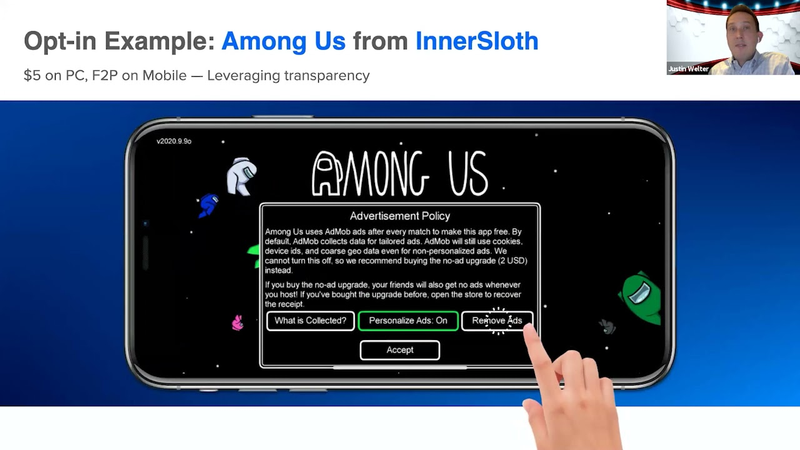
Monetisation Optimisation in Apple's New Normal
The mobile gaming industry faces a significant shift in monetization and user acquisition strategies due to Apple’s implementation of iOS 14 privacy changes, specifically the transition to an opt-in model for the Identifier for Advertisers (IDFA).
- The transition to an opt-in model for the Identifier for Advertisers (IDFA) under iOS 14 requires publishers to shift from traditional tracking to privacy-compliant frameworks like Apple’s SKAdNetwork.
- Publishers should implement header bidding or advanced bidding to allow real-time competition among ad networks, which stabilizes eCPM rates and offsets the loss of granular targeting.
- Rewarded video ads are the most effective format for maintaining engagement, as they consistently demonstrate higher completion rates and user preference compared to non-skippable formats.

How to Optimise Game Success & Monetisation With the Right Brand Partners
The gaming industry is undergoing a fundamental transition toward G-commerce, a model that integrates brand partnerships, e-commerce, and digital assets directly into the gaming experience.
- The G-commerce model integrates e-commerce and brand partnerships directly into game lobbies to monetize the entire player base, including non-paying users, without relying on disruptive advertisements.
- By rewarding players with in-game currency or exclusive items for completing external retail purchases, developers can increase player lifetime value and retention.
- Plug-and-play software development kits now enable developers to integrate complex e-commerce and marketplace features into their games in as little as one hour.

Panel: Best Practices in User Acquisition & Retention
Modern user acquisition strategies are shifting away from traditional reliance on dominant social platforms like Facebook toward more diversified channels, including Google’s Universal App Campaigns, Unity, and AppLovin.
- User acquisition strategies are shifting from a reliance on Facebook toward a diversified mix of channels including Google’s Universal App Campaigns, Unity, and AppLovin.
- Marketing should be managed as a dynamic financial investment where capital is reinvested as long as marginal revenue exceeds the marginal cost of acquisition, rather than operating under rigid monthly budgets.
- Playable ads are a high-performance format that can increase install rates by two to three times compared to standard video advertisements.
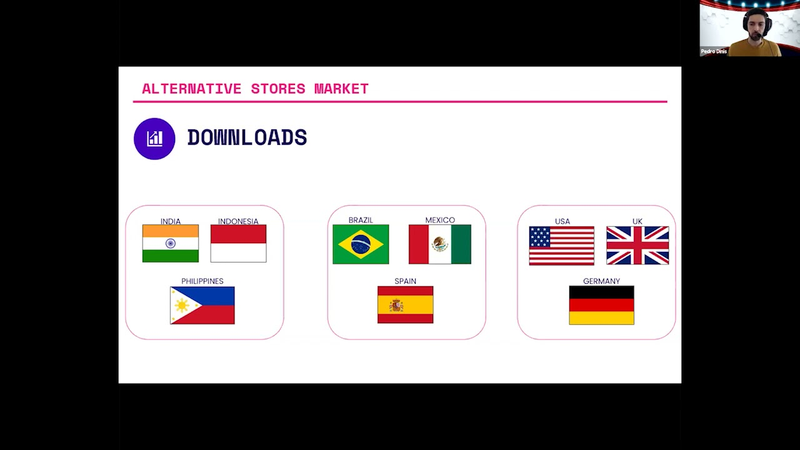
Growing Your Audience in Alternative App Stores
Alternative app stores have emerged as a critical growth frontier for mobile game developers, currently accounting for over 20 billion annual downloads.
- Alternative app stores, including Aptoide and OEM platforms like Huawei’s AppGallery, now account for over 20 billion annual downloads and represent 10 to 20 percent of the total Android market.
- Expanding into alternative channels requires a shift from automated, programmatic advertising to a hands-on operational model focused on direct business development and localized content.
- Alternative stores offer lower competition and more stable organic download rates compared to the saturated Google Play Store, making them effective for generating incremental revenue without cannibalizing existing traffic.
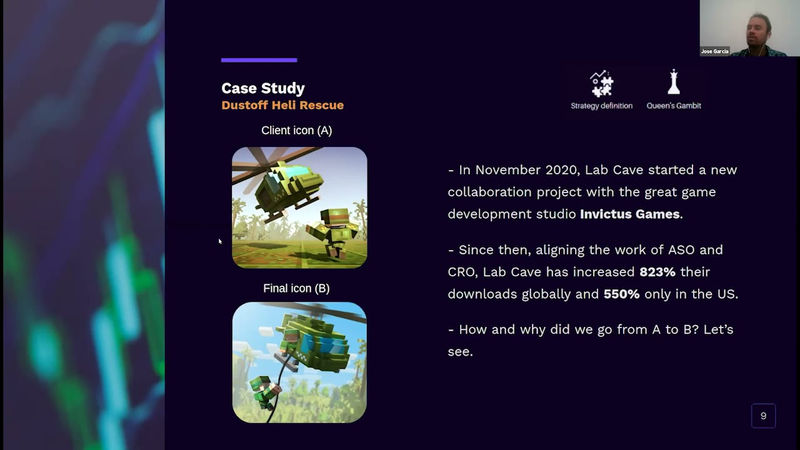
Superstar Session: Art Definition: The Queen's Gambit of CRO
Conversion rate optimization serves as a critical, scientific methodology for transforming mobile game store traffic into confirmed installs.
- Systematic A/B testing of creative assets can drive massive growth, with documented cases achieving a 2,000 percent increase in daily active users and an 800 percent increase in global downloads.
- Rigorous conversion rate optimization (CRO) can specifically boost U.S. market performance, with targeted asset testing yielding a 500 percent rise in installs for certain titles.
- Testing cycles should span three to four weeks to ensure results reach statistical significance rather than relying on industry assumptions or universal design tropes.

TWIG 129: Applovin Falls 19%, Playstation IP to Mobile, Square Enix Acquisition Rumors, JK Retiring
The gaming industry currently faces significant valuation challenges and strategic pivots as major players attempt to reconcile traditional console strengths with the demands of the mobile market.
- AppLovin shares declined 19% as investors reacted to the company's reliance on its own game portfolio rather than its marketed software-as-a-service business model.
- Sony is attempting to expand its console-based intellectual property into the mobile market, though it currently lacks the institutional expertise required for high-retention, live-service models.
- Analysts suggest that Sony should pursue licensing or strategic partnerships with established mobile developers rather than relying on internal development to mitigate operational risks.
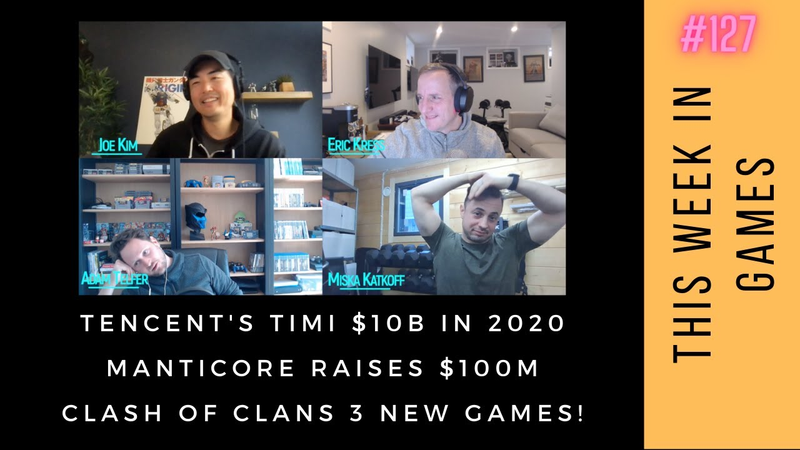
TWIG 127 | 3 New Supercell Clash Games, Tencent Timi $10B in 2020, Manticore $100M for "Multiverse"
Tencent’s TiMi Studio Group has emerged as a dominant global force, generating $10 billion in revenue during 2020.
- Tencent’s TiMi Studio Group generated $10 billion in revenue in 2020 and is leveraging this capital to establish Los Angeles-based studios focused on original, cross-platform, live-service intellectual property.
- Manticore Games secured $100 million in venture capital to scale its user-generated content platform, though it faces significant challenges competing against established incumbents like Roblox and Epic Games.
- Supercell is expanding the Clash brand with three new titles across the puzzle, auto-chess, and action RPG genres, though analysts question the long-term monetization potential of these genres in Western markets.
Writers
Games and companies
Games