Mobile reports and market data
Documents

How to Get Bang for Your Buck with Influencers featuring Chief Pat
The mobile gaming industry has undergone a significant professionalization, shifting from individual content creation to complex, multifaceted organizations that bridge the gap between developers and players.
- Mobile game developers should integrate creators into the entire development lifecycle, from early playtesting to post-launch marketing, to ensure authentic engagement.
- Influencer-generated content has become a critical asset for high-performing ad campaigns as traditional performance marketing faces challenges from data privacy regulations.
- Long-term partnerships with creators who have a genuine affinity for a game yield a higher return on investment than one-off, transactional ad spots with high-profile influencers.
Return of the Fortnite - The Metacast by Naavik
The integration of Fortnite into the iOS ecosystem via Xbox Cloud Gaming represents a strategic shift in digital distribution, allowing Epic Games to circumvent traditional app store limitations while simultaneously advancing Microsoft’s ambition to establish Game Pass as a platform-agnostic, ubiquitous service.
- The integration of Fortnite into the iOS ecosystem via Xbox Cloud Gaming serves as a strategic blueprint for bypassing traditional app store constraints while advancing Microsoft’s goal of making Game Pass a platform-agnostic service.
- Long-term player retention can be achieved through deep, player-centric design, as demonstrated by EVE Online’s two-decade lifespan, which utilizes unconventional tools like Microsoft Excel and player-driven narratives.
- The web3 gaming sector currently struggles with superficial technology applications and must move beyond replicating traditional financial models to discover mechanics native to decentralized systems.

Square Enix’s Western Studios ‘Only’ Cost $300M? - The Metacast by Naavik
The gaming industry is currently navigating a period of significant structural realignment, characterized by both the volatile emergence of Web3 projects and the strategic consolidation of established intellectual property.
- Embracer Group acquired Square Enix’s Western studios for $300 million, taking control of major franchises like Tomb Raider and Deus Ex to bet on the long-term value of single-player narrative IP.
- Square Enix divested its Western studios to reduce operational costs and refocus resources on its core Japanese development strengths.
- Yuga Labs’ Otherside metaverse project generated $300 million in revenue but suffered from significant technical failure due to an Ethereum gas war, highlighting the risks of poor infrastructure planning.

two & a half gamers session #14 - How to read Ad mon data for beginners? ATT & player segmentation
The mobile gaming industry is currently navigating a period of significant structural shifts, characterized by aggressive consolidation, shifting investment priorities, and the maturation of post-privacy monetization strategies.
- Post-privacy revenue success is increasingly driven by internal player segmentation and in-game progression depth rather than reliance on external tracking data.
- Apple’s App Tracking Transparency (ATT) opt-in rates have stabilized at approximately 40–42% in key Western markets, indicating a predictable environment for post-privacy monetization.
- To maintain bidding efficiency and prevent latency, developers should limit ad placements to fewer than 43 per geography.

Product Manager to Founder | Akash Senapaty (From Zynga to Vah Vah)
The transition from product management in the gaming industry to entrepreneurship requires a fundamental shift in mindset, moving away from prestige-driven metrics toward genuine problem-solving.
- Transitioning from product management to entrepreneurship requires shifting focus from prestige-driven metrics to genuine problem-solving and operational discipline.
- Technical skills in SQL and data analysis, typically honed in large gaming firms like Zynga, provide the necessary foundation for scaling new startup models like Vah Vah's live vocational training.
- The Indian tech landscape offers structural cost advantages and a deep talent pool, but firms struggle significantly with hiring high-caliber engineers and establishing effective onboarding processes.
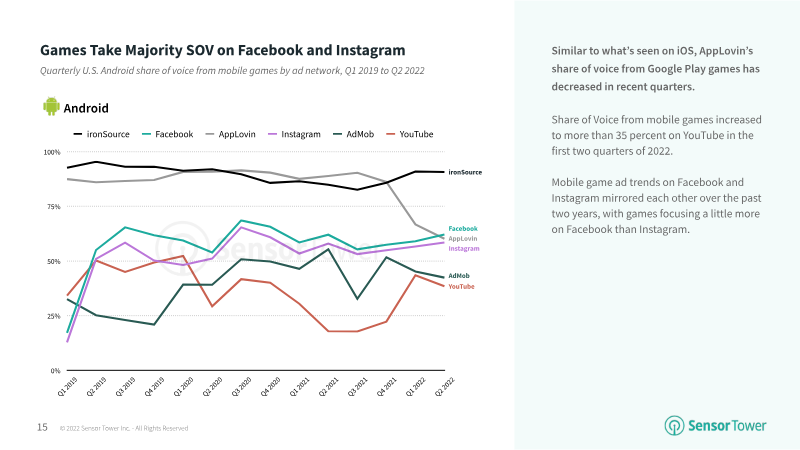


Mobile Gaming Market Outlook 2022
Sensor Tower's "Mobile Gaming Market Outlook 2022" covers the mobile game and advertising market across the App Store and Google Play, with worldwide data through H1 2022 and forecasts to 2026, plus deep dives into Card Battler, MMORPG and Real-Time Strategy sub-genres.
- Global mobile game consumer spending declined year-over-year for the first time in Q1 2022, falling 6 percent to $21.2 billion.
- Mid-Core games account for 60 percent of worldwide mobile game player spending in H1 2022 but only 14 percent of installs.
- Casual games made up 78 percent of worldwide downloads in H1 2022, while Mid-Core games made up 14 percent.

STEPN: Move-to-Earn or Ponzinomics? - The Metacast by Naavik
Ubisoft currently faces significant instability, characterized by a halved market capitalization, persistent project delays, and internal cultural challenges.
- Move-to-earn models like STEPN currently function as speculative loops that rely on a continuous influx of new capital to sustain user rewards, mirroring the volatility of earlier play-to-earn systems.
- Ubisoft is a prime target for private equity acquisition due to a halved market capitalization, persistent project delays, and a workforce size that is disproportionately large relative to its recent performance.
- Long-term viability for move-to-earn projects requires a shift from speculative market-driven valuations to tangible utility, such as partnerships with health insurance providers or sustainable gameplay loops.

How a gaming executive Chris Heatherly red-pilled on crypto and joined Recur
The integration of blockchain technology into the gaming industry represents a fundamental shift from traditional free-to-play models toward sustainable, player-driven economies.
- The gaming industry is shifting from traditional free-to-play models toward player-driven economies that prioritize secondary market activity and long-term asset utility.
- To achieve mainstream adoption, platforms are removing technical friction by integrating fiat payment options and automated wallet creation, similar to the strategy employed by Epic Games.
- Recur is developing internal branded experiences for partners including the NCAA, Paramount, and Sanrio to refine infrastructure before scaling these tools for third-party developers.

TWIG #178 EA’s acquisition of Glu does not seem to be going according to the plan…
Electronic Arts’ acquisition of Glu Mobile faces significant performance challenges, as evidenced by a decline in the revenue and download metrics of key acquired titles.
- Electronic Arts’ acquisition of Glu Mobile is underperforming, as key titles including Golf Clash, Design Home, Covet Fashion, Kim Kardashian: Hollywood, and MLB Tap Sports show consistent declines in both revenue and user acquisition.
- While EA reported a 68 percent growth in mobile bookings for Q3 2022, this increase was driven by the consolidation of acquired portfolios rather than organic growth within the business.
- The integration of Glu assets is hindered by a significant exodus of leadership talent from the acquired studios, threatening the long-term viability of the portfolio.
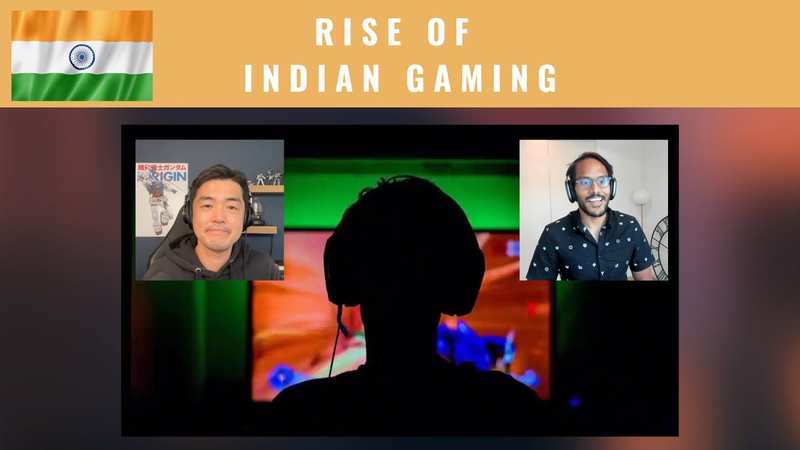
The Rise of the Indian Gaming Market
The Indian gaming market has undergone a profound transformation, evolving from a fragmented, arcade-centric landscape into a mobile-first powerhouse.
- The Indian gaming market is projected to grow from a $1.8 billion valuation to $5 billion by 2025, with the player base expanding from 500 million to 700 million.
- The industry is shifting from a high-volume, low-effort development model toward a focus on technical mastery and the production of complex, high-quality content.
- Investment is diversifying as capital flows from global gaming funds, generalist venture capital, and strategic players like Krafton into the local ecosystem.

two & a half gamers session #12 - Metacore 65M loss, Niantic 1 hit wonder, Industry conference guide
The gaming industry currently faces significant challenges regarding marketing efficiency, platform monetization, and the long-term viability of major titles.
- High-budget TV advertising is not a guaranteed path to profitability, as evidenced by Metacore incurring a $65 million loss despite significant revenue growth.
- CD Projekt Red experienced a 63% year-over-year revenue decline, highlighting the difficulty of maintaining long-term financial momentum following a troubled product launch.
- Security vulnerabilities remain a critical industry risk, exemplified by the $600 million Axie Infinity crypto heist attributed to state-sponsored actors.

Garena Free Fire Deconstruction - The Metacast by Naavik
Garena Free Fire serves as a primary case study for the efficacy of mobile-first design in the global gaming market.
- Garena Free Fire achieved over one billion downloads by prioritizing mobile-first design, specifically optimizing performance and mechanics for low-end Android devices to capture underserved global markets.
- The game’s monetization strategy uniquely combines cosmetic items with temporary power-ups, successfully balancing revenue generation with player fairness to maintain high lifetime value.
- Garena Free Fire serves as a critical financial pillar for Sea Limited, providing the capital necessary to diversify into broader digital ecosystems such as e-commerce.
Writers
Games and companies
Games