Mobile reports and market data
Documents

4X (R)evolution part2. Last War: The biggest 4X in 2024! Crucial UA integration into core-loop
The mobile 4X strategy genre is undergoing a fundamental transformation driven by the integration of hyper-casual mechanics directly into core gameplay loops.
- The mobile game Last War has achieved significant market success, scaling to approximately 2.5 million daily revenue and maintaining strong download volume in 2024.
- User acquisition (UA) strategy is the primary driver of product design, with developers prioritizing hyper-casual gameplay elements in onboarding to maximize conversion rates.
- Successful 4X titles, including Last War, Top War, and Top Heroes, utilize consistent creative themes such as 'gate' mechanics and zombie hordes across TV commercials, billboards, and social media ads to maintain UA momentum.

Innogames’ Deniz Kekeç On Building Long-Lasting Relationships With Narrative Marketing
Narrative marketing serves as a strategic framework for enhancing user acquisition and long-term retention in casual simulation games.
- Narrative marketing enhances user acquisition and retention in casual simulation games by shifting focus from mechanical features to character-driven storytelling.
- Studios should use rigorous A/B testing via isolated Meta ad accounts to validate narrative personas, measuring success through install-per-mille and overall profitability.
- While narrative-focused campaigns may incur higher initial costs per install, they are justified by increased player lifetime value and long-term retention.
The Road Ahead: Gaming Market Outlook Google's Alpagut Çilingir
The mobile gaming industry is currently navigating a period of significant contraction, characterized by declining market growth, rising user acquisition costs, and a shift toward a winner-takes-all dynamic where top-tier titles increasingly dominate market share.
- The mobile gaming market is shifting toward a winner-takes-all dynamic, characterized by declining overall growth and rising user acquisition costs.
- Studios must transition from hyper-casual models to hybrid-casual mechanics to improve long-term retention and monetization efficacy.
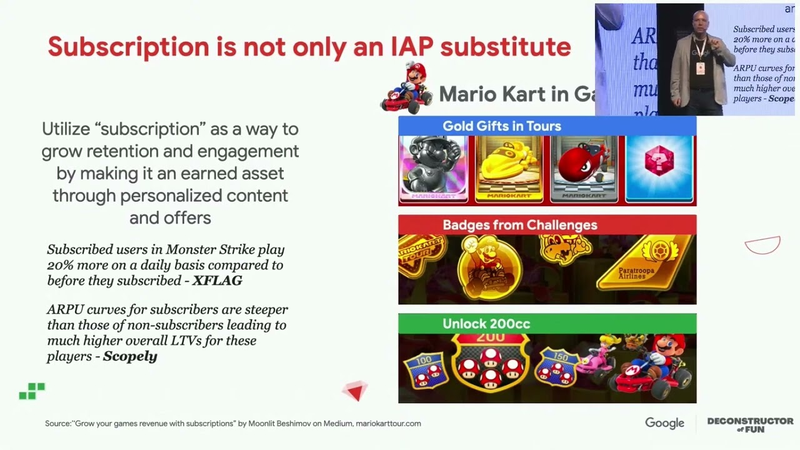
- Subscription models are becoming essential engagement tools, particularly when integrated with gamification features like badges and challenges.

Sustain Creative Excellence to Drive Enduring Growth with Amit Pande & Jen Donahoe
The modern digital marketing landscape, particularly within the mobile gaming industry, necessitates a shift toward creative-first strategies to engage a global audience characterized by short attention spans.
- Advertisers must prioritize native-feeling, vertical short-form video content to capture user attention within the critical two-to-three-second window.
- Over 80% of advertisers are now tailoring creative assets specifically for short-form environments, frequently utilizing influencer partnerships to increase authenticity and engagement.
- Creative assets serve as the primary fuel for machine learning engines, requiring the upload of maximum-volume, diverse asset sets to optimize performance across Google’s inventory.

The Art of Achieving Peak Performance with John Wright, Jennifer Donahoe & Di Weng
This discussion outlines a strategic framework for mobile game development and user acquisition, emphasizing a lifecycle-based approach to achieving peak performance.
- Modern user acquisition relies on automated bidding strategies, such as value-based bidding and ROAS optimization, to hit specific day-three or day-seven performance goals.
- Game development follows a four-stage lifecycle: MVP for core loop validation, Alpha for testing long-term retention with four to six hours of content, soft launch, and hard launch.
- Monetization strategies have shifted from pure in-app purchases (IAP) to hybrid models that capture revenue from both paying users and ad-engaged players.

Stay Compliant with the Ever-Shifting Privacy Landscape with Di Wang, Rachael Weinberger & Rina Onur
The mobile gaming industry is currently navigating a significant shift in data privacy regulations, most notably the European Union’s Digital Markets Act (DMA).
- The EU’s Digital Markets Act (DMA) mandates that large platforms like Google separate core services, restricting cross-service data sharing and disrupting real-time user acquisition targeting.
- Marketing teams must shift from deterministic measurement models to a holistic strategy that integrates SKAdNetwork, modeled conversions, and first-party data.
- Creative strategy has replaced granular identifiers as the primary lever for audience targeting, necessitating frequent, isolated testing to triangulate campaign performance.

Turn Your Game into a Money-Making Machine with Fatma Güngör Okutan & Felix Braberg
This discussion provides a strategic overview of mobile game monetization in 2024, emphasizing the transition from rapid, hack-driven growth to sustainable, product-focused revenue models.
- Long-term mobile game profitability in 2024 requires a hybrid monetization model that balances in-app purchases (IAP) with sophisticated, data-driven ad strategies.
- Publishers must shift focus from simple eCPM optimization to maximizing total ad revenue and Average Revenue Per Daily Active User (ARPDAU).
- To protect retention and IAP conversion, developers should implement user segmentation tactics such as delaying ad exposure for new players and tailoring ad loads based on geolocation or acquisition source.

Unlocking Global Growth with Google Play's Robbie Hopkins & Romain Mardot
Global expansion represents the most significant growth opportunity for mobile game developers, as consumer spending in international markets currently outpaces domestic growth by a factor of three.
- International consumer spending in mobile gaming is currently growing at three times the rate of domestic markets, making global expansion the primary driver for industry growth.
- Custom store listings that utilize region-specific color psychology and culturally relevant imagery can increase monthly active users by more than 3.5 percent.
- Developers should implement automated pricing tools to adjust in-app purchase costs based on local purchasing power, while using integrity protections to prevent VPN-based price exploitation.
How to Catch the Next Big Fish with Laura Taranto of Big Fish Games
Developing a successful mobile game in a competitive, mature market requires a disciplined, three-pronged framework that integrates quantitative data, qualitative player sentiment, and internal domain expertise.
- Successful mobile game development requires a three-pronged framework that synthesizes quantitative data, qualitative player sentiment, and internal domain expertise to identify viable market opportunities.
- Studios should establish a clear North Star goal and accept high failure rates as an inherent part of the development cycle to ensure better resource allocation and stakeholder alignment.
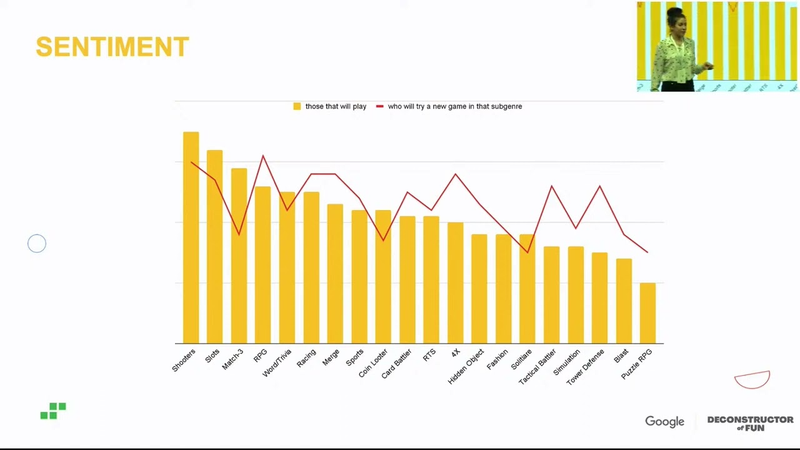
- Quantitative metrics such as downloads, revenue, and ARPDAU are essential for identifying subgenre trends, but they must be balanced with player sentiment to uncover unmet needs and frustrations.

Unfiltered Market Talk with Michail Katkoff & Eric Kress
The global gaming industry is currently navigating a period of structural stagnation, driven by a post-pandemic market correction, the lingering effects of privacy-centric user acquisition shifts, and a restrictive macroeconomic environment.
- The gaming industry has shifted from rapid expansion to a mature phase characterized by structural stagnation, driven by post-pandemic corrections, privacy-centric user acquisition challenges, and high interest rates.
- High capital costs are forcing studios to prioritize immediate operational efficiency and profitability over speculative growth, effectively stifling large-scale mergers and acquisitions.
- The mobile gaming market is evolving into a winner-take-all environment where established titles dominate revenue share, leading to a decline in core gaming segments despite the resilience of casual genres.

Fireside chat: How Scopely Fuels Growth and Outpaces Rivals with Jen Donahoe & Jamie Berger
The success of Scopely’s mobile gaming portfolio, particularly the 2023 breakout hit Monopoly Go, is driven by a strategic synthesis of intellectual property (IP) integration, social mechanics, and a disciplined approach to performance marketing.
- Monopoly Go generated $800 million in revenue during Q4 2023, providing the financial scale necessary to fuel aggressive user acquisition while maintaining operational discipline.
- Scopely treats intellectual property as a platform for authentic gameplay rather than a guaranteed success driver, exemplified by adapting the traditional Monopoly board game into a real-time social experience.
- Community management is treated as a core marketing function, resulting in significant engagement metrics including 8 million Facebook followers and 500,000 Discord members for Monopoly Go.
Level Up: AI Powered Mobile Gaming Growth with Google's Katie Funk & Belinda Langner
Google’s product leadership highlights the integration of artificial intelligence across the mobile gaming lifecycle, positioning AI as a critical multiplier for user acquisition, creative optimization, and monetization.
- AI-driven value-based bidding, such as Target Return on Ad Spend (tROAS), has replaced manual campaign management to better align user acquisition with specific revenue goals like in-app purchases and advertising.
- Voodoo achieved a 58% increase in Return on Ad Spend (ROAS) by implementing AI-optimized bidding strategies tailored to their specific monetization structures.
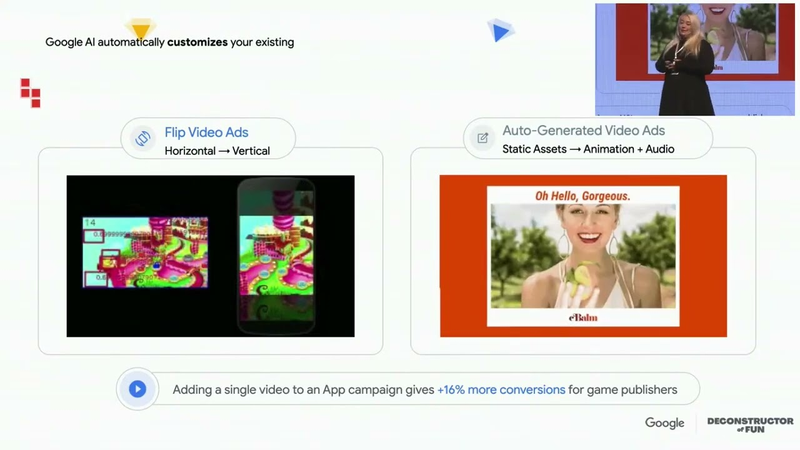
- Google’s AI-powered creative tools, which include automatic video reorientation and asset generation from static images, deliver a 16% performance uplift in campaign results.
Writers
Games and companies
Games