VideoDeconstructor of Fun
Unfiltered Market Talk with Michail Katkoff & Eric Kress
15 Mar 202442 min video
Transcript
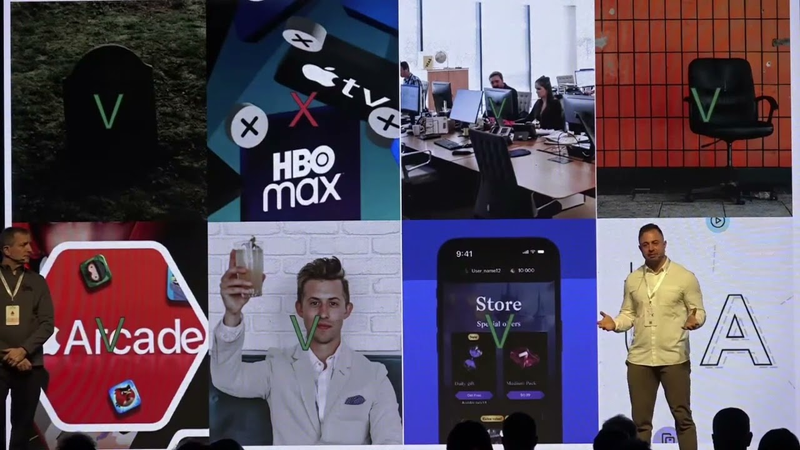
[Applause] [Music] [Applause] [Music] welcome welcome welcome everybody to think games Istanbul now as we begin I wanted to do four four key thanks so I want to first thank everybody here and everybody online for coming to the event for for viewing the event and for being present and for being online so thank you secondly I want to thank the speakers so we have speakers all the way from sound Francisco to Singapore from Barcelona to Beijing and I want to thank all of the speakers that came in here to share their insights about product about marketing about the market and about funding so hope you enjoy all the talks
thirdly of course I want to thank Google without Google this wasn't possible and I want to especially thank Google because they're always supporting the ecosystems whether it's downtime whether it's the high time uh they do amazing events they bring people together and that is the most important part of of us of the gaming industry and fourth I want to give a a special MVP thanks to s karaj from Google she's been absolutely essential and in in making this happen everybody who's a speaker everybody who's been organizing she's being the one in contact with with everyone so uh she's been the uh the key glue and the MVP player of this event so SE is uh fantastic yeah I want to reiterate that for SE is absolutely amazing she's like wrangling cats to get us all together on this um and what I would say is that uh she's far more fun after the event than during the event so give her a fist bu
elbow something say hello and give her thanks um the other thing I wanted to say before we get started is a public service announ announcement so things suck in gaming just generally speaking right it's a pretty awful time in general and what I realized after thinking about this is the majority of people that have worked in Mobile have never seen a downturn right because mobile really started taking off in 2010 so we it's been a while I've been personally through two and a half right in 94 when I started working it was freaking terrible Market in 2000 it was absolutely brutal and then in ' 08 so this is normal sort of right and it sounds a little flippant but this is what happens it boom and bus cycles and we readjust and everything will be fine um in 2001 for instance I was in my parents basement playing EverQuest for over a year looking for work until EA took me back right so it gets better it will be better and um and just hang in there all right you're don't go off and start looking to be a plumber or
something gaming will be fine Mobile's huge console is massive we all be okay all right so in this presentation we're going to talk about a lot of the pr predictions and by a lot I mean six different ones and it would be weird to talk about predictions if we didn't go through the previous predictions that we last year so just to run quickly through the last year's eight predictions and how we did to maybe get a little bit of a credibility of what we're going to say today so number one we predicted that the organic Discovery will be dead and buried and yes featuring has been a memory of the past for a while the K factors are pretty much at their alltime low and even Indies were admitting last year that featuring is kind of dead so On To The Next One streaming platforms this was a prediction that as Netflix was pouring billions into gaming that would force other streaming platforms to really seek for publishing um in gaming and then really looking at G as a growth
Avenue that did not happen so we were wrong we said that you would most likely be returning to office well things changed in 2023 the power shifted from the employee back to the employers and employers started to enforcing the type of a structure and the company cultures that they feel that fit them best versus what are the best for individuals and we saw a lot of return to office not all the companies but many companies did this uh we predicted that you might be getting laid off and unfortunately that prediction came true gaming was not Recession Proof as was thought before the D Market downturn there was a lot of over hiring during the lockdowns as the world was perceived to be a very different place than it was right now metaverse did not come zero interest rates disappeared and growth stalled and because of that we're seeing a correction and we areu can be seeing even an over correction through 2024 we predicted that if developers
would go to the safe harbors the Apple arcades the Netflix games somebody who would pay them in advance for a game so that they can live to fight another time another day and with privacy changes economic downturn the VC winter that came true a lot of developers were seeking money from these um platforms to get paid to you know to ship a game we also predicted that it would be a reckoning for the VCS um um and we saw a lot of venture capital pull away from growth stage investing in terms of dollar amounts we saw the Investments go down 75% at the same time the amount of Investments went down by about 25% so there was there was less checks and the checks were much smaller and what was happening and what will be likely happening is some of the companies will go down or take down rounds during this next year we also predicted that the web shops would be embraced by the
Publishers and that came to True payments are not as complicated as they once were there were plenty of service providers more coming in almost every day um this allows a lot of Publishers to avoid the platform premiums and it also allows them to own their customer relationship so we saw a big shift in this direction and finally something that uh actually Eric is going to talk about more today is that paid user acquisition became more of a break even game so downloads were decreasing in any key markets most advertisers were struggling to break even or to reach the same type of a Heights and there were some companies that were able to succeed despite the idfa we have some of the talks like sculle is going to be here today talking about Monopoly go so it's not all bad for everybody but it was bad for many so you can argue that we were more right than wrong I suppose just last year so we'll see about this year so moving on to predictions uh for the dma
now clearly I'm no expert on the dma Mr Archie out there was trying to school me last night so I'm not going to pretend right but what I'll say is clearly the idea behind dma is to give Publishers more control over their stores and to allow them to have a more direct relationship with their customer in in theory um Apple's proposal was clearly not acceptable um so their 17% 3% processing fee this core technology runtime fee was obviously not a great idea um the Apple Store like with this absolutely insane uh scare screen is is not acceptable and then the big thing is that one decision is basically for the entire organization which won't work as well so this is Apple at its finest right and I talk about this on the podcast all the time it's like heads you lose taals I win type thing and you got to respect you know how deviously clever they are in terms of abiding by the idea sorry abiding by the letter of the law but clearly not the spirit of law in terms of what uh they were supposed to
do so again these type of policies or regulation that capture for the big you know only the big companies are going to be able to do these type of activities epic and Microsoft are already making moves epic evidently yet today just got their store pulled so there there goes that but nonetheless they are likely coming back to the store this year regardless is what I'm hearing anyway so I imagine most publish will opt out of this and it'll be kind of a steady the same thing as ever um but my prediction here is that I think dma is going to go medieval on them right and we'll find out actually this week at least the initial things but over the year I think they're just going to go after apple and because my understanding is that dma is not to be trifled with and and and I think they're going to get super aggressive with apple and they're going to start to feel the heat um as soon as it starts to be implemented and we should see fines and additional uh legislation to force them back to the uh table to to negotiate this so that's my first prediction okay
all right I'll try to do a little bit of a difficult one prediction so the lean times will drag on now what happened in 2023 is we didn't see much growth in the game Market overall almost the same size and when you adjust that to inflation it was actually a decrease in the market size and when you break it down to the three key Market areas you see PC that was actually the one market that was growing and of course there was a lot of great games that were launched on PC and console and there's a lot of innovative games that were launched on on PC and there are some several key franchises that were doing really well so some liveop franchises like the League of Legends or the um counter strikes they were doing well and actually growing throughout the year on the console side if you can go back please on the console side what was happening is the growth that was expected due to the uh amazing I mean probably one of the best years in the industry ever was 2023 in terms of quality of games yet when we look at the cons Market as a whole we merely see um
a growth on that and it seems like there's not enough users and there's too many different games but there's also too many different business models happening at the same time when you have subscription games with a whole huge catalog you have fantastic premium games coming out and then you have games as a service like fortnite and Roblox came in on the console so all these things combined together with the hard accessibility of the platform with the expensive price and with a very limited amount of audience made made it so that the platform did not or the or the revenues did not grow despite the uh the expectations of and the quality of the game's launched and then we have our own mobile 50% usually of the industry now a little bit lower we actually saw according to the newu we saw a little bit of a decline and of course this is a lot due to the uh the Privacy changes but there are other things that affected the sort of a I wouldn't say decline but this lack of growth in our industry and those are pretty much five
trends that are affecting so number one is of course we had the lockdown years we had the 21 22 although bad for majority of people very good for our industry what changed was people started to travel more they started doing different Fitness activities they started dating that starting going to the restaurants they started moving around being less at home being less at their screen number two was a structural shift in privacy that of course Shak the game economy meaning the UA Arbitrage game days were over number three we had competition from other media sources so that was always there but it seems like users spent more and more time on social media more time on on streaming and again the dating I don't know why it keeps talking about dating apps I don't I don't use them but but music and and podcasts and products and all of those were taking more and more time and being more engaging than than perhaps games before then we had different geopolitical not had we are still having many geopolitical crisis and that of course made made the world from a
globalized to a multi-polar and finally there were a lot of economical challenges that impacted spending more concretely it was interest rates and then there was inflation so first comes inflation then comes the interest rates and that's really something that I wanted to dive deep into because I don't think I can speak to many things you will speak about the other UA stuff and to make my point what I'm trying to say here is the interest rates will have the high interest rates will have an impact on the lack of growth of the industry and as long as we have higher interest rates we won't be seeing the the type of a growth that we had before and to make my case I'll take you back to the 70s and during the 70s it was um arguably the worst time since the Great Depression for most developed economies and that was because of because of well War the war in Middle East caused the the price of oil to go up and the price of oil that went up the inflation went up and the inflation up went up central banks increased the
interest rates that's all normal but what was happening in the 70s every time they brought down the interest rates the inflation went went up again higher and higher now the people in charge of central banks live through this so they know this very well and my argument is and listening to the central banks what they're saying is that even as the inflation will go down to the normal level to 2% whatever they will not change the interest rates because they're afraid that it will bounce back so they will keep it longer they want to see see uh they they want to truly kill the inflation and that's why I believe that the interest rates will remain high now what that means is is that there are severe effects to different types of companies I'm using embracer just as an example but it's really for all the companies that were focusing more on growth rather than profitability so with the highest higher interest rates what that means basically is that the cost of servicing depth goes up the more depth you have the more expensive it is if you have a lot of depth like some companies that have been very much focused on goth
that means that you have a significant financial strain on your business meaning that even the day-to-day operations become very expensive and you have to cut costs so there will be a decline of merg Acquisitions you can't take money from the bank in order to buy new companies it's um if you can one slide back uh you can't it's it's hard to take m&a it's hard to take the invest put in the investments into new products you're becoming more risk averse you're thinking about franchises and IPS rather than thinking about new cool games because because it's just so expensive and you don't have anymore the money to invest into risk your bets at the same time there's a rise in productivity your day-to-day operations are more expensive so you're pushing productivity you're pushing efficiency and that leads as we can have seen to a lot of layoffs so to summarize it I believe that high interest rates are one of the key elements that influence the lean times and games there's few things so limited consumer demand for games
interest rates also hurs consumers and they have to prioritize where they spend their money we can see that in console Market where so many great games launch and still we didn't see the same type of a growth as expected we'll see fewer games in development because it's just too expensive to invest and companies are avoiding a lot of riskier bets we'll see uh fewer investments into new projects or new Studios um There Will Be Few exits through mergers and Acquisitions and of course this is an important part not only for the founders but it's also important part for the VCS when there's no exits it's more dangerous to to invest and so forth uh there's going to be focus on Pro profitability instead of growth and finally there's going to be focus on efficiency and productivity and those will continue to lead to layoff as I believe the uh the market will be overcorrecting itself but then again when you overcorrect at some point you go to a different direction and as I Crest said there's boom and busts and
unfortunately we're going through uh one of the uh the latter one I didn't know that Mishka was an economist so uh but uh anyway so um I'm going to bring it back to this chart that I used last year which is a complete isore I know and the Kenzie C Consultants are eyes are bleeding at this point but the line here is the market growth for Revenue in us and then the green bars are basically the growth and what we saw was actually things got started to improve and they're actually much better in q1 this year as well um so we're seeing some kind of St ilation I I would say in in the UA Market as people kind of adjust to the New World Order um now I think it's driven a lot by Facebook app 11 and Google which kind of have adjusted really well to the and then to some degree uh you know Unity is limping along with the rest of them but um but also we saw absolutely massive release with Monopoly go and the further success of the of the puzzle genre or the match uh genre um in this next chart basically what I'm trying to show here is exactly
kind of what I said last year is that the the the Casual game genres are doing extremely well and driving the majority of the growth while all the core genres are still deteriorating kind of as expected without targeting um I think this will actually continue for the next couple years um and then this final chart is another isore but the fundamental thing here is that this is continues to be a battle of the big right so what this chart is basically saying is that 64% of the revenue generated last year are games that are five years or older right so even with the success of Monopoly go which you can see it jumped at the new releases from 3 to 7% still the majority of the gaming is being done by the big Publishers and the big games um and again this is a battle of the big with with huge budgets making huge UA uh bets like uh Monopoly go which is profitable by the way um so anyway so my prediction is that we are going to see some stabilization in the UA Market um Facebook and App 11 are are leading the charge as well as Google uh
Unity is you know the two drunks holding each other up or limping along um we'll see if they can pull it together um the market I think will remain flattish over the next few years which is a little bit better than what I expected last year um and I'll get to that why in a minute uh and and again continuing suffering for the core but to the with casual kind of leading the charge so what about fingerprinting so last year I was expecting fingerprinting to get more be uh Apple to be more aggressive on fingerprinting and I think I'm going to say I was wrong on that I think at this stage they are going to allow uh IP tracking as a way uh as an alternative to uh idfa um now I could be wrong and then in a few months I'll be I have to repeat this this uh presentation but there's a couple reasons why I think this is going to happen one is they don't have the capability of actually doing it um two is uh they do not want to impact their ecosystem system as much
the reality of it is Apple's not doing all that well right this disastrous visor launch you know the Vision Pro looks like an absolute train wreck they got rid of the car so it's like they don't have any Avenues of growth and so they cannot go after their Cash Cow um by implementing these changes because these changes don't only impact gaming but it impacts the entire ecosystem so my the expectations the expectations that people I talk to is they will not go Med go um after fingerprinting end result Google Android will obviously be the most private and uh private Network in all in the world for for uh for mobile right go Google all right interesting so apps will overtake games in terms of Revenue I wrote a little bit about this topic and it was one of the most divisive writings that I've done some people liked it some people hate it and I I like to mine a little bit for conflict I like to say certain things show some data and wait for others to prove it wrong if they prove it wrong I'll change my opinion now now in terms of games and apps there's some
interesting graphs that I want to go through so as you can see from here you have the uh the consumer spend and you have the uh the growth of income what we can see in 21 what's happened is that the uh consumer spend went down both for apps and games it rebounded really quickly for apps and continued to go up and continues to go up at a significant pace and this is of course inup purchase Revenue it is not inup ad Revenue it is not web shop Revenue only in up purchases which is the main thing thing that really matters for platform holders now when we look at the um and even the growth by the way of of disposable income did not rebounce the uh the spending on inapp purchases so looking at the next couple of graphs when we look at the market the market wasn't really growing that much so everything was was stable during the last few quarters and during the last few quarters the apps were taking more and more of consumer spend compared to games we still like to refer that games make 70 5% of App Store Revenue they might be
making even more of that because of all the Ina ads because of the web shops if you if you count that way yes but if we only look it from the platform side what we are seeing is that apps are the ones that are drawing growth of Revenue and we as Gamers we like to point out to these graphs of of saying like you know entertainment cost per hour is lowest of games but is it truly like if we really bring in all the apps the YouTubes the Twitter's the uh the Tik Tok the Instagrams those are pretty cheap they take a lot of our time and you know they don't take a lot of our money and then on the other hand we also don't talk a lot about the utility many of these apps with as I said the YouTubes the Tik toks are really important the LinkedIn those are really important for for many users so even though if the uh price could be a little bit of a higher like Netflix over here you have to also divide that to the whole family for example so the the only looking at the cost per hour per entertainment is not the single metric that I believe the
consumers are are looking at when they're making their decisions where to spend their money and most importantly where to spend their time and talking about these two things money and time I think there's two fronts that the apps are pushing games on on mobile number one is of course the disposable income when the disposable income decreases it seems like based on the graph that we're seeing without actually knowing the web shop revenues without knowing the inup ad revenues BAS based only on those it seems like the consumer spending and Ina purchases is is not very flexible when it comes to apps and very flexible when it comes to inapp purchases but most importantly it's the time users are spending more and more time on different platforms we like to say that our games are very social they're addictive they're this and that but are we more social and addictive than than the Tik toks and the YouTubes and the and the LinkedIn I'd argue not so much so time is is very crucial and it's not only with mobile gaming it's Al also what we're seeing in console uh as an example so the question
kind of comes back to is how do we take the road back to growth and I think my perception from this in a in operating in a very mature Market compared to a growth Market you have to switch your approach from a Lean Startup where you just throw out MVPs and figure things out to a more of a deliberate approach and that really leads to a three things that I think the studios need to consider so first of all is the sort of Rapid experimentation when you do quick demos and you test them quickly and you find the fun and that is the game that you're going to develop I think that's not enough anymore I'm not saying that that's not a crucial part of your development process it is but I think you need to have a compelling strategy for what you are building this is a mature Market you have to you have to have insights you have to have capabilities you have to understand your competitors you have to understand your Market you have to understand what is your funding situation how much resources do you need in order to realize you can't just have a quick demo
and just go with it and and believe that everything is going to happen today as it happened in 2013 or 16 you also in my opinion have to move away from fail fast and pivot approach to adjusting according to the strategy so as you've set your strategy based on your inside based on your capabilities based on what's happening in the market and the funding you have and the funding you know you will get you adjust inside of that this morning we were talking with um with Jamie from from scopely and he was talking about the development process of Monopoly go that it took 7 years and there were major adjustments during that time there were adjustments inside that strategy that was set by the company and I think that is a you know a powerful version of course a very outlining type of a game but I think you can do that for other ways as well keep your vision your your product placement adjust inside of that move forward don't pivot to something you don't know because it feels easier in the when you're doing the pivot the thir third part is is over focusing on testing we
love that we love to do something quickly get it to users hand and then modify it based on how they're using it that's that's important and I think you should be always testing different components of your game of your marketing strategy as you progress in development cycle at the same time if you over focus on testing you will get it iterative title and iterative titles are having a very hard time in this market now it could be faster to build but it's going to be very hard to Market the prices are going to be outlandishly expensive as you're competing you know against the dozen other puzzle games uh in the market and I think you know Turkey in in some sense when I look at the market a lot of you are making great puzzle games but a lot of you are making great puzzle games and and that's a that's a bit of a challenge here and then final part is if you build it they won't come like that's not the approach that you have you can't just build a game and say Okay marketing it's done
we've user tested users love it kpis are great at a small scale let's go too late you have to have it from the beginning you have to think about growth from the start of your game even if you're a Founder when you go out pitching that's what F what VCS will ask you well what's your growth strategy you can't just focus on the product and hope they will come so that will be the change of the mindset in my opinion that could take you back to the growth hey how do we get back here we're going backwards oh sorry my bad all right uh the uh investment prediction so m&a um so thanks to Convoy for these charts by the way um I think the market should see a slow increase we we actually saw some decent volumes in m&a um last year but I think this should increase because as companies run out of funding they need alternative uh ways of
uh of of Alternatives these strategic Alternatives and m& is where they would go um I do not expect expect any Mega mergers out there sorry Mr Goldman Sachs if you're out there um EA or take two are likely not for sale this year um primarily kind of related to regulatory issues I think it's really really challenging with the current FTC EU and and the UK bodies um now of course if we have a new president in the uh new president next year forbid um that could actually change and that you know maybe they'll the FTC will start to uh not hate big Tech the way they do um I do think that Ubisoft might be taken off out the off the board um I don't think Eve is up to the challenge of of managing that organization as I've said many times in the podcast um but I think that's likely in 2025 um the fundamental problem that we have right now is that there are very few acquirers left if you think about it right Zinga is off the board board um EA is licking their rooms from one of the
worst Acquisitions in video game history with u glue scopely I would imagine is taking a break but I guess you know we'll see right I mean the Saudis are trying to figure out what to do with the asset and and and it's unclear as to what their strategy might be um and then obviously embracer and SK stillfront are absolutely collapsed um so I don't know if they're going to be acquiring anything anytime soon so it's just not a lot of buyers left what I do think is that will lead to like likely lower valuations and more very very selective Acquisitions out there and maybe some newer companies will come up as consolidators something like foris tilting point you know they have to be relatively well funded of course um to further consolidate the industry on the on the smaller side so that's kind of where I think the MMA Market's going to be the VC Market it's going to be a slog I think the reality of it is is that without platforms that grow the market VCS become far and Far less interesting if you are in a flatline type of Market VCS are going to go elsewhere you know
likely chase the rainbow of AI um and even crypto maybe to some degree because that's coming back which is frightening um but I think you know I think again the VCS are likely to go outside of gaming uh and and maybe you know again go after AI but um and whatever else comes up that that that you know gets them excited you know I talked to these guys last night about it is anyway they're an interesting breed um so I think we'll still can see see these absolutely ludicrous Investments by these by these big VCS like with these AAA projects which in my view make absolutely no sense because that's not a VC investment you know the the returns required for VC investment Mak sense or 10x plus right so these 50 30 $50 million deals really make no sense these deals are are are primarily geared towards Publishers this is what a publishing deal looks like and V should not be Publishers just be clear on this
so we should see those things continue but they make no sense in my view um and so I think this is kind of the biggest challenge with gaming as a whole is that uh we should see early stage funding continue but this this grow stage funding is going to be a real challenge right to find the bigger checks to get them to the next level of growth um and so a lot of these companies will likely have to uh uh fail to scale and then likely get shut down are acquired um but I I do think that that the the early stage will still as as we we adjust to the New World Order um the early stage companies will go like uh our own Goram from uh Google he started lat Ventures or Latin whatever the you pronounce I said the sorry I cursed I'm not supposed to but uh late Ventures I think those type of funds they're actually going after early stage companies that are trying to adjust to the New World Order I think those will create the new crop of game companies that will be in you know three to four years you can get those kind of returns so I think that kind of investment will
continue um finally for the public markets um so we've seen a lot of big players get taken off the board so uh in particularly Activision in Zinga which hurts my business um but uh but we actually I do expect epic to actually get to the public markets in the next 18 to 24 months um as soon as the mar IPO Market opens up hopefully later in the year see the fundamental problem here is that if there's na from epic I apologize ahead of time is that Tim Sweeney is is not the right type of CEO right he's not going to be giving up much control to the public markets and so it's a little dangerous similar to like the Roblox CEO um you know he's a wild uh he he he's a liability to some degree but but we'll see um I think that uh will be big a big big IPO when that comes out um but in the New World Order and the way the way the world is working right now with the markets kind of flatlined it's a battle of the big right it's a market share game right and it's kind of back to the
old ways before mobile where it's the winners and losers and you make bets and in a hedge fund for instance you're betting long short and so whoever actually wins the product cycle you know the stock Rises and so it's it is a good opportunity for the public markets um and and that's actually one of the reasons I'm starting a hedge fund next year but if you have any questions let me know but um so uh I think you know the public markets will be pretty active generally speaking uh over the next few years all right last one so AI alagood is actually going to be talking from Google about AI more and we have more speakers actually showing what they're going to do with AI and in in actually puzzle game content so interesting talks about AI so I'm going to kind of zoom out and and talk about it on a higher level now the promise of AI for gaming is really twofold first of all if you have a smaller team and you're making unique creative games now the resources you're not held back as much by your resources if you
embrace the uh the tools the AI tools that you can use on the other hand if you have a large team now you can make a truly open world populated procedurally developed content adaptable game mechanics and narratives truly immersive open world looking at elements like graphics and and narrative design we can see that with AI tools you can enhance visuals by turning 3D rendered Graphics into photorealistic images so imagine playing a movie something that has been promised in gaming for a long time uh you can be exponentially faster at content creation talking to many studios they went from testing a couple of different variants to testing tens of variants in the same amount or even shorter amount of time uh there are deep Learning Systems in AIS that will contribute to a more visually appealing game environments and finally when we're talking about narrative designs and immersive games AI can assist in crafting Those comp narratives it can generate different plot twists
dialogues and even branching story lines then looking at the the programming side of things you have you can basically revolutionize the game engines so there's automations of various components such as physics Graphics rendering uh there's procedurally generated game content including levels missions characters all of those will be procedurally generated and then finally there's analysis of players behaviors during the game play that changes the preferences based on the preferences of the player and evolves the gameplay so adaptive game mechanics adapting difficulty levels uh according to the content that the AI actually procedurally generates and kind of looking back and then thinking it more on the individual level so I try to think of like what do we as individuals need to have to to embrace the change and those that are needed in the future
world and I'm not going to go through what is needed but what's interesting is not what is not here so there's nothing on problem solving quality control attention to detail and most importantly working with others so teamwork leadership social influence empathy active listening all of these are missing here and um interesting take of course I'm not 100% in line with World economic Forum I would say that um but definitely the uh the things to focus on are quite different today as they were just a while back before the AI started taking over and you know layoffs is in the news every single week and there's been a lot of different types of articles that have been coming in from AI related content so if you just click through some of the uh the most fear-mongering articles that that I could find good sir so
essentially whether it's the IMF whether it's a Goldman Sachs whether it is just click on ahead whether it is uh Goldman Zachs whether it is um other institutions whether it is um U price water how was Coopers your favorite McKenzie all or even Nvidia all of them are talking about the the significant changes that AI will impact in all the the workforces not not only just you know gaming specific and actually there's an anecdote so when I came in here in in Turkey on on T on Tuesday so the um the U the receptionist was taking me to the hotel room went to um elevator in the evening and he's like you know starting a conversation like do you use Chad gbt I was like yeah and then he was like listen like he started using chat gbt and the tasks that took him two hours before so writing different emails to to clients and different type of tasks now take two minutes or 10 minutes and then he was saying how he's going to teach his daughter to to start using AI
to proactively you know learn different things and this is you know prompted by by another person I wasn't asking him about Ai and what I'm trying to say is like how how how people are adapting to AI not in in in our industry but everywhere are they seeing the power of it and I think those on the Forefront are the uh the ones who are going to be who are going to evolve how we use how we use AI so um anyways just going back to this so transforming the way we make games so first of all compact teams uh there's a lot of amazing like PC is the uh probably the most Innovative Market at the moment and if you can imagine those small teams that are making games like valheim or um battle bit and so forth now with the with an extra tools of the tools of an AI they can make bigger games maybe they can start operating those games so there's a lot of opportunities for smaller teams who previously lacked resources to make bigger more creative titles at the same
time for the large teams it's an ability to make truly immersive worlds now I believe that that the people who are experienced Professionals in the industry and who Embrace AI can be invaluable Assets in any company now if you consider that that Superstar artist that you have in your studio that amazing programmer um that that great product manager or data analyst or or you know even a person in your Finance or or marketing departments with AI tools they can do much more they can do much more faster they can do things that they weren't able just to do before and you know increase I don't know it's a worth thing to say for about human to increase their value but increase their contribution to to the company and become truly invaluable players at the same time if you're less experienced and or reluctant to start using these different AI tools then it's going to be a challenge because these are transforming the ways we work and if you don't want to use the new tools it's it's a it's a it's a challenge that a lot of Executives of of course are are
wrestling with because we understand that adopting these tools will mean transformation and we as people don't like transformation we like things to be as it is we don't want to see our our colleagues to be laid off and and especially if it's because of different type of tools so there's natural inclination not to adopt these tools but I think it's um I think you know in the long run it's it's impossible to to keep this change away so going back on a personal level I think it is important to to focus on creative thinking like data like AI does not take your creativity away and I think that is one of the most important part we have as humans analytical thinking I mean a lot of results from from AI are are quite BS so you have to be able to Cipher what is what is true and what isn't technological literacy so meaning that you understand how these different tools work but you also can Embrace different type of tools and then try them out and I think the is always important lifelong learning resilience probably that what
people here have in the room so I don't need to talk about that uh that ability so to recap you want me to recap or you want recap go for it all right well I can recap so digital markets acts uh it will make apple bleed I think this is your words not mind pretty pretty violent uh artificial intelligence begins to transform the ways are working user acquisition recovers app overtakes games and inapp purchases not looking at inapp ads not looking at web shop revenues investment crunch continues so less Investments coming in and finally the lean times drag on now before we finish this up before I welcome ala good chilling here something that I haven't done for for any of these events we haven't taken a selfie on the stage and I really want to so is it possible for me to take a selfie with Eric with have you on the background I'm I'm too old I'm too old
[Applause] let's do it [Applause]
Auto-generated captions from YouTube — names and numbers may be misheard.















Comments