VideoDeconstructor of Fun
Turn Your Game into a Money-Making Machine with Fatma Güngör Okutan & Felix Braberg
15 Mar 202427 min video
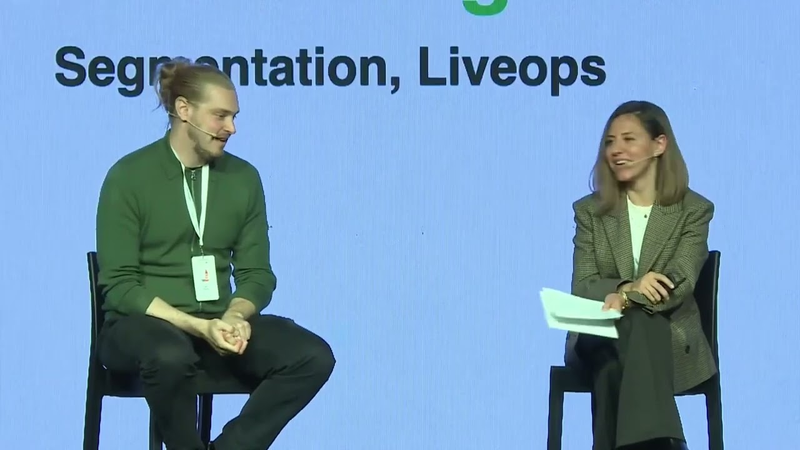
Hello everyone. My name is Fatma. I lead app monetization partnerships at Google. I work on the self-serve side, which basically runs the ads platforms of Google. And I'm thrilled to be here today back in my hometown with the many colleagues and amazing publishers that inspired me among many years. And today I'm fortunate to have Felix Bröberk with me, who is a very well-known person in the industry and ad monetization consultant. So, welcome Felix. Hi, thank you. Would you like to
Sure. I'm just a blonde boy from Sweden who likes ads. I ain't you. Yeah. I've had the good fortune to work with a lot of companies for DSPs, ad networks, one shady one. You can look it up. Right now I'm an ad monetization consultant. You can also catch me on a weekly podcast about UA, game designs, and ad monetization called Two and a Half Gamers. So, today we will be spending some time obviously on 2024 strategies in ad monetization. Um 2023 was an interesting year. It was really busy for our publishers. They spent a lot of time in adapting to industry-wide changes and managing risks mostly. I'm not going to repeat all the challenges that we discussed earlier this morning. However, I just want to reiterate the fact that gaming still remains robust. It's such a massive and inspiring industry
uh that we I think here still very inspiring stories in 2024. So, today uh we were hoping to spend some time on some hybrid monetization strategies, which was a big shift last year. And now we will be discussing a little bit about the innovation in the age of AI. How our publishers can innovate their inventory. And then we will be also talking about the necessity of the sustained revenue. Uh where we will be talking a bit about the ad quality and other important uh sustainable metrics. So, we are also announcing something, right? Yeah. Yeah, at the end of the presentation. Yeah. A hidden gem. Maybe. Maybe. Uh so, Felix, how was 2023 for you and how do you foresee also 2024? So, 2023 was a great year up until the 20th of December. In terms of in advertising, uh it was great. Uh
but pretty much it was great for artificial reasons. So, we ad monetization managers had a hack available to us that was probably the most profitable one in the industry. And then now with Google bidding coming out, that kind of went away. I don't know if you're allowed to talk about that or if you can say anything. Um I can try to say something. Okay. Uh so, it's a very valid question. Um but first I need I think we need one clarification. Uh the team uh who buys ads, uh which is Google Ads, is a completely different and team from us who works with the publishers to help them sell their ad space through Ad Manager or AdMob kind of products. So, uh obviously, we are really good friends with them. We are colleagues. I can see some familiar faces in this group. But obviously, when you think with our perspective, Google Ads is just a buyer for our platform. So, maybe you
won't believe that, but all the changes were also surprised to us. So, we heard with everyone at the same time with everyone in the industry. So, and it was again also surprising for us. But on the other hand, after this clarification, then we think about the traditional waterfall ad buying. So, it was I think it's fair to say that it was a very clunky uh price negotiation, right? So, you set a price and then you lower it, lower it, lower it until someone buys it. So, our Google Ads friends thought that it wasn't the most efficient way, so they decided to switch to single price strategy, and then they launched the real-time bidding, right? And on the other hand, since May last year up until today, they have also changed lots of ad operations behind the scenes, meaning
that we used to call maybe we can call them complex ad operations. You can either call them hacks or not. So, I'm not going to debate whether it's they were right or wrong, but in the end they decided to change their approach to those behaviors, and they decided to classify them as abuse, and they really started to um penalize them, right? So, again, on our side, our biggest job was really making sure that our publishers are using real-time bidding. That was our top priority. And today, if you ask me about the 2024, I think there is still a lot of uncertainties. It's really hard to talk about or make estimates about how Google Ads revenue will be uh among the year. So, I don't know if it's a Yeah. good enough information for you. so. I mean, at 2024, there's still ways you can make money in kind of the hacky
way. So, kind of in 2024, what I foresee happening is just you have to experiment more with bid floors. That probably right now is the most profitable way for you to change your business right now. You can go home and set bid floors, which basically increases your ad revenue. But then more and more the ad monetization role will start to shift towards product. So, that means you have to get in Yeah, get your hands dirty. A good tip from Felix. Um so, if we maybe if we can jump a bit further in details. So, first of all, hybrid monetization. Uh I think again, we talked a lot about this today, but we have seen even a tighter relationship with the in-app ads revenue and also in-app purchase revenue this year. You can see in this figure the in-app purchase and the ads revenue split that is sorted by the gross revenue by genre. Uh we have seen a really good shift this
year, and I think not surprisingly in most of the genres, both ads revenue and in-app purchase revenue grew. So, however, mostly we have seen that our publishers were willing to expand in the other direction. And we have seen especially in the hidden objects kind of genres improved ads revenue. Do you have any good examples on that to share further with us? Hidden objects or hybrid casual monetization? Hybrid casual. Let's start with that. Yeah, we've seen quite a lot of growth. It's something we talk about on the podcast quite a lot. We actually have a definition for what hybrid casual is. We we it as anything coming from a studio that used to make primarily ads driven like monetization strategies that makes at least uh $33,000 a day in IAP revenues. And we have according to that metric seen quite a few right now breakouts coming primarily from Voodoo,
Say Games, Lessmore, Crazy Labs, and Habi. Uh these are kind of the pioneers of the hybrid casual kind of movement and push. And kind of with hybrid casual, we're seeing two main ways when it comes to ad monetization, how you actually monetize these types of games. And that is you either show your users or you make your users watch a lot of rewarded ads only. Or you actually utilize all the three main ad units, which is interstitials, rewarded, and banners. So, that seems to be the way they actually design the core game loop and core and core functionality of the games. Do you have any preference when you recommend We Are Warriors. I mean, we we had him on the podcast the other day, and we actually calculated that this game right now makes $33,000 a day in ad revenue and another 210,000 in ad revenue. So, it's quite impressive. They make their users watch on average about 14 rewarded impressions per session, which is just pretty crazy. And they're not even doing any segmentation, which can talk about later. But, yeah.
Um so, as we were talking about it with hyper casual, uh I just wanted to put this figure to show you how the trends were throughout 2023, all genres versus hyper casual. So, first of all, hyper casual is not dead. Yes, uh the the genre has seen lots of challenges, headwinds, but it's still the top download generating genre for sure. And I also believe that they still have lots of opportunities, especially in emerging markets. Uh but obviously, there are lots of challenges that we again discussed a lot about this today. I don't want to repeat everything, but increased user acquisition costs, limited budgets, marketing budgets. There is also a bit like the user fatigue, you know, like it's a bit like fading novelty. Maybe we can put it that way. And there's also obviously the shift in terms of user behaviors like the social channels, short videos are
also taking a lot from this genre. Um so all together obviously impacted the genre. However, you can see from this figure, especially on the right, if you look at the late year trends, you see that there is a increased IAP revenue and a declining ad revenue. We explain this with hybrid casuals strategies that were dominating the market mostly. And more to hear from you with your hybrid So more talking about the hybrid casual ad monetization style. So to dig a bit deeper, probably the best examples that come to mind is My Perfect Hotel from Say Games. We actually saw someone from Say Games here for the first time in my entire career. So hopefully they're here. Anyway, so kind of the main ad monetization kind of strategies here is that if you show banners, you have them on a very low refresh rate, 10 to 15 seconds. They really aggressively apply
both interstitial ads and banner ads. The idea here is that you want to force your users or appeal to your users to make an IAP. All IAP SKUs above a certain thresholds tends to have a remove intrusive ads components to it, which increases the appeal of yeah, buying an IAP. Also, rewarded ads tend to be dynamic and appear basically at the right time at the right place. And quite a lot of time, so yeah. And on the rewarded only side, uh essentially there's also quite an interesting thing that's happening where gaming companies are utilizing skip its, which is a ticket to skip the rewarded ad, or premium currency to actually skip the rewarded ad to even a increase the appeal of making IAP purchases even more. Which is, yeah, exactly what I talked about here, which has a kind of a dual purpose uh double punch
uh effect on eCPMs because one thing that's not really discussed quite a lot uh where I talk to my clients is that everyone asks for high eCPMs, but they don't really know what actually goes into the eCPM calculation. And one of the biggest components of eCPM is actually how many like what big portion of your users actually make IAP purchases. So, if you have a high degree, let's say like of 4 to 5% of users in your game that make IAP purchases, that means that you're very likely to get king uh yeah, good game. Like studios that have like a lot of UA budgets buying more heavily in your game, which actually increases your eCPMs quite a lot. By how much? I have one client where they have no IAPs. They're on a what can you say, a rewarded video average globally of about $12 uh and in the US about 18. Uh a similar title that I worked with that has 30%
IAP revenue, they're earning $42 eCPMs in the states and nearly $30 global. So, that's kind of the difference if you have IAP purchases in your game. Wow. That's impressive. So, maybe talking about this, we can switch the gears a bit and talk about innovation. Ooh. So, 2024 uh looks like will be lots of uh potential with increased maybe ad impressions than in adding inventory. So, while ECPM's can fluctuate a bit, uh we also, I think, anticipate lots of innovations in the industry. So, what what do you usually recommend your pub- publishers in terms of innovation? Yeah, there's there's two things that are really hot right now that I'm talking to pretty much all my clients. And the first is around ad placements during live ops events. That's probably one thing that I work with most clients right now that I don't think is very like percolated that much down into our industry yet. Simply put, it it's free real estate.
You should really like put together your live ops events with unique ad placements that go inside of your in-game like events. Why? Because essentially doesn't create inflation. I'm talking about rewarded video here. So, essentially when you put more ad placements that risks the risk of inflation, but what you're doing when you're putting in ad placements during live ops is that you're only increasing or enabling users to increase the speed that they can get through the live ops. So, it's free real estate, really. Uh here's an example from Golden Goblins from their events. You have their core regular gameplay, and then you can see also their ad placements that they put in on the event on uh the right. Yeah, very clever, very simple, but I've worked with clients sometimes during live ops events here sometimes doubling ad revenue increasing it by 80%. But, it has a really big impact during the events. So, if you're not doing that, free advice. I think we heard really Yeah, fair enough about live ops. Fair
enough about live live ops. Um so, we also covered this one, I suppose, right? That's like segmentation. That's the that's the next big thing you can do. That's the The second big thing that I talk a lot with my clients with right now is segmentation, right? So, that means that you should show different amount of ad loads to different types of users. So, big caveat here is that you should only do this if you don't have a big social following on your game. If you do, they will find out and they will crucify you. But, if you don't, that means you have the opportunity to actually experiment with this. And this is probably the only thing that I've been able to work with every single client on and never been able to see a downlift or a negative impact. So, basically, how does segmentation work? You show different amount of ads to different types of users. So, this is actually an example from a client of mine that's a match-three game that probably most of you have heard about and played. Uh they hate ads, but they wanted to try rewarded ads. But, the CEO was very adamant that they only wanted to try
rewarded ads if they could lose no IAPs and no impact on retention. So, what we did was we set up a segmentation strategy that only shows rewarded ads after 28 days. So, 28 days? 28 days. And then after that, we show quite a lot of them. But, we were able to actually grow that to about 15 20K a day in ad revenue after segmentating segmenting it quite heavily. So, we actually called it the driftwood category of user cuz they're not contributing to the bottom line, so it's okay for us then to show rewarded ads. Okay. Yeah. Do you still show after 28 days or Yeah. Yeah, that's when we start showing them. Okay. Yeah, the other one that's really basic is just doing it on geolocation. What you can do that's quite simple here is just start with cooldown and playing around with cooldown periods and different geos. Yeah, very simple. So, tier two, tier three geos have like shorter cooldown timers that are quicker to progress through, while in the US, you have Yeah, they're longer.
And then, the final one, which is probably Yeah, the Yeah, this one. This is one from Alien Invasion, basically, where essentially, if you don't impact if you don't interact with the last couple of ad placement opportunities, that's when they start increasing the price available to you for the reward available to you if you actually convert. So, you're actually trying to hit like the parity in yeah, supply and demand, which is really cool. But, these are some easy ways of starting to do segmentation. I had a word with a really big hybrid casual publisher yesterday who actually segments users based on which types of UA campaigns they actually came into the game with. So, if they came in from an IAP driven campaign, they basically are seeing way less ad units as they would if they are on an ad ROAS or a blended ROAS campaign. Thank you, Felix. So, now as we're talking about innovation, I just want to talk about one innovation that we're working for a while that's really excites me. It's the
immersive in-game ads. Um you can already see from the visuals, I think they're speaking themselves, but they naturally blend into game. And they're really flexible. You can You can customize whether they're clickable or not. Uh you can also show either programmatic demand or um you can also show Google go through the Google auction. Um and also uh we are currently supporting it on Unity. Soon, it will be also available on C++ based on custom game engines. Um so, yeah, we're really excited about this. Uh this is a bigger visual where you can see the natural fit of the ad into the gameplay. Did you guys announce a new product? Yeah. Did you guys announce a new product? Cool. That's going to be interesting to see what the the fill rate looks on this cuz uh yeah. Yeah, like um I personally think that it will be really as good as the banners that we have.
Okay. So. Yeah, that brings us to our last topic, the sustained revenue. Um usually in ads monetization we hear that eCPMs are really mostly considered as the primary metric for success usually. At least one of the most common question that we hear from our publishers will be are my eCPMs good enough? How can I increase them? So, Felix, with your perspective and experience All right. how do you see the success in ad monetization? Is it related with the eCPMs? If I were to show you these two visuals Yeah. which one would you pick for your publishers? I can tell you a little story here from when I used to work in an ad network, right? It wasn't a fancy one like Google or Facebook or anything like that. Anyway, like um if we had clients that came to us that only talked about eCPMs, we automatically thought that they don't really know what they're talking about. So, the thing that we care about in ad
monetization is not eCPM. It's ultimately we care about ad revenue, right? And eCPM is just a mere component of ad revenue. It's fill plus eCPM that actually makes the impact. I would gladly take a lower eCPM if it means like higher ad revenue because of higher fill any day of the week. So, when you're actually speaking to your network like representatives if you only ask about eCPM, they will think you're not very clever and you don't really know what you're talking about. So, always ask about ad ARPDAU or ad revenue, right? Cuz that's what matters in the end. Okay, thank you. Um and a bit to support that, I would like to talk a little bit about again how we put pitching our product if it's okay for you. Uh so, we will be talking about a bit AdMob platform. Um this is a really exciting topic for me because this year and also last year, I'm pretty sure you have noticed that, we are investing a lot to AdMob platform. And um
this year and also very soon in terms of ad performance um we will be announcing some new real-time bidders available on AdMob. Uh Very soon they will be announcing during GDC in 2 weeks time. And then we will be also launching the mediation toolkit, which will be providing lots of operational ease for our publishers. And then for the publishers who you have hybrid monetization set up as we were discussing today, we will also have some good features such as optimizing the floor prices based on payers, non-payers. Or if you are also doing some mediation AB tests, we will be also delivering the results faster. So we will have lots of features coming very very soon. And also in terms of insights with our enhanced bid landscape and benchmarking reports, you
can also get a lot of insights in terms of auction dynamics. And also you can benchmark yourself against your peers. Also on the sustainable piece, we have lots of improved integration with Firebase, Google Analytics. So I'm not going to talk about it for hours. Really I may spend 1 hour only talking about the all great improvements that we will have very soon. But I really encourage everyone to really, if you are not using it still, to at least test AdMob platform and plan some time to really compare the performance this year. So yeah. I think Yeah. That brings us kind of to end. Before we close our session, I think there's another important topic that we want to talk about. Which is tomorrow is
International Women's Day. Um it's a good time to really celebrate all the progress and also demand for more action for gender equality. And at Google this year we have the theme of um inspiring inclusion. And we're dreaming a world where everybody has everybody feels included and valued. And we think that for the fundamental of this is really inclusive design. And when we talk about inclusive design, we usually think about the accessibility side of the things. It's not only that. So we need to think about both for our workplaces and for our products all different groups. People of all genders, identities, different backgrounds, colors. Um the list is really long, but in the end we need to design our
workplaces and products for everyone. So this is my call to action for this group to inspire inclusion. Uh and let's reject biases. Let's foster inclusive and diverse perspectives. And let's design again our workplaces and the products accordingly. And my wish for this event is hopefully next time when we meet I can see more women in this room. And I will Yeah. leave it to you, Felix. I think the topic that's close to my heart and something that we talked about on the podcast quite a lot is the unfortunate prevalence of sexist ads and misogynistic ads in mobile gaming. It's something that we can see from some yeah publishers and advertisers. Uh which seems to be a returning theme. Just wanted to say that it's just something like it might be profitable. Just because you can do it is not something that you should do. And we hope that we
see less of those in the future. We've already seen some of the big advertisers that actually step away from that used to do this quite a lot. They actually have stepped away from doing it. And we hope that actually trend keeps on going. And we hope to see no sexist ads next year. Yeah. Thank you, Panos. So, just to close off, I think today um I think what I can say is that it's also not only for this session. Throughout the day I heard this really often that the future and the success is no longer in rapid growth or development. Instead, it's time to really think about sustainable businesses. How to establish or sustain the growth within your businesses. And as Google, I think we can really commit that we will be providing the tools and the support that you need for your journey. Thanks for all the inspiring stories that you have brought to our lives. And thanks for coming. Do you have anything to say for the closing?
Hope to see you all later for drinks. Yeah.
Auto-generated captions from YouTube — names and numbers may be misheard.
This discussion provides a strategic overview of mobile game monetization in 2024, emphasizing the transition from rapid, hack-driven growth to sustainable, product-focused revenue models. The primary thesis posits that long-term success in the current gaming landscape requires a hybrid approach that balances in-app purchases (IAP) with sophisticated, data-driven ad monetization strategies.
Key findings highlight that while the hyper-casual genre faces headwinds from increased user acquisition costs and audience fatigue, it remains a significant driver of downloads and revenue when integrated into hybrid models. Experts suggest that publishers should move beyond simple eCPM optimization, focusing instead on total ad revenue and ARPDAU. Effective tactics include implementing dynamic bid floors, utilizing live ops events for non-intrusive ad placements, and employing user segmentation—such as delaying ad exposure for new users or tailoring ad loads based on geolocation and acquisition source—to protect retention and IAP conversion rates.
The industry is also shifting toward more transparent, real-time bidding environments, moving away from the "clunky" traditional waterfall methods of the past. Technical innovations, such as immersive in-game ads that blend naturally into the user experience, are identified as the next frontier for inventory growth. Furthermore, the discussion underscores the importance of ethical advertising, specifically calling for the industry to reject sexist and misogynistic ad content, and advocates for inclusive design practices to foster diverse and sustainable gaming ecosystems. These insights are intended for mobile game publishers and developers looking to refine their monetization operations through better data utilization, improved ad quality, and a commitment to long-term business health.

Deconstructor of Fun · 2026

Deconstructor of Fun · 2026

Deconstructor of Fun · 2026

Deconstructor of Fun · 2026

Deconstructor of Fun · 2026

Deconstructor of Fun · 2026

Deconstructor of Fun · 2026

Deconstructor of Fun · 2026

Deconstructor of Fun · 2026

Deconstructor of Fun · 2026

Deconstructor of Fun · 2026

Deconstructor of Fun · 2026

Deconstructor of Fun · 2026
Deconstructor of Fun · 2026
AppLovin · 2025
Deconstructor of Fun · 2024
Naavik · 2024

Deconstructor of Fun · 2024
Liftoff · 2024
ironSource · 2022

SocialPeta Data Research Institute · 2021
Sensor Tower
Deconstructor of Fun · 2026

Deconstructor of Fun · 2026
Comments