VideoDeconstructor of Fun
Fireside chat: How Scopely Fuels Growth and Outpaces Rivals with Jen Donahoe & Jamie Berger
15 Mar 202429 min video
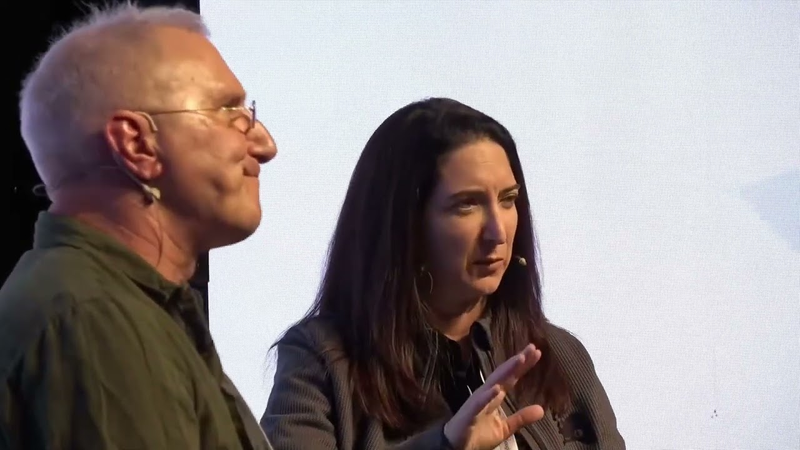
[Applause] [Music] [Applause] [Music] [Applause] got make sure you're on oh we're not we don't have a oh we don't have slides hello everybody okay hi good to see you guys for the slides I don't think wait what's this I know for the slides our non-existent slides yeah we don't have slides hi so um let me introduce myself I am Jen I'm a strategic marketing consultant at beta hat and Jaden Inferno and I actually uh used to work with this guy
at scopely So Jamie why don't you just do a little quick intro hey I'm Jamie Burger it says over here that I'm the svpa marketing at scopely and um I currently work on Monopoly go awesome so um this little session is going to be where we spill all of our secrets because you have two marketers sitting here whoit what well yes secret I didn't know that part yeah no that's part of the that's why you showed up was to actually toate give lots of Secrets so um we're going to do three key things today one is talk a little bit about IP integration into games uh we're going to go a little bit into stumble guys and all of the fun things that Jamie had a chance to do on stumble guys before he came back to Monopoly and then answer a lot of Monopoly questions because I think we all have lots of them of like how did it get that big so first uh just want to start off with um IP integration so I always joke on the podcast that I'm the brand police
uh everyone's always asking me what I think about brand Integrations um at scopely it's been such a core strategy since the very beginning using IP in games and and in Integrations into like programs that you've done so can you talk a little bit about how you think about IP as part of the overall growth strategy sure so well so my history in scopely is I started in 2014 um so I've been there for 10 years now the the very first game I launched at scopely was Yi With Buddies so that was our very first IP game um and I've been involved in every launch since then um you know IP we've discovered um you know that IP can be a very powerful platform to build an audience and to create a game that uh engages that audience authentically um you I think the trick let's let's kind of say the most obvious Point here which is that IP is not a guarantor of success
success um that's been proven many times and it it uh sometimes we'll hear people say oh that game's working because it's an IP game but I can point to the graveyard of Ip games and it's a big one um so it IP alone cannot create success uh IP is a platform uh it's an opportunity and I think what we we've been successful and others um is that uh we try to find what is it about the IP that would make for a great game and authentically uh I make for a great game and sometimes it's fairly obvious for yatsi it was playing yatsi but in this case being able to play it with your friends um and to create some unique new game mechanics in addition to the traditional just traditional game of of yatsi that helped
it grow um and then there's other games where we have to be like Star Trek Fleet command very interpretive about what is the what is it really that that is the fantasy of making a experiencing Star Trek that people want and I think the team did an amazing job of interpreting the Star Trek IP in a way that was in my in my belief the first truly successful Star Trek game I know some Paramount folks might not agree with me on this statement but um I think the success of that game really points to the way that they interpreted IP um and then you know there's a lot of interesting things we've been doing with IP now on stumble guys which is a different approach which is we have um an original Ip that's a platform it's an open platform and we realized that that's a a game that we can bring IPS into the game and that was actually new for us uh you know we we're we're very used to making games based on IP and here is a a game where we're integrating IP um and we had to really rethink our
approach to it but um you know it's been it's been successful so far yeah I was super super impressed with what you guys were doing with stumble guys um I think many of you know so I forgot to mention I do that little podcast called this weekend games and some of you may listen to it but on that podcast what we talk a lot about is uh my toy background and I used to work at Hasbro and Mattel and Disney and all these Brands and when that's what you did you started to inor orate Barbie and Hot Wheels and Nerf it was fun to see they're actually competitive companies I was a little worried about it aging down the brand but um you actually were telling me some really interesting stats that that wasn't the case at all because uh we think Nostalgia is only for old people but Nostalgia for a gen Z is like three years ago two years ago is Nostalgia for a gen z um the uh you know so stumble guys is a genen Z
game it is a genzi phenomenon it's its core demographic is 13 to 21 years old and uh I have learned a lot working on that game in the past 18 months in terms of rethinking the way I think about marketing what does marketing even mean to someone in that demographic and um and so for me the what I've realized is that uh this is a demographic that is unimpressed with ideas that we think they should be impressed by um the concept of an IP integration to them is so obvious it is literally their daily life collaborations music movie crossovers tick toks Duets it's their life every day and so doing an IP integration for a genen z audience is not exciting um what
you have to do is you have to say what is going to be authentically interesting and fun interesting to talk about and fun to play and I think that's what I'm proud of that we've done on stumble guides over the past year and Hot Wheels is a great case study where it was our first IP integration and yeah there was a lot of debate honestly about is this the right IP to integrate with uh is it too young young um does it make sense to our players and I think what we found is we found the fun um I was telling you the original concept for Hot Wheels was we were going to build a Hot Wheels track and then the characters were going to run around and jump around the way you normally did in stumble guys and that didn't feel particularly great and uh one of our game designers came back and said what do you think about this and showed us a game a tech demo of a driving in the game which the game did not support that as a as a mode and we
said well now we found it uh and so once we introduced the Hot Wheels it blew up our Dau it blew up our installs our reactivation it was a huge event we learned a lot from it and of course the team it U Mattel is a great partner so yeah a lot of good success there yeah so the next one you did that I thought was really interesting I wanted you to touch on was Mr Beast um that one wasn't as typical right it's not necessarily a character or car you can just put in the game it's more of a personality so how did you approach that and think about that well a little a little background on Mr Beast uh you know we do a lot of research as you would imagine and um did a lot of usual Quant studies trying to understand what what were brands that our audience would be interested in and you know we threw Mr Beast in just like hey it'd be interesting to see like how does how would he stack up uh Mr Beast with our audience was the number number one IP in the world uh and
I'm talking about all the famous most famous IPS you can name he was above all of them in interest wow um that is how powerful he is to this audience and he's not a um just a talent he is an IP um the team there is created not just uh him as a personality but the these insane videos that they create and wild fantasies that come to life that they create is a game mechanic in itself and and so the the thing we loved when we approached the their team was they instantly got it it wasn't about like hey let's just make a skin of Jimmy and put him in the game uh they were like no let's let's make an entire set of levels let's build entire experiences and Jimmy will help um design them and uh and we can create whole new game
modes and we can work with you on your ugc and people can create their own Mr Beast so you know the exciting thing about that team is how much they get it um they live in that world gaming is endemic to yeah uh him and his audience and so it was so native for them to think about that integration so yeah it wildly popular successful integration and and a lot it has to do with the the nature that he's not just a brand he is an Entertainment form himself and when he tells his fans that he's doing something they know he's doing it right the way he wants to do it and they respond and they did and it was you know it's been a great partnership with that team that's super cool so also very cool is you just announced um switch stumble guys on the switch for pre-registration program you're on Xbox how did you think about I I think this is the first time scle has taken a mobile game to console and there's not even that many we were trying to think of like what mobile
games go to console in general people we were like is ginin one of those if anyone knows let us know because we couldn't think of one but how did you guys think about that and why did that make sense uh well we were fortunate I mean the the kit team when they designed stumble guys uh whether intuitively or on purpose designed it to be ready for console um it was the the the ux the controller experience was all designed for a handheld controller and as a matter of fact all the most active engaged PC Gamers uh for stumble guys all play on on controller because it's the best in my opinion experience about how to play the game so it was natively from a design point of view ready to go to console um which is a very rare situation most mobile games you cannot imagine working really well playing really well on Console this game was
already essentially predesigned to be that so for us it was really just the hard work of like making sure when we moved it to console that it felt good um and that if you were a player of this game if you already play on on mobile you're ready to pick it up the interesting thing about coming to console for us is that when we you know thought about it is a from the audience point of view there's two really interesting audiences we're speaking to one is are current player base already play on mobile and they're like I also want to play on switch or I also want to play on Xbox or Playstation and then the other really interesting group was friends of our players who say I don't usually play mobile games or it's not my like I wouldn't play mobile I wouldn't play stumble guys on mobile but now that it's on Xbox I will play with my friend who loves the mobile game and so we really love the fact that it actually is expand in our audience but very natively
where it's actually like first deegree friends who just now want to play with their friends who already love the game yeah all right so we're going to close out stumble guys and we're gonna we're going to go to the big one Monopoly go so number one congratulations I was I was warned we were going to talk about Monopoly go so I'm prepared we we're we're going to get there and so one of the things that we talk about on the podcast a lot of times is that Monopoly go seems to have hit the successful formula which which is IP plus um features that have really been iterated on um some may even say humbly copied from other games plus just absolutely killer amounts of of UA and the social component I I like to call it the Revenge mechanic with uh Good Karma which is uh Community chest the features that allow you to want to engage with your friends and so so let's talk about another kind of formula um
does this game actually make money and do you want me to get a whiteboard out and should we write numbers on a on the screen to show that this thing makes money yeah I mean let's acknowledge that it's a little weird for the marketing guy to be talking about this but um let's kind of let's get this out of the way um scopely has a very classical perspective on how we should run our business and if you've worked with us for a long period of time you probably understand this um we believe in running great businesses and we know that to be a great business is to be profitable um and when I say profit it's not future profit and on a cohort basis it's iida and so just to put this to bed uh this kind of strange debate um Monopoly go is very profitable on an eaab basis every day every month and every quarter and
and to put some context around it we you know it was revealed through the Hasbro call uh investor call that uh you know we gen we generate $800 million of Revenue in Q4 um that gives you a little perspective on the scale of the of the business on a run rate basis and you know when when people people are saying well how can you invest a lot and be profitable well there's your answer if you have an $800 million quarter business you can invest aggressively and still be extremely profitable um if you're running it you know with a lot of discipline which we do um so yeah the good news on this game is I would I would suggest to everyone that the debate or the dialogue should move away from is this game profitable and I would suggest the debate should be why is it profitable um why is it doing so well because I honestly think we've
had a whole morning of talking about the challenges of this business right now and the why is the most important conversation that we have it's like what is happening with this game that's a good segue to my next question which is um so I I worked on Monopoly for many many years my origin story into video gaming was on adaa I probably made 10 or more U Monopoly games and the the single most interesting fact about this brand is that it is a brand that everyone thinks it's from their own country because the board is all the locations from whatever country you're in so if I'm in the US it's Boardwalk if if you're in the UK it's Mayfair or something else sorry UK folks I don't remember what it is exactly but that brand awareness and plus affinity and plus a q score probably matches up to something that is almost like be Mr Beast like gives you that those numbers that allows you to really appeal to such
a a massive audience how do you think about leveraging the brand and and some of those capabilities like with UA or with with brand marketing how do you think that plays into the success I mean you talked a little bit about the formula right uh I want to take a moment I want to take a step back from the formula for a moment and say one thing that I think matters to me a lot and I think matters as the team um we don't think about a formula about this game um the thing we fixate on as a team is player love we are fixated on the players loving this game and we just talked about profit we we never talk about that as a team we talk about what can we do to earn the love of our players
and there are you I would I would challenge kind of I think we spend as an industry in Mobile gaming too much time trying to think of formulas we always try to go what is the right way what is this formula how ultimately you were trying to distill a deeply subjective thing which is how can I unlock player loyalty and love MH and supercell was just up here has done an amazing job of that um dream games here in turkey has done an amazing job of that and there's many others and now getting to the Monopoly part of that player love we I am as a marketer in the early days we most of you probably know Monopoly go Journey has been a long journey um in all the early days of thinking about Monopoly as a development I have never seen a game in any of my research in all my 30 years of doing professional marketing marketing that had a as much
Affinity breath and depth of affinity as Monopoly of of any IP um it is essentially this bizarre Universal IP that Everyone likes and everyone knows and all demographics I Can't Describe many others that that fit that model and so I think one of the things that was this exciting opportunity with Monopoly but the Deep challenge was how do you tap into that um but do it in a way that is takes what people love about Monopoly but does it in a way that they can engage all the time and every day which you cannot do in the traditional style of the board game rules and so I think the Brilliance of what we've been able to unlock um and not we mosimo and and the team who worked on this game for
years um working to unlock the fun of what can make this game so much fun and so the credit goes to that team the development team did an amazing job on my end where I was a participant was on working to challenge like where's the Monopoly like how do we make sure and I think you were involved in some of these conversations back in the day which is like how does the player see and feel what they love about Monopoly when they come to this game and when they play it every day and I think the team has done an amazing job on the brand marketing side you know we we work to say to to do the same thing which is like how can we unlock the fantasy of Monopoly the love of like what do you really love about Monopoly and there's the elements the iconic elements of the game experience itself But ultimately it's about playing with other people like what do you love about the game it's not the rules of the game you love it's the people you played with that you love it's the fact it's the your deep deep seated memory of flipping the board uh because you caught
someone uh stealing from the bank like you just have such strong feelings and emotions about playing that game with your family and your friends and tapping into that um into that social experience is really important I would say you know you talk about like the Revenge Loop which I don't love that term um but there is a lot of back and forth interaction of winning and losing billions and millions but our most popular game element is cooperative play um our Co-op our Co-op events are wildly popular wildly successful drive up our da and engagement constantly and so um you know we see that yin and yang Balancing Act of like the competitive aspect of the game which is a zero some win lose kind of game and then the cooperative play Community chest and now our Co-op events so it's great because you get to both be friends and and uh competitors any given day which I think
is a unique kind of experience so when I was working with the Pogo team at EA we called it coopertition which was the element especially for this consumer base that they want to work together but they want to work together towards a common goal against other people and so it fulfills a lot of those social needs and motivations I like to think that this is the Monopoly that finally has all of the good of Monopoly without all of the evil of Monopoly the Zero Sum nature of like always somebody feeling like they have to lose I think you were able to like remove some of those parts and pieces from it and keep only the the good feelings it's a game um and there are others like we're not going to pretend that we invented this idea but we I think have done a good job of distilling it which is it's a it's a social experience it's a real-time social experience it is a game that is only enjoyed with others um often with friends and family but also with new people you meet and um itat creates that social connectivity and experience that
um like I said is Monopoly right and um and so I I love playing the game myself because I know the people I'm playing with and playing against and um you feel a sense of connection with them and I think it's tapped into that and it could never be successful as a monopoly only game it could never be successful because we spent money on UA and had the ability to do that it it it can only be successful if we did those things and we tapped into the social component and the social experience and the social invitations of which we've had 400 over 400 million social invitations have been generated through Monopoly go in the past um less than a year that gives you a sense of like how deep you know the social engagement is so the the final piece I want to get into is a little bit about brand marketing I I'll be kissing up a little here every everyone um Jamie's one of the best creative brand marketers I've ever had a chance to work with just really you know the way that you're able
to tap into some of those motivations for brand marketing so scopely isn't necessarily the home where brand markers go because uh usually it's very performance-based and show me the numbers and show me the the return but so how are you now thinking about the integration of brand marketing with UA I mean you kind of need to diversify the portfolio so to speak because you can you just can't do one or the other so how are you uh convincing the guys to spend money on brand well um two things I I'd say I have never ascribed to the idea that brand and performance are different things I have from day one at scopely always said that great performance is great brand and I will never walk away from that belief um we the reason much of our UA Works in my opinion is we have an amazing UA team and we tap into what people love about Our Brands um through
our creative and those two things work together exceptionally well um brand marketing brand media Beyond performance um I've always been a believer in we've dabbled in and we have done we have and I've always I'm I'm proud of the work we've done at scopely over the years in brand but you know we've never been able to dedicate the level of commitment to it that um we could maybe aspire to but Monopoly is a game where we believe that that is the case so um diversifying our media strategy diversifying our marketing mix is absolutely something I believe in and and how do we get scopely to believe in it you demonstrate performance yeah um we're always going to be a performance-driven company we're always going to be a company that if you want to make an investment you have to demonstrate how is it driving outcome that outcome can be different
types of outcomes but um you need to have a clarity about what it is you're trying to accomplish and when you demonstrate that and we just ran um you know a pretty meaningful test of TV in the UK in in December um you know once we're able to then do that in a meaningful way and demonstrate that it drove incremental performance in a in a way that would excite us as a company then floodgates are open um so I think um you know I would expect to see more about that in the future for us um but Monopoly is a game Monopoly goes a game and Monopoly is a brand that we think is a great platform for brand marketing outside of the context of Pure Performance does that extend to community as well I think you have 700,000 Discord members like that's pretty massive for a casual mobile game we've yeah the the over 8 million in Facebook and 2 million in Tik Tok and crazy and amazingly over half million in
Discord which you would think is traditionally a very core games kind of um destination and and so yeah this community as a as a voice of our game is more powerful than any UA money we can spend um and engaging them and leveraging them as a voice of our player based two other potential players or laps players and bringing them back or new players to bring them in is the most important thing we can do and and for the context the our community team and social team are part of our marketing org um because we believe that there is no difference between you know we we have to always have community in our minds so um we're going to wrap up and um many of you who listen know that we do What's called the Golden twig Awards now and uh Monopoly go won one of our awards called you crushed it so here is the official presentation U Brit back at comms has
asked for like some sort of wow yes there's a photo moment everybody okay awesome it's real wood yes please notice the new branding um speaking of brand marketing well that concludes our session um breakout rooms are about to happen I think they should be up on a screen maybe no if not you can do the QR code on the back um and see what's next so thank you everybody thank you
Auto-generated captions from YouTube — names and numbers may be misheard.
The success of Scopely’s mobile gaming portfolio, particularly the 2023 breakout hit Monopoly Go, is driven by a strategic synthesis of intellectual property (IP) integration, social mechanics, and a disciplined approach to performance marketing. Rather than relying on IP as a guaranteed driver of success, the company treats it as a platform to build authentic player experiences. By interpreting established brands through unique game mechanics—such as the transition from traditional board game rules to real-time social interaction—the company fosters deep player loyalty and long-term engagement.
Key findings highlight that Monopoly Go achieved significant financial scale, generating $800 million in revenue during the fourth quarter of 2023. This profitability allows for aggressive investment in user acquisition (UA) while maintaining operational discipline. The game’s success is attributed to "coopertition," a balance of competitive and cooperative play that leverages the universal affinity for the Monopoly brand. Furthermore, the company emphasizes that community management is a core marketing function, evidenced by massive engagement across platforms, including over 8 million Facebook followers and 500,000 Discord members.
The company’s approach to Stumble Guys demonstrates an evolution in strategy, moving from creating games based on IP to integrating external IP into an original platform. Research indicates that for Gen Z audiences, IP integration is a standard expectation rather than a novelty; therefore, success requires authentic, fun, and interactive experiences, such as the Mr. Beast collaboration. Additionally, the company is expanding its reach by porting mobile titles to console platforms like the Nintendo Switch and Xbox, noting that the original design of Stumble Guys was natively suited for controller-based play. Ultimately, the company maintains that high-performance UA and brand marketing are not mutually exclusive, but rather complementary forces that drive sustainable growth.

Deconstructor of Fun · 2026

Deconstructor of Fun · 2026

Deconstructor of Fun · 2026

Deconstructor of Fun · 2026

Deconstructor of Fun · 2026

Deconstructor of Fun · 2026

Deconstructor of Fun · 2026

Deconstructor of Fun · 2026

Deconstructor of Fun · 2026

Deconstructor of Fun · 2026

Deconstructor of Fun · 2026

Deconstructor of Fun · 2026

Almedia · 2026

Deconstructor of Fun · 2026

Deconstructor of Fun · 2026

Deconstructor of Fun · 2025

Deconstructor of Fun · 2025
Deconstructor of Fun · 2025

GamingReport · 2025
Deconstructor of Fun · 2024
Deconstructor of Fun · 2024
Deconstructor of Fun · 2024
Naavik · 2024
Deconstructor of Fun · 2024
Comments