Global reports and market data
Documents

So you think you're global?
Achieving true global success in the mobile gaming industry requires moving beyond the assumption that digital accessibility equates to a monolithic market.
- Sustainable international expansion requires moving beyond simple translation to deep localization that adapts pacing, community management, and marketing messaging to regional preferences.
- Developers must treat the Asian market as distinct entities, as China, Japan, and Korea each require unique strategies and local partnerships rather than a monolithic approach.
- Monetization in emerging markets like Brazil and Africa requires integrating carrier billing and alternative payment solutions, as traditional credit card infrastructure is often insufficient.
eSport vs irlSport
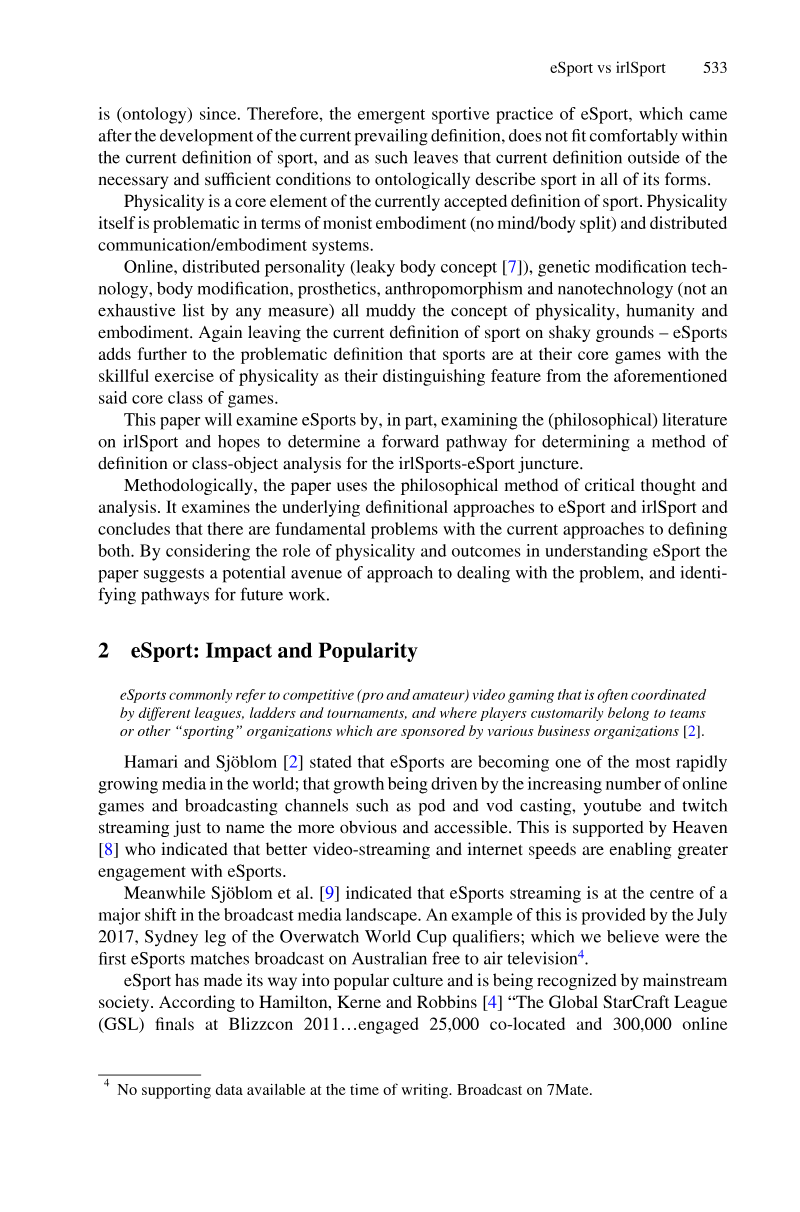
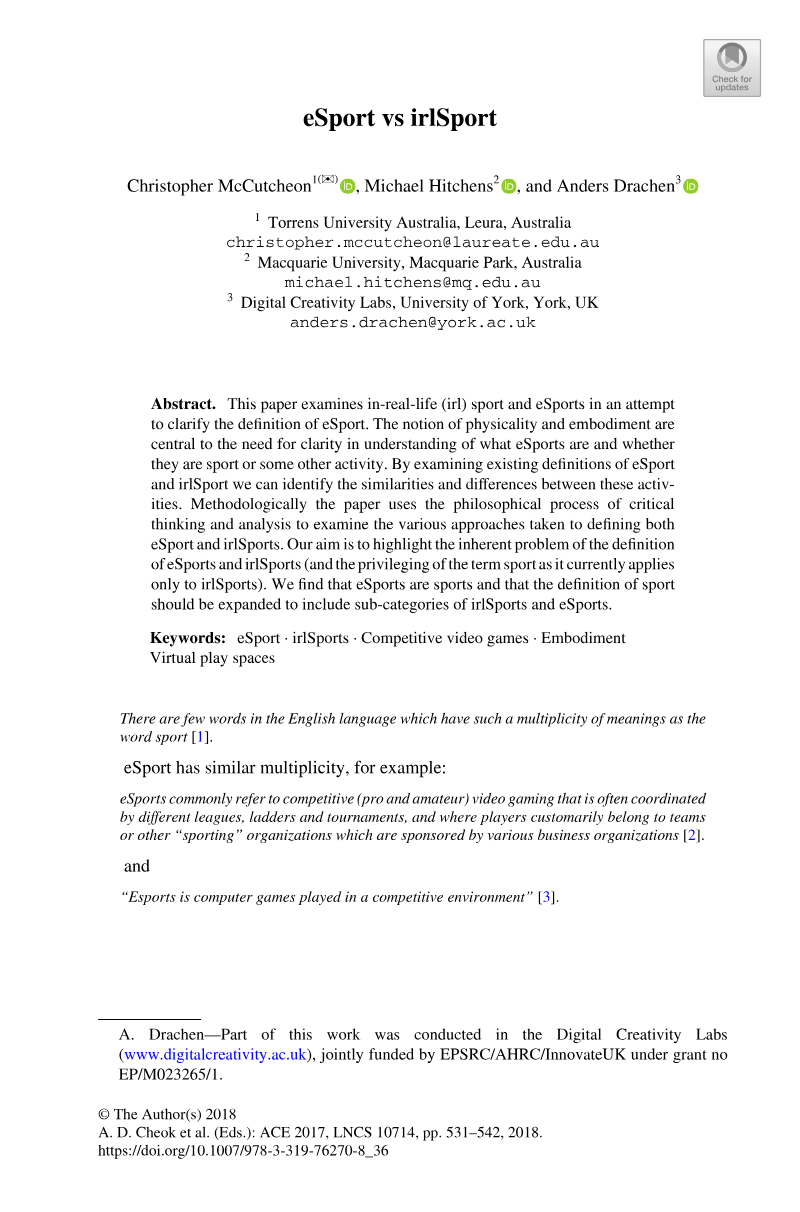
The paper by Christopher McCutcheon, Michael Hitchens and Anders Drachen, published in a 2018 Lecture Notes in Computer Science volume (ACE 2017), examines in-real-life (irl) sport and eSport to clarify the definition of eSport.
- The authors argue that the current definition of sport, which rests on physicality, does not adequately cover eSports, and they propose conceptualizing sport not just in terms of physicality but more importantly goal-directed skillful embodiment.
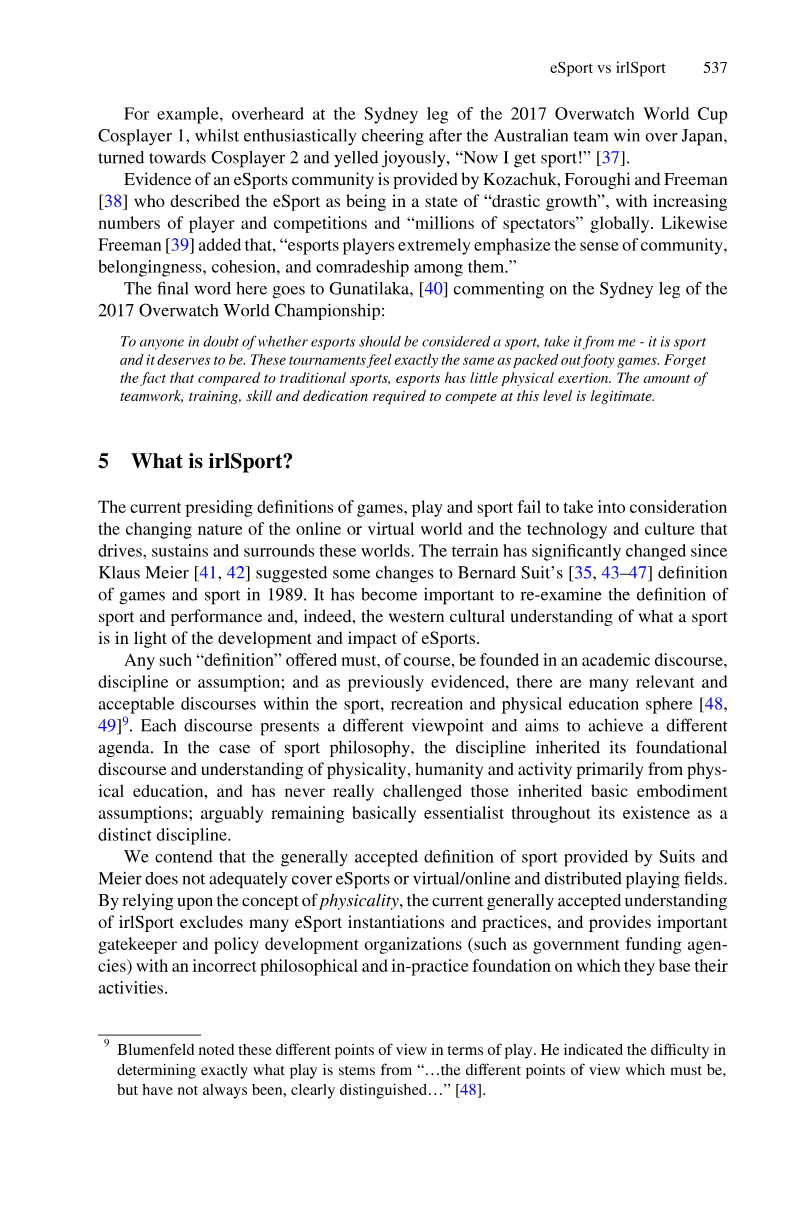
- The paper cites a 2013 League of Legends championship that reached 8.5 million online viewers, compared with 7.2 million viewers of an ITV broadcast of the FA Cup Final in the same year.
- Citing Snider, the paper states that League of Legends had 32 million players each month in 2013.
Analysis of the Effect of Number of Players on the Excitement of the Game with Respect to Fairness
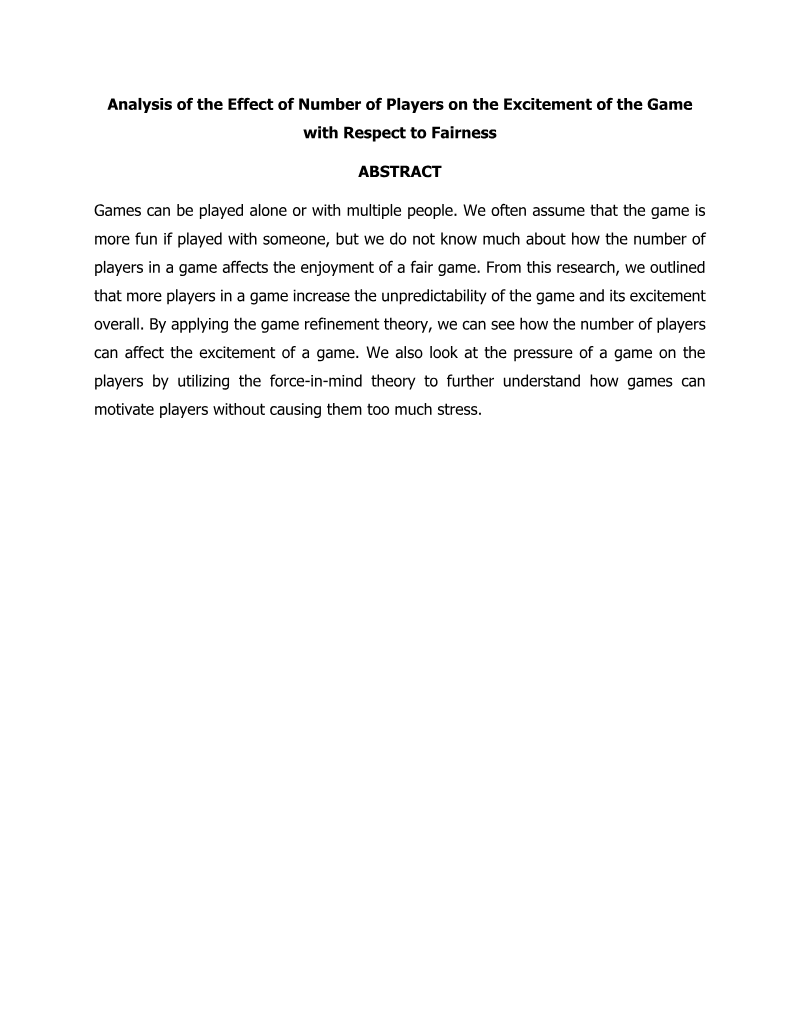
Increasing the number of participants in a game significantly enhances overall excitement by introducing greater levels of unpredictability.
- Increasing the number of players enhances game excitement by introducing greater unpredictability into the competitive environment.
- Game refinement theory confirms that expanding the player base alters competitive dynamics to effectively heighten overall entertainment value.
- Force-in-mind theory serves as a framework to balance competitive pressure, ensuring games remain challenging without inducing excessive player stress.
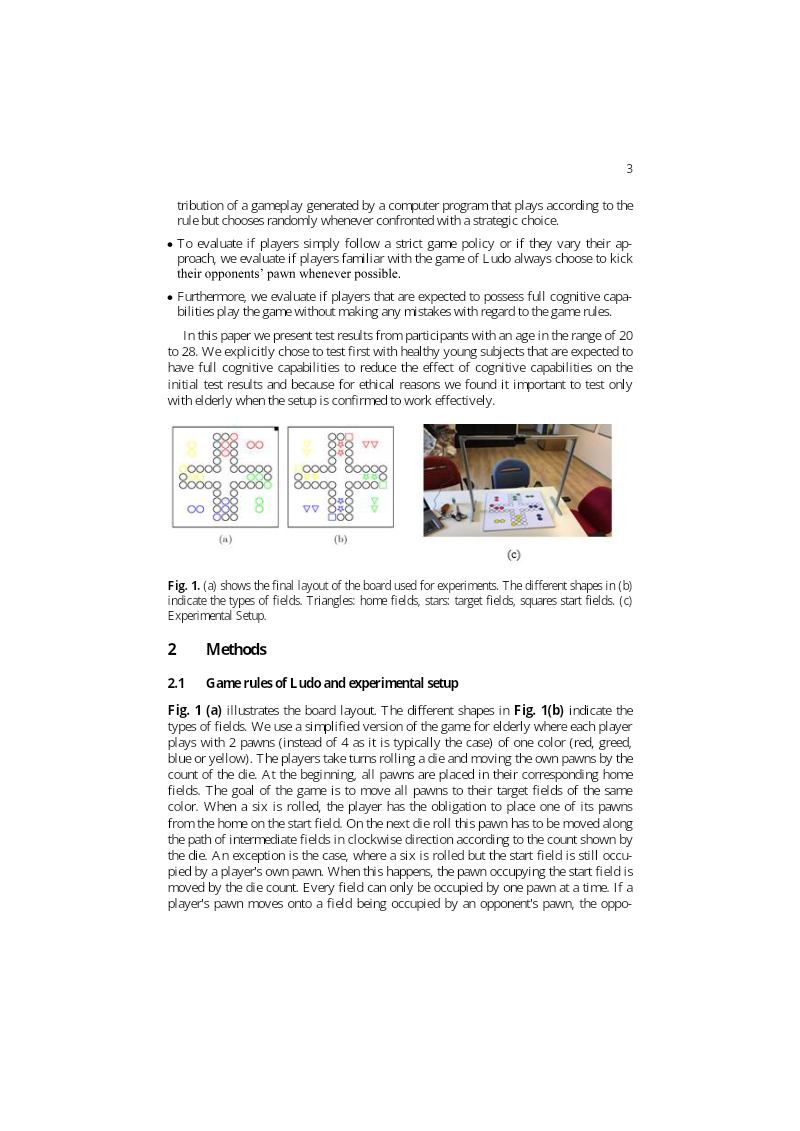
Evaluating the Adoption of the Physical Board Game Ludo for Automated Assessments of Cognitive Abilities
This study, published in 2018 in the Joint International Conference on Serious Games proceedings, is by researchers at Maastricht University in the Netherlands.
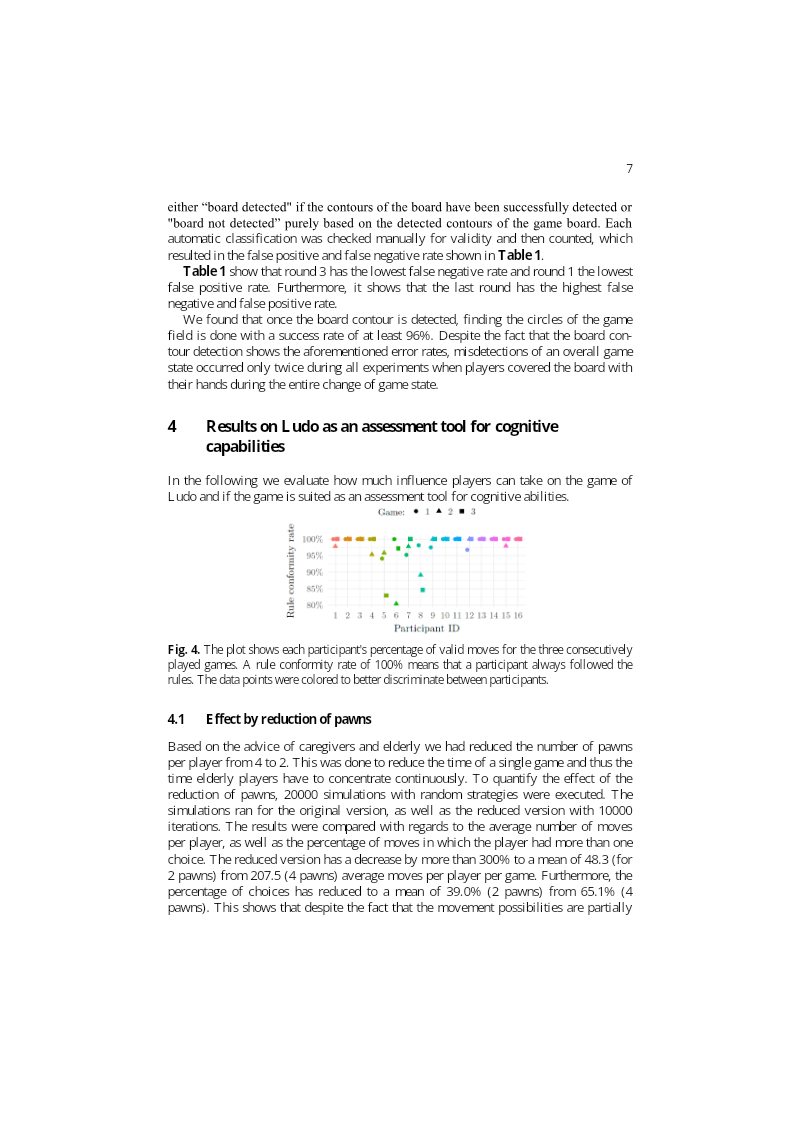
- Human players' move counts differed significantly from a purely random-strategy simulation, which the authors take as evidence that players follow some strategy.
- In the two-pawn version, human players averaged 42.56 moves per player per game, with a standard deviation of 5.96.
- Twelve of the 16 participants chose to kick out an opponent every time they had the opportunity.

gamevironments: Video Gaming and Death (2018)
Jordan Brady Loewen's paper, published in a 2018 special issue on video gaming and death, argues that conventional video games treat death as a mechanical reset with little existential weight, whereas virtual reality may alter how players think about mortality.
- Loewen's 2018 paper argues that conventional video games treat death as a mechanical reset with little existential weight, whereas VR may reshape players' thinking about mortality through embodiment and out-of-body experiences.
- The paper frames VR as intensifying Bergson's 'fabulation' (the tendency to attribute life and soul to images and beings), a tendency Loewen links to religious thought.
- The principal empirical anchor is a 2017 University of Barcelona study by Bourdin and colleagues, which reported a 50 percent reduction in fear of death among participants who had VR-induced out-of-body experiences compared with controls.

Video Gaming and Death
The document explores the multifaceted relationship between video gaming and death, focusing on how digital games represent death narratives, violence, and the uncanny.
- Games are argued to be among the most uncanny media because they blend data with embodiment, familiar worlds with mechanical strangeness, and personal memory with networked circulation, drawing on Freud's theory of the uncanny.
- The central case study is the 2010 creepypasta "Ben Drowned," read as both a viral phenomenon and a ghostly informational simulacrum that blurs the boundary between organic and digital, living and dead.
- The physical Nintendo 64 cartridge, which stores save data, becomes a site of nostalgia, memory, and haunting, making hardware itself a vessel for the uncanny.
Library Not Found: The Disconnect between Gaming Research and Development
"Library Not Found: The Disconnect between Gaming Research and Development" reveals a substantial chasm between social science academic research and the commercial game development industry.
- Academic research on games has failed to reach developers: 46% of recommendations in the literature target researchers, while only 12% address developers, mirroring the distance reported by nearly every developer interviewed.
- The review drew on 9,157 retrieved papers, with 47 reviews and meta-analyses read in full, plus 73 stakeholder interviews with developers, educators, and players.
- Developers described academic research as tentative, inaccessible, outdated, and insufficiently attentive to market needs, citing dense jargon, difficulty locating papers, and a preference for industry venues such as the Game Developers Conference.
21st Century Soul Guides: Leveraging Myth and Ritual for Game Design
The document, "21st Century Soul Guides: Leveraging Myth and Ritual for Game Design," posits that video games can function as contemporary "Soul Guides," facilitating player engagement with profound existential concerns such as death, isolation, freedom, and the search for meaning.
- Doris Rusch's paper argues that myth and ritual, historically used to help people confront existential givens like death, freedom, isolation, and meaninglessness, can be revived through video games as modern vehicles for meaning-making.
- The paper contends that prior game research has focused on myth's social and aesthetic dimensions while neglecting its psychological and spiritual function, and it is framed as a call to action rather than an empirical study with no measured claims about player outcomes.
- The concept of the 'soul guiding' game distinguishes titles such as Journey, Shadow of the Colossus, and Never Alone from action-focused mythic games, favoring contemplation and reduced rigid structure over using myth as mere backdrop.
NieR (De)Automata: Defamiliarization and the Poetic Revolution of NieR: Automata
NieR (De)Automata: Defamiliarization and the Poetic Revolution of NieR: Automata examines NieR: Automata as a prime example of how video games can achieve artistic evolution through "defamiliarization," a concept rooted in Russian Formalist poetics.
- Grace Gerrish applies Russian Formalist theory, particularly Shklovsky's and Eichenbaum's concept of defamiliarization (ostranenie), to argue that video games can renew players' perception by subverting their technical devices such as interfaces, controls, music, and language.
- The essay positions NieR: Automata as a deliberate balance between familiar gaming conventions and disruptive innovation, using shifting gameplay styles, perspective changes, and interface-narrative blending to destabilize player expectations about genre.
- Specific examples cited include a treasure-hunt side quest that tricks players into committing violence and the "chaos language" songs that feel both familiar and alien.
"There Are No Women and They All Play Mercy": Understanding and Explaining (the Lack of) Women's Presence in Esports and Competitive Gaming
The document investigates the significant underrepresentation of women in esports and competitive gaming, positing that structural barriers rooted in a "toxic meritocracy" and "hegemonic (geek) masculinity" are primary deterrents.
- The authors argue that women's scarcity in esports stems from cultural structures, namely toxic meritocracy and hegemonic geek masculinity, rather than any deficit in gaming skill, and that women's room for participation is extremely narrow in both extent and legitimate forms.
- In a questionnaire of 737 Finnish women gamers, 13.5 percent had considered competing, and the most common reasons for not doing so were disliking competitiveness, lacking interest in esports titles, and feeling insufficiently skilled, with gender-related concerns and community toxicity recurring as significant themes.
- Analysis of former Overwatch official forum discussions from 2016 to 2018 found that users largely attributed women's absence from the Overwatch League to cultural and environmental factors rather than biology, often citing research showing negligible gender differences in gaming skill.
Paralysing Fear: Player Agency Parameters in Horror Games
"Paralysing Fear: Player Agency Parameters in Horror Games" proposes an "Agency Parameter Model" to explain how player agency is manipulated in horror games to evoke fear, terror, and suspense.
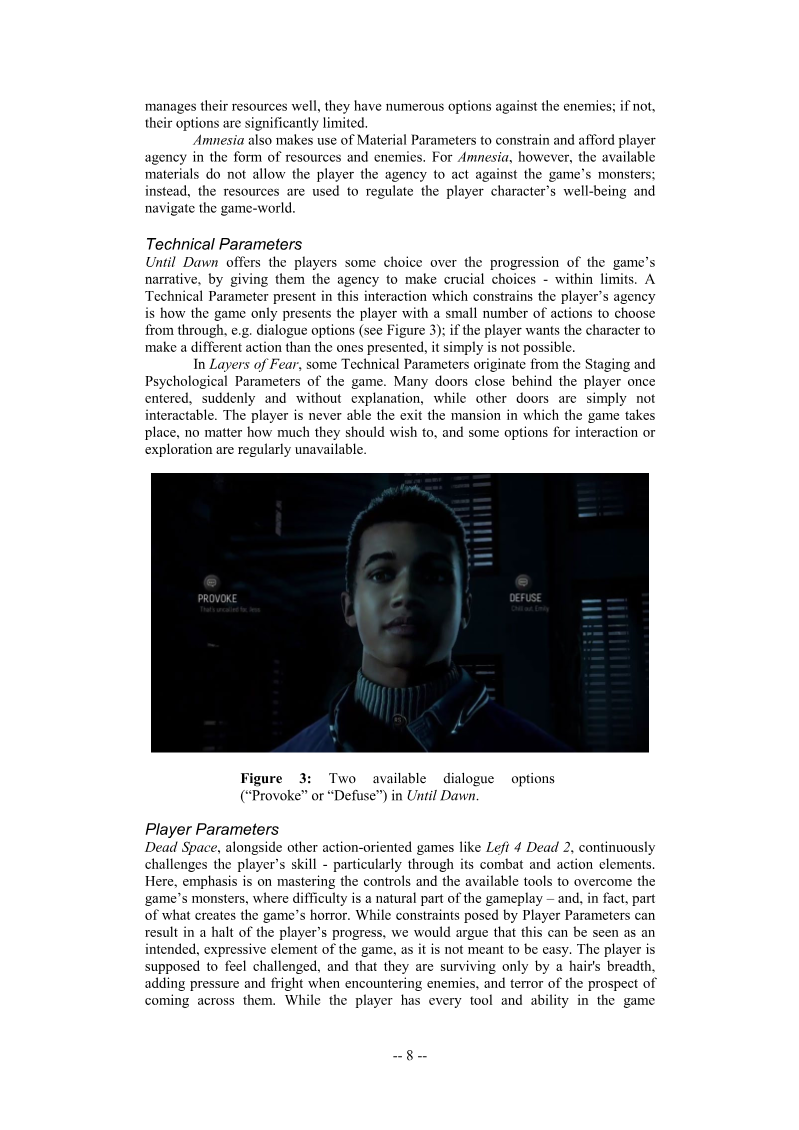
- Horror in games is produced less by content than by calibrated constraints and affordances that restrict or open up what the player can do, and the report proposes an Agency Parameter Model to analyse this.
- The model organises agency into three hierarchically arranged categories: Player Character Parameters (physical and psychological), System Parameters (technical and material), and Player Parameters, all encapsulated by Staging.
- The framework was built from hands-on play, fieldnotes, and recordings of six horror titles, including Amnesia: The Dark Descent, Dead Space, and Until Dawn, and is grounded in qualitative humanistic analysis.
Civic and Political Transgressions in Videogames: The Views and Experiences of the Players
This study investigates the civic and political dimensions of transgression in video games, focusing on player experiences to understand how games can foster meaningful civic learning.
- Players in ten participatory workshops (May–December 2017) with 73 members of the academic community in Porto, Portugal, analysed short, freely available games on social issues, and the transgressive framework emerged inductively from their accounts rather than being imposed in advance.
- Four forms of transgression were identified: the transgression of linear narratives (e.g., Unmanned), of ideologically neutral truth (e.g., Republia Times, To Build a Better Mousetrap), of the rhetoric of free choice and merit (e.g., Spent, Darfur is Dying, Ayiti), and of individualism and the myth of the "Other" (e.g., The Migrant Trail, Against All Odds, Quandary).
- Players recognised that structural conditions, rather than individual decisions alone, shape poverty and mobility, challenging meritocratic assumptions.
Writers
Games and companies
Games