Global reports and market data
Documents
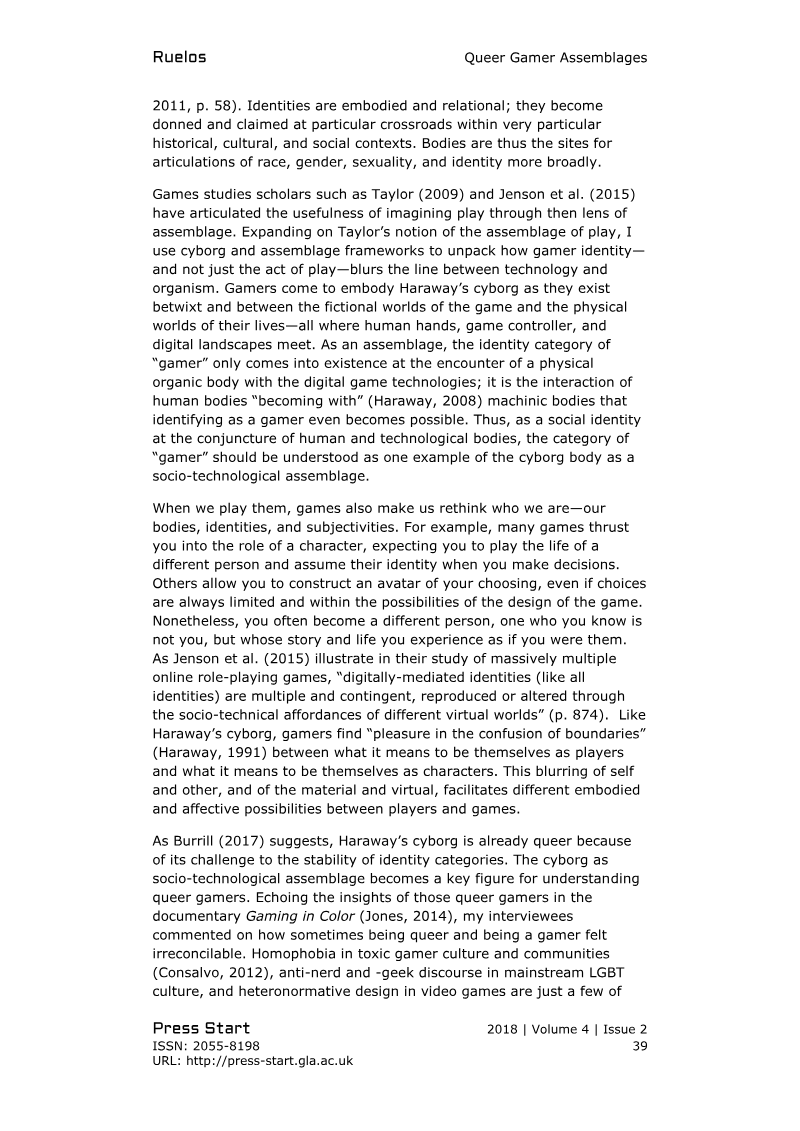
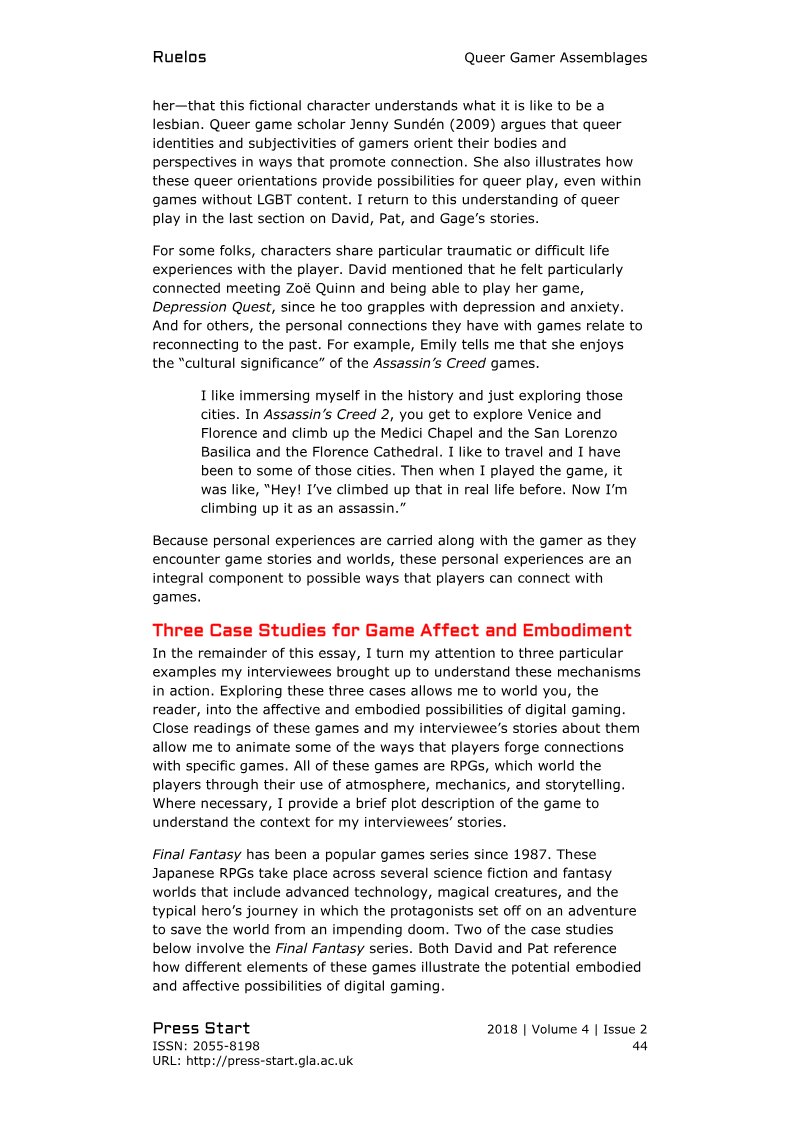
Queer Gamer Assemblages and the Affective Elements of Digital Games
Spencer Ruelos, a University of California, Irvine researcher, examines the affective and embodied relationship between LGBT/queer gamers and video games in an essay published in Press Start (2018, Volume 4, Issue 2), a student journal from the University of Glasgow.
- The author proposes three mechanisms that mediate queer gamers' affective connections to games: worlding elements, storytelling practices, and personal experiences.
- The essay argues that queer gamers' gaming identity exists at the encounter between a physical body and digital game technologies, framing gamers as socio-technological assemblages.
- The author describes Bully's achievement for kissing boys as making queerness persistent and explicit in a game's mechanics.

Things I Don't Feel Comfortable Telling You About
The pursuit of transparency in content creation serves as a mechanism for personal growth and audience trust.
- Sustainable success in the creator economy requires balancing personal financial and ego-driven motivations with the delivery of genuine value to an audience.
- Radical transparency regarding personal flaws and limitations serves as a tool to dismantle the curated facade of perfection, fostering deeper trust with viewers.
- Audience satisfaction is the only viable mechanism for creators to achieve long-term personal freedom and financial independence.
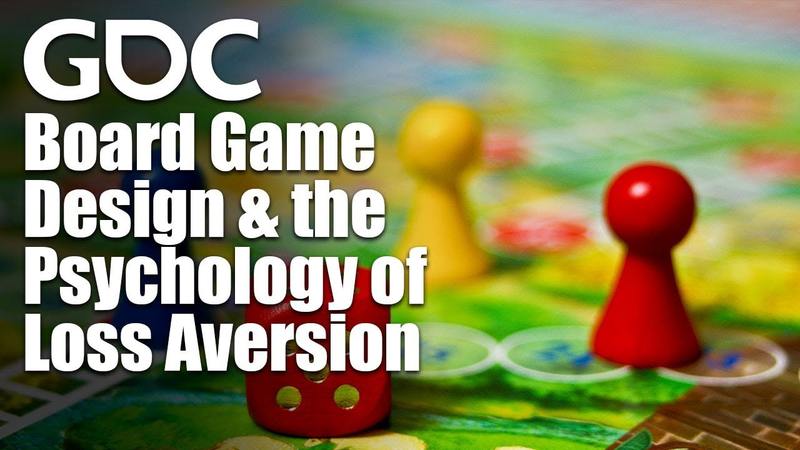
Board Game Design Day: Board Game Design and the Psychology of Loss Aversion
Loss aversion serves as a foundational psychological principle in game design, predicated on the observation that the emotional pain of losing an asset is felt approximately twice as intensely as the joy of acquiring an equivalent gain.
- Loss aversion dictates that the emotional impact of losing an asset is approximately twice as intense as the joy derived from gaining an equivalent one, making it a primary driver of player engagement.
- Mechanics that threaten the removal of progress or force resource sacrifice compel players to act irrationally to avoid deficits, creating high-stakes environments that increase emotional investment.
- Designers utilize the endowment effect and endowed progress—providing players with a head start toward a goal—to foster artificial attachments that make the potential loss of progress feel like a significant personal setback.

The Journey to Becoming a Game Developer Begins!
The pursuit of solo game development and entrepreneurship serves as the primary focus for this initiative, which aims to document the transition from an aspiring creator to a professional developer.
- Solo game development requires a comprehensive lifecycle approach that integrates technical game design with the operational complexities of running a small business.
- The development process is best approached through iterative, real-time learning rather than relying solely on pre-existing industry expertise.
- Documenting failures and setbacks transparently serves as a practical tool for other developers to identify and bypass common professional pitfalls.

Unconventional Wisdom on Creating a Passionate Community
The primary objective of this presentation is to outline unconventional, effective strategies for cultivating a passionate and creative gaming community.
- Community management should be treated as a series of human-centric relationships rather than a transactional marketing function to drive long-term brand advocacy.
- Establishing a zero-tolerance policy for harassment and publicly defending community members against toxic behavior is essential for maintaining a culture of inclusivity.
- Providing a human face for the brand through initiatives like YouTube Q&As creates a 'Senpai noticed me' effect that significantly increases individual fan engagement.
Headlander: Discovering Modern Methods in Sound via 70's Sci-Fi
The aesthetic foundation of Headlander rests on the deliberate recreation of 1970s dystopian science fiction, shifting the focus from conventional hero narratives toward themes of identity and existential doubt.
- The audio production for Headlander prioritized raw, analog textures over digital polish to replicate the atmospheric soundscapes of 1970s dystopian science fiction.
- Creative limitations, such as the prohibition of traditional percussion, forced the team to utilize sequencers, arpeggiators, and noise generators to build rhythm.
- The team employed a 'designing to memory' philosophy, blending vintage hardware sounds with modern layering and high-quality reverb to ensure accessibility for contemporary players.
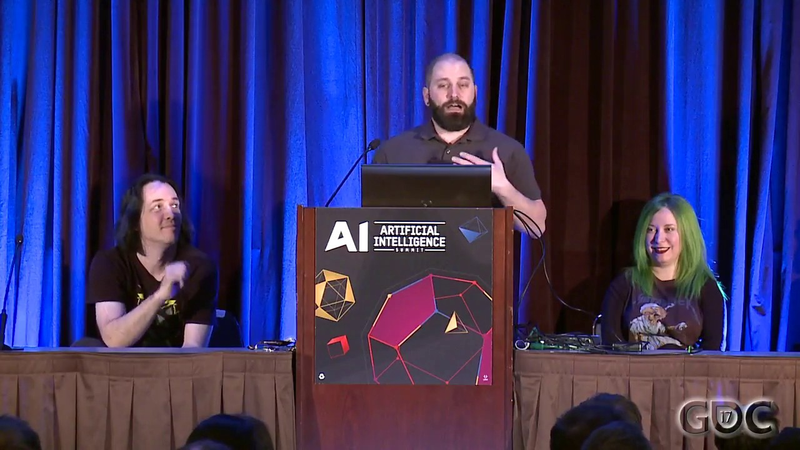
Turing Tantrums 2017: AI Devs Rant
The game development industry currently suffers from a rigid, outdated professional classification system that stifles individual growth and team efficiency.
- The industry must transition from broad professional labels like 'programmer' or 'designer' to a granular, skill-based framework to improve team efficiency and individual growth.
- Artificial intelligence development is currently stagnant due to an over-reliance on legacy architectures like behavior trees and a preference for mundane solutions over innovation.
- Machine learning has failed to provide meaningful improvements to player experiences or secure increased resource allocation despite significant industry hype.

How FIFA Delivers Live Content to Users Fast
Transitioning to a Games-as-a-Service model requires decoupling live content delivery from core server and game updates.
- Decoupling live content delivery from core game updates allows developers to bypass lengthy certification processes and push continuous, high-volume updates to users.
- A centralized, browser-based portal enables a small team of producers to deploy localized content across 11 platforms in under an hour without requiring engineering intervention.
- The system is designed for rapid reaction to real-world sporting events, enabling the delivery of timely, value-driven promotions within minutes of an event occurring.
Deploying Learning Materials to Game Content for Serious Education Game Development: A Case Study
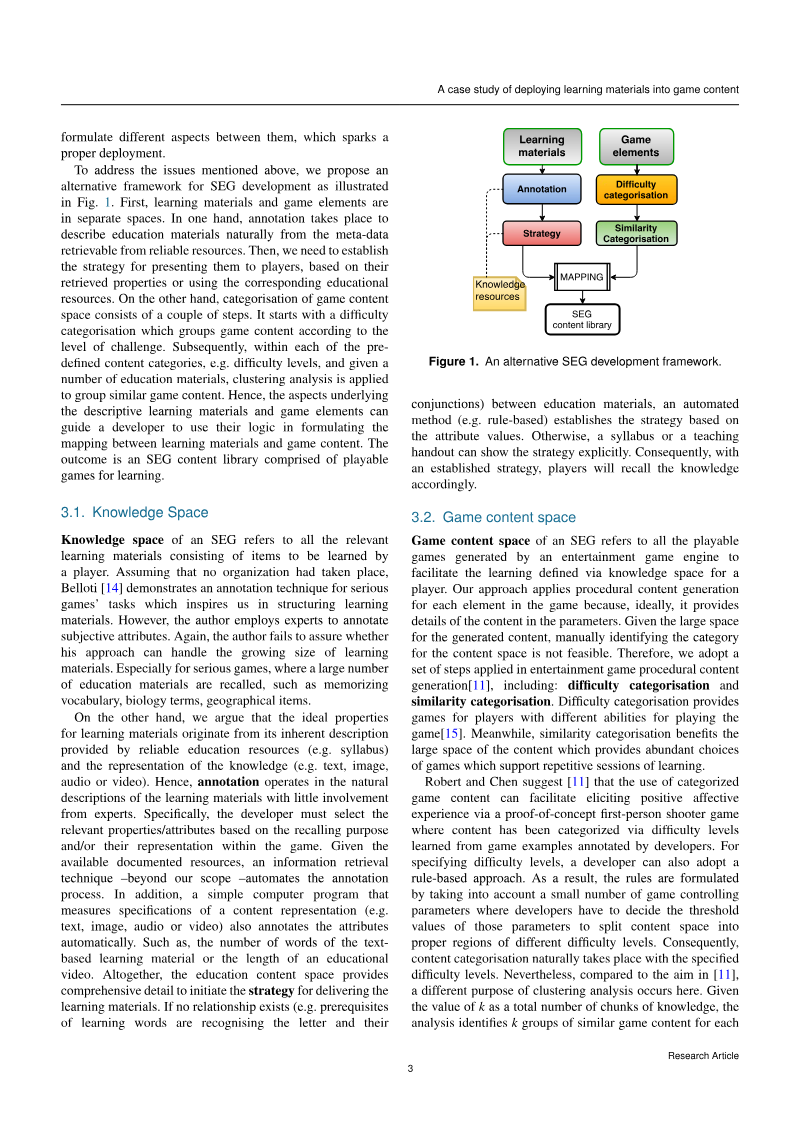
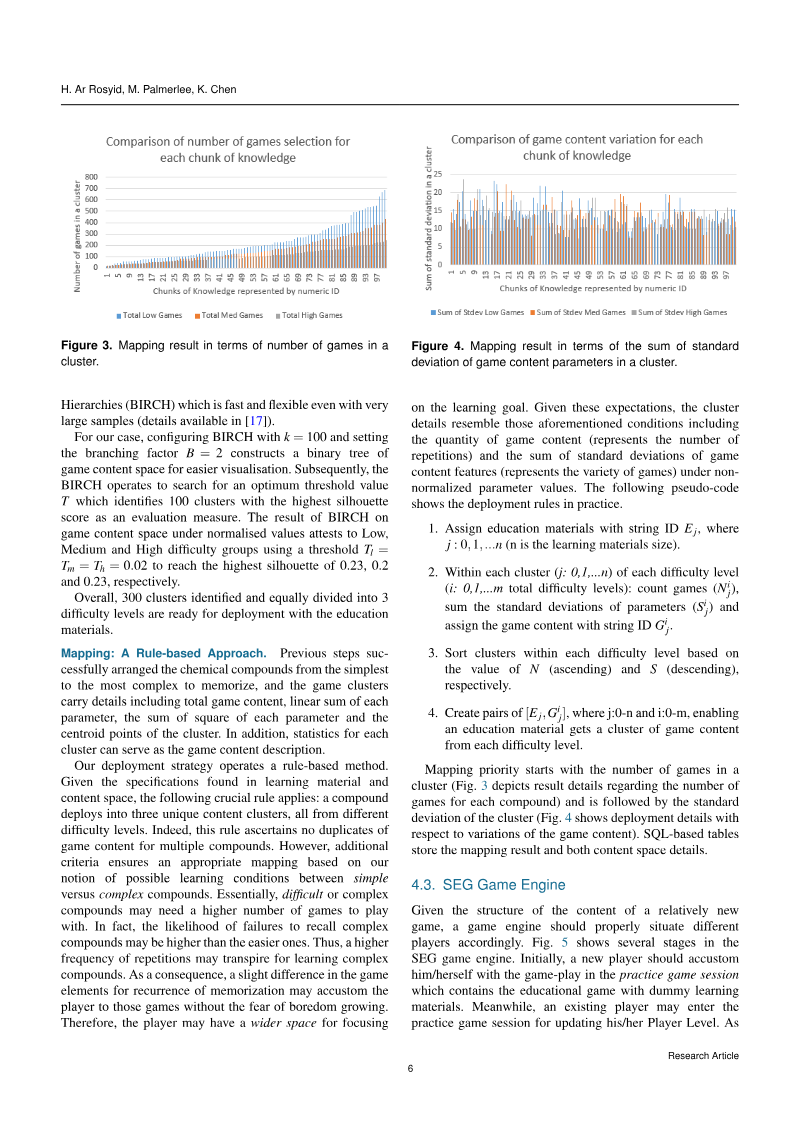
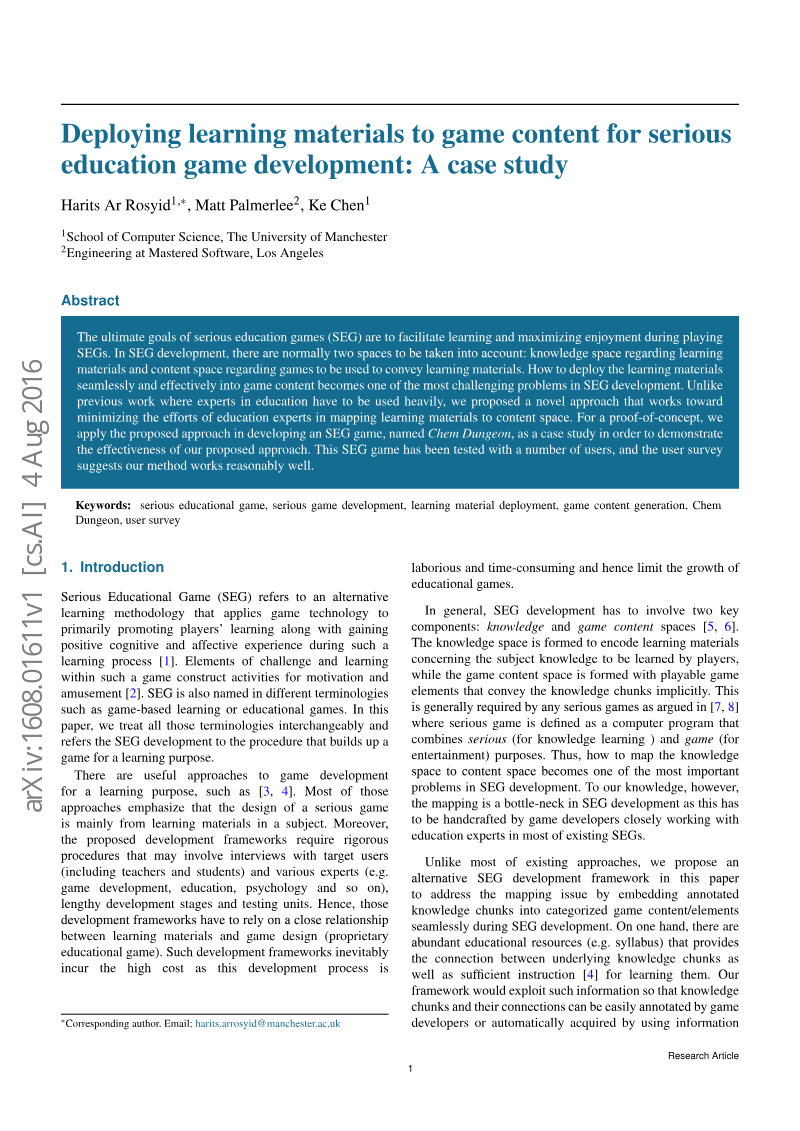
The authors, from the University of Manchester and Mastered Software, present a framework for serious education games that maps learning materials to game content with less reliance on education experts.
- Of 540 reports from 50 players, 352 said the games were entertaining, and the authors report that the proportion of fun reports (0.652) is greater than 0.5 at the 0.01 significance level.
- Of 309 game sessions where players had no prior knowledge of the learning material, 219 showed improved learning performance and 90 did not.
- Among 309 sessions, 154 combined a positive learning outcome with a fun experience, which the authors cite as evidence that the content spaces and mapping can produce both.

Thought-Provoking Play: Political Philosophies in Science Fictional Videogame Spaces from Japan
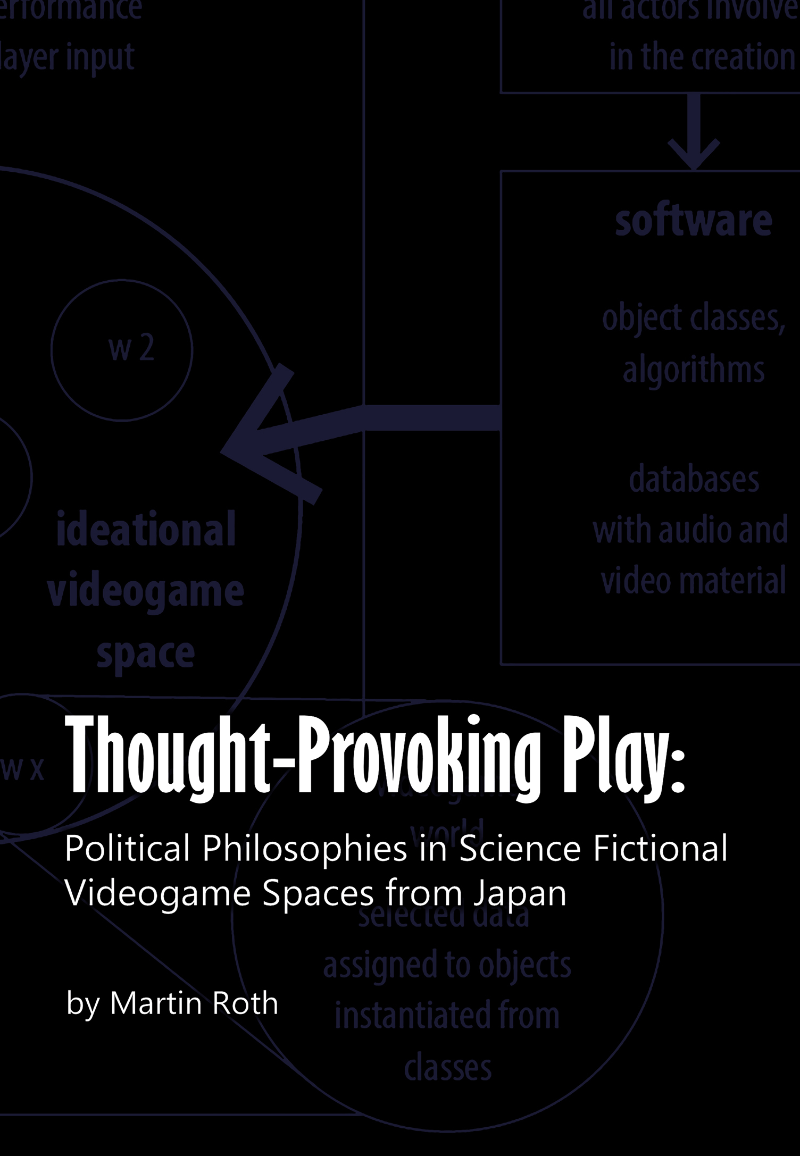
"Thought-Provoking Play: Political Philosophies in Science Fictional Videogame Spaces from Japan" by Martin Roth investigates the capacity of Japanese science fiction videogames to function as "radically political spaces" that challenge the status quo and stimulate political imagination.
- Roth argues that videogames function as an 'ideational' or 'enacted' space co-produced by designers, the computer, and players, where rule systems, narrative, representation, and randomness generate conflicts that resist full simulation; he frames this as a hypothesis tested through close analysis rather than a demonstrated finding.
- The study is motivated by the claim that neoliberal capitalism narrows perceived alternatives and threatens the political imagination, and it proposes Japanese science-fictional games as spaces that can stimulate that imagination.
- Science-fiction titles accounted for only seven of 204 million-selling Japanese games, yet held a steady 10 to 15 percent of annual top-100 sales between 2000 and 2011, with the market dominated by Gundam franchises.
Level Design in a Day: Level Design Histories and Futures
Level design functions as a multifaceted discipline that bridges raw data, industrial manufacturing, architectural theory, and community-driven social practice.
- Level design is an inherently political practice where the creator's worldview and biases dictate the social inclusivity and intent of virtual spaces.
- The evolution of level design is inextricably linked to tool development, as software constraints—from early grid-based editors like DoomEd to modern 3D engines—directly define creative boundaries and designer workflows.
- AAA development has shifted toward a formalist orthodoxy that prioritizes functional grey-box prototyping and scalable geometry to manage the technical demands of modern production.
Storytellers of eSports
Storytelling serves as the foundational pillar of the esports industry, acting as the primary driver for fan retention and long-term community growth.
- Human-centric storytelling, rather than gameplay mechanics or prize pools, is the primary driver for long-term fan retention and community growth in esports.
- Organizations must shift from scripted public relations to authentic, character-driven narratives that highlight the personal journeys and rivalries of individual competitors.
- Content creators must prioritize clear narrative arcs over the inclusion of every prominent figure, often requiring ruthless editorial decisions to maintain engagement.
Writers
Games and companies
Games