More on Esports
View all
Whitepaper
“It’s Not My Fault”: Exploring Attributional Patterns in eSports Player Toxicity
Association for Computing Machinery · 2025
Whitepaper
Meta as a Social Contract in Competitive Play
University of Jyväskylä · 2025
Presentation
A Historical Perspective on Speedrunning: Evolution and Impact of the Informational Aspect
DiGRA · 2023
Whitepaper
Current Issues of Sustainability in Esports
International Journal of Esports · 2022
Whitepaper
Playing for the Legend in the Age of Empires II Online Community
Press Start · 2022
Whitepaper
The Development of Sports: A Comparative Analysis of the Early Institutionalisation of Traditional Sports and E-sports
Falmouth University · 2019
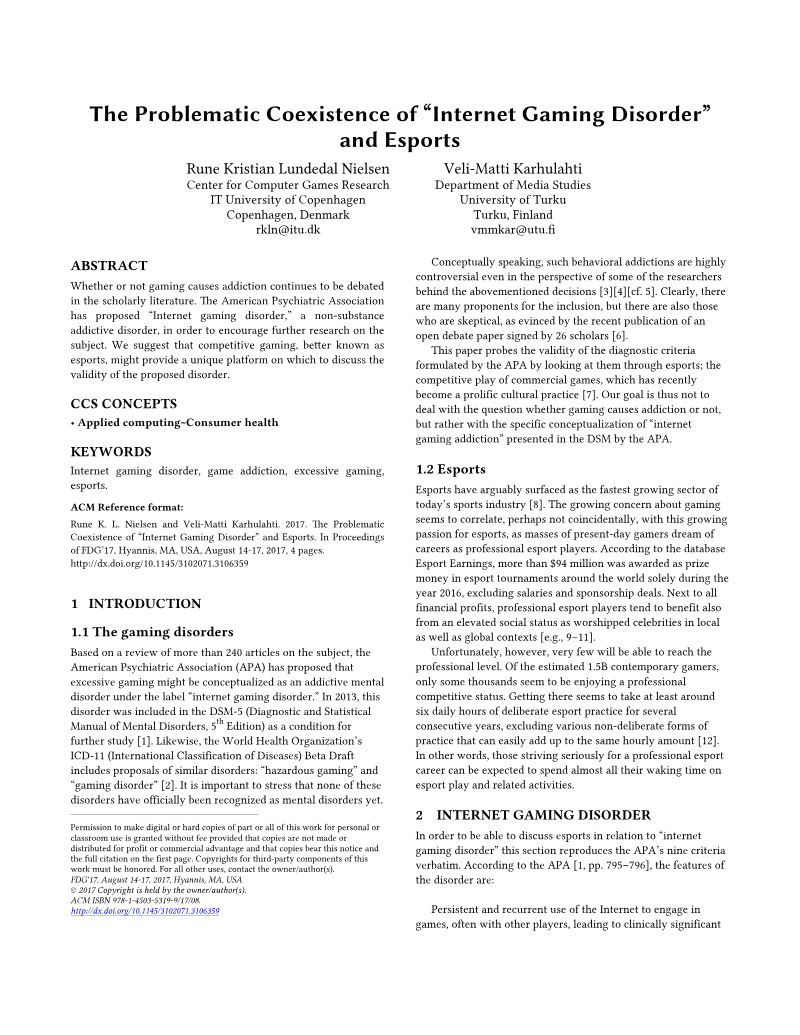
Whitepaper
The Problematic Coexistence of "Internet Gaming Disorder" and Esports
Foundations of Digital Games (FDG) · 2017
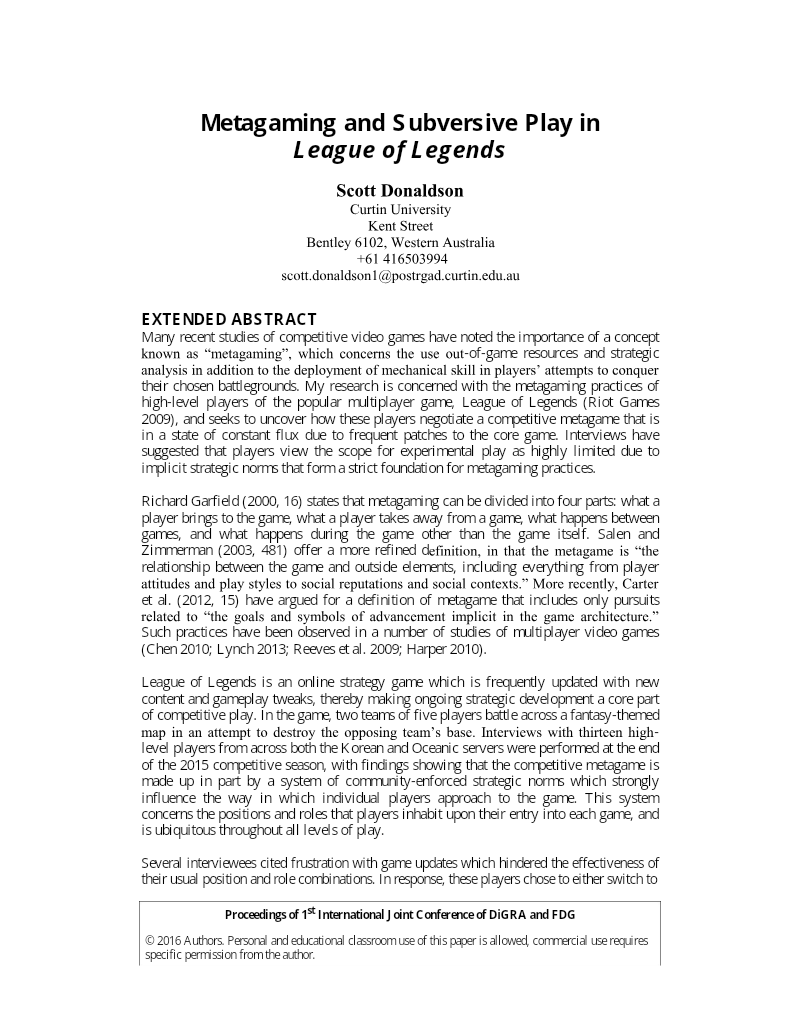
Whitepaper
Metagaming and Subversive Play in League of Legends
DiGRA · 2016
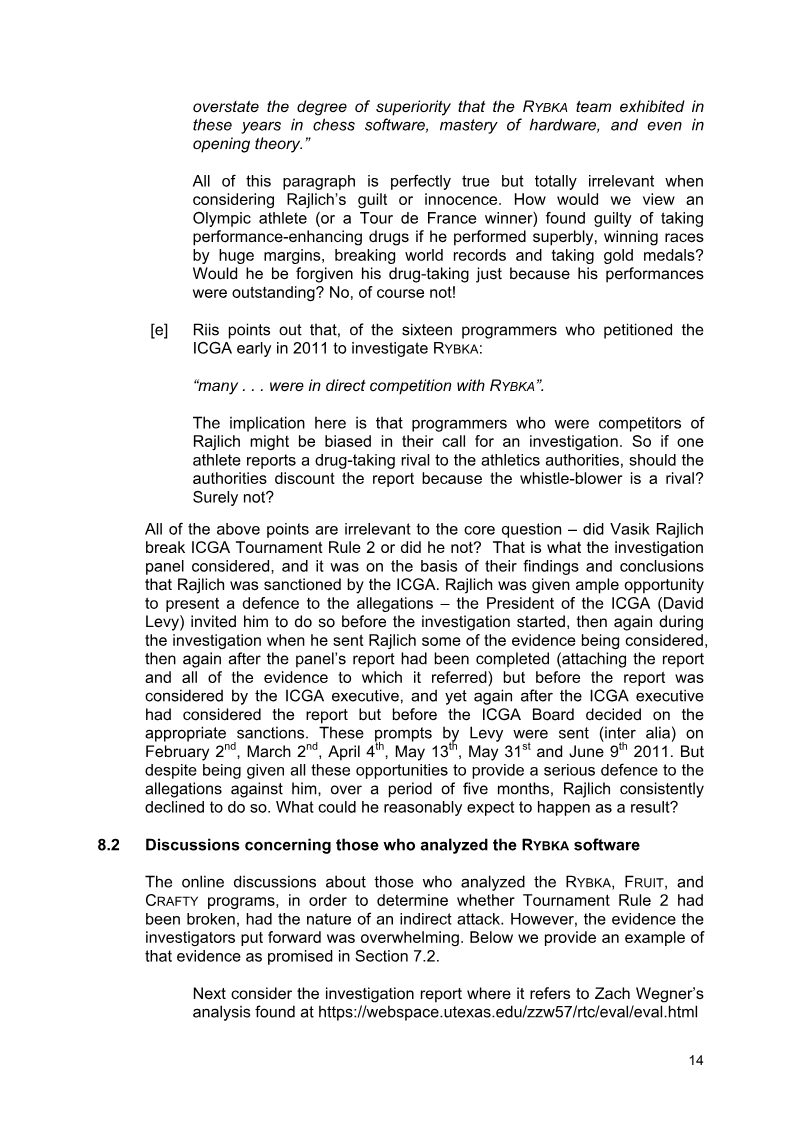
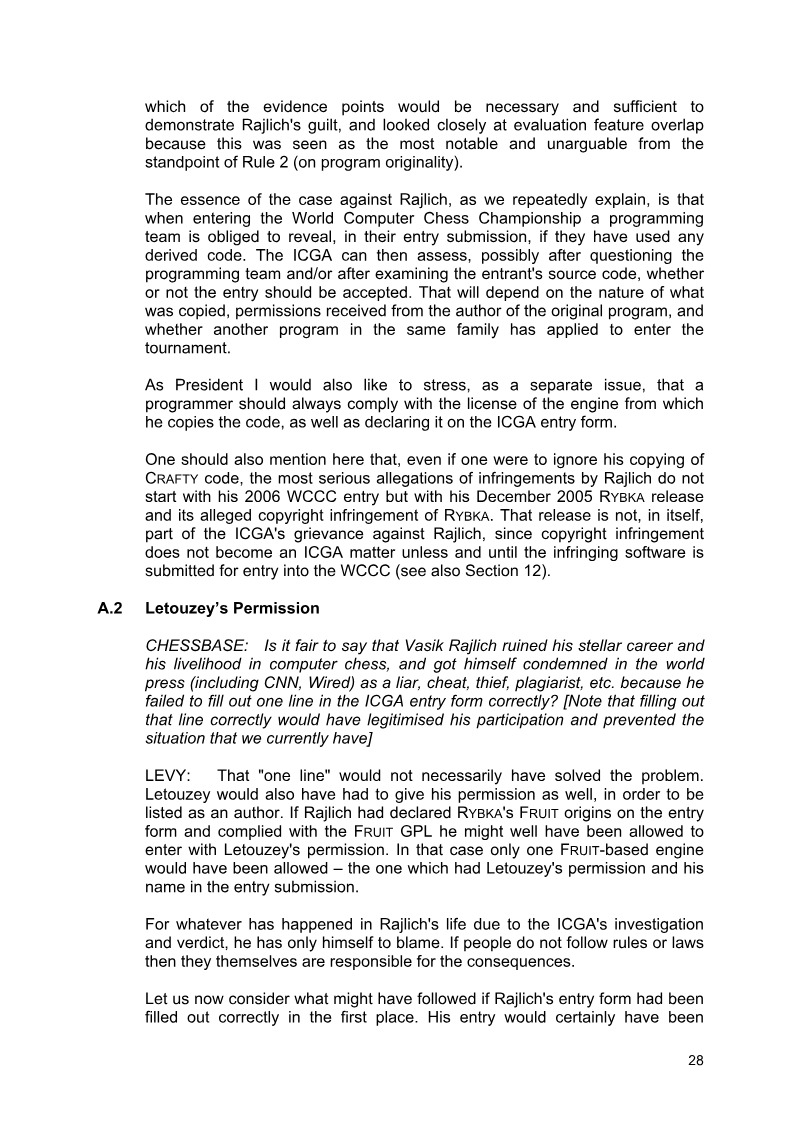
Whitepaper
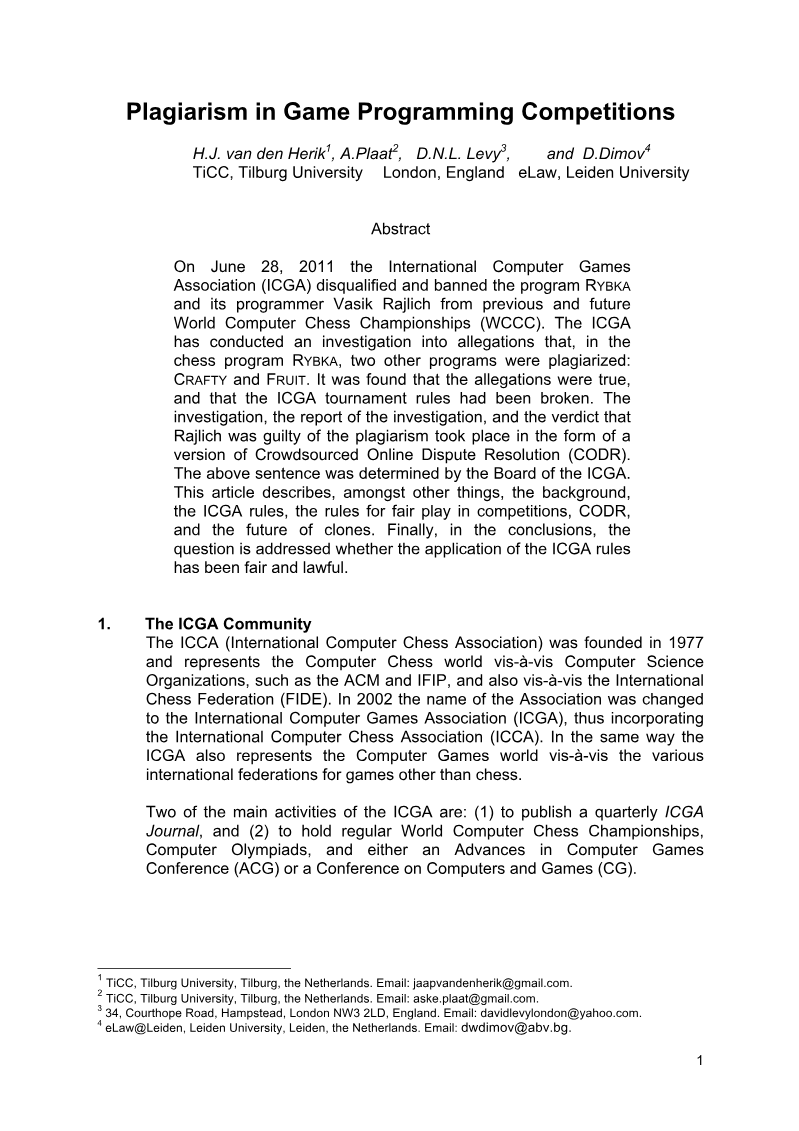
Plagiarism in Game Programming Competitions
International Computer Games Association · 2014
Whitepaper
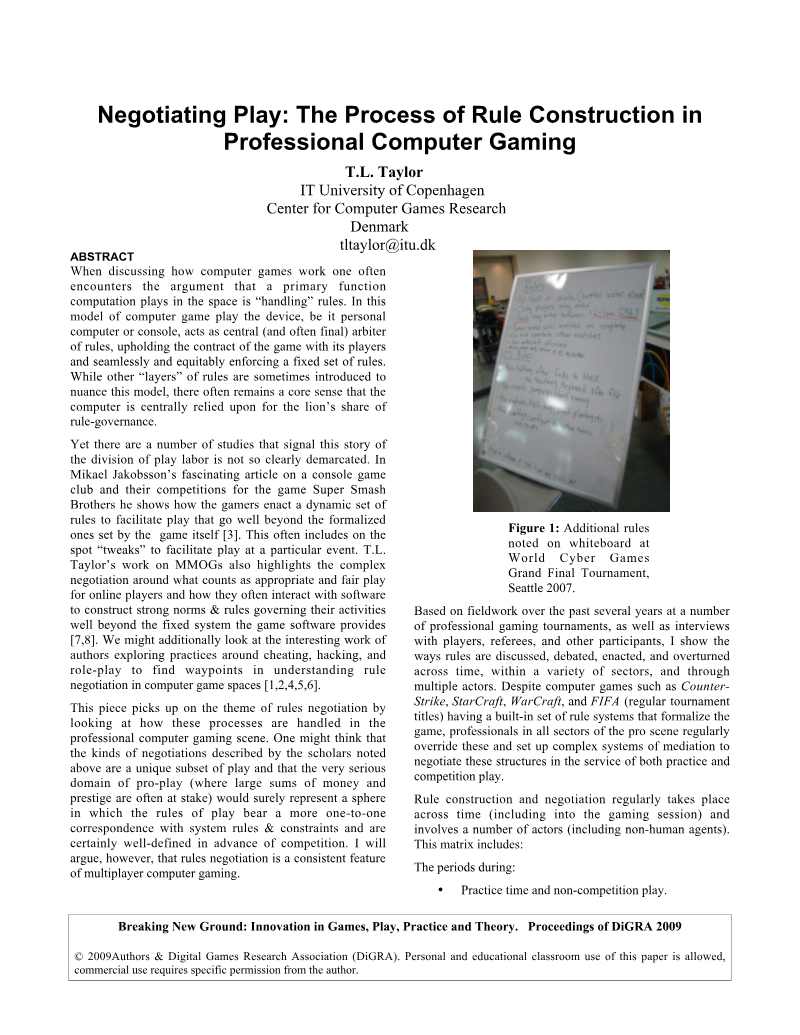
Negotiating Play: The Process of Rule Construction in Professional Computer Gaming
DiGRA · 2009

Whitepaper
Well Played: A Special Issue on Esports and Community
ETC Press



Whitepaper
Digital Resilience, Health, and Harms: The Digital Convergence
DiGRA · 2026