Game Studies reports and market data
Documents
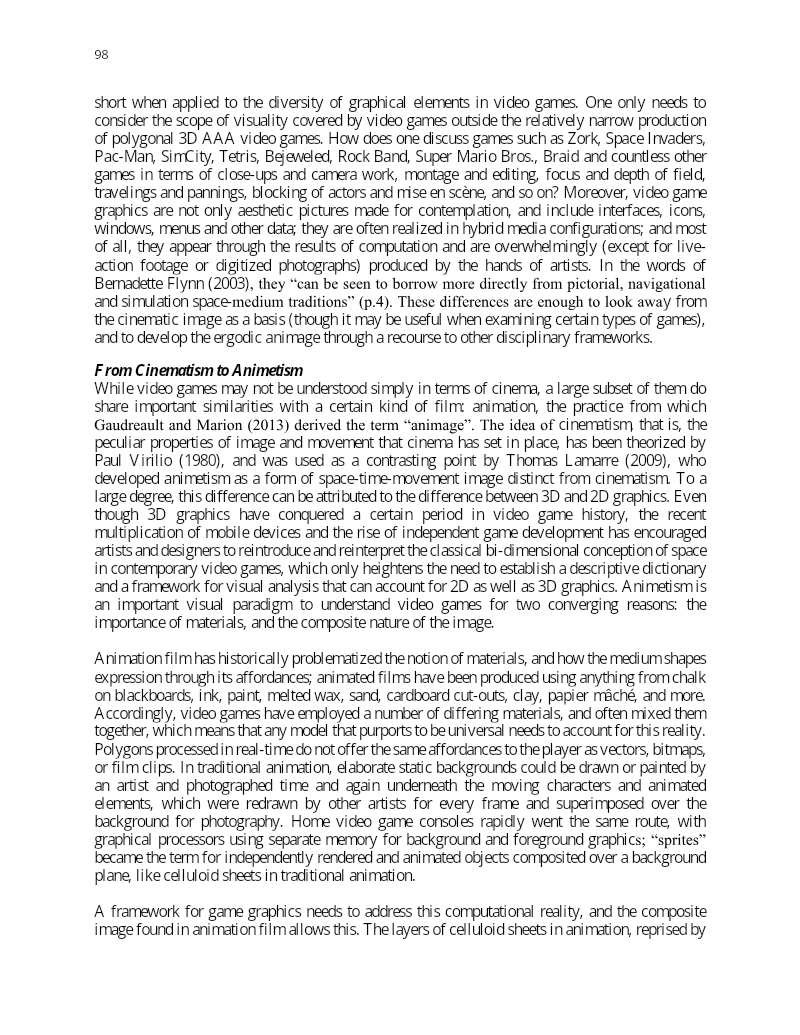
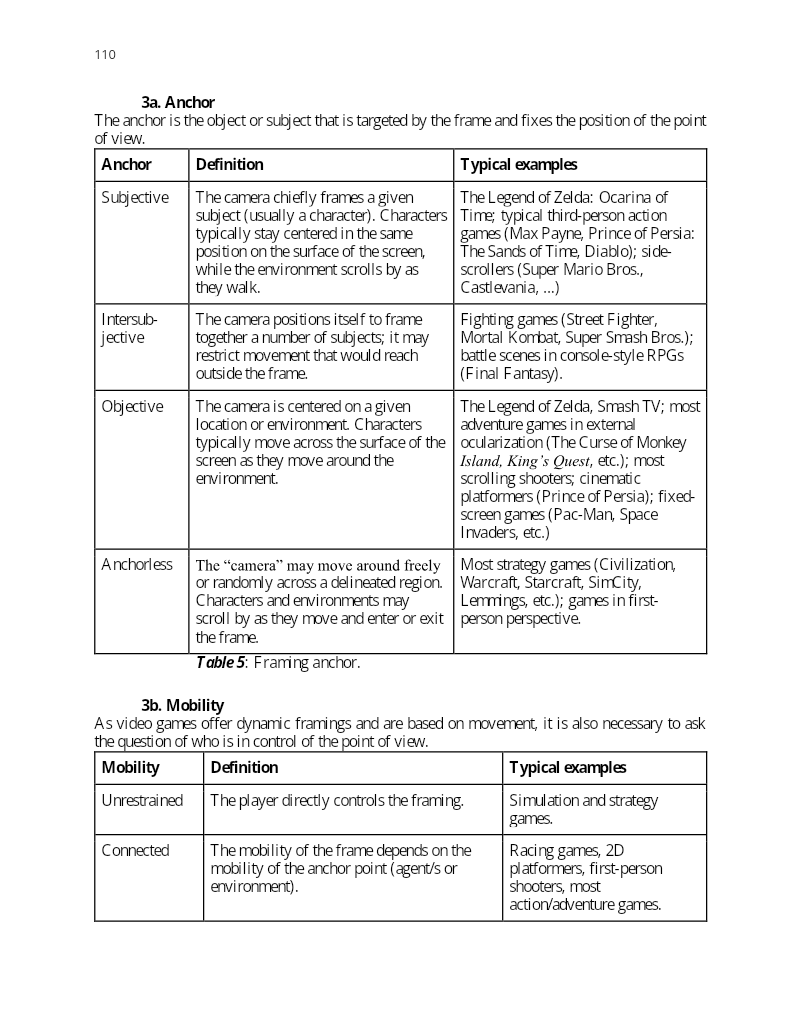
The Game FAVR: A Framework for the Analysis of Visual Representation in Video Games
The Game FAVR framework establishes a comprehensive, formalistic methodology for analyzing video game visuals by prioritizing the ergodic animage—the intersection of interactive gameplay and graphical representation.
- The Game FAVR framework shifts visual analysis away from traditional filmic and cinematic conventions to focus on the 'ergodic animage,' which prioritizes the intersection of interactive gameplay and graphical representation.
- The methodology utilizes four primary analytical parameters—composition, ocularization, framing mechanisms, and plane analysis—to evaluate how visual structures directly facilitate player agency.
- The framework categorizes the game world into three distinct planes—agents, in-game environments, and off-game environments—to account for 'impossible' tri-planar configurations and mixed projection methods.
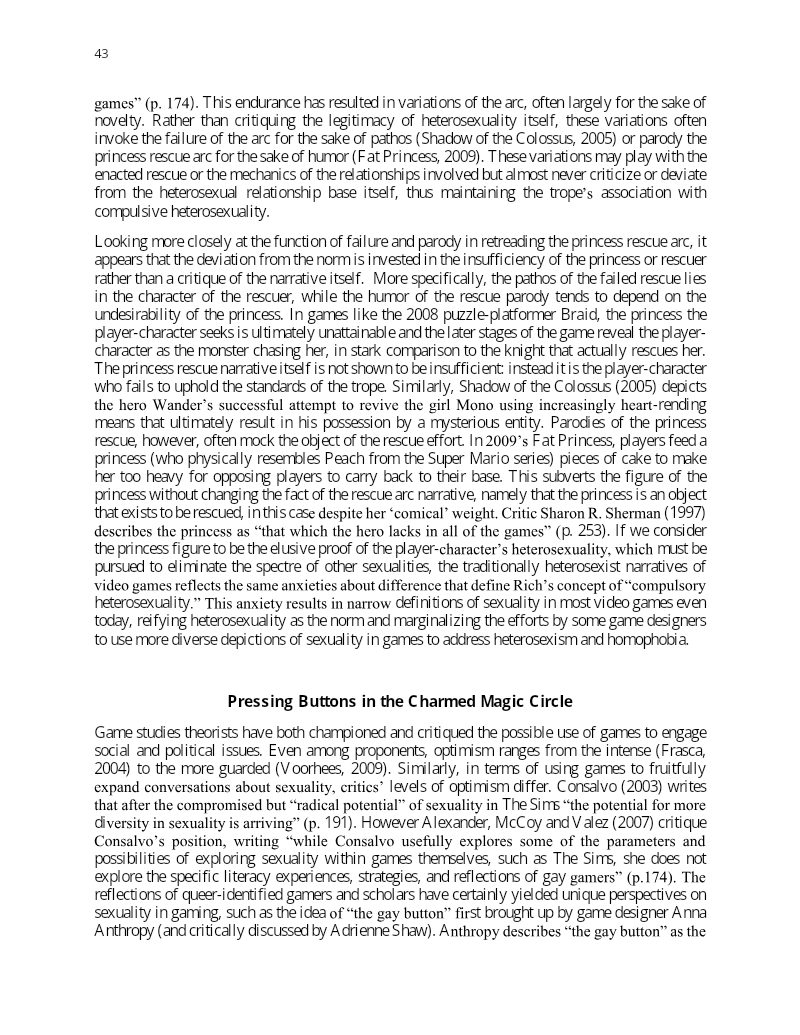
Renegade Sex: Compulsory Sexuality and Charmed Magic Circles in the Mass Effect Series
Video games frequently enforce compulsory heterosexuality by restricting player agency to narratives that prioritize heteronormative structures.
- Triple-A game design frequently enforces compulsory heterosexuality by restricting player agency to heteronormative structures and rendering non-normative sexualities invisible.
- In the Mass Effect series, BioWare’s romantic mechanics remain tethered to a sex hierarchy that privileges monogamous, heteronormative relationships.
- Romantic options in Mass Effect are often gated by the player’s chosen gender, reinforcing a binary framework that fails to accommodate fluid expressions of identity.
Going Beyond the Game: Development of Gamer Identities Within Societal Discourse and Virtual Spaces
The gamer identity has evolved from a functional descriptor of play into a multifaceted social and personal construct that defies traditional, narrow categorization.
- The 'gamer' label has transitioned from a functional descriptor of play frequency or genre preference into a fluid, multifaceted social identity.
- Traditional stereotypes of gamers as socially isolated males are increasingly obsolete and fail to reflect the diverse, interconnected reality of modern gaming culture.
- Gamer identity is primarily constructed through individual self-perception, community participation, and shared virtual experiences rather than static demographic metrics.
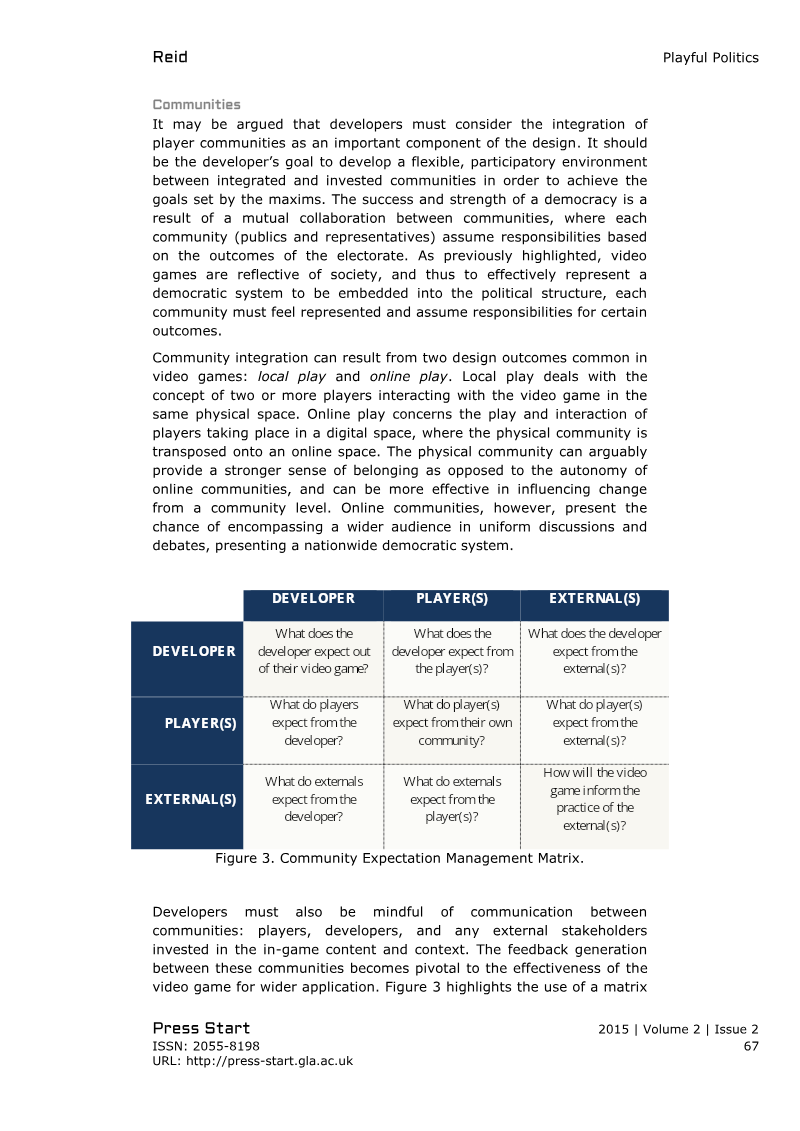
Playful Politics: Designing Video Games for Political Participation in the UK
Video games represent a potent, underutilized medium for reversing the decline in political participation among young adults in the United Kingdom.
- Video games are an underutilized medium for increasing political participation among the 18–24 demographic in the UK, offering a more engaging alternative to traditional, static political education.
- Existing simulations like the Democracy franchise successfully model complex governance but often alienate disenfranchised users by requiring high levels of pre-existing political knowledge.
- A structured Political Design Framework is required to ensure games serve as accessible entry points for civic engagement rather than exclusionary tools for the already informed.


Authorship and Moral Rights in Video Games
Video games occupy a complex position within United Kingdom copyright law, where they are primarily classified as films rather than singular creative works.
- Under UK law, video games are treated as a collection of multiple copyrighted works, with the producer and principal director (often the lead designer) recognized as the statutory joint authors of the film elements.
- Copyright ownership for video game contributors is typically governed by Section 11(2) of the CDPA, which vests ownership in the employer when works are created by staff in the course of their employment.
- UK law explicitly excludes computer programs from moral rights protection, a decision criticized for potentially treating software as a 'lesser species' of copyright work and ignoring Berne Convention standards.


Playing Alone, Playing With Others: Differences in Player Experience and Indicators of Wellbeing
Video games serve as distinct psychological environments where the mode of engagement—solitary or social—fundamentally alters the pathways to player wellbeing.
- Gaming impacts wellbeing through two distinct pathways: solitary play functions as a restorative tool for autonomy and competence, while social play acts as a mechanism for social integration and relatedness.
- Cooperative play with known individuals provides the highest levels of social bonding, whereas interactions with strangers are effective for building bridging social capital.
- Excessive play time is consistently associated with a decline in overall psychological health, regardless of the gaming mode.

Investigating Perspectives on Play: The Lenses of Play Tool
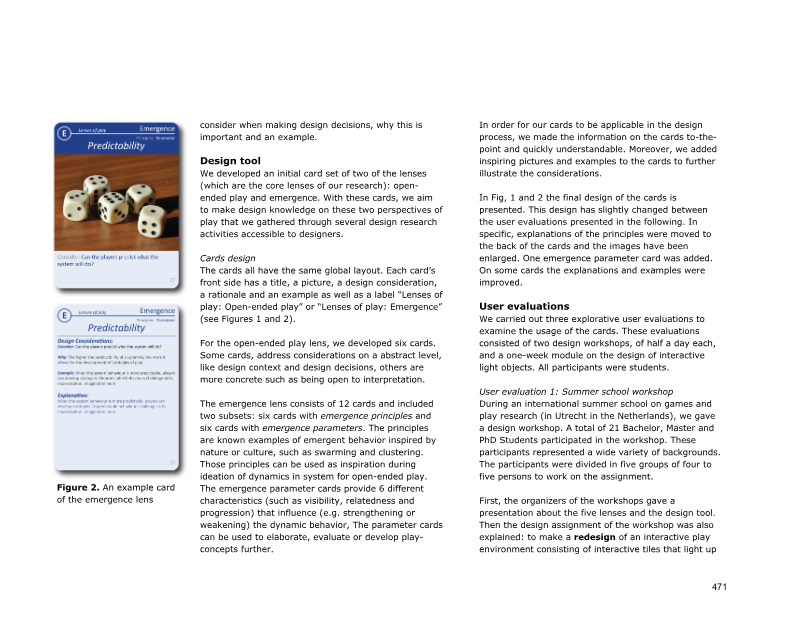
The Lenses of Play tool is a card-based design instrument developed to assist practitioners and students in creating interactive, playful environments.
- The Lenses of Play tool provides a structured framework for interactive design, categorizing considerations into five core areas: open-ended play, playful experiences, forms of play, stages of play, and emergence.
- User evaluations involving 79 participants across three distinct academic settings in the Netherlands confirmed the tool's effectiveness in bridging the gap between abstract design theory and practical application.
- Designers primarily utilize the tool as a source of inspiration for brainstorming and redesign, finding it particularly effective for grounding design decisions in literature and structuring complex concepts.

Flow during Individual and Co-operative Gameplay
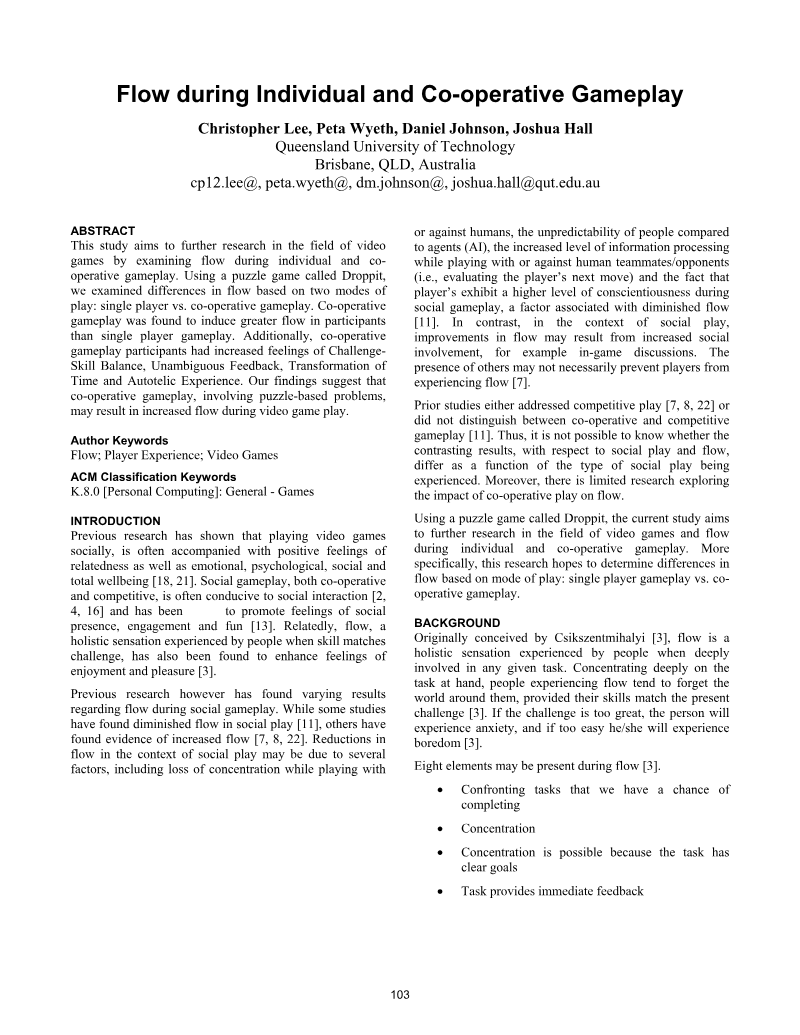
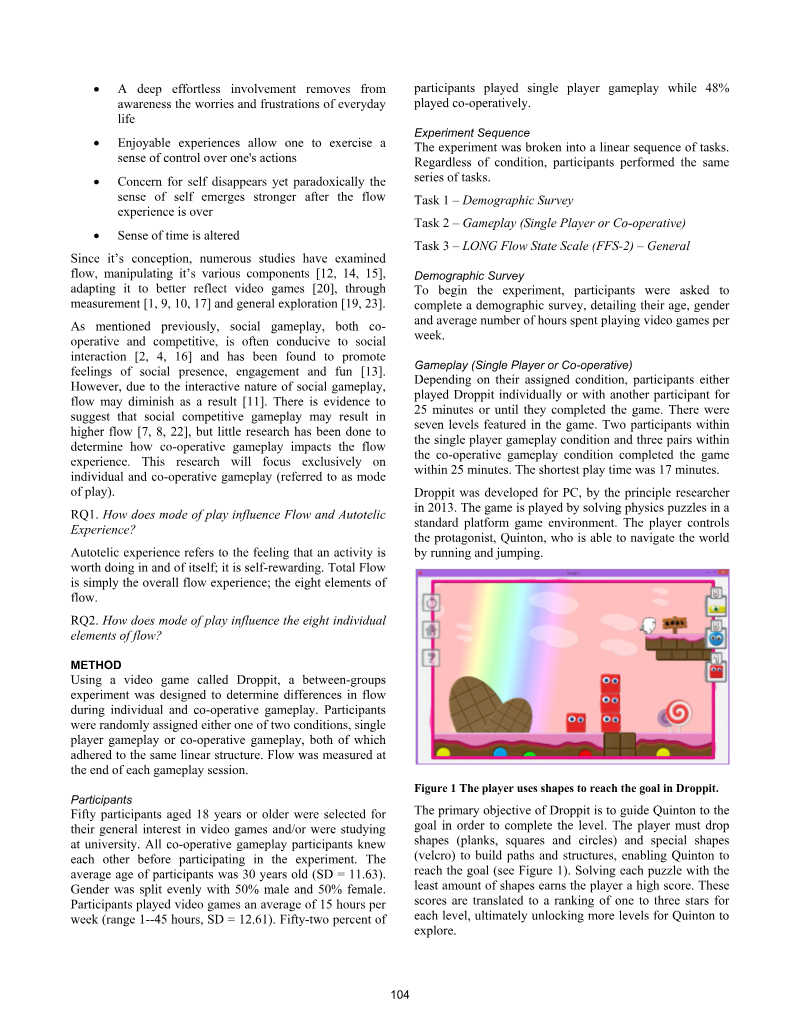
This study investigates the impact of social interaction on player experience by comparing flow states during individual versus co-operative gameplay.
- Co-operative gameplay significantly increases total flow states compared to individual play, as measured by the Long Flow State Scale (FFS-2) in a 50-participant study.
- Collaborative play improves three specific components of flow: challenge-skill balance, the clarity of unambiguous feedback, and the transformation of time.
- Players in co-operative conditions report a higher autotelic experience, indicating that social interaction makes puzzle-based gameplay more inherently rewarding and enjoyable.
StreetGamez: A Moving Projector Platform for Projected Street Games
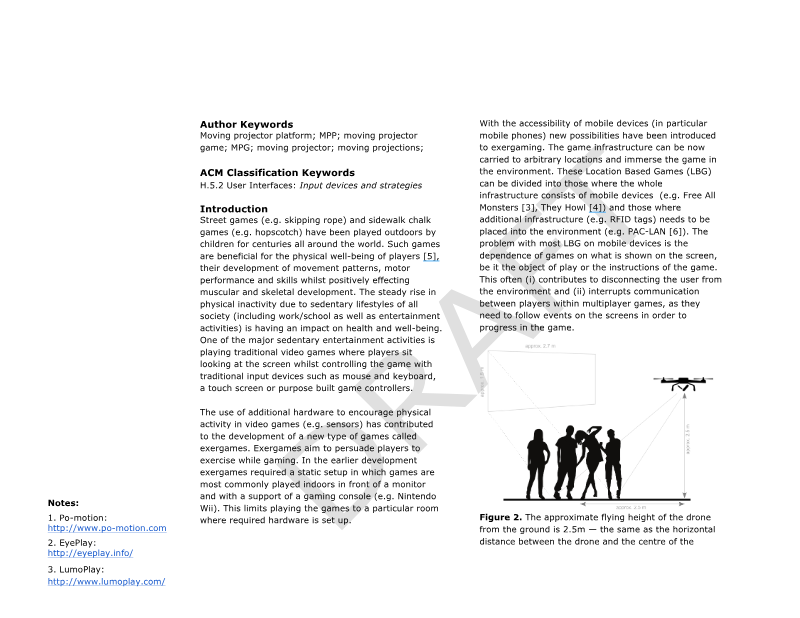
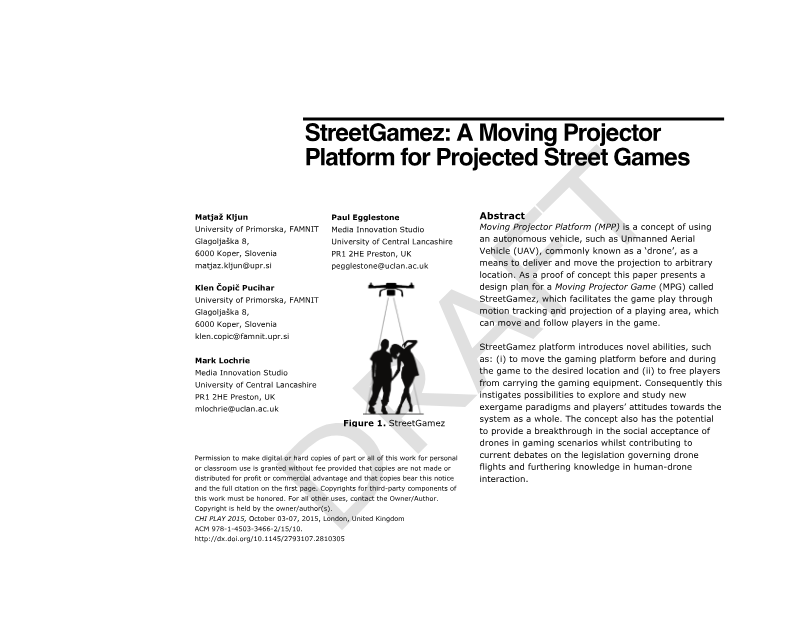
The StreetGamez project introduces the concept of a Moving Projector Platform (MPP), which utilizes autonomous unmanned aerial vehicles (UAVs) to deliver and project interactive gaming surfaces to arbitrary outdoor locations.
- The StreetGamez project utilizes autonomous UAVs to create mobile, interactive gaming surfaces, effectively decoupling exergaming from static, indoor infrastructure.
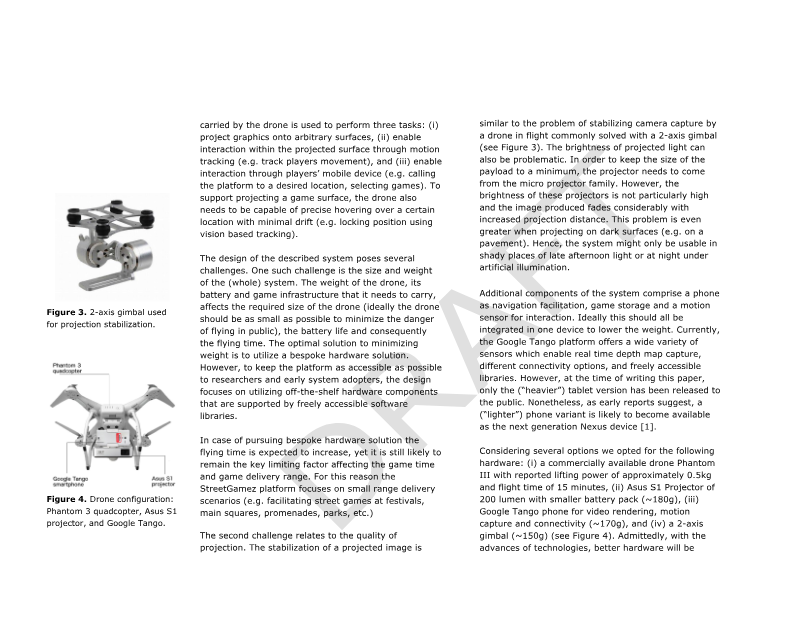
- The current prototype hardware configuration integrates a Phantom III quadcopter, an Asus S1 micro-projector, and a Google Tango device for depth mapping and motion tracking.
- Technical implementation relies on a 2-axis gimbal to stabilize projected images, though payload weight remains a critical constraint on total flight time.

Removing the HUD: The Impact of Non-diegetic Game Elements and Expertise on Player Involvement
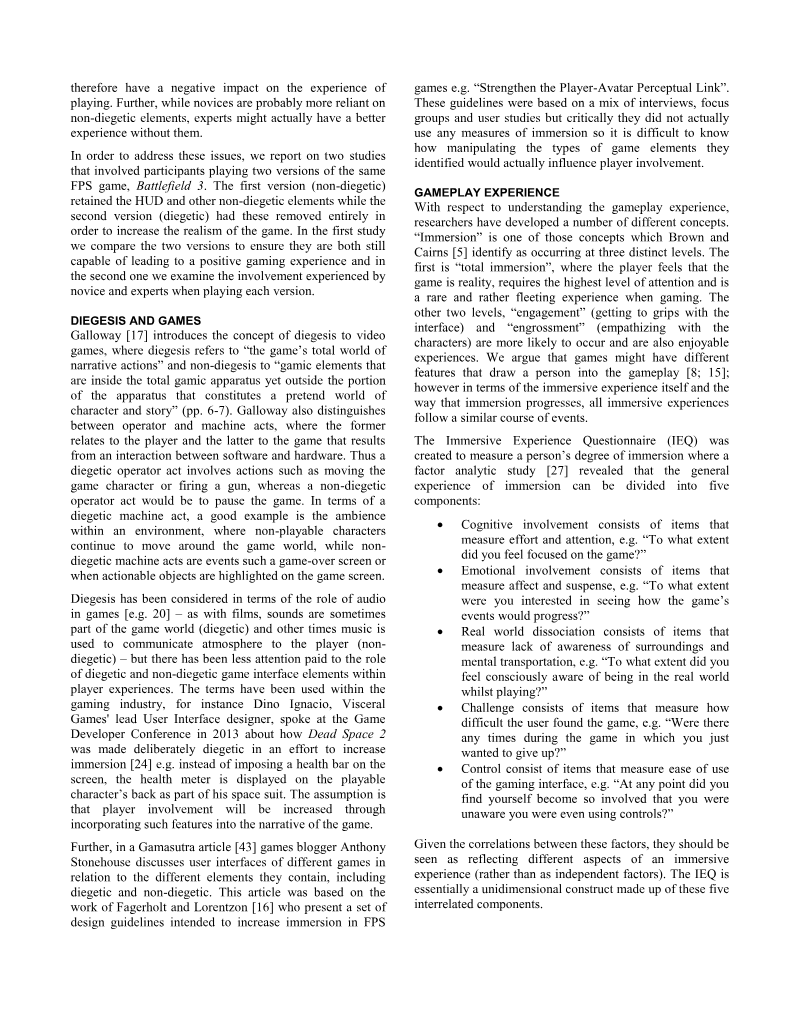
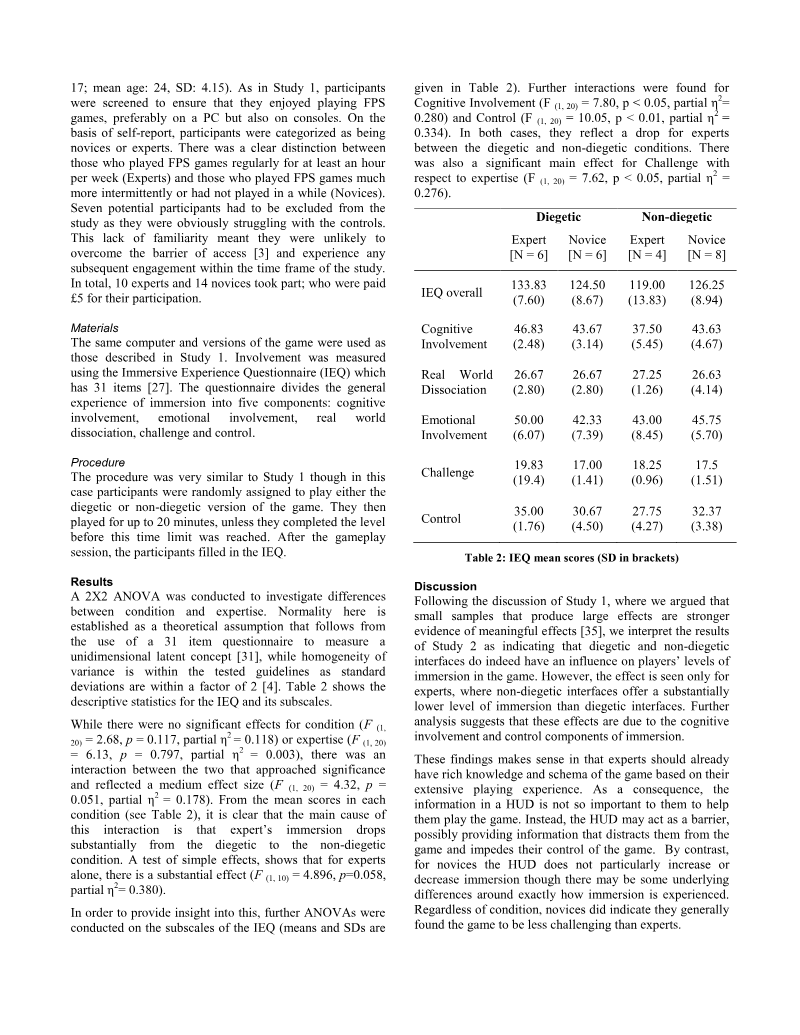
The removal of non-diegetic interface elements, such as heads-up displays, serves as a critical design lever for modulating player immersion and cognitive engagement.
- HUD removal serves as a primary design lever to modulate player immersion and cognitive engagement by reducing visual clutter.
- The effectiveness of non-diegetic interface elements is fundamentally mediated by the player's level of expertise.
- Experienced players experience deeper immersion and a stronger sense of control when HUD elements are removed, as the absence forces higher cognitive involvement.
Game-based Assessment of Psychoacoustic Thresholds: Not All Games Are Equal!
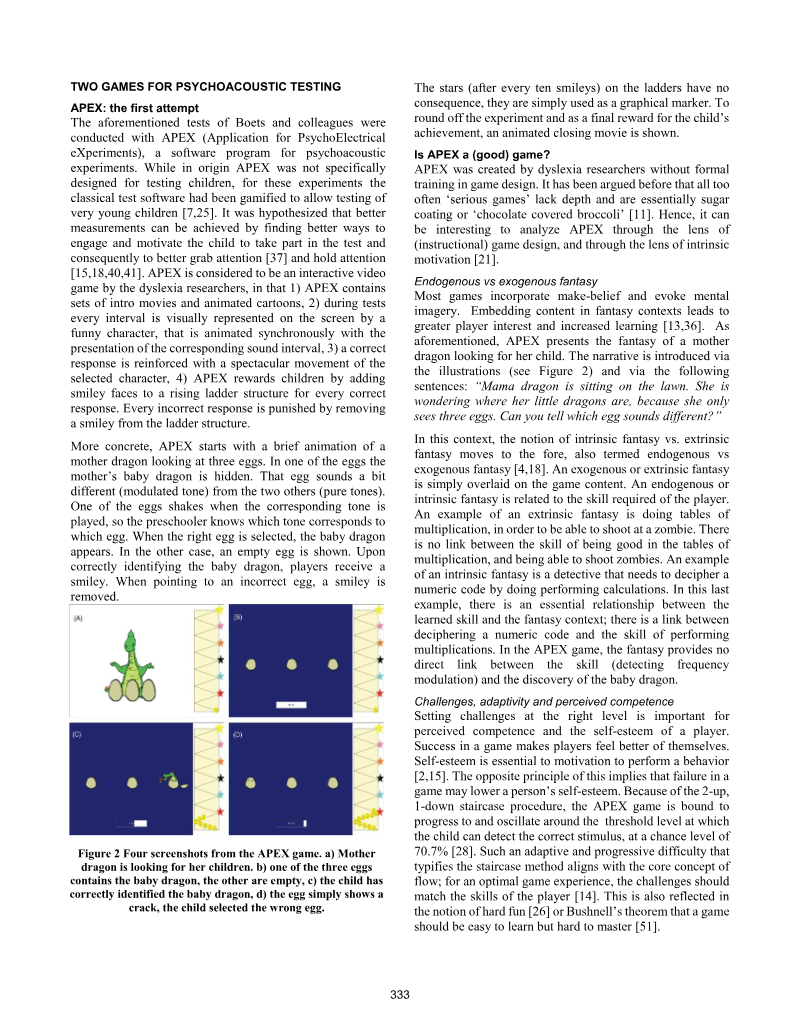
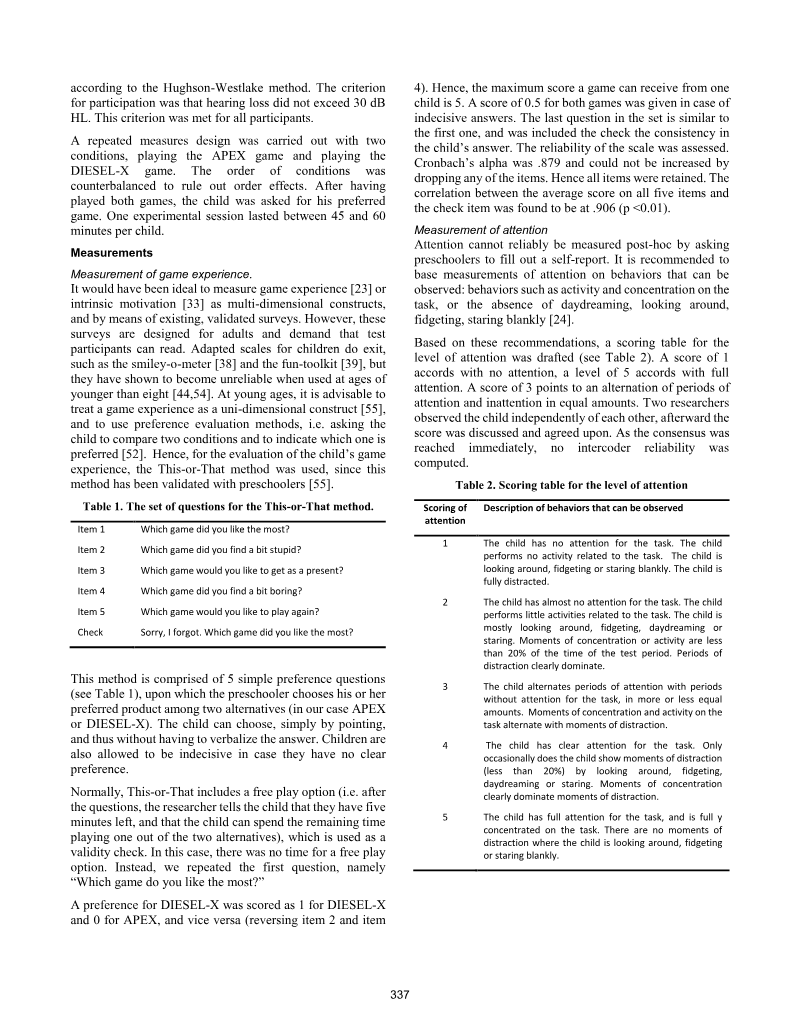
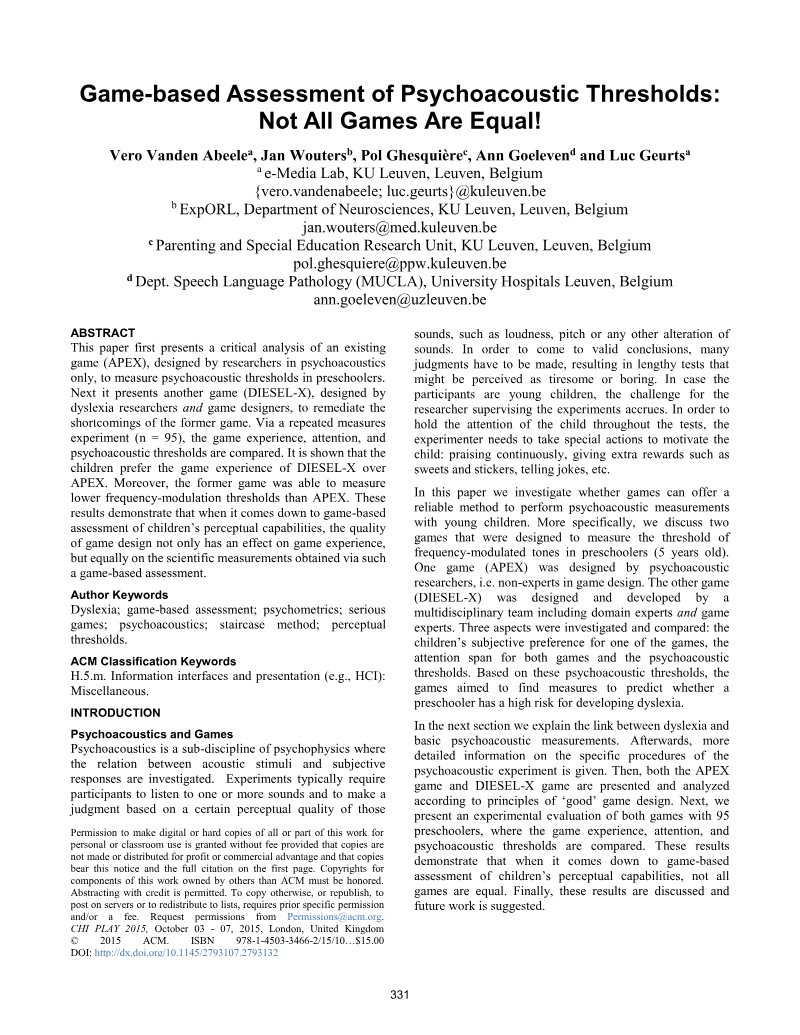
Game-based assessments serve as a critical tool for measuring psychoacoustic thresholds in preschool populations, yet the efficacy of these instruments depends heavily on the quality of their underlying design.
- High-quality game design is a prerequisite for valid clinical assessment, as poor mechanics can obscure scientific findings and lead to inaccurate psychoacoustic threshold measurements.
- The professionally engineered DIESEL-X platform achieved lower, more precise frequency modulation thresholds compared to the researcher-developed APEX system.
- Superior engagement and sustained attention in preschool populations are driven by DIESEL-X’s integration of narrative-driven goals, player-centered design, and autonomy-building features.
Emotional and Functional Challenge in Core and Avant-garde Games
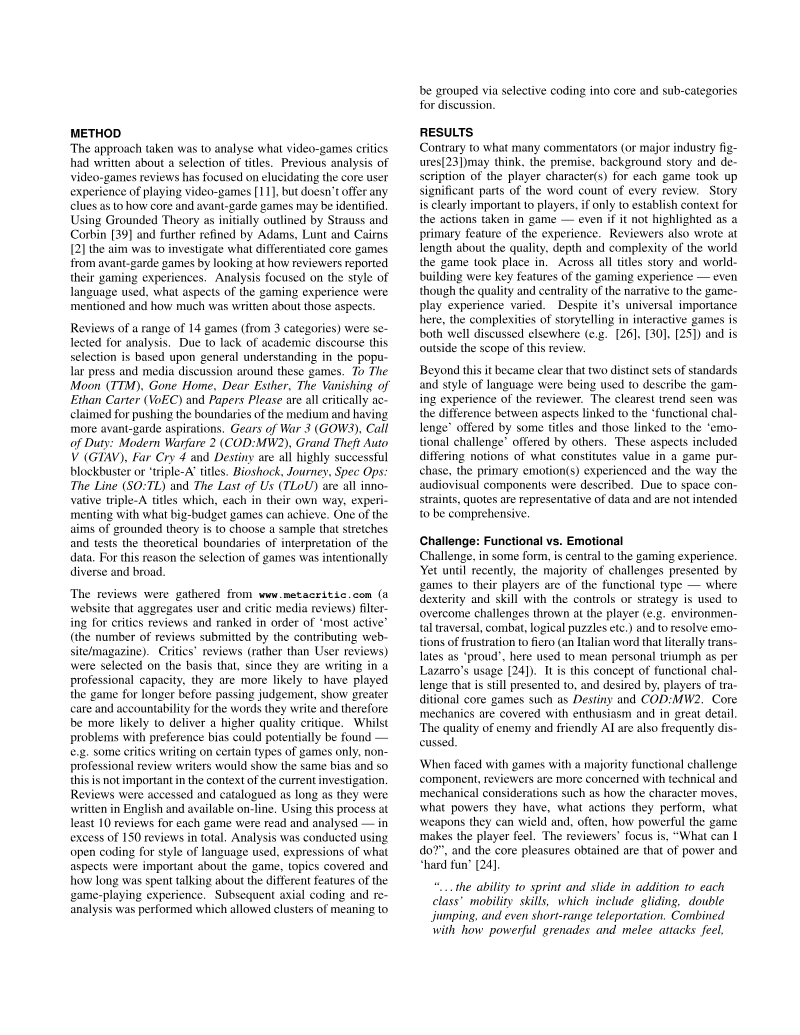
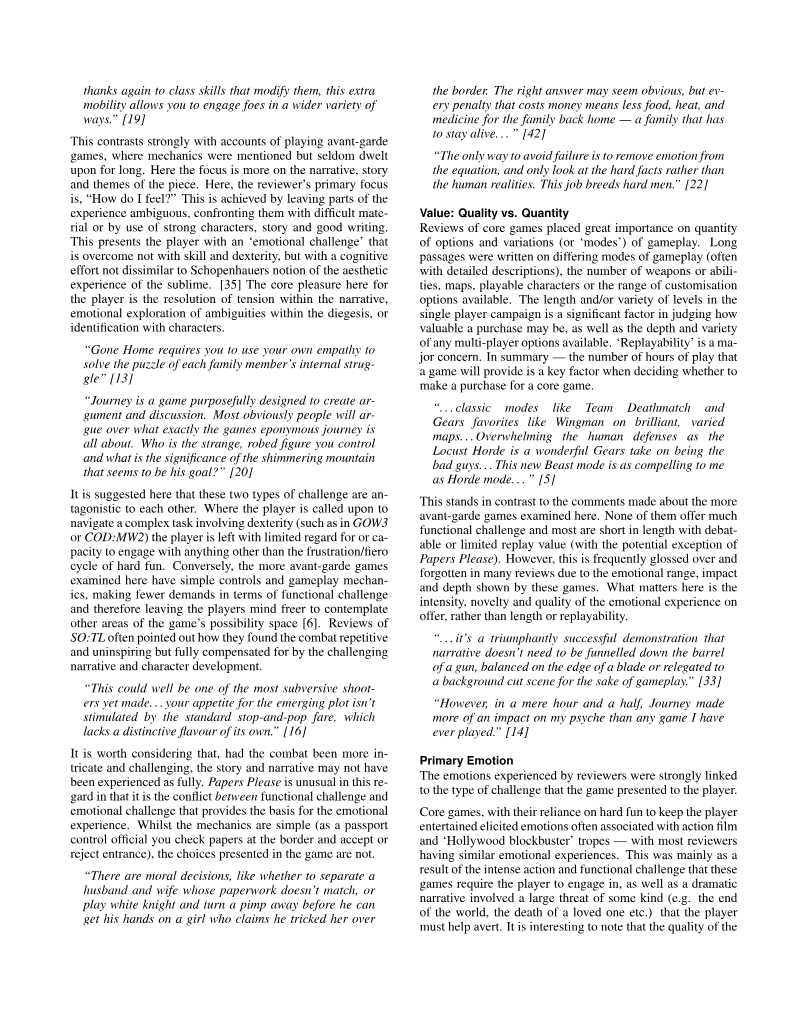
This analysis investigates the evolving landscape of digital games by identifying the criteria that distinguish traditional core titles from more experimental, avant-garde works.
- Games can be categorized by a primary challenge dichotomy: functional challenge, which demands mechanical mastery, versus emotional challenge, which requires cognitive and reflective engagement.
- Functional challenge defines traditional triple-A titles, where value is derived from technical performance, content volume, and player power.
- Avant-garde titles prioritize emotional challenge by utilizing ambiguity, solitude, and narrative depth, often intentionally de-emphasizing mechanical complexity and replayability.
Writers
Games and companies
Games