Game Studies reports and market data
Documents
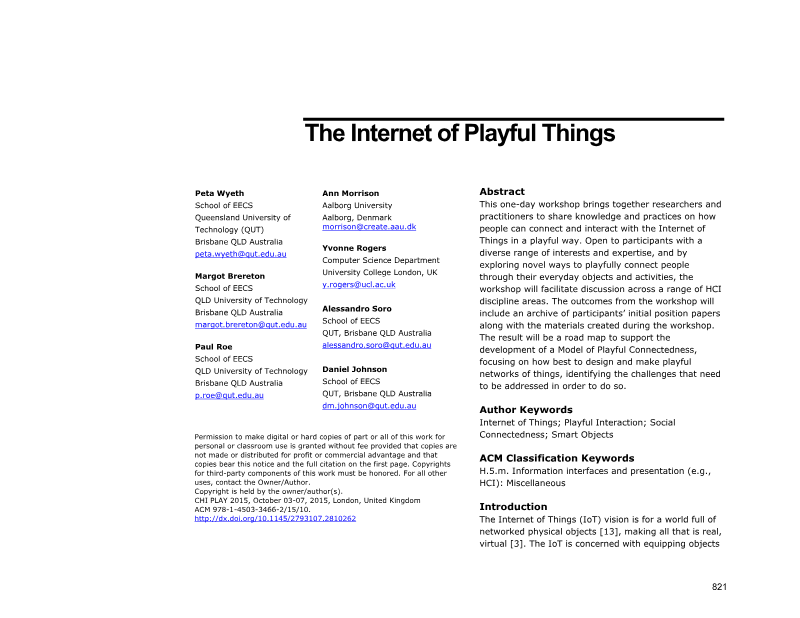


The Internet of Playful Things
The Internet of Playful Things addresses the research gap in the Internet of Things (IoT) field, which has historically prioritized utilitarian applications such as supply chain management and home automation over user experience and social interaction.
- The 'Internet of Playful Things' initiative aims to pivot IoT development from utilitarian functions like supply chain management toward socio-material interactions that foster social connectedness and well-being.
- The research framework was established during a 2015 CHI PLAY conference workshop, which utilized participant position papers and design-led brainstorming to map the intersection of HCI and playful design.
- Successful IoT design requires mapping physical and digital information in a way that accounts for human emotion, daily routines, and social dynamics rather than focusing solely on technical connectivity.

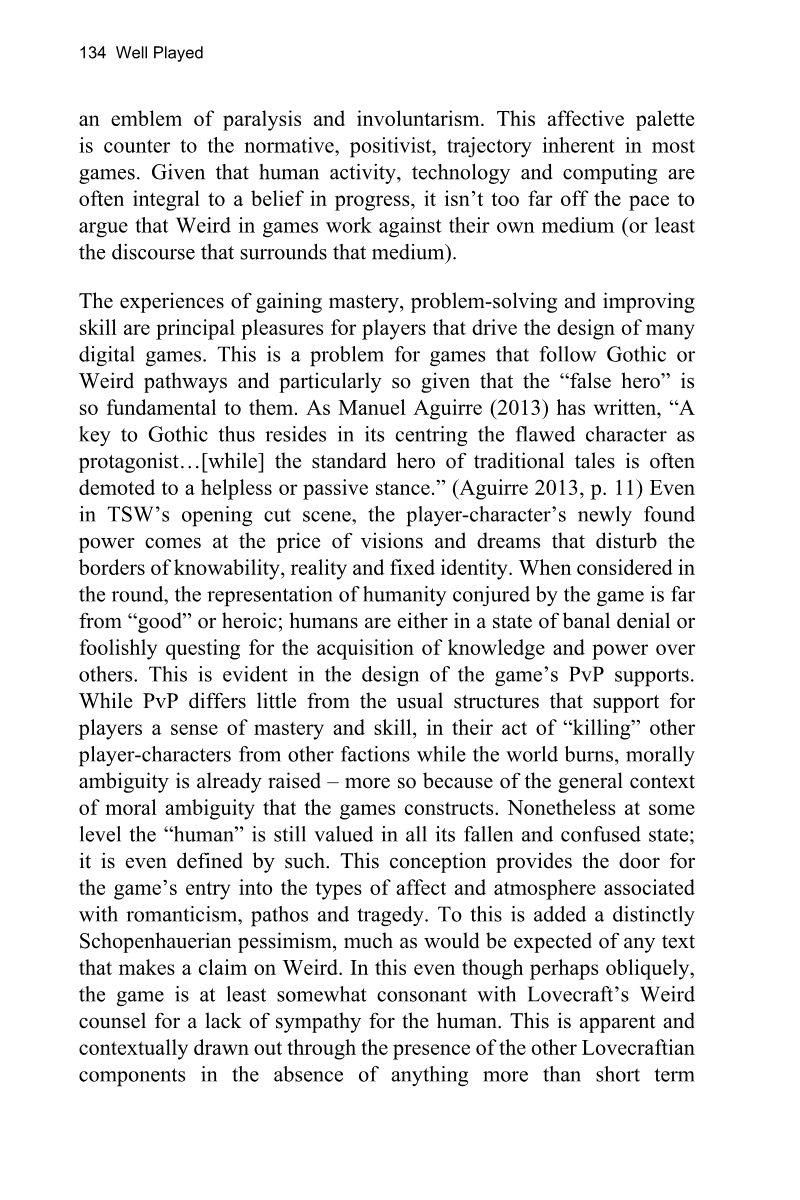

Well Played: A Seriously Weird Special Issue
The collection of analyses presented in Well Played: A Seriously Weird Special Issue explores the intersection of unconventional game design and the "Weird"—a thematic framework characterized by psychological dissonance, subversion of genre tropes, and the disruption of traditional player agency.
- The 'Weird' in game design—characterized by psychological dissonance and subversion of tropes—is an intentional strategy to challenge normative gameplay rather than a failure of design.
- Games such as WarioWare and Frog Fractions utilize instructional dissonance and erratic mechanics to create cognitive friction, forcing players into critical reflection.
- By employing 'defamiliarization,' experimental titles like Kentucky Route Zero, The Secret World, and Hatoful Boyfriend move player engagement beyond simple consumption toward an interrogation of the medium’s artifice.
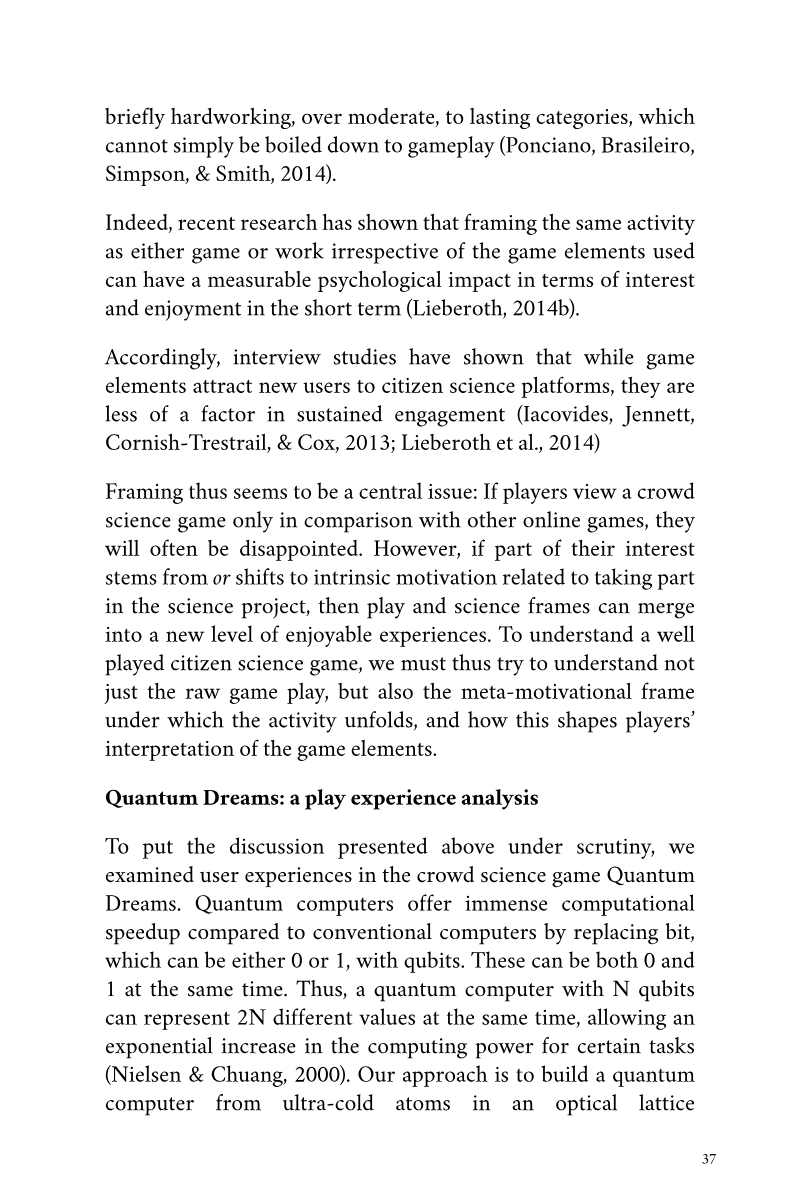
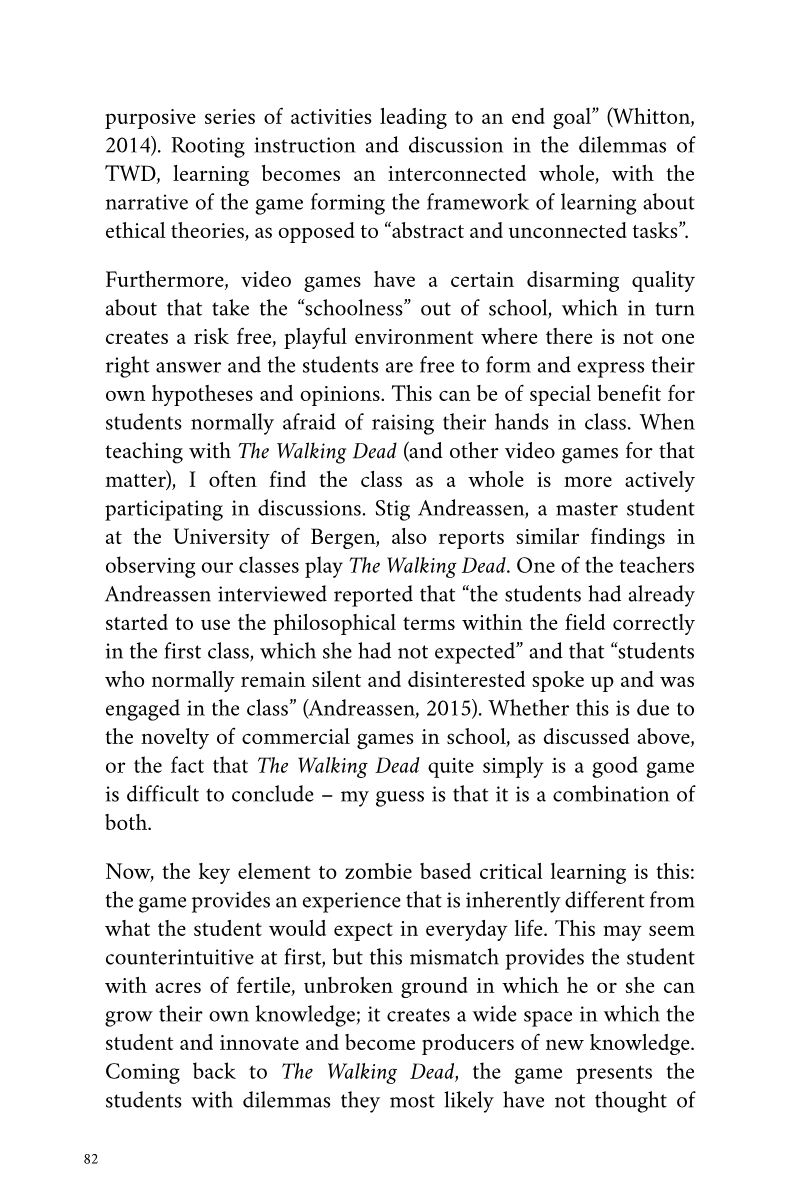

Well Played: Special Issue on Learning and Games (2015)
Video games serve as powerful, multimodal active-learning tools capable of translating complex academic content into engaging, narrative-driven experiences.
- The effectiveness of games as pedagogical tools depends on intentional design, structured curriculum integration, and the learner's ability to bridge gaming mechanics with conceptual frameworks.
- Games facilitate learning across diverse fields by utilizing interactive simulations, such as Plague, Inc.: Evolved for probabilistic reasoning and titles like Medulla and Quantum Dreams for technical scientific education.
- Narrative-driven experiences like The Walking Dead provide risk-free environments for exploring complex ethical dilemmas, though success requires explicit reflection mechanics to ensure knowledge transfer.


Videogame Visions of Climate Futures: ARMA 3 and Implications for Games and Persuasion
Video games frequently struggle to influence player perspectives on climate change because overt, mechanics-heavy simulations often trigger ideological resistance.
- Explicit, mechanics-heavy climate simulations often trigger 'simulation fever,' causing players to reject game logic to protect their existing ideological beliefs.
- Aesthetic integration of sustainable infrastructure is more effective than didactic mechanics for fostering long-term cultural shifts regarding climate change.
- ARMA 3 successfully normalizes a post-carbon world by embedding renewable energy, such as wind and solar installations, as background elements rather than focal points of political debate.
Video Game Self-efficacy and its Effect on Training Performance
Serious games serve as highly effective training instruments that leverage experiential, active, and situated learning to outperform traditional text-based instructional methods.
- Serious games outperform traditional text-based instruction for procedural skill execution by providing authentic, risk-free environments that mirror real-world demands.
- Video game self-efficacy is a critical moderator that dictates how effectively a trainee translates simulation exposure into actual performance outcomes.
- While both game-based and text-based methods are equally effective for acquiring long-term declarative knowledge, interactive simulations are superior for maintaining and executing complex procedural tasks.
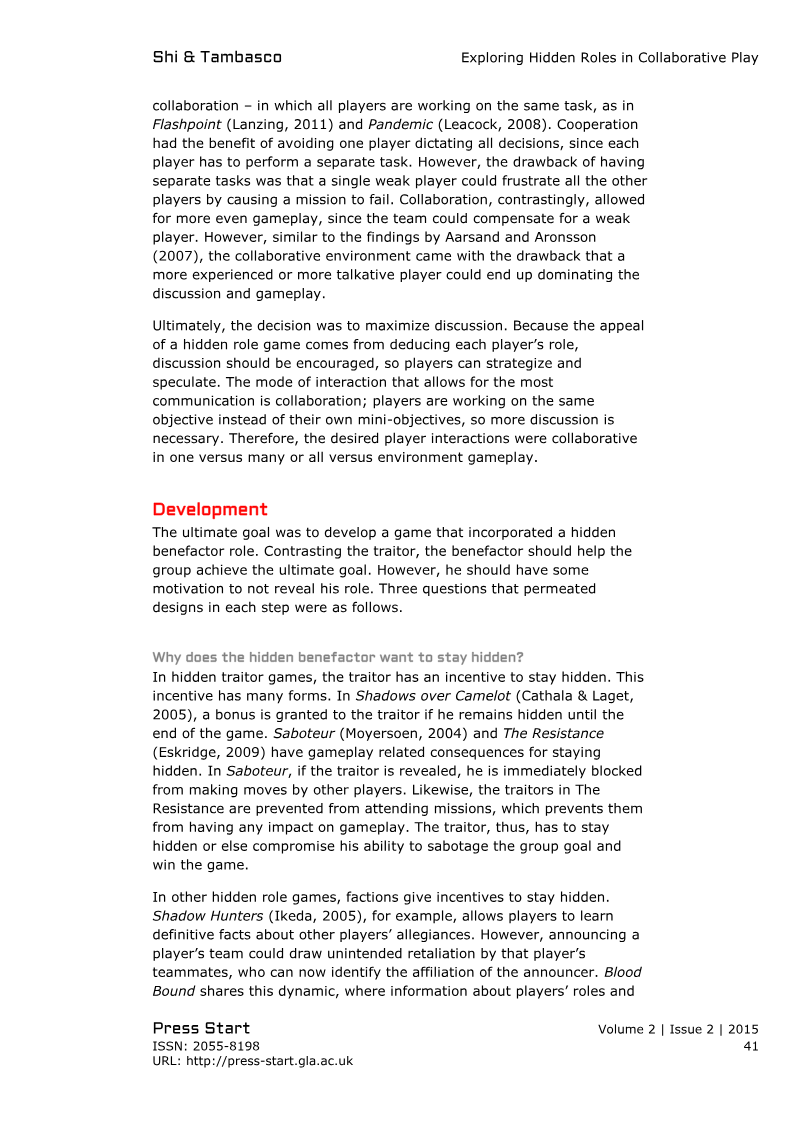
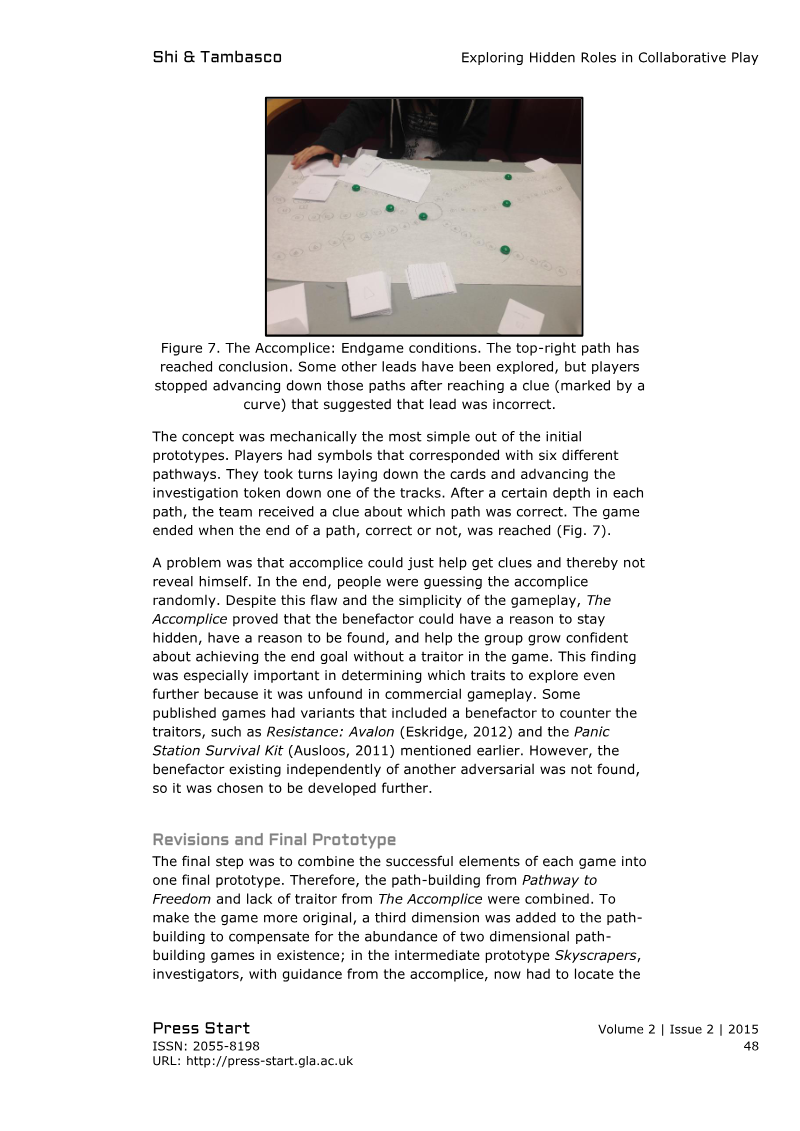
Insight: Exploring Hidden Roles in Collaborative Play
Co-located collaborative gaming environments often rely on traditional cooperative or competitive frameworks, yet the integration of hidden roles offers a significant opportunity to deepen player interaction and trust dynamics.
- The 'hidden benefactor' role offers a new design space for collaborative games by allowing players to secretly assist the group without the antagonistic intent of traditional traitor mechanics.
- Successful implementation of hidden roles requires balancing incentives, such as unique powers or protection from elimination, to motivate players to maintain their secrecy.
- Prototypes like 'Nab a Banana' demonstrate that aligning individual objectives with team success through voting blocks encourages players to actively investigate the identities of their peers.
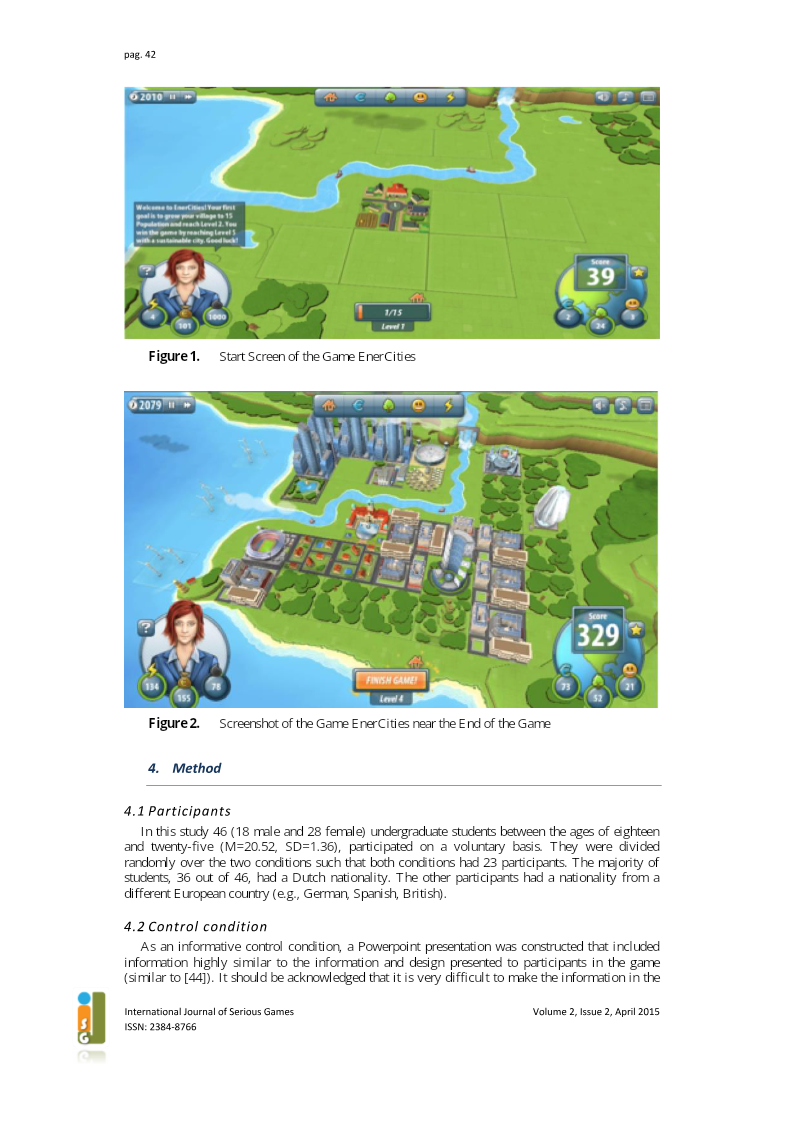
Measuring Effectiveness of Persuasive Games Using an Informative Control Condition
Persuasive games are frequently promoted as superior tools for fostering attitude change and knowledge acquisition, yet empirical evidence often fails to substantiate these claims when compared to traditional media.
- A study of 46 university students comparing the game EnerCities to a PowerPoint presentation found no statistically significant difference in knowledge gain or attitude shifts between the two formats.
- Participants reported higher levels of credibility and learning outcomes when using traditional presentation materials compared to the interactive game.
- Interactive game features may introduce extraneous cognitive processing that distracts users from core educational content, negating the assumed persuasive advantage of the medium.
Games Are Motivating, Aren't They? Disputing the Arguments for Digital Game-Based Learning
Digital game-based learning is frequently promoted as a transformative educational panacea, yet these claims often lack the rigorous empirical foundation necessary to support such widespread adoption.
- Digital game-based learning currently lacks a rigorous empirical foundation, relying heavily on anecdotal evidence and speculative hypotheses rather than verifiable scientific data.
- The assumption that high player engagement inherently leads to effective learning is flawed, as game design often prioritizes rapid performance and immersion over the deep, metacognitive reflection required for knowledge acquisition.
- Game mechanics frequently lack the necessary instructional scaffolding, meaning that the freedom of movement in digital environments can hinder rather than facilitate learning.

Conjuring the Ideal Self: An Investigation of Self-Presentation in Video Game Avatars
The investigation into avatar creation and gameplay behavior within The Elder Scrolls Online reveals that digital self-presentation is fundamentally driven by the psychological interplay between a player’s self-esteem and their real-world identity.
- Players use avatars as a canvas for their 'ideal self,' with body self-esteem acting as the primary predictor for how closely a player chooses to mirror their real-world identity in their virtual counterpart.
- Avatar personalization significantly intensifies the player-avatar bond, correlating with higher levels of physiological arousal and increased aggressive tendencies during violent gameplay.
- Gender-based role selection in The Elder Scrolls Online largely mirrors traditional societal stereotypes, with female players favoring supportive roles like the Templar and male players preferring damage-focused classes like the Dragonknight.
The Legal Nature of Video Games: Adapting Copyright Law to Multimedia
The legal classification of video games remains a complex challenge within copyright law due to their multifaceted, multimedia nature.
- Video games are best protected under current copyright frameworks as an amalgamation of distinct works rather than a single sui generis multimedia category.
- Existing copyright laws effectively protect individual game components, such as source code as literary works and visual assets as graphic works or films.
- Creating a new, unified legal category for video games is unnecessary and potentially detrimental to the protection of separately exploitable assets like character designs and soundtracks.
One Simulated Hand, Two Real Hands: Antisimulation and Phenomenological Correspondence in Videogame Control Schemes
This analysis establishes a framework for evaluating videogame control schemes through the lens of phenomenological correspondence, which measures the relationship between the complexity of a simulated action and the physical input required by the player.
- Control schemes can be categorized into three models based on phenomenological correspondence: reductionist, completionist, and antisimulation.
- Antisimulation games like QWOP, Surgeon Simulator 2013, and Octodad: Dadliest Catch intentionally design controls to be more complex than the simulated task to disrupt player agency.
- Reductionist correspondence, seen in titles like Call of Duty 4 and Canabalt, simplifies complex real-world actions into intuitive, singular inputs to prioritize player empowerment.
Parasocial and Social Player-Avatar Relationships: Social Others in Thomas Was Alone
The relationship between players and their digital avatars has evolved beyond traditional parasocial models, shifting toward a framework where avatars function as social others.
- The Banks-Bowman social categorization system (2014) provides a framework for analyzing player-avatar relationships beyond traditional parasocial models, identifying four distinct dynamics: avatar-as-object, avatar-as-me, avatar-as-symbiote, and avatar-as-social-other.
- The 'avatar-as-social-other' relationship occurs when players perceive a playable character as having independent agency, often leading to increased emotional investment and a sense of responsibility for the character's well-being.
- In the game 'Thomas Was Alone' (2012), the developer uses narrative voiceovers and character-specific traits to successfully frame simple geometric shapes as sentient entities, effectively pushing players away from an 'avatar-as-object' perspective.
Writers
Games and companies
Games