Game Studies reports and market data
1,143 documents·283 writers
Documents
Whitepaper23 pages
The Man with the Gun is a Boy who Plays Games: Video Games, White Innocence, and Mass Shootings in the U.S.
The recurring tendency to blame video games for mass shootings in the United States functions as a strategic rhetorical device designed to preserve the concept of white innocence.
- Blaming video games for mass shootings functions as a rhetorical strategy to preserve white innocence by framing white male perpetrators as corrupted victims of media rather than agents of ideological violence.
- Empirical research consistently fails to establish a causal link between video game consumption and real-world violence, yet political and media figures repeatedly prioritize gaming as a culprit following mass casualty events.
- The focus on digital media serves as a distraction from the systemic issues of easy firearm access, misogyny, and the proliferation of political extremism in the United States.
Journal of Games Criticism

Whitepaper14 pages
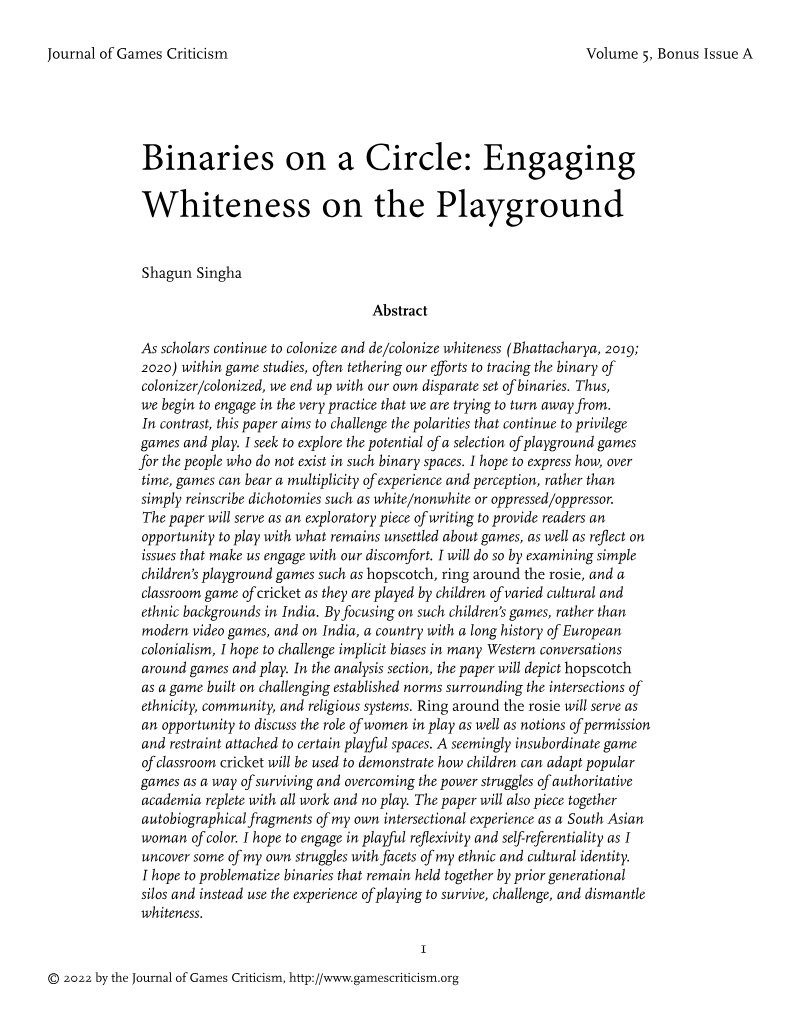
Binaries on a Circle: Engaging Whiteness on the Playground
Traditional game studies often rely on rigid, binary frameworks such as colonizer versus colonized or white versus other, which fail to capture the fluid complexities of identity.
- Traditional game studies often rely on rigid, binary frameworks that fail to capture the fluid complexities of identity and power.
- Whiteness functions as a pervasive system of power, capital, and colonial influence that intersects with caste, class, and geography.
- Games such as hopscotch, cricket, and nursery rhymes are historically rooted in colonial structures that reinforce authoritative norms.
Journal of Games Criticism
Whitepaper36 pages
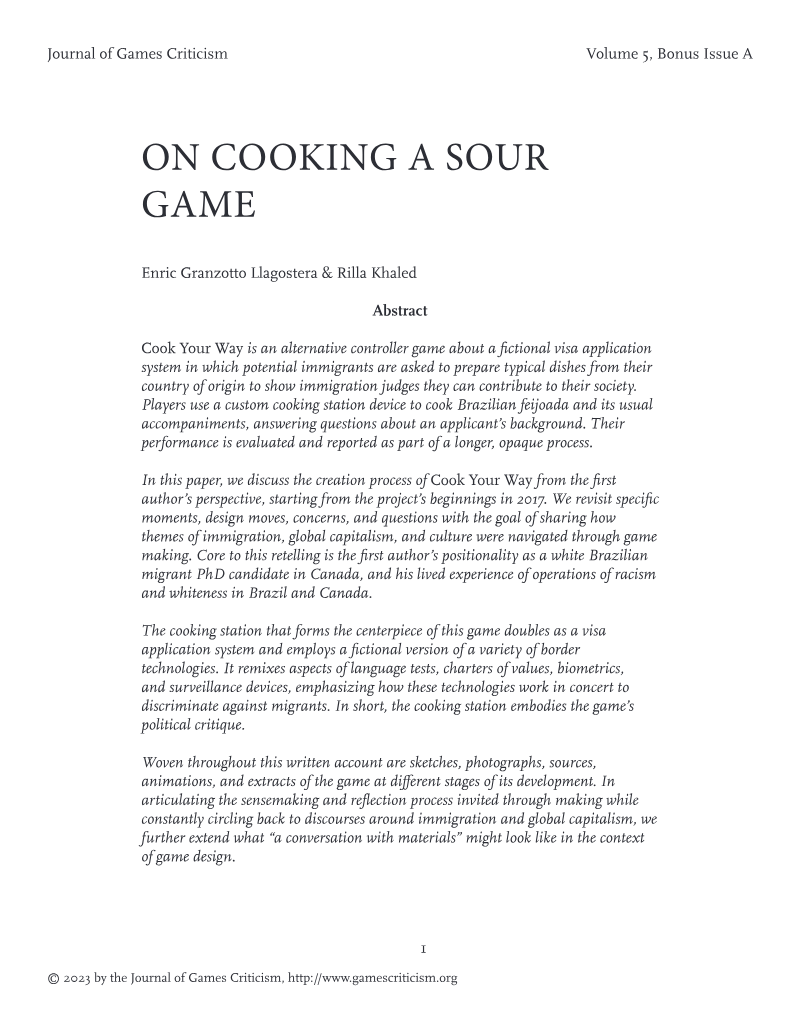
On Cooking a Sour Game
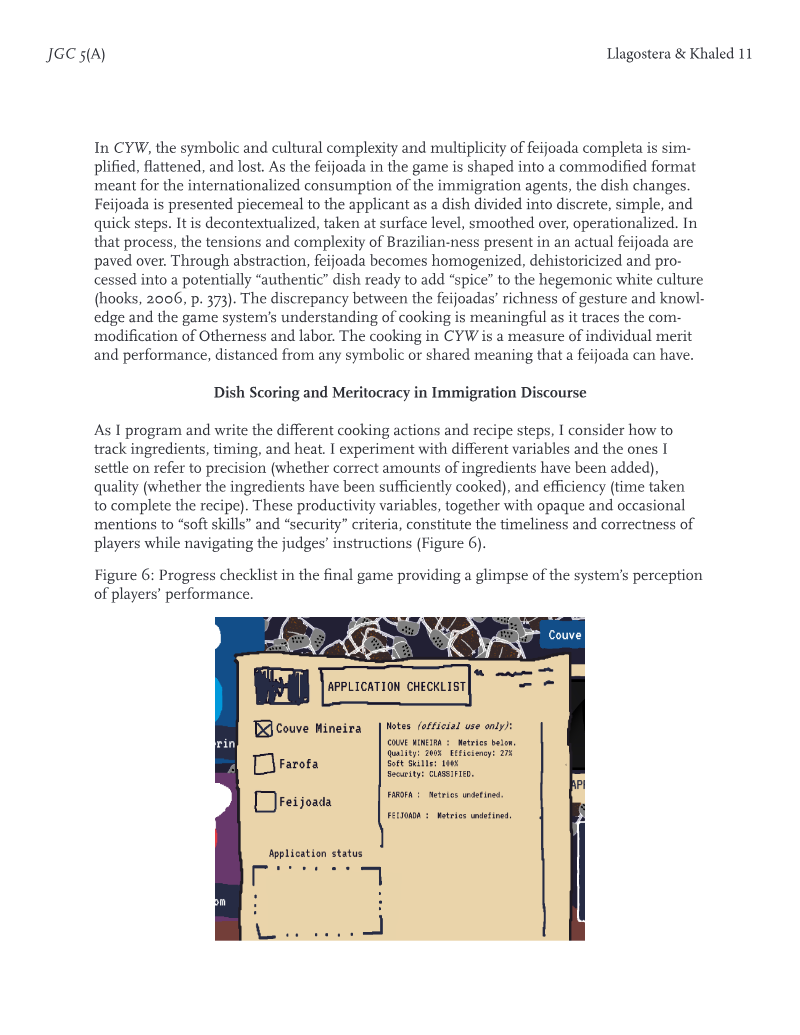
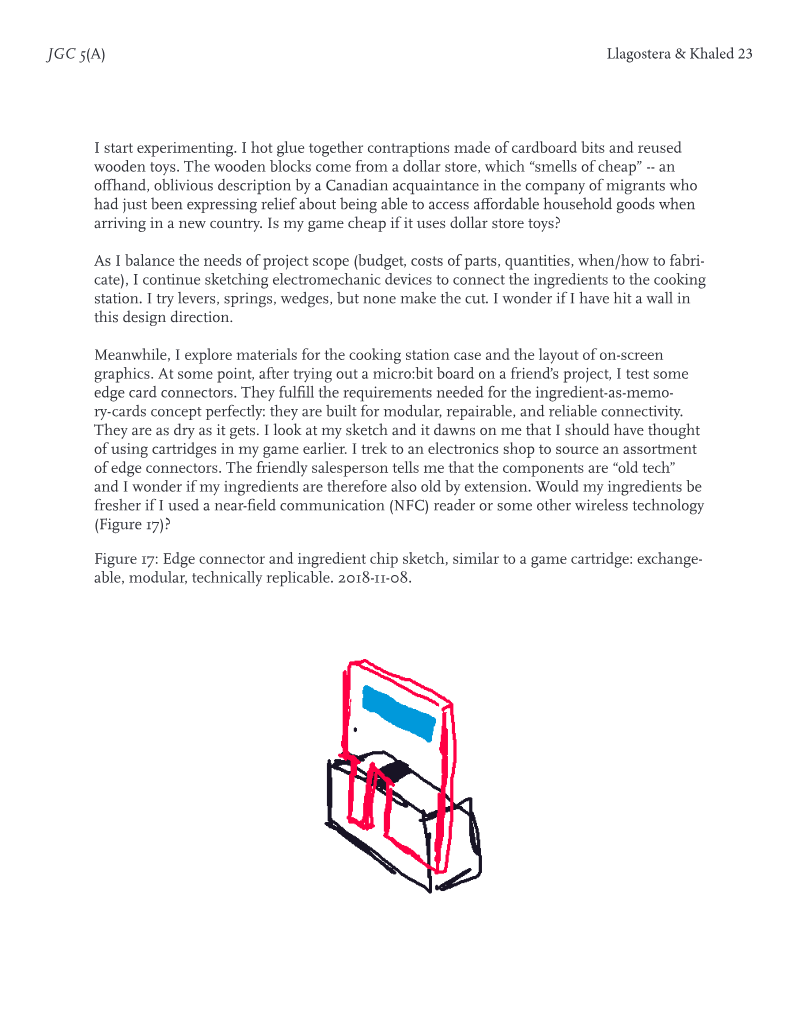
Cook Your Way functions as a critical intervention in game design, utilizing an alternative controller and the preparation of traditional Brazilian cuisine to interrogate the dehumanizing mechanics of global immigration systems.
- Cook Your Way uses a custom physical cooking interface to simulate the high-pressure, dehumanizing experience of navigating the Canadian immigration system.
- The game design rejects traditional empathy-driven narratives and player-empowerment mechanics in favor of structural instability and anticlimax to mirror bureaucratic inefficiency.
- By utilizing modular, transparent hardware, the project forces players to confront the friction and futility inherent in state-sanctioned border regimes.
Journal of Games Criticism