1 free read left. Create a free account for unlimited reading + AI research.
Create free accountWhitepaperAssociation for Computing Machinery
Distilling the key insights…
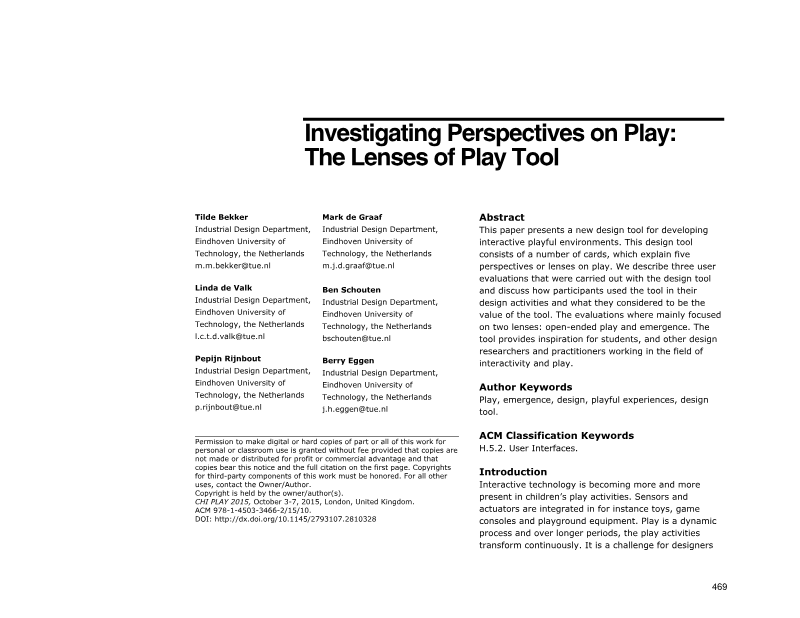
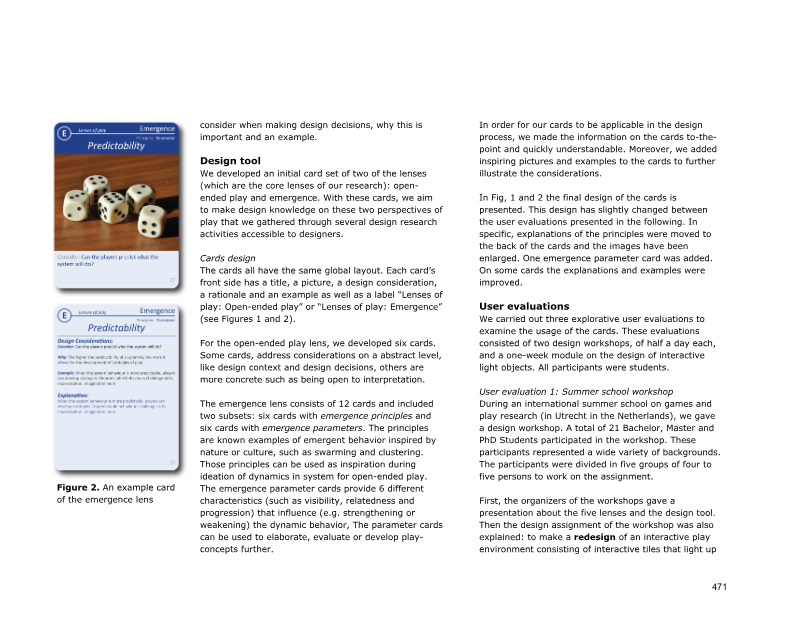
The Lenses of Play tool is a card-based design instrument developed to assist practitioners and students in creating interactive, playful environments. The primary thesis is that structured, theory-grounded design knowledge can be effectively translated into accessible, hands-on tools to help designers navigate the complexities of interactive play. The tool organizes design considerations into five distinct lenses: open-ended play, playful experiences, forms of play, stages of play, and emergence. By providing these perspectives, the tool aims to bridge the gap between abstract design theory and practical application, particularly in projects involving sensors, actuators, and evolving play dynamics.
The research methodology involved three separate user evaluations conducted in the Netherlands, focusing specifically on the lenses of open-ended play and emergence. These evaluations included a summer school workshop with 21 multidisciplinary university students, a vocational training workshop with 40 human-technology students, and a week-long course for 18 master-level design students. Data were gathered through real-time observations, group interviews, and feedback sessions.
Key findings indicate that the tool is highly effective as a source of inspiration during both initial brainstorming and later redesign phases. Participants reported that the cards helped them analyze concepts, structure ideas, and ground design decisions in literature. While users typically selected only two to four cards at a time, they found the hands-on, low-profile nature of the tool intuitive and beneficial for collaborative discussion. The study concludes that the Lenses of Play tool is a valuable resource for designers—especially those with limited experience—to manage the balance between system predictability and user freedom in interactive environments. Future work aims to refine the full card set and expand testing to include professional design practitioners.
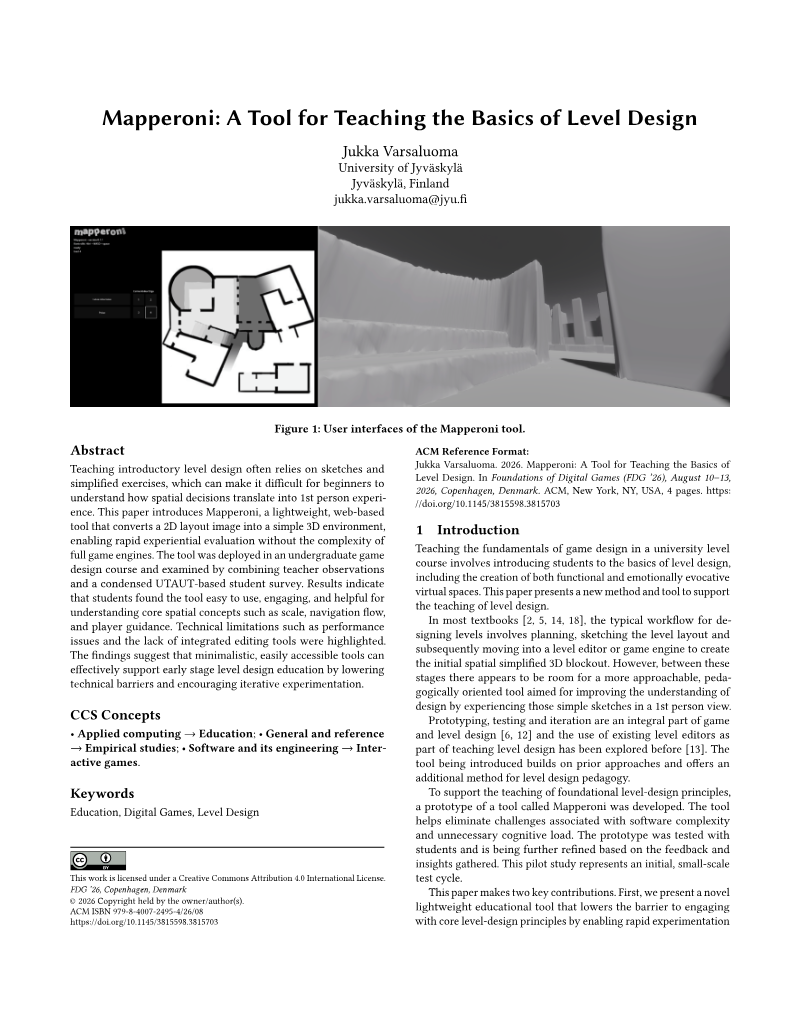
Association for Computing Machinery · 2026
Association for Computing Machinery · 2026
Association for Computing Machinery · 2025
Association for Computing Machinery · 2025
Association for Computing Machinery · 2025
Association for Computing Machinery · 2025
Association for Computing Machinery · 2025
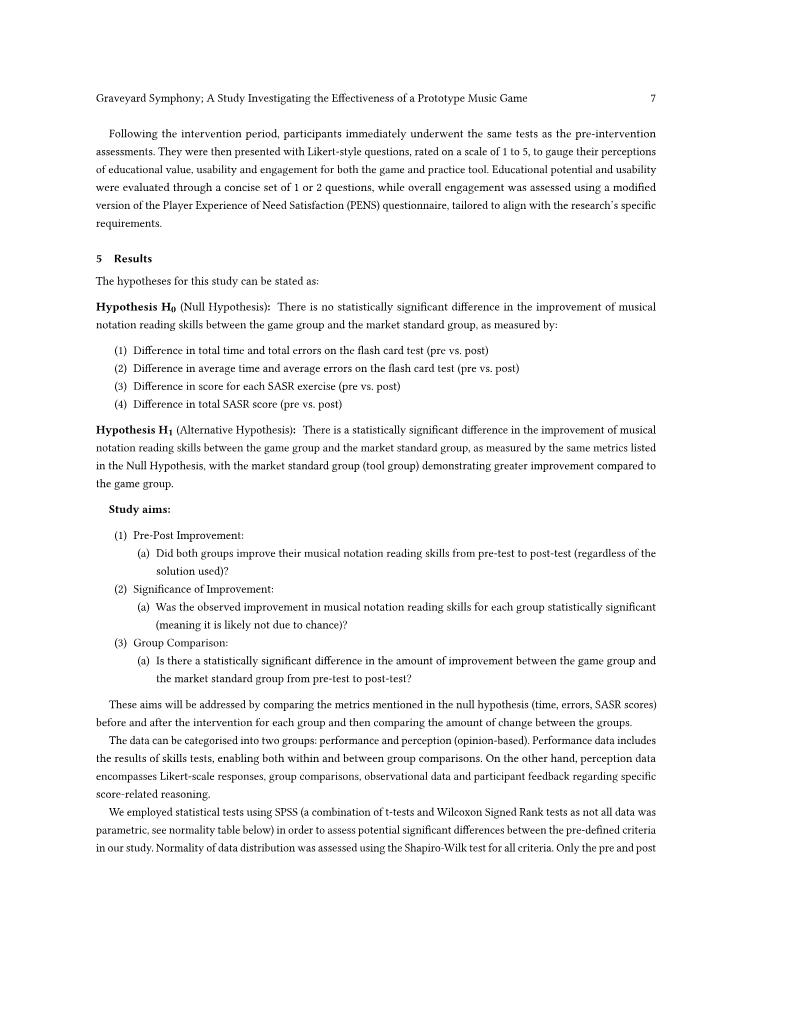
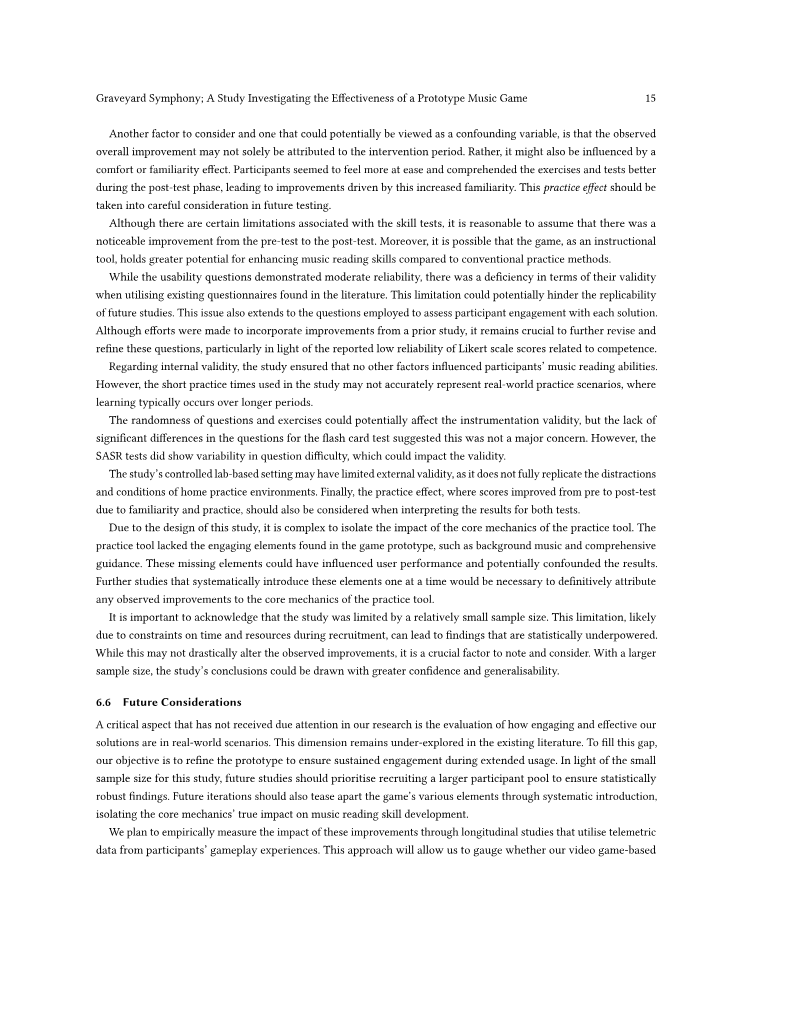
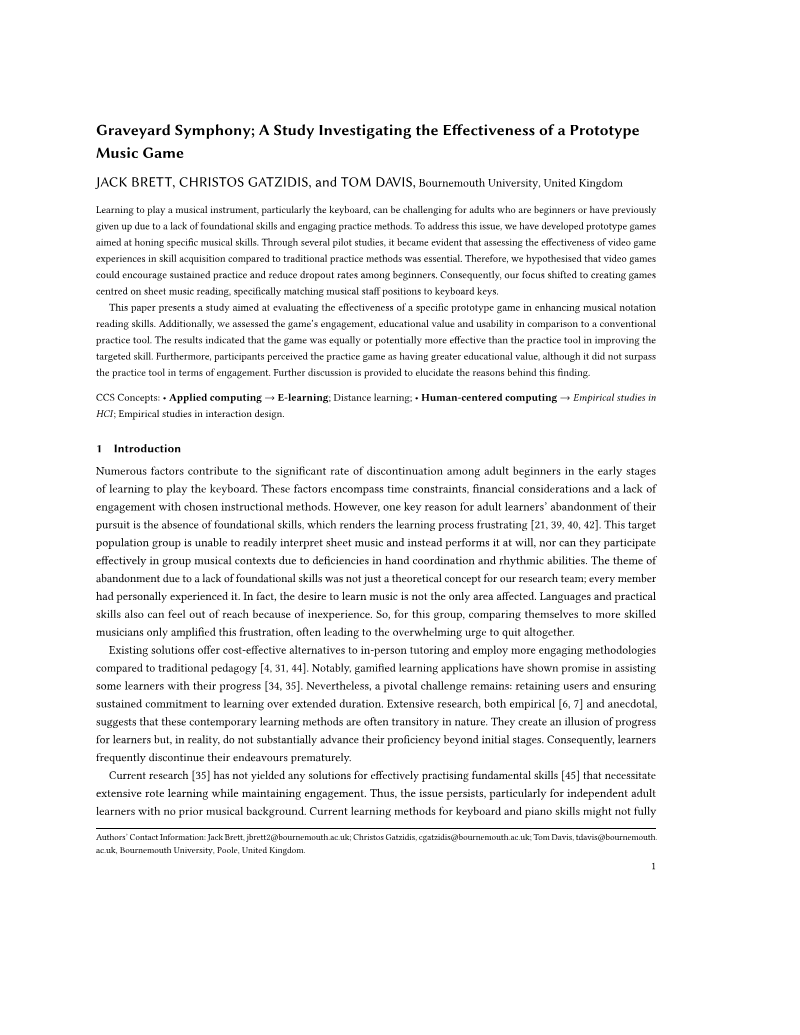
Association for Computing Machinery · 2024
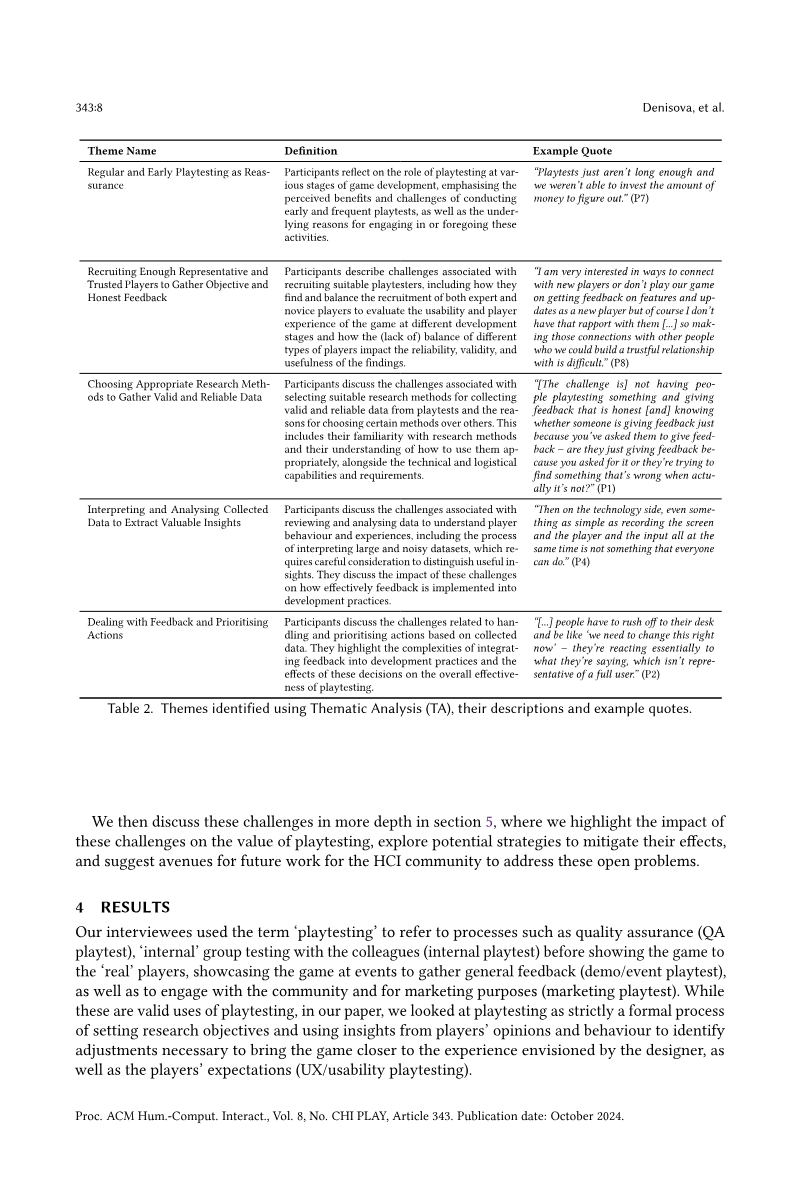
Association for Computing Machinery · 2024
Association for Computing Machinery · 2024
Association for Computing Machinery · 2024
Association for Computing Machinery · 2024
Ludic Language Pedagogy · 2026



























Comments