Serious Games reports and market data
275 game industry reports, presentations and talks about serious games from writers such as International Journal of Serious Games, DiGRA and European Conference on Games Based Learning (ECGBL), newest from 2026. Every document has a summary and key insights with the page they come from.
Documents
Playful Pedagogy: Student Perceptions of Academic Skill Development Through Board Games
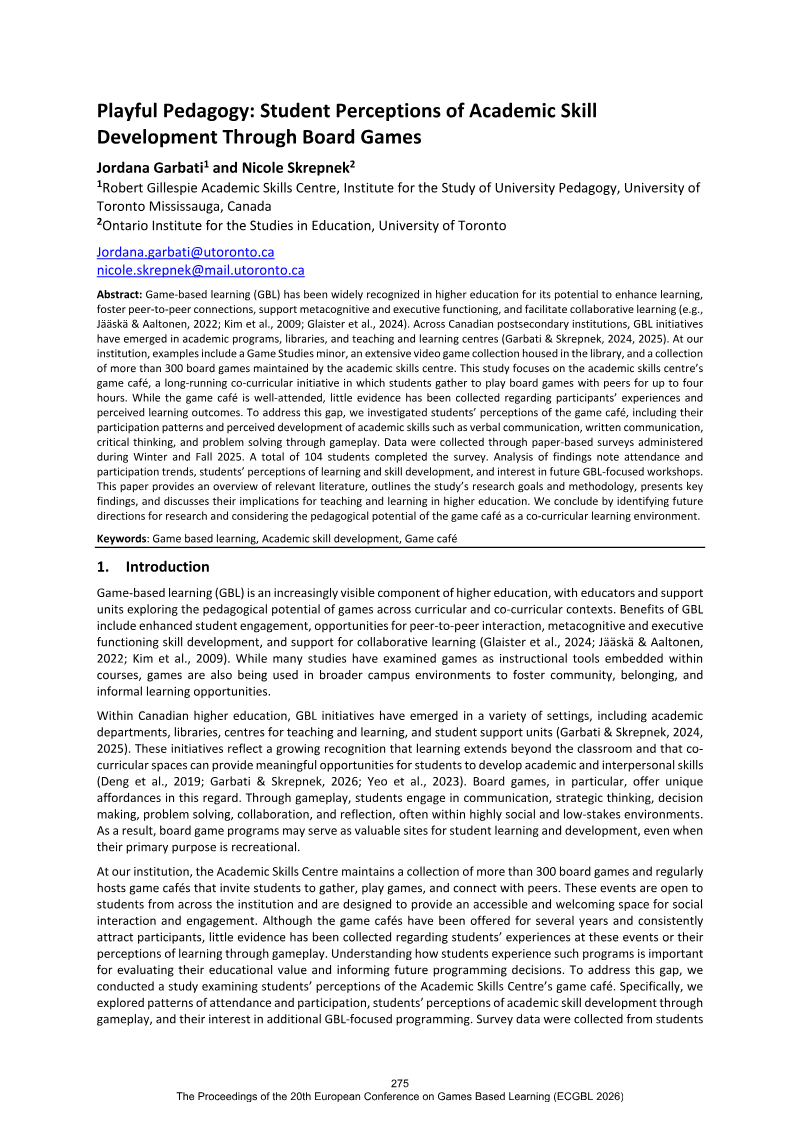
This study examines how university students perceive a co-curricular board game café hosted by an Academic Skills Centre at a Canadian university, with a focus on participation patterns, perceived academic skill development, and interest in future game-based learning workshops.
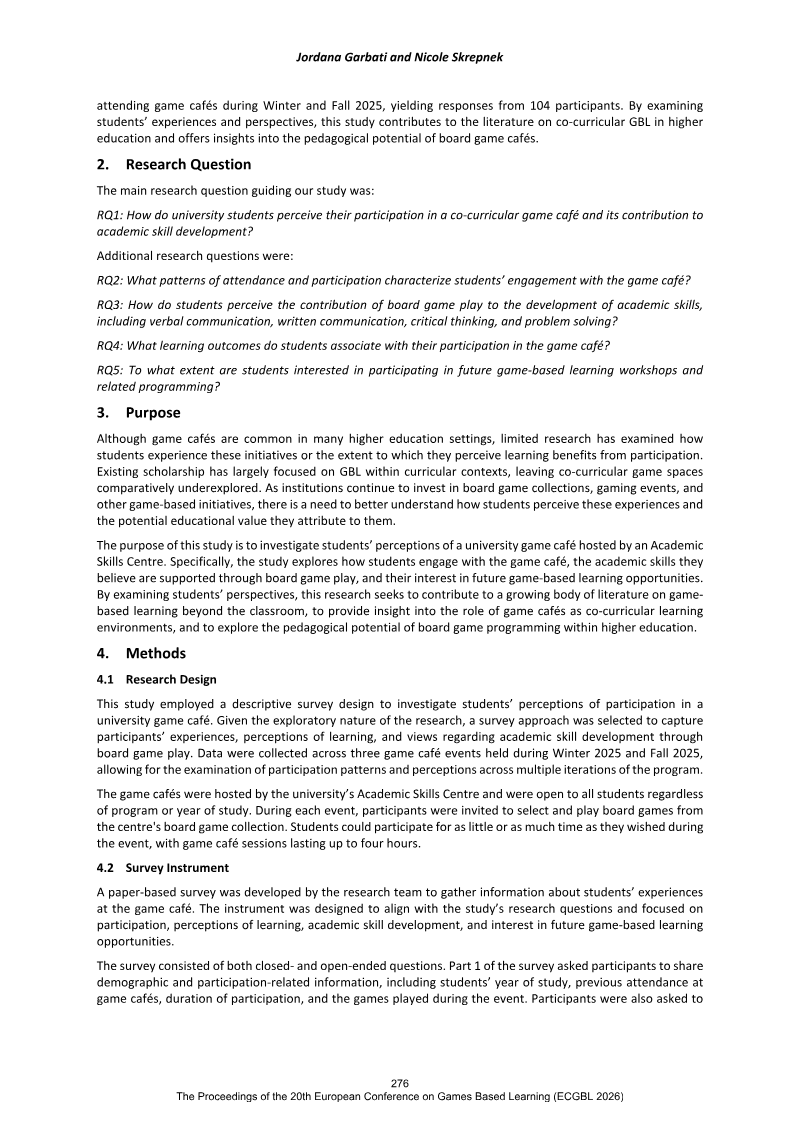
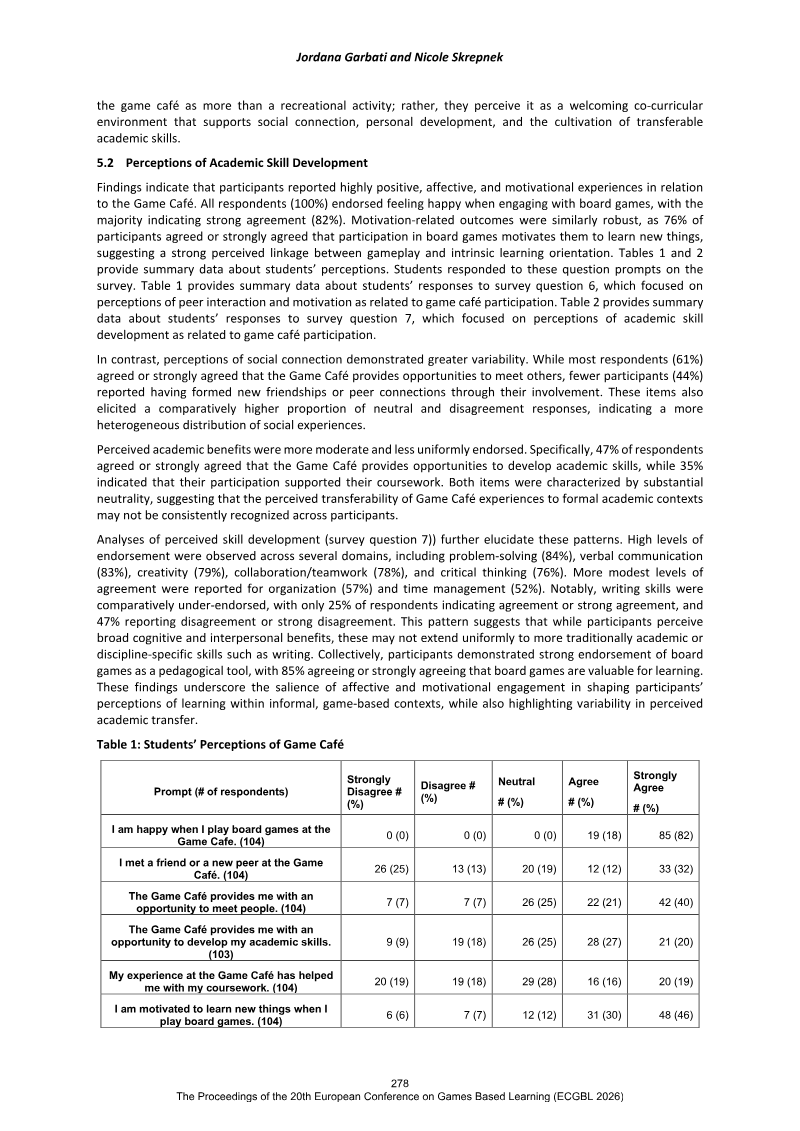
- All 104 surveyed students reported happiness during board game sessions, and 76% agreed that board games motivate them to learn, making affective and motivational responses the study's strongest findings.
- Students perceived the strongest skill development in problem solving (84%), verbal communication (83%), creativity (79%), collaboration (78%), and critical thinking (76%).
- Perceived transfer of gained skills to coursework was modest at 35%, and writing skills were endorsed by only 25% of respondents.



An Early-Stage Feasibility and Usability Pilot for an Immersive Serious Game to Support English Spelling and Semantic Skills
This early-stage feasibility pilot examined whether an AI-assisted virtual reality serious game could support adult English spelling and semantic skills, with the broader aim of addressing persistent literacy challenges.
- The pilot found that spelling errors fell from a pre-test mean of 3.86 to a post-test mean of 3.07, a medium effect (Cohen's d = 0.514), but the change was not statistically significant (p = 0.077).
- Completion time also decreased with a medium effect (Cohen's d = 0.447), yet this too was not statistically significant (p = 0.118).
- Self-reported gains were high, with 75% of participants reporting improved spelling and 87.5% reporting semantic benefits, though subjective measures carry their own limitations.
Defeat Means Friendship: Does Competitive Play Prepare Children for Cooperation?
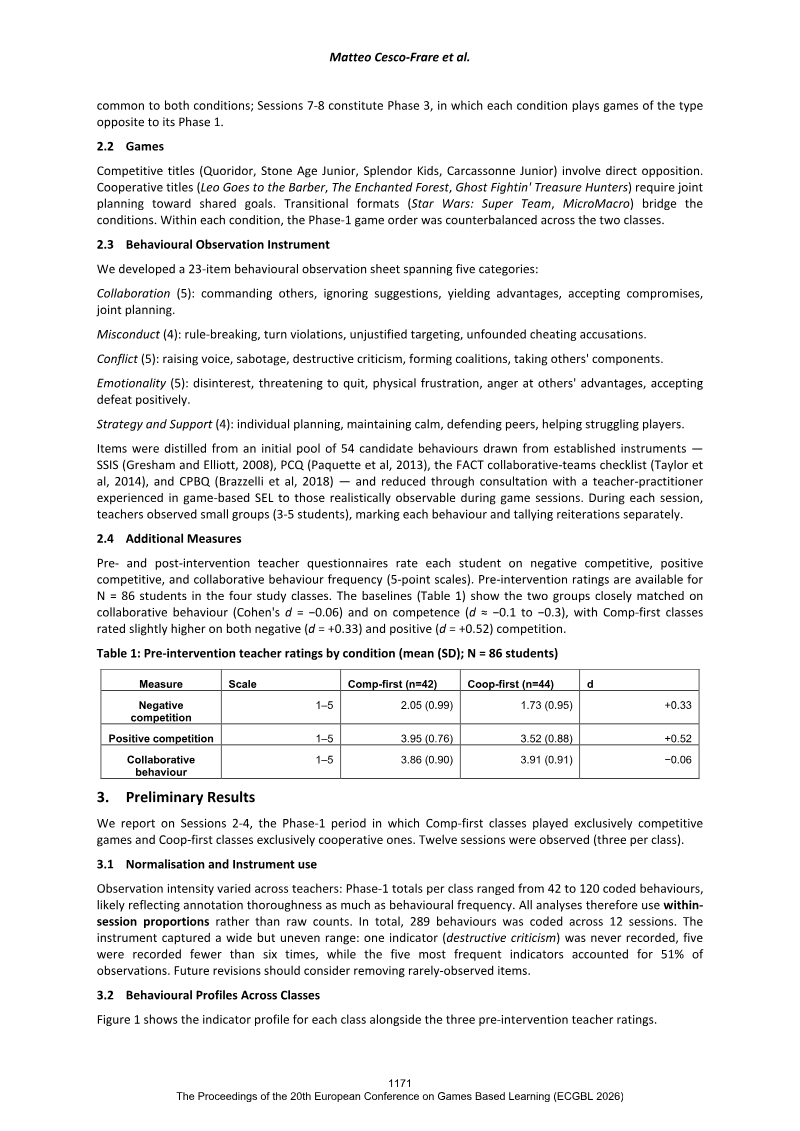
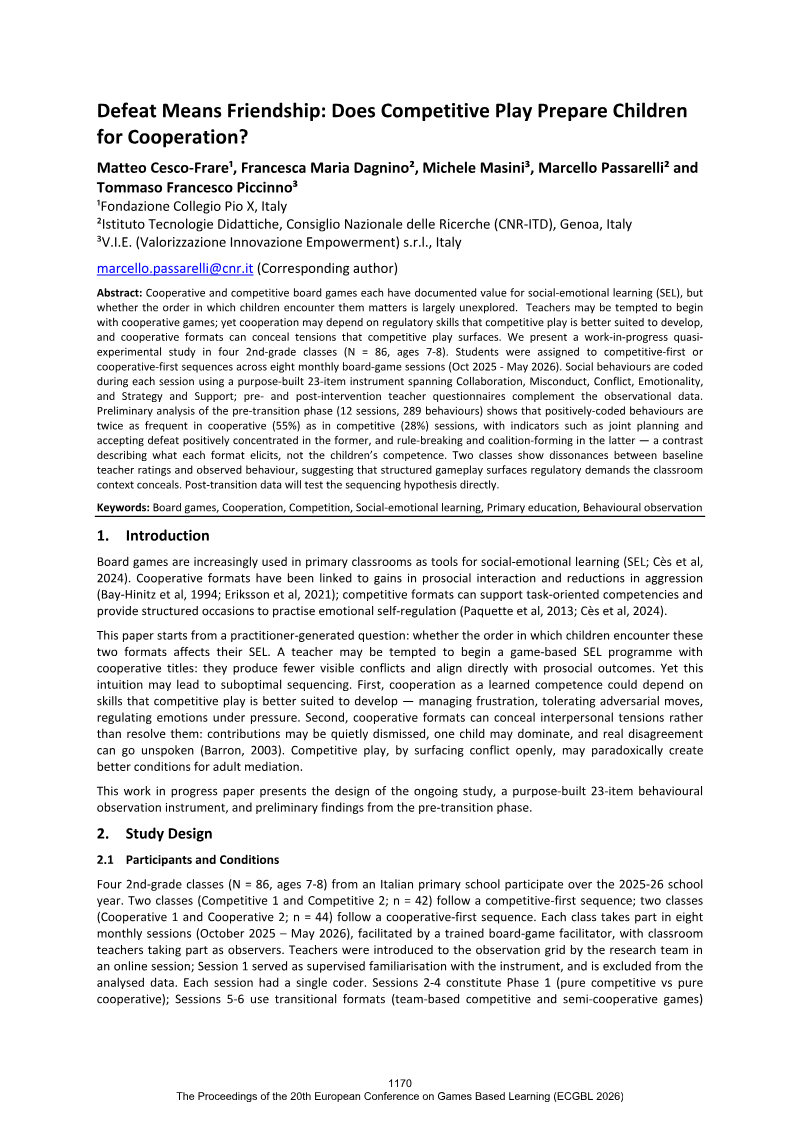
This work-in-progress quasi-experimental study asks whether the order in which children encounter competitive and cooperative board games affects their social-emotional learning.
- The study examines whether playing competitive versus cooperative board games in a set order affects social-emotional learning in 86 seven- to eight-year-olds across four second-grade classes in an Italian primary school, with eight monthly sessions from October 2025 to May 2026.
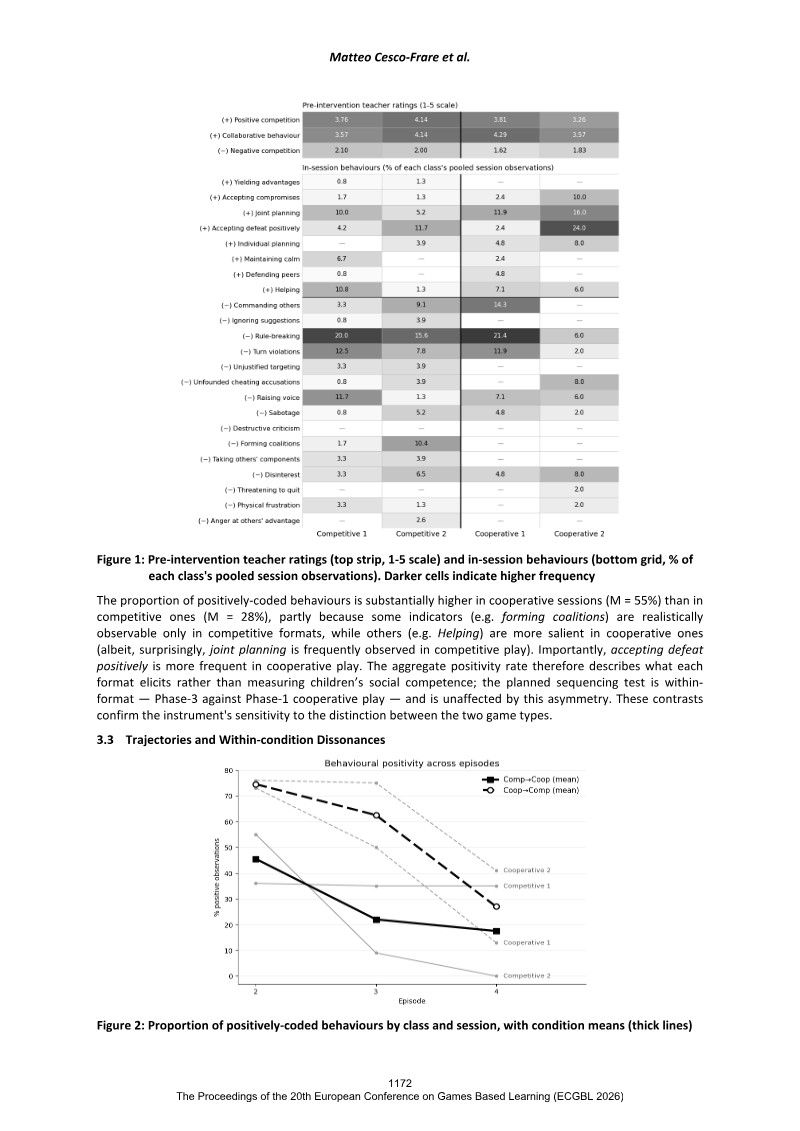
- In preliminary analysis of 12 sessions and 289 coded behaviours, positively coded behaviours made up 55% of cooperative sessions versus 28% of competitive ones, a contrast the authors attribute to what each game format elicits rather than to children's social competence.
- The core hypothesis is that competitive play may build regulatory skills such as frustration management and tolerance of adversarial moves that later support cooperation, but this sequencing effect remains untested until the final data phase.
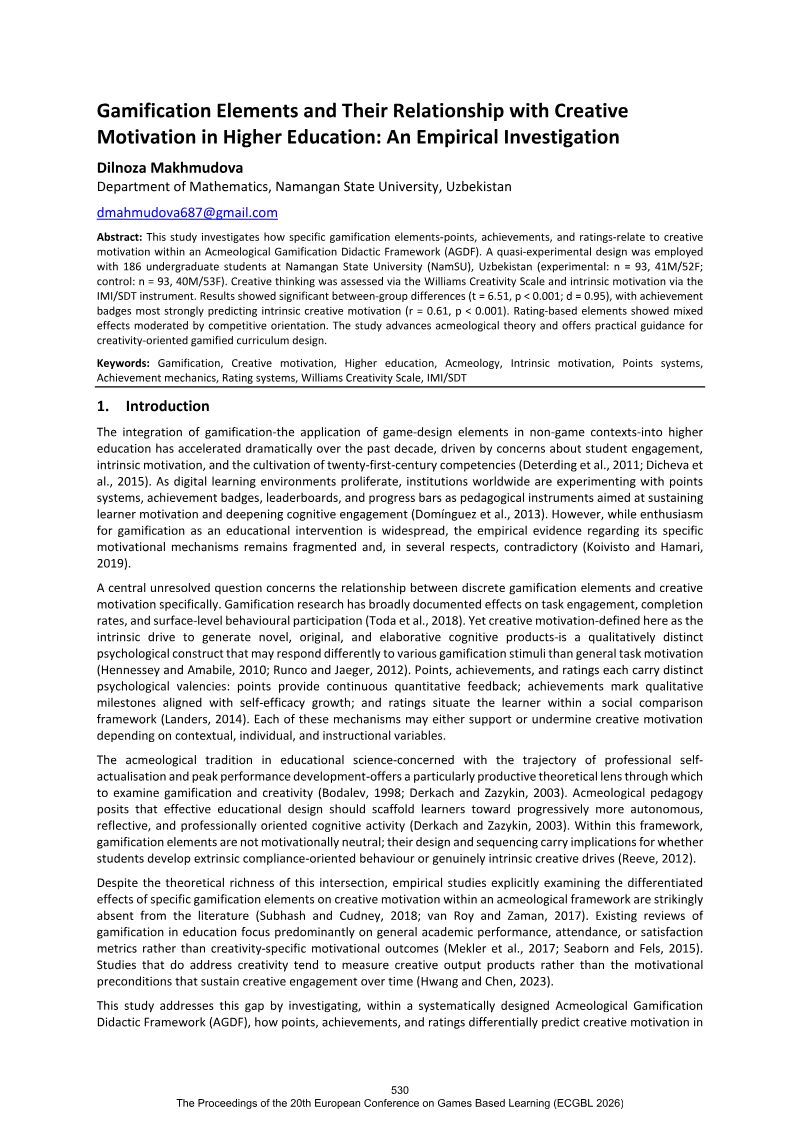
Gamification Elements and Their Relationship with Creative Motivation in Higher Education: Uzbekistan
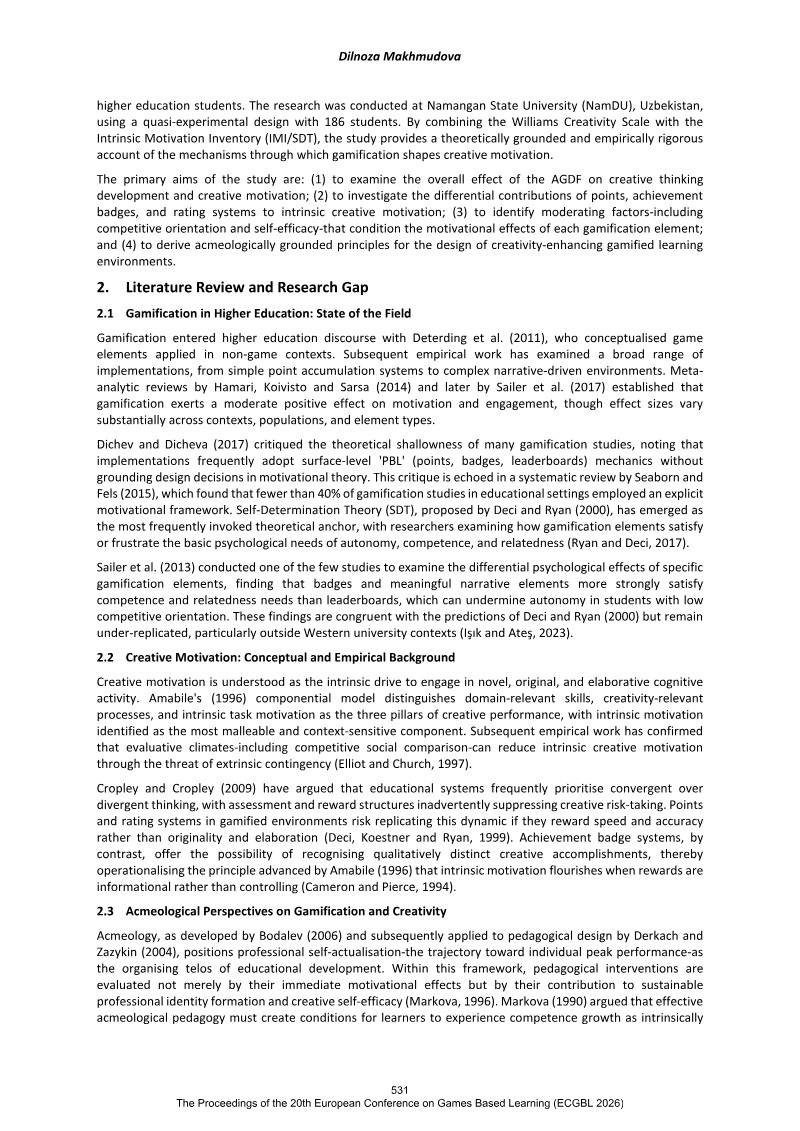
This study examines whether an acmeologically designed gamification framework, incorporating points, achievement badges, and rating systems, can enhance creative thinking and intrinsic creative motivation among higher education students.
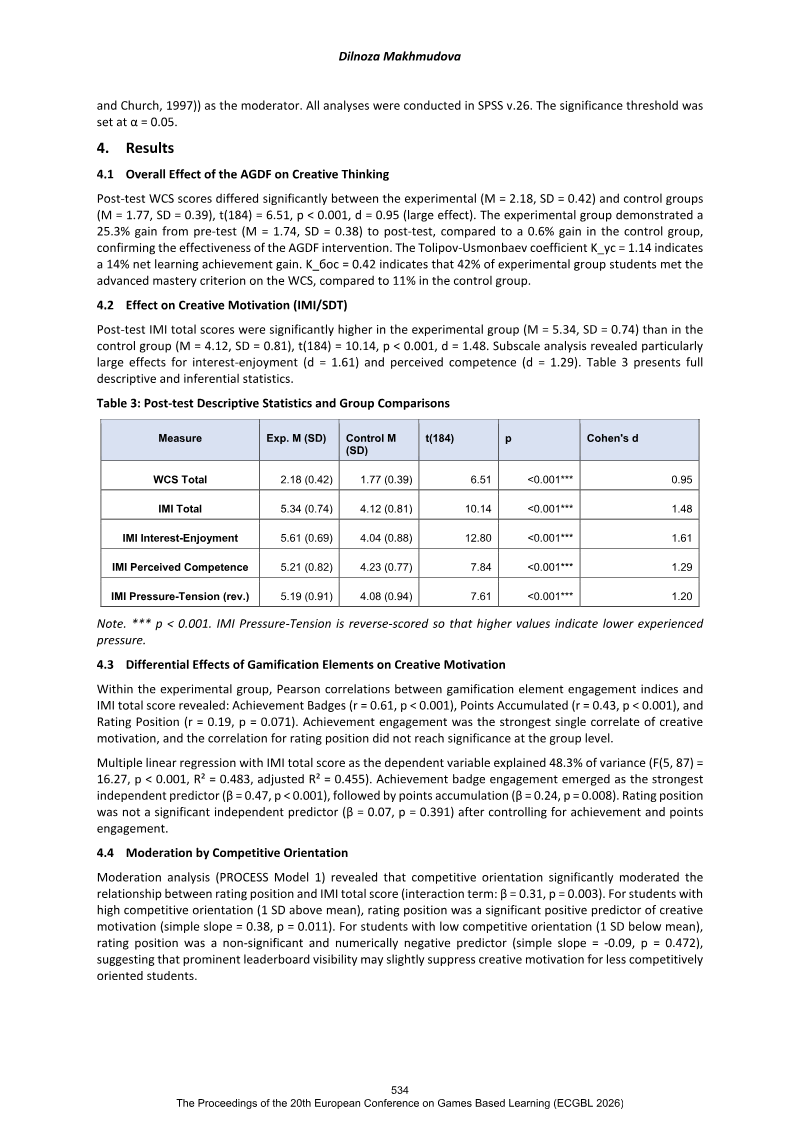
- Gamified instruction produced large gains over standard instruction in a quasi-experimental study of 186 students at Namangan State University: creative thinking (Williams Creativity Scale, d = 0.95) and intrinsic creative motivation (Intrinsic Motivation Inventory, d = 1.48).
- Achievement badges were the strongest predictor of intrinsic creative motivation (β = 0.47) among the gamification elements tested.
- Points had a smaller positive effect on motivation, which the authors attribute to a creativity-bonus design rather than points as such.



Challenges of Simulations and Serious Games Embedded in Emergency Preparedness Platforms
This study examines the difficulties of embedding simulations and serious games (SSGs) into emergency preparedness (EP) training within university settings, focusing on the B-prepared ecosystem, a set of four open platforms (VR-prepared, IM-prepared, Disastropedia, and RU-prepared).
- Integrating simulations and serious games into formal university education is harder than developing them, because institutional constraints and distinct educational competencies determine whether integration succeeds.
- The main barriers to course integration were rigid curricula, predefined learning outcomes, limited teacher capacity, and incompatible learning management systems, though integration was still feasible overall.
- Usability scores (System Usability Scale) varied widely, at 56% in one context and 86% in another, and the differences appear to stem from access routes rather than inherent qualities of the games.
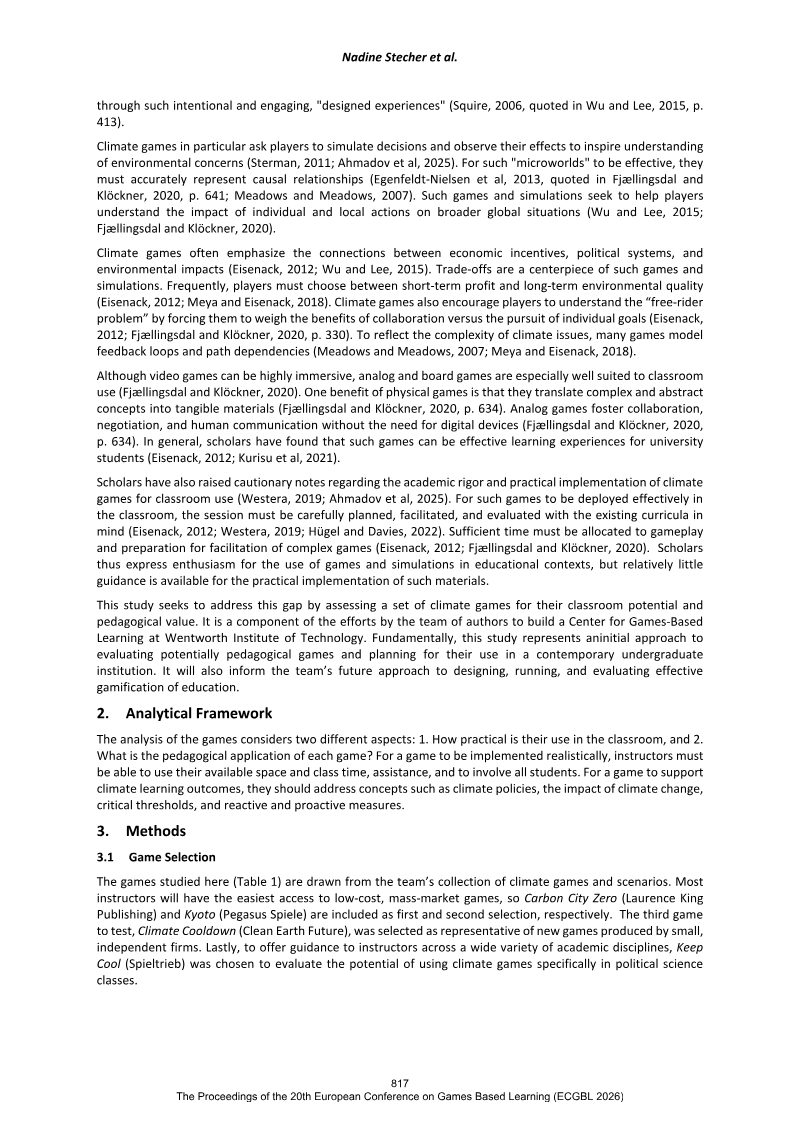
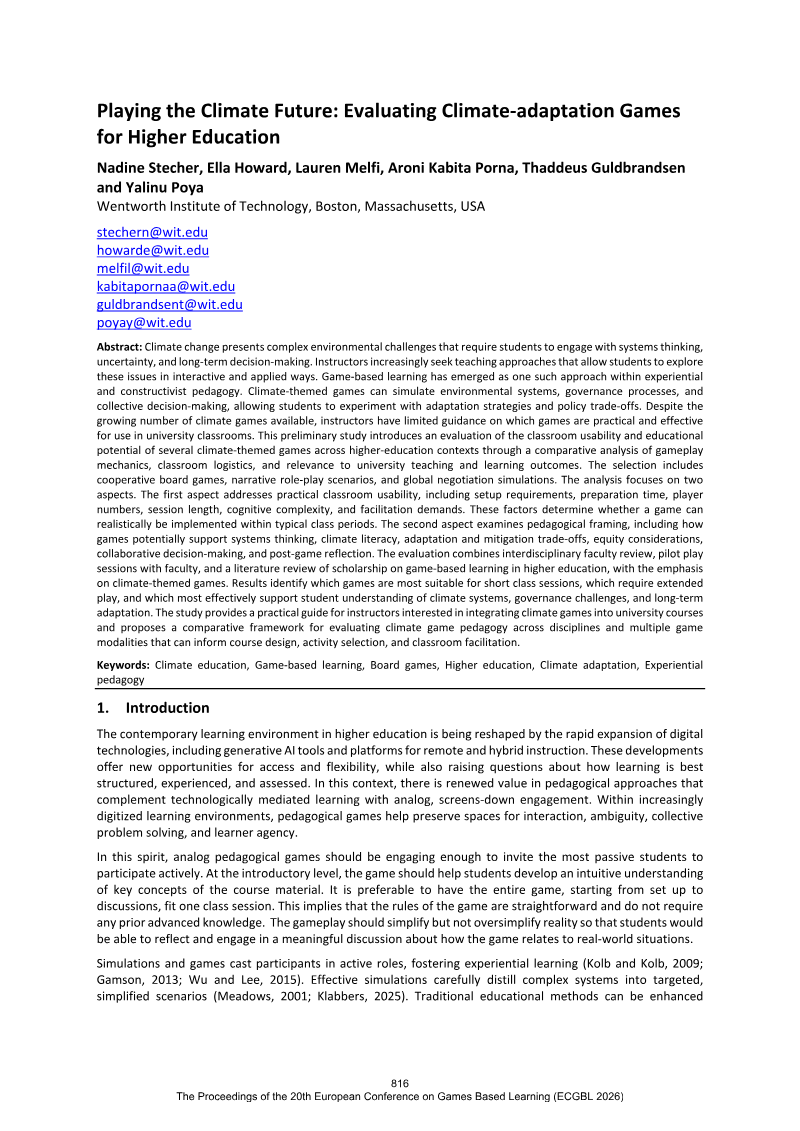
Playing the Climate Future: Evaluating Climate-adaptation Games for Higher Education
This preliminary study evaluates four climate-themed board and simulation games for use in university classrooms, with the aim of giving instructors practical guidance on which games can realistically fit into a course and what pedagogical value each offers.
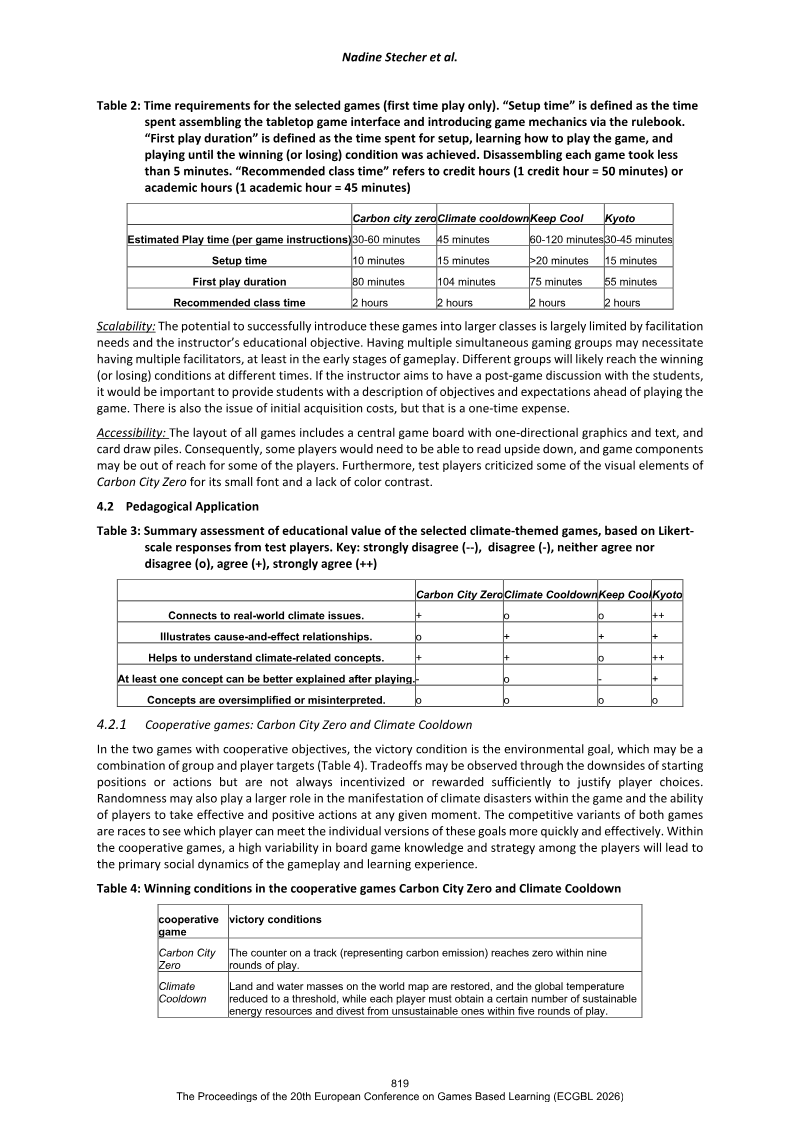
- The study evaluated four climate-themed games for university classrooms: Carbon City Zero, Climate Cooldown, Keep Cool, and Kyoto, covering two cooperative and two competitive titles.
- Every game ran well beyond estimated play times during first sessions, and the authors recommend allotting a full two-hour class period for any of them.
- Kyoto was judged the most immediately classroom-ready and best suited to governance and interdisciplinary courses, while Keep Cool offered strong political-economy insights but required careful debriefing.
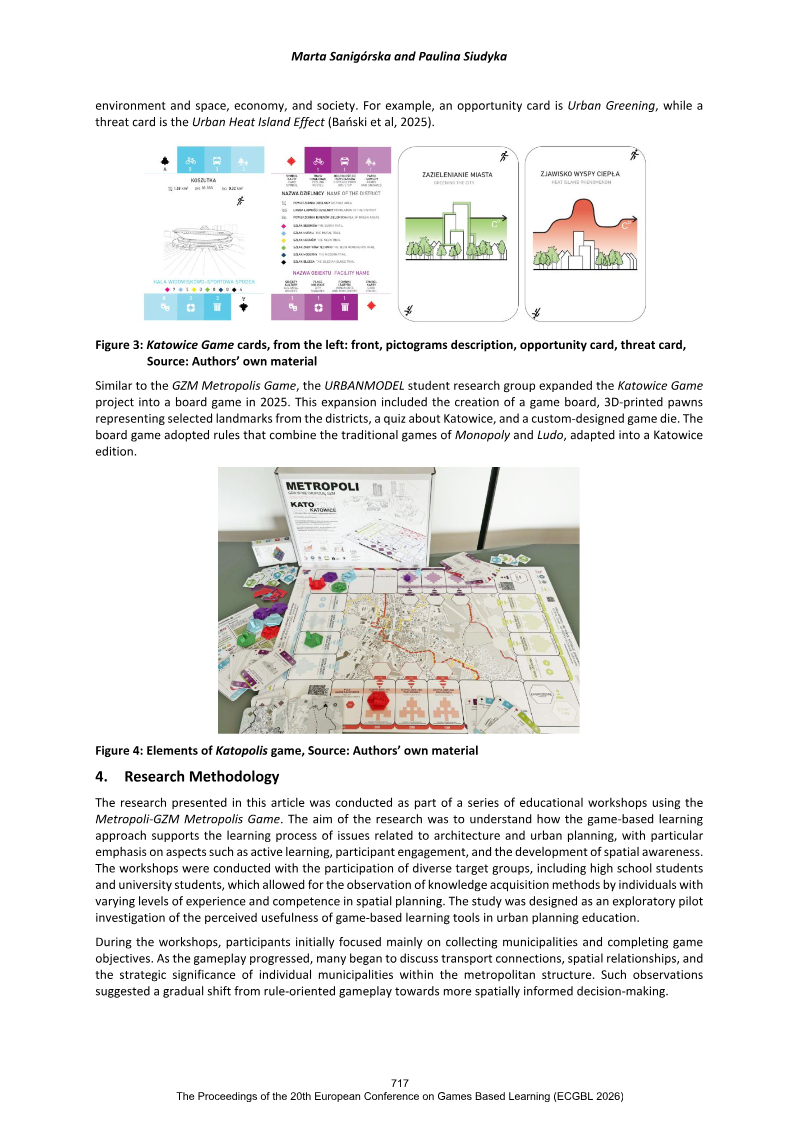
GBL in Urban Planning Education: Case Studies of Metropoli and Katopolis Games
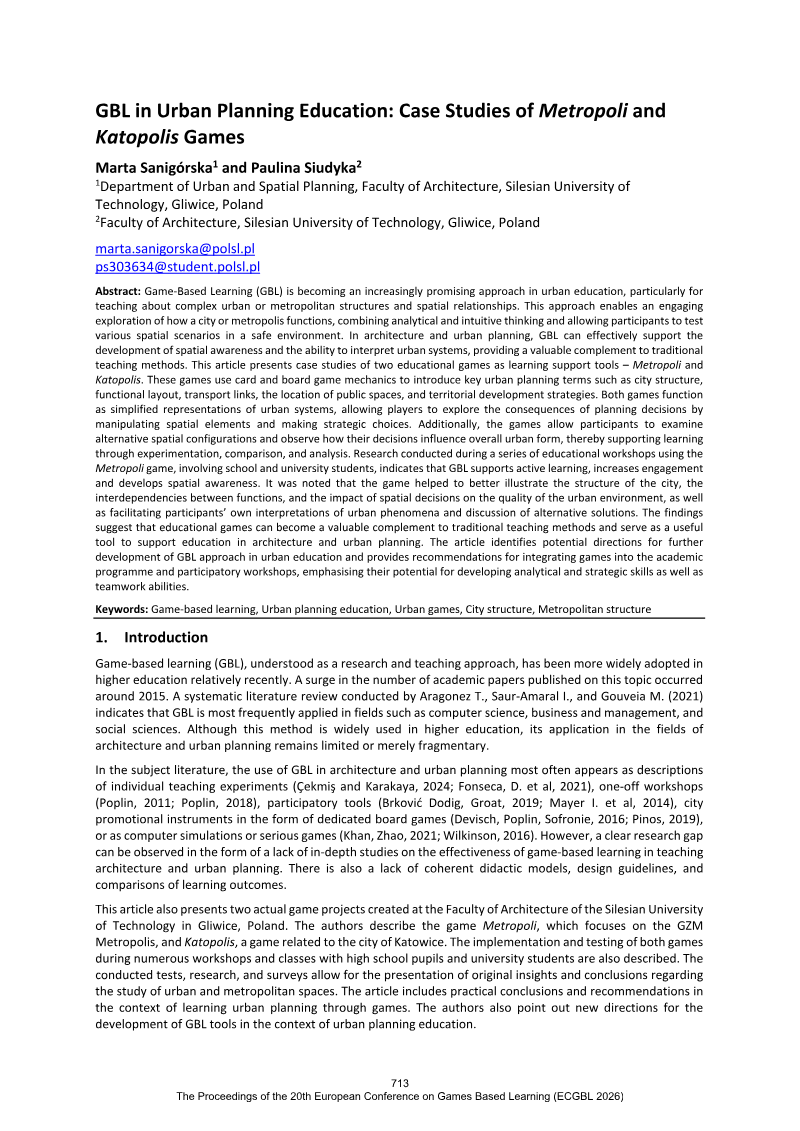
This study examines game-based learning (GBL) as a tool for teaching urban planning and architecture, using two educational card and board games developed at the Faculty of Architecture of the Silesian University of Technology in Gliwice, Poland.
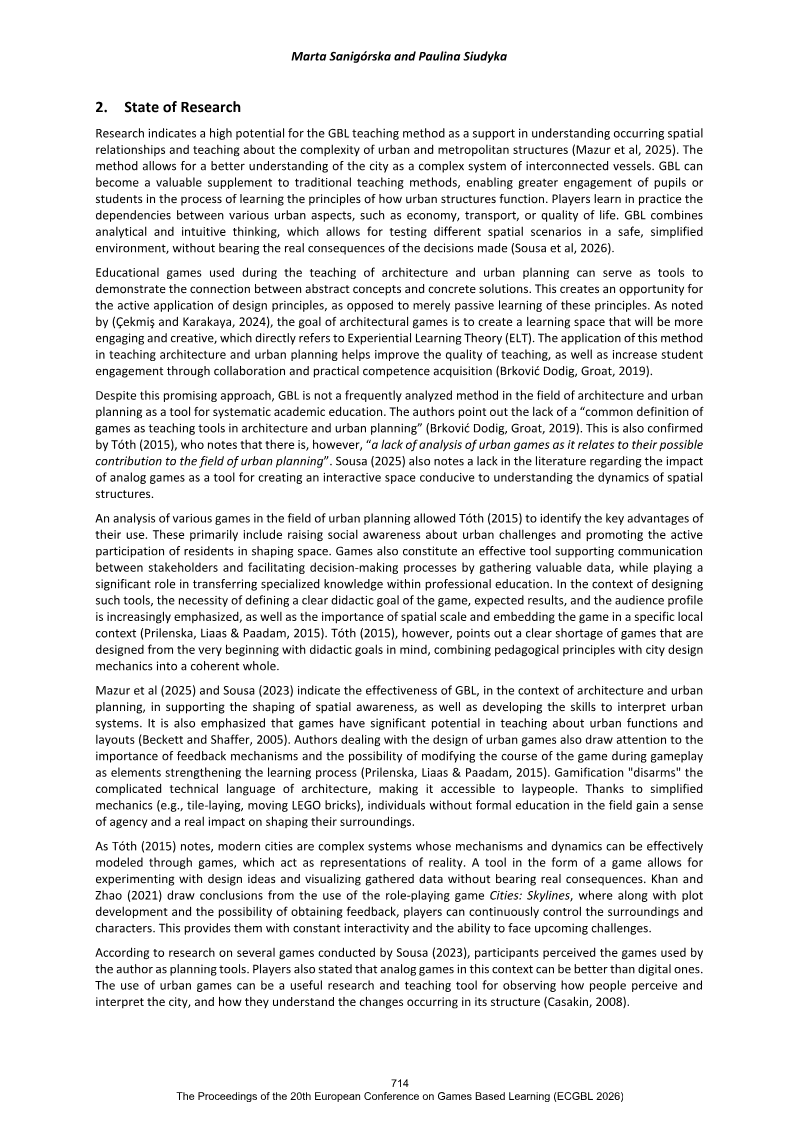
- Metropoli and Katopolis are educational card and board games developed at the Faculty of Architecture of the Silesian University of Technology in Gliwice, Poland, using Monopoly-style mechanics and standard 52-card decks where each card represents a municipality or city district with statistics on population, area, green space, water areas, and bicycle infrastructure.
- The municipality card data is drawn from public sources such as Statistics Poland, and the games aim to help learners grasp interdependencies between urban functions, transport, and public space through experimenting with spatial scenarios.
- The authors argue that game-based learning remains underexplored in architecture and urban planning, with few in-depth studies of effectiveness, coherent didactic models, or comparative learning outcomes, and few games designed from the outset around explicit educational goals.
Designing Educational Games in Higher Education: A Convergent Mixed-methods Pilot Evaluation
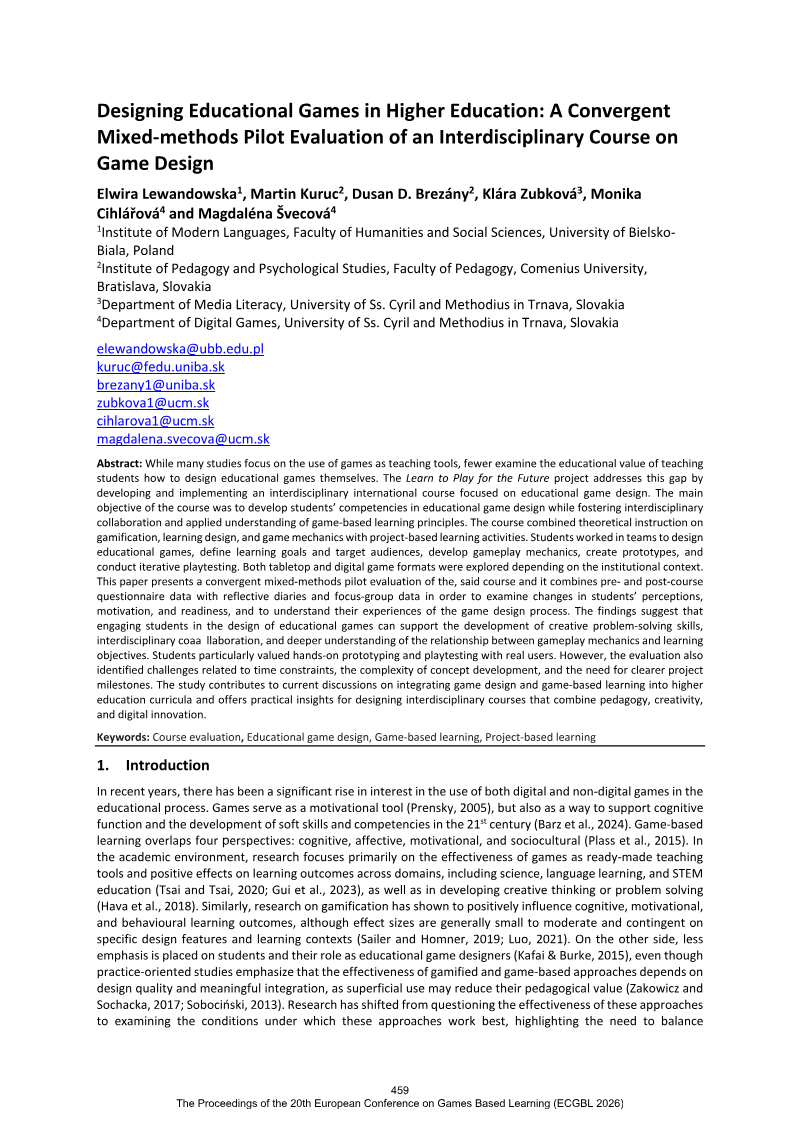
This pilot evaluation examines an interdisciplinary higher-education course on educational game design that brought together pre-service teachers and future game developers.
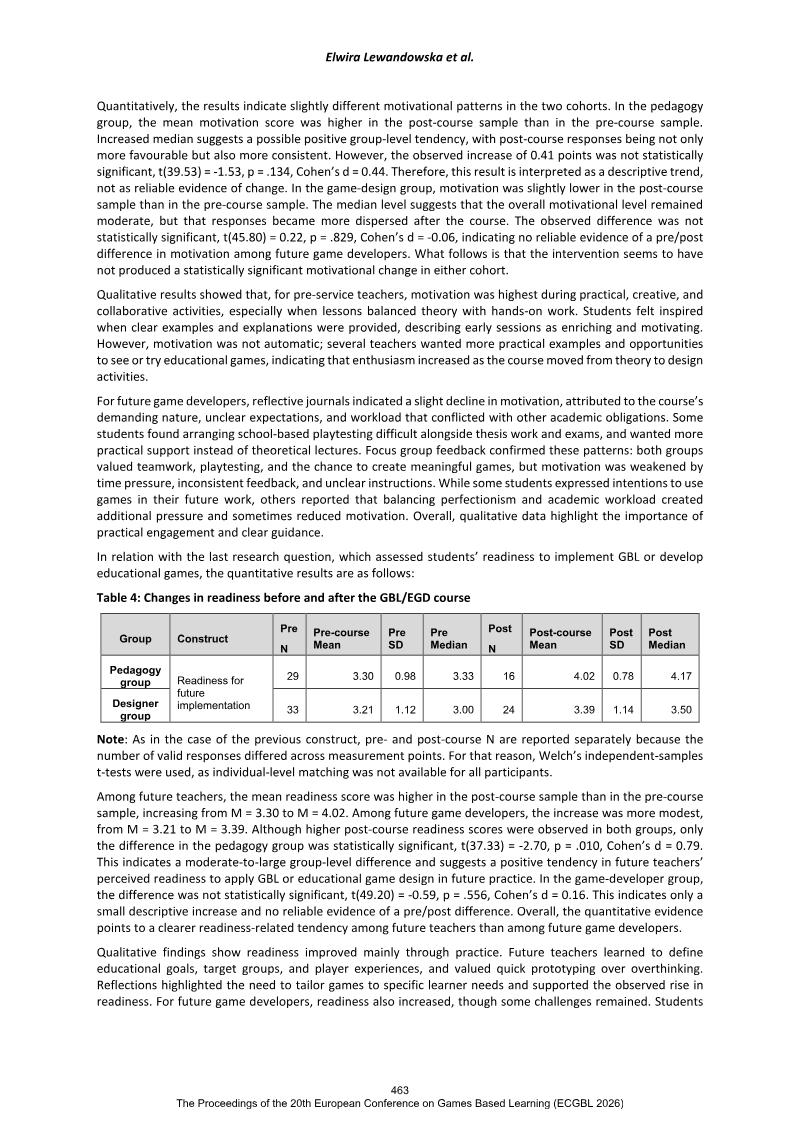
- Pre-service teachers showed significant gains after the course: readiness to implement game-based learning rose from M = 3.30 to 4.02 (p = .010, d = 0.79), while their perceptions of game-based learning climbed from 3.92 to 4.52 and motivation from 3.77 to 4.18.
- Future game developers showed no comparable gains: their perceptions and motivation were broadly stable or slightly lower, and their modest readiness increase was not statistically significant.
- Developers' reflections pointed to a growing awareness of design complexity rather than stronger conviction about educational games, suggesting the course tempered rather than boosted their enthusiasm.
Extending The Project Win Game: Teaching Real Options and Moral AI Project Decision-making
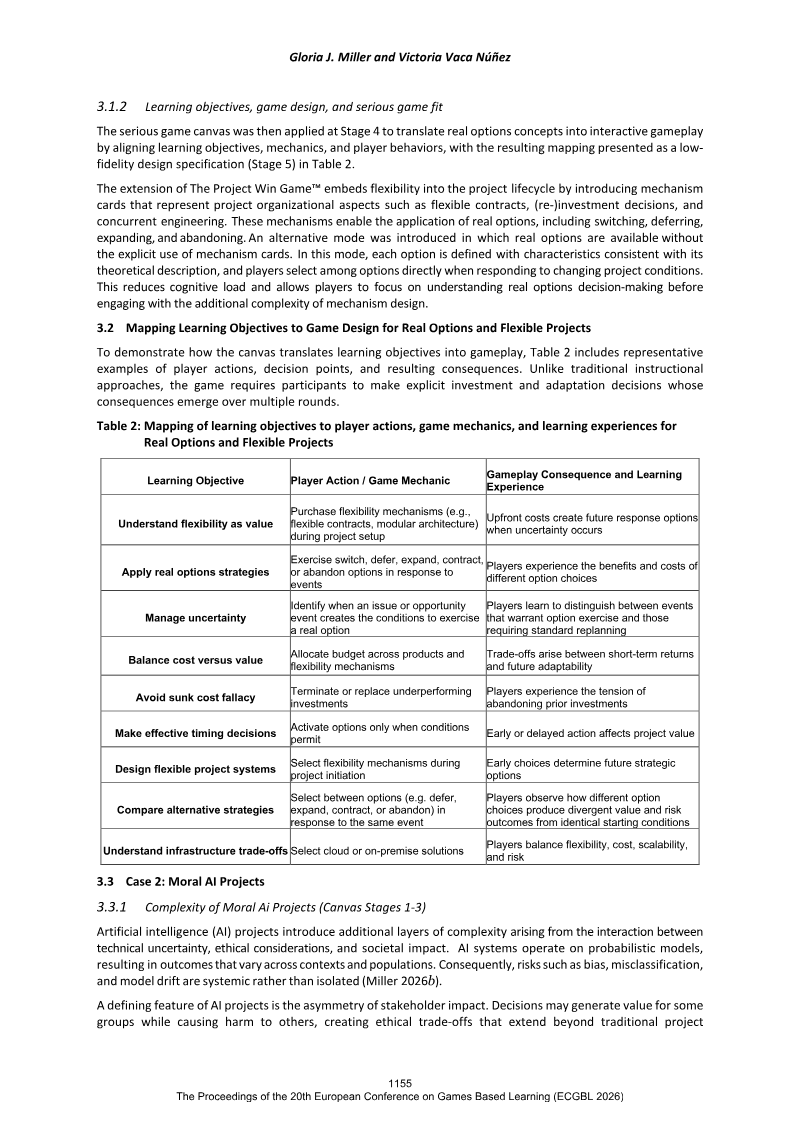
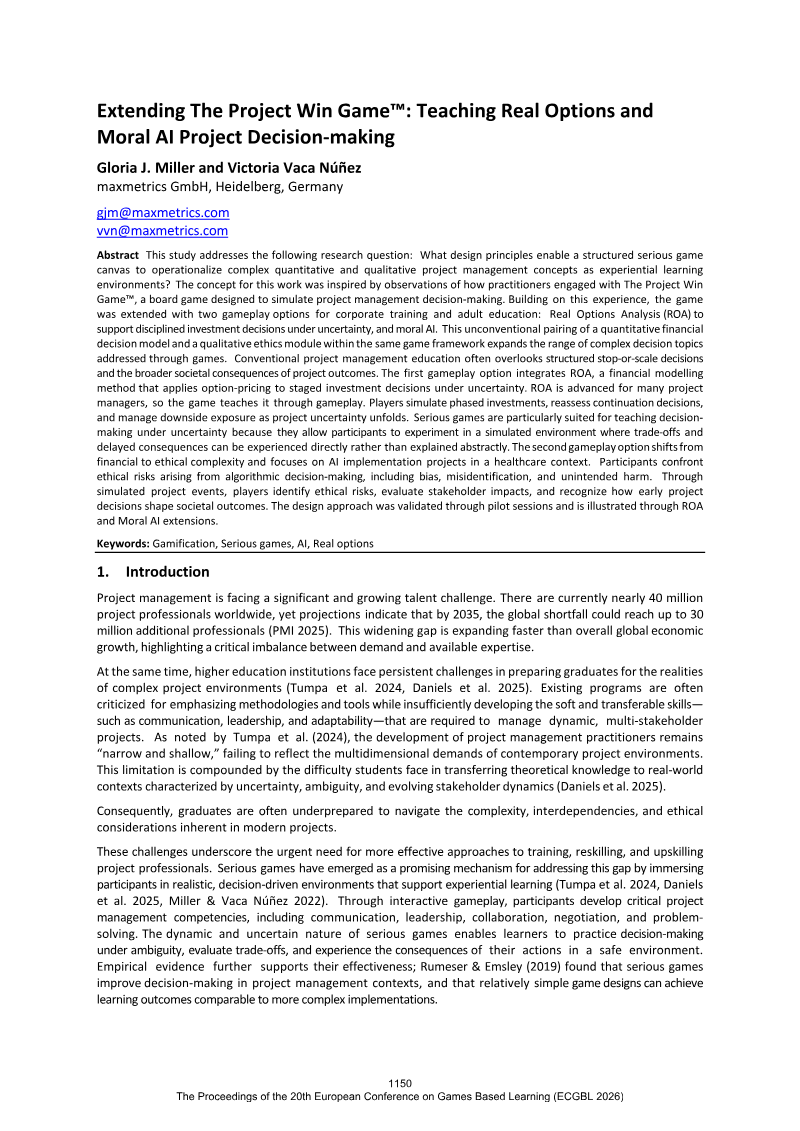
This document presents an extension of The Project Win Game™, a project management serious game, with two new modules: Real Options Analysis (ROA), which teaches staged investment decisions under uncertainty, and a Moral AI module addressing ethical risks in healthcare AI projects.
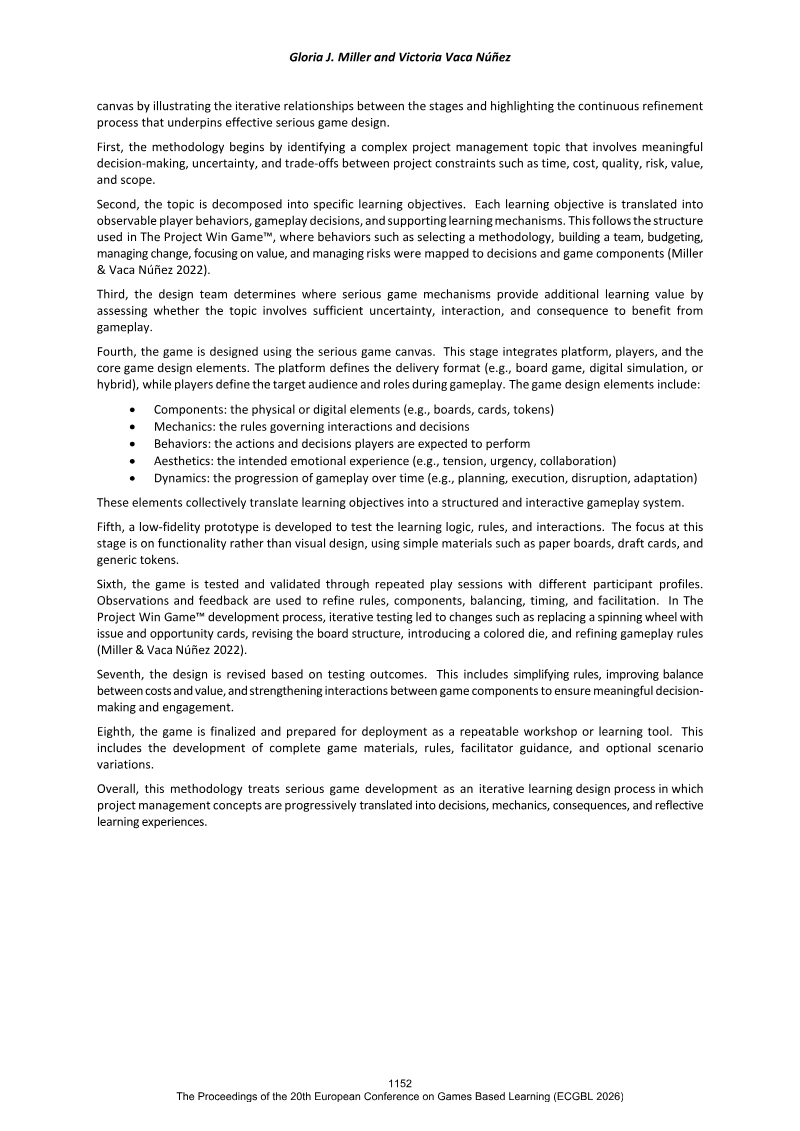
- The paper proposes extending The Project Win Game™ with a Real Options Analysis module for staged investment decisions under uncertainty and a Moral AI module addressing ethical risks in healthcare AI projects, supported by an eight-stage Project Management Serious Game Canvas and an iterative design methodology.
- The motivation is a documented project management talent gap of roughly 40 million practitioners worldwide, with a projected shortfall of up to 30 million by 2035, alongside concern that conventional programs underdevelop soft skills and decision-making under uncertainty.
- Iterative playtesting refined economic balance, component interactions, and complexity, including a colored-die mechanic and a simplified mode, and players reportedly could distinguish option types and understand trade-offs through play.
Disco Elysium: Existential Reflection within Crisis
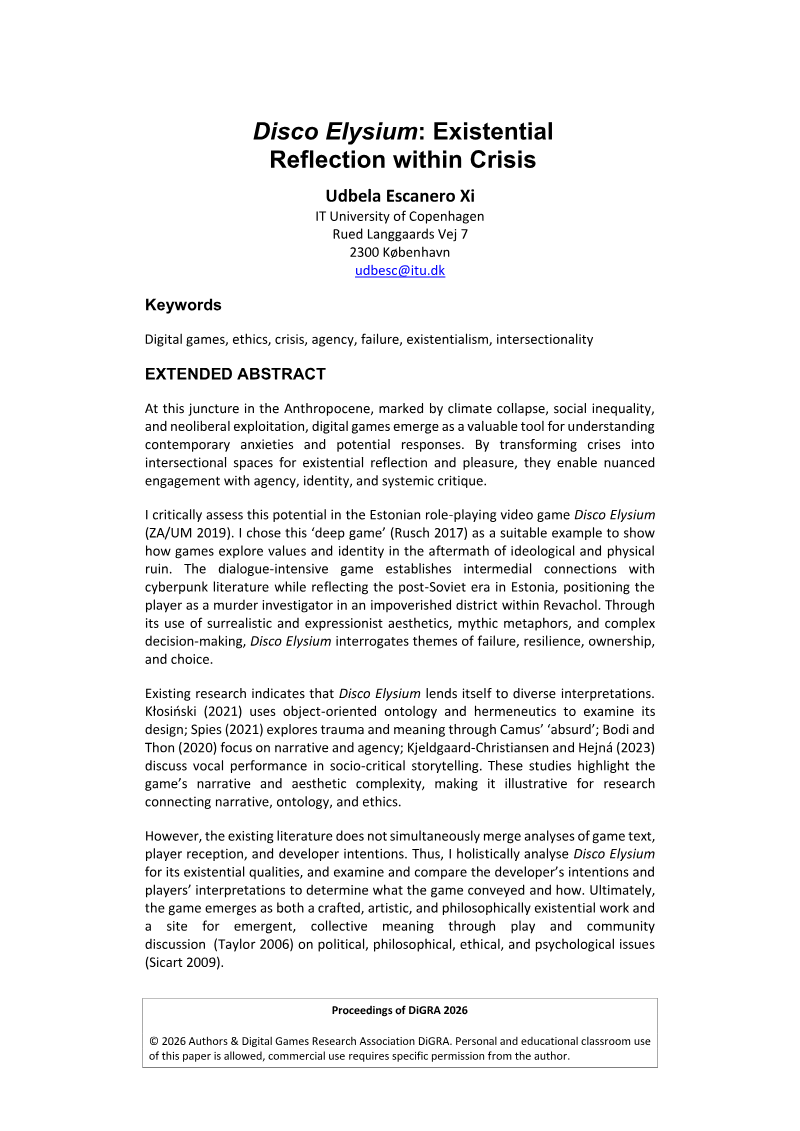
This paper examines Disco Elysium, the Estonian role-playing game developed by ZA/UM and released in 2019, as a case study in how digital games can facilitate existential reflection on crisis, agency, failure, and identity.
- The paper uses Disco Elysium (ZA/UM, Estonia, 2019) as a case study of how games can prompt existential reflection on crisis, agency, failure, and identity, and argues this design intent is substantively realized in player engagement.
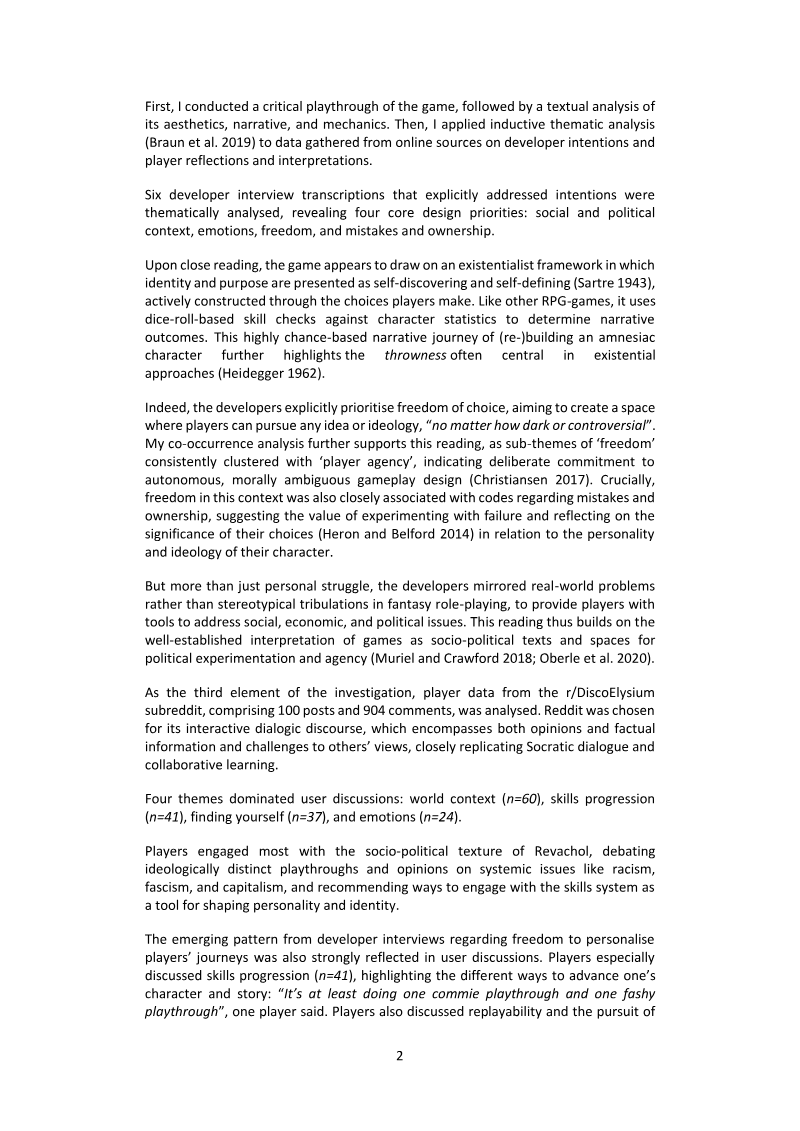
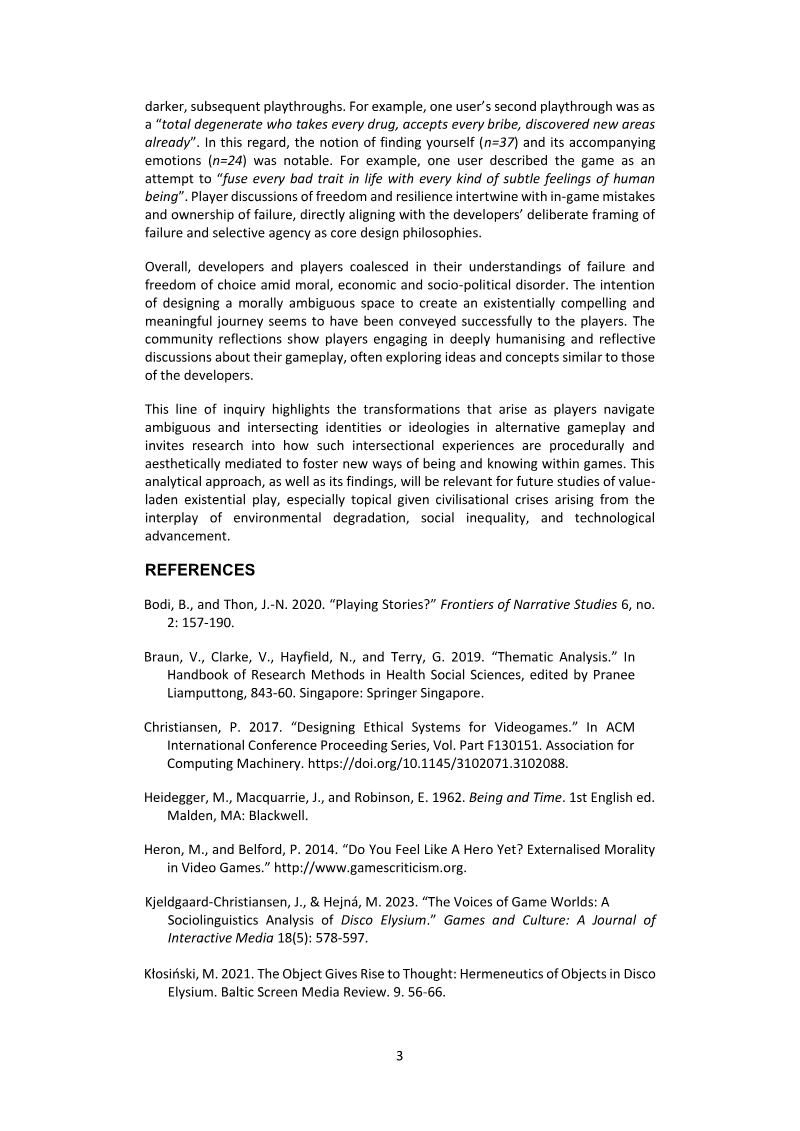
- The methodology combines a critical playthrough, textual analysis, thematic analysis of six developer interview transcripts, and 100 posts and 904 comments from the r/DiscoElysium subreddit.
- Developer interviews yielded four core design priorities: social and political context, emotions, freedom, and mistakes and ownership.
Larp with Erasmus: A Quantitative Study of Live Action Roleplay Projects 2014-2022
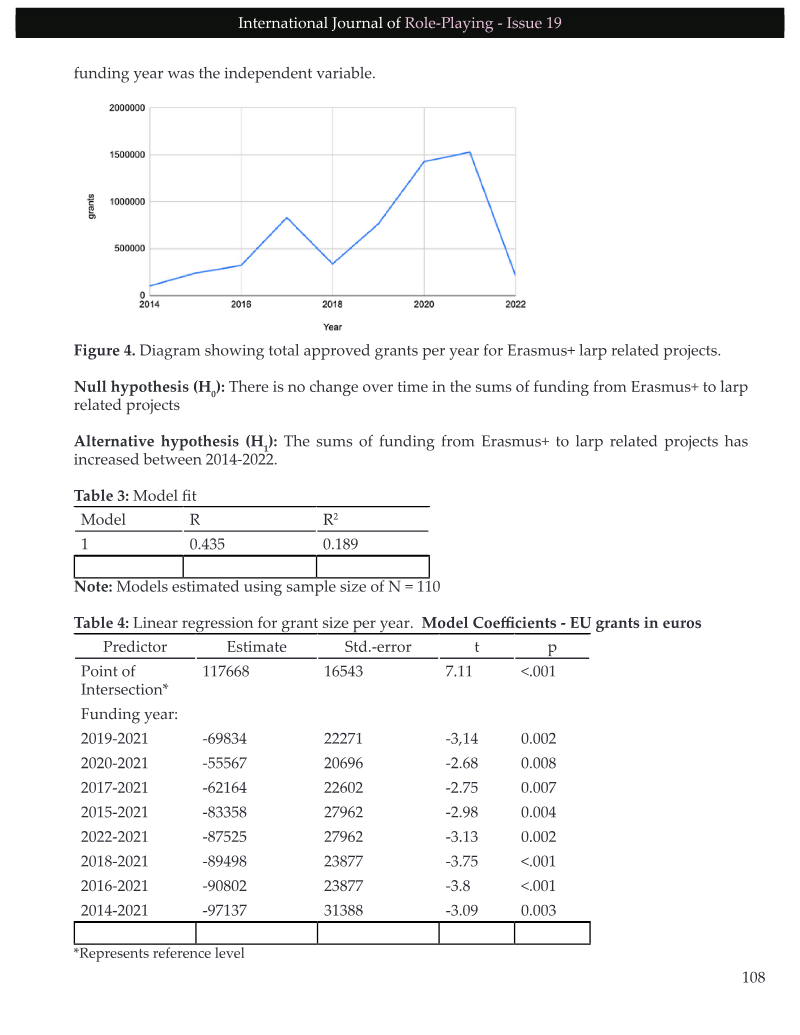
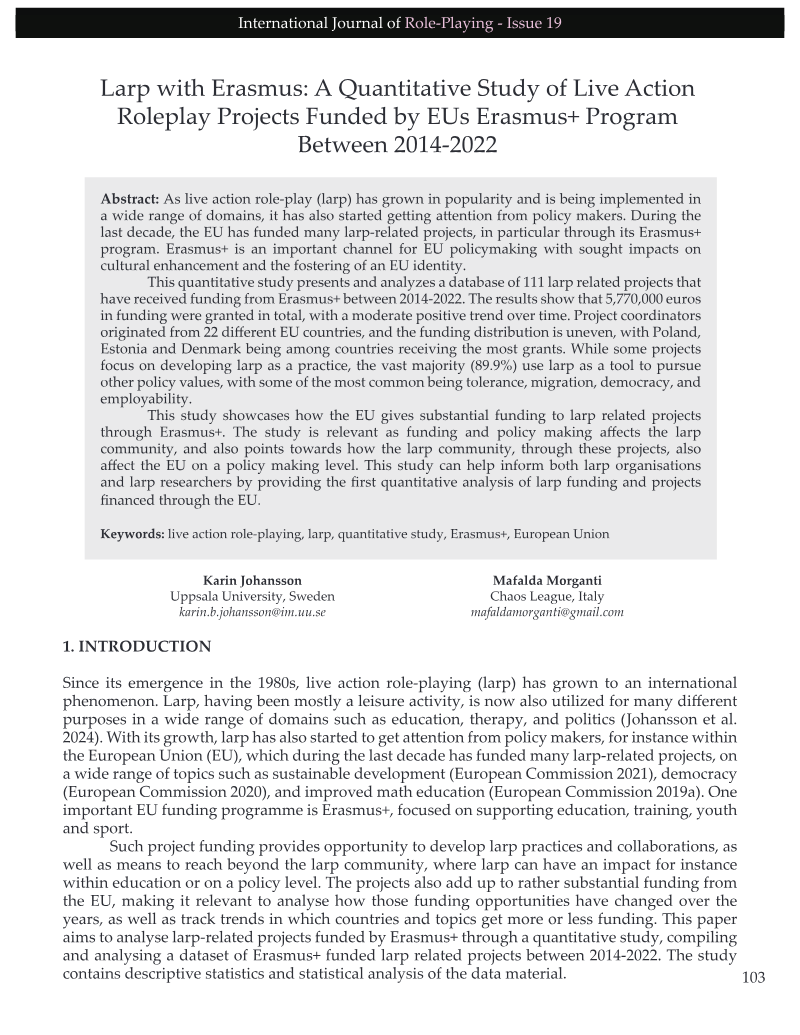
Live action roleplay has emerged as a significant pedagogical and civic tool within the European Union, supported by approximately 5.77 million euros in funding through the Erasmus+ program between 2014 and 2022.
- Between 2014 and 2022, the Erasmus+ program provided approximately 5.77 million euros in funding to support 111 transnational live action roleplay (larp) projects.
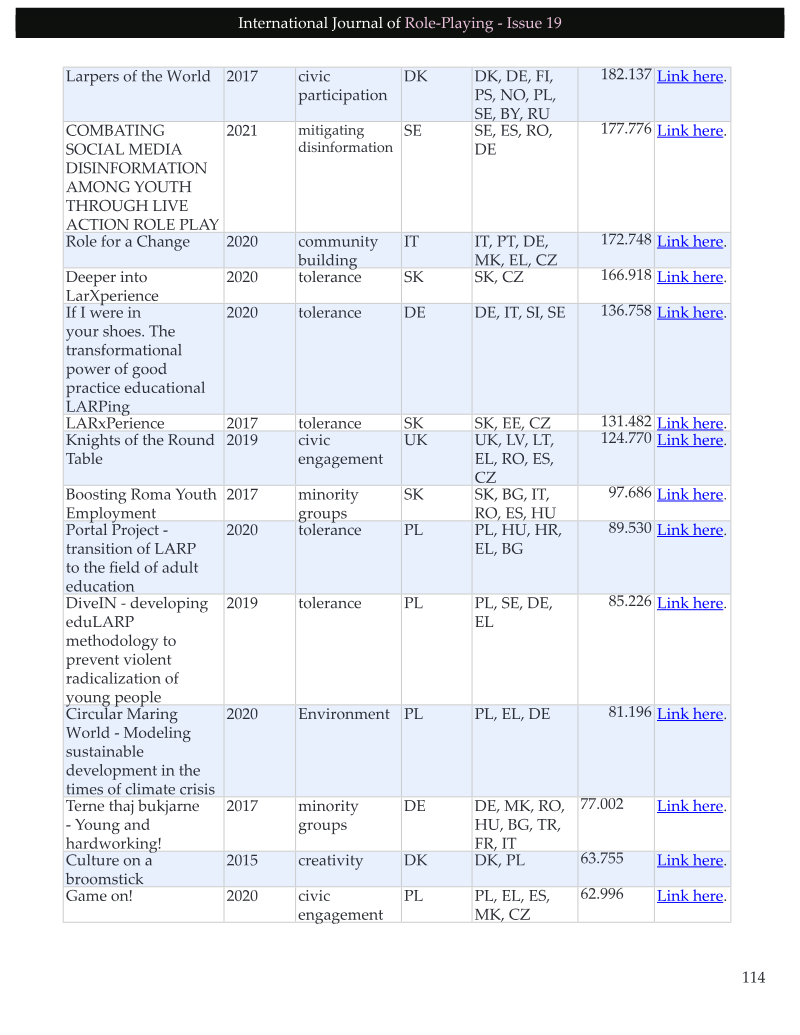
- Nearly 90 percent of funded projects prioritize social policy objectives, such as promoting democracy, tolerance, social inclusion, and employability skills, rather than artistic development.
- Project implementation is geographically concentrated, with Poland, Estonia, and Denmark serving as the primary hubs for development across the 22 participating countries.



Transformative Play for Building Resilience to Misinformation
Transformative play serves as a pedagogical framework for building resilience against misinformation by shifting the focus from traditional, skills-based media literacy to experiential, affective learning.
- Transformative play builds misinformation resilience by shifting from traditional skills-based training to experiential, affective learning in low-stakes environments.
- The Euphorigen Investigation escape room uses a deliberate plot twist where players inadvertently share a deepfake to force a visceral realization of their own susceptibility to manipulation.
- Structured debriefing sessions are the critical phase of the intervention, enabling collective sensemaking and the internalization of lessons regarding information credibility.