Dungeons & Dragons
Game
32 documents in the library are about Dungeons & Dragons, from writers such as Extra Credits, Game World Observer and GameDiscoverCo. Each has a summary and key insights with the page they come from.
Connections
The documents about Dungeons & Dragons on the inner ring, the other games and companies they name on the outer one. Select a cover to see it up close and open it in a new tab; drag to move, pinch or Ctrl + scroll to zoom.
Key figures from the reports
Hasbro reduced its Project Sigil virtual tabletop team by 90% after failing to successfully integrate a standalone, profit-driven platform into the existing Dungeons & Dragons ecosystem.
Extra Credits, 2025 · Hasbro Management Crit Fails, Videogame Workers Union Debuts & Minecraft Live | Games For Breakfast, p. 46
Hasbro is committing $1 billion toward internal game development to expand studio capacity and support new projects, including a G.I. Joe-themed game and an untitled Dungeons & Dragons title.
Game World Observer, 2024 · Hasbro Q2 2024 Financial Performance: Digital Gaming Segment
Wizards of the Coast demonstrates that legacy brands can thrive by leveraging evergreen IP like Dungeons & Dragons, reporting $816 million in revenue with high profit margins.
SuperJoost, 2021 · Crypto Is a Space Race: Buying into Something Better
Starbreeze canceled its Dungeons & Dragons cooperative title, Project Baxter, resulting in a $27.3 million write-off that exceeds the company's total revenue for the 2024 fiscal year.
Game World Observer, 2022 · Starbreeze Q1 2022 Financial Results
Documents about Dungeons & Dragons
The Next Big Thing in Games Is Low Tech
The gaming industry is currently defined by a persistent, industry-wide obsession with technological advancement, characterized by escalating development budgets and a reliance on high-compute infrastructure like AI and cloud streaming.
- The gaming industry has seen a 10x increase in average development budgets for AAA console games since 2000, driven by a persistent focus on technological advancement.
- Despite industry efforts to prioritize AI and high-compute infrastructure, there is a growing market trend toward analog play, with board games serving as a popular social connector that acts as a counterweight to digital screen time.
- The industry's reliance on tech-centric KPIs to measure success is increasingly criticized as ineffective, particularly when attempting to compare disparate titles like Candy Crush and PUBG.

Steam’s VR Sellout, Pokemon Saved & Is Blizzcon Back? | Games For Breakfast
The gaming industry currently faces a period of significant transition, characterized by hardware stagnation in the virtual reality sector and a strategic pivot toward legacy content and community-driven initiatives among major publishers.
- Blizzard is reviving the MOBA 'Heroes of the Storm,' signaling a renewed focus on legacy titles following recent announcements at Blizzcon.
- Dungeons & Dragons leadership acknowledges the need for long-term recovery, admitting that the brand must move beyond promises to repair community trust after a year of public missteps.
- Market data suggests that VR adoption remains niche among core gamers, with estimates indicating that only 30-35% of the enthusiast audience actively engages with virtual reality hardware.

The Miraculous Story Behind Baldur’s Gate 3
The development and release of Baldur’s Gate 3 represents a significant anomaly in the modern video game industry, characterized by a complex history of licensing, financial instability, and creative perseverance.
- Larian Studios' success with Baldur's Gate 3 is attributed to its status as a rare, large-scale, privately owned developer, which allows it to avoid the short-term pressures of quarterly earnings and investor demands faced by publicly traded companies.
- The development of Baldur's Gate 3 required a massive scaling effort, with the studio growing its workforce from 140 to 450 employees to manage the complex production pipeline required for full cinematic integration.
- Baldur's Gate 3 has achieved significant commercial success, selling over 20 million copies and winning multiple Game of the Year awards despite facing major external challenges, including the COVID-19 pandemic and the forced relocation of staff due to the 2022 Russian invasion of Ukraine.
Universes Beyond comes to Dungeons & Dragons | Design Club
Wizards of the Coast is aggressively pivoting the Dungeons & Dragons brand to meet the high-growth revenue expectations set by parent company Hasbro.
- Wizards of the Coast is shifting Dungeons & Dragons toward a high-volume product model to meet Hasbro’s aggressive revenue growth expectations.
- The strategy mirrors Magic: The Gathering by integrating external franchises into the fifth edition ruleset through the Universes Beyond initiative.
- The World of Warcraft expansion serves as the flagship for this model, providing modular toolkits of species, classes, and dungeons designed to overlay onto existing campaigns.
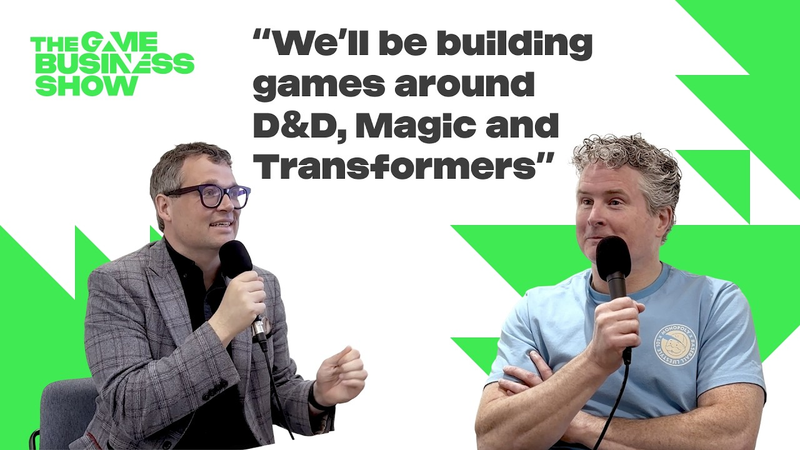
The D&D company is spending $1bn making video games, and none of them are games-as-a-service
Hasbro is currently executing a decade-long, $1 billion investment strategy to expand its footprint in the video game industry.
- Hasbro is executing a $1 billion, decade-long investment strategy to expand its video game footprint, explicitly rejecting the games-as-a-service (GaaS) model in favor of premium, single-player experiences.
- The company is prioritizing high-quality, 40-to-50-hour traditional PC and console titles to avoid the high volatility and low success rates associated with GaaS.
- Hasbro’s portfolio strategy divides development between internal studios for core brands like Dungeons & Dragons and Magic: The Gathering, and external partnerships for casual or mobile properties like Monopoly Go.
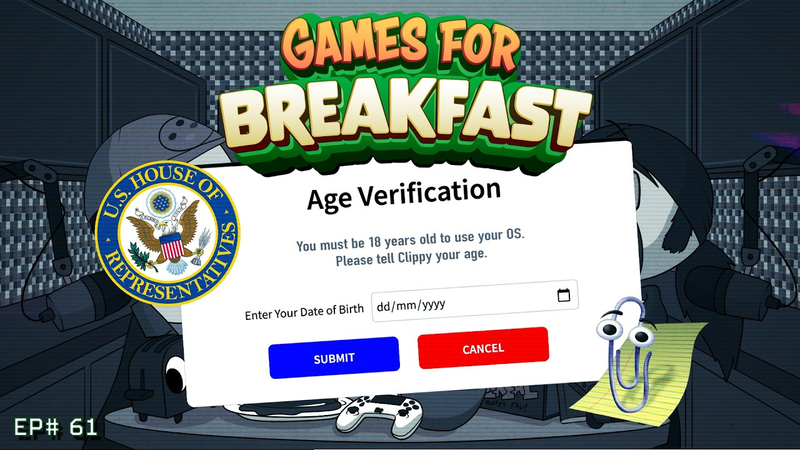
The "Parents Decide Act" Sucks, D&D's New Game Masters & Bloodborne's got Jack | Games For Breakfast
The current legislative landscape in the United States faces scrutiny over the proposed Parents Decide Act, a bill mandating age verification across operating systems.
- The U.S. House of Representatives is reviewing the 'Parents Decide Act,' a proposed law that would require operating system providers to verify the age of all users and mandate parental verification for anyone under 18.
- Dungeons & Dragons is developing an in-house live play show, signaling a strategic move to establish its own branded content separate from independent successes like Critical Role.
- The gaming industry lacks a standardized 'red band' trailer system equivalent to the film industry, complicating the marketing of games that contain mature themes or potential triggers for general audiences.
Difficulty, Complexity, and the Single Player Experience | Design Club
The design of modern single-player role-playing games, particularly those rooted in complex tabletop systems like Dungeons & Dragons, centers on the tension between mechanical balance and player agency.
- Modern RPGs like Baldur’s Gate 3 treat complexity as a player-controlled lever rather than a rigid difficulty curve, allowing users to master systems to create overpowered builds.
- Developers prioritize player agency by accepting that allowing users to 'break' the game through deep engagement and optimization is a deliberate trade-off that enhances the sense of discovery.
- Balancing complex systems requires careful management of the action economy, resource expenditure, and recovery mechanics to maintain combat pacing without relying on artificial gating like boss armor.

Wizards of the Coast will bet on new talent for future D&D and Magic video games
Wizards of the Coast is strategically pivoting toward becoming a major publisher of premium video games by leveraging its core intellectual properties, Dungeons & Dragons and Magic: The Gathering.
- Wizards of the Coast is pivoting to become a major publisher of premium video games by leveraging its Dungeons & Dragons and Magic: The Gathering intellectual properties.
- The company has partnered with the newly formed studio Giant Skull, led by industry veteran Stig Asmussen, to develop a new Dungeons & Dragons title.
- Wizards of the Coast is establishing a centralized content creation team to support studios with fantasy-focused art and world-building for projects developed in Unreal Engine 5.
Sony Reigns in Bungie, Battlefield’s Beta Booms, Nintendo Stays Nintendo | Games For Breakfast
The gaming industry is currently navigating a period of significant strategic realignment, marked by aggressive corporate consolidation and shifting consumer sentiment.
- Sony has officially ended Bungie's independent status, signaling that the developer will no longer receive the special elevated treatment it was granted following its acquisition three years ago.
- Sony's live-service title Concord reportedly cost between $200 million and $400 million to produce but generated only $1 million in revenue, leading the company to downplay its live-service portfolio during recent shareholder meetings.
- Nintendo is surveying customer sentiment regarding its new 'game key cards,' which function as physical license keys rather than containing actual game data, requiring users to download the full software.

Is AI about to transform video game tie-ins with movies and TV shows?
The modern entertainment landscape is undergoing a fundamental shift as intellectual property holders move away from treating video games as mere marketing appendages for film and television.
- Entertainment IP holders are shifting from using video games as marketing appendages to prioritizing high-quality, authentic gameplay that functions as a cohesive extension of a broader narrative universe.
- Studios are increasingly developing games and screen projects simultaneously by using shared creative teams and unified technological pipelines to ensure narrative consistency.
- The use of tools like Unreal Engine for both pre-visualization and final production is becoming the industry standard for maintaining emotional resonance across film, television, and gaming mediums.
Epic’s State of Unreal: Building the Future of Games or Just Selling More Tools?
The annual State of Unreal keynote highlighted Epic Games’ ongoing efforts to expand its ecosystem through Unreal Engine 5.6, the Unreal Editor for Fortnite (UEFN), and the Epic Games Store.
- Epic Games reported $2.1 billion in total payouts to developers, with $722 million of that revenue generated specifically by third-party creators within the Unreal ecosystem.
- Epic is aggressively expanding the Epic Games Store with mobile self-publishing tools and a 0% revenue share model on the first $1 million earned to compete with established platforms.
- Unreal Engine 5.6 and the Unreal Editor for Fortnite (UEFN) are the core of Epic's strategy, though UEFN currently faces significant criticism regarding its platform stability and user experience.
Hasbro Management Crit Fails, Videogame Workers Union Debuts & Minecraft Live | Games For Breakfast
The gaming industry is currently navigating a period of significant structural tension, defined by the friction between aggressive corporate monetization strategies and the practical needs of player communities.
- The video game industry has seen the debut of a nationwide union supported by the Communications Workers of America, a move intended to combat crunch culture and unsustainable profit cycles following widespread layoffs.
- Hasbro reduced its Project Sigil virtual tabletop team by 90% after failing to successfully integrate a standalone, profit-driven platform into the existing Dungeons & Dragons ecosystem.
- The rapid shutdown of live-service titles like Seekers of Sky Veil highlights the increasing fragility of digital-only distribution and the resulting challenges for long-term game preservation.