Game Development reports and market data
Documents

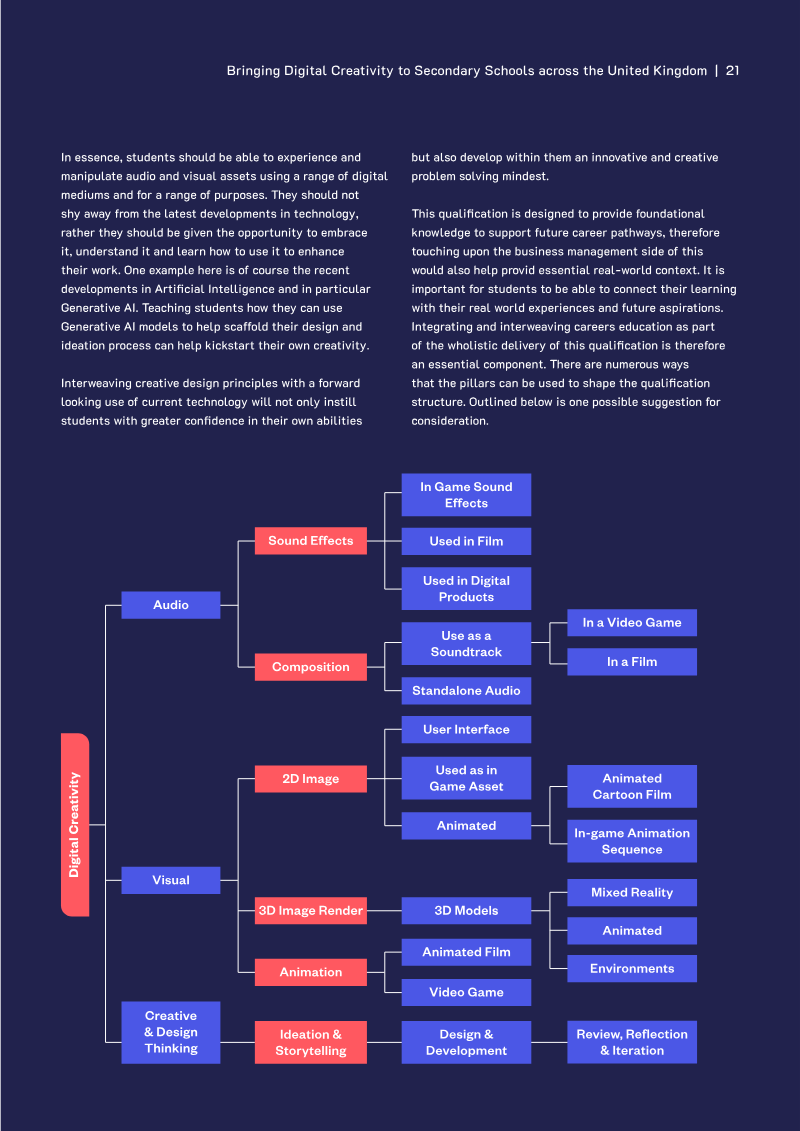

Bringing Digital Creativity to Secondary Schools: United Kingdom
The United Kingdom's secondary education system currently exhibits significant deficiencies in its digital skills provision, particularly at Key Stage 4, leading to a substantial decline in digital qualification uptake and pronounced gender disparity.
- The UK secondary curriculum is shifting toward a proposed 'Digital Creativity GCSE' to counter declining qualification uptake and a persistent gender gap in digital education.
- The new qualification pivots from theoretical computer science to active, project-based production, focusing on audio, visual, and design-thinking disciplines.
- Curriculum design prioritizes accessibility by ensuring coursework does not require high-specification hardware, aiming to mitigate the digital divide in under-resourced schools.
Tools & Services Survey: November 2024
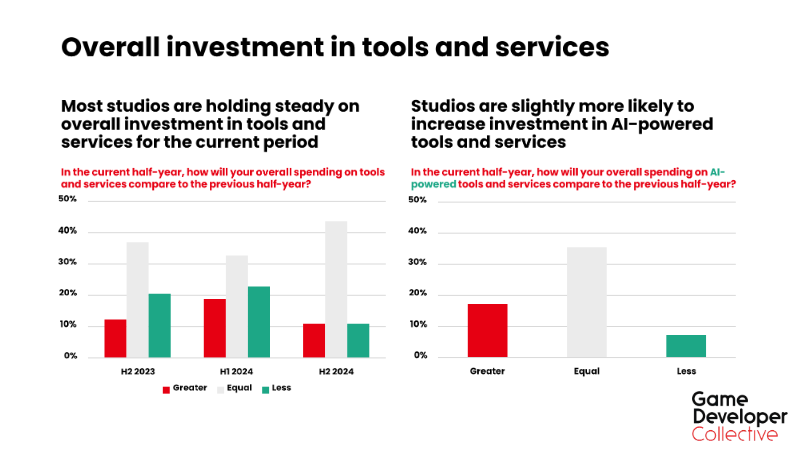
The November 2024 Tools & Services survey of the Game Developer Collective panel examines how developers use and invest in game engines, 3D tools, cloud and backend services, and how worsening industry conditions constrain those choices.
- Market sentiment is increasingly negative, with 55% of developers describing current conditions as 'bad' and 41% of studios reporting underperformance against expectations.
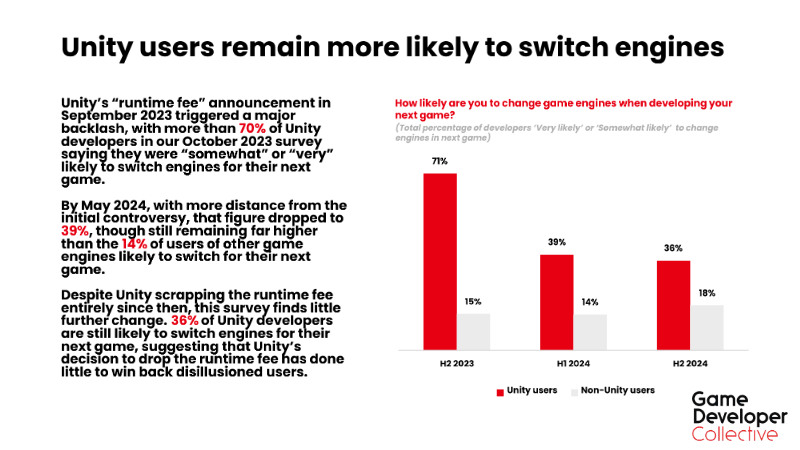
- Unity continues to lose market share following its 2023 runtime fee controversy, with 36% of its users still planning to switch engines compared to only 14% for competitors.
- Brand trust in Unity remains damaged, as only 30% of developers report being happy with the company despite the reversal of its controversial fee policy.

How To Make A 3D Level In 15 Minutes
This guide outlines a streamlined workflow for constructing 3D game environments within the Unity engine using the ProBuilder toolset.
- Establish a grid-based foundation in Unity using ProBuilder to ensure gameplay mechanics like jump height and movement speed remain consistent with the physical level layout.
- Utilize a blockout-first methodology by constructing simple, abstract geometric shapes to define spatial flow before applying aesthetic details.
- Maintain strict adherence to global snapping settings and consistent texture tiling parameters to ensure uniform mapping and efficient material application across the mesh.
It's like RAY TRACING but for AUDIO | Simon Ashby from Audiokinetic
The primary function of audio middleware in modern game development is to bridge the gap between static sound asset creation and the dynamic, unpredictable nature of interactive environments.
- Audiokinetic’s Wwise is a specialized sound engine that integrates with game engines like Unity, Unreal, and Godot to manage dynamic audio behaviors at runtime, distinguishing it from linear digital audio workstations (DAWs) used for pre-rendered assets.
- Unlike linear media production, game audio requires dynamic mixing because player actions and environmental variables—such as character distance or occlusion—are unpredictable and must be calculated in real-time.
- Wwise supports cross-platform development by allowing audio to be mixed around a 3D listener, enabling the endpoint device (console, PC, or mobile) to adapt the final output to the user's specific hardware, such as binaural headphone rendering.
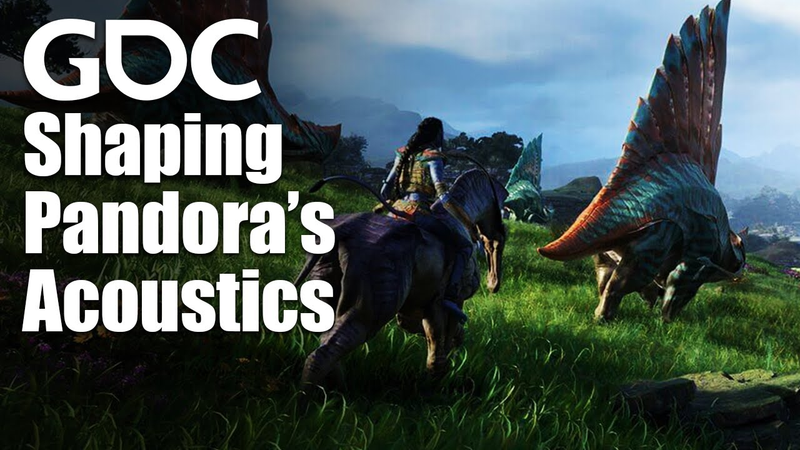
Finding Space For Sound: Acoustics in 'Avatar: Frontiers of Pandora'
The acoustic architecture of Avatar: Frontiers of Pandora represents a significant evolution in planetary-scale sound design, utilizing the Snowdrop Engine to deliver high-fidelity, context-aware audio within complex organic environments.
- Massive Entertainment evolved the Snowdrop Engine's acoustic systems from 'Tom Clancy's The Division 2' to support planetary-scale environments in 'Avatar: Frontiers of Pandora' while maintaining high-fidelity city-scale effects.
- The 'Slapback 4.0' system utilizes a dual-layer emitter strategy that separates early reflections, optimized for rapid response to oncoming geometry, from late reflections, optimized for long-tail diffuse reverberation.
- To manage performance, the engine uses a 'Ring of Local Origins' and emitter cannibalization, where reflection points are dynamically shifted or killed based on the player's movement and raycast sanity checks.

What's the last thing developers think of? | Chris Meredith from Xsolla
The Middle East and North Africa (MENA) region is emerging as a pivotal growth market for the global games industry, characterized by a lack of historical market baggage and a high influx of both established publishers and emerging developers.
- Developers must shift from a user-acquisition-only model to sustainable, direct-to-consumer monetization strategies to ensure long-term business viability.
- The MENA region is a primary growth market for the global games industry, driven by a lack of historical market baggage and a high influx of new publishers and developers.
- Data privacy regulations are increasingly limiting traditional tracking methods, making the establishment of direct relationships with end users essential for player retention.
Game Industry Hot Takes: Ubisoft's Struggles, Unity's Revival, and Microsoft's Game Pass Gambit
The global gaming industry is currently navigating a period of intense structural volatility, characterized by the decline of legacy development models and the struggle to integrate massive acquisitions.
- Ubisoft faces significant operational challenges, with analysts suggesting the company should pivot to a leaner model focused on its core Assassin's Creed franchise rather than high-budget, underperforming titles like Star Wars Outlaws and Avatar.
- Unity is undergoing a corporate turnaround under new leadership, marked by the strategic decision to eliminate controversial runtime fees to stabilize its 70% market share in game engine technology.
- AppLovin has emerged as a dominant force in mobile advertising, generating $1 billion in quarterly revenue and demonstrating strong free cash flow that positions it as a high-growth, maturing tech entity.

How One Studio Stays Successful When Shift Happens
Iron Fox Games maintains long-term industry viability by transitioning from traditional mobile work-for-hire models toward a specialized focus on game preservation and modernization.
- Iron Fox Games ensures long-term viability by pivoting from traditional work-for-hire models to a specialized focus on modernizing and preserving classic mobile titles released between 2009 and 2012.
- The studio maintains financial stability by balancing client-funded work-for-hire projects with the development of original intellectual property.
- By leveraging Unity’s browser optimization, the studio bypasses oversaturated Steam and console markets to reach audiences through web-first platforms and services like Halfbrick+.
AI, New Platforms, & the Future of Game Development
The modern game development landscape is undergoing a fundamental transformation driven by rapid iteration cycles and the integration of large language models.
- Studios can achieve high-velocity production by utilizing agile teams and a 'yes-and' philosophy, a model demonstrated by the deployment of approximately 100 titles over a four-year period.
- Competitive advantage is shifting from process efficiency to fundamental innovation as AI tools and platform features become industry-standard 'table stakes,' a phenomenon known as the Flint effect.
- Developers are leveraging AI for complex logic, such as dynamic lexical generation, to create scalable experiences that evolve based on real-time player input rather than static content.

How This Game Dev Got 150,000 Wishlists In A Month — Full Time Game Dev Podcast Ep. 021
Transitioning to full-time independent game development requires a strategic balance between creative ambition and financial pragmatism.
- Developer David Wehle achieved 150,000 wishlists for his upcoming game, 'We Harvest Shadows,' within one month by leveraging a high-quality, standalone demo.
- The game's marketing strategy relied on a 'genre-bending' approach that combined farming simulation with horror, a niche identified by analyzing market trends and player fatigue toward 'soulless' games-as-a-service titles.
- Strategic exposure through high-profile influencers, including Jacksepticeye (30 million subscribers) and Gab Smolders, significantly accelerated wishlist growth after they praised the demo's emotional depth and unique mechanics.

Łukasz Hacura - Buffer is a Lie – How to Plan a Game Production Budget
Game development budgeting is fundamentally hindered by the inherent uncertainty of creative production, where scope and financial requirements remain inextricably linked and prone to constant fluctuation.
- Budgeting for video games is inherently unpredictable, as evidenced by Larian Studios, which experienced significant budget overruns on both 'Divinity: Original Sin 2' and 'Baldur's Gate 3' despite their extensive experience.
- Development budgets are highly susceptible to external economic shocks, such as the 40% spike in game development labor costs observed in Poland between 2021 and 2022 due to post-COVID remote work competition.
- Production should be structured into distinct phases—ideation, production, and post-production—with post-production treated as a critical investment for quality rather than a mere financial buffer.
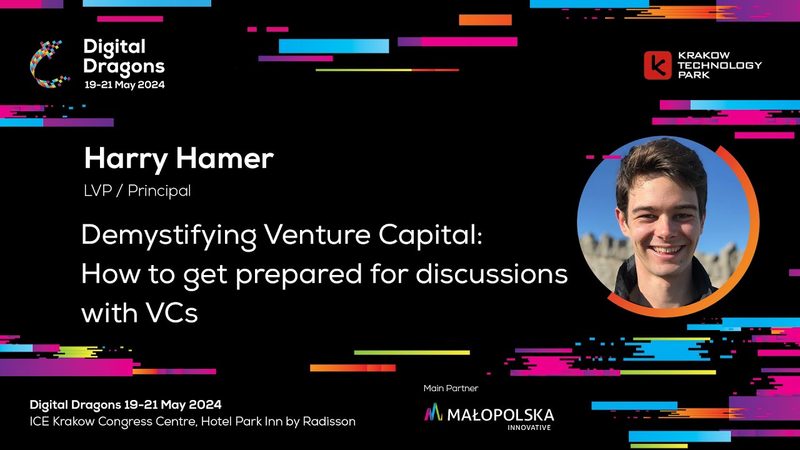
Harry Hamer - Demystifying Venture Capital: How to get prepared for discussions with VCs
Venture capital in the gaming industry is currently navigating a period of significant recalibration, marked by a 79 percent decline in investment during 2023.
- Venture capital is not suitable for every studio; if your business goal is a $20–30 million exit, consider non-dilutive funding, grants, or debt to retain equity rather than pursuing VC-backed scaling.
- Lvp operates as a seed-stage fund, typically deploying checks between $500k and $2.5 million into gaming startups that demonstrate fundamental innovation or platform-level growth.
- Founders should avoid 'technology-first' pitching, such as simply adding AI or blockchain labels to a project without a first-principles explanation of how the technology fundamentally changes the value proposition.
Writers
Games and companies
Games