1 free read left. Create a free account for unlimited reading + AI research.
Create free accountReport Ukie
1 free read left. Create a free account for unlimited reading + AI research.
Create free accountReportUkie
This focus has contributed to a decline in qualification uptake and a persistent gender gap in digital education.
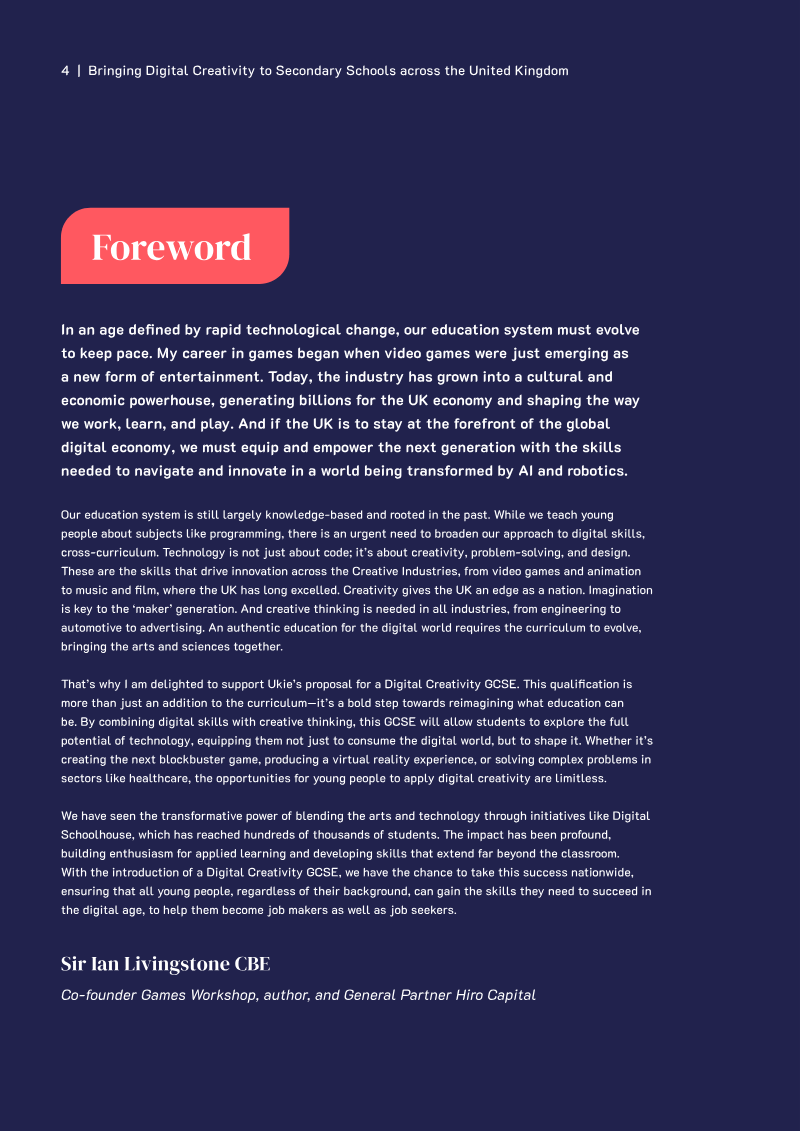
The United Kingdom’s current secondary education curriculum suffers from a narrow focus on theoretical computer science, which has contributed to a notable decline in qualification uptake and a persistent gender gap in digital education. To address these systemic issues, a new Digital Creativity GCSE is proposed to shift the pedagogical focus from passive technology consumption to active, creative production. By integrating audio, visual, and design-thinking disciplines, this qualification aims to provide a more inclusive pathway that attracts a diverse student body while better aligning academic outcomes with the practical demands of the modern digital economy.
The proposed curriculum centers on three core pillars—audio, visual, and creative design—utilizing project-based coursework that mirrors real-world industry collaboration. This approach is designed to foster essential cognitive and interdisciplinary skills necessary for careers in sectors such as video games, animation, and broader creative digital industries. Crucially, the qualification is structured to be accessible without requiring prohibitively expensive, high-specification hardware, thereby mitigating the digital divide that often restricts access to advanced technical education in under-resourced schools.
Successful implementation of this initiative requires a strategic partnership between industry bodies, policymakers, and educators. Beyond curriculum design, the proposal emphasizes the need to address structural challenges, including teacher shortages and the necessity for robust professional development. By bridging the divide between technical computing and creative application, this reform seeks to cultivate a future workforce that is not only technically proficient but also creatively versatile, ultimately securing the long-term competitiveness of the United Kingdom’s creative digital sectors.

Ukie · 2026
Ukie · 2026

Ukie · 2026
Ukie · 2026


Ukie · 2026
Ukie · 2026
Ukie · 2026
Ukie · 2026
Ukie · 2026

Ukie · 2025
Ukie · 2025
Ukie · 2025
Jason Schreier · 2026