Key insights
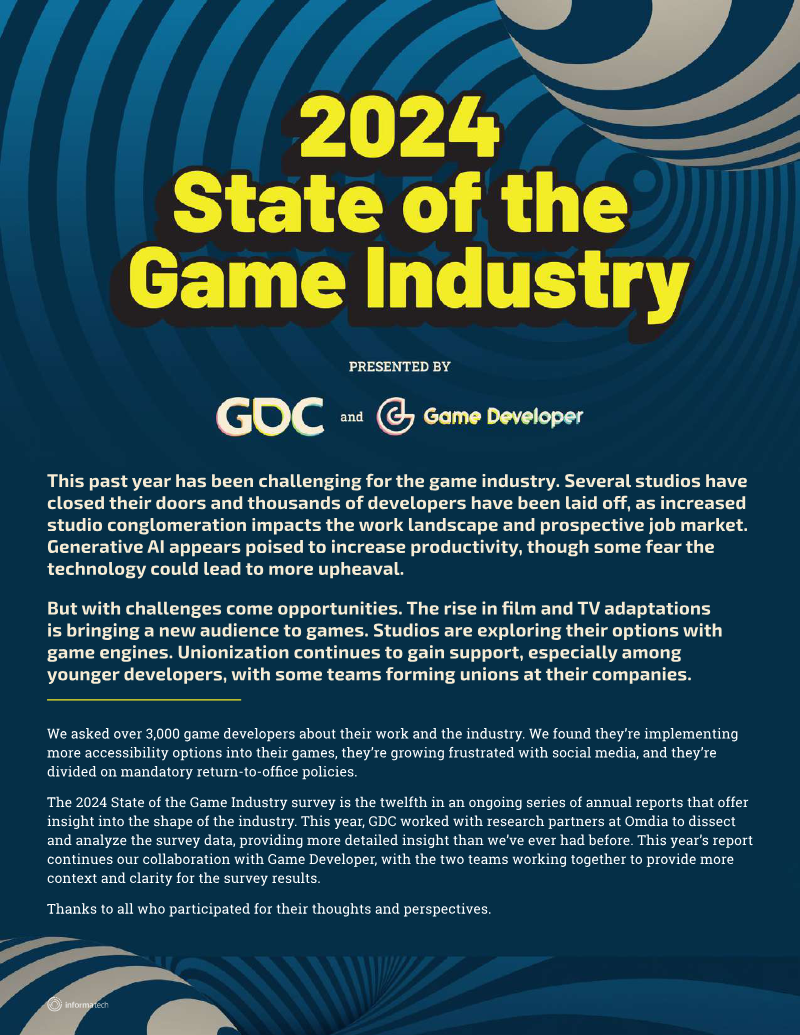
7 slides
Job insecurity
One-tenth of developers reported job losses in the past year.
58% of respondents are worried about future cuts. Layoffs have risen, and revenue pressures and market shifts continue to drive restructuring.
Job losses. 10% of developers experienced layoffs in the past year.
Page 10 of the reportThere were no layoffs43
Colleagues were laid off29
Other teams / departments had layoffs18
I was laid off11
Our studio / company closed down4
N/A16
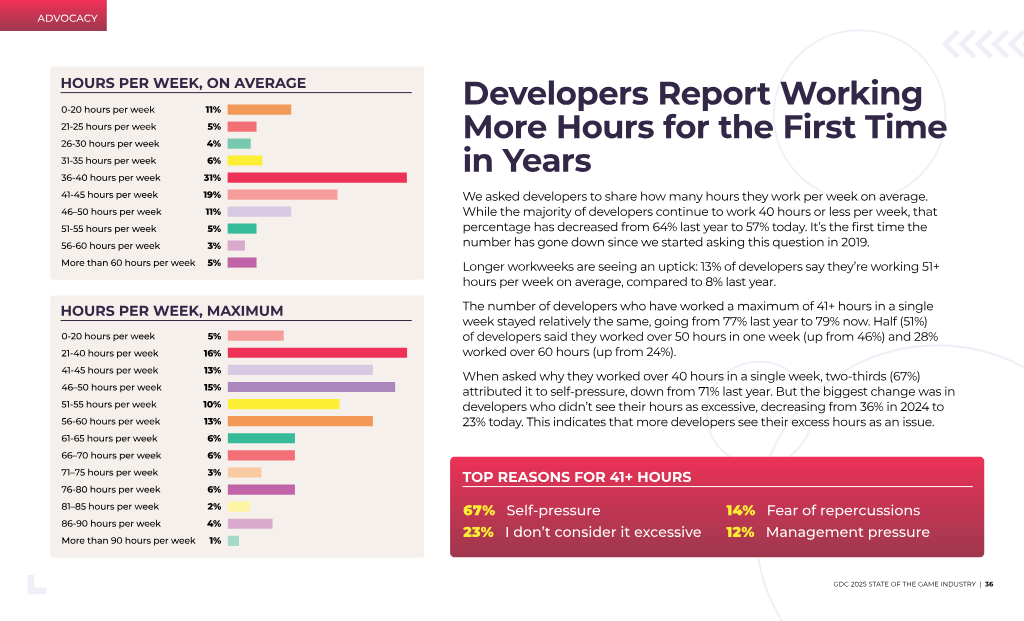
Work hours
Developers working over 50 hours a week rose from 8% to 13%.
Half of respondents now view excess hours as problematic.
AI adoption
52% of studios use generative AI company-wide, but negative perceptions climbed to 30%.
36% of developers use it personally. Only nine percent of companies plan to expand AI use. Ethical concerns, intellectual-property risks, and fears of job displacement affect more than half of respondents.
Page 17 of the reportI use them36
No, we have no interest27
Some of my colleagues do16
No, but we're interested9
Don't know7
Other5
Live-service
Only 13% of studios intend to launch a live title next year.
42% of studios already produce live titles. AAA developers are more inclined at 33%. Worries about market saturation, creative fatigue, predatory monetization, and burnout persist.
Page 26 of the reportNo42
Don't know / N/A29
I already develop live-service games16
Yes13
Diversity gains
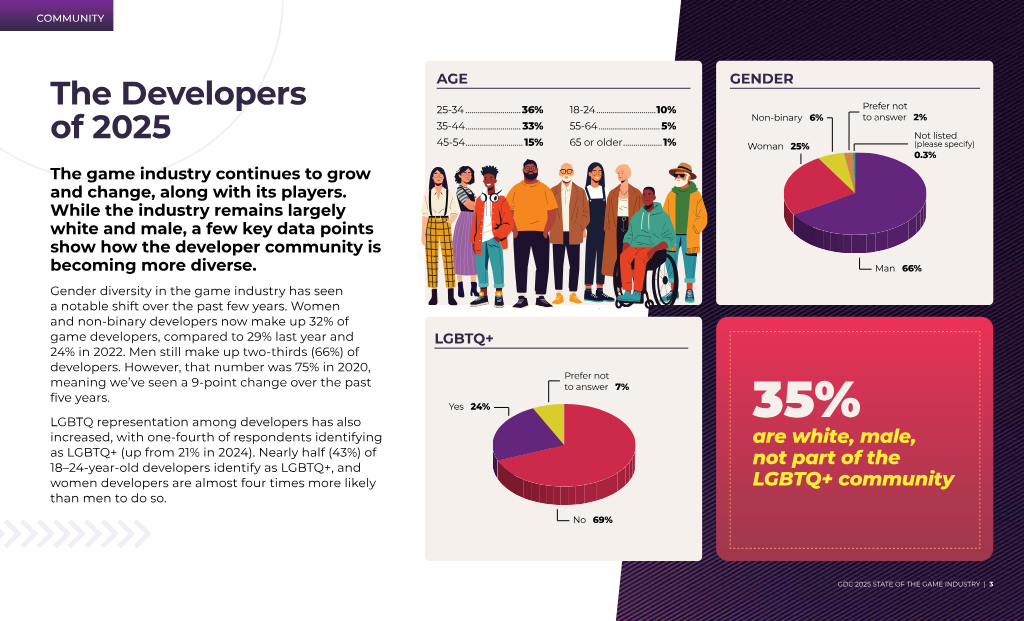
Women and non-binary developers now account for 32% of the workforce.
This is up from 29% in 2024. LGBTQ+ representation reached 24%, yet white males still dominate at 66%.
Union support
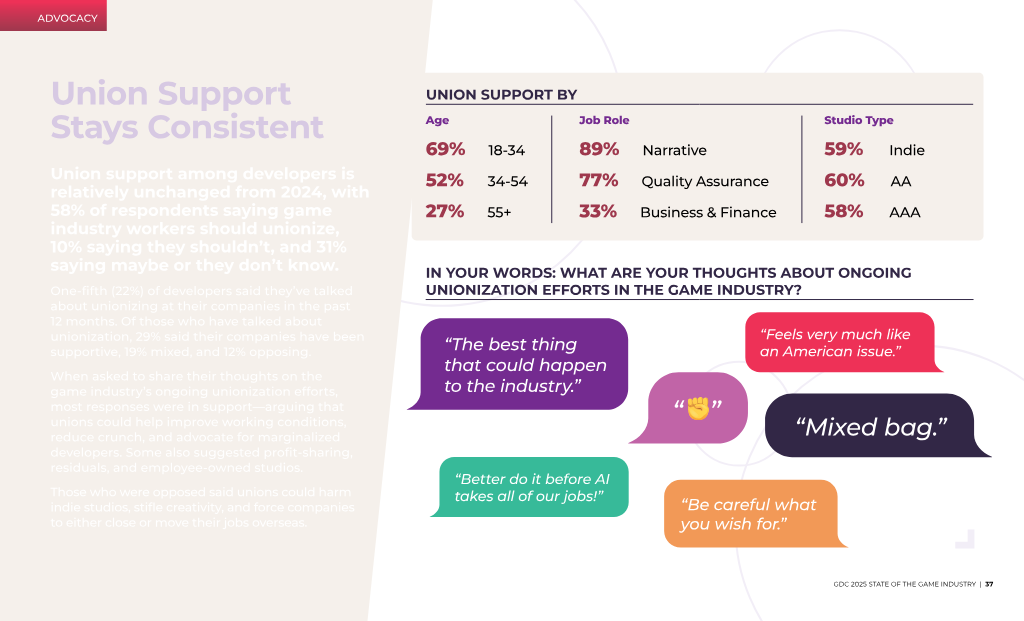
69% of developers support unions, but only 22% discussed it in the past year.
58% advocate industry unionisation. Union support remains robust, yet actual discussion remains low.
Financing
Self-funding remains the dominant financing method at 56%.
Success rates vary across funding models. Revenue pressures and market shifts continue to drive restructuring.
Self-funding56
Publishing deal / Project-based funding28
Government funding / Grants15
Venture capital15
Co-development contract15
Friends or family14
Private investment13
Seed funding11
1 / 7
Ask AI about this report