Game Development reports and market data
Documents

How To Make Indie Games Full Time (Greg Lobanov) — Full Time Game Dev Podcast Ep. 037
Achieving a sustainable, full-time career in independent game development relies on building a consistent portfolio of commercial projects rather than chasing singular viral successes.
- Indie developers do not need viral hits to sustain a full-time career; consistent income can be generated through a portfolio of smaller, non-explosive titles like Coin Crypt, Wandersong, Chicory, and Beastieball.
- When working with limited resources, developers should refine their core game loop and gimmick as a solo developer before hiring a team to scale production.
- Working with publishers can be a strategic choice for experienced developers to offload non-creative tasks, but creators should avoid large, high-stakes deals and prioritize clear, concise milestones to mitigate risk.
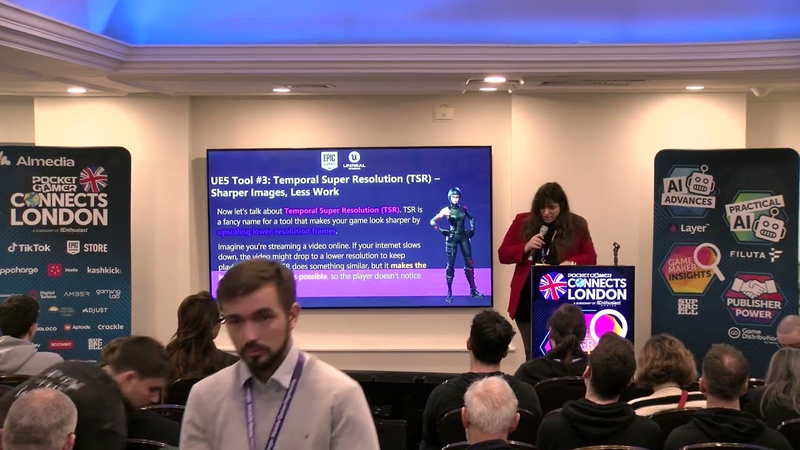
Session: Mobile Gaming With Unreal Engine – Performance, Optimisation, And Fortnite Mobile.
This presentation outlines strategies for optimizing mobile game performance using Unreal Engine, with a specific focus on the technical architecture behind Fortnite Mobile.
- Unreal Engine utilizes three core technologies—Nanite, Lumen, and Temporal Super Resolution (TSR)—to bridge the gap between mobile hardware limitations and AAA-quality visual fidelity.
- Nanite optimizes complex 3D environments by dynamically adjusting geometric detail based on camera distance, functioning similarly to a digital map that only renders high-resolution data when zoomed in.
- Temporal Super Resolution (TSR) enhances performance by rendering at a lower resolution and upscaling the image, allowing mobile games to maintain high visual sharpness without taxing the GPU.

Panel: Supercharging Development – How AI Tools Can Augment Everyone.
Artificial intelligence is poised to fundamentally transform game development over the next five years, primarily by enhancing non-player character behavior, procedural content generation, and data-driven analytics.
- AI is projected to fundamentally transform game development over the next five years by enhancing NPC behavior, procedural content generation, and data-driven analytics.
- Integration of AI tools requires a shift toward rigorous software engineering practices, specifically the implementation of robust continuous integration pipelines and automated code quality management.
- AI acts as an augmentative tool that enables smaller teams to achieve greater scale and hyper-personalization by automating repetitive technical tasks and bug detection.

Panel: Hype Or A Real Force For Games – Where Are We With AI In 2025?
Artificial intelligence represents a fundamental, transformative shift for the global gaming industry in 2025, moving beyond mere hype to become a core driver of production efficiency and innovation.
- Approximately 30% of the gaming industry has integrated AI into production workflows as of 2025, creating a significant competitive divide between early adopters and those at risk of obsolescence.
- AI implementation is currently driving up to a fivefold increase in asset creation efficiency, primarily focusing on accelerating development timelines rather than workforce reduction.
- The industry is transitioning from simple task automation to using AI for the creation of entirely new game genres and dynamic, conversational non-player characters.

Sustainability at Embracer Group: FY 2024/25 ESG Fact Sheet
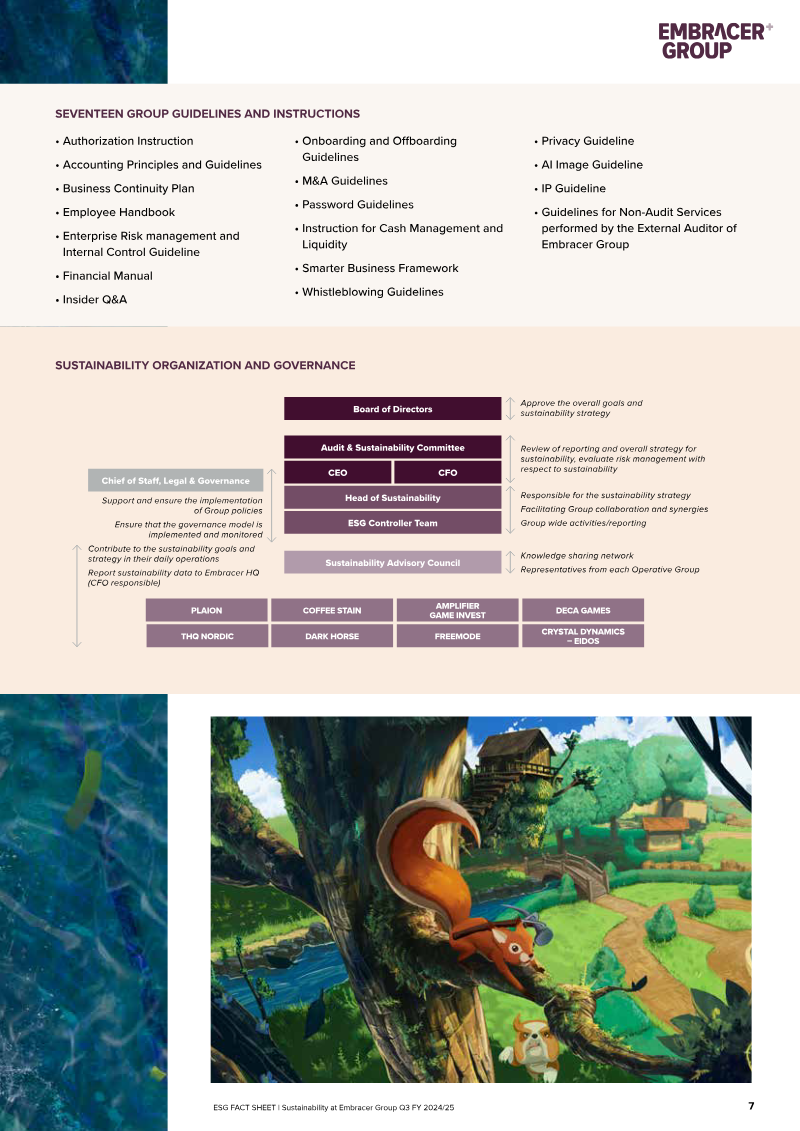
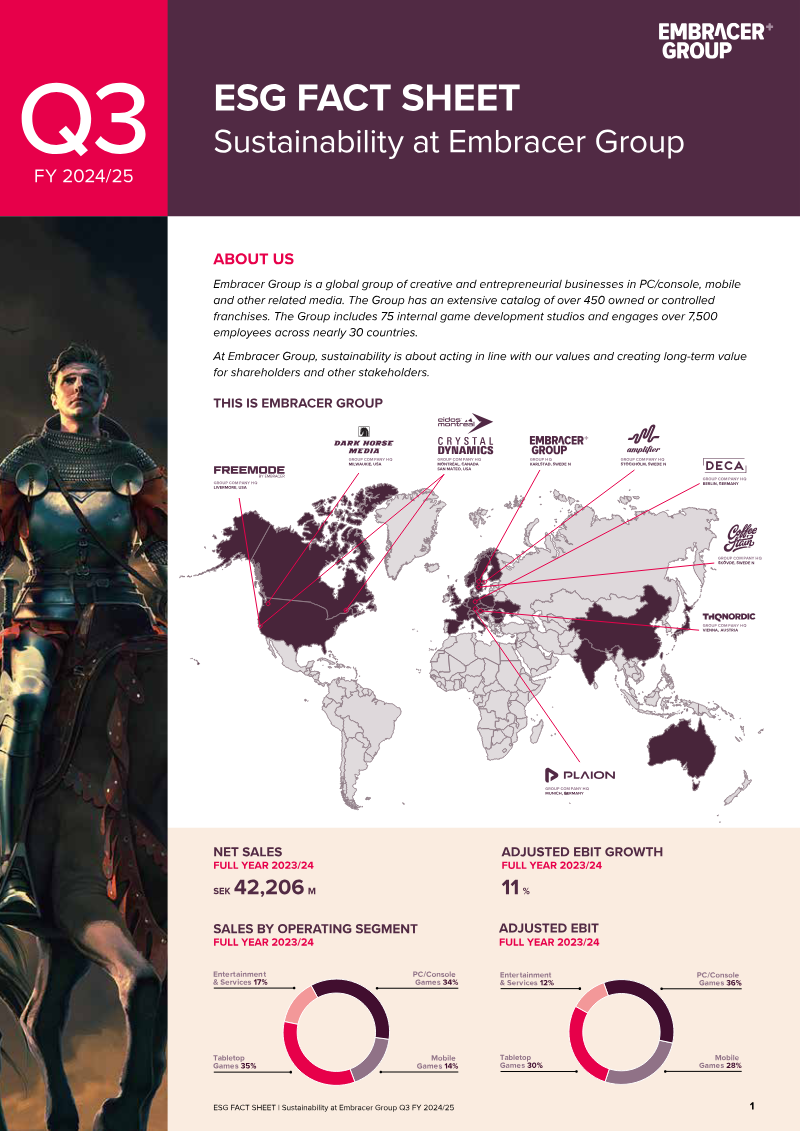
Embracer Group's FY 2024/25 ESG Fact Sheet outlines its sustainability strategy, progress, and goals across environmental, social, and governance dimensions.
- Embracer Group is preparing for full compliance with the Corporate Sustainability Reporting Directive (CSRD) and European Sustainability Reporting Standard (ESRS) by FY 2025/26.
- The company has committed to a science-based target of reducing carbon emissions by 45% by 2030, using 2021 as a baseline.
- Approximately 98% of the group's total carbon emissions are categorized as Scope 3, originating primarily from purchased goods, services, and product usage.

How To Make Games Alone (And SHOULD YOU?)
The development of independent games involves a spectrum of production scales, ranging from solo efforts to collaborative team-based projects.
- The decision to scale from a solo developer to a team should be dictated by the specific technical and design requirements of the project rather than a general desire for company growth.
- Solo development provides maximum creative autonomy and agility, but often requires outsourcing specialized tasks like music and sound design to maintain professional production standards.
- Transitioning to a team-based model enables the realization of ambitious 'dream projects' that exceed the capacity of a single developer, though it introduces increased production friction and slower development cycles.

Gaming Today with Studio GM Chris Stone | 362
The gaming industry is currently navigating a significant post-pandemic correction characterized by a shift away from the unsustainable growth, aggressive over-hiring, and inflated salary expectations that defined the previous few years.
- The gaming industry has shifted from a pre-COVID era of easily accessible $100 million budgets for AAA projects to a current environment where investors are significantly more risk-averse.
- Remote and hybrid work models have disrupted traditional project management, as the lack of in-person interaction makes it difficult to gauge individual productivity, maintain team shorthand, and build the trust necessary for effective leadership.
- Managing remote teams requires a personalized approach, as managers must account for varying home-life constraints and individual work styles rather than relying on standardized, pre-prescribed recipes for team composition.


20 Years of the Korean Game Industry
The document, "20 Years of the Korean Game Industry," provides a comprehensive overview of the Korean game market's evolution from 2004 to 2023, detailing its growth, key trends, regulatory challenges, and increasing social contributions.
- The South Korean game industry grew fivefold over the last two decades, reaching a total market valuation of 20 trillion KRW by 2023.
- Mobile gaming became the industry's primary growth engine in 2017, officially surpassing PC-online revenue.
- The sector successfully pivoted from a niche PC-online focus to a multi-platform ecosystem, recently diversifying into console and subculture genres with international hits like 'P의 거짓' (Lies of P) and 'Dave the Diver'.

How to Score Treasure as An Indie Game Studio
The mobile gaming industry presents significant challenges for small independent studios, particularly regarding user acquisition and monetization strategy.
- NineZyme OÜ, a four-person indie studio, successfully modernized the classic tile-sliding puzzle genre by integrating character-driven narratives and vibrant animations in their debut title, Tiles Tales: Pirates.
- Indie studios must remain agile by prioritizing direct experimentation and data-driven testing of monetization models over following generic industry-standard advice.
- Transitioning from a premium to a freemium model proved necessary for NineZyme OÜ to broaden audience reach and better align with player behavior.

Cloud Creations: Scaling up Game Dev
Cloud computing serves as the foundational architecture for modern game development, enabling studios to offload complex backend operations and focus resources on creative innovation.
- Cloud-native architectures enable the development of persistent, physics-driven worlds capable of supporting massive player bases of up to 100 million users per title.
- Transitioning to cloud infrastructure allows studios to dynamically scale server resources based on real-time demand, which reduces production costs and accelerates time-to-market.
- Cloud-based AI is increasingly used to automate repetitive development tasks like rigging and procedural generation, allowing teams to focus resources on human-centric artistry and complex gameplay mechanics.

Session: Breaking Silos – Data Democracy To Maximise Teams Effort - Alla Tytarenko, devtodev.
Data silos represent a significant operational challenge in the gaming industry, often resulting in inconsistent metrics, duplicated efforts, and delayed decision-making.
- Data silos in gaming organizations cause operational inefficiencies by creating inconsistent metrics, duplicated efforts, and delayed decision-making.
- Establishing a single source of truth requires defining shared KPIs and documenting them in a centralized, accessible location to ensure all departments use identical metrics for performance indicators like retention and lifetime value.
- Organizations should conduct a comprehensive inventory of their existing tool stack to identify and eliminate redundancies, overlaps, and technical inefficiencies.
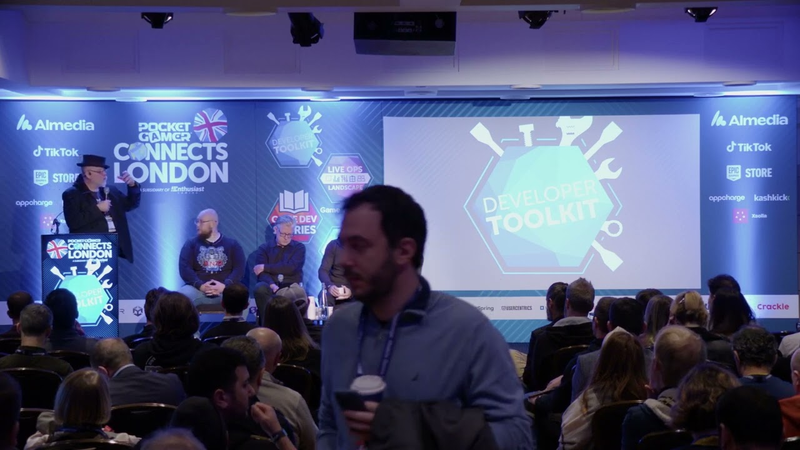
Curated Panel: The Game Development Renaissance – What Will Be The Foundations Of Gaming's Next....
The global gaming industry is currently undergoing a transformative renaissance characterized by a shift away from monolithic, high-budget development toward agile, specialized production models.
- The industry is shifting from monolithic, high-budget production toward agile, specialized models that utilize AI and machine learning to improve efficiency and reduce development overhead.
- Studios are increasingly offloading long-term live operations to third-party providers, allowing internal teams to prioritize creative innovation and emotionally resonant gameplay over content volume.
- To combat market saturation and AI-driven content bloat, developers must adopt platform-agnostic distribution strategies that bypass traditional app stores in favor of messaging apps and community-centric platforms.
Writers
Games and companies
Games