Game Development reports and market data
Documents

How to Port F2P Mobile Game to Web, Nintendo Switch, Steam?
Successful porting of free-to-play mobile games to Web, Steam, and Nintendo Switch requires a strategic, data-driven approach centered on game economy and platform-specific flexibility.
- Validate game concepts through a five-week hyper-casual prototyping phase, using KPIs like cost per install, funnels, and session length to de-risk investments before full-scale development.
- Design the core game loop to be economy-based and functional without monetization elements, ensuring the title can transition easily from free-to-play mobile to premium console or subscription models.
- Prioritize mobile success as a prerequisite for expansion, avoiding the high risks associated with simultaneous multi-platform development.
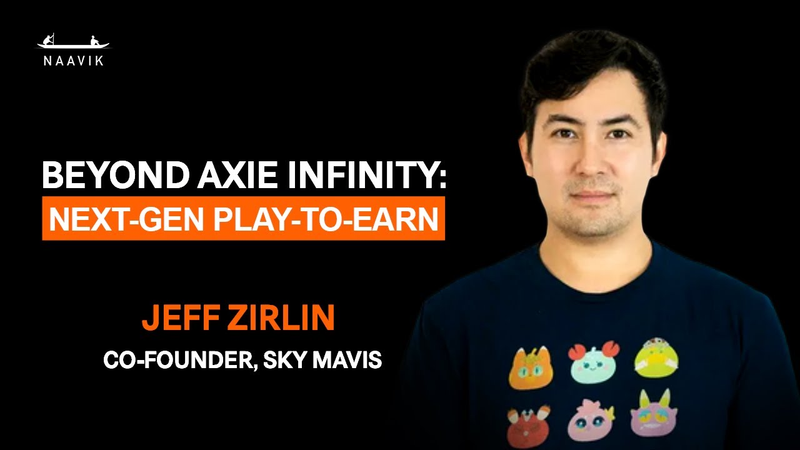
Web3 Gaming: Insights from the Ronin Ecosystem
The Ronin blockchain serves as a specialized infrastructure designed to overcome the scaling and transaction cost limitations inherent in the Ethereum network.
- The Ronin blockchain is transitioning from a curated, permissioned model to a permissionless ecosystem, allowing any developer to build on the network while maintaining Sky Mavis's role in providing strategic publishing support and grants.
- The 'Ronin effect'—the ability to drive significant user acquisition and liquidity for new projects—was validated by the game Pixels, which grew from 5,000 to millions of users in a few months and reached a multi-billion dollar market valuation.
- Sky Mavis has launched the Ronin Developer Console, a suite of tools designed to lower barriers to entry by providing features such as sponsored transactions, marketplace integration, and access to core network APIs.
How Interactive Should My Game Story Be?
Effective narrative design hinges on aligning interactive elements with core player motivations, such as the desire for self-expression, replayability, or meaningful reactivity.
- Determine the specific goal of interactivity before implementation, focusing on whether it serves player self-expression, shareability, or the desire for the game to acknowledge their unique actions.
- Avoid the 'branching explosion' trap by using structural loops and focused choice points rather than attempting to create an infinitely forking narrative tree, which is difficult to manage and produce.
- Align game design with player expectations by using clear signposting throughout the experience, ensuring players understand the rules and consequences of the narrative systems before they reach the end.
Jobs in the French Gaming Industry: March 2025
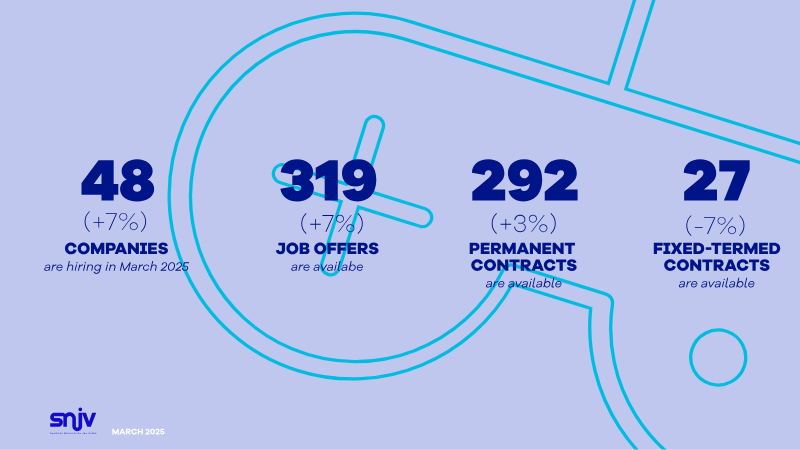
The French gaming industry saw 292 job offers available in March 2025, a 7% increase from the previous month, with 48 companies actively hiring.
- As of March 2025, the French gaming industry features 319 active hiring companies and 292 total job openings, marking a 7% growth in both categories compared to the previous month.
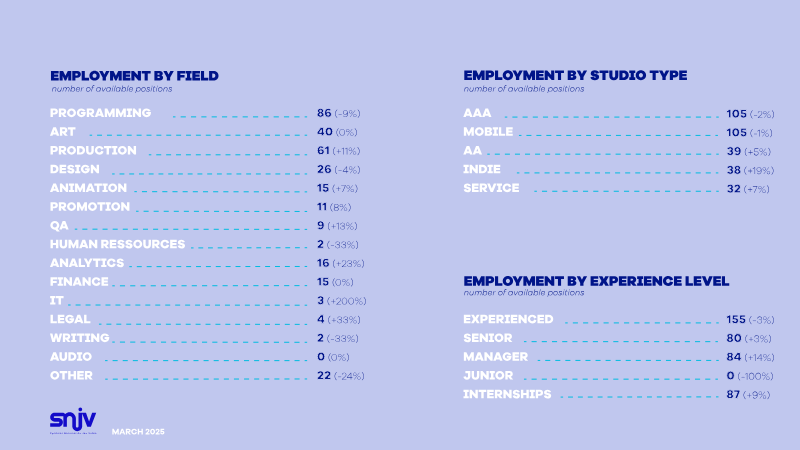
- The market is heavily skewed toward experienced talent, with junior-level roles effectively vanishing while manager-level openings have increased by 14%.
- Programming is the most in-demand field with 86 open positions, followed by a significant surge in IT-related roles and a decline in human resources and writing positions.
Is This Seat Taken? Demo analysis
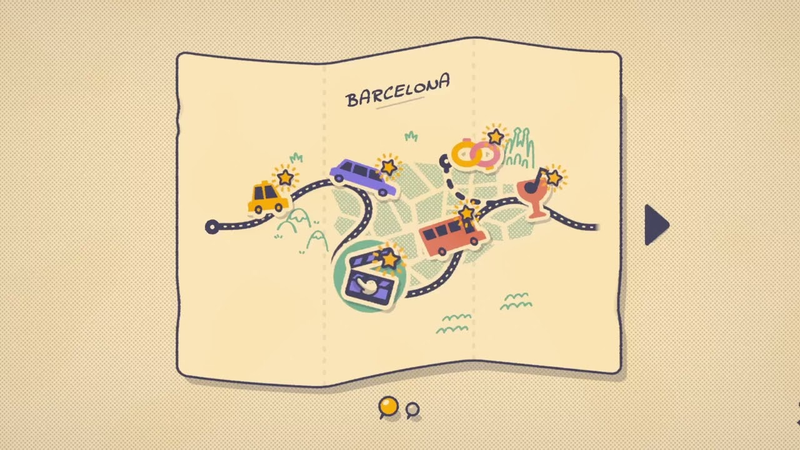
The puzzle game Is This Seat Taken? demonstrates that accessibility and visual cohesion are primary drivers of success for indie titles on Steam.
- Limiting a game's color palette to three or four colors significantly improves visual cohesion and aesthetic quality, especially for developers without professional art backgrounds.
- Puzzle games often struggle on Steam, but 'Is This Seat Taken?' succeeded by prioritizing a highly polished, distinct visual style—using paper and sticker-like aesthetics—over complex, high-difficulty mechanics.
- Casual puzzle games with shorter playtimes (e.g., 45 minutes) can achieve high daily user counts during Steam Next Fest because the demo is accessible and easy to complete, leading to higher turnover compared to long-form 'crafty' building games.

Rise of Vietnam: Mobile Gaming Boom—Key Players, Winning Strategies & What’s Next
Vietnam has rapidly ascended to become a global mobile gaming powerhouse, with the domestic industry projected to surpass $1 billion in annual revenue by 2025.
- Vietnam’s mobile gaming industry is projected to exceed $1 billion in annual revenue by 2025, supported by a consistent 30 percent year-over-year growth rate.
- Local studios including iKame, Brave Stars, and ABI Games have become top global publishers by prioritizing high-scale, ad-monetized ultra-casual and super-casual titles.
- The industry’s success is driven by a collaborative ecosystem where developers share data and gameplay templates to maintain lean production models and high user retention.
Welcome To PG Connects London 2025 - Chris James
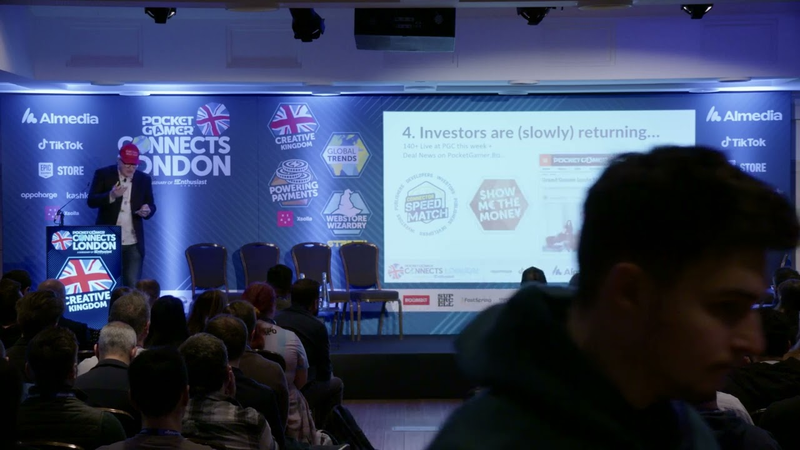
The Pocket Gamer Connects London 2025 conference, hosted by Steel Media CEO Chris James, serves as a strategic industry gathering aimed at analyzing the current state of the global games market and identifying growth opportunities for the year ahead.
- The global games industry generated between $188 billion and $200 billion in revenue last year, maintaining its position as the world's largest entertainment sector.
- Approximately 40,000 industry jobs were lost globally over the past 18 months, though recruitment activity remains ongoing for those seeking new roles.
- The distribution landscape is shifting away from the Apple and Google duopoly, with new app stores and direct-to-consumer portals emerging from companies like Aptoide, Huawei, Samsung, and Epic Games.

Building a #1 Earning VR Game
Spatial has successfully transitioned from an augmented reality collaboration platform into a leading developer of user-generated content within the virtual reality sector.
- Spatial achieved enterprise-wide profitability as of December by transitioning from an AR collaboration platform to a leading developer of user-generated VR content.
- The success of the top-earning title 'Animal Company' is driven by a social-adventure gameplay loop supported by consistent live operations and community engagement via Discord.
- The company scaled its user base by leveraging accessible hardware like the Meta Quest 3S and repurposing foundational code from previous experimental projects.

Publishing 101: What Game to Build, Why, and Which Publisher is Right for You by John Wright
Mobile game publishing serves as a critical strategic lever for developers navigating a challenging financial landscape characterized by a five-year low in venture capital funding.
- Publishers prioritize a 'hunting' strategy over 'farming,' with hunting yielding a 1-in-20 to 1-in-50 success rate compared to the 1-in-300 to 1-in-500 success rate of portal-based farming submissions.
- Developers should adopt a 'plus one' strategy by iterating on existing successful game mechanics rather than pursuing high-risk, true innovation, which has a high failure rate due to unpredictable market reception.
- Lean development teams should focus exclusively on core product engineering and MVP development, leveraging publishers to provide the necessary capital, marketing expertise, and expensive third-party technology stacks.

How Ubisoft Brought Feudal Japan to Life: Rendering 'Assassin's Creed Shadows' with Nicolas Lopez
The development of Assassin’s Creed Shadows represents a significant technical evolution for the Anvil engine, necessitating a shift from traditional asset-based workflows to highly scalable, systemic solutions.
- The development of Assassin's Creed Shadows required a next-generation overhaul of the Anvil engine, incorporating a new ray-tracing pipeline and micropolyon technology.
- Managing the game's massive scale—which includes dynamic time-of-day, seasonal changes, and systemic weather—necessitated the development of specialized debugging tools, such as generating QR codes to replicate exact in-game environmental parameters for testers.
- Working on an open-world project of this magnitude requires shifting the engineering mindset from pursuing maximum individual asset quality to prioritizing scalable solutions across all production stages.

I Spent 3 Years Making A Horror Game... Let's Play It!
Twisted Tower represents a three-year independent development effort to create a narrative-driven, first-person shooter that blends whimsical, cartoon-like aesthetics with horror elements.
- Twisted Tower is a 3D horror game inspired by BioShock and 1950s theme park aesthetics, developed over a three-year period by a small team.
- Approximately 90% of the game's assets were created from scratch, with the team specifically avoiding heavy reliance on pre-made asset packs for environmental and character design.
- To increase replayability without using procedural generation, the developers implemented a branching path system that effectively doubled the required level design workload.

So.... my game is in Steam Next Fest RIGHT NOW. Here's how it's goin
Steam Next Fest serves as a pivotal mechanism for independent game developers to generate significant pre-launch momentum, primarily through the strategic deployment of high-quality demos.
- Launching a demo 1–2 weeks before Steam Next Fest allows for a longer window to gather feedback and build momentum, potentially yielding over 20,000 wishlists prior to the event start.
- Effective trailer structure follows a 'big action, story/motive, return to action' formula to maintain viewer engagement without causing fatigue.
- Influencer outreach should be targeted by genre (e.g., mascot horror or Bioshock-style games) and utilize 'ladder climbing,' where smaller successful videos are used as social proof to secure coverage from larger creators.
Writers
Games and companies
Games