Game Development reports and market data
Documents

How StarCraft 2 fans helped Dreamhaven sign a game
Dreamhaven, a developer and publisher founded by former Blizzard co-founder Mike Morhaime, is navigating the current gaming landscape by prioritizing high-quality, genre-distinct titles and community-driven development.
- Dreamhaven leverages grassroots community feedback to identify publishing opportunities, most notably signing the auto-battler Mechabellum based on strong recommendations from the StarCraft 2 player base.
- The company operates with a lean structure of approximately 120 employees across two internal studios, Secret Door and Moonshot, supplemented by external outsourcing to maintain production capacity.
- Dreamhaven’s market thesis is driven by the saturation of the industry, noting that 19,000 games were released on Steam last year without a proportional increase in titles selling over 100,000 units.

How He Sold 2,000,000 Copies Of His Games (Dave Gilbert) — Full Time Game Dev Podcast Ep. 039
Achieving long-term success in the independent game development industry requires a disciplined, incremental approach that prioritizes sustainable growth over high-risk, large-scale projects.
- Building a sustainable game development career is best achieved by starting with small, manageable projects that allow for rapid iteration and learning rather than risking all resources on a single long-term title.
- Developing a consistent brand and universe across multiple titles helps cultivate a loyal audience of returning players, which provides a financial safety net for future, more ambitious projects.
- Managing the psychological toll of public feedback requires a 'thick skin' that prioritizes mental health by choosing not to engage with negative criticism, even when it feels like a personal attack.

How This Small Game Studio 10x Their Revenue in an Industry Downturn
Fumb Games achieved a tenfold increase in revenue during a challenging 2024 industry downturn by focusing on a strategy of iterative testing, transparent monetization, and operational efficiency.
- Fumb Games achieved a 10x revenue increase in 2024 by focusing on iterative testing and operational efficiency rather than relying on a single breakthrough.
- The studio’s revenue model is anchored by a hybrid approach, with approximately 70% of total income generated through advertising.
- Fumb Games tested roughly 100 game concepts over a two-year period to identify high-performing mechanics and scale successful titles like Bitcoin Miner and Idol Miner.

Why You Won't Finish Your Game (And How To QUIT Quitting!)
The primary obstacle preventing independent game developers from completing their projects is not a lack of technical skill or poor game design, but rather an intense, underlying fear of public scrutiny and potential failure.
- The primary barrier to project completion for independent developers is the psychological fear of public failure and scrutiny rather than a lack of technical or design proficiency.
- Developers often struggle to separate their personal identity from their work, causing them to perceive critical feedback or minor bugs as personal attacks.
- The high-stakes nature of long-term development cycles creates a cycle of anxiety where the public reception of a demo is incorrectly viewed as a definitive judgment on a developer's entire career.
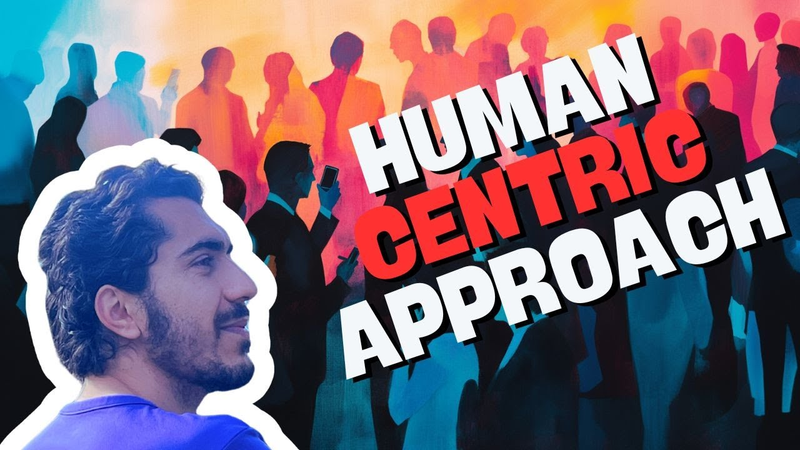
A Human-Centric Approach to Mobile gaming industry by Ömer Yakabagi
The mobile gaming industry is currently experiencing a crisis of identity, characterized by an aggressive, revenue-obsessed startup culture that prioritizes key performance indicators (KPIs) over the core values of creativity, joy, and human connection.
- The mobile gaming industry's current 'peak culture'—a startup-driven focus on rapid growth and aggressive revenue targets—is stifling creativity and creating unsustainable pressure on developers, artists, and marketers.
- To restore the industry's core value of providing joy and connection, companies must shift from a purely revenue-centric model to a human-centric approach that prioritizes employee well-being and mental health.
- Creative professionals, including designers and developers, are often forced to prioritize high-volume content production over innovation, which diminishes the quality of the player experience and the long-term health of the industry.

Tools and Tactics That Help Small Game Studios Nail Big Results
Small game studios can achieve significant results by integrating monetization mechanics directly into core gameplay and leveraging artificial intelligence to overcome resource constraints.
- Small studios should prioritize integrating monetization directly into core game mechanics rather than attempting to back-engineer revenue models after development.
- Testing should focus on early-stage metrics like CPI and retention before introducing monetization, allowing studios to pivot based on player engagement with specific items or features.
- Live ops, such as limited-time events with unique progression paths, provide a scalable way to introduce new content and revenue opportunities without overwhelming small teams.
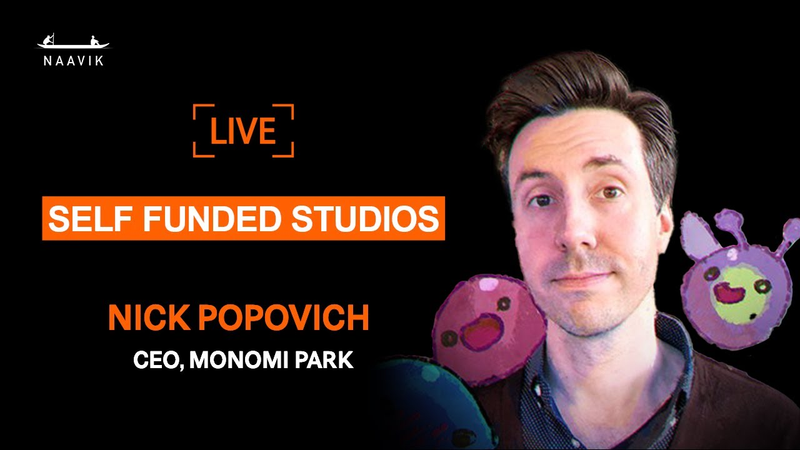
Sustainable Growth: Building Studios Without External Funding
Achieving long-term success in the independent game industry requires a fundamental shift away from venture capital and rapid, high-risk scaling toward a model of sustainable, organic growth.
- Studios can achieve multi-million unit sales, such as those seen in the Slime Rancher franchise, while maintaining full creative control by prioritizing organic growth over venture capital.
- Financial self-sufficiency is best maintained by deferring hiring until specific operational pain thresholds are reached, keeping teams lean and focused on stability.
- Risk mitigation during development is achieved by prototyping core gameplay loops early to confirm engagement before committing to full-scale production budgets.

Softlaunch Sonar #8 - Exploring the Latest Game Releases & Innovations
The mobile gaming industry is currently defined by a strategic shift toward aggressive iteration on proven mechanics and the widespread adoption of hybrid genre models.
- The mobile market is shifting toward hybrid genre models that blend successful core loops, such as combining arcade idle progression with base-building or integrating board-game mechanics into puzzle frameworks.
- Developers are aggressively iterating on proven 4X strategy mechanics popularized by high-performing titles like Last War and Whiteout Survival to mitigate risks in a saturated market.
- Rising user acquisition costs and market saturation have made IAP-driven monetization models essential for sustaining growth in new mobile releases.
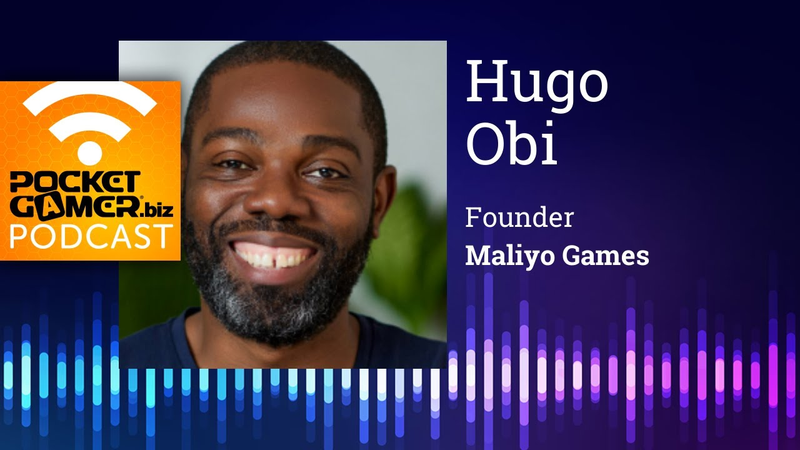
The Studio Shaping the African Gaming Sector and What To Expect from the Region in 2025
The African gaming sector is undergoing a pivotal transformation, shifting from a passive consumer market toward a robust hub of original content creation.
- The African gaming sector is projected to exceed $1 billion in revenue this year, driven by a young, tech-savvy population and widespread mobile accessibility.
- Local studios are shifting from outsourced work-for-hire models to the development of original intellectual property that emphasizes local folklore and culturally resonant storytelling.
- Nigeria, Kenya, South Africa, and Egypt are currently the primary engines of growth for the regional gaming industry.

Personalization in Gaming: The Holy Grail of User Experience (and
Personalization represents the next frontier in gaming user experience, moving beyond static, rule-based segmentation toward dynamic, AI-driven environments.
- Gaming is shifting from static, rule-based segmentation to dynamic, AI-driven environments using contextual multi-armed bandit algorithms to automate difficulty, pricing, and ad frequency in real time.
- Machine learning replaces manual A/B testing, allowing studios to simultaneously optimize for conflicting goals like player retention and monetization without repetitive manual configuration.
- The mobile casual puzzle sector is currently the primary adopter, using these tools to refine rewarded video placements and prevent revenue cannibalization.

Supercell's New Boat Game - The Experts Weigh In
Supercell’s latest project, currently referred to as Boat Game, represents a significant strategic shift toward ambitious, real-time, and hardcore mobile experiences.
- Supercell is shifting its strategic focus from casual, short-session mobile games to complex, hardcore experiences featuring naval combat, third-person shooting, and deep RPG progression.
- The 'Boat Game' utilizes a hub-and-shard structure with 3D environments, marking a transition away from traditional menu-based mobile interfaces toward persistent, immersive worlds.
- The studio is attempting to accelerate development by reusing assets from previous internal projects like Moco and employing a 'ship early' philosophy to iterate on a high-fidelity engine.

How Istanbul Became the New Capital of Mobile Gaming – And Where It’s Headed Next
Istanbul has emerged as a preeminent global hub for mobile gaming, characterized by a unique synthesis of high-volume prototyping, data-driven design, and a decentralized, ownership-based organizational culture.
- Istanbul’s gaming success is driven by a decentralized organizational model that empowers small, agile teams and product owners to maintain rapid prototyping and iteration cycles.
- The local ecosystem benefits from a high concentration of engineering talent and specialized mediation companies that provide the necessary infrastructure for scaling operations.
- A critical structural challenge is the talent bottleneck at the mid-to-senior level, which currently limits the industry's ability to transition into more labor-intensive genres like RPGs and strategy games.
Writers
Games and companies
Games