Game Development reports and market data
Documents
The GameCreator: Self-Created Mobile Games on the Internet
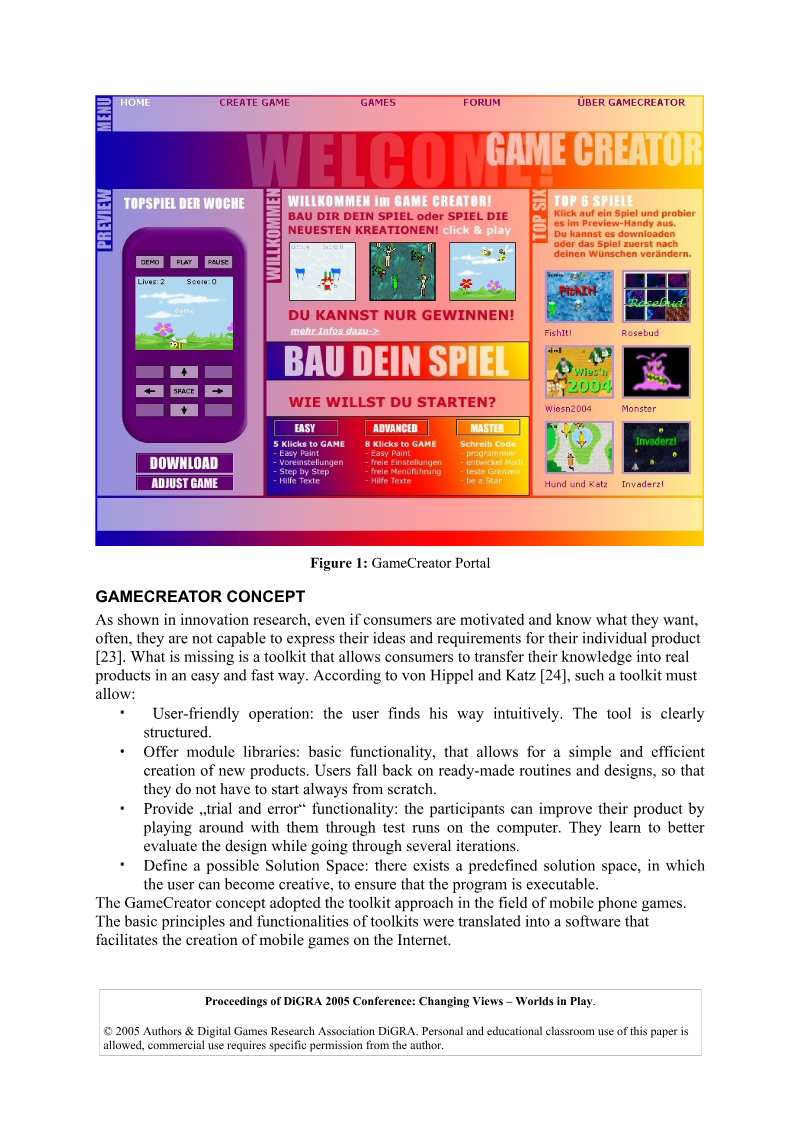
This paper introduces the GameCreator, an Internet platform designed to enable consumers to create and download their own mobile Java games without requiring programming skills.
- The GameCreator is a 2005 DiGRA-presented web platform that lets users with no programming skills build and download their own Java mobile games, either from scratch or by modifying templates, using a graphical wizard, live preview, server-side compilation into JAR files, and an embedded community for sharing and co-developing games.
- The paper argues that self-created games offer value beyond ready-made titles because the effort of creation is rewarded through hedonic enjoyment, personal utility, social recognition, and symbolic meaning, such as use as personalized gifts or messages.
- The platform targets three segments through easy, advanced, and master modes: Mobile Internet crossover users who have never downloaded mobile games, regular gamers aged roughly 9 to 18, and programming-literate users seeking top-tier games.
A Realistic Reaction System for Modern Video Games
The document introduces a Realistic Reaction System (RRS) designed to enhance player immersion and believability in modern video games by modeling dynamic, societal-like relationships between in-game characters and objects.
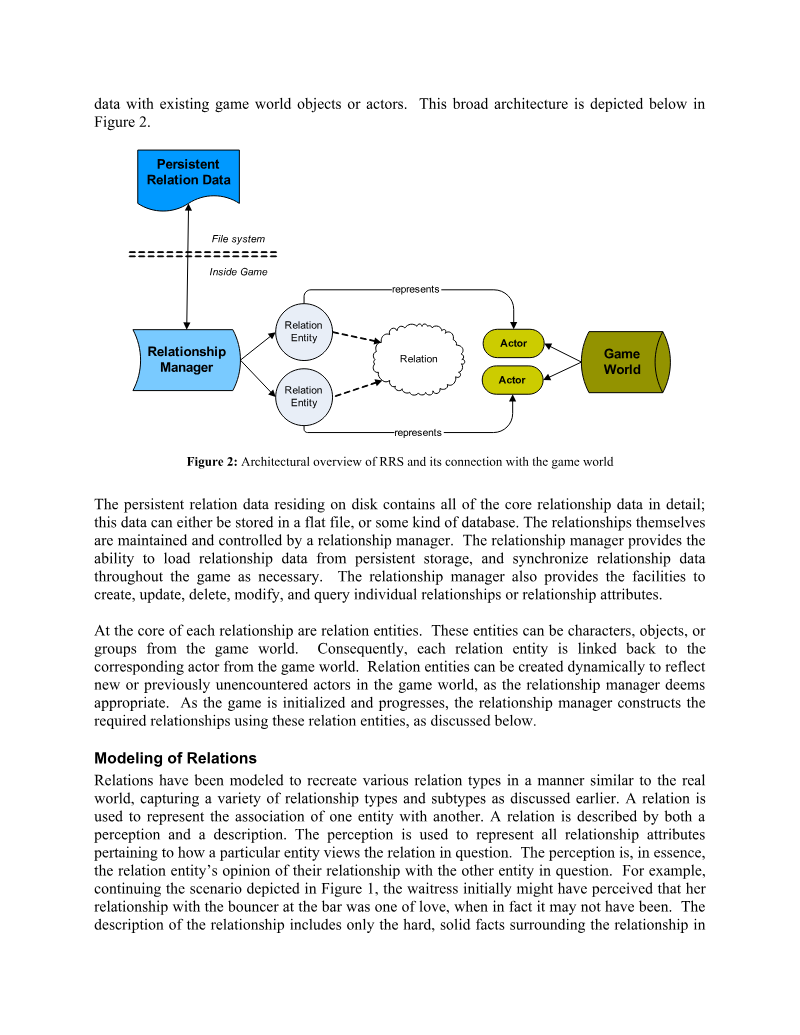
- The Realistic Reaction System (RRS) replaces scripted, event-driven reactions with a persistent relationship network in which characters, groups, and objects are nodes connected by typed, attributed edges that characters can query to shape behaviour and dialogue.
- Relationships are organized in a hierarchical taxonomy (emotional, familial, business, membership) and carry attributes such as origin, history, strength, polarity, and validity, and they decay toward neutrality over time unless reinforced.
- Game events affect the network directly, and their effects propagate indirectly through related entities, similar to reputation spreading through a community.
B.Sc. Computer Game Development: Why Not?
This document proposes a Bachelor of Science in Computer Science with a specialization in Game Development, driven by declining enrollments in traditional computing science programs and the significant, yet underserved, market niche of the computer game industry.
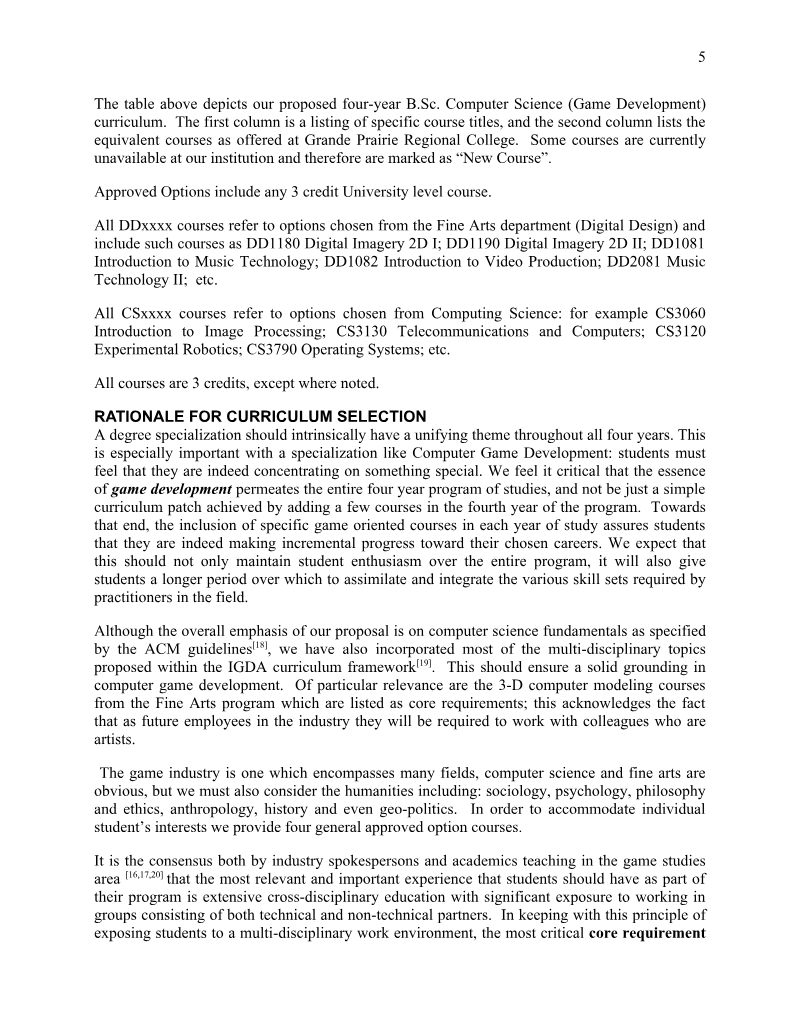
- The paper proposes a four-year B.Sc. in Computer Science with a Game Development specialization at Grande Prairie Regional College in Alberta, Canada, motivated by declining computing science enrolments in North America since around 2000.
- The authors argue the computer game industry, with global sales exceeding $30 billion, offers strong economic growth and largely unmet demand for qualified graduates.
- The central thesis is that a game development program can meet industry needs while preserving the integrity of a standard computing science education by blending ACM computing curriculum guidelines with the International Game Developers Association's curriculum framework.
History of Digital Games in Turkey
This study provides a historical overview and current status of digital games and the game industry in Turkey, covering the period from the late 1980s to 2005.
- Turkish players' habits and play durations parallel global averages, but domestic game development has been extremely limited and poorly documented.
- Digital games reached Turkey in the early 1980s via arcade-style "Atari Salonu" halls, which prompted a 1985 regulatory response requiring local permits.
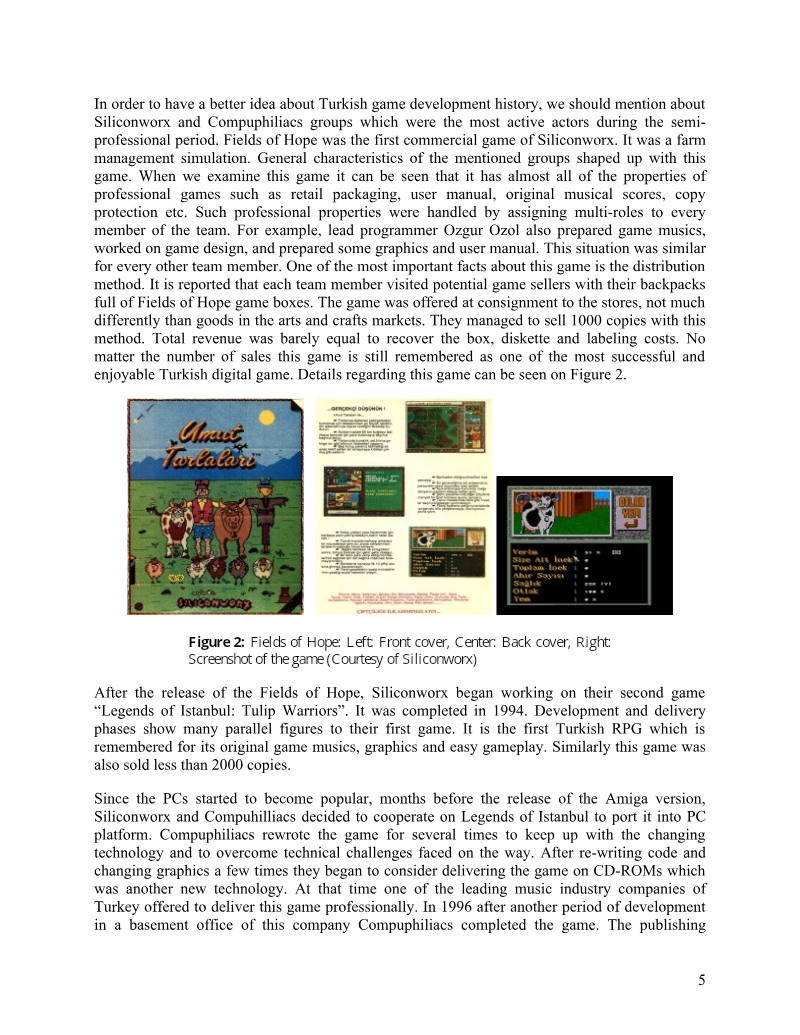
- Turkish home game development passed through three phases: an amateur 1980s period built on the Commodore 64 and magazine-published source code, a semi-professional 1990s period centered on Amiga and PC groups like Siliconworx and Compuphiliacs, and a professional stage from 2000 onward.
A Sociotechnical Conjecture About the Context and Development of Multiplayer Online Game Experiences
The document posits a sociotechnical framework for understanding multiplayer online games, asserting that their "development" is an ongoing process of "context engineering" that extends beyond initial design into active gameplay.
- Multiplayer online game experiences are framed as sociotechnical constructions whose meaning is continuously co-produced by designers and players rather than fixed at launch.
- The central thesis is that 'playing is authoring': designers inscribe rules, roles, and arenas, while players reinterpret and rewrite these conditions through their actions.
- Game design sets up conditions for emergent experience rather than predetermining outcomes, making social interaction the principal driver of what unfolds in a match or community.

Mise-en-scène Applied to Level Design: Adapting a Holistic Approach to Level Design
This document proposes that level designers can enhance emotional depth and narrative communication in video games by adopting the filmic concept of mise-en-scène.
- Mise-en-scène, the film concept of deliberately arranging everything visible within a frame to convey meaning, is proposed as a framework for level design to deepen emotional engagement and communicate narrative and psychological subtext.
- The paper maps Robert Kolker's mise-en-scène elements (spatial arrangement, props, camera relationship, color, lighting, and framing) onto level designers' responsibilities such as set dressing, lighting, texturing, and object placement, noting that cinematography and costuming typically fall to other team members.
- Close readings of Kubrick's The Shining show how scale, the Overlook Hotel's labyrinthine architecture, shifting color temperatures from warm amber to cold blue, atmospheric effects like snow and haze, and repurposed props reinforce themes of isolation, decay, and supernatural dominance.

Automated Identification of Patterns in Evaluation Functions
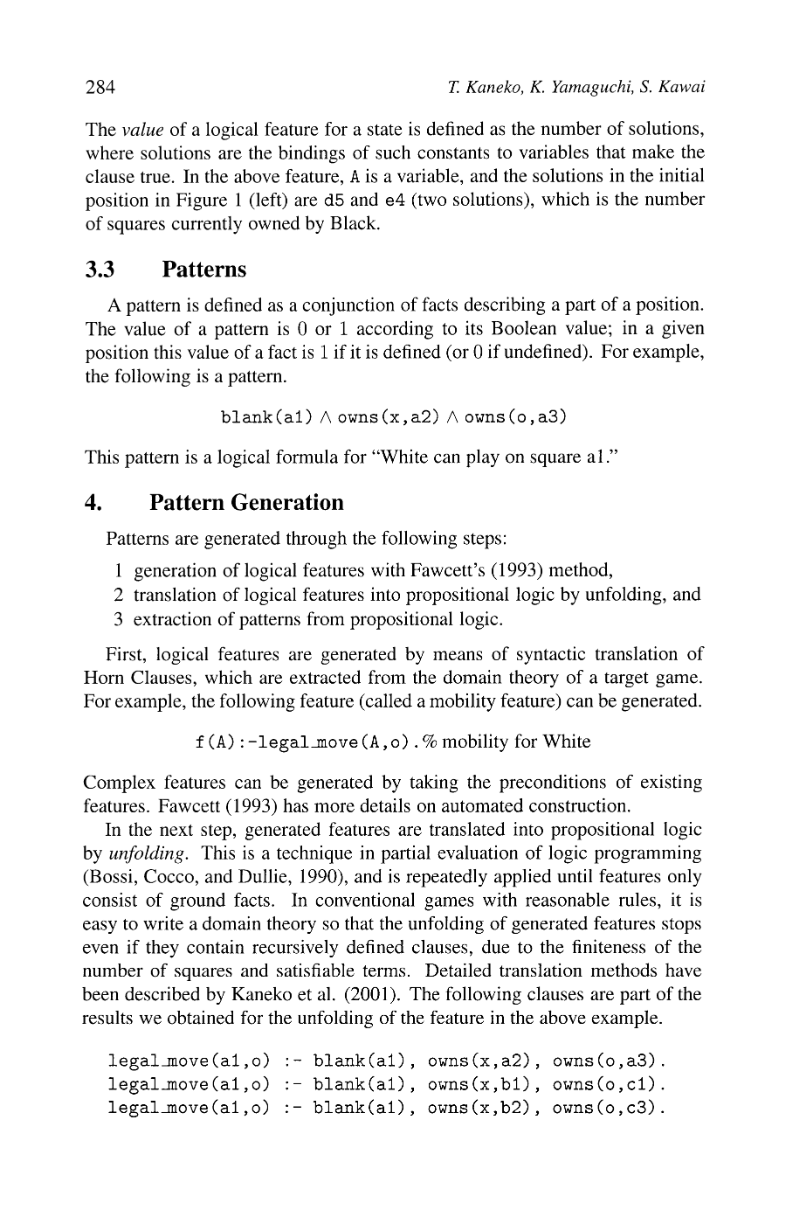
This paper by T. Kaneko, K. Yamaguchi and S. Kawai of The University of Tokyo proposes an automated method for generating accurate evaluation functions for games without expert knowledge of the target game, using Othello as the test game.
- The authors report that about 100,000 patterns were selected from more than eight million automatically generated candidates, and that the resulting evaluation functions were accurate.
- The paper states the accuracy of the generated Othello evaluation functions is comparable to that of specialized Othello programs and much better than existing general methods.
- The authors state that evaluation functions built from logical features were more than 20 times slower than those built from patterns extracted from the same logical features.
First Experimental Results of ProbCut Applied to Chess
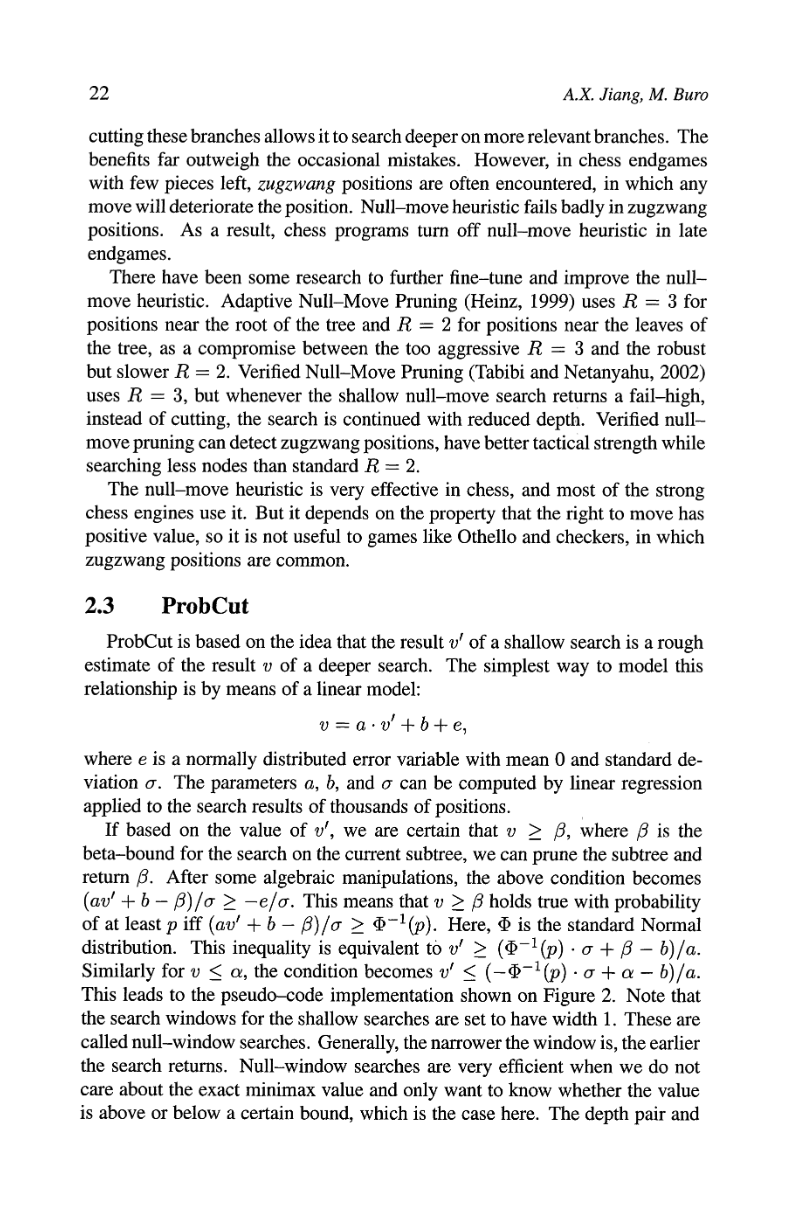
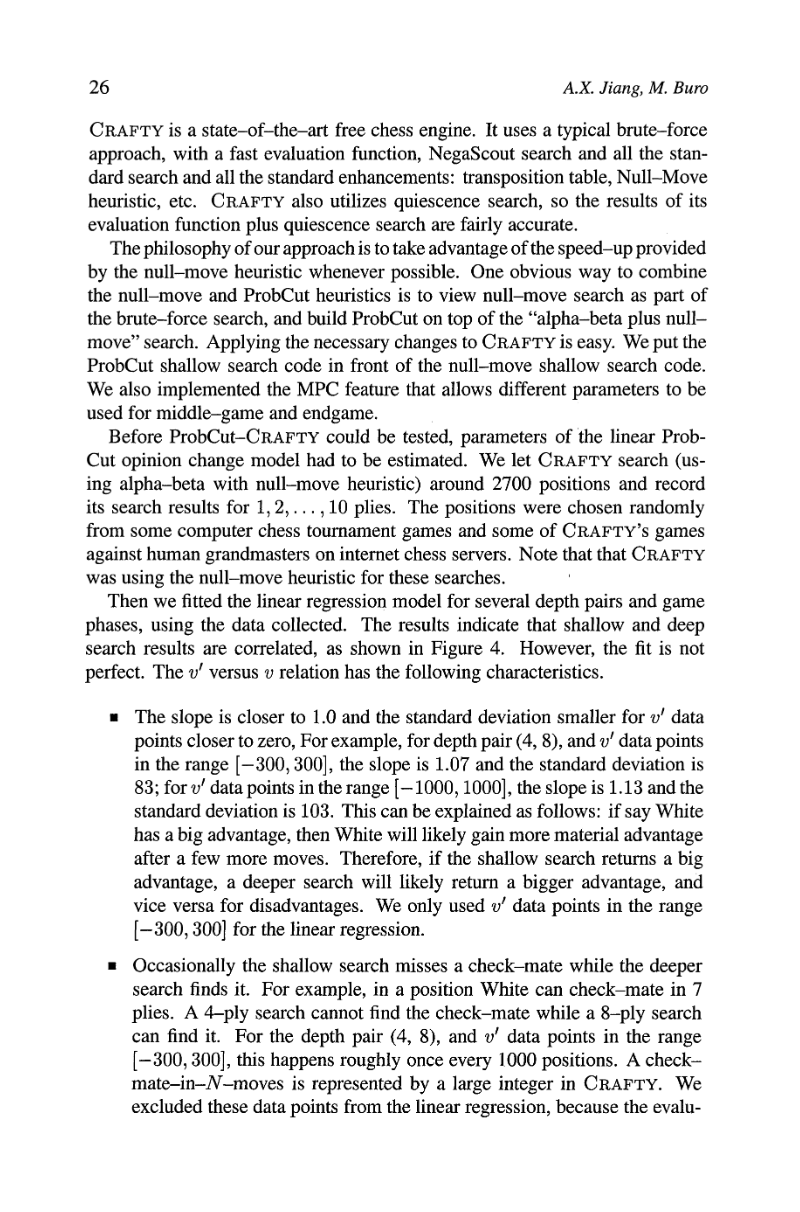
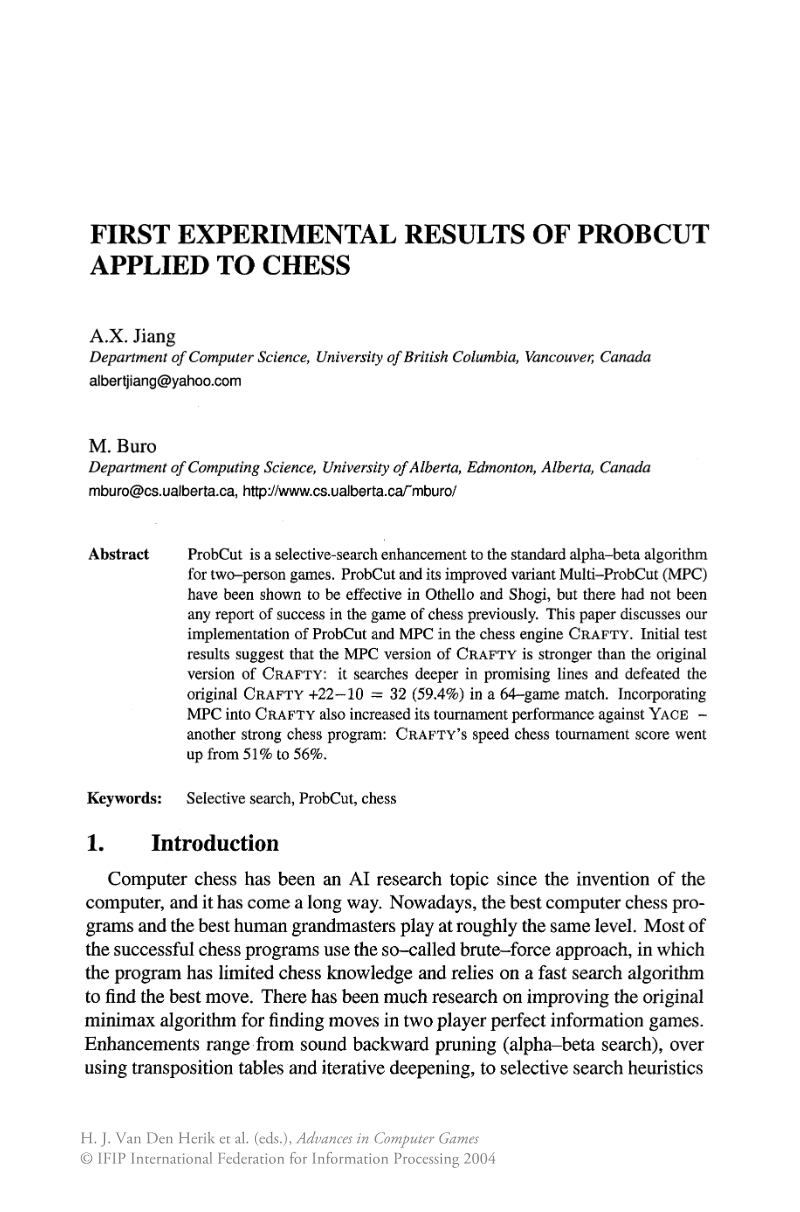
This research explores the application of ProbCut and Multi-ProbCut (MPC) heuristics to computer chess, aiming to enhance the standard alpha-beta search algorithm.
- Integrating Multi-ProbCut (MPC) into the CRAFTY chess engine resulted in a 59.4% win rate against the original version in a 64-game match.
- MPC-enhanced CRAFTY improved its win rate against the YACE chess program from 51% to 56% under speed chess conditions.
- The implementation of MPC heuristics allowed the engine to achieve an average search depth increase of approximately 0.5 plies.
Monte-Carlo Go Developments
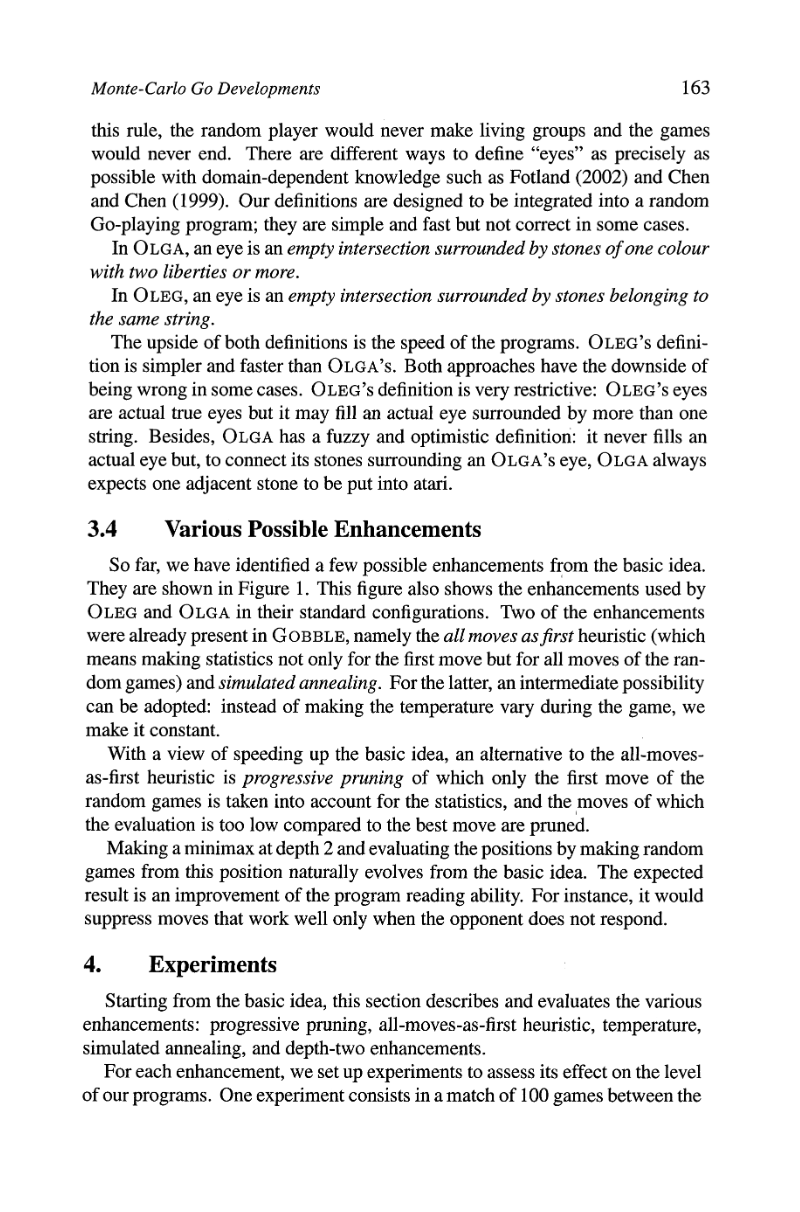
Bouzy and Helmstetter describe two Go programs, OLGA and OLEG, built on a Monte-Carlo approach that the authors describe as simpler than Bruegmann's (1993) method and based on Abramson (1990).
- The authors report that progressive pruning and the all-moves-as-first heuristic speed up the programs without deteriorating their level much.
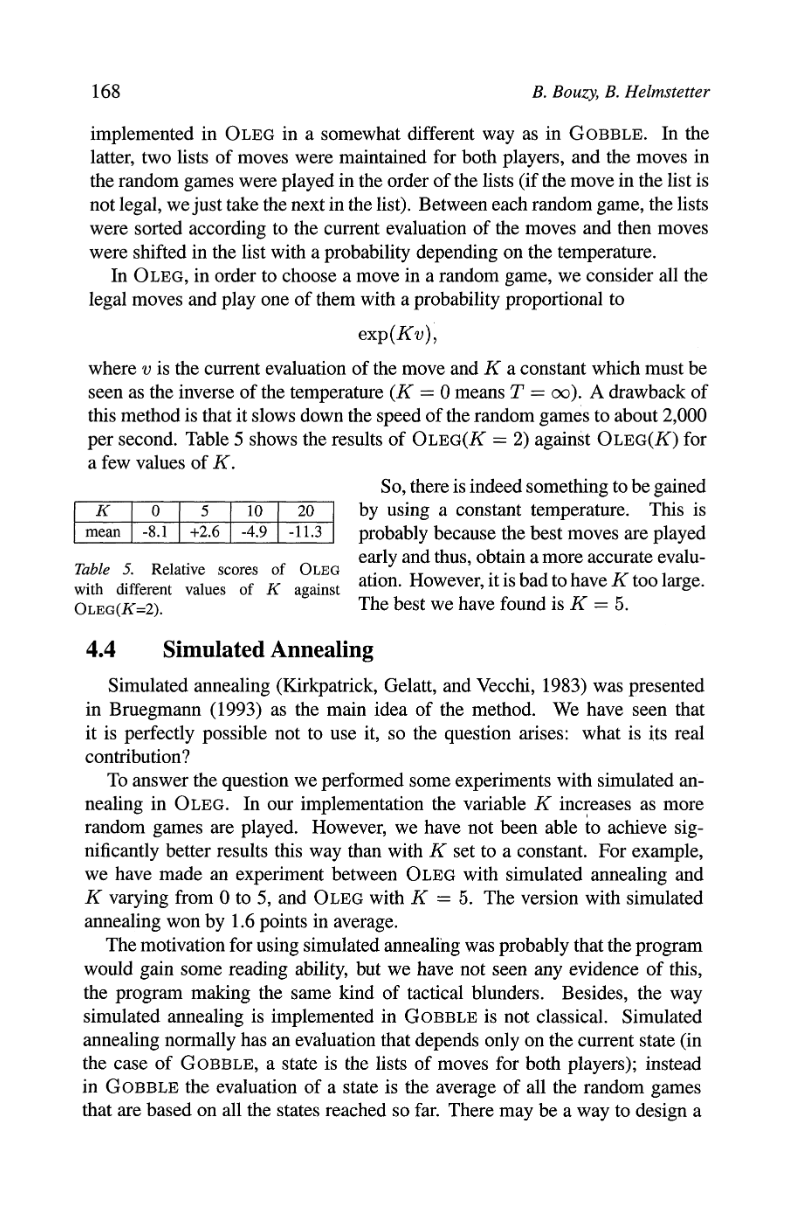
- A constant temperature is reported to guarantee a higher level, while the authors found simulated annealing did not help significantly.
- On 9x9 boards, the authors state that OLGA and OLEG match INDIGO, while GNUGO 3.2 is clearly stronger.



Interactive Audio on the Web: Review and Recommendations
Published in December 2002 by the MIDI Manufacturers Association, this document provides a comprehensive review and set of recommendations for interactive audio on the web, addressing the fragmented landscape of existing technologies.
- The 2002 web audio landscape is defined by extreme fragmentation, forcing developers to rely on incompatible proprietary technologies like Macromedia Flash, QuickTime, RealOne, and Java.
- Macromedia Flash is currently the most viable and ubiquitous tool for interactive web audio, despite its lack of native digital signal processing and advanced sequencing capabilities.
- Advanced platforms like Java Sound and Beatnik offer superior synthesis and real-time manipulation but are marginalized by high barriers to entry and inconsistent browser integration.
Complex Games and Palm Computers
The primary objective of this analysis is to address the technical and functional design challenges inherent in developing complex games for Palm handheld computers.
- The window for independent, one-person game development on the Palm OS platform is a transient opportunity that will close as hardware evolves toward specialized gaming devices requiring professional teams.
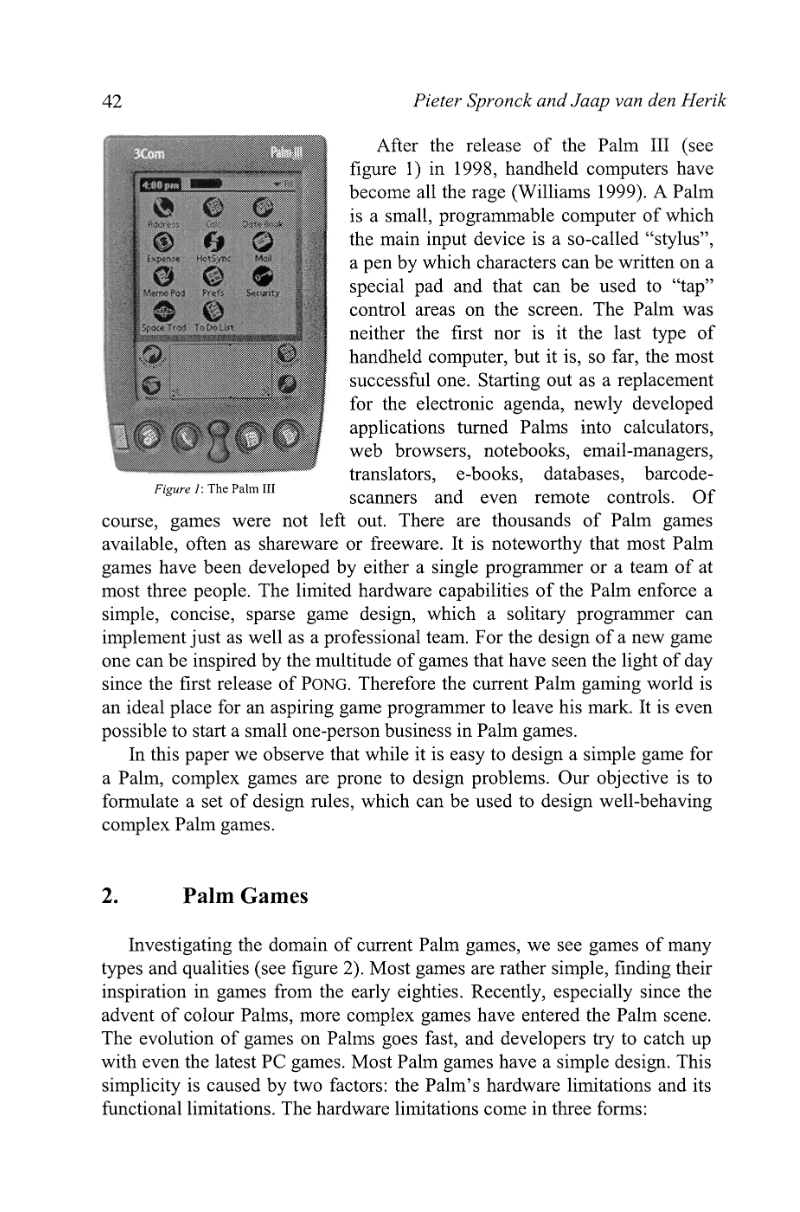
- Developers frequently fail to account for Palm hardware constraints, specifically low-resolution displays, limited memory, and the device's primary function as a tool for quick, task-oriented business use.
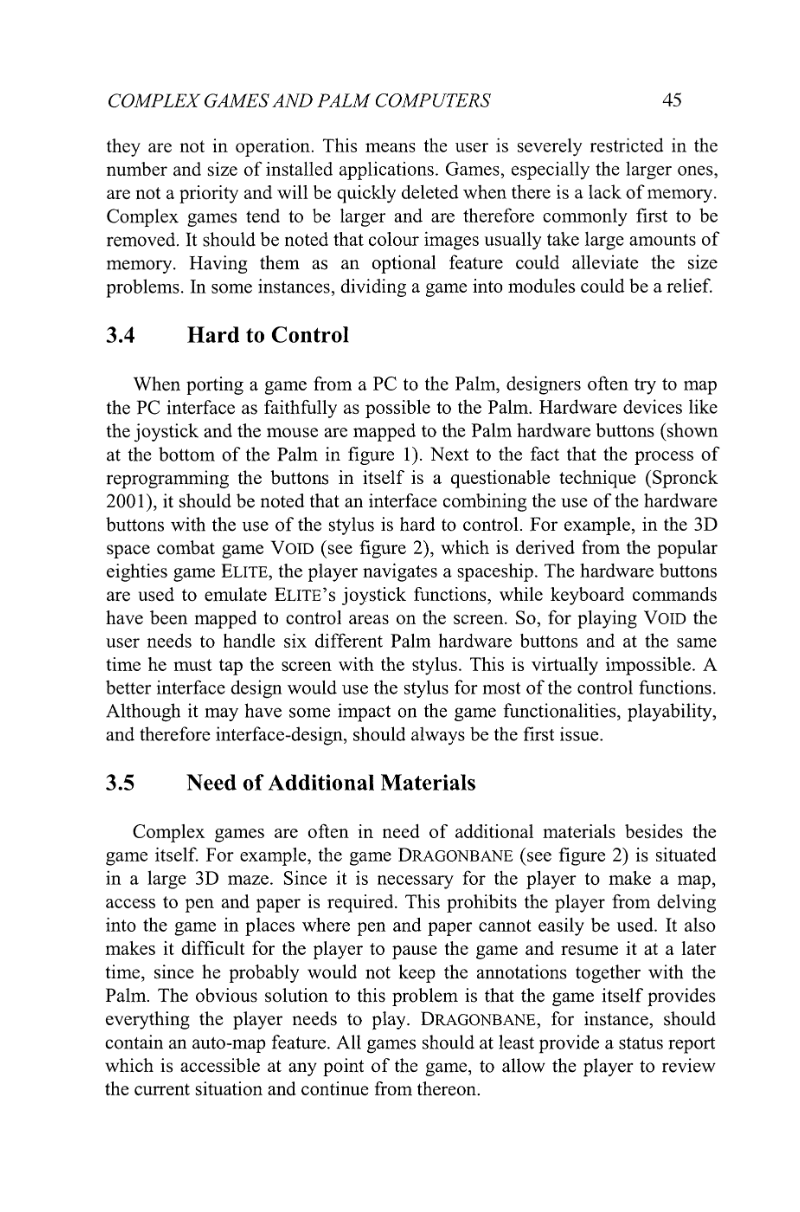
- Seven recurring design failures hinder Palm game viability: excessive screen density, navigation complexity, high memory overhead, poor control mapping, reliance on external materials, lack of interruptibility, and the necessity for external manuals.
Prototyping Mobile Game Applications: Practical Use Experiences
OpenTrek serves as a Rapid Application Development (RAD) platform designed to simplify the creation of mobile games for handheld devices, such as Personal Digital Assistants (PDAs).
- OpenTrek is a Rapid Application Development (RAD) platform that abstracts hardware complexities and provides built-in support for graphics and peer-to-peer networking to lower mobile game development barriers.
- An educational study involving 28 M.Sc. students demonstrated that participants with no prior game development experience could successfully build 12 distinct, functional game modules over a five-week period.
- The platform utilizes a high-level C++ class hierarchy and automated session management, allowing developers to prioritize game design over low-level hardware integration.
Writers
Games and companies
Games