1 free read left. Create a free account for unlimited reading + AI research.
Create free accountReport MIDI Manufacturers Association
1 free read left. Create a free account for unlimited reading + AI research.
Create free accountReportMIDI Manufacturers Association
Developers must rely on incompatible proprietary technologies. This hinders the development of consistent interactive experiences.
It's like building with different toy blocks that don't fit together.
Key Challenge. The web audio landscape in 2002 is defined by extreme fragmentation.
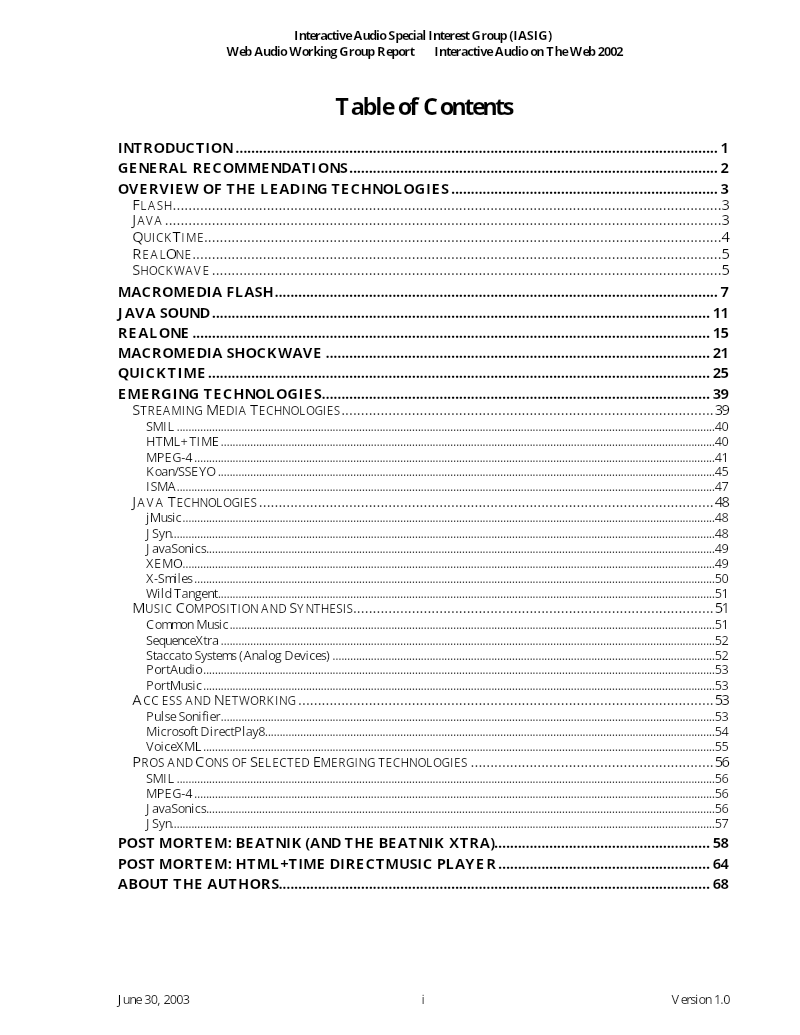
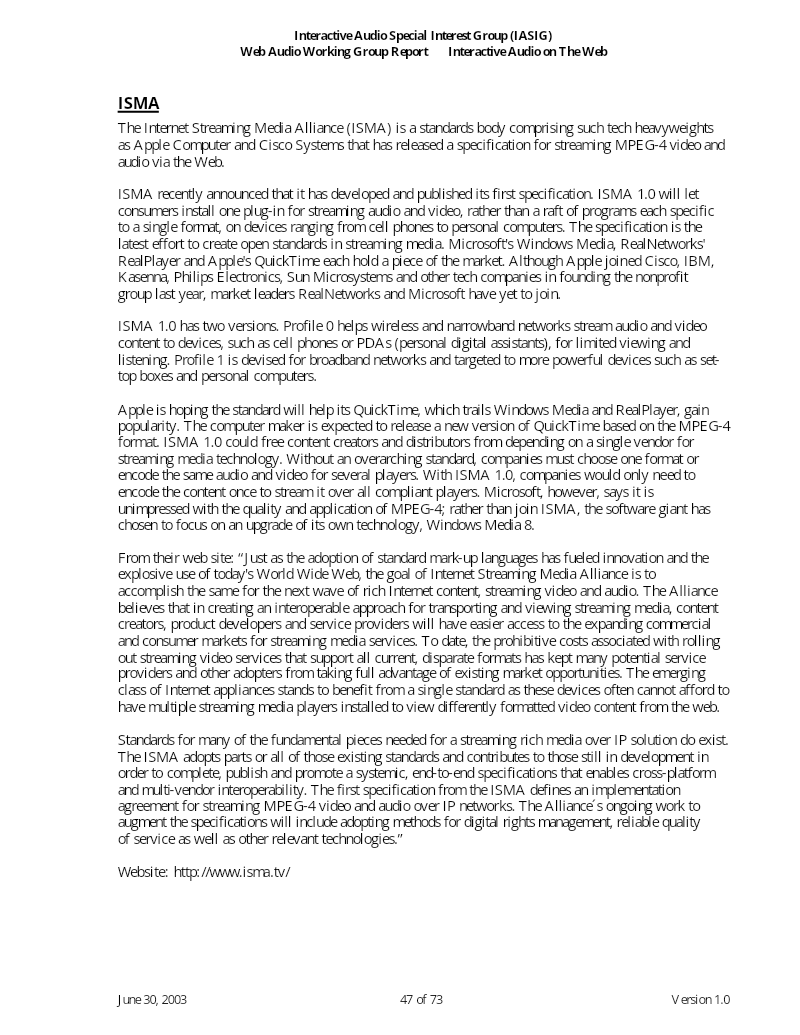
The web audio landscape in 2002 is defined by extreme fragmentation, characterized by a reliance on incompatible, vendor-specific technologies that hinder the development of consistent interactive experiences. The industry lacks a unified standard, forcing developers to navigate a complex array of proprietary platforms—including Macromedia Flash, QuickTime, RealOne, and various Java-based solutions—each offering distinct advantages in streaming, synthesis, or interactivity while suffering from significant limitations in browser support, synchronization, and cross-platform reliability.
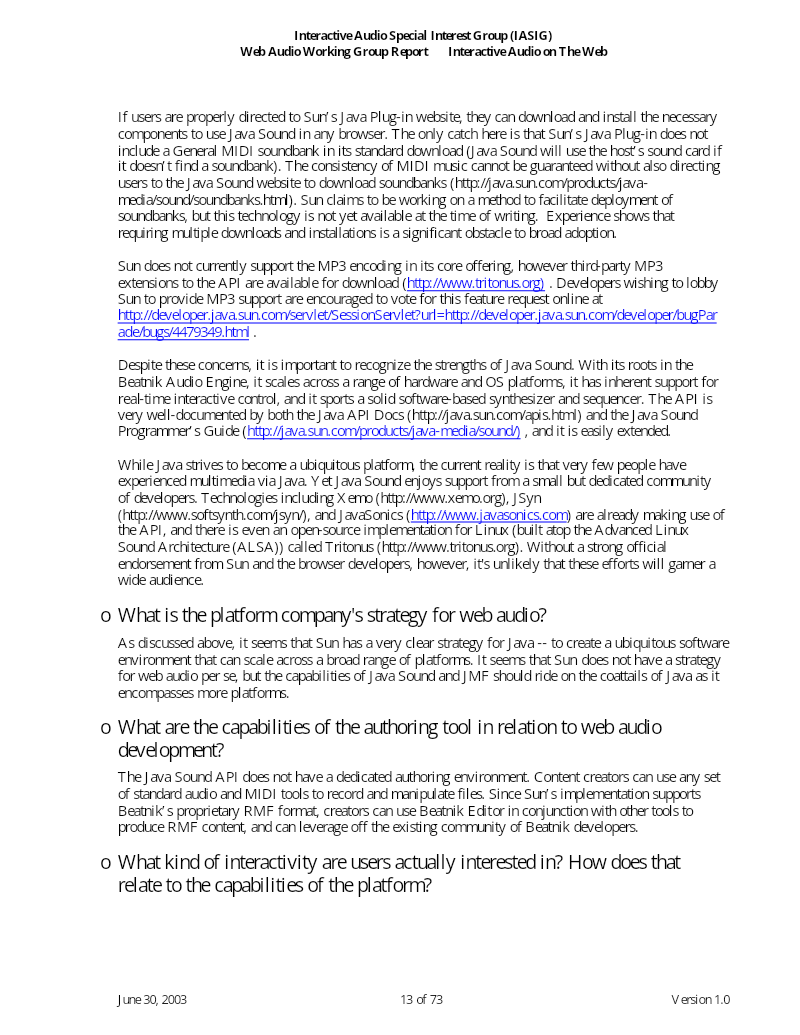
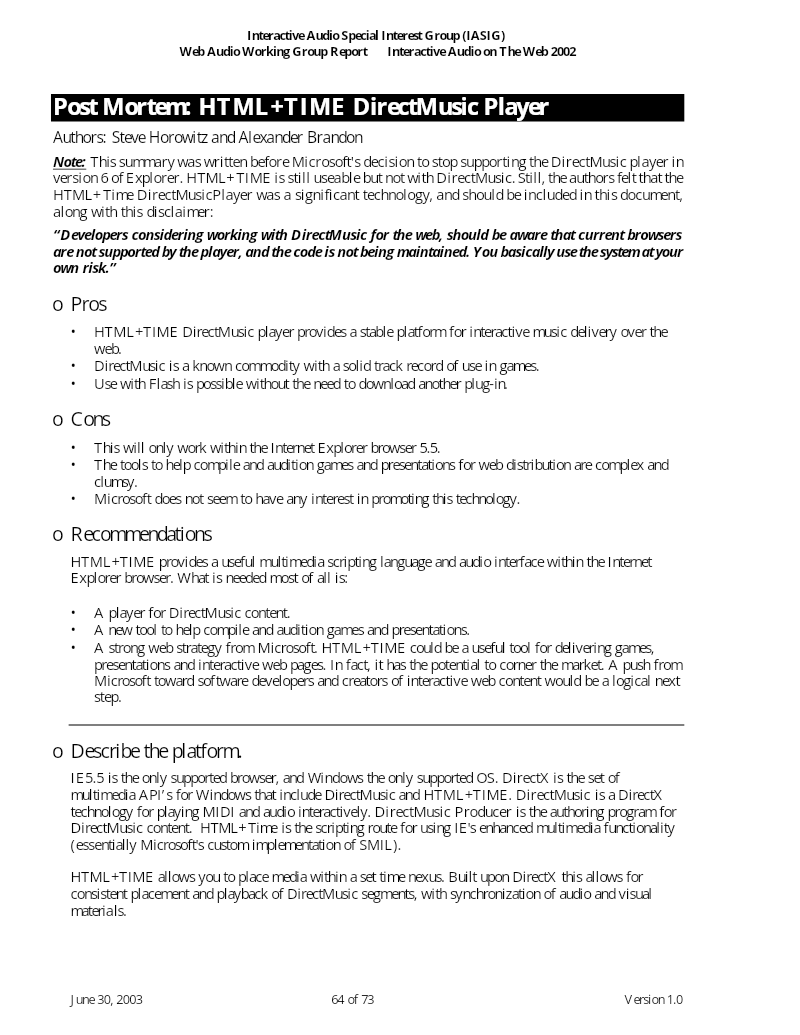
Macromedia Flash emerges as the most viable, ubiquitous tool for interactive web audio, despite its lack of native digital signal processing and advanced sequencing capabilities. Conversely, while platforms like Java Sound and Beatnik offer sophisticated architectures for synthesis and real-time manipulation, they are largely relegated to legacy status or niche use cases due to high barriers to entry, inconsistent browser integration, and the requirement for cumbersome user-side plug-ins. Microsoft’s HTML+TIME and DirectMusic provide powerful, plugin-free alternatives for Windows environments, yet these remain hampered by a lack of cross-platform support and minimal industry promotion.
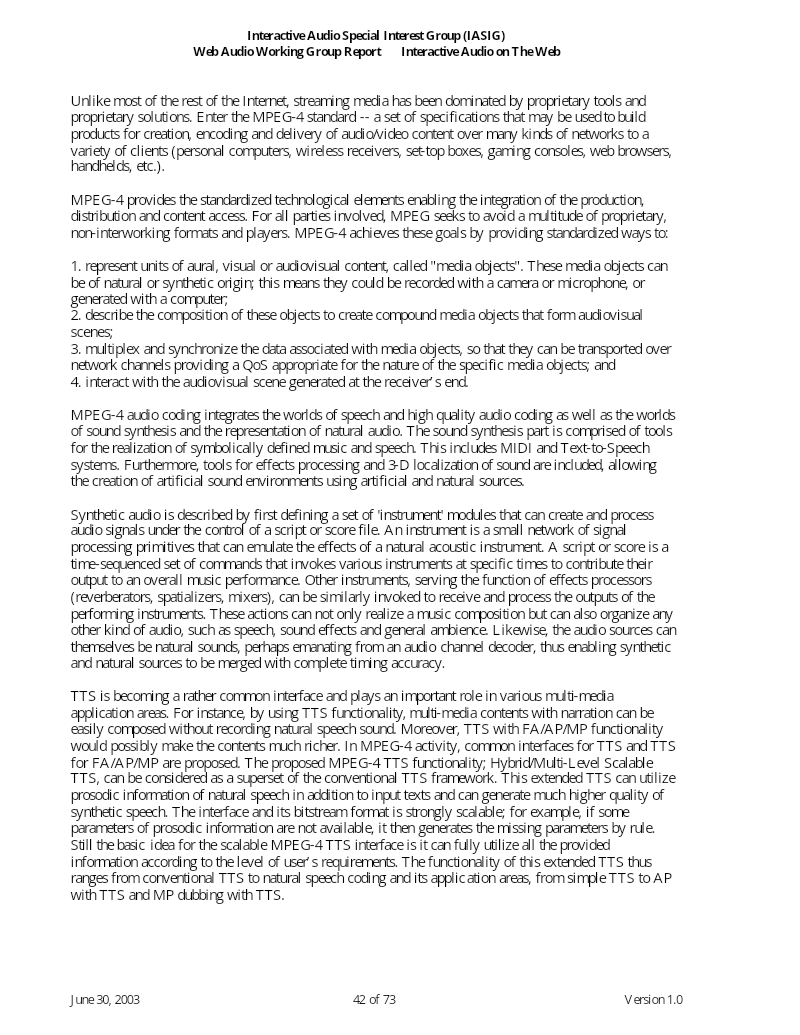
To move beyond this fragmented state, the industry must prioritize the adoption of open, non-proprietary frameworks such as MPEG-4 and SMIL. These standards offer a path toward bandwidth-efficient, scalable delivery of natural and synthetic audio across diverse hardware, from mobile devices to high-performance PCs. Ultimately, the absence of an all-encompassing solution necessitates a strategic, project-specific approach to technology selection. Future progress depends on proactive collaboration to establish a common vocabulary for interactive audio, ensuring that developers can implement dynamic features like spatialization and seamless branching without the technical overhead currently imposed by proprietary ecosystems.
The games and companies this document names on the inner ring, other documents about them on the outer one. Select a cover to see it up close and open it in a new tab; drag to move, pinch or Ctrl + scroll to zoom.
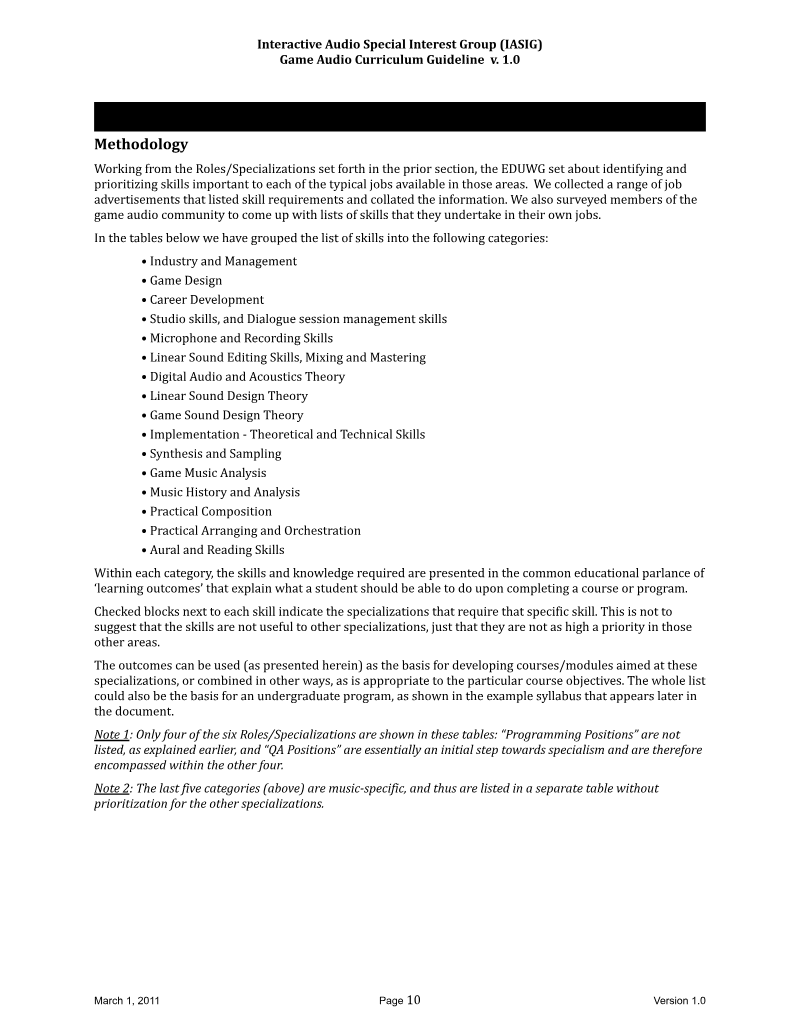
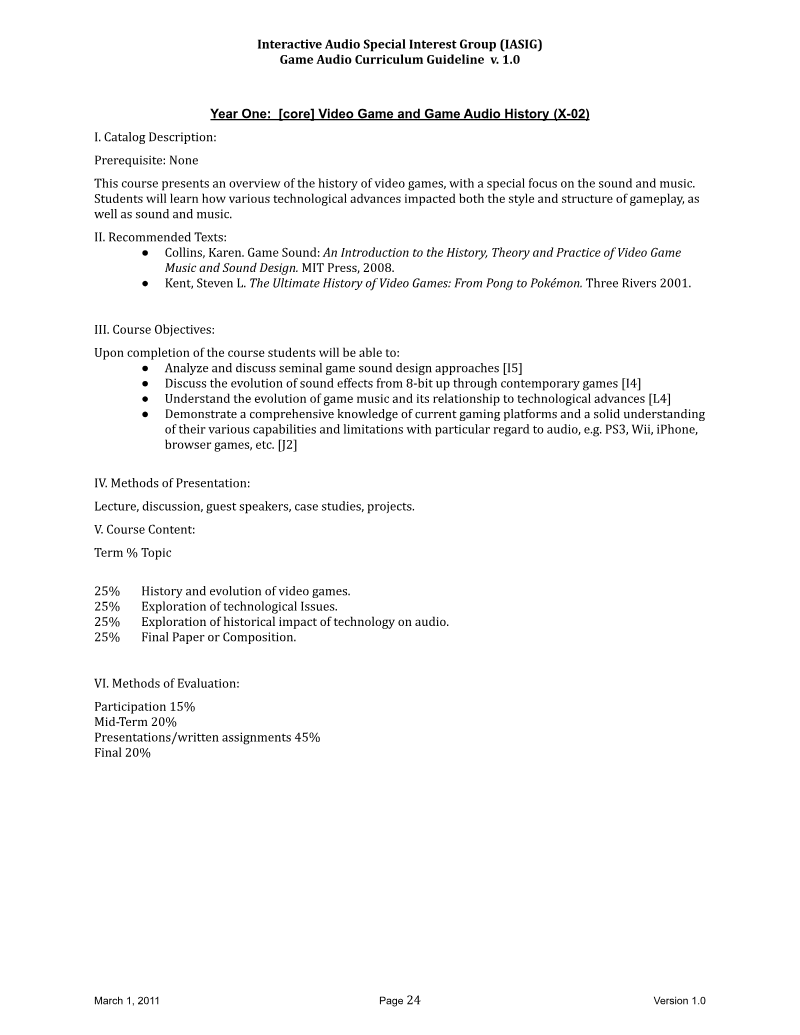
International Game Developers’ Association · 2011
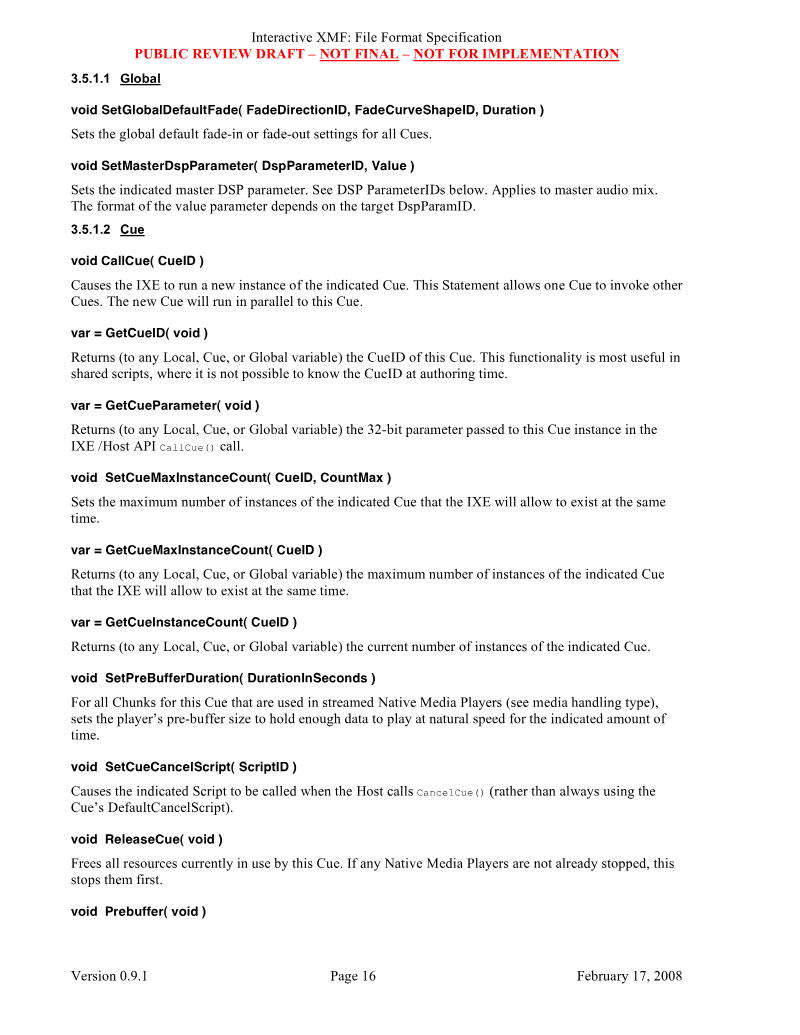
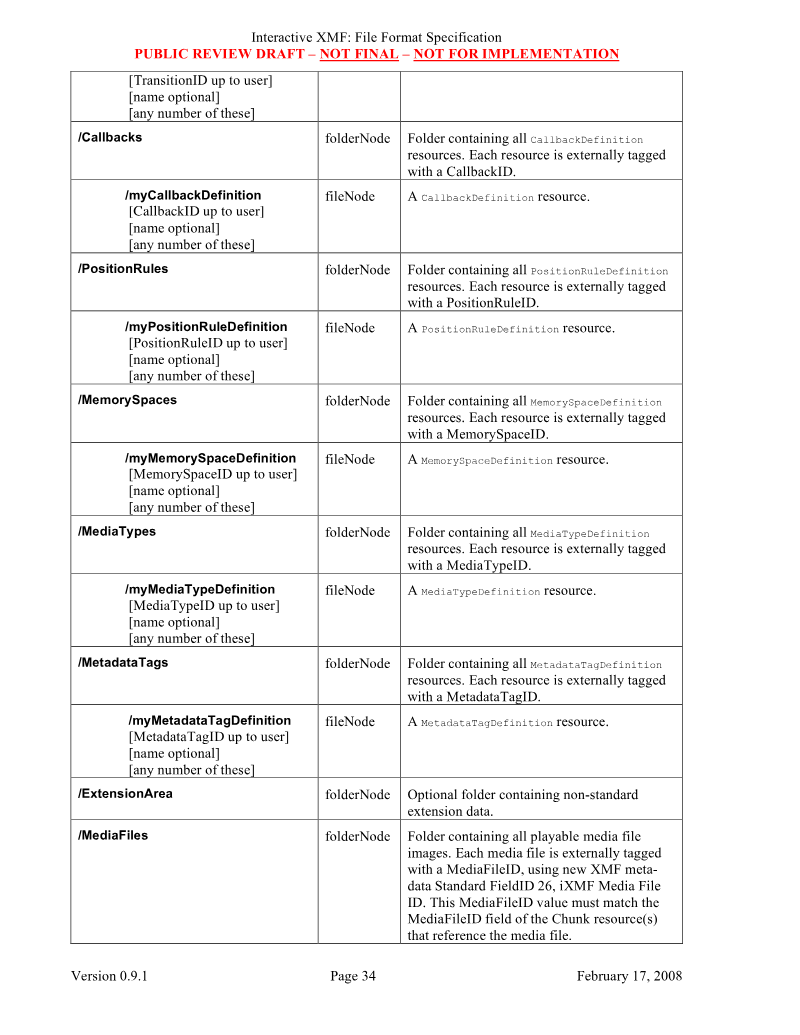
Interactive Audio Special Interest Group · 2008
MIDI Manufacturers Association · 2007
Interactive Audio Special Interest Group · 1997
Game Developers Conference · 2026