Game Development reports and market data
Documents
Have Laptop, Will Telecommute: Working Globally in Games
Remote collaboration has become a highly viable and increasingly standard operational model within the global game development industry.
- Remote work has become a standard operational model in the game industry, allowing studios to reduce physical overhead costs and access global talent pools through tools like Jira, Trello, and Slack.
- Long-term career stability is best achieved by negotiating remote contracts directly with studios rather than relying on freelance platforms, which are often characterized by wage depression and high competition.
- Developers must proactively manage their professional presence by maintaining a robust LinkedIn profile and a professional portfolio to secure high-quality, sustainable contracts.
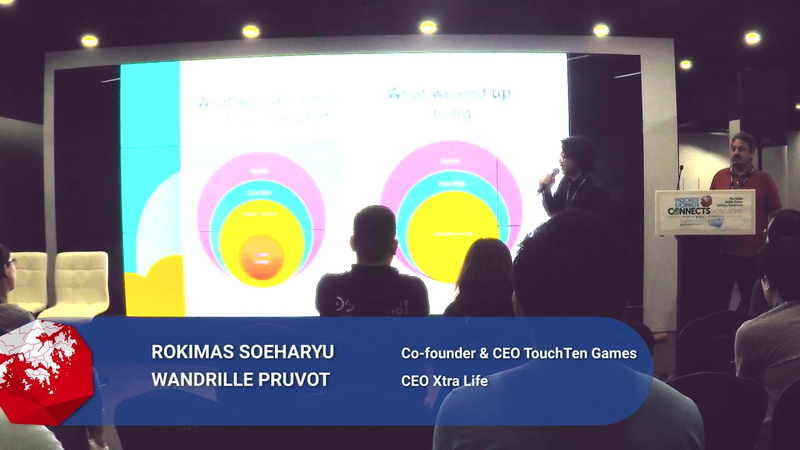
TouchTen: How we Doubled Iteration Speed Using SaaS Back End
The mobile game developer TouchTen, in partnership with the backend-as-a-service provider XtraLife, demonstrates that leveraging external infrastructure solutions significantly accelerates iteration cycles and improves competitive outcomes in the mobile gaming market.
- TouchTen reduced overall development time by approximately 25% by offloading backend infrastructure to the service provider XtraLife.
- Leveraging a Backend-as-a-Service (BaaS) model allowed TouchTen to maintain a bi-weekly sprint cycle, facilitating rapid concept validation and market responsiveness.
- XtraLife supports over 200 live games and processes 500 million API calls monthly, providing the necessary scale to handle growth from 10,000 to 500,000 daily active users.

Game Dev: 3 Weeks to Finish! (Devlog)
The development of the indie game Will You Snail is currently governed by a strict four-week production timeline, with the focus shifting toward finalizing the game’s concluding level and implementing a comprehensive dialogue system.
- The development of 'Will You Snail' is operating under a strict four-week production timeline, with the final phase focused on completing the concluding level and implementing a new dialogue system.
- The developer produced approximately 450 new lines of context-specific voice dialogue to transition the AI antagonist into an active observer role.
- Dialogue integration proved to be the most time-intensive task of the project, exceeding initial estimates and requiring the use of pre-allocated buffer time to prevent schedule slippage.
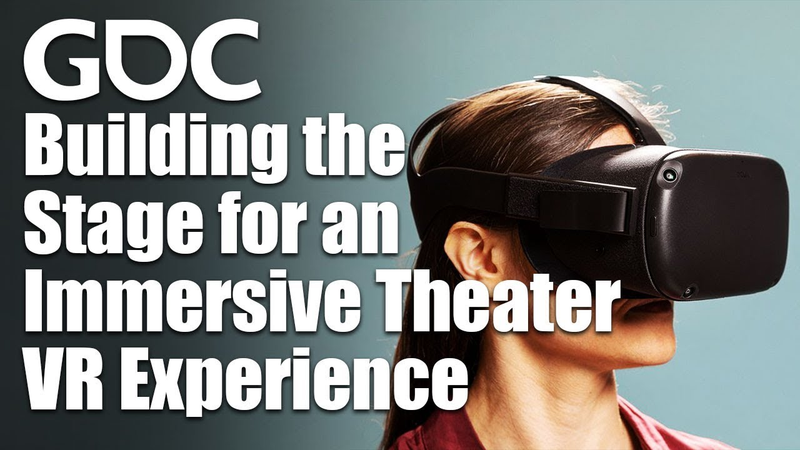
Building the Stage for an Immersive Theater VR Experience
This presentation details the artistic and technical development process for an immersive virtual reality theater experience created by Tequila Works.
- Tequila Works maintained a consistent 60 frames per second on PlayStation 4 by prioritizing narrative discovery over traditional gameplay mechanics to manage performance constraints.
- The team utilized a medium-poly modeling workflow with soft bevels instead of high-poly baking to save memory, reduce texture seams, and improve silhouette quality for close-up inspection.
- To mitigate motion sickness, the art direction eliminated texture noise and avoided alpha-tested textures in favor of a clean, physically based lighting and material aesthetic.

From 2D to 3D in a SNAP! (Unity Snaps Tutorial)
This analysis examines the utility of Unity’s Snaps asset ecosystem as a bridge for developers transitioning from 2D to 3D game design.
- Unity Snaps modular asset packs enable rapid 3D level construction through a drag-and-drop workflow, significantly accelerating the transition from 2D to 3D development.
- Integrating ProGrids with Snaps assets ensures precise alignment, which eliminates common technical issues like mesh clipping and spatial misalignment.
- ProBuilder allows developers to perform in-engine mesh manipulation—such as face extrusion and geometry subdivision—without requiring external 3D modeling software like Blender.
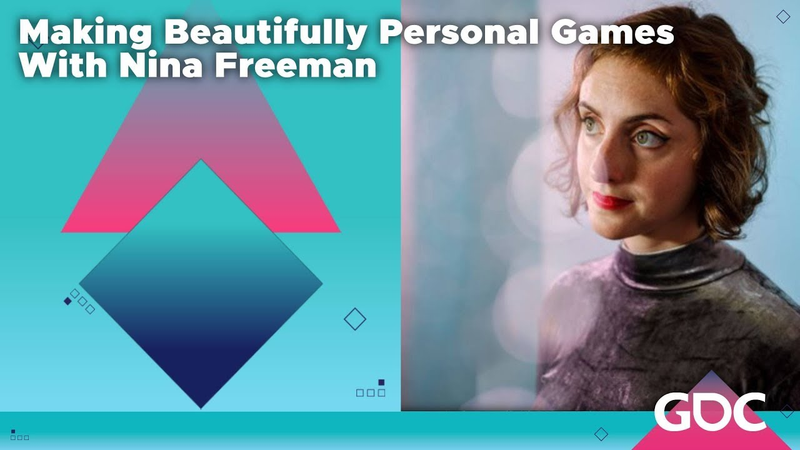
Making Beautifully Personal Games With Nina Freeman - GDC Podcast Ep. 3
Autobiographical game design functions as a powerful medium for transforming private, lived experiences into resonant, interactive narratives.
- Autobiographical game design transforms personal history into interactive narratives by treating lived experiences as research subjects and archiving digital artifacts like chat logs or journals.
- Developers can achieve necessary critical distance by viewing their younger selves as distinct characters and allowing sufficient time to pass before translating sensitive memories into game mechanics.
- Success in the indie industry is driven by the consistent release of creative work and a robust portfolio rather than formal academic credentials.

The Latest Graphics Technology in Remedy's Northlight Engine
Remedy Entertainment’s Northlight engine represents a significant shift in modern game development by transitioning from traditional screen-space rendering techniques to geometry-aware DirectX Raytracing.
- Remedy's Northlight engine supports ray tracing by building top-level acceleration structures every frame, while handling deforming geometry via a compute shader that updates static buffers on the GPU before the bottom-level builder processes them.
- Ray-traced shadows provide accurate contact points and soft-shadow transitions, but shooting 16 rays per pixel at Full HD resolution incurs a performance cost of approximately 80 milliseconds.
- To optimize material binding for DirectX 12, the engine packs all material parameters into a single buffer and reserves dedicated space in the descriptor heap, allowing for draw calls without additional bindings.



Market Study: China, Japan and South Korea
This study, conducted by Neogames Finland with funding from the Finnish Ministry of Culture and Education in 2019, gives a brief overview of the games markets in China, Japan and South Korea for Finnish game developers.
- China was the biggest APAC games market in 2019 by Newzoo's estimate, but the study notes that the new regulatory approach has significantly decreased new game launches there compared with other game markets.
- Japanese mobile players are described as the biggest spenders in the world, spending an average of $371.0 annually in games, 3.5 times more than a typical mobile gamer in the U.S.
- According to the 2018 White Paper on Korean Games, in 2017 the share of mobile games (47.3%) surpassed PC games (34.6%) as the main distribution platform of games in South Korea.

Design, Play, Disrupt: Curating the V&A's Videogame Exhibition
Video games represent a sophisticated contemporary design discipline, characterized by a constant tension between subjective emotional storytelling and objective system engineering.
- The V&A exhibition redefines video games as complex cultural artifacts and sophisticated design disciplines rather than mere entertainment.
- Curators moved away from nostalgia-driven displays to focus on the intentionality behind digital works, positioning games alongside established visual arts and literature.
- The exhibition methodology emphasizes the materiality of development by showcasing creative debris, such as prototypes, notebooks, and spreadsheets, to reveal the labor behind digital media.
How to Make Games and Influence People: Leading Your Team Effectively and Healthily
Effective leadership in the independent game development sector requires a shift from purely technical management toward a model rooted in psychological intelligence and interpersonal transparency.
- Sustainable creative output in game development is directly dependent on prioritizing team health as a foundational pillar of the production process.
- Effective leadership requires shifting from purely technical management to a model rooted in psychological intelligence, utilizing frameworks like Transactional Analysis and Dialectical Behavioral Therapy to manage conflict.
- Leaders must apply Herzberg’s motivation-hygiene theory by simultaneously removing productivity obstacles and providing consistent professional validation to staff.

Physic Scientist to Game Engineering with Joschka Pottgen | Game Dev Unchained Episode 208
The transition of high-level scientific expertise into game engineering highlights a significant convergence between particle physics and real-time simulation.
- The gaming industry has become a primary driver of innovation in parallel computing and virtual environments, with its technological advancements now being adopted by the automotive and scientific research sectors.
- High-level scientific expertise, such as that from research environments like CERN, is increasingly vital to game engineering due to the industry's growing demands for automation, build systems, and high-performance computing.
- To overcome resource constraints, smaller studios should move away from redundant proprietary tool development and instead prioritize reusable systems and open-source practices.

Tuning the Muzzle Velocity of the Plasma Rifle Bolt on Legendary Difficulty in HALO
The design of the plasma rifle within the Halo franchise serves as a case study for the distinction between long-term competitive balancing and iterative tuning.
- To increase game difficulty, developers should prioritize increasing the speed of combat—such as projectile velocity and AI firing rates—rather than simply increasing global damage scales, which often results in a punishing experience rather than a challenging one.
- Tuning is distinct from balancing; while balance focuses on long-term game longevity, tuning involves the specific calibration of mechanics to ensure they feel effective and responsive to the player in real-world scenarios.
- Projectile-based weapons like the plasma rifle require a visible contrail and a velocity that is slow enough to allow for human reaction and dodging, but fast enough to avoid appearing comical or disconnected from the game's frame rate.
Writers
Games and companies
Games