1 free read left. Create a free account for unlimited reading + AI research.
Create free account
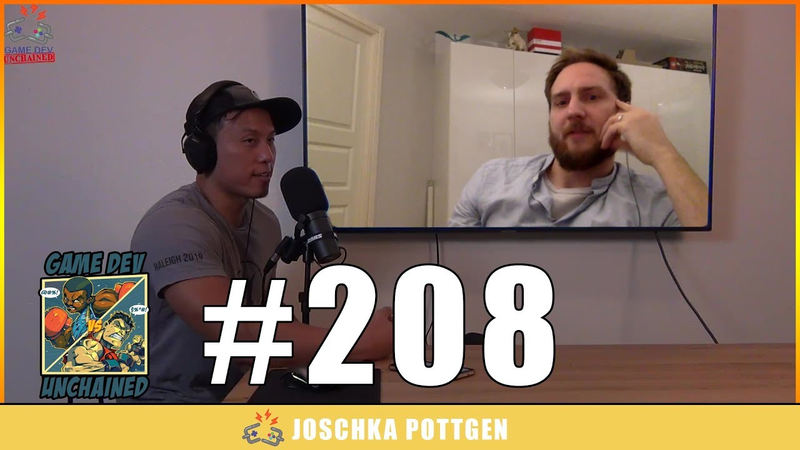
Physic Scientist to Game Engineering with Joschka Pottgen | Game Dev Unchained Episode 208
Key insights
6 takeaways- 01High-level scientific expertise, such as that from research environments like CERN, is increasingly vital to game engineering due to the industry's growing demands for automation, build systems, and high-performance computing.
- 02The gaming industry has become a primary driver of innovation in parallel computing and virtual environments, with its technological advancements now being adopted by the automotive and scientific research sectors.
- 03To overcome resource constraints, smaller studios should move away from redundant proprietary tool development and instead prioritize reusable systems and open-source practices.
- 04Emerging distribution models, including cloud streaming and direct platform integration, are lowering barriers to entry and enabling developers to convert passive audiences into active participants.
- 05Interdisciplinary learning and self-directed growth are essential for professional development, with European models of state-subsidized extracurricular activities proving more effective than rigid, standardized education.
- 06Games are evolving into a serious medium for critical thinking and technological advancement, serving as a foundational tool that prepares individuals for a rapidly changing global job market.
Ask AI about this video
Transcript
I you you this is game dev Unchained the number one game development podcast about game development and the lifestyle thereof I am your host Brandon Pham and today I have a special guest that is joining me yashka hodcha I do yashka nice to meet you a little better than I am right a little rough to start this is our like third try but I assure you it's gonna be a fun part of our interview here where this is an opportunity for you which is usually our guests introduce themselves to our audience out there who they are where you're at and where you're heading alright so yeah my name is Josh Papac and as you already said I started working at Tashia Studios a
game company two years ago a little bit more than two years ago and I'm currently there the lead of the core tech team before that I did something completely different namely I worked at the European lab for particle physics called CERN where I made my PhD and yeah worked on research on particles when you're talking about particle physics for the layman's out there are you talking about computer simulation in particular or what exactly is that applied to you know it has nothing to do with computers I mean of course there's computer simulation involved in particle physics but it is the fundamental research on the particles that make up all the metal that surrounds us right it's basically what CERN does is it
collides protons and does that at pretty high energies and we look at whatever happens when we collect them and what kind of particles are created in those processes and try to find new things like for example the Higgs boson which was discovered a couple of years ago which maybe some people have heard if they're interested in this kind of research all right now you're gonna have to bridge the guess so how did you go from there to game development so what happened here so I'm ELISA guessing that you were interested in games and then something yes yes I was so I mean I played games all my life pretty much I'm also a very very enthusiastic D&D player and Dungeon Master so there's a little bit of cake design I guess in there and narrative design but apart from that I basically
all I did there was programming and working on build systems and setting up automation for different things working on monitoring and all of that of course has a big role in computer game development and I started at Tashia because they had a job opening which pretty much looked for exactly what I was doing which was a DevOps position so I started there as a kind of build engineer slash DevOps and worked on the build system and automation processes and yeah that's pretty much how I got into it and I have it's a very interesting right so far it's very different from CERN but it also has a lot of parallels what are the main parallels because I'm still wrapping my head about you dealing with real science and then you mean Computer Engineering
is that part of what you guys have to learn or I mean that's a whole different side of it right it is it is very different I mean so it's something that has been ever more becoming more and more important over the years in particle physics especially because you have to see a lot of what we do at CERN involves a lot of simulation computer simulation right and then comparing that simulation with data that we take with big machines essentially and so a lot of software development is involved and especially automation is very important and making sure that things run very quickly so there's also a lot of optimization which I guess also it has some parallels to what we're doing any better entrenched mmm-hmm well definitely I mean game development as industry itself is very technical I
think more technical big six industries at least because we're dealing with real-time simulation so things have to run and look good I mean at this state right so I would say when I talk to developers or anybody that it's outside or coming in they find it the most stimulating because we have a lot of game developer especially engineers that go out and go to other tech companies that are a lot more profitable like they definitely lack the passionate drive that our technology within the industry is constantly striving for and yeah I mean that's one of the things I feel like we keep a lot of engineers because of that sole reason do you find that to be somewhat true for sure but that's actually one of the big parallels yeah because it's earn what we because of the size of it I mean I don't know how much you know about certain it's a a pretty big flap with like three thousand people
working on site and there's a huge IT department we have a huge computing firm or they have a huge computing firm and they work with industry leading experts from Intel from Google etc etc to make things run as quick as possible and basically operate at the very edge of the kind of technology and that's what I see as the parallel to games development like there's a lot of that as well and I kinda that's what I took from CERN and that I loved at CERN and now I have again at Thalia because there is or in games development in general because there is exactly this drive to develop technology and bring it to a stage where it hasn't been before and kind of be on the bleeding edge and make it better and yeah I completely agree with you that
that's like one of the big factors while it's interesting and what especially comes into play for game development compared to how it was in my previous job is that there is this collaboration with very different disciplines right where before it was mostly engineers and yeah physicists here I work with artists and designers and guys who to narrative design or audio guys right and that brings a whole new aspect to the whole game which to me is one of the big factors that makes it very very interesting so you're speaking on two different fronts of bleeding-edge one is with scientists or physics that feels important and then and then games is like essentially as entertainment but I do see like a return with the real-time simulation that we are providing other
verticals are starting to finally take notice and utilize within their tech industry to kind of push their industries forward outside of just games and entertainment now being a part of game development how do you see that future kind of playing out where it gonna be beyond just games and entertainment I don't know how familiar you are with this but do you see the applications starting to extend beyond disk controllers and game consoles definitely I think there's already a lot of that actually happening and in scientific computing parallel computing is very very important and for that of course the games industry with graphics cards has brought a lot of new technology which is being adapted slowly in science as well so I've seen that happening while I worked at CERN that there was basically a whole new algorithm development or a new
branch of algorithm development happening making sure that we use those resources that basically were introduced because the games industry pushed technology forward and I think the same applies to other industries for sure so you've been two years and you're saying this is your first game development jungle yes it's very true how has experience been I mean how hard was the transition did you feel like it was tougher than it was or easier than it was or were you just thrilled but the the sheer fact that you were working on a passion project it was kind of easier than I thought because a lot of what I was doing in especially in the beginning when I started at Tozzi was really working on only the backend system side
so working on the build systems and integrating tools and things that are very similar to what I did before now that I get a little bit more involved as the lead of our core tech team where it's more towards the actual game systems and that kind of implementations it's becoming more challenging and I have to learn much more things very quickly so how has the dynamic been I mean that at CERN where you weren't imagining teams back then - or was this a new skill set that was kind of thrust on you I wasn't on paper I wasn't really managing anything I wasn't a position however where I was supervising other PhD students and I was working with a few different teams that were sitting in different parts of Europe and coordinating a little bit between them like there was a actual software
coordinator that worked above me but that person didn't have that much time so a lot of the day-to-day business of that fell on to me so some of those things I definitely brought also already into the job but it's again kind of a different level because now the the full responsibility is on me and yeah yeah like the the actual personal responsibility for the people that work in that group which I didn't have before because it was people that were employed by other people but now it's actually all on me so that's definitely something that I'm learning as we go so aside from the adjustment to the different industry adjustment to people is obviously a key factor right so you're dealing with scientists and physicists before and now dealing with artists and I mean engineers are sort of on that level of thinking but like now you're artists and designers so like how is how has that
dynamic then it's been amazing I really I really like it it's it's before at CERN it's a lot of people who think kind of like that come to a table so there's a lot of they're still very very vivid discussions but everybody kind of has a very similar mindset right well here in the games industry that is definitely not sure because problems are approached from many more angles than what I'm used to and I really love that fact it's it's amazing to see how you know sometimes I struggle with grasping what other people tell me and the other way around and then you have to come up with more explanations of or different explanations of what you're talking about and make sure that everybody at the end of the day comes to the same page and everybody understands each other so I really yeah it's it's an
interesting experience and learning curve for sure I'm always interested to on the outsider's perspective because I've been in the industry for a while now so I'm very uh very keen on how we look at ourselves but coming from that other industry and especially talking to your colleague is like hey I'm thinking of switching industries to games I mean I wonder what type of feedback to do kit or thinking on lease on that side of like is that even a possibility I know there's more respect now in terms of dis game developers but it's not like quite there yet in terms of a viable option for a lot of scientists you know I mean yeah it was a very mixed reaction I think there were a few people who are more my age I guess or our age that were kind of impressed or or were intrigued
at least by the whole idea that I would go into games development and and try that thing that they always thought oh my god it would be really interesting to work there but I don't have the skill set for that but then there were definitely some more senior people that were a little bit more critical and I remember one person said to me yeah ok so you're going into games industry entertainment you know other people too brain cancer research after they work here which not condescending at all but I think overall it was a very positive experience that people were kind of more intrigued than anything else and very supportive as well mm-hmm well was it again like as you as you met with yourself like the the influence from from games industry and taking driving
technology forward there were also a few who mentioned that like one person brought up you know if you meet some very smart people who work on these algorithms make sure that they know that there's also a job here maybe for them if they want and so on I think there's also a lot of people who are keen on kind of that cross fertilization that is happening yeah and I think that's still like a blossoming side of the industry that not a lot of people are aware of like these tech companies are starting to use game tech essentially - a lot of these self-driving cars for example they're using crowd simulation within the engine itself to kind of help get their tech to be smarter until they actually test it out surgeons going to these like simulations police officers the army they're all using game tech to kind of create a better virtual environment using VR
goggles so I'm always interested to kind of hear like how because these are just small little nerd circles within the companies of these textures that they could oh yeah you know these are innovative ways that we can think about this but it isn't really broadened to this landscape where people at CERN are aware of this huge industry potential because games have gotten and pretty far since you know the 80s no I wouldn't go so far as to say that they are not aware because this they are trying to do some collaboration at least for example there was when I left I don't know actually where it was taken but there was this idea of doing a virtual tour of CERN in virtual reality I have to be honest and I haven't really kept up to date with that project but it sounded interesting back then and there was also another project that I thought
was really amazing where they were trying to bring augmented reality to - basically there to the computing centers you know if there is a faulty units to very quickly identify where it is and and get hints basically a heads up this implementing things like that are things that CERN is looking into at least or was looking into when I was there yeah and that's like part of the gay industry that I'm very excited about making games and entertainment is super fun but I think there are a lot of practical needs that other industries can benefit from us and like you said yeah the AR tech at its core is a game engine to make that heads-up display work so my other question to you is since being at Tashia Stuart II is I think you guys didn't ask your second game right and I can only guess that that's the game that you guys are working on don't need two peoples any
details about that but was there a particular reason why he chose starsia Studios over any other choices location because my my wife actually moved to Sweden so that was a very very big factor in choosing Tashia over let's say any other random game studio and that I ended up at the game studio other than a different industry was also kind of chance but as I said before it's like driven by the the interest in games development in general I had my little like hobby projects when I was not yet working at a games company now that kind of stopped where I did my little game prototypes and things that never got anywhere of course but yeah that's why I looked into different game studios in malmö and yeah then I looked at the tozi website and I remember
reading the Job Description and it was just yeah that's true this me that's me and I decided to apply and I guess they agreed that I would be a very good fit for this kind of position that's great I mean I am always in support of that my video just went crack so I'm using a switch to you I'm always in support of like outside influence from other industries to kind of help the industry grow I mean that's the only way that I've seen the industry have have grown to the state it is to to continuously look at outside perspective and bring it in to our business even though it is for entertainment I think there's a lot of technology being driven right now that are really great case scenarios for for everybody there's a lot of like championing the game
industry and the game dev profession as you can only guess from what I'm trying to say but like I also want to see your perspective overall on how I know you came in and more like a fan of the industry but now being a game developer like I wonder like what what your perspective is in terms of like the industry as a whole and the state of where it is and where you feel like we can grow both positively and negatively and everything yeah I mean that's a very broad question so I about the state of the industry it's hard to judge for me as well because I haven't been there so long right so I don't want to lean too far out the window but like one of the things that I see happening that is not
being done as much as it could be at least in our studio is making sure that we don't reinvent the wheel all the time and with that I mean basically when we when we create our games keep in mind that it's not just for the product that we're currently working on but could also be something for the product that we do next and I I see that also in some other studios I've talked with or talks I've seen that people are moving towards that but there is that they still can learn a lot I think from other industries when it comes to that and yeah I think that's one of the main things that I'm at least concentrating on at tars even at the moment making sure that we do that and I mean for us a big thing is of course we as you just mentioned we released a little - one
pretty much just before I came and that was the first game that we made with Unreal Engine since then we've or basically in the same week as a little timers way to East the second game with Unreal Engine which is called static which is a pretty small VR game for psvr and from that we have learned to to take things the next step and make sure that we can use them for the next projects and that's what I'm working on pretty much making that work as well as possible and that's one of the topics actually we are discussing for our upcoming G decks but like I kind of want to dive into it a bit like especially with smaller studios bigger studios actually I I feel I have a better handle of this where these use technology and build off of that where smaller studios kind of concentrate on just getting one game at a time out and
often existing press the restart button which is uh you know if we try to really make sense of it makes no sense at all right if we're trying to utilize a small team and its resources to its best of its ability so what do you think what do you factor that to be mostly is miss planning or it's just one of this thing where a team just feels like they want to innovate and with innovation just has to just go back to the drawing board from scratch I think a big factor is what you just said but it's it's kind of small teams and because it's small teams the deadlines can become pretty tight so it's almost a luxury to think about these things right because what you have to focus on this tool to hit your milestones and make sure that you get the stuff done that needs to be done to release the game in the end and while
I think that's a very important thing to keep in mind it's like taking it the next step between products basically it's one of the things that we need to get better at and as you said like bigger studios are definitely better and at that and they need to be better at then because they spend much more money on the games but yeah it's it's a very important topic for small studios as well and I'm also wondering if if things like open source could be something that is that could play a bigger role in this then it currently does because while you never want to open source the entire game I think there's definitely some merit in opening up systems that are reusable like going from similar
direction as epic does with with Unreal Engine while working on smaller systems and and basically leveraging more of Unreal Engine and make sure that we share that across smaller studios mm-hmm I feel like our industry is a lot more tight-lip than other industries where at least with movies yes they protect their ip's but even when it comes to its success in box office numbers day one they are a lot more vocal and transparent mainly because they can't really hide those things because if they rely on a theater is kind of draw on their numbers but it's something where games unless the private companies want to reveal it we have a harder time to kind of gauge which games are doing well or not which also makes it hard for us to kind of pitch our game within a John Rowe that it's obscure that's the more broader view of that but
on a smaller scale wrong kind of big scale open source IP like having technologies where smaller teens especially I feel like any developers are probably more open to this idea of like sharing technology within each other and sharing ideas and best practices to kind of help everyone succeed because we're less competitive it's an interesting proposal is this something that you just observe just from the last two years because it sounds pretty obvious but it isn't something that a lot of people are pushing right now which I feel is a disadvantage to all are the smaller time developers trying to create and invent new things on the daily and not learning from each other yeah yeah I think I mean it's it's something I've definitely observed in the last few years but I've always wondered because coming from from
physics where or especially certain CERN has a very long history of being very open about basically everything they do all the source code for all the simulation and everything is open source you can access the data that is taken by the experiments and basically to some extent at least we do the analyses that are being published so it's it's for me it's a very natural thing to think about okay how can we kind of make sure that more people benefit from the stuff that we do and I mean I also don't want to sound completely naive I mean I'm aware that if you do that too much you you were you might hurt your own business from it right but I feel like things like for example the build system a working build system for unreal engine that can package for different platforms and is flexible enough to to adapt to
different scale projects basically and distributes binaries within the studio and that sort of stuff that's not something that we make our money with essentially right that's something we can easily share and provide smaller studios with and and simplify basically their workflows so yeah I agree with you it's something that it should be kind of straightforward and I wonder why it's not happening more yeah I mean there's definitely headways made by software companies like unreal unity making their engines free for anyone to use blender in terms of 3d software has really pushed forward the last couple years because they've been open source and free and I feel personally that they're kind of really dominating over 3d Max and Maya the traditional programs that we use within a game studio those guys have been so lazy on the laurels we're
not we're not sponsored by Autodesk but I have to say the last five six years they just haven't been updating and innovating and blender has been taking a lot of market share and I feel in the next couple years because of them being open source and so openly available and so innovative that they're gonna take over that market really soon if not already had a lunch conversation today about exactly that yeah where one of our artists is basically saying the same thing like why are we paying and not using blender instead because blender has made so much headway and basically as yeah innovated we're where Maya has been stable for the last years and it would make so much more sense for him to move towards blender so I agree I mean there's a lot of headway being made in that and there's definitely companies to do a lot of this but it is still only a
few right it's it's basically engine providers and then a few like blender I don't know if there's more no I mean that's the only ones that I can really think of right now but those are proven case scenarios that within our industry have shown how much improvement to everybody's well being and should be using this example for developers and studios to be more open about the study stuff especially with the Indy crowd the Indy crowd and this is something I kind of want to have a more open discussion with you to kind of hear your opinion about that well you know streaming is of course becoming it's coming right I think it's gonna start with really in real discussion with stadia I don't think it's gonna change anything because at least in the States we have data caps it's kind of limiting to how much we can stream which
is hopefully they can reverse that law but you know it's not to kind of downplay how the console guys have been doing streaming for years now just been probably just quietly being successful with that model I wonder what your thoughts about how streaming comes into play with smaller developers and and the industry as a whole because it will make an impact we're just not sure how how big of an impact it will be yeah it's an interesting question and I think especially like as you said with stadia there's a lot of things that can happen if you if you look at what they are basically marketing with where you can jump into a game with your favorite YouTube personality and and compete against them or play with them or whatever somehow integrate all that directly into the game I think there is a lot of potential to completely change
how we play games and and consume games right because if you I mean there's so many people who tell me that they have watched a let's play or something but I have never played the game themselves and if you if you shorten that gap somehow I think there's a lot of potential for sure yeah that is something a pretty interesting as well the latest trend with streamings and streaming stars have been that yes people the the product isn't about the games anymore they just tuned into their streamers and that's the product right and yes unless there's a community around the game itself which you guys probably understand with little nightmares you guys build a community people don't buy any and they want to buy into a community that continues way
after the game and be a part of that community in the long term and I am the one thing with Google and I do they call it stadia and I feel ironically if they're gonna stay right because with Google products as you can understand right they be they make things as much as they like you know quit on them it feels like City is gonna last a little longer than one of their like pet projects because of the potential that they understand but it's a hard to get into and their leverage with YouTube and being one click away from actually playing the game is very enticing and I hope that does solve what you're saying an issue where maybe it's more about access and less about their interests of actually playing the game
because that is a barrier I feel like the last few years have been building up and developers or small non developers that are having a lot it's hard a hard time kind of just like how do we convert these guys if any into paying customers or even playing customers you know yeah no I completely agree I mean the the the communities that we built with the games that we make they they keep it alive and it's important that we have them but at the same time like if those communities then can also help us reach more people to actually play the games that we make that is like a huge thing and and would be a big factor in helping us make better games and bringing it to more people for sure plus I want to see I would love to see the impact of the switch is very clear right people playing triple-a console
games on the go not like an obvious thing but it took a while for the technology to catch up for us to actually achieve that but now that with the streaming stuff it gives us a really insane amount of access through our phones and tablets playing the games that I would normally only play on my console how you feel that will change people's perspective once it's a lot easier the buy-in is a lot smaller like if you feel like you people who are not within our age at CERN do you feel like that removes a certain barrier to them to actually get into games because now they're not to buy into a $500 computer or console but I think in general for sure and I mean you see that with the
mobile market right there's so many people who play on their on their mobile phones that would never have bought a ps4 and and if then through stadia in some way you make the non mobile games accessible for for them as well I think that will be a very big thing well I mean the people hit Cerner were saying what they were saying it was really just people who grew up with a very different environment mm-hmm trying to solve world issues yeah no I understand I mean it's it's still like a although we have fortnight although I feel like in recent years game development is a little bit less obscure right the mainstream have really taken notice and respected in a certain way they're still like a lot of
old-school thoughts about how games are just a toy which I don't think will ever be removed but it's getting there it's getting there I feel a lot of times no I completely agree about that as well and like I mean I also don't want to say that the scientists at CERN look at games condescendingly in any way like that was one opinion right I don't I don't wanna I don't want to give the wrong impression here because for example we also said at some point in the meeting and talked about making certain more accessible and there were ideas of building the detectors that we have four kids in Minecraft so that they can explore them so I mean it's definitely there that that people who are not gamers themselves perceive this as a big opportunity to reach more people and engage with them in a very different way than they were able to do before so it's it's a huge it's it's
yeah it has a lot of potential to to improve a lot of things and especially with virtual reality if I think about that as having my physicist head on if I if I think about stuff like custom custom loaded well house cosmology sorry difficult word for some reason if I think about cosmology or stuff like that and and you you implement some sort of virtual reality we can explore the cosmos maybe that's just mind-blowing like if I have that as a kid I would have been just blown away well you kind of brought it into topic that I always joke about right how we're we're all this VR in our talk is kind of leading us to the matrix and it's the running joke is it's gonna be powered by Unreal or Hart by unity basically right so as a real real life scientists and physicists like how do you if we just
play into the sci-fi world a bit how do you see games kind of lending into that it seems like there's a natural progression there towards that type of reality where people kind of live within a virtual role yeah for sure I mean I can think of a lot of ways how that can can make it easier to reach more people like one way as I said before like where you have simulations and visuals that make it clearer to the to the person you're talking to what you're actually talking about but then there's also when you think about education if it's not every school can afford to have a science lab right with virtual reality suddenly that may be much more easy to acquire because all you need to do is buy some product and a few VR goggles and people can explore that sort of stuff through simulation
and I think that's a huge thing that will that will hopefully be adapted by a lot of schools to make it easier for people to get into science as well what are the main restrictions that you feel when it comes to the education right now game development itself have been at least in the states like the schools have been closing down left and right because they were mostly for-profit it only is it recently with with universities that game development and even pro gamers programs have kind of been popping up left and right is it there any insight on at least that side of the world on in terms of education because you're you're obviously at least with game development pretty much self-taught yes so what what is the
landscape over there in terms of just somebody who wants to do this development specifically guys you worried yeah game development specifically well you can tell you can tell our audience about how to be a scientist but it seems a little tougher for most people do I know I agreed for for games development we actually in Sweden have a pretty big school called the games assembly that is specifically designed to teach again design game programming etc etc to students who are interested in that it's a it's a very compact program of I think two years if I'm not mistaken I might be wrong because but I think it's a two year program where they get basically a crash course in how we develop games and how to get a job in the industry and we actually it tells you have a lot of people who graduated from that school
and they come with a lot of knowledge about how game development works and and integrate very very quickly into our Teebs so at least in Sweden that is something that's happening quite a bit in Germany where I'm from I'm actually not so sure I think there there is a couple of universities that offer specific programs but it is not nothing like here where you have a specific school that teaches that as far as I know but I might be wrong well I have to assume that you went to like a to college to get your degree to work at Sur yeah it's not yeah it's not one of those jobs that you can just walk in and be bright right they do require some basic education yeah yeah so going through that and then transitioning to
more of a soft heart well for any future learning right it seems like you're a pretty great guy who continues to learn and grow and like is there anything used you should try it is there any like tips that you have out there for developers or anybody that's listening and like how do you continuously speak so motivated because I assume and I only feel like you you have a lot of hobbies on the side as well besides all this I do have too many hobbies I think I don't know how how does that work I have no clue it's just I think it's something that comes natural to me that I'm just very motivated to try and acquire more knowledge and I just use any channel that I find to do that and yeah it's it's I think a lot of it is organization and being sure to make the time for the things that you want to
do for example I Oh on the weekends I used to you know scroll up and down my my Steam library not being sure what I want to play but thinking I should play something and then I just made sure that if I'm at that kind of mind space where I would even sure what I really want to do I just do something else then and yeah keep monitoring myself and and try to be productive even in the times where I maybe don't initially feel like I want to be productive but it's of course that's also not something that always works I've spent the idols on the staring at my computer screen I'm not doing anything that's the necessary balance but it sounds like absolutely was this pass on or taught like so I
have children right so I'm the key thing that I was wanting to pass on to them is just to be naturally curious yes it sounds like is this something that you picked up from your parents just being curious and wanting to learn and always being productive where does this discipline come to firm yeah I think so I mean it's my parents made me go outside a lot and explore the woods and stuff like that I think that's a very important part to as a kid get naturally curious about things in the world and then that develop more into yeah into all these kinds of different hobbies like I because of the indie for example I picked up crafting recently and doing a lot of like dungeon building and things like that and I think a lot of skills that I learned as a kid because when my parents made me go to an art school to learn drawing and painting and sculpting but
all now suddenly pays off because hey this is super useful for the zombie I'm picking up right now so yeah it's it's I think a lot of it comes from my parents made me do things that maybe I wasn't motivated for at the time and I'm very thankful for that for sure yeah and that's what I'm trying to try to do well like what I found with a lot of successful people is that they have parents or at least at a young age were enabled to kind of explore as many things as they can and make it possible for them to go ahead and and pursue that passion is one of those things too that I've tried to like instill in my children like whatever you start just just finish it to an optimal level just be good at it and then if you decide if you don't want to move forward that's fine but at least you obtain that skill and I feel a lot of children ala days at least in the states they have a natural
curiosity at first and interest but then they never finished through with it and which is a detrimental outcome I feel but I'm always curious in other countries it's such as Germany or anywhere in Europe how all children are naturally you know what's normal over there because it feels like accessibility and and are more encouraged than it is here it feels more restricted here there's I feel like there's like a standard status quo that people are expected at least in the states it's like just go to school do your your required electives because you know at least on over here they're taking music out there taking all the electives out there's not a lot of other things besides you know math and science which I feel like you you are thumbs up on but as an artist you know it's very
hard to find my place within school I mean what type of structure do you feel over there is a little bit more advantageous than that we are in the States at least what you felt was helpful for you know bringing yeah so so when like the art school that I mentioned I think and I might be wrong because this is a long time ago but I think it was at least subsidized by the state right so there's a lot of that where with because it's because we have welfare states over here they try to to help bring these things into families by subsidizing a lot of this stuff which is of course a huge opportunity because even when your parents aren't super rich or anything they can afford to bring you to those goals and make sure that you learn whatever you think or what your parents think I think you should learn and I mean also like a I also picked up stuff
that I really was bad at like I tried to learn the bass guitar and I just couldn't wrap my head around it so but still I had the opportunity to try it and as you said at least take it to a two level where I could say no this is not for me even though I would like it to be for me but yeah I think it's it's basically accessibility to these kinds of things and structures having them around is very important and and what you say is also something that I I observe over here it's if that's more going into university actually where we since we moved away from or we standardized kind of our our university credits and mold them a little bit after I think the looks excellent system sort of I don't know but first for the reason
well because of that restructure it also went more towards a very straight path that you have to take well when I studied a couple many years ago no it was more encouraged to stray from your path and and take any courses that you think might be interesting right so even though you might be studying physics you might as well take a course in philosophy or take a course and I don't know anything else literature or whatever you can think of so it's it's sad to see that in Germany as well this is a direction it's developing towards yeah and it's something within the states that I've noticed we've been doing for a long time I mean it's because for a long time the taking out electives or like any type of different perspective of thinking pretty much in reading cogs to be very good at one
particular thing is becoming an issue since automation as you may be aware is a huge problem that's happening very soon where we replicas are kind of replacing jobs that can be done by robots right so what I'm seeing is like a lot of people are not able to so I'm always saying this see because you have a dual career essentially which is a very unique stand to have efficiency in both different industries right and it's over here in the states there's just people who trying to find a single career and they're just having troubles adapting to the new changes of the technology and robotics being a part of it so I'm always curious about a global perspective on that and what ways at least how you think is can be avoidable that's why when I talk about games and
when you were talking about education and people putting on VR and having more accessibility with the Internet and enabling a lot of that I feel can help a lot of this issue likes just someone being able to learn guitar with someone like a master across the world is it's very exciting stuff that I don't think a lot of people really think of games as that type of potential not to downplay entertainment which is fun there's bigger applications that I feel like a physicist so show yourself I'm sure you hear a lot of slag but like I always admire like people are doing like very Admiral things about the world and changing things and so now you're working in games okay you know there is a huge upside but you know the bigger potential is little later like the matrix and other things that no people
not a lot of people think about how how games can really apply to their lives well I also don't really agree with that though like games can can have a big impact on on people's lives and a positive impact on people's life right it's it's an art form that can challenge people and that can make them think about things that they wouldn't think about otherwise it's it's I mean it's the same as reading a good book or or watching a movie that makes you think about something just that the engagement with it is likely even deeper than it is at least with a movie for sure because you are in the space and you do things in the world and because you do those things your actions have consequences and with that you can of course bring a lot of people bring a lot of things to people's attention that you might not be able to do otherwise so it's it's to me it's a very important medium and it's it's not just a you know
just entertainment right it's yeah it's so and I definitely agree with you there because a lot of the tech companies like the Guru's that created Facebook and Twitter and all those they got into programming mostly because of them trying to make the game of their own like their first projects are usually game related and not making a word processor or something you know I mean making games a little bit more fun and then the that type of application yes for sure for sure so this is actually the end of the hour where we did an hour of podcasting Thank You yashka for joining us and I told you it's gonna fly by pretty fast and it's also at the time where I kind of hand the mic over to you to promote to give attention to or shout out to anybody
that you want to use this little moment for hand over the mic to you go for it all right yeah thanks for having me it was blast talking to you and I'd like to thank Murph to start with because he said set me up for this podcast together with you after he was here a couple of weeks ago I think and yeah big thanks to my wife at earlier as well who keep supporting me with my crazy ideas like hey let's do well we we take your wife to you man we need people like push the industry forward and it's been a pleasure to talk to you and look out for anybody listening yashka will be a speaker at gtex NME that I will be following you up on and I look forward
to your talk now so that yeah pretty much ends this hour with game dev Unchained we're here every Tuesday and see you guys next week [Music] you [Music]
Summary
The transition of high-level scientific expertise into game engineering highlights a significant convergence between particle physics and real-time simulation. Professionals moving from research environments like CERN to the gaming industry bring essential skills in automation, build systems, and high-performance computing, proving that the technical demands of modern game development mirror the rigor of scientific inquiry. While the entertainment sector was once viewed as less impactful than pure research, the industry now serves as a critical driver of innovation in parallel computing and virtual environments, with its technological advancements increasingly adopted by the automotive and scientific research sectors.
To sustain this growth, the industry must shift away from the redundant development of proprietary tools. Smaller studios are encouraged to prioritize reusable systems and embrace open-source practices, a collaborative approach that mirrors the transparency found in academic research. By reducing the need to reinvent fundamental technologies, developers can overcome resource constraints and focus on creative iteration. This evolution is supported by emerging distribution models, such as cloud streaming and direct platform integration, which lower barriers to entry and allow developers to convert passive viewers into active participants, thereby fostering more robust and accessible gaming communities.
Education remains a cornerstone of this professional landscape, with a particular emphasis on the value of interdisciplinary learning and self-directed growth. European models that prioritize state-subsidized extracurricular activities demonstrate the benefits of fostering diverse skill sets early in life, contrasting with more rigid, standardized educational paths. Ultimately, games function as a powerful medium for critical thinking and personal development, acting as a foundational tool that prepares individuals for a rapidly changing job market. By treating games as a serious vehicle for technological and educational advancement, the industry continues to solidify its role as a vital contributor to broader societal progress.



Comments