Game Development reports and market data
Documents
How to Quickly Get Ideas in Game Jams
Generating effective game concepts within the time-constrained environment of a game jam requires a structured, iterative approach to brainstorming.
- Prioritize aggressive scope management by cutting non-essential features like complex menus or inventory systems to focus on a single, high-quality core mechanic.
- Use a structured, iterative brainstorming method by mapping out all interpretations of a theme and treating each iteration as a sub-theme to refine abstract concepts into concrete mechanics.
- Favor simple, easily implemented ideas over high-concept novelty, as the quality of a game jam project is determined by development focus rather than the premise.
Art Direction for AAA UI
Effective AAA game interface design hinges on the delicate equilibrium between aesthetic visual identity and functional transparency.
- AAA UI design must balance aesthetic identity with functional transparency by using Gestalt theory to minimize cognitive load and prevent player distraction.
- Designers should prioritize visual hierarchy through strategic use of color, shape, and typography to ensure interface elements support rather than intrude upon gameplay.
- Typography must be legible at varying distances and include a mandatory 40% text expansion buffer to accommodate global localization requirements.

IS INDIE GAME DEV DEAD? (My 2020 predictions!)
This analysis outlines five key predictions for the game development industry in 2020, focusing on the shifting landscape for independent creators.
- Traditional game sales are becoming an unreliable revenue stream, forcing independent studios to pivot toward platform-exclusive deals and advances from companies like Epic Games, PlayStation, and Stadia.
- The rise of subscription-based monetization models is fundamentally changing how independent developers approach project funding and long-term financial stability.
- Success in the modern market depends less on individual coding proficiency and more on high-level art direction, strategic pitching, and the ability to synthesize existing assets into a cohesive product.
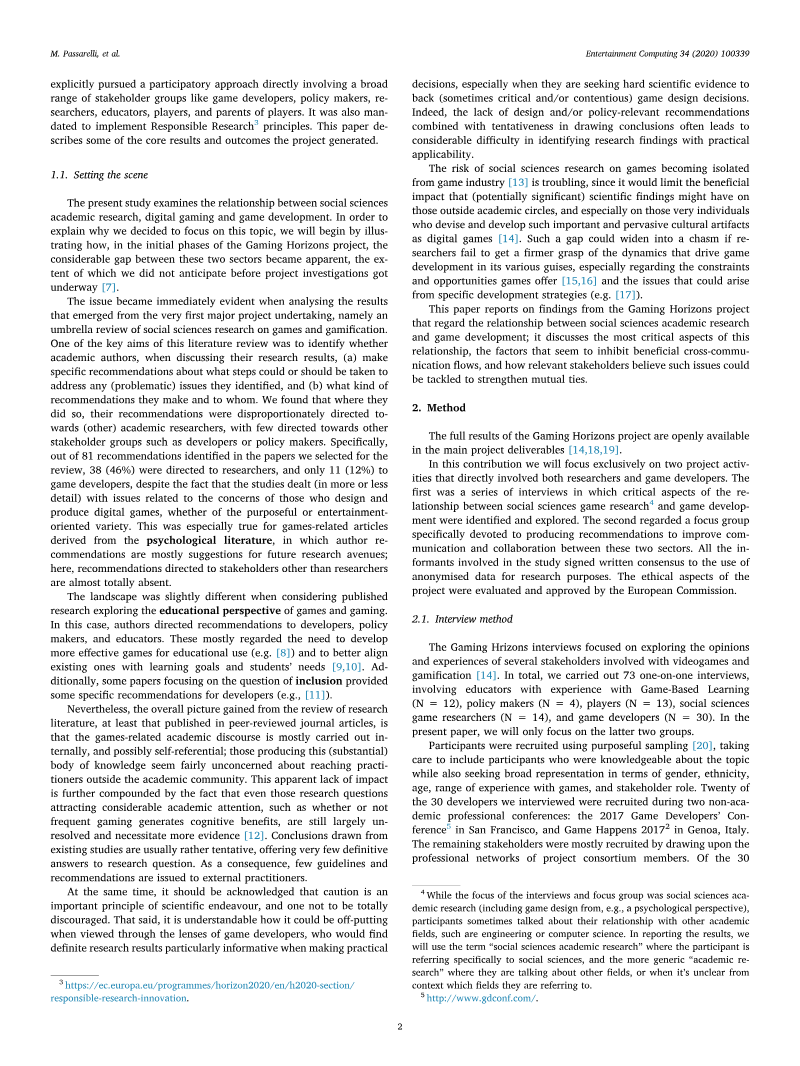

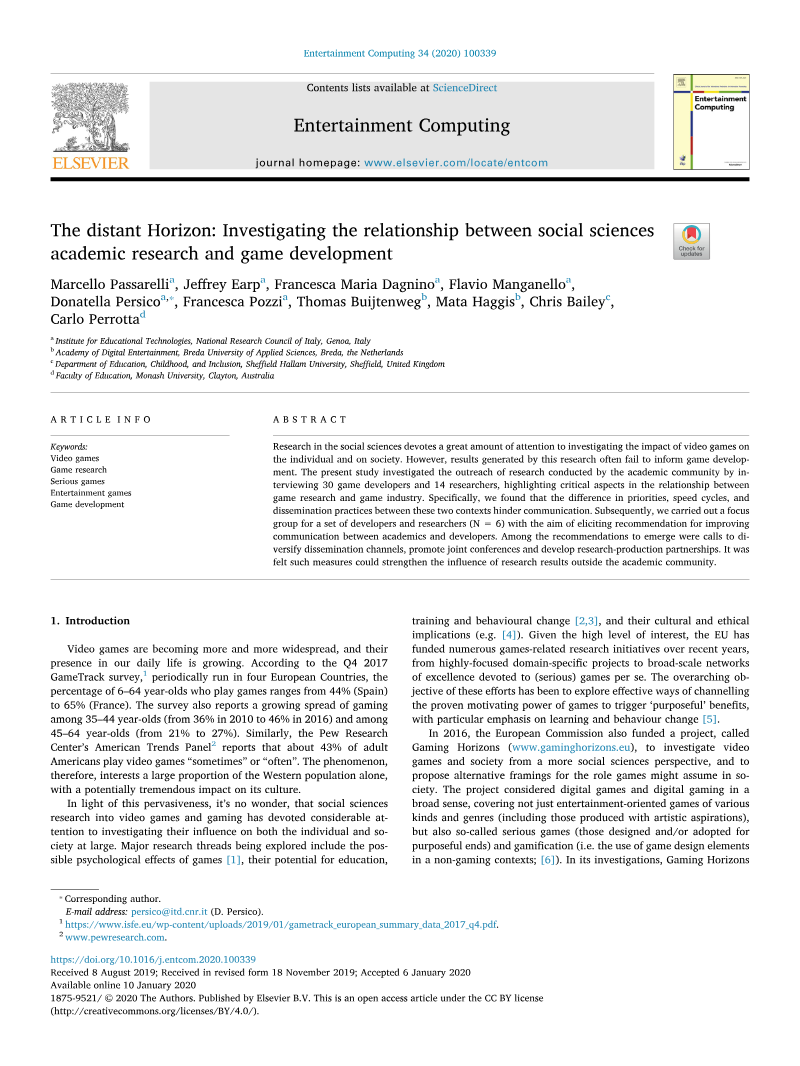
The Distant Horizon: Investigating the Relationship Between Social Sciences Academic Research and Game Development
The authors, a team of researchers from Italy, the Netherlands, the United Kingdom and Australia, report findings from the Gaming Horizons project on the relationship between social sciences academic research on games and game development.
- Researcher-authored recommendations in the reviewed literature were directed mainly at other academics, with developers receiving few.
- Developers described academic research as written in obscure, field-specific jargon, which they cited as a main factor discouraging engagement with it.
- Developers were often unable to see market value in social science research, with one interviewee noting that research was historically not directly useful to games.
Game Studio Leadership: You Can Do It
The primary role of a game studio leader is to serve as a protective buffer against external chaos, allowing creative teams to focus entirely on the development process.
- The primary function of a studio leader is to act as a protective buffer, shielding creative teams from external chaos to ensure focus on the development process.
- Leadership should prioritize team composition over rigid top-down planning, allowing the collective expertise of talented individuals to shape the studio's product vision.
- As studios scale, leaders must transition from direct game creation to organizational design, implementing structured feedback loops and clear career paths to replace informal communication.
Dead by Daylight: Object of Obsession
Dead by Daylight functions as a foundational case study in the evolution of asymmetrical 4v1 multiplayer horror, prioritizing visceral, emergent gameplay over traditional interface-heavy mechanics.
- Behaviour Interactive transitioned from a work-for-hire model to self-publishing to establish a sustainable development framework focused on rapid prototyping and internal playtesting.
- The studio shifted from a volume-based content model to a structured, chapter-based release cycle to ensure long-term viability and prevent technical debt.
- Map design utilizes a semi-procedural approach that combines static landmarks for navigational stability with randomized elements to maintain replayability.

Brain-Computer Interfaces: One Possible Future for How We Play
Brain-computer interfaces represent a fundamental shift in the future of interactive entertainment, aiming to transcend traditional input methods by directly measuring a player’s internal neurological and physiological states.
- Brain-computer interfaces (BCI) enable the transition from subjective player surveys to objective, real-time monitoring of neurological and physiological states like engagement, frustration, and cognitive load.
- Developers can use granular data from EEG, fNIRS, and fMRI technologies to optimize game design elements and accelerate iterative development cycles.
- BCI technology facilitates adaptive gameplay by dynamically adjusting difficulty, narrative pacing, and reward structures to maintain a player's optimal flow state.
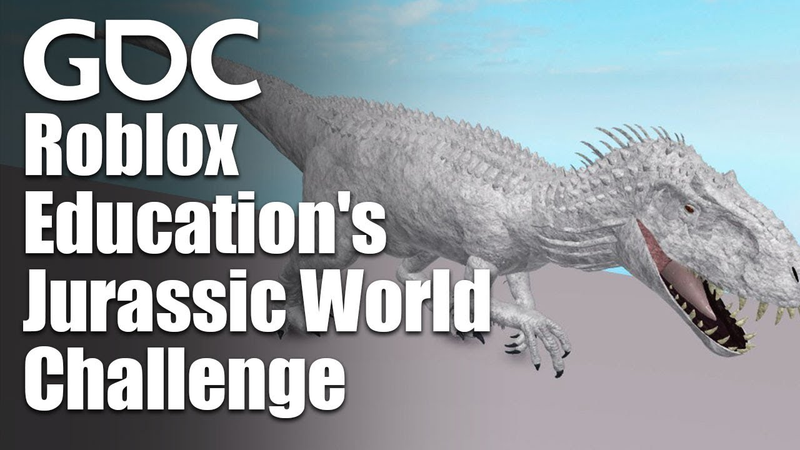
Dinosaurs and Volcanoes: Roblox Education's Jurassic World Challenge
The Jurassic World Creator Challenge serves as a strategic framework for democratizing game development education by leveraging high-profile intellectual property to lower the barrier to entry for novice creators.
- The Jurassic World Creator Challenge engaged over 6 million participants and resulted in the publication of 270,000 games within a three-month period.
- Leveraging high-profile intellectual property acts as a strategic framework to democratize game development education by lowering the barrier to entry for novice creators.
- Educational outcomes were optimized by transitioning from complex tutorials to concise 40-minute modules designed for seamless classroom integration.
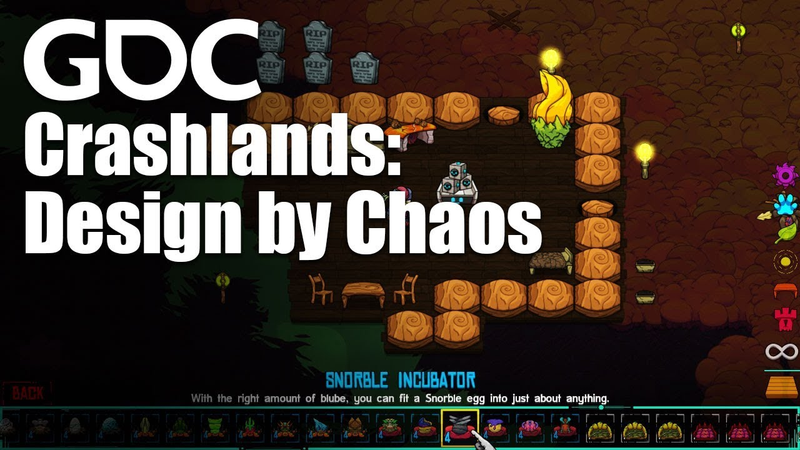
Crashlands: Design by Chaos
The development philosophy behind the action-crafting RPG Crashlands centers on a bottom-up, iterative approach that eschews traditional planning, game design documents, and long-term forecasting.
- Butterscotch Shenanigans achieved a 93 Metacritic score and over 500,000 units sold in the first year of Crashlands by prioritizing rapid, bottom-up iteration over rigid planning.
- The development process rejects traditional game design documents and long-term forecasting in favor of a brief, high-level directional anchor.
- The 'Goodenough' principle prioritizes immediate progress and player experience over perfection, which the studio credits with preventing crunch and burnout.
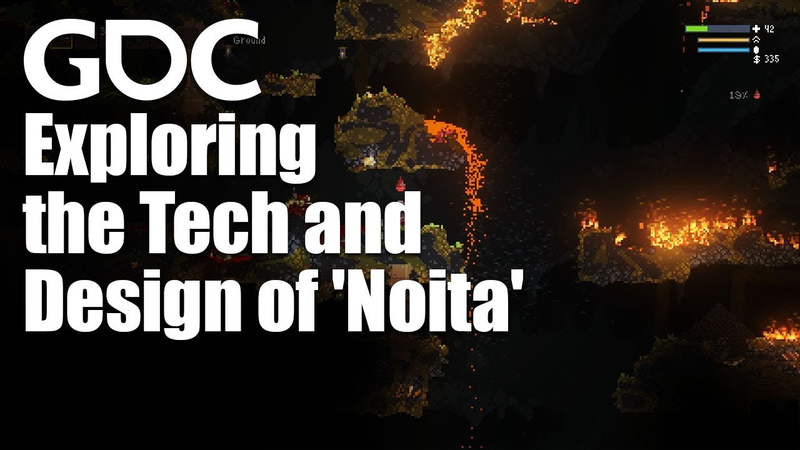
Exploring the Tech and Design of Noita
Noita functions as a technical showcase for pixel-based physics, utilizing a custom engine that integrates granular falling sand simulations with Box2D rigid body dynamics.
- Noita achieves high-fidelity pixel physics by integrating granular falling sand simulations with Box2D rigid body dynamics within a custom engine.
- The engine maintains performance in a continuous world through a chunk-based multithreading system that uses a checkerboard pattern to prevent thread conflicts.
- Memory management is handled by a dynamic streaming system that loads and unloads world chunks to ensure stability during complex simulations.
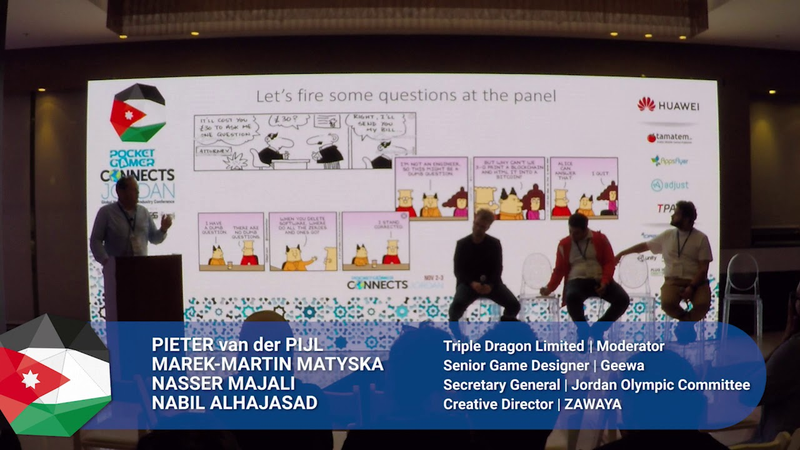
Panel: Riding the Wave of Esports
The esports industry is undergoing a critical transition from a niche phenomenon into a significant global commercial force, driven by intense community engagement and high-profile charitable initiatives.
- The esports industry faces a critical sustainability challenge where immediate profitability is elusive, requiring either massive organic player bases or sustained capital investment to survive.
- Corporate sponsorship strategies are currently shifting away from short-term financial returns to focus on building long-term brand loyalty among younger demographics.
- Integrating esports into traditional sports frameworks like the Olympic movement risks undermining the borderless, global team structures that currently drive high-level competitive quality.
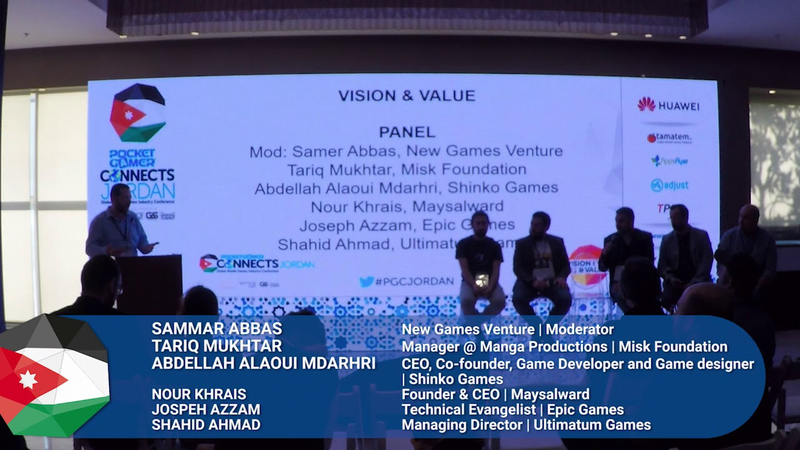
Panel: Capacity Building & Community in the Region
The Middle East and North Africa (MENA) region is currently navigating a pivotal transition as it seeks to transform its burgeoning gaming interest into a sustainable, professionalized industry.
- The MENA gaming sector is transitioning from grassroots enthusiasm to a professionalized industry by prioritizing sustainable infrastructure and cohesive regulatory frameworks.
- Economic diversification strategies across the region are increasingly targeting the creative economy, legitimizing gaming as a viable career path to combat talent migration.
- The industry currently faces significant operational hurdles, including high developer burnout rates, fragmented regional infrastructure, and a tendency for studios to work in isolated silos.
Writers
Games and companies
Games