Game Development reports and market data
Documents
Inertialization: High-Performance Animation Transitions in Gears of War
Inertialization serves as a high-performance alternative to traditional crossfade blending within the animation architecture of Gears of War.
- Inertialization replaces traditional crossfade blending with a post-process approach, eliminating the need to simultaneously evaluate both source and target animation states.
- The system utilizes a fifth-order polynomial curve to calculate pose differences and initial velocities, treating transitions as a mathematical smoothing problem rather than a dual-state blend.
- By evaluating only the target animation, the system achieves a fixed frame cost and avoids the performance spikes associated with multi-state evaluation.
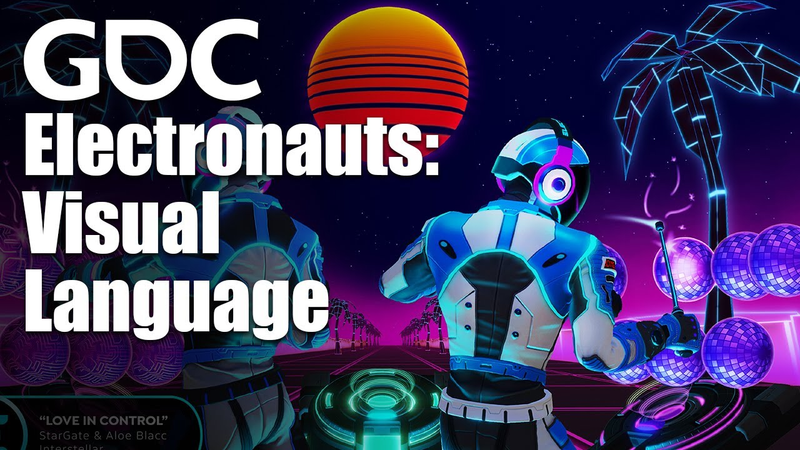
Visual Language of Electronauts: An Immersive Sound Based VR Experience
Electronauts is an immersive virtual reality music creation experience designed to enable users to perform music regardless of their formal musical training.
- Electronauts is a music creation experience developed by Survios that utilizes a proprietary 'Music Reality Engine' to ensure user inputs remain on-beat regardless of musical skill.
- The visual design of the experience was heavily influenced by 1980s synth-wave aesthetics, utilizing neon color palettes, geometric shapes, and cosmic imagery to create a psychedelic, sensory-overloading environment.
- The environment design for the 'Prodigy One' hub was inspired by professional audio equipment, incorporating speakers, equalizers, and turntables into the architecture to reinforce the theme of sound-driven creation.

How This Game Dev Sold 200,000 Copies of His Game
Sustainable success in the independent game development industry relies on a pragmatic synthesis of creative passion and disciplined business management.
- Achieve long-term success by treating game development as a business, focusing on project completion through asset stores and outsourcing rather than pursuing perfectionism.
- Mitigate financial risk by maintaining steady employment or diversifying income through platforms like YouTube, Patreon, and freelance work instead of relying solely on individual game sales.
- Prioritize a data-driven marketing strategy centered on building wishlists, email funnels, and consistent community engagement over waiting for a singular breakthrough launch.
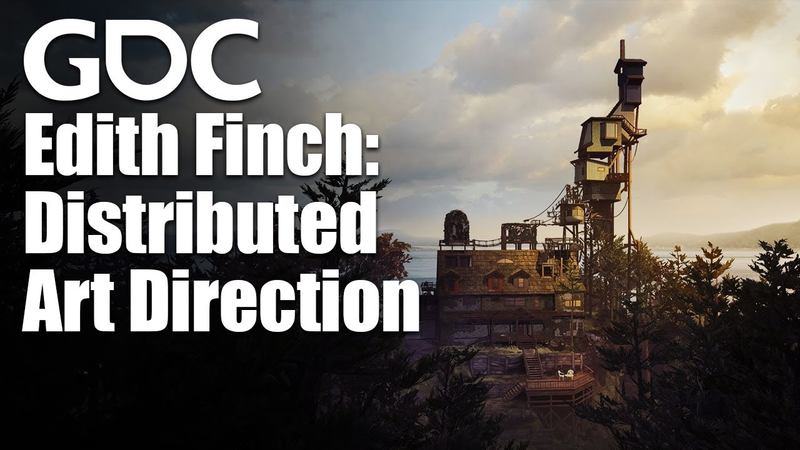
The Distributed Art Direction of Edith Finch
The development of What Remains of Edith Finch serves as a case study in distributed art direction, where a small, independent team successfully navigated the absence of a singular art director by prioritizing iterative collaboration and shared creative goals.
- Giant Sparrow successfully developed What Remains of Edith Finch over a five-year cycle using a decentralized, non-hierarchical art direction model rather than a traditional top-down structure.
- The team utilized a 'just-in-time' methodology, allowing the visual style to evolve organically alongside gameplay mechanics and narrative requirements rather than adhering to a rigid pre-planned aesthetic.
- To ensure high-quality, story-driven environmental design, the team produced approximately three times the amount of material that was ultimately included in the final game.
How I Became a Full Time Game Developer
The narrative outlines the professional trajectory of an independent game developer, detailing the transition from a traditional corporate career to full-time game creation.
- Securing $28,000 in the first 24 hours of a Kickstarter campaign provided the necessary capital to complete the game Pinstripe, serving as the primary catalyst for transitioning to full-time development.
- Achieving professional viability in the indie sector requires a hybrid strategy of leveraging community support, crowdfunding platforms, and publisher partnerships to mitigate financial risk.
- The developer successfully scaled their career by building on early validation from Flash-based games, which garnered millions of plays before moving to larger commercial projects like Pinstripe and the critically acclaimed Never Song.

Publishers & Developers - Exploring the Core Relationship | PocketGamer.biz RoundTable
Successful publisher-developer partnerships are fundamentally rooted in mutual trust, transparency, and the alignment of long-term goals.
- Successful partnerships rely on mutual trust and long-term goal alignment, evolving into collaborative relationships that prioritize open communication to navigate industry shifts like remote work.
- Operational friction is often caused by developers underestimating the labor required for marketing assets and the resource strain of testing games across multiple potential publishing partners.
- Developers should clearly articulate all necessary development costs, including patents, during the initial pitch phase to prevent administrative and financial misalignment.

Recruitment: Looking for the Holy Grail - PocketGamer.biz RoundTable
Securing employment in the competitive games industry requires a strategic approach to personal branding, where clarity and relevance are paramount.
- Recruiters spend an average of only seven seconds scanning an initial application, making concise, keyword-optimized resumes essential for passing the first filter.
- Portfolios must prioritize quality over quantity by showcasing the full development lifecycle, from initial conceptualization to the final product.
- Candidates should replace passive job applications with active networking, such as engaging in specialized developer communities, participating in game jams, and sending personalized outreach notes.
Designing Text UX for Effortless Reading
Optimizing text user experience in video games requires a fundamental shift in perspective, treating written content as a core gameplay element rather than a secondary aesthetic layer.
- Treat text as a core gameplay element rather than a secondary aesthetic layer to minimize cognitive friction for the player.
- Optimize readability by maintaining line lengths between five and fifteen words and utilizing generous margins and paragraph spacing.
- Calibrate typeface selection and layout design specifically to the player’s viewing distance to ensure accessibility and clarity.
The Making of Masterpiece VR with Jonathan Gagne | GduX.me 2020
The democratization of 3D content creation relies on shifting from traditional 2D interfaces to native virtual reality environments.
- VR-based 3D modeling, supported by machine learning, can increase production speeds by up to 10x and reduce the learning curve by a factor of 200 compared to traditional 2D interfaces.
- Masterpiece VR currently supports a user base of over 30,000 individuals and maintains seamless integration with industry-standard pipelines including Unity, Unreal Engine, and Substance Painter.
- The VR industry is maturing through the combination of high-fidelity software and lightweight, cloud-enabled hardware, with a long-term shift expected toward augmented reality as motion-tracking constraints are resolved.
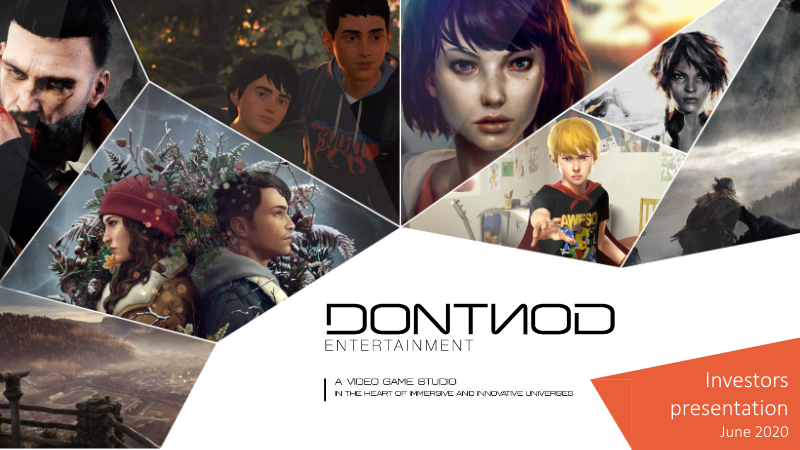
Don't Nod Investor Presentation
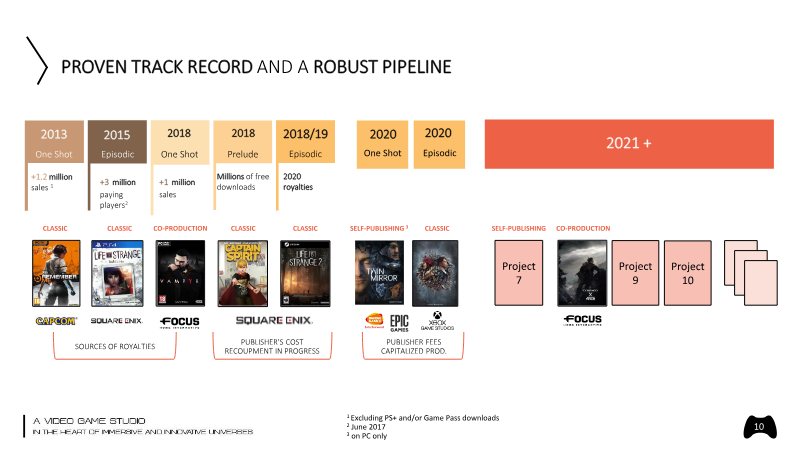
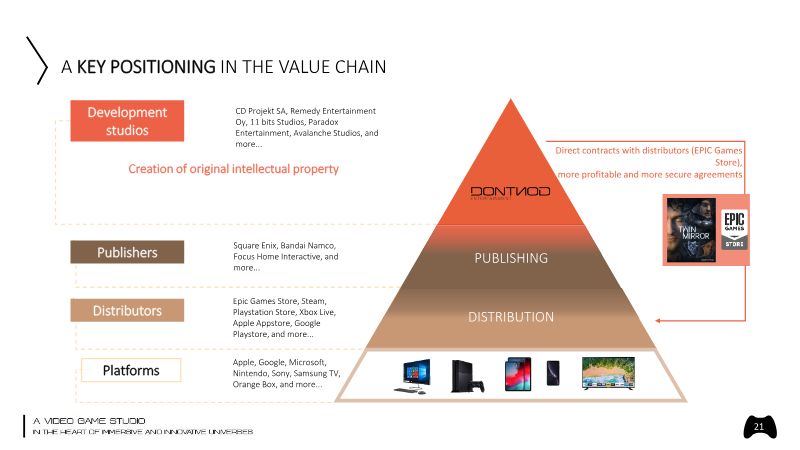
This is a 2020 investor presentation from Don't Nod Entertainment, a French video game studio based in Paris, covering its business model, portfolio, and financial results for 2018 and 2019 (French GAAP, consolidated figures).
- Consolidated total operating income rose from €15,185k in 2018 to €18,017k in 2019, while royalties fell from €3,811k to €2,062k.
- Consolidated net income moved from €490k in 2018 to a loss of €(86)k in 2019.
- Cash and cash equivalents decreased from €24,415k at December 31, 2018 to €16,955k at December 31, 2019.
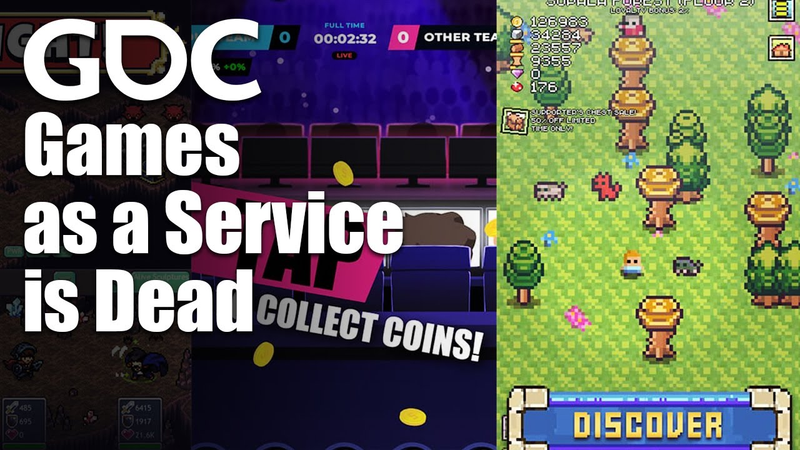
Games as a Service is Dead
The Games as a Service model is increasingly unsustainable for the majority of mobile developers, as the industry has shifted away from the organic virality that once defined early social gaming.
- Success in the current mobile market is determined by front-loaded store performance and initial install velocity rather than long-term iterative retention strategies.
- Developers must maximize conversion metrics during the first 30 days of a global launch, as organic visibility inevitably declines after this window.
- The pre-launch open beta phase is the most critical period for optimizing store conversion rates through constant A/B testing of icons, preview videos, and feature graphics.
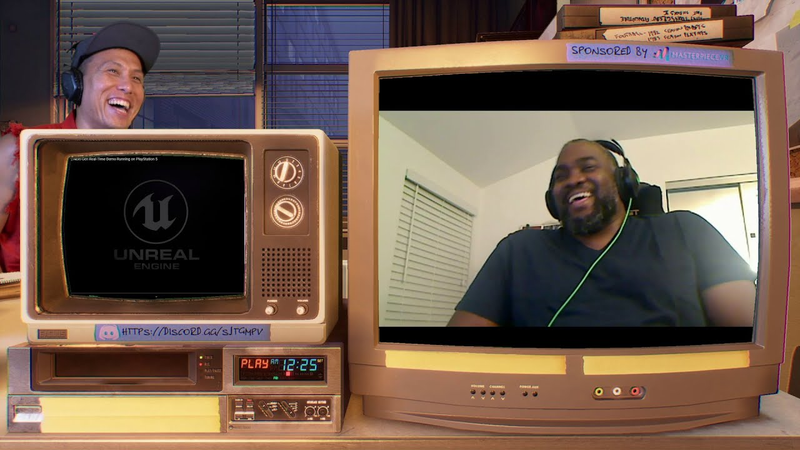
Unreal Engine 5 Reactions, And Last of Us 2 Ending a Generation | Game Dev Unchained Roundtable News
The introduction of Unreal Engine 5 marks a pivotal shift in game development, primarily driven by the integration of Nanite geometry and Lumen real-time global illumination.
- Unreal Engine 5 introduces Nanite geometry and Lumen real-time global illumination to automate light-baking and eliminate traditional optimization bottlenecks for high-fidelity assets.
- Despite technological advancements, Unreal Engine 5 does not remove the need for rigorous character animation, physics simulation, and efficient asset management in full-scale production.
- Industry experts view high-end tech demonstrations as aspirational marketing tools rather than immediate standards, as most studios continue to prioritize cohesive art styles over raw photorealism.
Writers
Games and companies
Games