Game Development reports and market data
Documents

GduX.me 2020 | Day 3
The Game Dev Unchained Expo (GduX.me) 2020 serves as a comprehensive forum for navigating the complexities of the modern gaming industry, emphasizing the necessity of balancing artistic ambition with pragmatic business strategy.
- Long-term success in game development requires shifting focus from 'external quality' (visual polish) to 'internal quality,' which prioritizes business strategy, asset reuse, and process replicability.
- The 2020 pandemic accelerated a permanent shift toward remote work, enabling studios to access global talent pools while necessitating more resilient and flexible operational infrastructures.
- Lighting has evolved from a secondary task into a foundational storytelling discipline that requires balancing artistic composition with GPU performance constraints.

Dead by Daylight: When Creative and Business Minds Are Cooking with GAAS
Dead by Daylight serves as a definitive case study for the successful implementation of Games-as-a-Service models, demonstrating that long-term profitability is best achieved by aligning creative vision with player-centric monetization.
- Monetization in Games-as-a-Service (GaaS) should be additive to the player experience rather than subtractive; by focusing on optional cosmetic items, developers can generate revenue while enhancing player engagement and character customization.
- Behaviour Interactive rejected loot boxes in favor of an 'a la carte' store model to maintain player trust, opting for lower immediate revenue in exchange for long-term brand health and player respect.
- Generosity in GaaS, such as allowing players to unlock 60-70% of store content and all original characters using a grindable 'soft currency,' directly correlates with increased average session duration and player retention.

GduX.me 2020 | Day 2
The GduX.me 2020 conference served as a comprehensive forum for independent game developers to navigate the intersection of creative integrity, business acumen, and evolving technical standards.
- Sustainable studio growth requires balancing creative passion with a professionalized business framework, including rigorous time-investment tracking and clear milestone scheduling.
- Unreal Engine 5’s Lumen and Nanite systems enable smaller teams to achieve AAA-quality visual fidelity, though they remain secondary to fundamental artistic discipline and optimization.
- Protecting intellectual property is a critical operational necessity, requiring proactive legal management of user-generated content, robust terms of service, and consistent DMCA compliance.

Job Stability, Quality Of Life, Windjammers With Dave Lang - GDC Podcast
The game development industry has undergone a significant transformation over the past two decades, shifting from a landscape defined by high-risk volatility and frequent studio closures to one that increasingly prioritizes sustainable business models and improved quality of life.
- Iron Galaxy Studios mitigates financial risk by maintaining a diverse portfolio of ten to twelve simultaneous projects, focusing on technical consulting, co-development, and porting.
- The studio prioritizes long-term job security and a strict forty-hour work week, explicitly rejecting the industry-standard 'crunch culture' to improve employee retention and quality of life.
- A reputation for high-quality delivery allows Iron Galaxy leadership to negotiate more favorable project timelines with industry partners, further stabilizing the studio's operational framework.

The Future of Monetisation - PocketGamer.biz RoundTable
The mobile gaming industry is undergoing a fundamental transition toward a diversified, three-pillar monetization model that balances in-app purchases, advertising, and subscription services.
- The mobile industry is shifting toward a three-pillar monetization model that balances in-app purchases, advertising, and subscription services to replace the traditional reliance on gacha mechanics.
- Battle passes have emerged as the standard tool for driving long-term player retention, though they must be carefully calibrated to avoid destabilizing core game economies.
- Developers are increasingly treating non-paying users as essential assets, leveraging their social engagement and ecosystem depth to drive the scale necessary for long-term title health.

The Sound of Anthem
The development of Anthem’s audio landscape centers on the integration of high-tech, heroic action within a grounded, science-fantasy environment.
- The audio team utilized the Frostbite engine’s dynamic mixing capabilities to integrate mechanical precision with organic immersion across the game's science-fantasy environment.
- Javelin exosuit audio is generated through a layer-based system that maps real-time game parameters like velocity, pitch, and surface interaction to mechanical servos and thrusters.
- The modular design philosophy for the four Javelin classes—Colossus, Storm, Interceptor, and Ranger—enables high-fidelity movement feedback without requiring manual, bespoke editing for every animation.

GduX.me 2020 | Day 1 Cont'd
Modern 3D character art production relies on a sophisticated pipeline integrating tools like ZBrush, Maya, and Marvelous Designer.
- Systemic industry crunch is a result of poor management, unrealistic scheduling, and flawed project scoping rather than individual employee drive.
- Sustainable development requires studios to prioritize rigorous production planning and disciplined cycles over chasing industry trends.
- Artists must treat legal processes as collaborative tools by using formal contracts that explicitly define work-for-hire terms and revision limits to ensure fair compensation.

GduX.me 2020 | Day 1
The 2020 GduX.me conference serves as a comprehensive forum for independent game developers to navigate the professional, technical, and cultural challenges of the industry.
- Marketing must be integrated into the development process from the conceptual stage rather than treated as an afterthought to ensure product viability.
- Developers should adopt a rigorous, experimental approach by testing concepts early and pivoting quickly based on market interest rather than relying on a 'build it and they will come' strategy.
- Success in the modern industry requires moving away from volatile social media algorithms in favor of data-driven strategies that identify a clear product 'hook' and foster direct audience engagement.
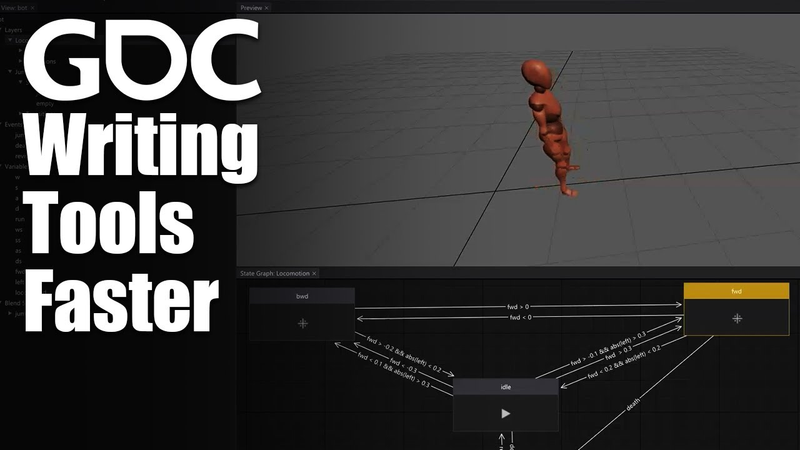
Writing Tools Faster: Design Decisions to Accelerate Tool Development
Game engine tool development often suffers from architectural bloat, where frequent transitions between volatile frameworks like WinForms, WPF, and web-based technologies create fragmented, unmaintainable codebases.
- Architectural bloat in game engine tools is primarily driven by fragmented, multi-layered stacks like WinForms, WPF, and web-based frameworks, which increase maintenance costs and debugging complexity.
- Implementing a unified, schema-driven data model—the 'truth'—enables automation of serialization, undo/redo functionality, and real-time collaboration through atomic pointer swaps.
- Transitioning to an immediate-mode UI system powered by C and Vulkan eliminates the need for complex state synchronization, as the interface is rendered directly from the data each frame.
Battlespace Next: Developing a Serious Game to Explore Multi-Domain Operations
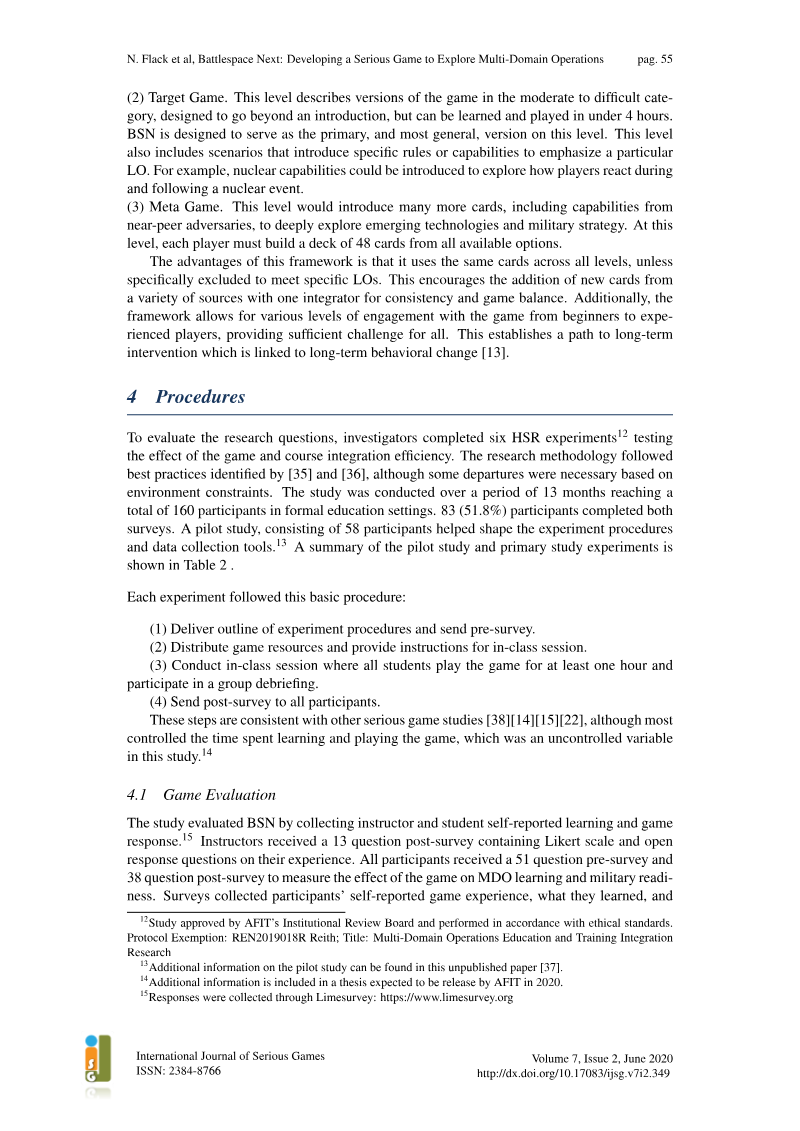
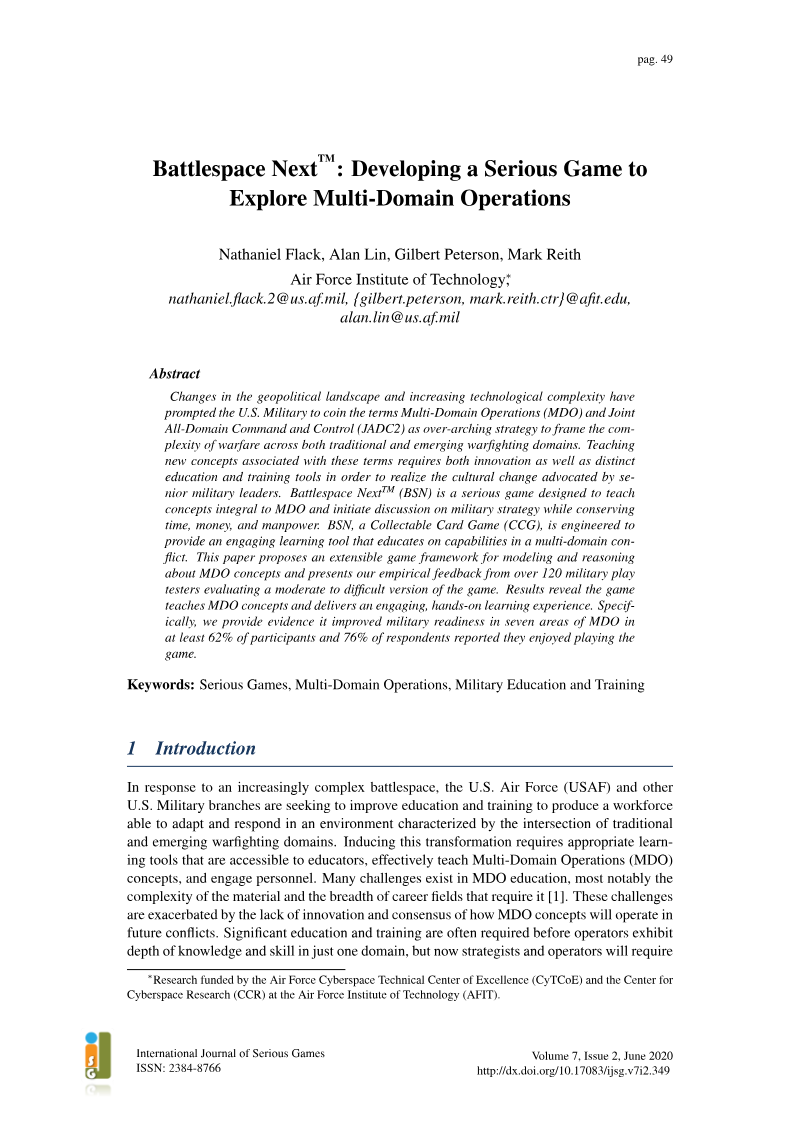
The paper, by Nathaniel Flack, Alan Lin, Gilbert Peterson and Mark Reith of the Air Force Institute of Technology and published in the International Journal of Serious Games (June 2020), presents Battlespace Next (BSN), a collectable card game designed to teach Multi-Domain Operations (MDO) concepts.
- Self-reported readiness improved in 62% to 78% of participants across seven MDO areas after playing the game.
- When offered a hypothetical lecture on MDO for comparison, 83% of participants said they would rather have played the game.
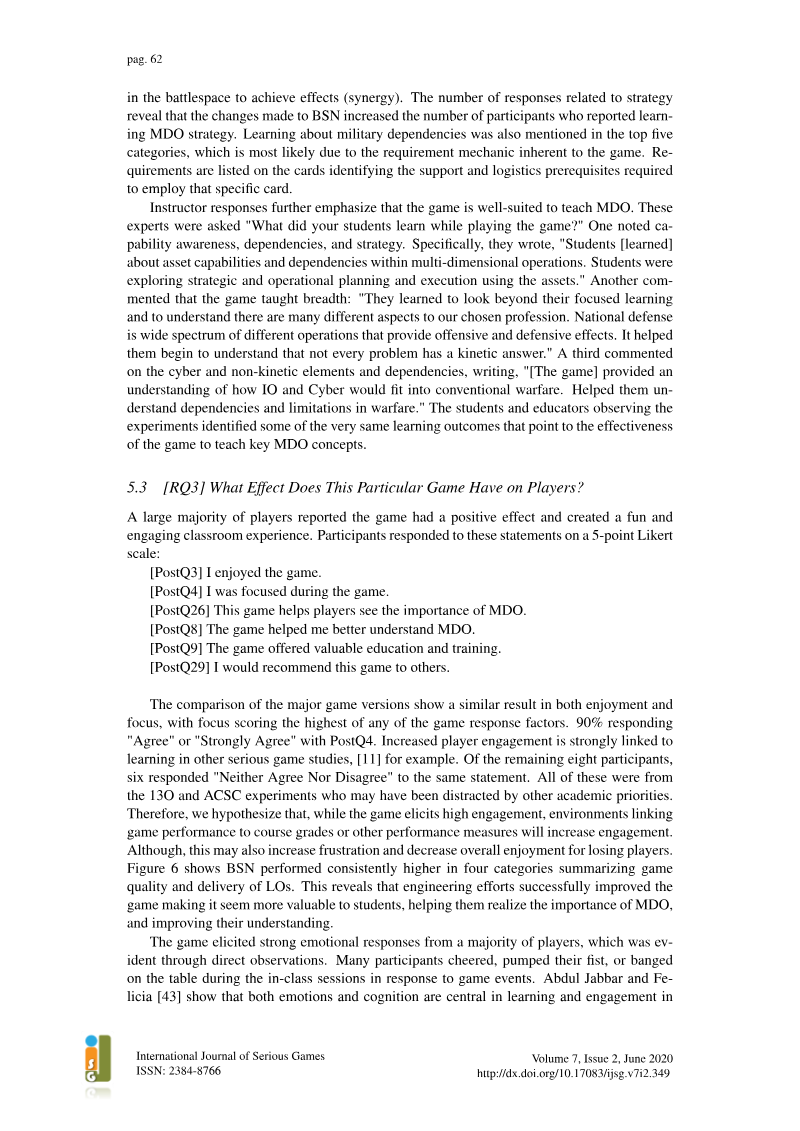
- Ninety percent of respondents agreed or strongly agreed that they were focused during the game, the highest-scoring of the game response factors.

Indie Game Devs Are Poor, Right?
The pursuit of a career in indie game development is often met with skepticism regarding financial viability, yet it offers unique opportunities for personal growth and creative autonomy.
- Solo indie game developers earn an average annual income of approximately $10,000, while members of small teams average $50,000 per person.
- Aspiring developers should mitigate financial risk by opting for low-cost technical schooling instead of traditional university degrees that incur significant debt.
- The indie development career path is best suited for individuals in their twenties who have fewer financial dependencies and can afford to experiment with a 'shotgun approach' to career discovery.
Building An Intelligent Game Testing System in Netease MMORPG Games
The rapid evolution of large-scale MMORPGs like Justice has rendered traditional manual and script-based regression testing increasingly unsustainable.
- Netease transitioned from manual and script-based testing to an autonomous AI architecture to manage the complexity of over 15,000 quest steps in the MMORPG 'Justice'.
- The system utilizes Markov decision processes, Monte Carlo Tree Search, and Upper Confidence Bound algorithms to autonomously navigate game environments and generate optimal testing paths.
- Integrating Natural Language Processing to extract intent from quest descriptions allows the AI to prioritize player actions, resulting in a threefold increase in search speeds.
Writers
Games and companies
Games