Game Development reports and market data
Documents
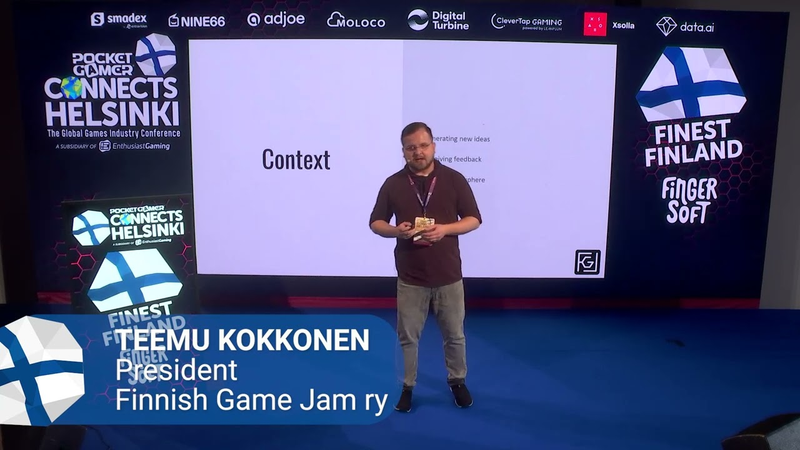
Game Jam Culture at the Workplace - Teemu Kokkonen, Finnish Game Jam.
The integration of game jam culture into the professional workplace serves as a powerful mechanism for fostering creativity, rapid prototyping, and team cohesion.
- Workplace game jams should be strictly voluntary and internally motivated to prevent employee burnout and maintain morale.
- Managers must implement 'time-boxing' to isolate creative sessions from daily operational tasks, which minimizes the latency between initial idea generation and actionable feedback.
- To ensure sustainability, companies should avoid 'crunch' culture by providing compensation, such as flexible working hours, for the extra effort invested in jam activities.
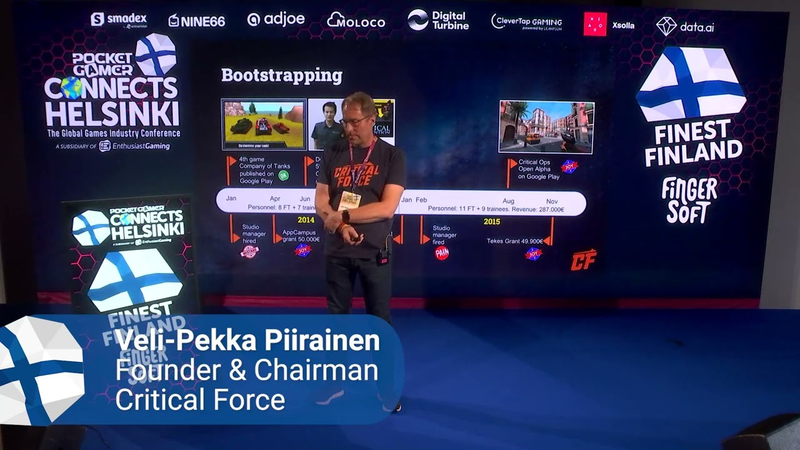
The Story of Critical Force: Over ten Years of joy & Pain - Veli-Pekka Piirainen, Critical Force.
Critical Force, a Finnish game development studio founded in 2012, has navigated a decade of significant volatility, scaling from a small startup to a 70-employee organization.
- Rapid, unvetted hiring between 2016 and 2018 caused the studio's workforce to quadruple, resulting in severe operational inefficiencies, cultural misalignment, and communication breakdowns.
- External competition from major titles like Fortnite Mobile and PUBG Mobile in 2018 caused Critical Force to lose half of its player base and revenue, nearly forcing the company into bankruptcy.
- Critical Force successfully transitioned its business model from premium-priced mobile games to free-to-play, eventually driving its flagship title, Critical Ops, to 130 million downloads and $40 million in revenue.
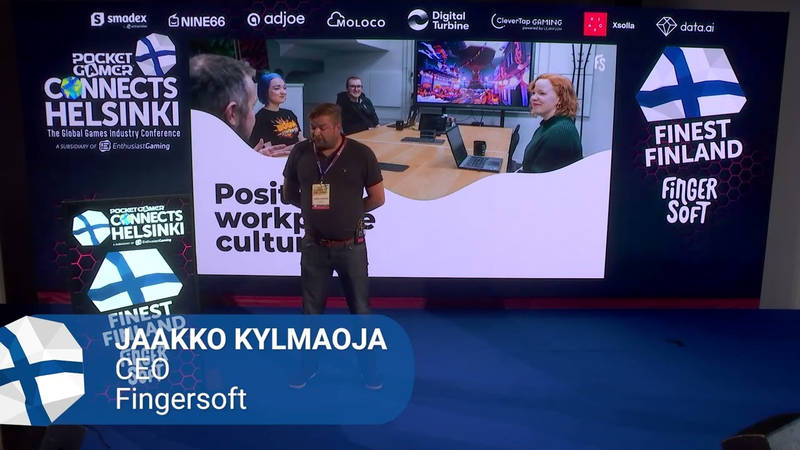
Building a Game Studio: The Blueprint for Purpose and Balance - Jaakko Kylmaoja, Fingersoft
The blueprint for building a sustainable and successful game studio centers on balancing high-performance product development with a caring, employee-centric organizational culture.
- Fingersoft achieved over two billion global downloads for its Hill Climb Racing franchise by prioritizing sustainable productivity over industry-standard burnout cycles.
- Operational efficiency experiments revealed that a six-hour workday model is more productive than a four-day workweek.
- The studio supports professional development through a dedicated educational budget of 4,000 Euros per employee every two years.
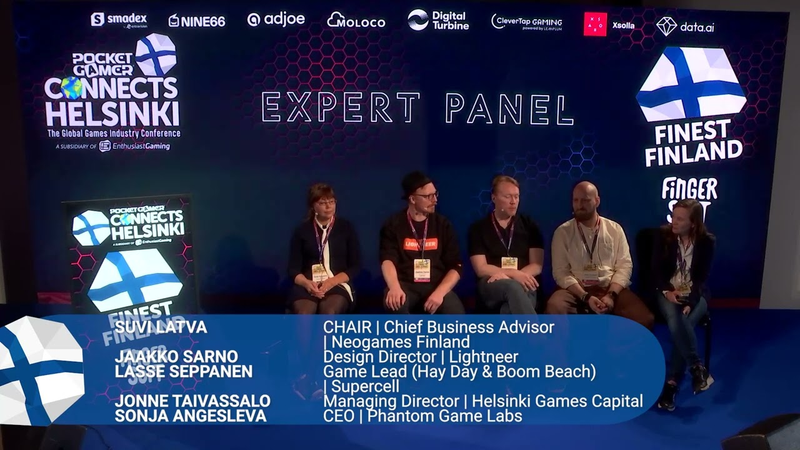
Panel: Finnish Gaming 3.0 - The Next Big Thing.
The Finnish gaming industry is currently undergoing a strategic evolution, transitioning toward a phase defined as Gaming 3.0.
- The Finnish gaming industry is transitioning to 'Gaming 3.0,' a model that leverages artificial intelligence to enable smaller teams to produce high-quality, complex content.
- Approximately 40 new studios have emerged recently, accounting for nearly 20 percent of the total Finnish gaming landscape.
- Despite technological shifts, success remains dependent on core fundamentals: robust game design, significant marketing investment, and the development of original intellectual property.
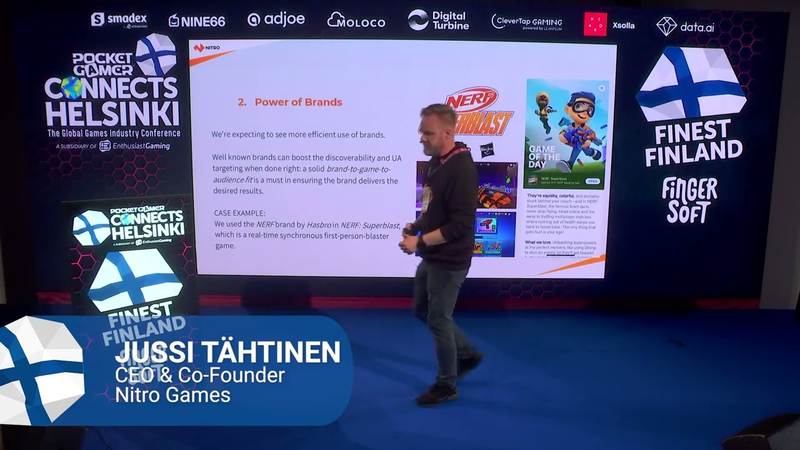
Nitro Games & the Next Wave of Games From Finland - Jussi Tahtinen, Nitro Games.
Nitro Games, a Helsinki-based mobile gaming studio with over 80 employees, specializes in the action and shooter genre.
- Nitro Games, a Helsinki-based studio with over 80 employees and 15 years of experience, utilizes a full-lifecycle development model that manages titles from initial concept through live operations.
- The studio identifies cross-platform and cross-play integration as a primary strategic pillar to overcome hardware limitations and reach wider audiences across mobile, PC, and console.
- Leveraging established intellectual property, such as the studio's partnership with the Nerf brand, is a critical tactic for mitigating rising user acquisition costs.
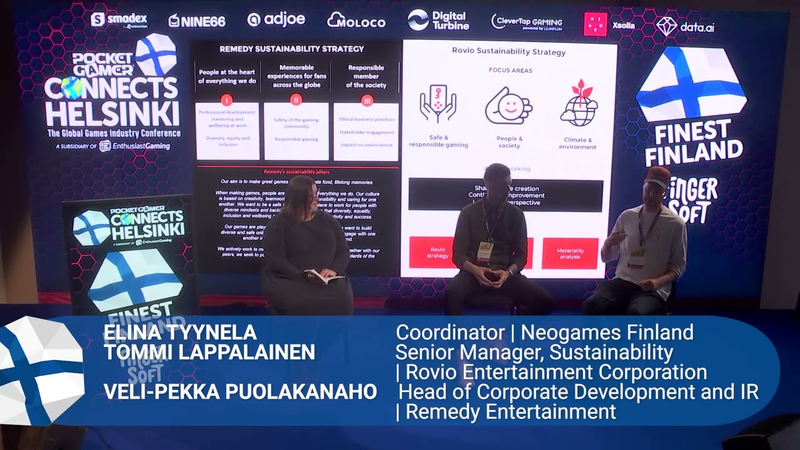
Fireside Chat: Steps Towards Sustainability – Cases Remedy & Rovio
This discussion outlines the sustainability strategies of two major Finnish game developers, Rovio Entertainment and Remedy Entertainment, emphasizing the transition of the gaming industry toward formalized environmental, social, and governance (ESG) frameworks.
- Rovio Entertainment and Remedy Entertainment have formalized their sustainability strategies around three core pillars: responsible gaming, people and society, and environmental impact.
- Both companies utilize materiality analyses, which involve direct engagement with stakeholders and employees, to identify and prioritize their specific sustainability focus areas.
- Rovio implements inclusive game development through accessibility playbooks and maintains player safety policies to effectively moderate user-generated content.
Monthly Games Industry Report: September 2023
The September 2023 Monthly Games Industry Report, which features Mobidictum interviews, compiles game-industry news, market research, articles and interviews.
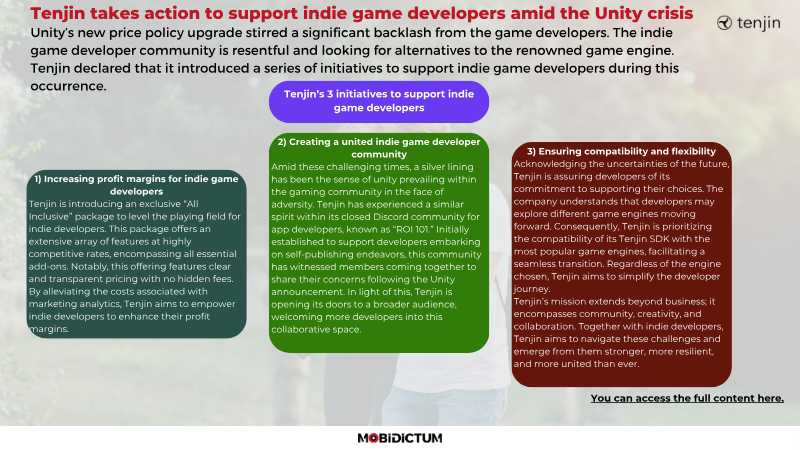
- The document says Unity's new pricing changes have set the industry in an uproar, and its table lists per-install runtime fees above install thresholds.
- Fancensus measured Starfield's total PR coverage across a window running from 14 days before launch to 4 days after launch.
- Proof of Play raised $33 million to develop fully onchain games for autonomous worlds.
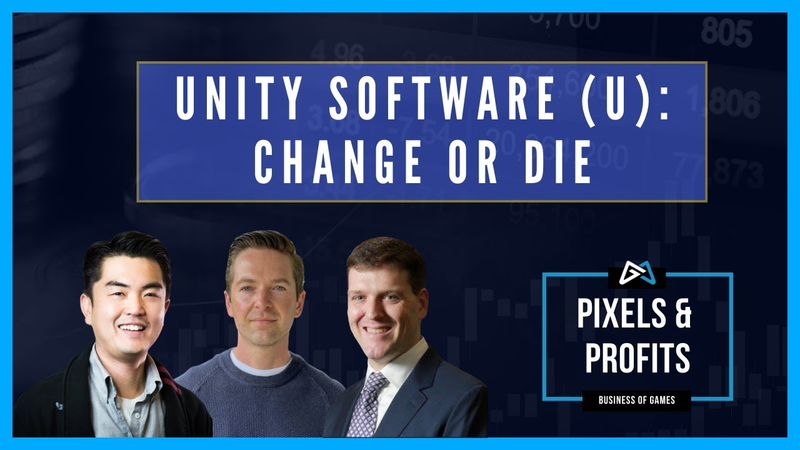
Unity Software (U): Huge Problems, Negative Outlook, Big Changes Required
Unity Software currently faces a critical inflection point as it struggles to transition from a growth-at-all-costs strategy to a sustainable, profitable business model.
- Unity’s revenue model is now heavily dependent on its Grow segment, which accounts for two-thirds of total revenue following the acquisition of ironSource.
- Stock-based compensation has reached 38 percent of total revenue, resulting in significant shareholder dilution.
- The company’s core Create engine business has failed to generate meaningful profits, leaving the firm reliant on aggressive monetization tactics to meet short-term EBITDA expectations.
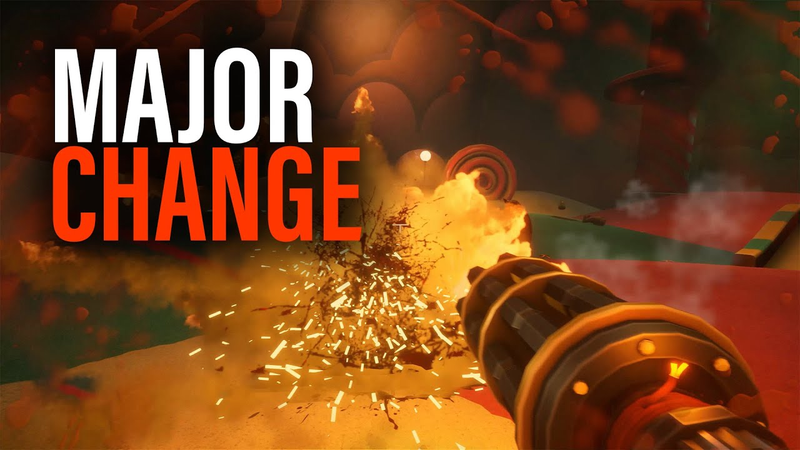
MAJOR CHANGE
The recent announcement regarding the game Twisted Tower serves as a case study for navigating the business of game development, specifically the strategic use of publishers to bring commercial projects to market.
- Securing a publishing deal with 3D Realms for Twisted Tower provided essential professional marketing, trailer production, and industry visibility that the development team could not achieve independently.
- The development team funded the project's research and development phase through a diversified income model, utilizing revenue from online educational courses, content creation, and sponsorships.
- The initial prototype for Twisted Tower required a financial investment exceeding six figures to support a dedicated team, including a full-time artist and a lead developer.
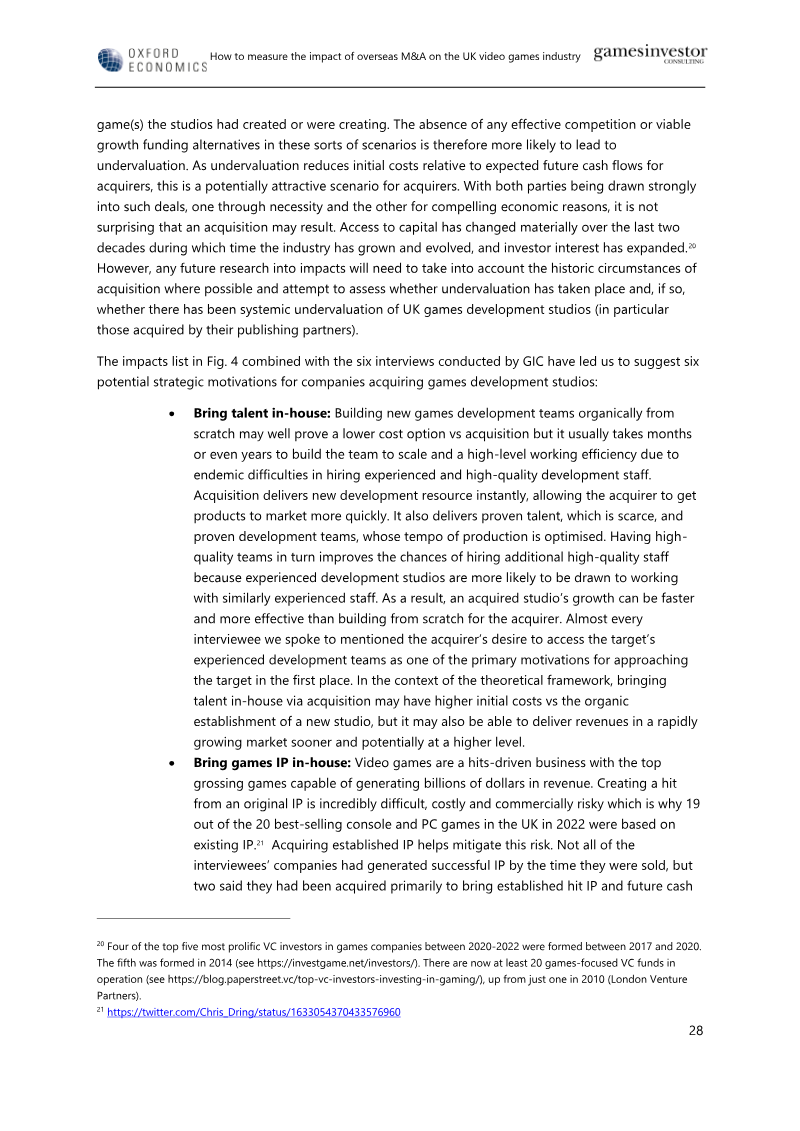
How to Measure the Impact of Overseas Mergers & Acquisitions on the UK Video Games Industry
A feasibility study commissioned by the BFI and the Creative Industries Policy and Evidence Centre, produced by Games Investor Consulting with Oxford Economics, reviews the economic consequences of overseas acquisitions of UK video games development studios.
- The database records 118 overseas acquisitions of UK-incorporated video games development companies from 1993 to 2022, with 49% of all transactions made by USA-headquartered buyers.
- Deal activity clustered in 2018 to 2021, with 2021 recording the highest number of predominantly UK-based studio transactions at 13.
- Existing games publishers were the most common overseas acquirers, accounting for 56% of all transactions.
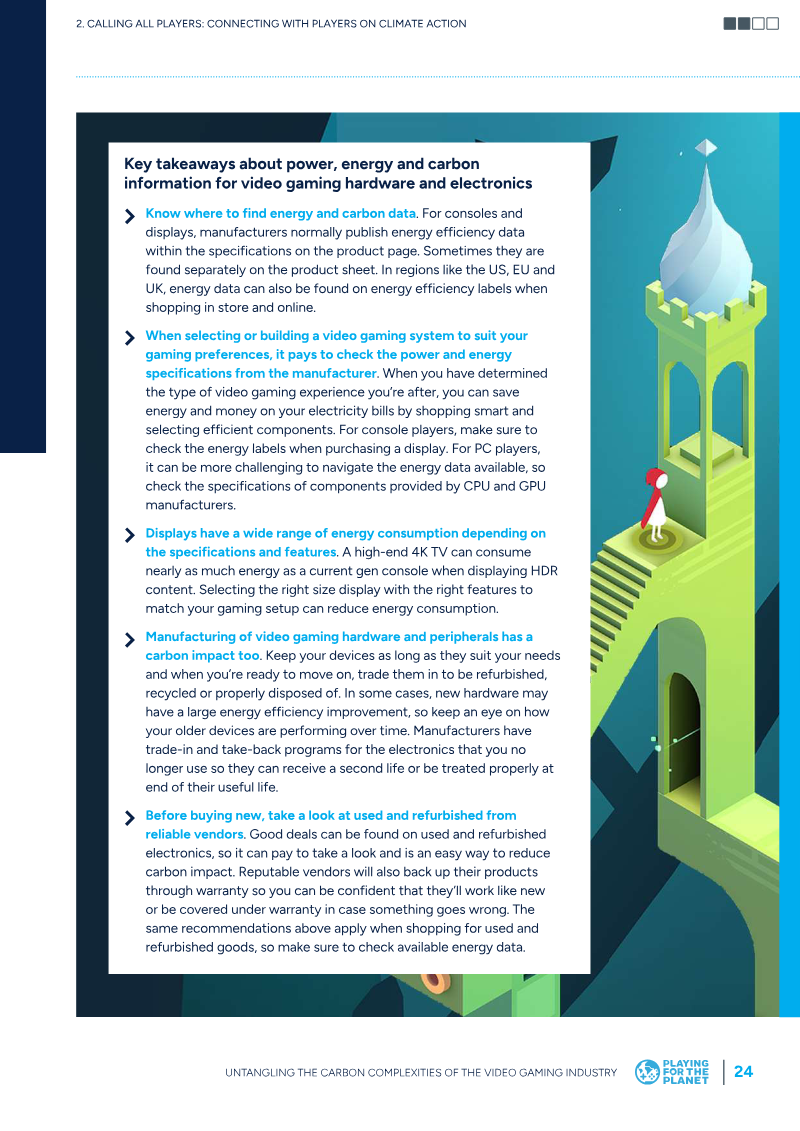
Playing for the Planet: Untangling the Carbon Complexities of the Video Gaming Industry
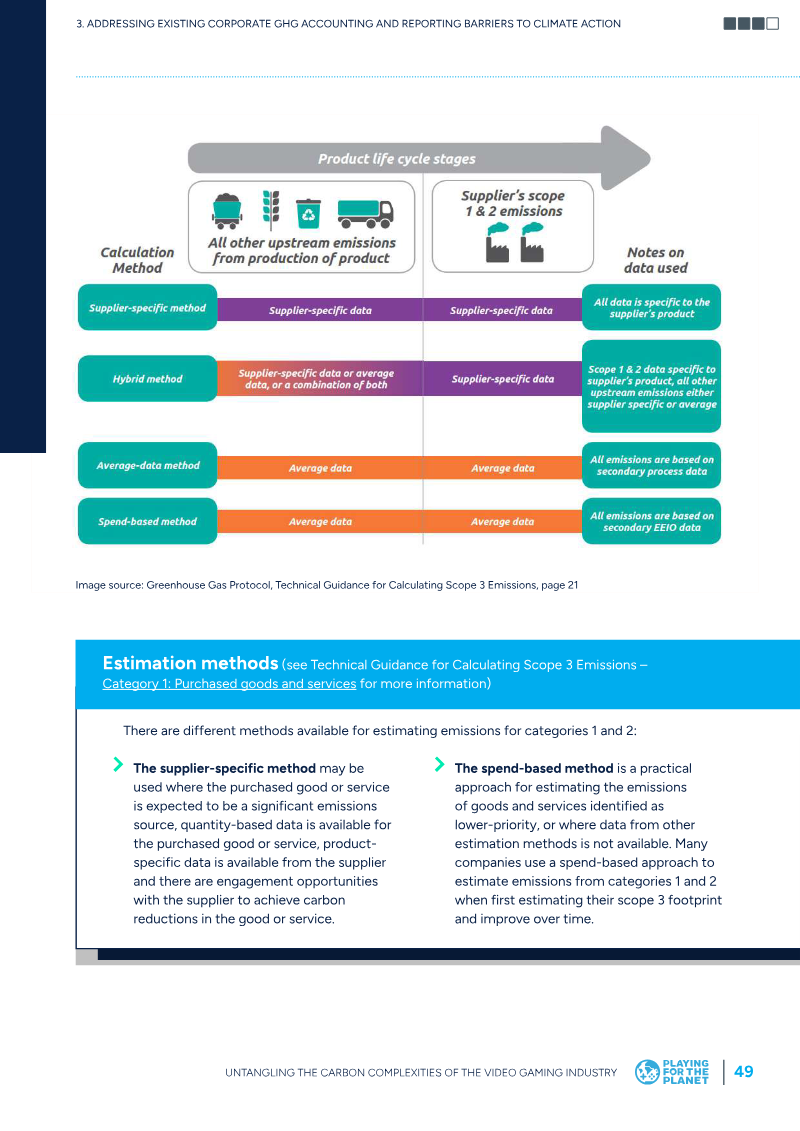
The Carbon Trust, commissioned by the Decarbonisation Working Group of the Playing for the Planet Alliance, authored this guide to carbon emissions in the video gaming industry, with guidance on scope 3 greenhouse gas accounting for video game businesses.
- Only 12 of 222 video game businesses analysed have set, or committed to setting, science-based targets.
- Categories 1 and 11 were identified as the most significant scope 3 categories for video game companies, followed by category 2.
- A PlayStation 4 study sponsored by Sony Interactive Entertainment estimated the carbon impact of playing a video game at roughly 50 gCO2e per hour of gameplay in Europe.

I'm Making A Bioshock Willy Wonka Hybrid (Devlog)
The development of the indie title Twisted Tower illustrates the volatile intersection of creative iteration and the financial realities of the modern game industry.
- Securing a publishing deal with 3D Realms validated the developer's commitment to a retro-inspired shooter aesthetic after a two-year development cycle.
- The project required over six figures in capital investment to support a team of full-time and part-time staff during its development.
- Frequent identity pivots—including shifting from a medieval shooter to an Art Deco platformer—created significant operational friction and strained team morale.
Writers
Games and companies
Games