Game Development reports and market data
Documents

I'm Making A Bioshock Willy Wonka Hybrid (Devlog)
The development of the indie title Twisted Tower illustrates the volatile intersection of creative iteration and the financial realities of the modern game industry.
- Securing a publishing deal with 3D Realms validated the developer's commitment to a retro-inspired shooter aesthetic after a two-year development cycle.
- The project required over six figures in capital investment to support a team of full-time and part-time staff during its development.
- Frequent identity pivots—including shifting from a medieval shooter to an Art Deco platformer—created significant operational friction and strained team morale.

Why I'm Sticking With Unity (Unity vs. Unreal)
The decision to continue using Unity for game development, despite significant industry controversy regarding corporate leadership and pricing, rests on a strategic evaluation of platform versatility, existing infrastructure, and technical requirements.
- Unity remains the preferred engine for projects prioritizing cross-platform accessibility, specifically for mobile, Nintendo Switch, and low-end hardware, whereas Unreal Engine is better suited for high-end 3D graphical fidelity.
- Unity’s ecosystem offers superior third-party asset availability, extensive documentation, and a larger developer community, which significantly streamlines troubleshooting and cross-platform porting.
- The decision to remain with Unity is heavily influenced by sunk costs, as existing investments in proprietary codebases and established game kits make migrating to a new engine inefficient.
The Aesthetics of Disharmony: Harnessing Sounds and Images for Dynamic Soundscapes Generation
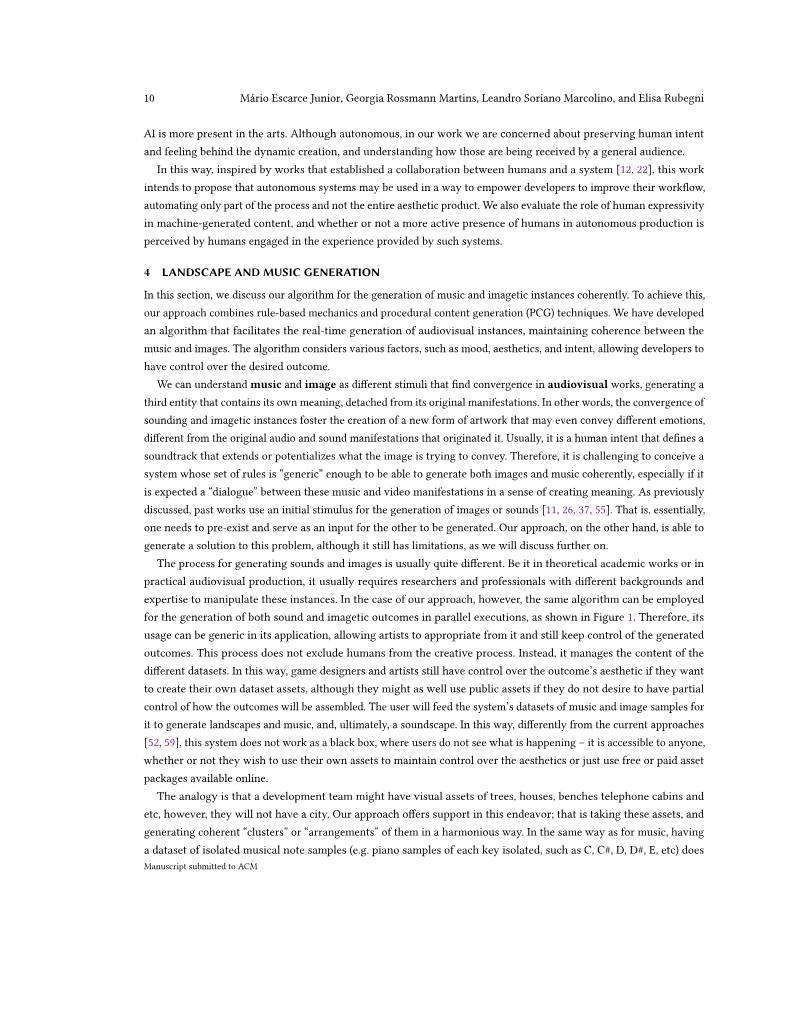
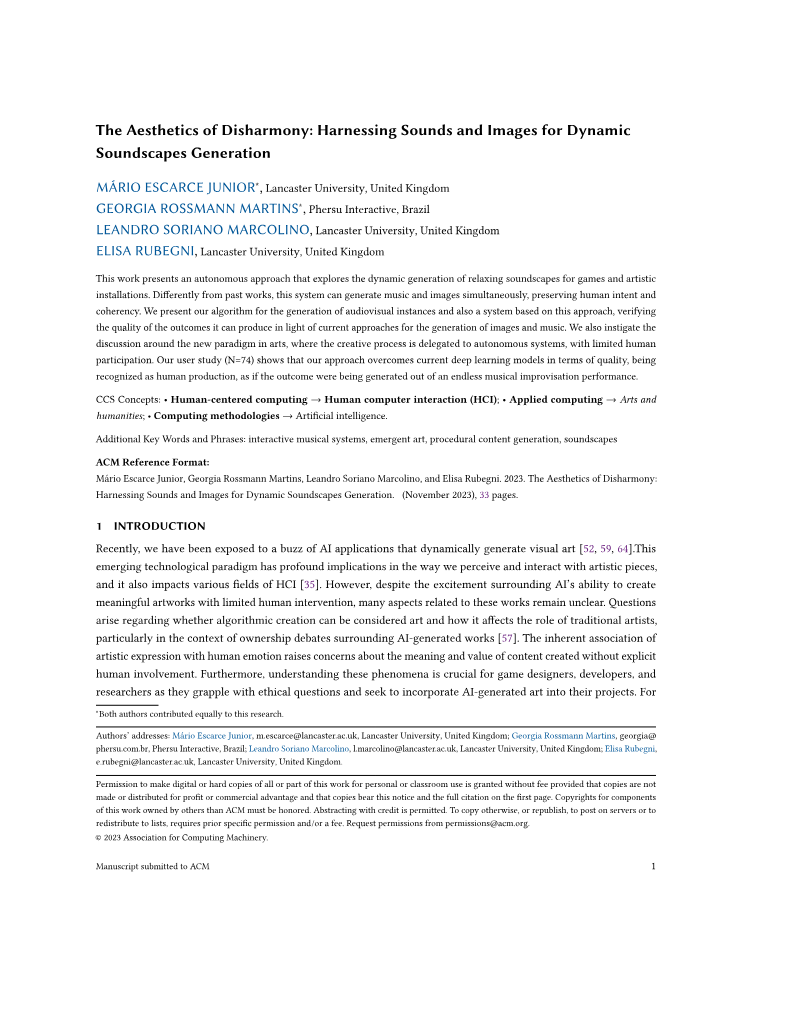
The authors present an autonomous, rule-based approach for generating music and images simultaneously for relaxing soundscapes, intended for games and art installations.
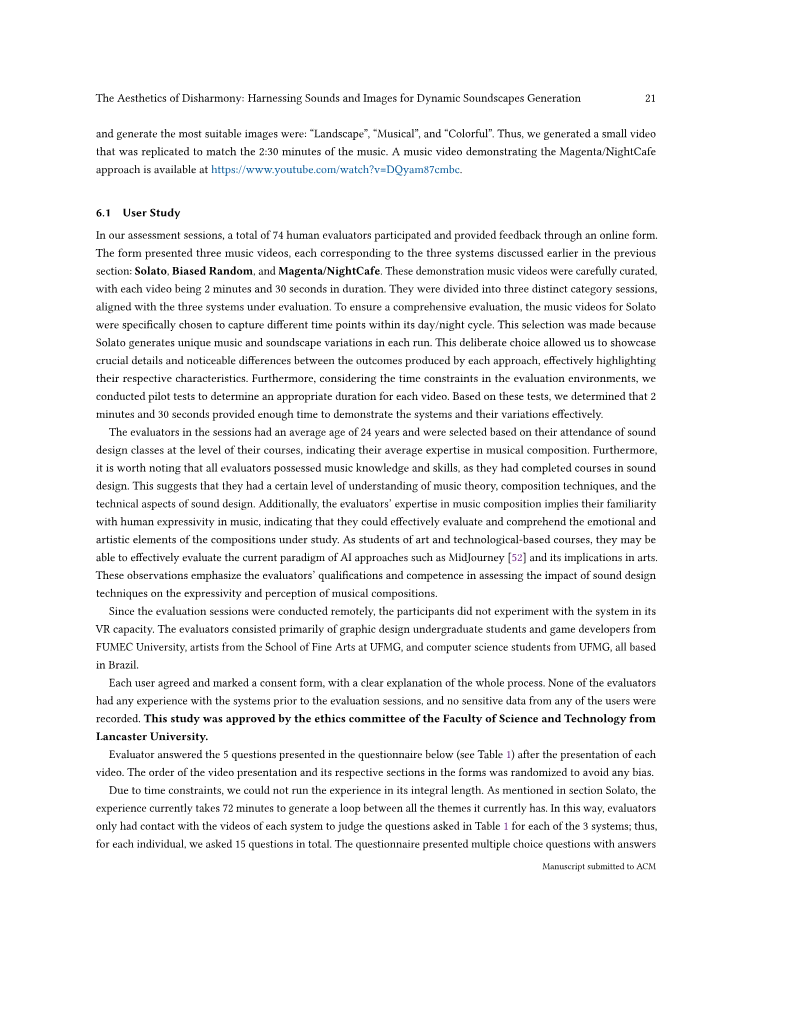
- Solato received the highest mean ratings across music, landscape, and music-image composition, with the authors reporting significant differences against the Magenta/NightCafe baseline.
- Solato's mean on the human-versus-machine scale was 4.56, placing it on the human side of the scale but only borderline.
- Most evaluators described Solato as relaxing/calm (60.8%), while a substantial share chose gloomy/melancholic (36.5%).
“An Adapt-or-Die Type of Situation”: Perception, Adoption, and Use of Text-to-Image-Generation AI by Game Industry Professionals
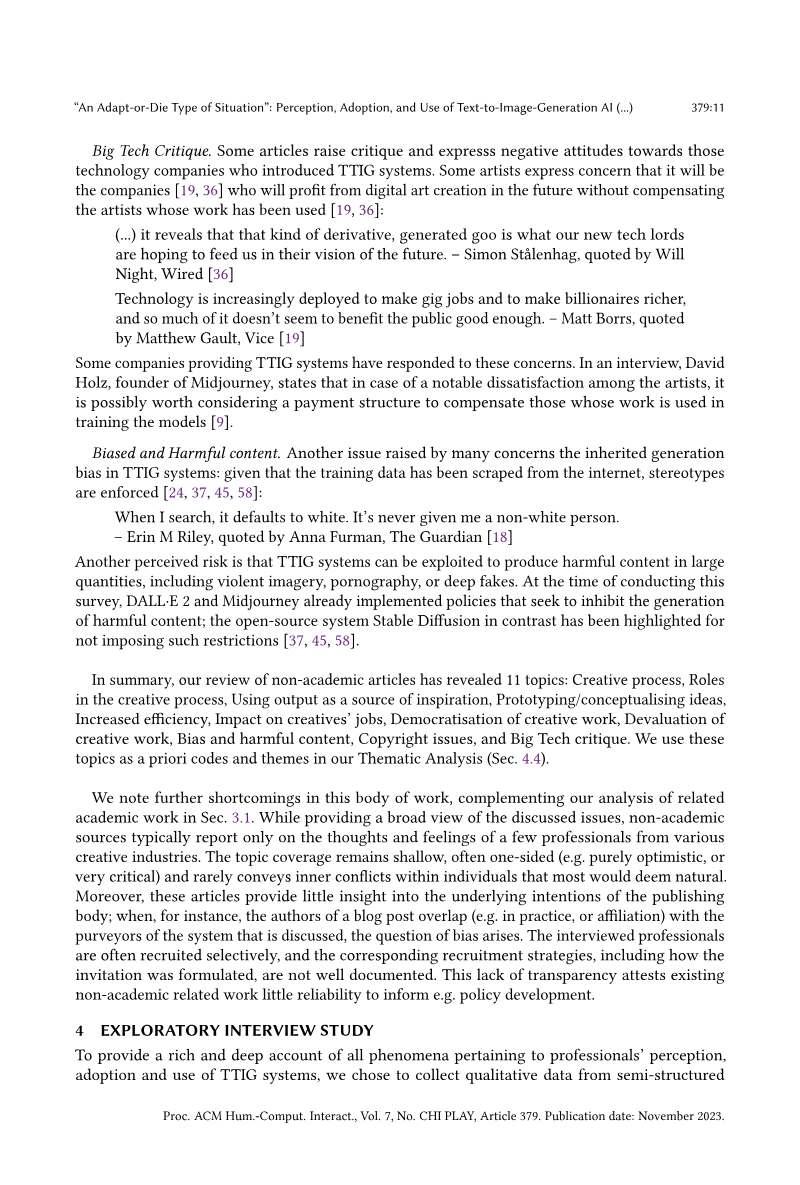
This exploratory interview study examines how professionals in the Finnish videogame industry perceive, adopt and use text-to-image generation (TTIG) AI such as DALL·E 2, Midjourney and Stable Diffusion.
- The majority of participants stated they were impressed by or interested in TTIG systems, and several showed excitement, yet most expressed concerns about people losing their job or livelihood, while the majority expected or knew others to be scared.
- Almost everyone considered TTIG another tool in their creative process rather than a creative partner. Most participants said their role transforms fundamentally when interacting with TTIG.
- Only about a third of participants use TTIG daily, another third a few times per week, and another third only monthly.
Introducing Resource Management Into a Large-Scale Cyber Security Seminar Game: A Case Study
This case study details the design, development, and implementation of a novel cybersecurity seminar wargame incorporating a resource management component.
- The paper adds a resource management component to a traditional seminar-style cybersecurity wargame to address criticisms of pre-scripted outcomes, limited player agency, idealized solutions, and disregard for practical constraints.
- The game was developed through a participatory design process with cybersecurity policy experts, a returning player, and a platform designer, going through eight iterations and multiple playtests before deployment.
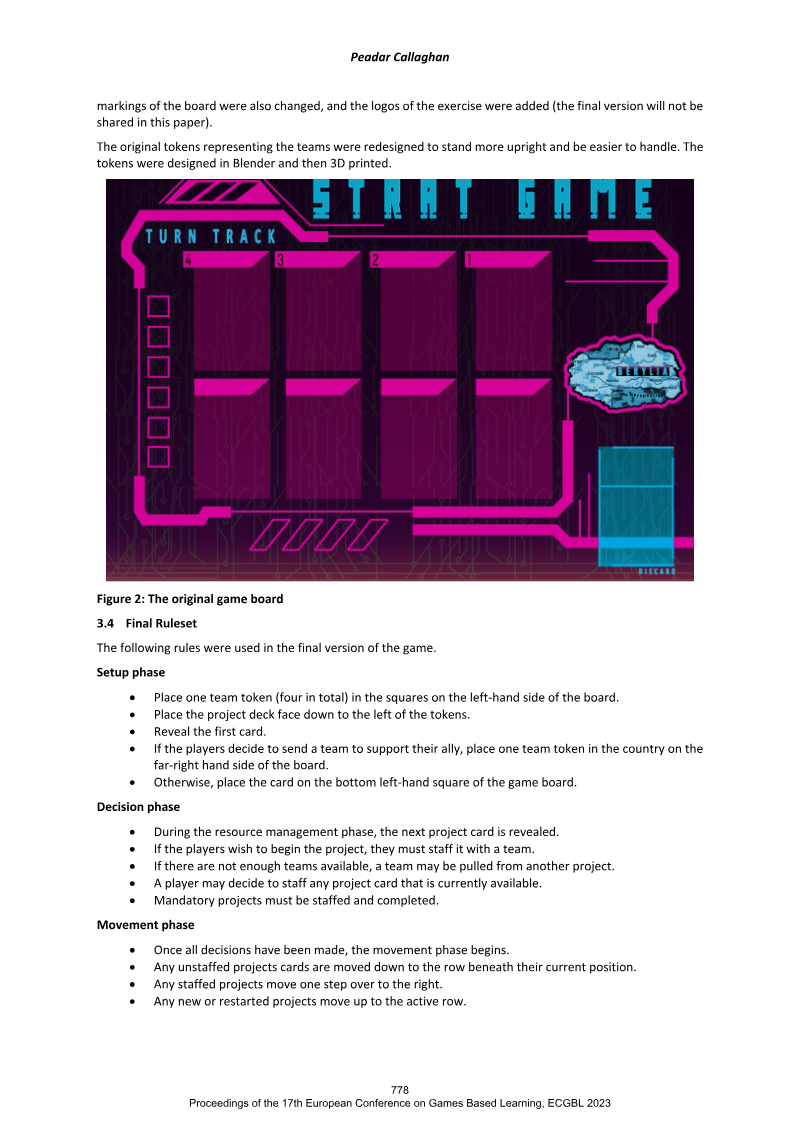
- Core mechanics include a limited pool of teams, persistent project cards, a four-turn timeline, and mandatory projects that must be staffed regardless of player preference.
Development of an Enjoyable Educational Game on Fundamental Programming: Designing for Inclusion and Learning Analytics
This study details the design and development of an educational game aimed at teaching fundamental programming concepts, specifically Python, to 10-16-year-old students, with a particular focus on attracting and engaging girls.
- The game teaches fundamental Python programming to students aged 10 to 16, with a deliberate focus on attracting girls while keeping a non-violent, inclusive design that still appeals to boys.
- Design requirements were derived from a systematic literature review and play-testing of three existing programming games with girls aged 10 to 15, yielding recommendations on creativity, character customization, exploration, collaboration, flow, and frequent feedback that permits failure and retry.
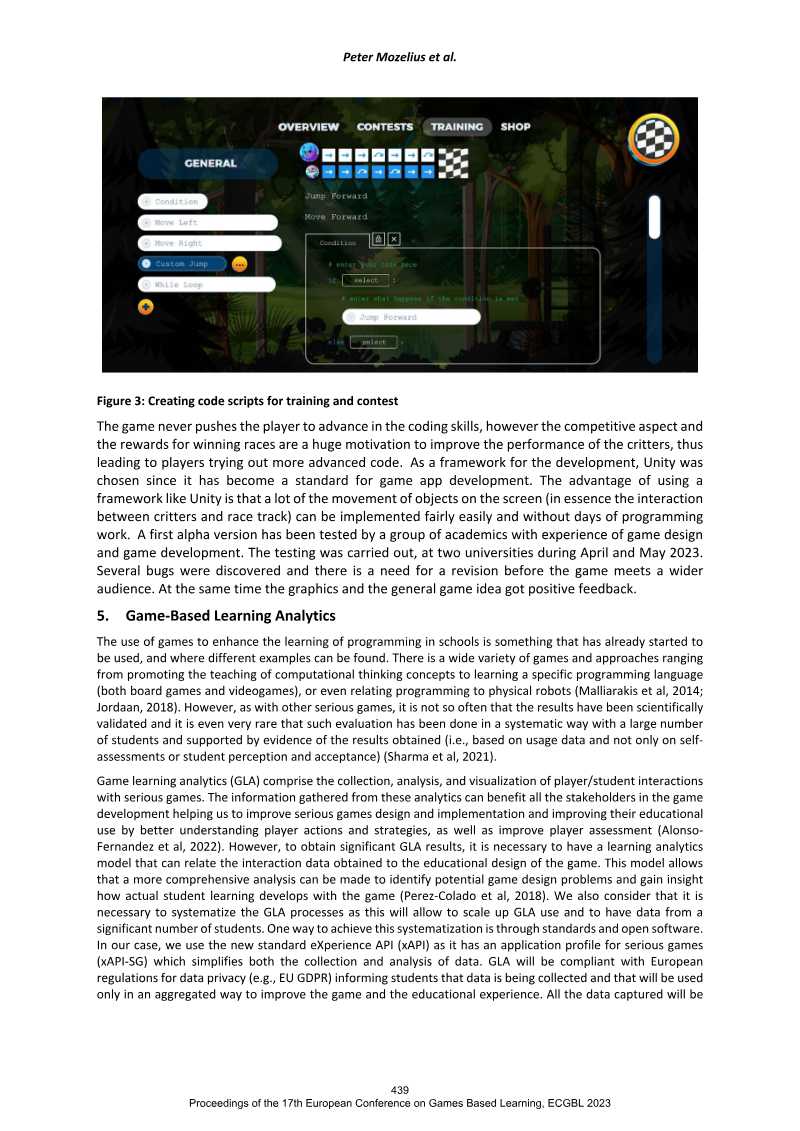
- The game, built in Unity, has players collect and train fantasy creatures ("critters") by writing short Python-style command scripts that control their performance in obstacle-course races against bots or other players.

Development of a 3D Immersive Game for Games and Systems Requirements Capture
Hainey, Baxter and Holder of the University of the West of Scotland describe the development of a 3D immersive serious game, Cubicle Conundrums: Quest for Clarity, built in Unreal Engine 5 to teach requirements elicitation.
- Cubicle Conundrums is a PC serious game set in a contemporary office, with two playable characters and around 10 NPCs, including a receptionist, manager and HR person.
- The game is structured as 10 scenarios, each covering a different aspect of requirements elicitation such as gathering, prioritising, updating, validating, documenting and resolving conflicts.
- According to the authors, very few games for requirements elicitation have been developed since 2011, with Ibrahim et al. (2019) identifying 10 serious games, only one of them from 2019.
Designing a 3D Serious Game About Career Pathways in the Games Industry
This document details the design and development of a 3D serious game aimed at informing university students about career pathways and required skill sets within the games industry.
- The paper is a case study documenting the design of a 3D serious game teaching undergraduate game development students about games-industry career pathways, not an empirical evaluation, and it reports no outcome data because the game was still under development.
- The core design principle is embedding learning content intrinsically within gameplay rather than presenting it as separate material, using a Unity hub-and-spoke structure with a central studio hub and branching levels for roles such as design, programming, art and animation, and quality assurance.
- Role details and hard and soft skill requirements are conveyed through a role-playing-genre dialogue system, while collectibles tied to graduate attributes serve as incentives and drive a levelling mechanic.
Ingenious Game: Insights Into Evolving From a Learning Card Game to a Learning Software Application Game
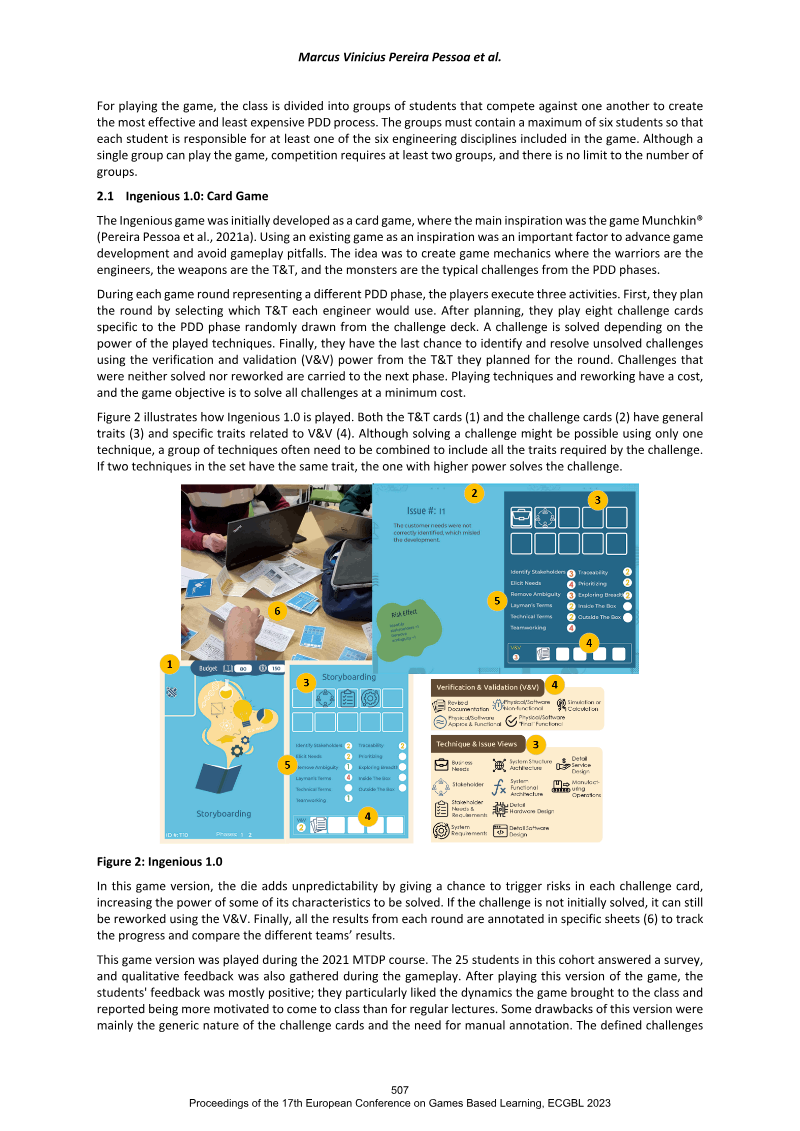
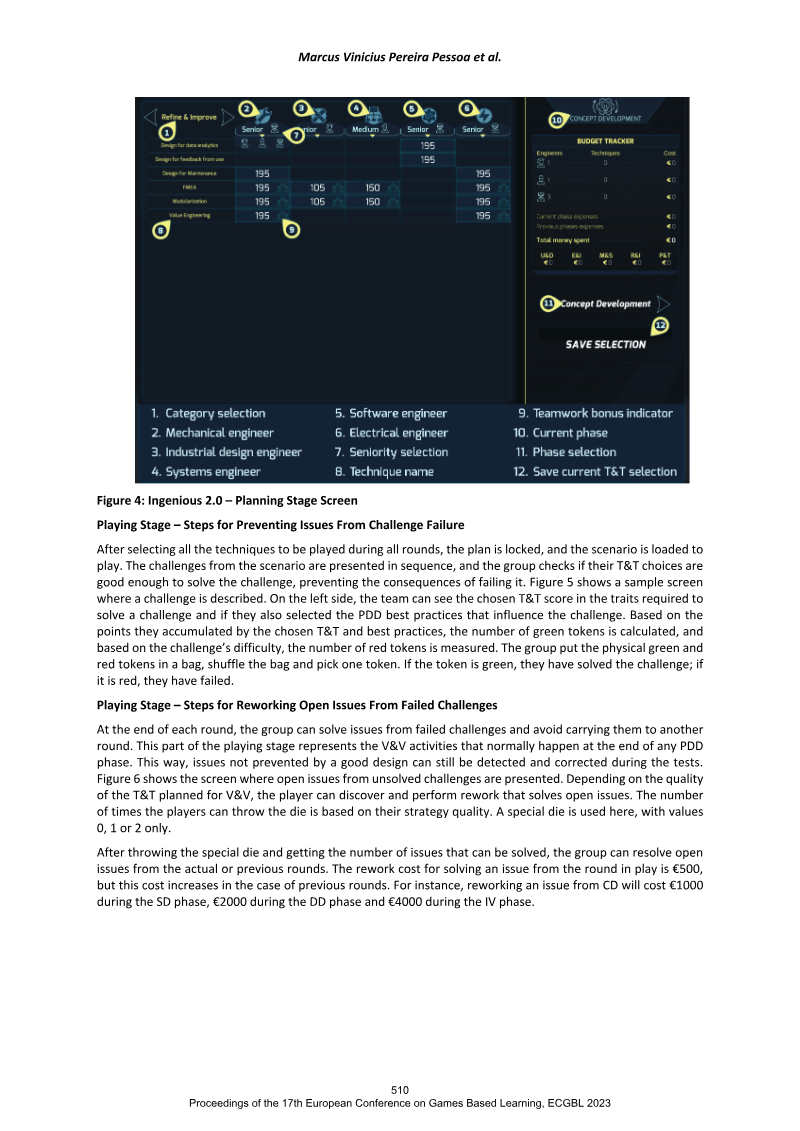
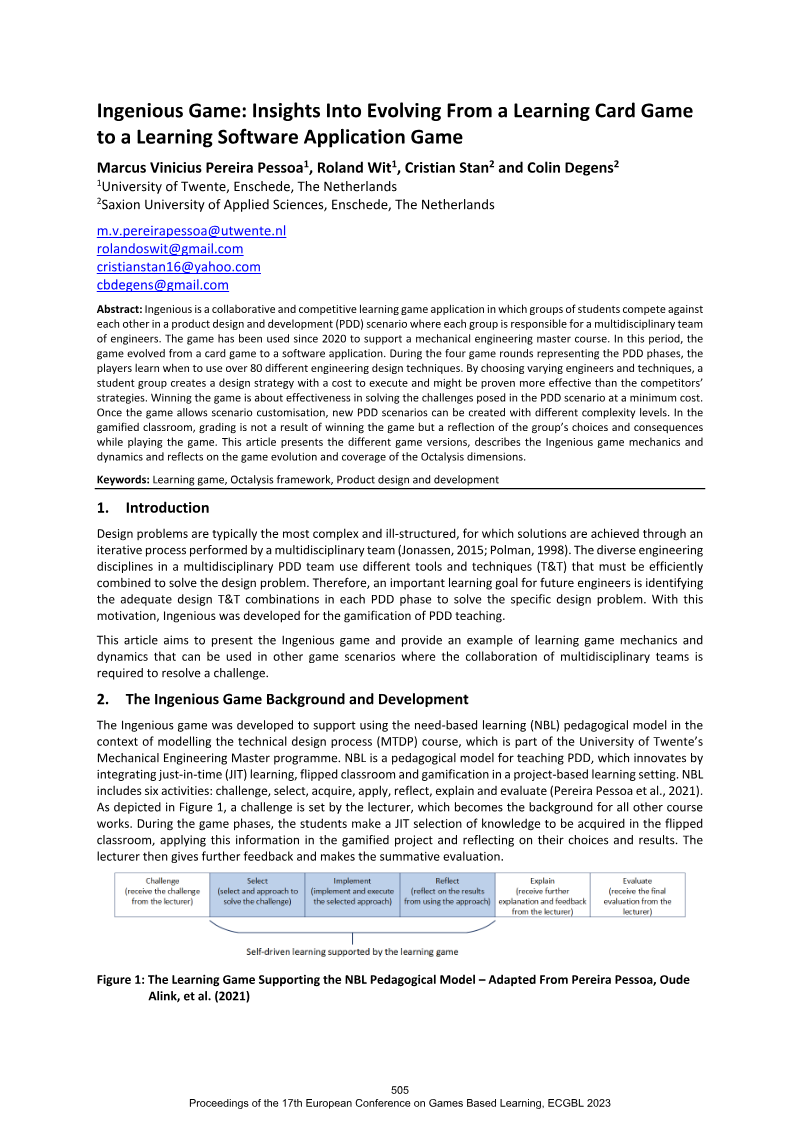
This paper, by Marcus Vinicius Pereira Pessoa, Roland Wit, Cristian Stan and Colin Degens from the University of Twente and Saxion University of Applied Sciences, presents Ingenious, a collaborative and competitive learning game in which student groups compete in a product design and development scenario.
- Ingenious uses four game rounds mirroring PDD phases, and the teams' cost and effectiveness determine how well they perform.
- In version 1.5, winning was defined by fewer unsolved challenges, with lower cost as the first tie-break.
- Version 1.5 was played by 39 students in the 2022 MTDP course, and the spreadsheet's locked and validated cells almost eliminated errors.
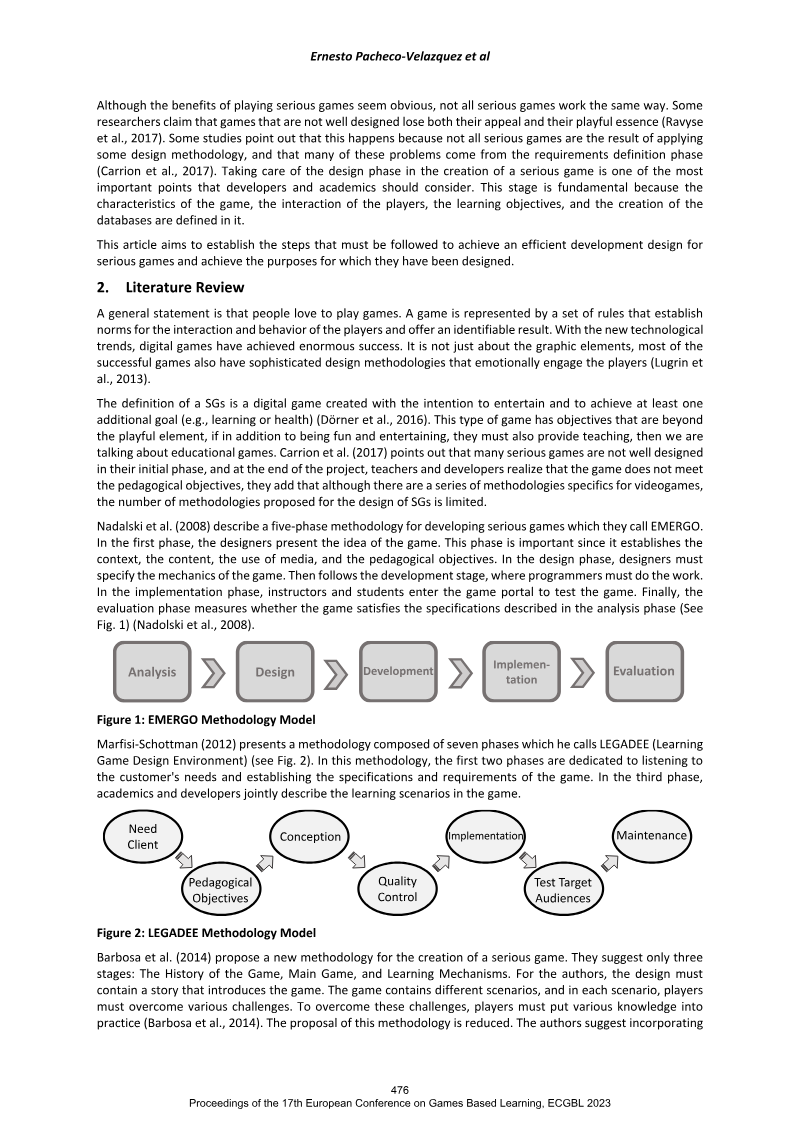
Proposal for a Participatory Methodology for the Creation of Serious Games
This document proposes a participatory methodology for the creation of serious games, specifically focusing on the design phase to address common issues arising from poorly defined requirements.
- Many serious games fail to meet their educational goals because requirements definition and design are handled without a structured method, and vague instructions from teachers leave developers unable to translate pedagogical intent into mechanics and software.
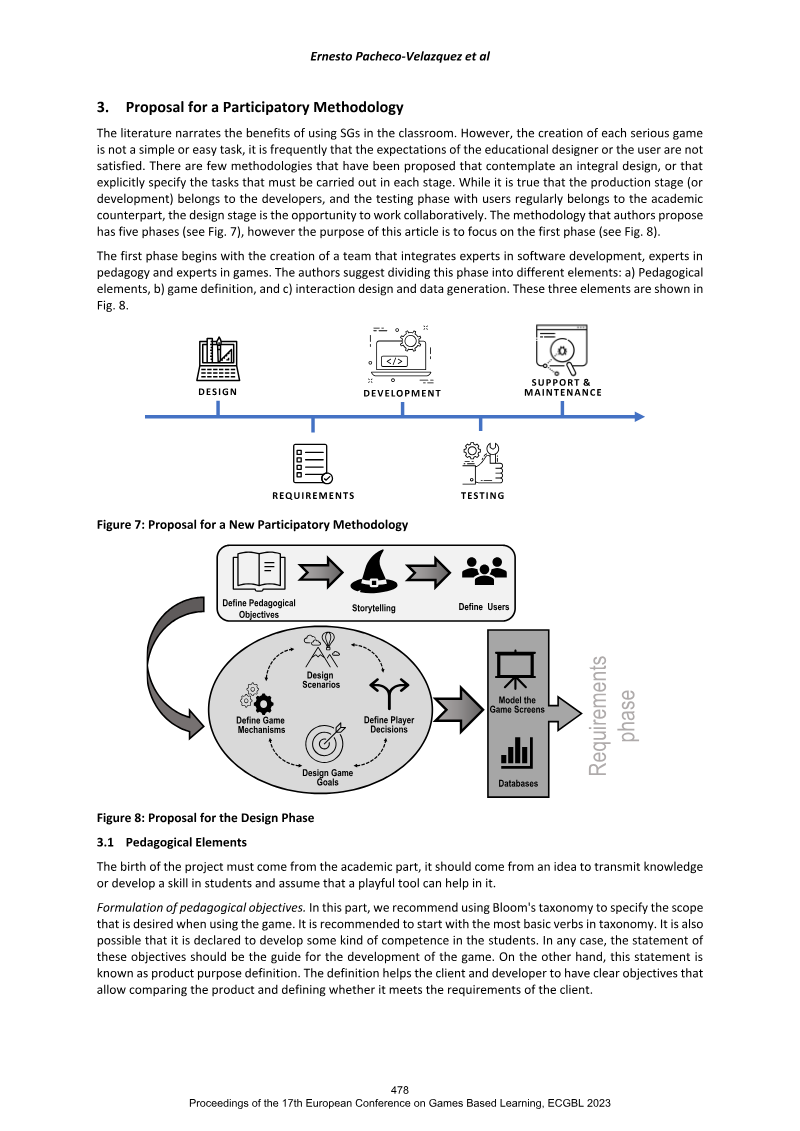
- The paper proposes a five-phase participatory methodology (requirements, design, development, testing, maintenance), with the design phase as its main focus.
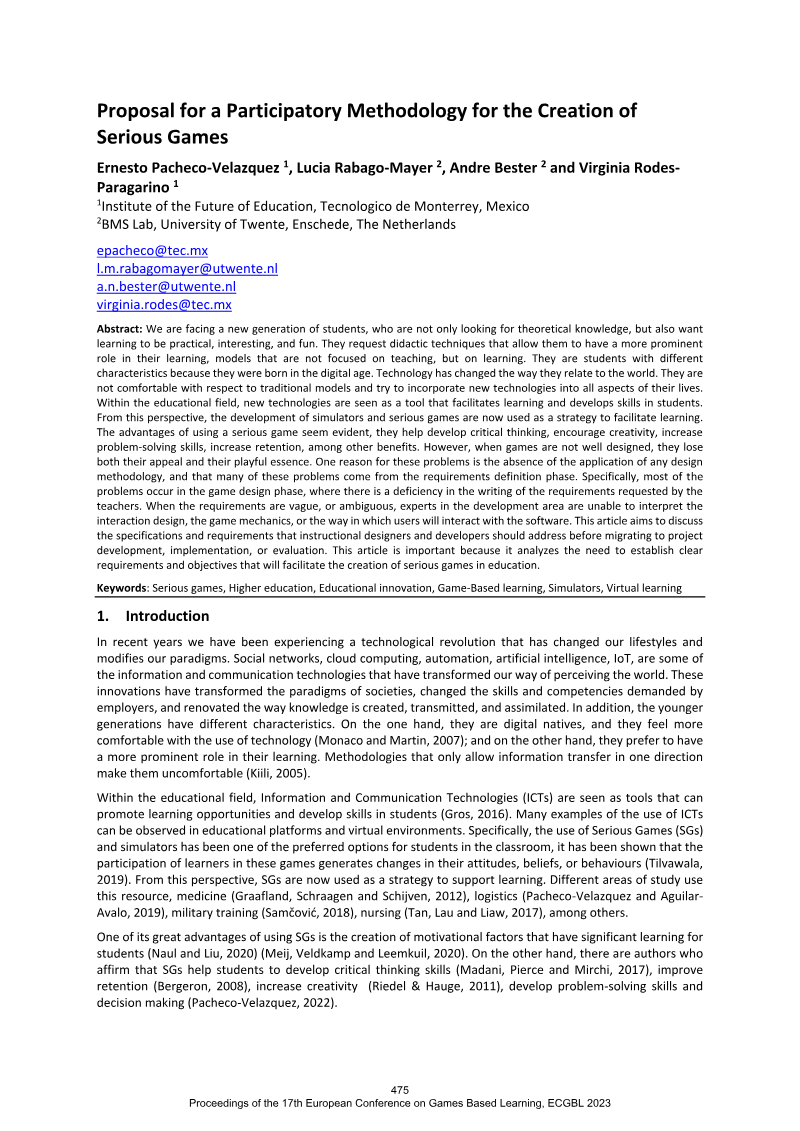
- The design phase is built on three interdependent elements: pedagogical elements (learning objectives grounded in Bloom's taxonomy, storytelling, and user definition), game definition (mechanics, scenarios, goals, and player decisions), and screens and databases.
Introducing Game Jams for Ecology and Citizenship Education in High School Classes
This paper explores the preliminary results of integrating game jam events, specifically "EcoGJ - the game jam for ecology," into Citizenship and Civic Education projects within Italian high schools during the 2022/2023 school year.
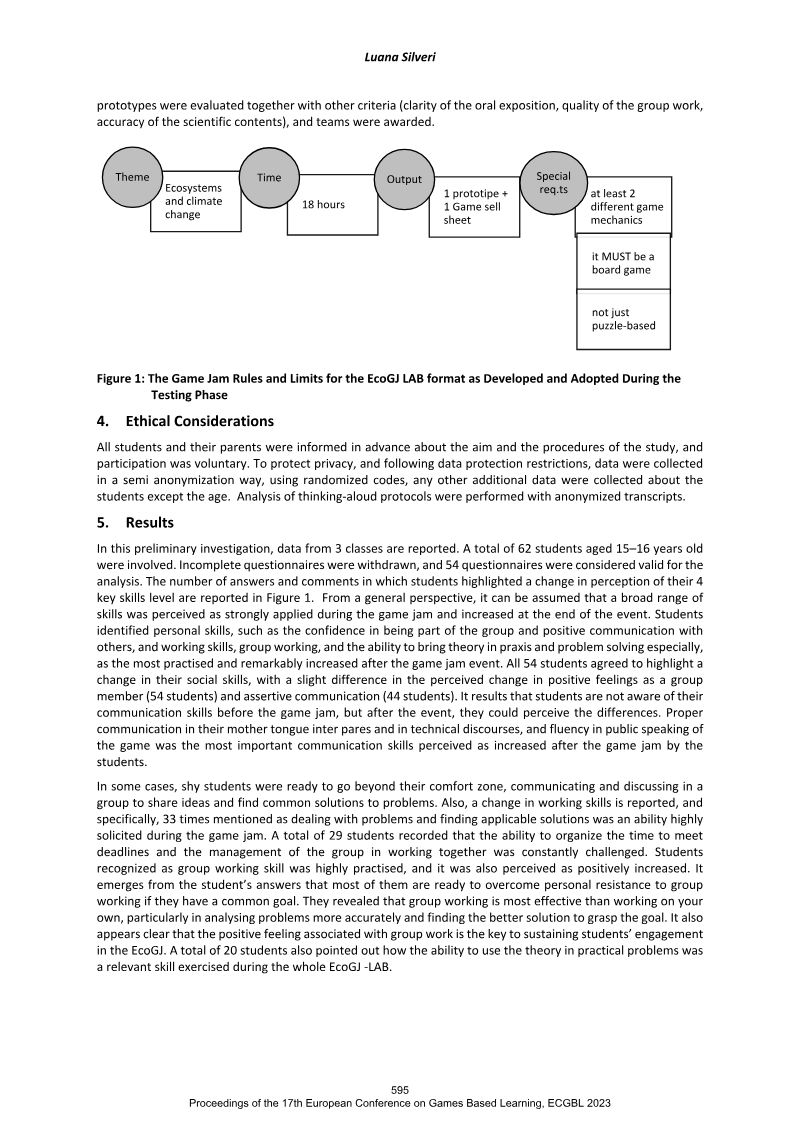
- The study tested EcoGJ LAB, a game jam format where students rapidly build board games around ecology and climate change, in a Citizenship and Civic Education setting at a scientific high school in Trento, Italy, a country where game-based learning is rarely used in secondary education.
- Of 62 students aged 15 to 16 across three classes, 54 valid questionnaires were analysed, combining students' metacognitive self-assessments with field notes and observations during the 2022–2023 school year.
- All 54 students self-reported improved social skills, with group working, problem-solving, positive communication, and linking theory to practice being the most strongly perceived gains.
Applying Design Research for Cross-Disciplinary Collaboration: Experiences From a Gamification Process
The paper, by Younjung Choi, Cornelis Willem Klok, Sharif Khaleghparast and Swapnil Shekhar from the University of Twente and Eindhoven University of Technology, reports on a cross-disciplinary team of four researchers who used a design science research (DSR) framework adapted from Peffers et al.
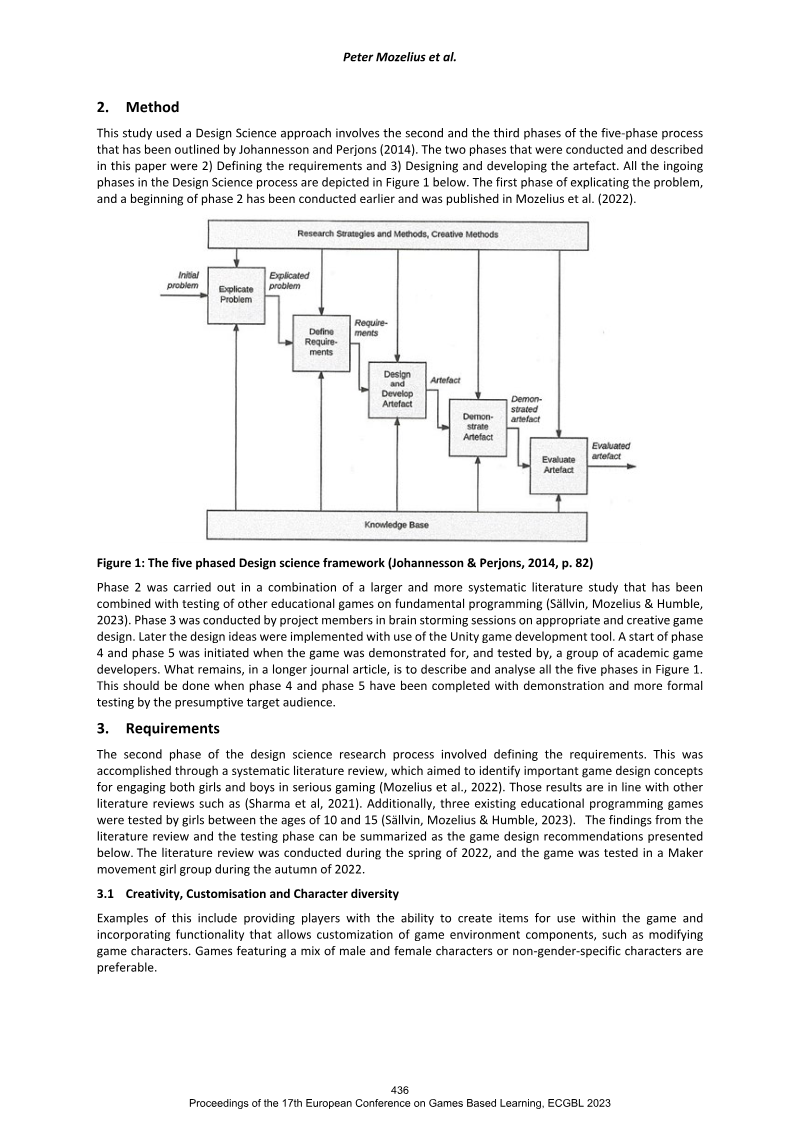
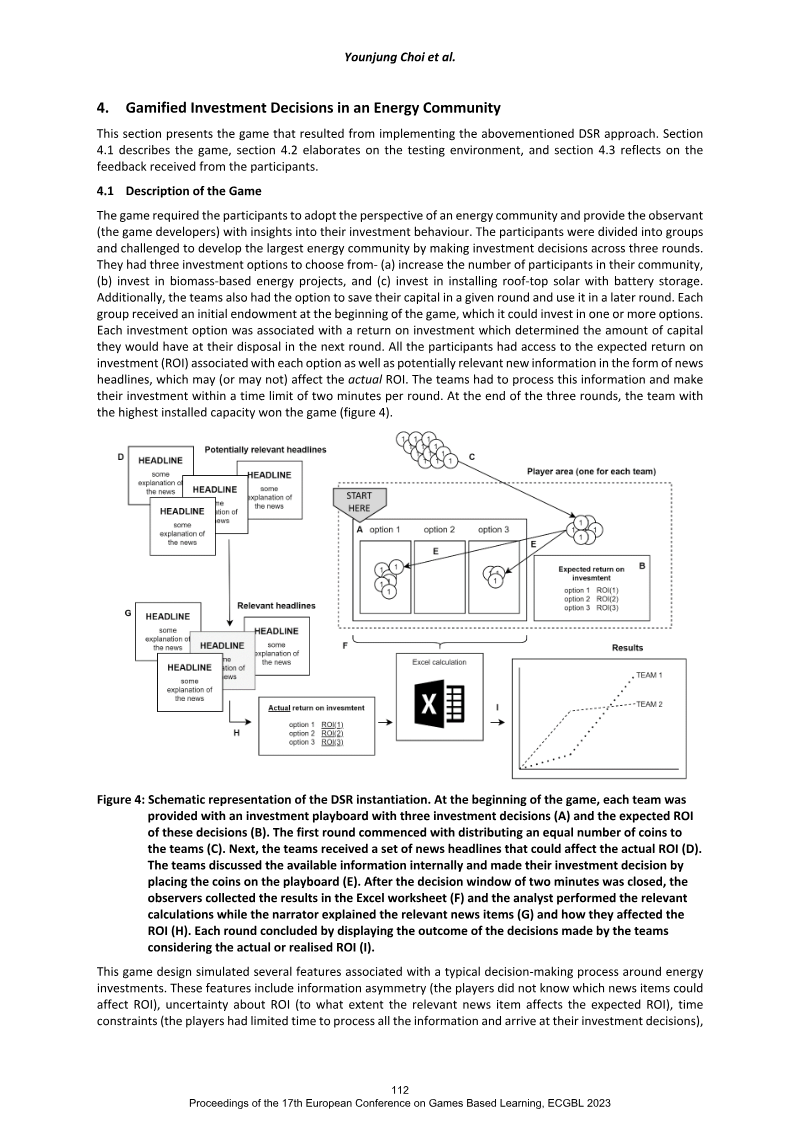
- The authors used a five-phase design science research framework to let four researchers from different disciplines integrate their knowledge into a game about energy community investment decisions.
- The survey in the second instantiation found that participants acknowledged learning about energy communities, which the authors say confirmed the stakeholder learning objectives.
- Participants understood the game's situation only gradually, starting uncertain about their roles but developing investment strategies in later rounds, mainly due to rivalry between teams.
Writers
Games and companies
Games