China reports and market data
Documents
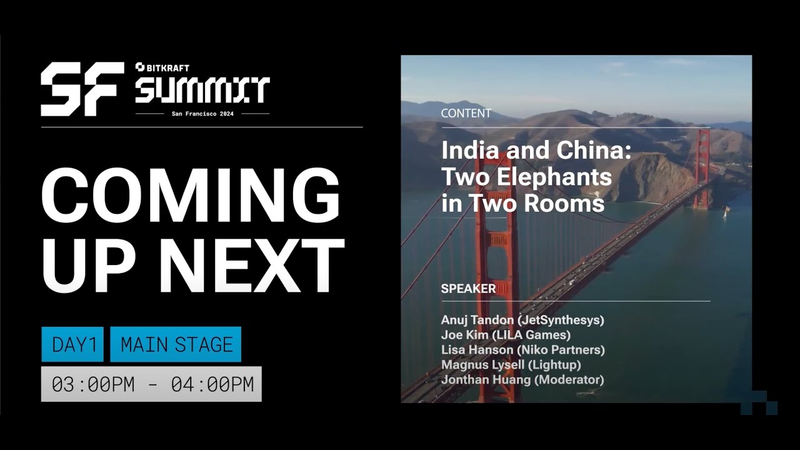
Games in India and China -Two Elephants in Two Rooms | BITKRAFT Summit 2024
The gaming landscapes of China and India represent two distinct developmental trajectories within the global market.
- China’s $50 billion gaming market, supported by 720 million players, is shifting its strategic focus from mobile dominance toward high-quality PC and console development for global export.
- India’s gaming sector is currently transitioning from a focus on low-cost live operations toward original game development and social gaming, driven by increased foreign direct investment and a wave of IPOs.
- The rapid integration of 5G technology and the UPI digital payment infrastructure in India is acting as a primary catalyst for the country's high-growth ecosystem.

Inside Timi Studio: How Call of Duty Mobile Set the Stage for Delta Force
TiMi Studio Group’s evolution from a mobile-centric developer to a global powerhouse is defined by a strategic shift in platform priority and genre focus.
- TiMi Studio Group is shifting from a mobile-first strategy to a PC-first development model with the upcoming Delta Force title to capture Western audiences accustomed to higher production values.
- The studio has scaled its development team from under 200 people for Call of Duty: Mobile to 400 people for Delta Force to support a more rigorous content cadence.
- Delta Force utilizes Unreal Engine 4 to enable cross-progression across PC, console, and mobile while explicitly excluding cross-play to maintain competitive integrity.

TWIG #306 Is Apple’s Big Move a Trick or a Treat?
The gaming industry is currently navigating a period of significant contraction and strategic realignment, particularly within the shooter genre, which has seen a 40% decline in monthly active users since the pandemic.
- The shooter genre has experienced a 40% decline in monthly active users since the pandemic, forcing developers to pivot toward single-player experiences and extraction-based mechanics.
- While 72% of top-grossing games now utilize web-based shops to bypass platform fees, these off-platform stores fail to solve the fundamental user acquisition challenges caused by mobile privacy identifier changes.
- The mobile gaming market is bifurcated, with MOBA revenue concentrated in Asian markets while Western mobile gaming remains dominated by puzzle titles targeting older demographics.
Game Industry Hot Takes: Ubisoft's Struggles, Unity's Revival, and Microsoft's Game Pass Gambit
The global gaming industry is currently navigating a period of intense structural volatility, characterized by the decline of legacy development models and the struggle to integrate massive acquisitions.
- Ubisoft faces significant operational challenges, with analysts suggesting the company should pivot to a leaner model focused on its core Assassin's Creed franchise rather than high-budget, underperforming titles like Star Wars Outlaws and Avatar.
- Unity is undergoing a corporate turnaround under new leadership, marked by the strategic decision to eliminate controversial runtime fees to stabilize its 70% market share in game engine technology.
- AppLovin has emerged as a dominant force in mobile advertising, generating $1 billion in quarterly revenue and demonstrating strong free cash flow that positions it as a high-growth, maturing tech entity.
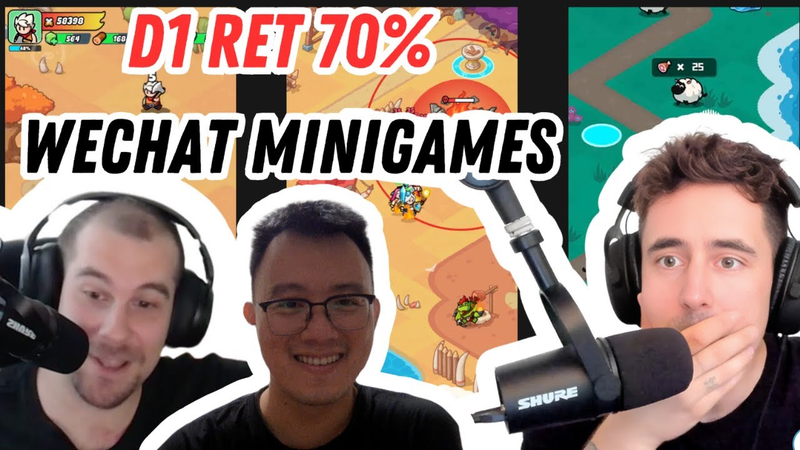
WeChat Mini-Games: Exploring the World of Mini-Games with Lemon!
The Chinese mini-game market has emerged as a high-growth sector, characterized by a 48% increase in market size during 2023 and a projected reach of 400 million monthly active users by 2024.
- The Chinese mini-game market grew by 48% in 2023 and is projected to reach 400 million monthly active users by 2024.
- Successful mini-games are now complex, fully featured experiences developed by lean teams of 5 to 30 people within accelerated two-to-three-month production cycles.
- Loot Box RPGs dominate the market, accounting for approximately one-third of total revenue through addictive progression loops and meta-systems.
TWIG #297 Gamescom Confidential, Why Steam ain't Blocked by China and the TRUTH about Tim Hortons
Gamescom 2024 underscored a pivotal shift in the global gaming landscape, characterized by the aggressive expansion of major Asian publishers like NetEase, miHoYo, and Tencent into Western markets.
- Asian publishers like NetEase, miHoYo, and Tencent are creating high competitive barriers in Western markets, with miHoYo investing $200 million annually into live-ops resources.
- New game titles are struggling to gain traction, currently capturing only 8% of total player time, while Steam wishlist-to-sale conversion rates have dropped as low as 5%.
- Black Myth: Wukong achieved record-breaking sales of 10 million units in three days, though its success remains heavily concentrated within the Chinese domestic market.
Chinese Gaming Giants: Tencent vs. Netease | Pixels & Profits
Tencent and NetEase represent the dual pillars of the Chinese gaming industry, yet both face a precarious future defined by domestic saturation, regulatory volatility, and escalating geopolitical friction.
- Tencent achieved significant financial efficiency in 2023, increasing its operating margin to 31.5% from 25.8% in 2022 while generating $23 billion in free cash flow, an 89% year-over-year increase.
- Tencent maintains a dominant global gaming position through full ownership of major studios like Riot Games and Supercell, alongside significant minority stakes in companies including Epic Games, Ubisoft, and Krafton.
- Tencent faces substantial headwinds in the domestic Chinese market, which accounts for approximately 70% of its revenue, due to strict government regulations on gameplay and increasing competition from emerging rivals like miHoYo and Game Science.

ChinaJoy 2024 POV: WeChat mini-games, the speed of game development & Impressive market growth
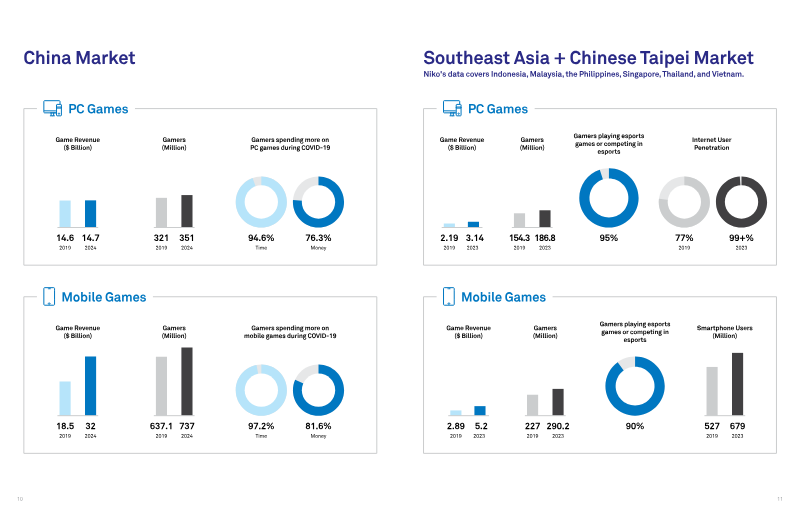
The Chinese gaming market represents a massive, rapidly evolving ecosystem projected to reach $40 billion in annual revenue, with mobile platforms commanding nearly 75% of the total share.
- The Chinese gaming market is projected to reach $40 billion in annual revenue, with mobile platforms accounting for approximately 75% of that total.
- WeChat mini-games have evolved from simple experiences into complex, high-fidelity RPG and strategy titles that bypass traditional app store friction to improve user acquisition.
- Chinese studios maintain a development velocity that significantly exceeds Western standards, utilizing granular data from advertising networks to iterate on mechanics with hyper-casual speed.

The State of China’s Gaming Market
China’s gaming and esports landscape has transitioned from a niche domestic sector into a globally influential powerhouse.
- China's gaming industry is shifting toward high-fidelity, AAA-quality production, as evidenced by the commercial success of titles like Black Myth: Wukong.
- Strict government regulations have driven industry consolidation, forcing smaller developers to align with major conglomerates like Tencent and NetEase or focus on international expansion.
- The Chinese esports sector has achieved stability by moving away from volatile sponsorship models, with top-tier leagues like Honor of Kings attracting consistent major brand investment.

two & a half gamers session #34 - Low budget UA, Sheep a Sheep game in China, APS Update, Amazon UA
Amazon Publisher Services (APS) represents a significant opportunity for mobile game developers seeking to diversify their monetization strategies beyond traditional giants like Meta.
- Amazon's ad ecosystem is split into two tiers: UAM (Unified Ad Marketplace) for initial access and TAM (Transparent Ad Marketplace) for high-performance inventory, which requires individual IOs with 4–10 different DSPs.
- To gain access to Amazon's premium ad placements, publishers should leverage their Amazon account manager to advocate for whitelisting, a process that can take anywhere from one week to three months.
- For low-budget ad-monetized games, the recommended UA strategy is to start with Facebook for D0/D1 optimization, then pivot to Google tROAS campaigns once performance signals decline or stabilize.

The Key to Making Games Successful: Your Network Infrastructure
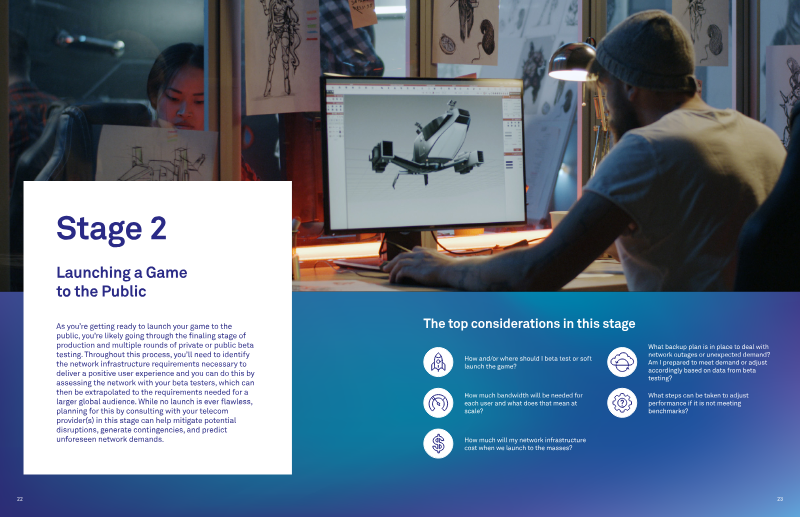
Robust, scalable network infrastructure serves as the foundational pillar for modern game development, directly influencing player retention, long-term profitability, and overall market success.
- Robust network infrastructure is a foundational requirement for player retention and long-term profitability in modern globalized game development.
- Strategic network planning must be initiated during the conceptual phase of development and maintained throughout the entire lifecycle of live services.
- Developers must proactively partner with specialized telecommunications providers to navigate fragmented international connectivity and ensure carrier diversity.

China's Regulations / Microsoft & EA Earnings / Apple’s Legal Challenges
The global gaming industry is currently navigating a period of significant structural transition, defined by shifting regulatory landscapes, evolving platform power dynamics, and changing consumer entry points.
- The Chinese government has retracted restrictive monetization regulations following market volatility, though major firms like Tencent continue to face stagnant growth and are pivoting toward AI to drive performance.
- Microsoft’s acquisition of Activision Blizzard reflects a broader industry shift toward operational efficiency and a strategic focus on high-revenue, service-based business models.
- Mobile devices have become the primary gaming gateway for younger generations, with nearly all children engaging with games by age ten.