China reports and market data
Documents
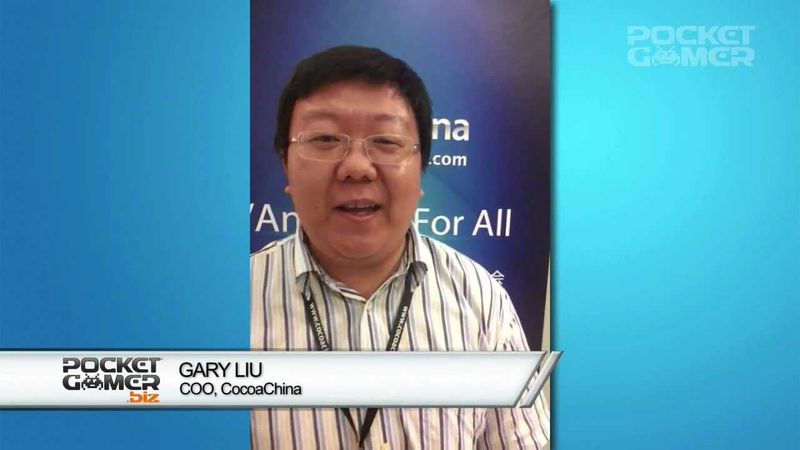
Pocket Gamer Biz interview Gary Liu, COO of Cocoa China
The Chinese mobile gaming market is experiencing rapid expansion, with projections indicating significant growth from current levels to an estimated 5 billion RMB by 2013.
- The Chinese mobile gaming market is projected to grow to 5 billion RMB by 2013.
- Android is currently outpacing iOS in growth and market importance within China, necessitating a strategic shift toward cross-platform development.
- Cocoa China is launching a multi-language game development tool, codenamed A2 SP2, in May 2013 to enable single-codebase deployment across all major platforms.
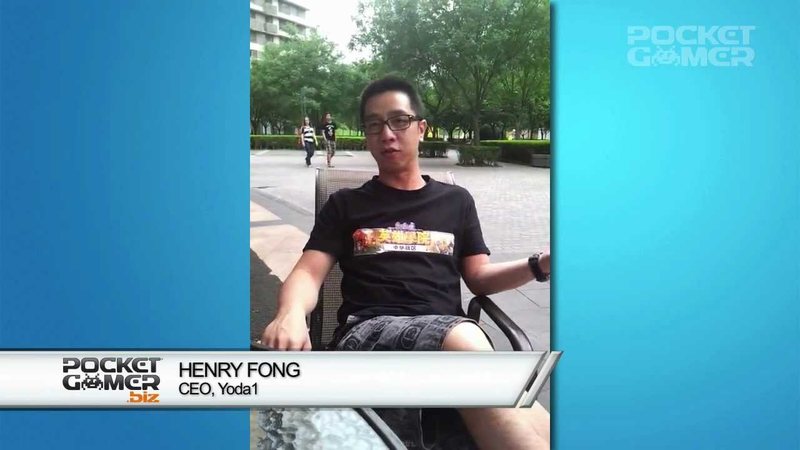
Pocket Gamer Biz interview Henry Fong, CEO of Yodo1
Yodo1 serves as a specialized gateway for Western mobile game developers seeking to navigate the complex Chinese market.
- Yodo1 provides a service that enables Western mobile game developers to distribute and monetize their titles in the Chinese market in under seven days.
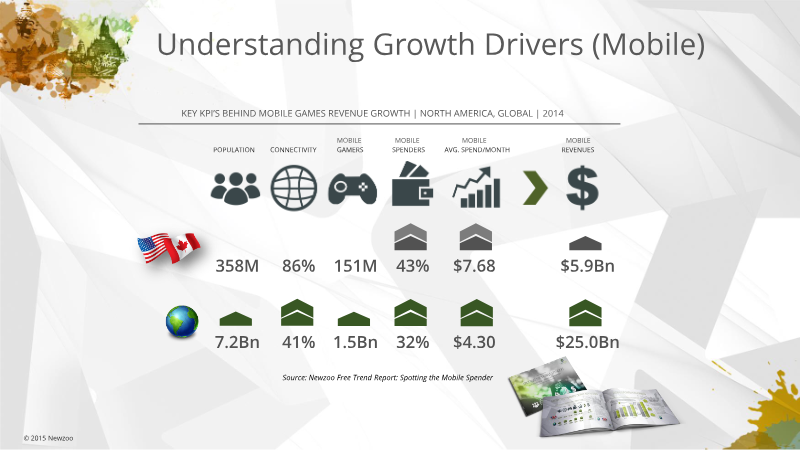
- The Chinese mobile market is experiencing rapid growth, with an estimated 200 million smartphones in use and a penetration rate of less than 20%, signaling significant long-term potential.
- Yodo1 differentiates itself by aggregating and federating access to China's fragmented ecosystem of top ad networks, payment methods, and distribution channels rather than forcing developers into a proprietary network.
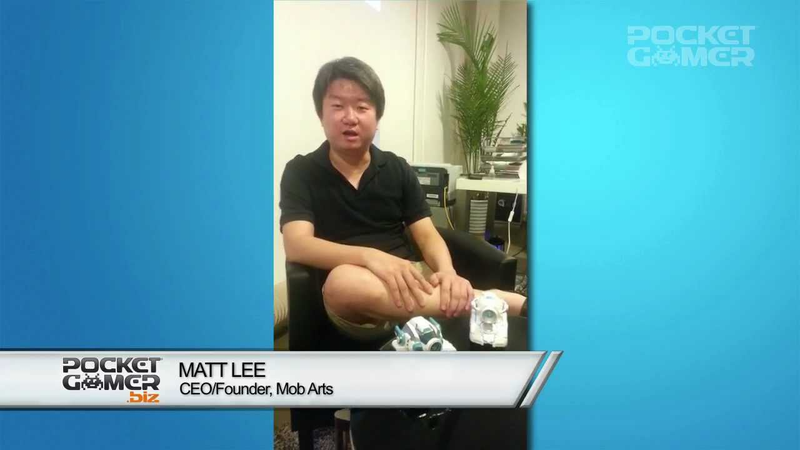
Pocket Gamer Biz interview Matt Lee, CEO of Mob Arts
Mob Arts, a Beijing-based mobile entertainment developer, distinguishes itself within the Chinese gaming landscape by prioritizing original intellectual property and innovative design over the common industry practice of cloning existing titles.
- Mob Arts differentiates itself in the Chinese market by prioritizing original IP and 3D-rendered console-style mechanics over the industry-standard practice of cloning existing titles.
- The studio’s flagship title, Space Tank, achieved strong international validation in the Korean market by securing nearly 7,000 five-star reviews within its first week of launch.
- Success for international developers in China requires high-quality game design, effective localization, and a commitment to providing consistent, compelling content updates for user retention.
The Investigation of Pandemic Impact on Global Gaming Market
The COVID-19 pandemic served as a significant catalyst for change within the global gaming industry, driving increased user engagement and revenue while simultaneously exposing regional vulnerabilities and structural weaknesses.
- The Chinese gaming market experienced an initial 25% revenue surge in early 2020, but subsequent regulatory constraints on ISBN licensing triggered industry consolidation and the closure of numerous small-to-medium-sized studios.
- Major U.S. gaming and hardware firms saw positive cumulative average abnormal returns of 7.66% during the pandemic, driven by increased demand from stay-at-home mandates.
- The Japanese gaming market bucked the global growth trend, suffering a statistically significant decline in stock prices, particularly within the mobile gaming sector.

Rolling into the Southeast Asian Games Market: Sizing Opportunities in the World's Fastest Growing Region
The Southeast Asian games market is currently experiencing a period of rapid expansion, positioning the region as one of the fastest-growing sectors in the global gaming industry.
- The Southeast Asian games market is projected to double in total revenue from $1.1 billion in 2014 to $2.2 billion by 2017.
- Mobile gaming is the primary growth engine for the region, with mobile revenues expected to triple and the total number of mobile gamers growing by 184% from 440 million to 1.25 billion between 2014 and 2017.
- Indonesia and the Philippines are the fastest-growing markets in the region, with projected CAGRs of 37.3% and 36.5% respectively between 2013 and 2017.
China's & Southeast Asia's Mobile Games Market: Every Piece of the Puzzle
This analysis examines the mobile gaming landscape in China and Southeast Asia as of mid-2015, highlighting the region’s pivotal role in the global games market.
- Mobile gaming is the fastest-growing segment of the global market, projected to reach $44.2 billion by 2018 with a compound annual growth rate of 15.9%.
- China is the world's largest mobile games market, with 2015 revenues of $6.5 billion expected to grow to $11 billion by 2018.
- Southeast Asia is the fastest-growing region for gaming, with a projected revenue growth rate of 30.2% between 2014 and 2018, doubling total market value from $1.6 billion to $3.4 billion.
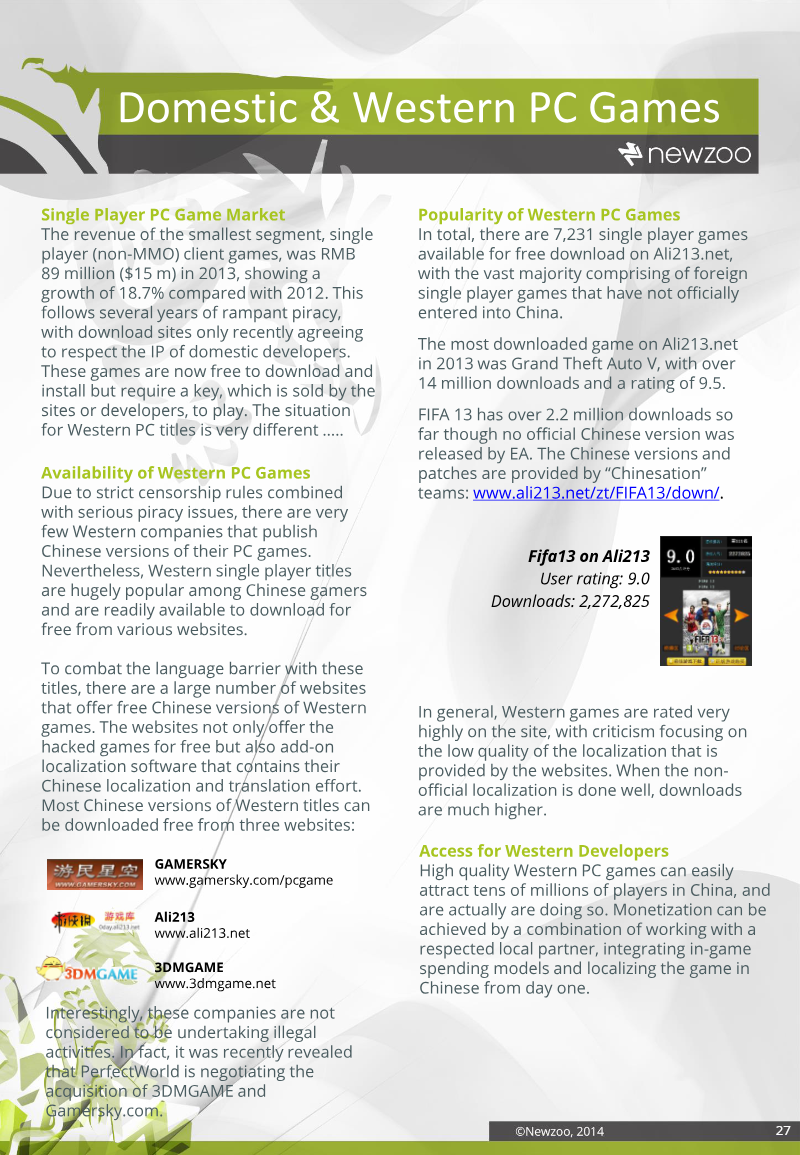
Introduction to the Chinese Games Market: Opportunities in This Expanding Market
The Chinese gaming market stands as the world’s largest and most dynamic digital ecosystem, characterized by a massive user base of 490 million gamers and a rapidly evolving technological landscape.
- The Chinese gaming market reached RMB 83.2 billion in revenue in 2013, representing a 38% year-on-year increase driven by a massive base of 490 million gamers.
- Mobile gaming is the primary growth engine, experiencing a 248.5% increase in users and a 246.9% surge in revenue during the observed period.
- Success requires navigating a fragmented distribution landscape dominated by domestic giants Tencent and NetEase, necessitating strategic partnerships for foreign entities.

Cloud Gaming in China: Key Developments and How It Differs from the West
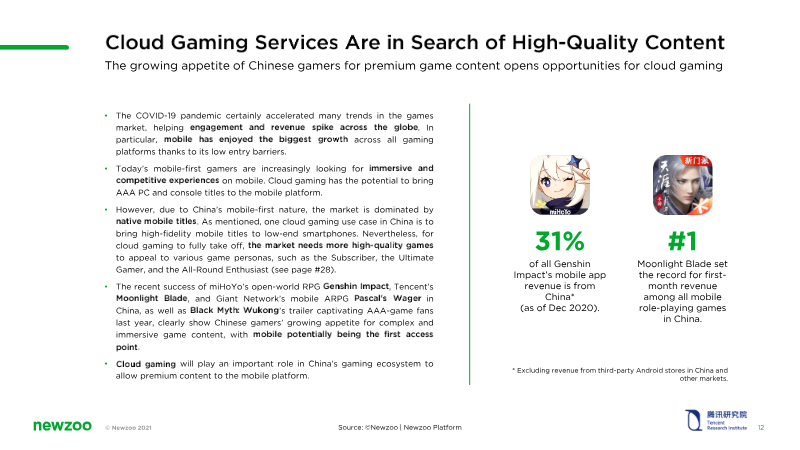
The Chinese cloud gaming market is undergoing a period of rapid expansion, positioning the nation as a global leader in 5G-ready infrastructure and cloud-based innovation.
- The Chinese cloud gaming market is projected to reach a compound annual growth rate of 135% between 2020 and 2023.
- China’s cloud gaming ecosystem is defined by a mobile-first approach and hardware-agnostic accessibility, contrasting with Western models that focus on streaming to existing PC and console hardware.
- Major industry players, including Tencent and MiguPlay, are leveraging 5G infrastructure and edge computing to develop cloud-native architectures and unique hardware like cloud phones.
China Steam & PC Gaming Market Report: 2025
The Chinese PC gaming market has reached a valuation of approximately $11–12 billion within a broader national gaming industry worth RMB 350.78 billion.
- Steam dominates the Chinese PC gaming market with an 87% share, contributing to a total PC gaming valuation of approximately $11–12 billion.
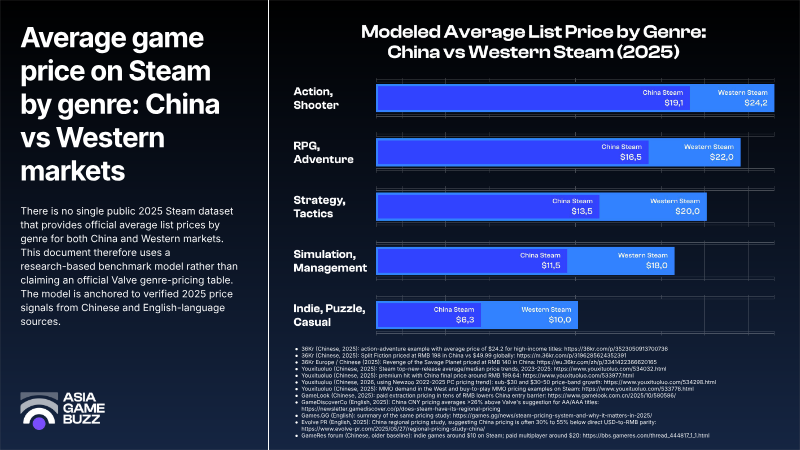
- Pricing for Steam titles in China must be adjusted 21% to 37% lower than Western benchmarks to align with local purchasing power and consumer expectations.
- Market discovery is driven by community-led engagement on platforms like Bilibili, TapTap, Heybox, and Sonkwo rather than traditional store-page traffic.