VideoThe Game Business
Wizards of the Coast will bet on new talent for future D&D and Magic video games
12 Aug 202522 min video
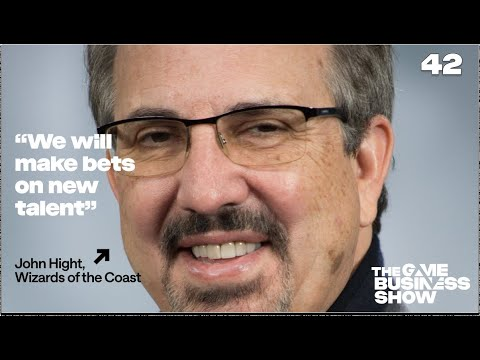
A lot of us have experience working on existing licenses and worlds and we have been working on our own IP and building our own world and it's something that we're very excited about, but this is about opportunities. This is about, you know, something that you can't walk away from. Ballers Gate is an incredible game and of course we're going to do a successor to that game. This is not the successor to that game.
Hello and welcome to the game business show with me, Christopher Dre. We attended Summer Gamefest in Los Angeles and met up with Wizards of the Coast. We spoke to them during the game business live event that we ran and it was a panel all about video game IP in Hollywood and you can check that out on the game.com or on our YouTube channel, but separately we also spoke to the Wizard CEO John height at Summer GameFest itself and we interviewed him alongside the developer Giant Skull. Giant Skull is a new studio formed by Stig Asperson. He is famous for the Star Wars Jedi series at Respawn and the God of War series at Sony Santa Monica. He
has signed a new deal with Wizards to create a Dungeons and Dragons game. So, he spoke to them both about the success of Dn D as a video game property, what it is Whizzers looks for in its development partners, and what we might expect from their new game. Enjoy. Hello. Welcome to the show.
Hello. Hello.
So, how did this partnership come about? How did it begin? So the partnership, you know, was maybe 20 years old at this point, you know, because we worked together on God of War.
The most recent partnership is just because of that. I mean, we've stayed in touch throughout, you know, me going to Blizzard, stick going to Respawn after after Sony, working together at Sony, uh, and then stick starting his own studio and and now me, uh, joining Wizards.
Yeah, it's been a long partnership. you know, we stayed friends after we separated like you said when you went to Blizzard and John reached out to me probably last September and uh he said,
"Hey, I started this new gig at Wizards." He was super excited about it and he said, "I want to see what you guys are working on at Giant Skull." And he came and visited and we started talking and that talking turned into Dungeons and Dragons and we started like cashing out contract details in earnest. I think like end of December and just uh about a week and a half, two weeks ago, the contract was like the ink was done. It dried. So, we're excited to be here.
So, was it was it Wizards convinced you to do Dungeons and Dragons? It wasn't you going I'd love to make a Dungeons and Dragons thing. It came organically.
It was it was very organic. It was more like why don't you speak about what you saw and then
Sure.
Yeah. I think you know it was it was great to go up and see his studio. there's a lot of folks there on his team I worked with before. So just going there was a fun experience. I had no idea when I got there I was going to see, you know, some technology and a, you know, kind of a a rudimentary game
demo that I couldn't put down. It was a fairly simple what we call playground where a playing characters running around and usually that's in early stages. It's kind of like oh cool and you put the controller down there. I just wanted to keep playing with it, you I mean, they really had built out a very convincing and fun and fluid demo that demonstrated, you know, movement and, you know, combat within a space. And I'm like, yeah, that's what's magic about this team. They always find the fun before going broad. And so I said, you know, it'd be be awesome if we later we talked and I said, hey, it'd be awesome if I could get you to build something, you know, for us. And and so like like what? And I said, I don't know. looked, look, we've got D and D, we got Magic the Gathering, we have a a thousand, you know, different brands within Hasbro. Tell me what interests you the most. And I and they kicked around. They looked at a lot of the different possibilities. But they landed on D and D. And so then
we set them up with the D&D team, you that's building all of our TTRPGs, and they rift. And uh and I think that resonated. Yeah, it was uh actually I mean I I don't think at least for me the decision to go with D and D wasn't very difficult because I think it plays into the the wheelhouse of a lot of the things that we've done in the past like we said God of War um worked on the the the Jedi series um you know wanting to like sink our teeth into something that's legendary something that's mythical something that has a lot of space for us to kind of um you know spread our wings and um you know kind of jump into the world and capture the spirit of it. It's super exciting. So, um we can't see we can't wait to see where it goes.
So, talk to me. Why did you want to go into an existing universe as opposed to just building your own? Was it
which you've done in the past obviously,
right? A lot of us have experience working on existing licenses and worlds and and uh we were we have been working
on our own IP and building our own world and it's something that we're very excited about. But this is this is about opportunities. This is about, you know, something that you can't walk away from. This is something about, you know, a lot of us have grown up on Dungeons and Dragons. And for me, with a new company, this is something that we're good at. We're good at working with partners. We're good at like capturing the spirit of uh you know, those worlds. It wasn't something that that I could just walk away from. It's some something that we could we couldn't walk away from. So, um it was actually pretty easy. John, when you are um when you're approached by studios or when you approach studios, I guess this is a kind of a unique situation because you know each other so well, but what makes you go actually know I asked this differently. Um when studios want to work on a D and D brand or or Magic or whatever it is, what's a what's a turnoff to you? What makes you go no, this isn't this isn't going to fit or this isn't going to work?
Um gez, I was hoping you asked the the question you start to ask, which is what what do I look for? Uh, can I answer both?
Yeah, go in.
Cuz you know, actually I way back even at Sony, I had to make the decision who's going to be the creative director on God of War 3. And I I knew Stig, but we hadn't interacted a lot. And through that process and seeing his passion and his ability to take the artist's eye and bring it into the players, you know, game players design, I'm like, this is a unique animal, you know, cuz he knows how to make it look beautiful. knows knows how to tell a great story and more importantly knows how to bring a team around him and in his shared vision and and just you know cuz everything you know takes effort right and and you got to have a leader that can motivate teams even in the darkest hour you know so they can see the possibilities of what can happen. So he had that and you can see that early on that glimmer in the eye, the excitement, the they can you
start asking them about, you know, the worlds they want to create or the the ideas they have and they just don't shut up, right? Because they're just so full of of energy and passion and ideas and that was the case. So that's the reason why that's stuff I've always looked for uh in in in people to work with in terms of I mean there are no real turnoffs per se. I I don't come into, you know, working with a studio or a designer uh or a company with a bias. I try to be very unbiased even in the genre of game like I've seen, you know, pretty interesting ideas. You know, look at what Scopley did with Monopoly Go. You know, I don't think anybody would have thought of that and yet it was so appealing to such a broad audience of of players. Um, but I want to make sure that they have a true interest in in the player, you know, the community. Like, if you're going to work in an IP, have sensitivities around that, you know, know what people would expect or what they hope for. One of the things that I
know that they can execute on is just incredible animation, incredible monsters and worlds, and they have to live up to one of the most difficult things out there, and that is the human imagination. because that is what D and D players bring to their games. You know, that's why they're so popular is because they all have this vision in their heads of, you know, what does an Al bear really look like? You know, what am I going to see when I come down turn the corner and a gelatinous cube is rolling towards me? And I think that their ability to execute and and have the artistry match and in many cases exceed our own imagination, there are very few teams that can do that. I think you answered the question in a clever way. How involved is Wizards in the project? How involved do you get when it comes to the game development side, the creation side?
Well, I mean, we we want to I mean, Wizards first and foremost, I want us to
be a haven for talent. Yeah.
And that means, you know, the responsibility is on us to create an environment where we can nurture creativity and great ideas. So the last thing we want to do is impose them, right? But, you know, help teams with that. You know, like we early on we we had Stig and his team just riff with our D and D team and think about all the different possibilities of where they could set things. And it's fun with D and D because it it's so open to the imagination. There's so much room for storytelling. There isn't, you know, this cannon that you have to follow in every character in every setting. you know, there's room for, you know, his team to go out and create new things, you know, within D and D, but then we want to make sure that, you know, from a resourcing standpoint that we're providing him with what he needs to be successful. Um, I think that, you know, we will make sure that he and, you know, they're great about this anyway, but it gets feedback from players and the community so that, you know, we can do
the extra effort of fine-tuning the game as it nears completion. Yeah, I think a lot of uh you know at least in the past some of my mistakes have been on the publishing side you know you kind of get everything done and bring it all together you run it through QA and you feel like okay we're good and I think what the difference is and if you really want to pursue premium games is that's where the real work begins you know you put your pencils down on creating new stuff and now you devote your energies towards really adding polish to the game and exposing it to players to make sure that you know they get it, they're having fun with it and and taking the time to fine-tune it.
Couple of things to pick on there, but yeah, dungeons D and D is open to interpretation. You're less having to deal with the cannon side of things, which I guess you've had to deal with in your previous Sure.
Was that part of the appeal of D and D, the ability not to have to check everything and and worry about how the fans might react or Well, I guess you still have to worry about it.
Absolutely. I think Dungeons and Dragons
is the definition of a playground. Even when I was a little kid, I mean, when I was playing with toys, it was either Star Wars or it was Dungeons and Dragons. I mean, that's they they were both hot in the late 70s and the early 80s. And uh, you know, for us, that's that's liberating. A lot of us have experience working on licensed products. Star Wars, you know, many of our team worked on the Batman series, so we we know what it's like. And um you know when we had the meeting up in Renon, it was uh you know my mind kind of opened up and to the possibilities of what we could do. And uh you know I still think that there's there's things that that that we have to abide by. I think there's the spirit of Dungeons and Dragons. There's the worlds. There's the um player agency and choice is really important. Building a party um of a family. Actions have consequences. Those types of things. Um, but bottom line is we're thrilled to have this opportunity.
Ask about the team because I think it's
been a while since we'd be caught up. What's going on with the team at the moment? How big is it? How have you grown? Tell us a little bit about the studio where it's at in the moment.
Yeah, so we're still small. We're about I don't know like I I think right now we're 35 people.
Okay.
And uh we don't plan on growing much more for a long period of time. And um I don't see us becoming like a massive team. I don't want to get to the point where it's unwieldy or anything like that. I think that uh with the tools that we have, the brain power that we have, the uh experience that we have, we can get a lot done with with a small team. Doesn't mean that we're going to be um you know, a tiny team or anything like that, but we're never going to get massive. I just that's not what Giant Skull is about.
Is it outsourcing and that part of the vision?
Yeah, certainly. I mean, we're going to use every single uh tool in the box. I mean outsourcing is is um you know if if you don't outsource a lot you're going to get left left in the dust in this industry but you got to make sure you find the right partners and your minds are aligned and everything and we've already started that process and we're collaborating with some great outsourcing partners.
Just to add one comment I mean one thing we're doing with our premium games is they're all they're actually all built on Unreal 5. Um, and we're establishing a content creation team to help service teams. So, you know, hey, we make fantasy games, we make sci-fi games. We're going to have uh a team of artists and worldbuilders that can help out and, you know, step in if if Stig wants to use them uh during that time when we're in full production. And it and it balances things out a lot better, you know, because if you've got really talented artists and they're you're they're part of your team when you're in early concept development and you're waiting for them to to engage. Uh they can get bored. It can get very costly for a studio to do that. Um so in this case, what we want to do is balance that a little bit by having a content team that can can help augment. And I think that's a little bit different. I don't know that all publishers do that. Uh,
but we're fortunate because we we a lot of our games are in the same space. So, we can build a talent team that's really good at at doing fantasy art
as well as being uh great for the individuals and that they they can they can work on variety of projects and there's they can all that kind of stuff. But, I guess it's good from a sustainab that's the big buzz word in the industry is being more sustainable, being mindful of budgets, trying to you know because how how trying to be mindful of costs and I guess that all plays into that as well.
Yeah, absolutely. you know, I mean, I I I want to make sure that you we invest a lot of time in in building relationships, in finding talent. Um, and I, you know, I don't want to go through having to reset that every time. And I think our talent doesn't want to either. You know, you announced this partnership and I've tried to look at all the headlines, see what people said, and almost all the headlines Boulders Gate 3 in the headlines. There's a level of expectation, right, that's been set when it comes to Dungeons and Dragons games. How mindful are you of that? Well, and and hopefully you can help decouple some of that. I mean,
Ballersgate is is an incredible game. And of course, we're going to do a a successor to that game. This is not the successor to that game. You know, we we go to Stig and his team to tell an incredible story and bring Dn D to, you know, a very broad audience. Ideally, the game will appeal to D and D players because it will help them, you know, realize their imaginations. It's like, this is so cool. It's bringing it to life, but it's also going to hopefully appeal to people that love playing action games. You know, they play the Jedi games, play God games, and and say, "Man, this team is so crisp and cool, and it's it's neat to see that they've now taken
this type of gameplay, this type of storytelling, and brought it to the D&D universe." Cuz our aspiration is to make, you know, D and D is, as Sig said, it's a playground, and it's it really is for everyone. I mean hundreds of millions of people have either played D and D or been aware of D and D and you know we
want to make sure that we you know we perpetuate that for the next 50 years. How do you see D and D games fitting within the wider D&D universe? When you talk about your video games about your B can be so varied but how do you connect all those together? Do you connect all those together? Is it just supposed to be a load of separate experiences connected by iconography and characters or is there a more overarching vision around how this might
Well, you know, I'll let Stig speak to some of his aspirations, but I hope that, you know, in in his mind he isn't thinking just, you know, one game and done that, you know, there's story arcs and things to pursue. I think the cool thing about D and D is it doesn't all have to be connected. you know, I mean, we have Ravenloft, we have Forgotten Realms, you know, Water Deep and, you know, Never Winter Nights. I mean, there's there's so many places you can go within, you know, D and D, at least what's been written.
And there's new things that are yet to be written in it. I think the thing that's going to connect us is that we are going to release premium games.
These are going to be hopefully some of the best games that you'll see. You're going to start to associate Wizards brand with with premium publishing of games. You don't find folks like Stig every day.
No.
So, we're also gonna have to make some bets on up and cominging talent and maybe do smaller games uh and give them a shot at building up teams and and learning along the way. So, we're going to do some experimental stuff.
What's your capacity? Do you have a number on how many you can take on or is that are you going to fill your way?
I mean, you know, we have five internal studios. I think we're going to bring on a few more projects hopefully of this ilk. uh maybe not quite as big as as what the STIG aspires to do and then a number of smaller and so I don't want to put an exact number on it because we're basically looking at a lot of stuff and uh you know we're trying to invest in the things that we believe in most but we got we have room for more.
Well you saw
want to give stick a chance to
Yeah. Yeah. I was going to say um where do you see yourself in three to five
years? How do you see this playing out both as in terms of your relationship with Wizards, but also as a studio?
3 to 5 years.
Yeah. Or 5 years, shall we say?
I'm going to be deep in a D and D game.
I mean, that's I mean, that's that's the bottom line. And uh it's it's going to be a wild ride. Looking forward to it.
And what about yourselves? What's your aspirations for Wizards in in for the next five years, shall we say? Yeah, for well for Wizards wide, you know, we're we want to bring magic and D and D to to more players. I mean, that's one of our stated goals and, you know, this this game is is one way in which we're going to bring D and D as you you gave a horizon of 3 to 5 years. I imagine that 3 years from now, he's still working on the game. I'm going to be hopefully playing the game and uh you know, because this is not a small project. you know, we want to make sure that, you know, it has the proper amount of time to make it fantastic. Um, in the case of Wizards Wide though, um,
bringing Magic, you know, really reinforcing the digital side of Magic, finding synergies between what we're doing on tabletop and what we're doing on digital. I mean, the fundamental thing that kind of unites both D&D and Magic is those games are systems that bring people together. you know, we come together to play a D and D game for storytelling to, you know, exercise our imagination. We play Magic because we like to build decks and and and, you know, be strategic. But we have a physical gathering of players, which I think is so incredible. You know, it really cements friendships and creates those stories that you tell each other. But Wizards is in a unique position in that we're doing both. And I think that there's going to be opportunities for us to, you know, use digital to to do what it does best and and and continue our advances on the on the physical side of gaming so that those communities can flow naturally back and forth with each
other.
This project that you're working on, Stig, is the vision that maybe it will transfer to physical and could it come back the other way and move into
Oh, yeah. We could absolutely create a TTRPG based on Stig's game. You know, I think that would never know that for sure, right?
Yeah.
Hold on. That was that exciting to you, is that prospect?
I If you make something that that can uh uh find itself in other forms and it it it was that that popular, yeah, we're totally down for that. That would be awesome. I've taken up all too much of your time. Thank you so much for speaking to me. Good luck with the development of the game, and I can't wait to see it. Yeah, as someone who loves Star Wars and God of War, I can't wait to see what it is you create.
Awesome. Thanks so much.
Thank you.
That's it for today's episode of the Game Business Show. Join us later in the week for our news and analysis show and make sure to sign up to our newsletter at ww.thegamebusiness.com. Until next time, thank you for tuning
in.
Auto-generated captions from YouTube — names and numbers may be misheard.
Wizards of the Coast is strategically pivoting toward becoming a major publisher of premium video games by leveraging its core intellectual properties, Dungeons & Dragons and Magic: The Gathering. The company’s primary objective is to cultivate a portfolio of high-quality digital experiences that capture the spirit of its tabletop roots while appealing to a broad, modern audience. To achieve this, leadership is prioritizing partnerships with proven creative talent, such as the newly formed studio Giant Skull, led by industry veteran Stig Asmussen.
The partnership with Giant Skull, which will focus on a new Dungeons & Dragons title, highlights the company’s preference for developers who demonstrate deep passion, strong team leadership, and the ability to create fluid, engaging gameplay mechanics. Rather than imposing rigid creative constraints, Wizards of the Coast aims to act as a supportive "haven for talent," providing resources and fostering an environment where developers can experiment within the flexible, imaginative framework of the D&D universe. The company is also implementing a centralized content creation team to assist its studios with fantasy-focused art and world-building, a move designed to enhance production efficiency and sustainability across its Unreal Engine 5-based projects.
While the company acknowledges the high bar set by recent successes like Baldur’s Gate 3, it emphasizes that its future pipeline will include a mix of large-scale premium titles and smaller, experimental projects. The long-term vision involves strengthening the synergy between digital and physical gaming, with the potential for digital game narratives to eventually influence tabletop content. By investing in both established veterans and up-and-coming talent, the publisher intends to ensure that its brands remain vibrant and accessible for the next 50 years, fostering communities that move fluidly between digital and physical play.

The Game Business · 2026

The Game Business · 2026

The Game Business · 2026

The Game Business · 2026

The Game Business · 2026

The Game Business · 2026

The Game Business · 2026

The Game Business · 2026

The Game Business · 2026

The Game Business · 2026

The Game Business · 2026

The Game Business · 2026
The Game Business · 2025
The Game Business · 2025

GungHo Online Entertainment

The Game Business · 2026

Deconstructor of Fun · 2026

CD Projekt · 2026

CD Projekt · 2026

The Game Business · 2026

The Game Business · 2026

The Game Business · 2026

The Game Business · 2026

Deconstructor of Fun · 2026
Comments