Dungeons & Dragons
Game
Documents about Dungeons & Dragons
Plus: Who Is Steam's Long Tail Paying Off For?
This analysis examines the commercial performance and "long tail" sustainability of video games on Steam, focusing on how initial launch momentum translates into long-term sales.
- Steam review volume serves as a reliable proxy for sales, with a typical multiplier of 30 to 40 units sold per review.
- Top-tier long-tail performers like Guilty Gear Strive and Doki Doki Literature Club Plus! maintained approximately 500 reviews per week six months post-launch, equating to 15,000–20,000 weekly unit sales.
- Long-term commercial success is heavily dependent on genre-specific appeal, particularly in online co-op and tactical shooter categories, and the ability to convert initial launch hype into sustained community engagement.
Plus: Next Week's Hype Makes an Ascent to the Starbase
Analysis of Steam Hype data and platform sales charts for late July 2021 reveals a busy release window dominated by high-profile indie and mid-tier titles.
- The Nintendo Switch digital ecosystem is shifting toward free-to-play titles like Pokémon Unite and Sky: Children of the Light, which is negatively impacting the discoverability and sales performance of new premium indie games.
- Starbase and The Ascent are the primary drivers of Steam consumer interest for late July 2021, with Starbase entering Early Access backed by 40,000 followers.
- Death’s Door achieved breakout success with a 92% positive review rate, while Cris Tales underperformed commercially due to technical instability and a $40 price point.

Hasbro Quarterly Report: Q3 2020
Hasbro’s financial performance for the third quarter of 2020 reflects a period of significant structural transformation driven by the $4.59 billion acquisition of Entertainment One (eOne).
- Hasbro’s net revenues grew 13% to $1.78 billion in Q3 2020, driven by the $4.59 billion acquisition of Entertainment One (eOne).
- The eOne acquisition significantly impacted the balance sheet, resulting in $3.15 billion in goodwill and increasing long-term debt to $5.18 billion.
- Net earnings for the first nine months of 2020 fell to $117.3 million due to high acquisition-related costs, amortization, and restructuring charges.
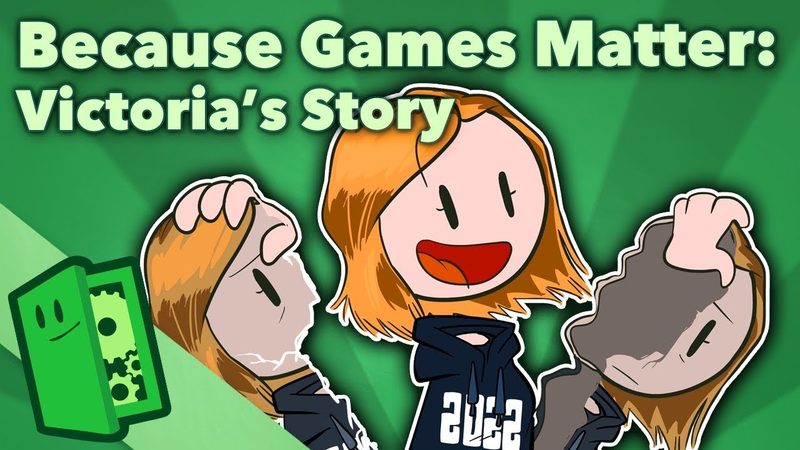
Because Games Matter - Victoria's Story - Extra Credits
This analysis examines the therapeutic potential of tabletop role-playing games, specifically Dungeons & Dragons, in addressing social and emotional challenges in children with ADHD and anxiety disorders.
- Tabletop role-playing games like Dungeons & Dragons provide a controlled, low-risk environment for neurodivergent youth to practice social interactions and develop self-regulation.
- Role-playing mechanics allow children with ADHD and anxiety to decouple personal anxieties from interpersonal engagement by navigating social scenarios through a character-based lens.
- Structured gaming programs serve as a viable, non-pharmacological therapeutic tool that helps socially marginalized children transition toward active participation and improved self-analysis.

Overwatch League Finals Report
The Overwatch League (OWL) Grand Finals at the Barclays Center serve as a primary case study for the current state of the esports industry, demonstrating that high-budget, publisher-led competitive gaming can successfully cultivate a dedicated fanbase and diversify revenue streams.
- The esports sector is seeing significant capital investment, highlighted by Meg Whitman’s $100 million infusion into Immortals and Douyu’s pursuit of a $600 million to $700 million US listing.
- Publisher-led esports events like the Overwatch League Grand Finals demonstrate that high-budget production can successfully drive fan engagement, though traditional sports marketing formulas often fail to resonate with gaming audiences.
- Hasbro achieved a return to profitability by leveraging digital growth in Magic: The Gathering and Dungeons & Dragons, while Mattel faced revenue declines and workforce reductions.
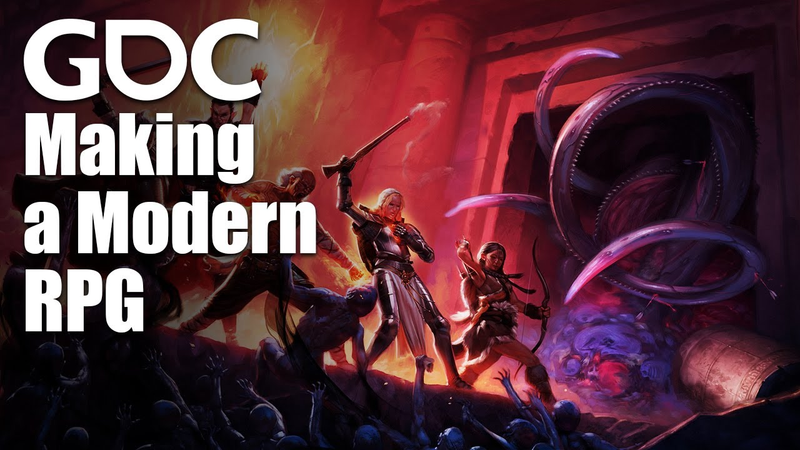
'Pillars of Eternity' and Proper Attribute Tuning
The design of Pillars of Eternity centers on modernizing traditional role-playing game mechanics by restructuring the six-attribute system to ensure universal viability across all character classes.
- Pillars of Eternity modernized the traditional six-attribute system by decoupling stats from rigid class requirements to ensure every attribute provides universal benefits.
- The design team eliminated 'dump stats' and 'trap builds' by pairing attributes with secondary defenses, ensuring tangible utility for every character archetype.
- A linear attribute system was implemented to minimize the performance gap between min-maxed builds and unconventional character concepts, such as high-strength wizards.
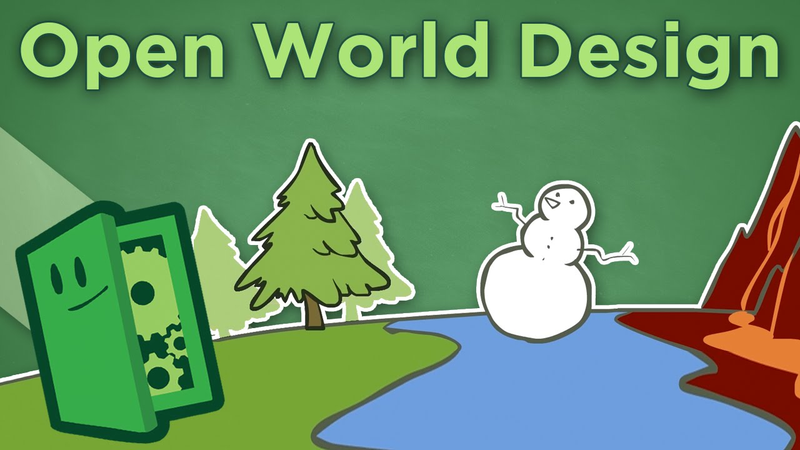
Open World Design - How to Build Open World Games - Extra Credits
Open world game design is fundamentally shaped by the initial conceptual framework adopted by the development team.
- Open world design is defined by two primary structural philosophies: the asset-collection model, which prioritizes seamless placement of disparate elements, and the modular-adventure model, which focuses on self-contained, thematic storytelling.
- The asset-collection approach, utilized in The Elder Scrolls series, simplifies production and team management but often results in a less unified narrative experience.
- The modular approach, derived from Dungeons & Dragons traditions like Baldur’s Gate, fosters stronger micro-narratives but requires high levels of cross-team coordination and carries a greater risk of wasted labor.

Designing free-to-play games requires more thought, says Will Luton
The free-to-play business model represents a fundamental shift in the gaming industry, driven by the unique economic characteristics of digital goods.
- Free-to-play is an essential evolution of the digital marketplace that requires a more rigorous approach to game design than traditional paid models.
- Because players can exit a free-to-play game without financial loss, developers must prioritize high-quality, engaging experiences to ensure long-term retention.
- The free-to-play model is platform-agnostic, successfully applied across diverse genres ranging from social games like FarmVille and arcade titles like Jewel Blitz to complex MMOs like Dungeons & Dragons Online.
Companies behind it
As the documents state it.