VideoThe Game Business
Is AI about to transform video game tie-ins with movies and TV shows?
12 Jun 202544 min video
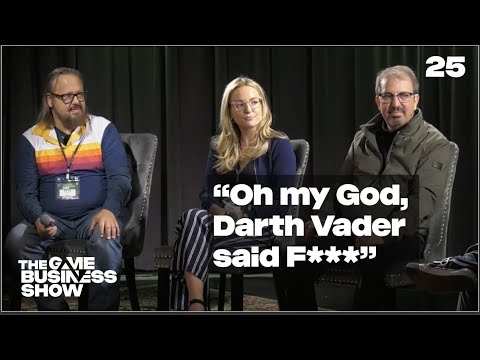
Darth Vader's a great example, right? We now live in a world where we have AI and PC and and yes, you can spend the first few minutes trying to get them safe like and that'll happen. Then you realize like there's so much more to it. It is very common for a child to be like, I watch Peppa, I want to play Peppa. I want to buy Peppa toys. I want to wear Peppa. It's like the whole thing that is Peppa's best friend. Hello and welcome to the game business show with me Christopher Ding. We have just finished the game business live in Los Angeles. This is where we did live recordings of the game business show. We did three recordings in total and despite the chaos and all the protests in Los Angeles at the moment 150 people came out to see the shows. We were delighted. It was brilliant and hopefully we get to do it again very soon. Every session was recorded so that we can release them all for our game business audience to enjoy from home. Um, this session is with three big names from the world of entertainment. Pete Wana, the president of interactive
atbow, which is the production company owned by the Russo brothers. Lisa Burgess, the general manager for kids at Netflix games. And John Height, the president of Wizards: The Coast, and digital gaming at Hasbro. They discussed bringing non-games IP into the world of video games. We talked Peppa Pig, Dungeons and Dragons, Magic the Gathering, Fortnite, The Electric State, and where the whole collaboration between games, film, and TV is heading. It was a really great chat and I hope you enjoy it. Hello. Welcome to the show. This is all I like this. I'm going to speak to each one of you individually and actually handily John you're sitting there because I'm going to start with you. Um you've just signed a really cool new partnership with Stig Asperson's studio Giant Skull to build a Dungeons and Dragons uh game. I can see why developers want to work with D and D. There's so much you can do in that world. But what is it that video games bring to you in D&D? Well, uh, video games bring to me a lifetime of employment, of which I'm
very grateful. Um, but I, you know, D and D is actually a game that I first started playing when it came out. I bought a Monster Manual. Unfortunately, there was no one else in my town that actually had any D and D books. So, it was a couple of years before I finally assembled a crew and and learned how to play and and have a good time with it. But I think, you know, video games are, you know, they're a ubiquitous form of entertainment. I mean, when I first got into the industry, there were very few people making games. Uh, you know, thank god my wife had a good job as a mortgage banker because with all the studio closures and, you know, failed attempts, uh, my my income was pretty unreliable, you know, back then. Uh, which is kind of hard to imagine. We see, you know, these figures, you know, from Circana about how big the industry has grown in all these years. But it's a it's a testament to everyone's playing. You know, everyone has a game. Everyone is has has seen or or knows of people that play games or maybe you found the one that you play all the time. But they're
they are, you know, they're here. I think they're here to stay. And I think that we're seeing more and more, you know, given the topic we're talking about, more and more IP being created in games as well as IP, you know, coming to games. I guess from your perspective, it's a way of the D&D, for instance, an opportunity to create those touch points and those moments around that brand so that people can discover the the stories and the universe in in different ways. Yeah. I mean, D&D is really unique in that by its design and it was literally designed 50 years ago. It's the progenitor of role playing games that we see today. Uh it was built to invite people to come and create stories. So, it's kind of tricky when you think about it. We're going to create an IP that allows everyone to come in and create their own IP. Um, but it is sort of the seminal fundamental, you know, fantasy world a lot of people are accustomed to. A lot of the monsters that we defined in Dn D are now things that, you know, you see in all the, you know, scary movies
and and and, you know, fantasy movies today. But it's a really fun and fertile ground to invite developers to come and create things for us because there's room for them to, you know, take some take some risks. Uh we don't have a very strict cannon other than, you know, the way the the game systems work themselves. Um so it's I think they can come in, they can have a lot of fun. We have a diversity of of worlds that people can go to from, you know, dark sun, which is, you know, psycho demons to um, you know, the fantasy worlds that we're accustomed to in Forgotten Realms to even the creepy and and scary of Ravenloft. You're also with with your other brands, Magic the Gathering, you're bringing games to that in in the Universes Beyond thing. There's a great big Final Fantasy Magic the Gathering advert out the front here. Now, are these tie-ups, do you see them more like marketing or are they legitimate ways for games to expand their universes? Oh, you know,
absolutely. And, you know, I think one thing that I believe fundamentally about, you know, when you're working with an IP or if you're associating with an IP is that the the unique selling point for that game cannot be the IP, right? The games themselves need to be either evolutionary within a genre or revolutionary. And when we work with, you know, in this case, Square with Final Fantasy, we really dig in, understand what their worlds are all about. I mean, they have many, many games. We had our our research team and experts go in and and and go through, pour through the lore, worked very closely with them uh to make sure that as we brought Final Fantasy into Magic, we really embodied what players would expect. you know, that world that they've they've they've grown to love. And there's a lot of different worlds in Final Fantasy if you've played played that game. So, uh um but that's that's what we look for. We look for partners there that we think there's really great crossover. Uh we do a lot of research with our players like what are some of
the things you're interested in? And we're seeing a lift not only for us, but also for Square this year. They've been super happy. We did a great um um collaboration with Fallout and that was right around the time of you know the series that came out. Um but we see a lift. We see new players coming in as a result of that or people that may have Magic's been around for over 30 years. people that may have churned now they're, you know, they're coming back and our partners are seeing a lift because it's like you walk into any one of our 8500 Wizards Play Network stores and you see that box, you know, with your IP on it and and you're actually in a in a store where a lot of influencers, the people that you go to like, what's a good game? Well, chances are they're in one of our local game stores. Outside of your established brands, you're working on a new one, I believe, that sort of crosses over from all different media. Talk us through talk us through that. Oh, you're talking about Exodus. Yeah. So, Exodus is a science fiction game.
It's set in a in a in a faristant future. Uh, and one of the the things about it is that we mere mortals in in the world of Exodus decided, hey, this planet has kind of fallen apart. you know, maybe it was a continuation of tariffs, but um we sent these ships off into the into, you know, the void to try and find habitable worlds and and this so these arc ships went out and 40,000 years later they said, "Hey, by the way, we found a good place to go." So then we send the next round of ships. Well, the problem is during that time period thanks to time dilation because these ships are traveling at near, you know, speed of light, our the the humans we sent have now become so evolved and so sophisticated that by the time we show up, we're kind of a bunch of, you know, pirate scrubs that are just looking for handouts. Um, and so inner Exodus, you're actually one of the travelers that has to go through these worlds and and and get cool gadgets and, you know, overcome some of
the, you know, the really crazy nasties that that have have popped up over the course of 40,000 years. But it's a beautiful, beautiful world. Uh, not everything is bad there. There's there's some really wonderful stuff. We follow we we included it with a a novel uh by Peter Hamilton. He's he's a award-winning sci-fi writer. Uh and we released first novel last last year. We're doing the the second follow-up novel right now. Um so that that's coming out next year. It's it's uh it's a big big bet for us. We're we're pretty excited about it. James Olen, who was one of the lead designers on Mass Effect, uh is the the main craftsman for for Exodus. So you're building that from the start with this sort of multimedia, multi- trans media, I guess, approach. Yeah, you're not just Wizards of the Coast, of course. Uh you you're also Hasbro and you decided to partner with uh Netflix on on Peppa Pig. Um why why do that? Why not do it yourself? Well, actually, as a result of, you know, the
acquisition we had with E1, we we had Peppa's uh you know, a game with Peppa and we felt like, you know what, we we always want to make sure that the things we're pursuing are the things that we are best suited to do. We build worlds. We tell stories. Uh really want to concentrate on at this stage D and D and and Magic and some of the other brands that we have. But Peppa is so awesome. You know, I have a granddaughter. She's five. She, you know, she plays Pepa, of course. You know, she gets more Peppa stuff as you might imagine under the tree. Um but nonetheless, it's it's such a cool, you know, franchise. Um and when Netflix, we started talking to Netflix. were like, "Hey, you know, we want Pepa to continue to have life uh both in video games and in and in uh linear media." And they were really the best partner. I mean, they can get behind it. They can build things for it. I'll let you talk more about it, but we're super excited that Peppa has a home and and and somebody that can really take care of her her uh Peppa's world and and uh and her series from from now into the
future. Well, that does bring us nicely to you, Lisa. this Peppa Pig uh tie up this project. What have you done? Talk us through what you've done and and how's how's it been performing? Yeah, so the World of Peppa Pig was an amazing game that that you all had and um it's been around for many years, as has Peppa. Peppa's been a beloved series for many, many years. And so when we were thinking about um what we wanted to do for kids games at Netflix, like we want to be able to have games that are highquality, engaging, and trustworthy. Uh we also want to be able to focus on things that our our our members are familiar with. And so when we were going through all of the games that existed out there, Peppa came to the top. It was very serendipitous the way that this all happened. And just for those of you that aren't familiar, World of Peep Pig was offered behind a subscription before. So it was $6.99 a month um for for members
to be able to play the full game or players, sorry, not members, or they could have just like a very small portion of the of the game for free. Our belief um and conviction was that the Netflix subscription and offering the game behind that, which is a more inclusive subscription that a lot of families already have, that we could put the game on our service, open it up, and result in something that's very valuable for our members, um and the the like PEPA series as well. And even though it's very early days still, we commercially launched it not even 30 days ago, we're already seeing a lot of those things that we're talking about, like deeper engagement with the title than what we what was being seen before, as well as stronger retention with the title from Opening It Up. So, we do feel like we're on to something with this being able to offer games of this type behind a subscription like ours. You talked about it a little bit there, but I know Netflix has got been quite ambitious with its uh plan for kids and
kids games as well. Tell us about that ambition. Yes, big ambition. Um, so I stepped into this role actually in January. So kids games is a very new spot for for Netflix in general and we have World of Peppa Pig and you would have seen the announcement about Sesame Street as well. This is really just the beginning and the start. A lot of our focus is on taking lessons that we've learned from the film and television side of our business and bringing in things that are familiar to kids. That is a focus on existing brands, existing IPs, whether that be characters or toys or games. And it's a really strong focus and foundation there in order to bring those kinds of games onto our service. Netflix has done plenty of um TV and film and game sort of collaborations before. We'll talk about another one in a moment. Um Black Mirror, Electric State, Squid Game, for instance. With
kids, however, um do you need to think differently about how you approach that? Are there um are there other things you need to be mindful of? Yeah. So, when I think about kids, of course, there's a lot of different things that you need to be mindful of. And there's there's there's some nuances when you're thinking about adults versus kids. When you're thinking about adult and you have a series, a TV series and the game, those might in fact be very different audiences. The person that watches the show and that wants to play the game could be different. Once you get into the kids space, it is very common for a child to be like, I watch Peppa, I want to play Peppa. I want to buy Peppa toys. I want to wear Peppa. It's like the whole thing that is Peppa's best friend, right? And so that is actually a benefit that we have when you think about kids and the extension of IP across all of those areas. But you do also have to make sure that like I think John what you mentioned like the game has to be fun. You cannot just throw an IP onto
something that is not fun and think that it's going to be successful because you know kids are smart and they are capable of very complex gaming interactions. And so making sure that you're not just like taking the IP and throwing it on to um something that it isn't fun with or without the IP. I think um when I was younger, the the games that uh I was being presented with, licensed games in particular, may not have been the best quality. Um and now you you can't you can't get away with that now, though. Um I think that's uh that's the the vibe that you know kids have the quality of kids games are so are so high now. And I've also got a 5-year-old that experience of they need everything. They want all the toys and all the merchandise and the bed sheets and the posters. Pete, for those unfamiliar, um, who aren't Agbo? What do you do? So, Agbo is a film and television production company formed by Joe and Anthony Russo, uh, who have done many fantastic movies,
uh, including the two of the biggest grossing films of all time in in Avengers: Infinity War and Endgame. Uh and then they were joined by Donald Mustard who came from was a found a game developer in Salt Lake City, Utah called Chair which got bought by Epic. And then Donald led the creative on Battle Royale for Fortnite um for close to 11 years and uh has now joined Joe and Anthony to work alongside and do film and television but also to bring games to as well. Okay, let's talk about that then. What is looking to achieve with video games? So I think is that you know you you mentioned the T-word before trans media and I think the game industry has had I've made games based on film and television IP my entire career and I think trans media gets thrown around a lot especially when you say oh you know we made a game based on a film or based on a TV show and for a long time the great lie of trans media
was that it was it was just marketing right you you mentioned marketing and marketing is great because it gets people to know about your game and your you you know, or your game turned into a film or TV show, which certainly now is like more popular than ever. And I think the goal at AGBO is to try to do games and films and TV shows that are built from the ground up by the same kinds of creators. So, we're lucky because at Agbo, Joe and Anthony are deeply passionate about video games. Uh I remember them telling me a story about sneaking out of their bedroom uh out of their bedrooms into their father's den where there was a computer so they could play Ultima. And so it's like oh this is this you know deeply passionate game makers that at the same time they were obsessing about you know great films they were also engaged in games that they could play on a nightly basis usually after their parents went to sleep. Uh and then in the case of Donald Mustard, right, he's and anybody who's seen any of the what he's done with Fortnite and the amount of character
integration from film and TV that are in Fortnite, I mean, really changed the landscape because it started out as, oh, you know what, we we would put uh characters from particularly Thanos and it was Joe and Anthony who got together with Donald and convinced him to put those types of characters inside of Fortnite. And originally it was like, "No, we're not interested in putting outside characters in Fortnite." And Joe and Anthony, you know, got together and had a phone call with Donald and talked for supposed to be a half hour call. It was like 5 and a half hours later. Uh they're still talking about it. And Donald basically changed his mind. It's like, "Hey, you know what? We're going to do this." And uh I think after that, the world exploded about what kind of integrations you could have between film and TV and games. That's obviously a big moment in terms of uh what happened there with Fortnite, but you also worked with um Netflix um on the electric state um mobile game. How was that experience? What did you learn? It's a pretty incredible experience because you know with anything in games and I think everybody
will agree games are great but games start with who's the developer, right? like it comes from that magical point of those men and women who start and take those ideas and put them on screen and get them to be fun. But when you're doing a game based on an IP, yes, the most important thing is that it's fun, but it can't just be fun. It has to tie back or it feels like, you know, slapped on marketing. So, what you need to do is make sure that when you building a game, and this is really the case for Electric State, um, it was built from the ground up to be both a prequel. So, if you played the game before you went and saw the movie on Netflix, if you played the game first, it works perfectly. it sets up the story. But if you've seen the movie and then go to the game, you know, store within Netflix and go play the games there, if you go after, even though it's a prequel story, you get an entirely different relationship with the characters. And the reason for that is I
work with a gentleman by the name of Albert Kim who, you know, who was involved for he was like one of the first few employees at Agbo. and Albert sits across both film and TV and games and all of the creative stuff, he ties it the narratives back together. So, working with Albert and the amazing crew at Netflix, we were able to make a story that has an emotional resonance so that when you watch it and if you play the game, I encourage you, it's like on the Netflix store and you can go play the game on your, you know, mobile phone. Um, when you play it, you will have an experience that you, and it doesn't matter whether you've seen the movie or not, or if you've seen the movie, it will hit you in a different way, but both ways will hit you emotionally because the way they made that game is that it's about the relationship between an older sister and a younger brother. And the younger brother gets a video game at Christmas, and he opens it up, and you experience all of this as you play through the game. Um, and she's
teasing him as he's playing it. Uh, anybody who has siblings will certainly feel the relationship. Um, and even the tutorial is done with a teasing sister to a younger brother. Um, but the game is really, really great. And that's because everybody on the Agbo side, on the Buck side, the developer, as well as Netflix, everybody came together to make sure that it was not just a good game, but that it it tied in creatively in in a unique and new way. what you're talking about there has got me thinking and one of the challenges I've heard in the past of when people make a tie-in with a film is those development schedules of TV and film this might be a question actually for you and and Lisa um the development schedules of of movies and TV shows versus video games are vastly different so when you're trying to create a collaboration where those two things are supposed to sort of meet or align how do you manage that Lisa show I don't know if that's something you can talk to Sure I'm I'm happy to share a little bit of how I think about it. And that is certainly a big challenge in terms of making sure that one, you're all rowing in the same
direction, but you're going to arrive at the same time because there's different uh times for each of those things. Um, and at Netflix, games has been around for a few years now. And what we're focusing on is actually having deeper ties across games and then film and television. uh so that we can get in both sides close on what's happening. Where do we want to have tie-ins and how do we want to do that. It's really an advantage that I would say that we that we have, but it's still a struggle and I don't think that there's any perfect I don't think that we have a perfect sol for it either. And I'm curious like from your lens as well. I mean, I think in in general, it's it's about sort of breaking down the IP uh at its earliest stages and find out how it translates, how it can be fun, but then making sure that you stay all the way through constant check-ins, being able to go back and games are an iterative process, right? So, you play it, you build it, uh it's either fun or it's not, and then you have to go back. It's very different
than sort of linear medium, but I think that you have to constantly have those check-ins to be able to make something go from, oh, isn't this a great idea? It sounds really good. Uh, and that that iterative process gets you there. I guess you're trying to two rockets going off. You gave me you gave me that example before of two rockets going off and trying to hit Yeah. I mean, I think when you when you make a game, right, like how do you do a game and a movie? You start off from the same base creative level, but you know the the movie and film or the film and TV show may launch here and you have a game that is going here. And the goal is to try to make them hit. But what's more important than making them hit at the same time at the same place and have that marketing dream is to make sure that both are of the highest quality possible because you know what's the Miiamoto quote which is a you know a delayed game you know. So delay game is eventually good. That's right. And a bad game is bad forever. And so uh it's a little bit different now because we can have games live service and sort of get there. But you
know the goal is essentially is to make sure that both things are of the highest quality possible. I think that's always the goal for Agbo because it's a we are a creative group. So we are trying to build the most entertaining things possible on both sides of the mediums. I'm going to ask a very generic question now and this is for the whole panel. Maybe John John we'll start with you. Um, what do you see as the role of video games in building universes? What's the specific role for games? Wow. You you give me the you give me the heavy ones to do with, you know, I'm I'm still trying to figure out, you know, okay, how how did two rockets end up at the same spot because I'm looking at, you know, the film industry has been around for over 100 years and there's this one person sitting in the director chair for a reason. The game industry is is catching up. I mean, we have hundreds of people involved in making games nowadays, and there's one person that makes a series of subjective decisions that ultimately lead to what the game
is. But when you've got that, who's got the wheel? So, I want I'm curious your answer to that that question. But I think the role for us is is to generate worlds, is to generate, you know, new places for us to all uh, you know, fantasize about being in, you know, and and want to escape into. Um, I think that we can also innovate within that space. I mean, how much technology was born out of, you know, the video game industry. You know, I can remember back when, uh, this is how long I've been at it, when we were, you know, making 3D cards for computers and all the, you know, Nvidia and, you know, Voodoo, they're gone. Uh, would come down and meet with the video game developers. It's like, what do you need to really move, you know, you know, polygons around on a screen because we were at the forefront of that. And that was probably, you know, what will lead someday to us realizing, you know, cyerspace or metaverse or whatever term you want to give it. Um, is that video games helped contribute to that because
it was the confluence of both entertainment and technology. Two of the most difficult things to harness uh other than small children um that we've ever encountered. Lisa, do you have any? So your question was like what is the role of games and universes, right? Um and and um I would actually go as far to say like games are the universe. Like I'm not sure that you can fully have a universe um without there being like without like the games kind of created that it is what you are interacting with and playing and is immersive. And I do think that it's hard to truly achieve a full universe with just linear alone. And so that is where I see like games are being able to actually be the universe and be that thing that that people can touch and play and interact with. Yeah. I think games are, you know, is definitely
a global medium, right? Like we have, you know, e even games you now that just have have players from around the world and they're constantly checking in. You have game live service games where people are jumping in. The games played 24 hours a day, right? You can log on to, you know, you log on to Fortnite at 4 in the morning and you packed lobbies like this. You know, games are never people never stop checking in. But to your point before about, you know, how do you, you know, how how does it happen? How do you do games and films at the same time? And for us, I think, you know, thank God for partners like, you know, with Epic, with Unreal Engine, right? You see how how much Unreal do you see now in film and, you know, film and TV and effects? Like at Agbo, we do a ton of previs in Unreal. So, if we're making that previs in Unreal, we can also take all the previs that was made for the film and we just put it in the game, right? Because it's all Unreal assets. Now, it's not, you know, it's not just like a Lego piece snapping into place, but there does need to be some massaging, but it is much faster than it
was even like five or 10 years ago, uh, when there was very little. You used to get, uh, stills from the film or still and like, well, here's your screenshots or art bible, right? Like now our art bible is in Unreal already, right? So, we have these places and it's much easier to build those games. It's not still not going to be perfect on the timing slot every at every turn, but it definitely makes it easier. I'm interested in what comes next in this space. Um, because we've seen attempts in the past, I think, of of Defiance, actually, which was a game where, you know, the idea was stuff that you did in the game, what players did in the game impacted the TV show, and then vice versa. Um, it's not the only game to try and do that. There's some valiant efforts, but it hasn't really worked out. It hasn't really been smooth. Do you think Do you think it will? paint, do you think it will? Yeah. I mean, I think you see some examples now, right? Like I think if you look at um what Netflix did with Night School and Sean Crankle, you know, their their collaboration with Black Mirror, uh
that's a really great game that feels truly trans media, right? That's based on an episode of the TV show and you can play the game. The game itself is incredibly compelling. I think if you look at some of the interesting things that uh you know brands are doing inside of Fortnite where it's in the UFN space, I think the UFN u UEFN space uh helps a lot because you don't have to you don't have to have a revenue element right off the bat. You're not selling something. All you have to do is get players in Fortnite to come play it. If you look at something like say what you know Dan Murray has done at Skybound where now you have a a tile that's all about Walking Dead inside of Fortnite. So you're seeing these things that are getting closer to that trans media vision. And I think at AGBO we're lucky because you know we have Joe and Anthony and Donald all together in the same room you know building and creating those universes that then we will spin off into movies, TV shows and of course games. Lisa John Lisa. Yeah I was going to say
there there's a couple of things that I think about. So, first of all, um I do think that we're just scratching the surface in terms of what can be done um and done successfully there. Like you mentioned, thronglets with the Black Mirror um you know, tie-in was was a great example. There's also with Squid Game, um some watch watch along unlock things in the game that are happening. And so I think the possibilities are there and the technology is there. But the the second thing that I think is changing, which is probably the more important thing, is that when you look at the youngest generation, generation alpha, they're growing up as digital natives. They're growing up with all of this technology and their parents are millennials and and and the Gen uh Gen Z. And so what's starting to happen is that this generation is almost expecting to be able to interact with things. They don't want to just watch something. They want to play it. They want to shape it. They want to do all of that. And so for
things to really take off, for innovation to take off and happen, one, the innovation needs to be there, but two, there needs to be a bunch of people that want to embrace and embody it. And I think we're just going to see more and more of that as the generations um age up. Yeah. I mean, I think we're we're on the threshold, right, of something really incredible in terms of the evolution of games. You know, linear media does a great job of guiding us through an emotional journey, right? And there's some some some things are always going to be best in film because you don't want to spoil the ending. But imagine, you know, the power of being able to walk into Lord of the Rings or Star Wars and be in those worlds and having your interaction with an NPC and I'm playing character be substantially different than mine and that both of our interactions will affect how that NPC, you know, behaves when Lisa enters into
that world. And all of that is I mean we're seeing it in different pieces of games now, but I think this is one thing where AI will will unlike un unlikely uh unlock that for us likely unlock that for us. Um because I think we can now adjust games for, you know, players behaviors, what their interests are. I want to walk down that dark alley or I want to I'm I'm going to diss this person and I'm going to like that person. Um, and I think that customizability, people being able to kind of define their own narrative, which would be a really interesting spot for writers and directors, is like how do you how do you allow for all this? Are you writing strict, you know, no, this is the dialogue that's going to be spoken at this moment, or are you now creating deep characters and you're setting what are some of the what are the limits to what that character would do in a given situation? Yeah, I think I'm super excited about where we're going and I think that we're helping to to bring it about. I think what John's talking about like for us it's emergent
gameplay, right? I we we think about it all the time at Agbo that some of the best stories that you're going to tell, you know, isn't necessarily the story that the writer wrote like you or you know, you were able to go Neil Young made a great Lord of the Rings game 20 years ago that put you right in the middle of of the the first scene and it felt great then, right? What we have to do now is we have to do that emergent gameplay element, right? How do the the story where the four of us all play a game at the same time and that's what we're talking about the water cool on the water cooler the next day, right? Even if it's a digital water cooler, but like just the ability for us to find new ways of playing and you may play the same segment or the same area of the map or the same level, but you play it in a way that is vastly different than you played before because the game because it's interactive, it punches back. it it changes itself so that you can have those new and different experiences. I'll ask about AI in a little bit. I think um actually know ask about it now because we've just seen you've seen some of the stuff you're talking about. I've
been thinking the Darth Vader appearance in Fortnite um with the AI voice work there with fans getting him to say the darnest things. So, what role do you see that playing, you know, in terms of building out entertainment universities? Do you need to be thinking about this in terms of these characters from maybe film and TV and coming into gamers and what people might be able to play with them? John, do you want to Oh, yeah. I mean, I think absolutely. I mean, we have to work out all of the, you know, the issues around making sure that the original performers are rewarded for for that and that they're, you know, they're on board with it. I think that was the case, you know, with Darth Vader. I think it's I'll be honest with you. I think it's a little weird to have Darth Vader say things that are completely out of character. It's fun, you know. Uh and I think as long as you know the original creators are fine with that, okay. Um but I think uh you know AI is definitely going to change the way in which we do things. You know games right now for instance, how many times you've gotten into a game and it asks it forces you to
you know answer the question, do you want to play easy mode which nowadays they call story mode? Really kind of bums me out. I like story. I don't mind a little bit of challenge. Or do you want to play really difficult? And wouldn't it be cool if the game could just kind of help figure that out and always give me a little bit of a challenge but not make me feel terrible? I mean, you pay $70 or, you know, SA's right. Maybe we're going to be paying $80 or we might be paying $40. I hope not. But no matter what you paid, you ought to be able to enjoy the experience and if you want, finish the game. And I think AI can help level all of that out and make the game, you know, more balanced. Lisa, do you have anything on the AI side of things or not so much? Yeah, I mean, I agree with a lot of of what we said and and AI is changing so many so many things. You can't ignore it, right? And um and and if you do, you're just going to be behind. I think that it it is thinking about what does that experience look like in games? What does that experience look like for the
audience that you're trying to build games for? what is it the matchup with the IP like of what you're talking about as well because like some characters you know it's they exist in their own world and they don't know you exist right and so it's like you can't interact with that character and that's an extension that's not going to make sense and then in some cases if the original creator is okay with it but it's there's a lot of nuance that you you can't ignore it um I think it's going to dramatically change things even what we talk about probably a year from now is going to be dramatically different than what we see today. But it's it's it's putting some deep thought into how you how you use it. Um and and how that's going to make an elevated experience I think is the most important thing. I think at GDC Alan Dan mentioned that maybe maybe I don't think you had a plan but there might be a thing with AI in terms of something happening in the TV show in the games and how that that might be able to put something into it. Pete, do you have any views on it? Yeah, I mean I think Darth Vader is a great example, right? We now live in a world where we
have AI and PC, right? Like we have and and and yes, you can spend the first few minutes trying to get them say like and that'll happen and then be like, "Oh my god, Darth Vader said holy." Like, but then you realize like there's so much more to it. If you spent any time with Darth Vader, he was part of your squad. He talked to you. He narrated the story as you went through it. It wasn't about him saying an F-bomb that mattered. That wasn't what was important. What was important because if you played it and he went in the squad, he would talk to you and call out what your, you know, and call you by the name even if you were a ninja turtle, right? He knew who you were and call those things out. That stuff's really important. But in order for us to really get the most out of it, IP holders have to be, and Dom mustard says this a lot, right? which is like you have to learn to be less precious about your IP because if not you're never going to come up with those ways that the game will surprise you and so much about it is you I work with Chris Mel andre all
the doing a lot of games on with minions and Chris used to say all the time like find a way to surprise and delight your audience and AI can do that in ways that were unexpected and unanticipated and for a younger generation, right? For Gen Alpha, that's the expectation for them. They live in a meme culture. They know my 12-year-old owns every meme under the sun. It's like shocking to me. But like you, they are so ready for everything that the only way to surprise them is to do things like use AI to make it really pop for you. I do hope we don't get the minions saying though. Um, moving away from AI, what do you the You talked about a little bit there about being precious. What are the biggest areas of conflict or challenge in terms of trying to get these two well not two but multiple entertainment sectors working together? Um Pete, do you have any? Yeah, I mean I think look it's it's education about where you know this and I've done this my whole career, right? So I've sat down with filmmakers and writers and producers and heads of
studios and talk to them about why interactive as a medium is fundamentally different than what you do there. All right. So, it started out about sort of explaining stories. And the nice part about working with game makers is especially developers. Developers almost always know the IP as well as anybody who works on the film and TV side, right? They just they're obsessive. They care about it a great deal and they're building these worlds which become games. Um, but in general, it's like you have to be able to inform people that this is how the medium is changing and this is what the expectation of our player base becomes, right? that they they're expecting these things and you have to grow with them. Lisa, what do you think the biggest conflicts and challenges in terms of working across IP holders and and and that kind of thing? It's a great question and and luckily I haven't bumped up into too many uh too many of those challenges or conflicts yet. I do
think it is always going to be a challenge in in being true to the IP, right? And making sure that there's true to the IP, but there's also the funness of the game. That's always sometimes those things are together and sometimes they're in conflict. Um, but that's was really the way I think about it. Yeah, I think of it in three parts. If you know if the IP is if is is is not active per se we aren't creating new stories or characters around it then I think it's kind of strictly following you know the cannon of what was established and then determining you know is there any flexibility to extend beyond that can we do the prequel if it's something that is being actively developed and that was kind of what I was alluding to you know with my question to Pete was you know who's driving you know who's gets to make the decisions you know and and that that can be a little bit tricky, you know, because we don't want to in a in a game introduce something or kill a
character that, you know, this the the developer story writer for that that game is like, "Oh, wait. The movie, I'm sorry, is is saying, "No, no, no, no. I've got something planned here. Don't don't touch that." And so, usually they're like third rails that are set up, you know, don't even go there. And and then finally, I think the last one is similar, and that is what if you're creating them at the same time, you know, who who gets to make the decisions? And I and I've worked on games where, you know, design felt kind of like social democracy, you know, everyone has their input. And I think the end result is as creative and fun as that was sometimes felt like a crazy quilt for for players, you know, and I think just like a director has to have in their head, you know, what is the viewer's experience? What is the audience going through and where where does he or she want to take them? I think the same is true of the game director. you know, they're looking at all these possibilities and they have to decide what goes in, what goes out. And those decisions about what goes out are just as important as what goes in. So, bringing those two together, I think, is
that I think that's tricky. And I and I think you kind of need somebody that can, you know, exist in both mediums with with some degree of proficiency and credibility to get the hundreds of people to, you know, line up and build the thing that they have in their mind. And that's what a lot of you are doing. I think I've got like a minute left that I'm going to ask one last question and so we have the be quick answers. What do you see such a big question? What do you see the future of these collaborations between linear and interactive entertainment? John, well I as I said I think you know one very interesting and cool future is where we can start as as as players as viewers craft some of the narrative ourselves. We can influence the world that we're experiencing. So I think in that collaboration is learning how to work together so that we can set those things up. Um and uh you know I for one I'm really excited about it. Not everything's going to work like that though. Lisa, what do you think the future is? I think the future is only
increasing in these types of collaborations. we've just scratched the surface and I think that over the coming years we're going to see a lot more one because of the capabilities of what we'll be able to create but two because of the audience demand is going to be there and that is going to be what makes these things take off when in the past um they haven't actually been able to pay us yeah I mean I think I talked about a little bit but I genuinely believe that emergent gameplay will move to emergent storytelling uh and that it's going to be it it will always be about you know whether it's the players or the viewers or the readers they will always dictate how we move it forward right the is we're really doing this for them none of this works without for us it's it's always about the players right so player focused uh gaming and that you meet them where they're where they're headed and not where they've been previous like you constantly push forward to give them a new and different experience that makes
them check into your world on a regular basis and play for a really long time. Thank you. That's all we have time for. Please warm hand for people. That's it for today's episode of the Game Business Show. I do hope you enjoyed it. These are all live sessions recorded at the Game Business Live in Los Angeles this week. We have two more to come and I hope you'll stay tuned for those. Until then, thank you for tuning in.
Auto-generated captions from YouTube — names and numbers may be misheard.
The modern entertainment landscape is undergoing a fundamental shift as intellectual property holders move away from treating video games as mere marketing appendages for film and television. Successful cross-media strategies now prioritize high-quality, authentic gameplay that respects the source material, ensuring that titles like those based on Dungeons & Dragons or Magic: The Gathering provide genuine value rather than relying solely on brand recognition. This approach fosters deeper audience engagement and higher player retention, proving that interactive experiences are most effective when they function as cohesive extensions of a broader narrative universe.
To achieve this level of integration, creators are increasingly developing games and screen projects simultaneously using shared creative teams and unified technological pipelines. By utilizing tools such as Unreal Engine for both pre-visualization and final production, studios can maintain narrative consistency and emotional resonance across disparate mediums. This collaborative model is essential for meeting the expectations of digital-native audiences who demand immersive, interactive participation within the worlds they consume.
Looking ahead, artificial intelligence is poised to accelerate this transformation by enabling emergent storytelling, personalized difficulty scaling, and dynamic interactions with iconic characters. These technological advancements offer unprecedented opportunities to surprise and delight players, yet they also require a new framework for IP management. For these innovations to succeed, rights holders must adopt more flexible licensing strategies while maintaining strong creative leadership to ensure narrative coherence. Ultimately, the future of entertainment lies in the transition from linear storytelling to player-driven, interactive experiences that allow audiences to actively shape the universes they inhabit.

The Game Business · 2026

The Game Business · 2026

The Game Business · 2026

The Game Business · 2026

The Game Business · 2026

The Game Business · 2026

The Game Business · 2026

The Game Business · 2026

The Game Business · 2026

The Game Business · 2026

The Game Business · 2026

The Game Business · 2026

Deconstructor of Fun · 2026

BITKRAFT Ventures · 2026
Two & a Half Gamers · 2026
Naavik · 2024
Naavik · 2024

Two & a Half Gamers · 2026

The Game Business · 2026

Naavik · 2026

Deconstructor of Fun · 2026

Two & a Half Gamers · 2026

Deconstructor of Fun · 2026

Two & a Half Gamers · 2026
Comments