
Castlevania
GameBy Konami · Released Sep 26, 1986
Step into the shadows of the deadliest dwelling on earth. You've arrived at Castlevania, and you're here on business: To destroy forever the Curse of the Evil Count. Unfortunately, everybody's home this evening. Bats, ghosts, every kind of creature you can imagine.
Connections
Each row is a game or company named alongside Castlevania, each column a document, oldest first. A mark means that document names it. Select a row to see those documents.
About the game
- Released
- Sep 26, 1986
- Publisher
- Nintendo
- Genres
- Platform, Hack and slash/Beat 'em up
- Platforms
- Family Computer Disk System, Arcade, Nintendo 3DS, Wii, Android, PC (Microsoft Windows), iOS, Wii U
- Links
- Official site, Wikipedia
Game data from IGDB.com
Documents about Castlevania
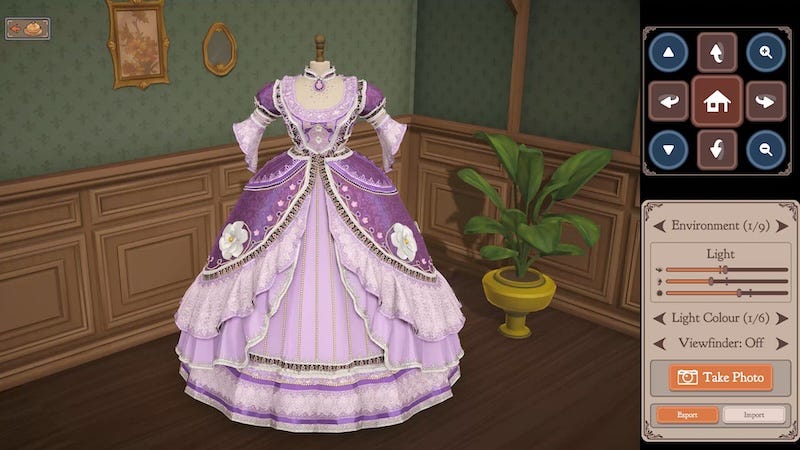
How Dressmaker Became ‘Ready to Wear’ for Hundreds of Thousands of Players
Dressmaker, a $15 self-published seamstress job sim from Free Lives' new Cozy Lives subsidiary, has become a semi-unexpected Steam megahit, and the newsletter uses it as a case study in how a novel, zeitgeist-aligned concept can break out.
- The indie title Dressmaker achieved over 500,000 units sold on Steam within its first two weeks, significantly outperforming expectations with an 8.6x conversion rate in its opening week.
- Unlike typical game sales curves that peak on day one, Dressmaker demonstrated sustained growth in concurrent users and sales, ranking as the fifth highest-selling debut on Steam for September 2026.
- The game’s success is attributed to its focus on deep, authentic creative mechanics based on real-world sewing expertise rather than generic minigames, appealing to a broad audience interested in self-expression.
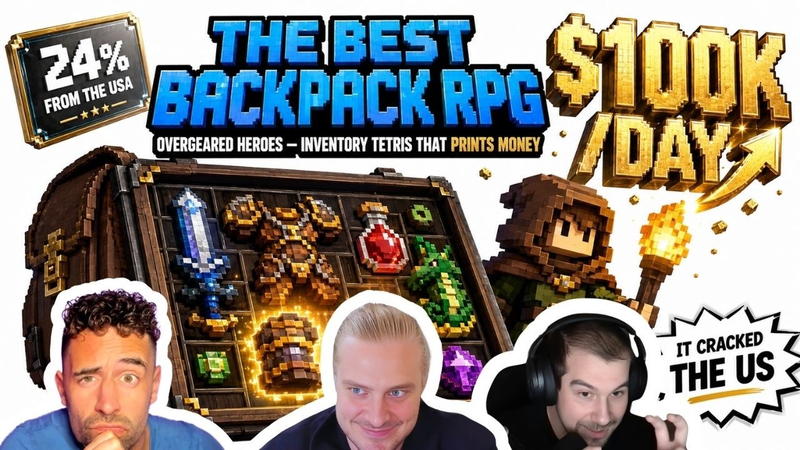
🎒 Overgeared Hero Breakdown: An Asian RPG That Actually Cracked the US market
Overgeared Hero represents a significant shift in the mobile RPG landscape by successfully bridging the gap between Asian-developed mid-core mechanics and the competitive United States market.
- Overgeared Hero generates approximately $100,000 in daily revenue, with the United States accounting for 24 percent of total earnings.
- The game achieves global market success by blending a traditional idle gacha chassis with an inventory-management roguelite core.
- Monetization is driven by a refined strategy of 12 rewarded ad placements rather than aggressive interstitial advertising, catering to a hardcore, strategy-focused audience.

The Vampire Survivors developer is opening studios and making over 15 projects
Poncle, the developer behind the hit title Vampire Survivors, is currently undergoing a significant strategic expansion.
- Poncle is scaling from a solo-developer origin into a decentralized federation of small, agile teams currently managing over 15 active development projects.
- The studio is expanding its physical footprint beyond the United Kingdom by establishing new offices in Italy and Japan to facilitate better collaboration with local stakeholders.
- Vampire Survivors has reached a global player base of over 27 million, providing the resources to fund a diverse portfolio of new genre experiments, including card games.

The state of video games with Matthew Ball – Part One
The global video game industry currently exists in a state of paradox, characterized by record-high consumer spending alongside widespread studio instability, mass layoffs, and a contraction in venture capital.
- The video game industry faces a paradox of record consumer spending coupled with widespread studio instability, mass layoffs, and a contraction in venture capital.
- The U.S. market is projected to see only 3% growth by 2026, a figure heavily reliant on major hardware cycles and tentpole releases like Grand Theft Auto 6.
- Surging demand for AI data center components is creating supply chain shortages for essential hardware like RAM and storage, threatening to increase production costs and delay future console generations.
Sony’s Good News, Discord’s Supervillain Arc, and No Hogwarts at Wizards | Games For Breakfast
The contemporary gaming industry is currently defined by a strategic tension between the successful revitalization of legacy intellectual property and the volatile challenges of maintaining live-service ecosystems.
- Sony’s recent State of Play event received positive reception, contrasting with the current industry trend of negative sentiment toward major publishers like Blizzard.
- Discord is facing significant user backlash regarding recent platform changes, leading to widespread cancellations of Nitro subscriptions and the disabling of their feedback site.
- Wizards of the Coast has officially confirmed there are no plans for Harry Potter-themed Magic: The Gathering cards, opting instead to focus on their existing intellectual property.
The Creators of Metroid Dread and Castlevania: Lords of Shadow Working in Crunch Mode
Current and former employees of the Spanish game development studio MercurySteam have reported a significant decline in workplace conditions, characterized by persistent crunch, layoffs, and restrictive management practices throughout 2025.
- MercurySteam employees have been subjected to mandatory 10-hour workdays and persistent crunch conditions since May 2025, following an initial policy shift in January.
- Management reportedly used emotional pressure, citing industry instability and the studio's dire financial situation, to enforce extended hours that were officially labeled as voluntary.
- The studio's internal crisis intensified following the commercial failure of their late-spring release, Blades of Fire.
Netflix's Most Popular Gaming Content
This analysis examines the intersection of the video game and streaming industries by evaluating Netflix’s viewership data for game-related adaptations.
- Game-related content accounts for 933.1 million hours of viewership on Netflix, representing approximately 0.99% of the platform's total engagement from January to June 2023.
- Pokémon is the most popular gaming brand on the platform, generating 261 million hours of viewership across 29 titles.
- The Witcher franchise shows significant sequel fatigue, with viewership for the series dropping from 72.2 million hours in the first season to 33.4 million in the third.

How DLC boosts engagement for PC and console games
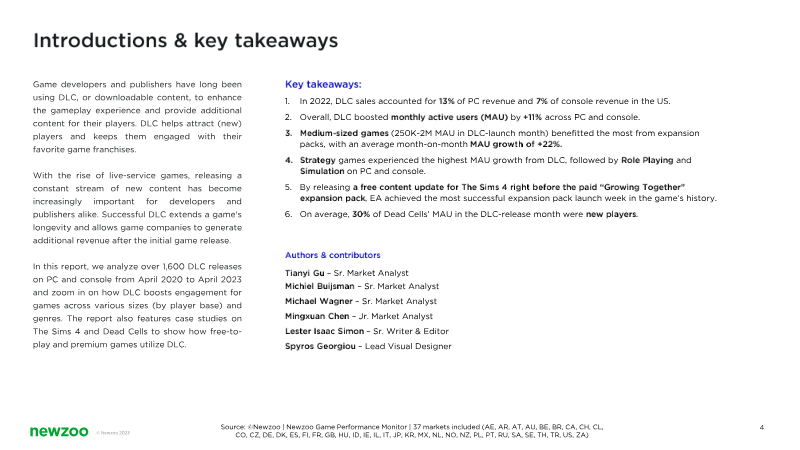
Downloadable content is a core tool for attracting and retaining players, particularly as live-service models make a steady flow of new content more important.
- DLC releases drive an average 11% increase in monthly active users (MAU), with medium-sized games (250,000 to 2 million MAU) seeing the highest impact at 22% growth.
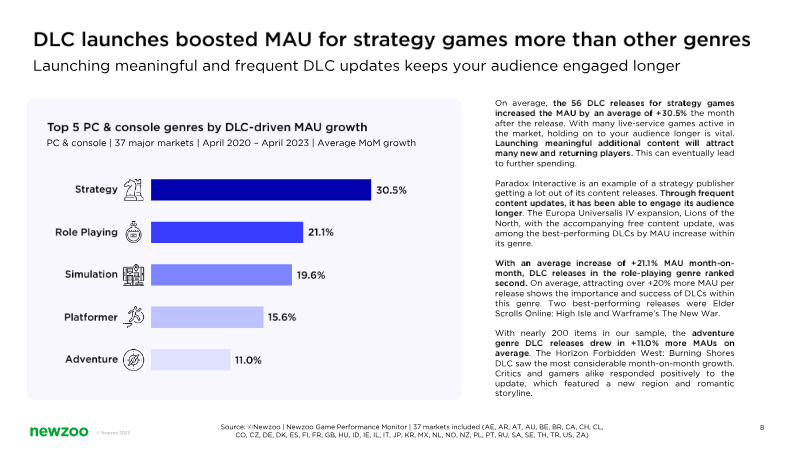
- Strategy games benefit most from the DLC model, recording a 30.5% average increase in MAU, followed by role-playing and adventure titles.
- DLC is a significant revenue driver, accounting for 13% of PC revenue and 7% of console revenue in the U.S. during 2022.
Konami to Create Remakes and New Installments of Classic IPs
Konami has shifted its strategic focus toward revitalizing its legacy intellectual properties through a combination of remakes and new installments.
- The Silent Hill 2 remake surpassed 1 million units sold globally within three days of its October 2024 launch, reaching this milestone significantly faster than the original game.
- In the European market, the Silent Hill 2 remake saw 78% of its launch sales on PlayStation 5, with the remaining 22% coming from PC.
- While the Silent Hill 2 remake outperformed horror titles like The Callisto Protocol and Alan Wake 2, its European launch sales trailed behind the Dead Space remake.

Netflix and Video Games
This analysis explores Netflix’s strategic positioning and potential expansion into the video games industry.
- Microsoft’s Game Pass is the primary competitor in the subscription gaming space, having already established a dominant position with over 18 million subscribers.
- Netflix’s traditional 'content-dump' strategy is ill-suited for the gaming market, which has shifted from a commodity-based model to an asset-based model driven by long-term user engagement.
- Netflix faces significant barriers to entry due to the presence of established industry 'apex predators' including Sony, Microsoft, and Tencent.

Microsoft Buys Metal Gear and Silent Hill Rumors | Games ReCAP
Speculation has emerged regarding a potential acquisition of Konami’s intellectual property portfolio by Microsoft, specifically targeting high-profile franchises such as Metal Gear, Silent Hill, and Castlevania.
- Speculation suggests Microsoft is negotiating to acquire Konami’s intellectual property portfolio, specifically targeting the Metal Gear, Silent Hill, and Castlevania franchises.
- The proposed deal aims to bolster Microsoft's presence in the Japanese market and support the expansion of Xbox Game Studios Tokyo.
- Under the rumored terms, Konami would retain royalty rights for remasters, while Microsoft would secure full profitability from all new, original titles developed from the ground up.
Meaningful Movement: The Labyrinth and Castlevania: Symphony of the Night
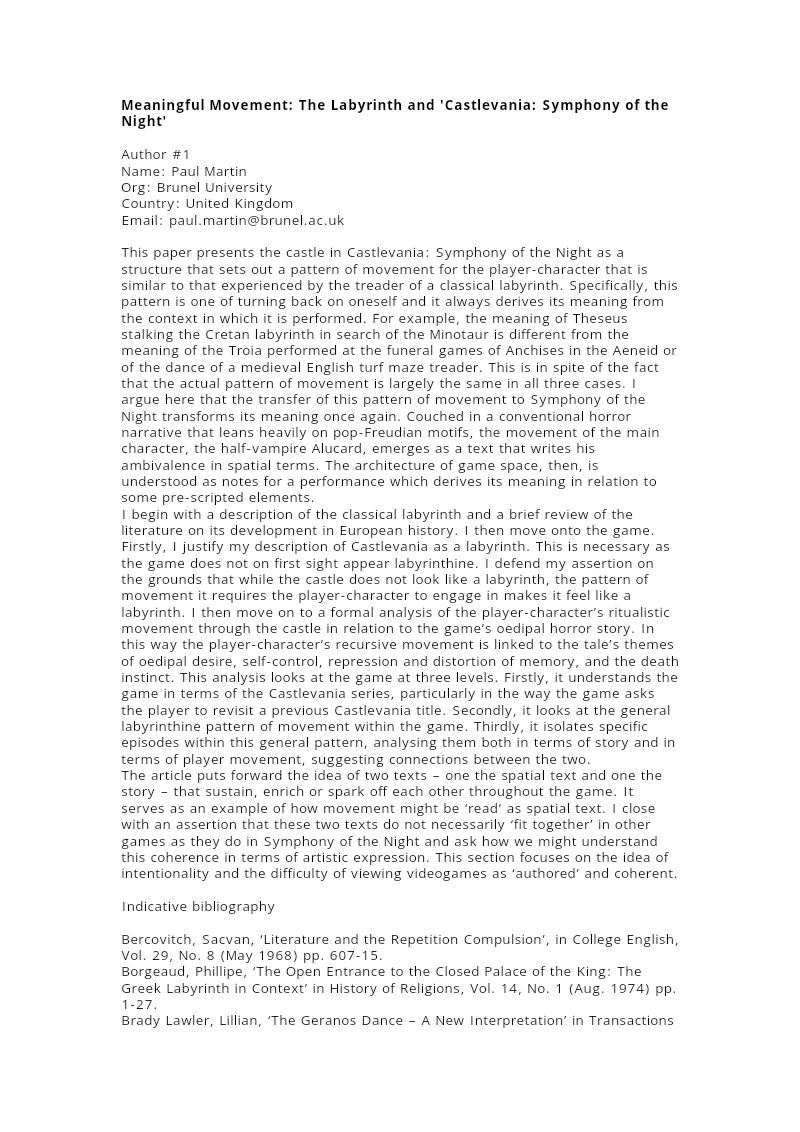
This paper argues that the castle in Castlevania: Symphony of the Night structures the player-character's movement in a manner analogous to the treader of a classical labyrinth, one defined by turning back on oneself.
- The paper argues that the castle in Castlevania: Symphony of the Night functions as a labyrinth not through its visual layout but through a recursive pattern of movement that makes the player repeatedly turn back on themselves, producing a labyrinthine experience.
- The author holds that the meaning of a labyrinthine movement pattern depends on context, citing its different significance in the Theseus myth, the Troia dance in the Aeneid, and medieval English turf mazes before reinterpreting it in the game.
- Within the game, the recursive movement is read as a spatial expression of protagonist Alucard's ambivalence, linked to oedipal themes such as desire, self-control, repression, distorted memory, and the death instinct.
Companies behind it


As the documents state it.