1 free read left. Create a free account for unlimited reading + AI research.
Create free accountWhitepaper DiGRA
1 free read left. Create a free account for unlimited reading + AI research.
Create free accountWhitepaperDiGRA
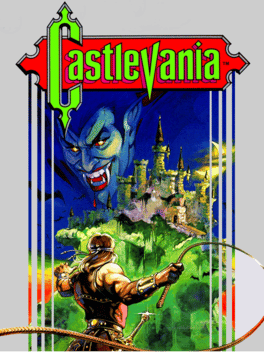
The castle's appearance is not labyrinthine.
This paper argues that the castle in Castlevania: Symphony of the Night structures the player-character's movement in a manner analogous to the treader of a classical labyrinth, one defined by turning back on oneself. The author stresses that such a movement pattern takes its meaning from context: the same pattern carries different significance in the myth of Theseus, in the Troia dance described in the Aeneid, and in medieval English turf maze traditions. Applied to Symphony of the Night, the pattern is reinterpreted once more, becoming a spatial expression of the protagonist Alucard's ambivalence within a horror narrative shaped by pop-Freudian motifs.
The analysis proceeds in stages. It first justifies treating the castle as a labyrinth, despite its non-labyrinthine appearance, on the grounds that the required pattern of movement produces a labyrinthine experience. It then links this recursive movement to the game's oedipal themes, including desire, self-control, repression, distorted memory, and the death instinct. The analysis operates at three levels: the game's place within the Castlevania series, particularly its invitation to revisit an earlier title; the general labyrinthine movement pattern across the game; and specific episodes, examined in terms of both narrative and player movement.
Central to the argument is the proposition that the game contains two interacting texts, a spatial text and a narrative text, which sustain, enrich, or provoke one another. The paper offers this as a model for reading player movement as a form of spatial writing. It concludes by suggesting that such coherence between spatial and narrative texts is not guaranteed in other games, and it raises the question of how such coherence should be understood as artistic expression, engaging with intentionality and the difficulty of regarding videogames as coherently authored works.
Each row is a game or company this document names, each column a document, oldest first. A mark means that document names it. Select a row to see those documents.
DiGRA · 2023
DiGRA · 2023
DiGRA · 2023
DiGRA · 2023
DiGRA · 2023
DiGRA · 2023
DiGRA · 2023
DiGRA · 2023
DiGRA · 2023
DiGRA · 2023
DiGRA · 2023
DiGRA · 2023
DiGRA · 2020