
Castlevania
GameBy Konami · Released Sep 26, 1986
Documents about Castlevania
Report13 pages
How DLC boosts engagement for PC and console games
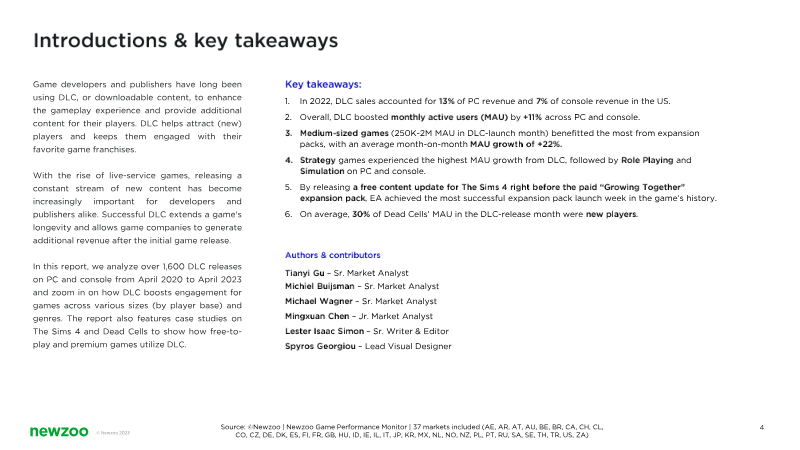
Downloadable content is a core tool for attracting and retaining players, particularly as live-service models make a steady flow of new content more important.
- DLC releases drive an average 11% increase in monthly active users (MAU), with medium-sized games (250,000 to 2 million MAU) seeing the highest impact at 22% growth.
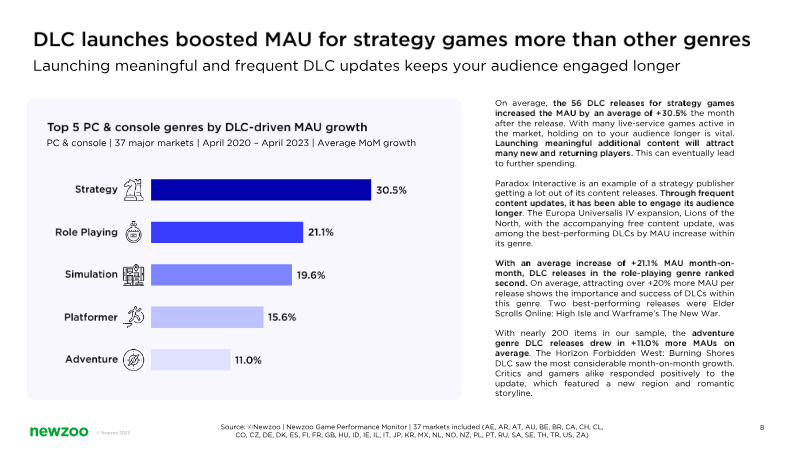
- Strategy games benefit most from the DLC model, recording a 30.5% average increase in MAU, followed by role-playing and adventure titles.
- DLC is a significant revenue driver, accounting for 13% of PC revenue and 7% of console revenue in the U.S. during 2022.
NewzooMay 2023
Whitepaper2 pages
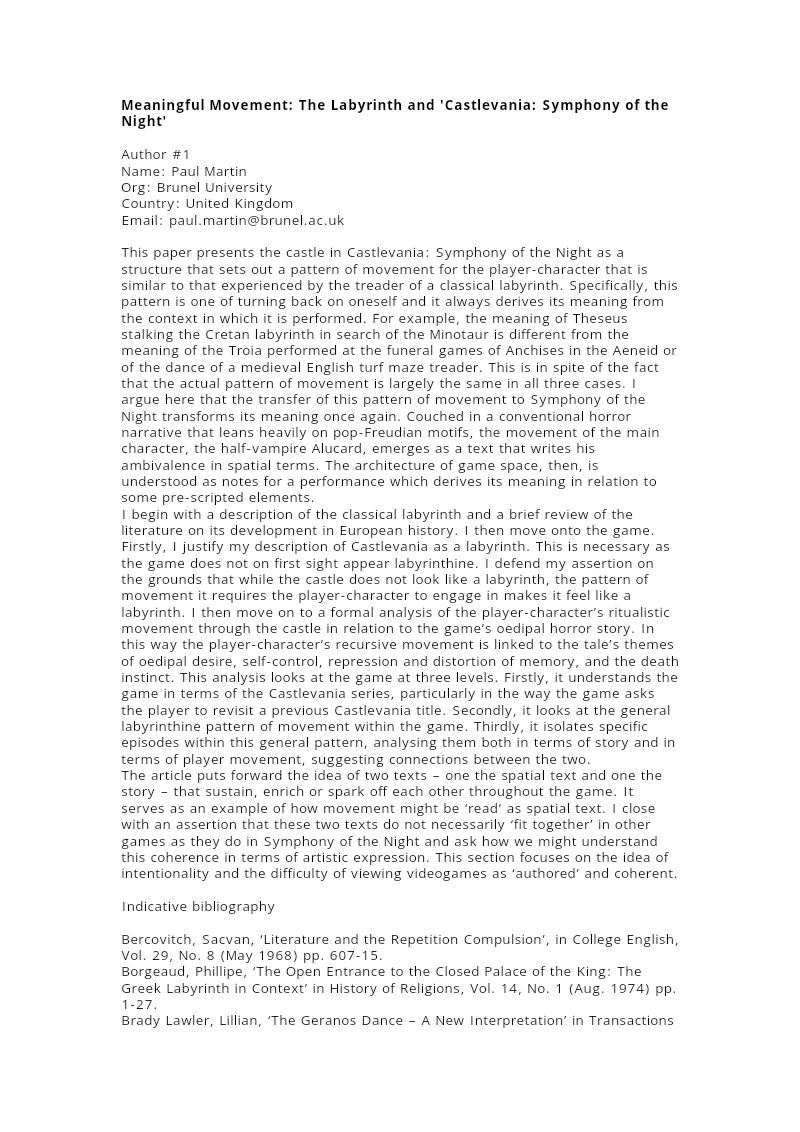
Meaningful Movement: The Labyrinth and Castlevania: Symphony of the Night
This paper argues that the castle in Castlevania: Symphony of the Night structures the player-character's movement in a manner analogous to the treader of a classical labyrinth, one defined by turning back on oneself.
- The paper argues that the castle in Castlevania: Symphony of the Night functions as a labyrinth not through its visual layout but through a recursive pattern of movement that makes the player repeatedly turn back on themselves, producing a labyrinthine experience.
- The author holds that the meaning of a labyrinthine movement pattern depends on context, citing its different significance in the Theseus myth, the Troia dance in the Aeneid, and medieval English turf mazes before reinterpreting it in the game.
- Within the game, the recursive movement is read as a spatial expression of protagonist Alucard's ambivalence, linked to oedipal themes such as desire, self-control, repression, distorted memory, and the death instinct.
DiGRAJan 2009
Companies behind it


As the documents state it.