Digital Games
Company
Documents about Digital Games

More Than a Craze: Photographs of New Zealand's Early Digital Games Scene
"More Than a Craze: Photographs of New Zealand's Early Digital Games Scene" describes an online exhibition of 46 photographs documenting the nascent digital games culture in New Zealand during the 1980s.
- The exhibition "More Than A Craze" by Melanie Swalwell, curated with Janet Bayly and hosted by Mahara Gallery in Waikanae, presents 46 photographs documenting New Zealand's early digital games scene of the 1980s.
- The photographs are argued to be valuable primary sources for researchers of play and interactive entertainment because they capture games, gamers, and gameplay at a moment of novelty.
- The images draw on documentary photographers Ans Westra, Christopher Matthews, and Robin Morrison, plus archival press images from Wellington's Evening Post and Auckland's Fairfax newspapers.
The Player Engagement Process: An Exploration of Continuation Desire in Digital Games
The paper, by Henrik Schoenau-Fog of Aalborg University Copenhagen and published in the DiGRA 2011 proceedings, examines continuation desire, the urge to keep playing, as a dimension of player engagement in digital games.
- In responses to what makes players want to continue playing, accomplishment overall was mentioned in 36% of statements.
- The authors identify four components of player engagement: objectives, activities, accomplishments and affect, which together form a process framework.
- In the authors' framework, immersion, flow, and enjoyment are results of engagement, so continuation desire is a prerequisite for experiencing them.
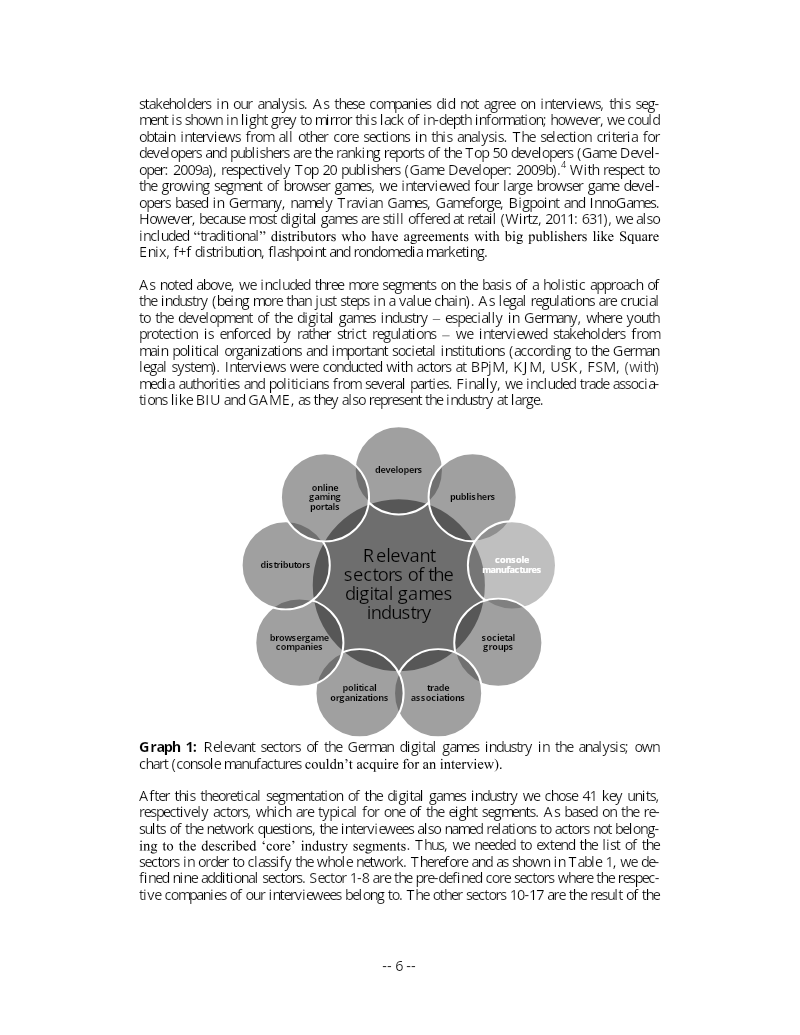
The Game Boys' Network: A Network Analysis of the German Digital Games Industry
Kröger, Domahidi and Quandt of the University of Hohenheim map the German digital games industry using 41 guided expert interviews conducted from August to November 2010 and social network analysis.
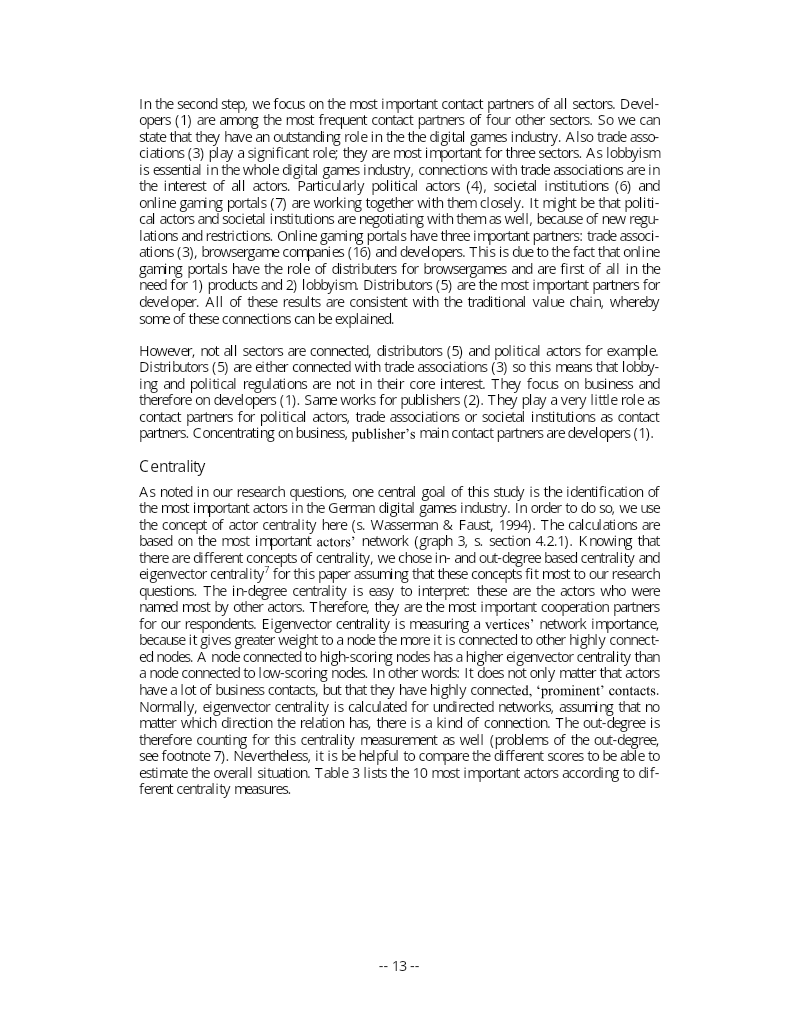
- Trade associations were the most central sector by eigenvector centrality, and GAME was the most central actor, scoring very high regarding all three centrality concepts.
- Developers were the most frequent contact partners of four other sectors, giving them an outstanding role according to the authors.
- The 41 interviews produced a contact network of 217 organizational units connected by 384 relations.
Grow-A-Game: A Tool for Values Conscious Design and Analysis of Digital Games
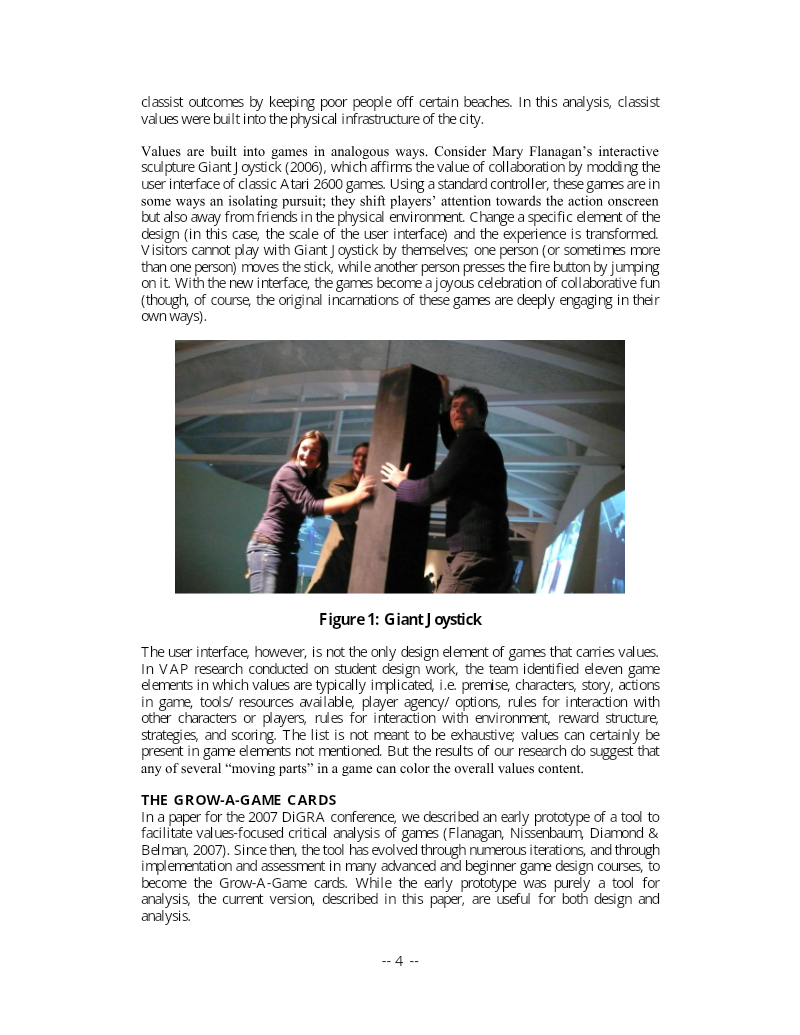
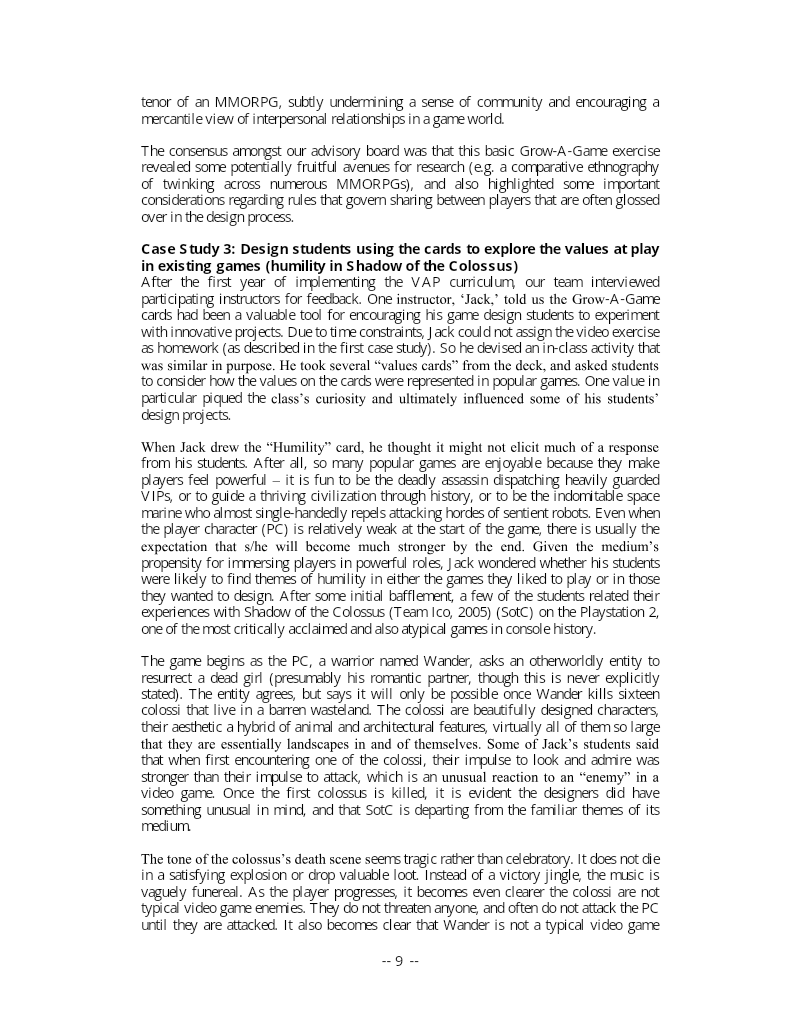
The paper, by Jonathan Belman, Helen Nissenbaum, Mary Flanagan and Jim Diamond, presents the Grow-A-Game cards, a tool from the Values at Play (VAP) project for values-conscious design and analysis of digital games.
- The authors argue that values are embedded in games through both mechanics and narrative or representational elements, and that these can conflict with each other.
- In the Layoff case study, the team found at least two distinct ways people play the game, with many players reading worker biographies closely and treating each move as a dilemma.
- The authors report that maintaining focus on a single value or set of values during design helps produce games with greater clarity and impact for the player.
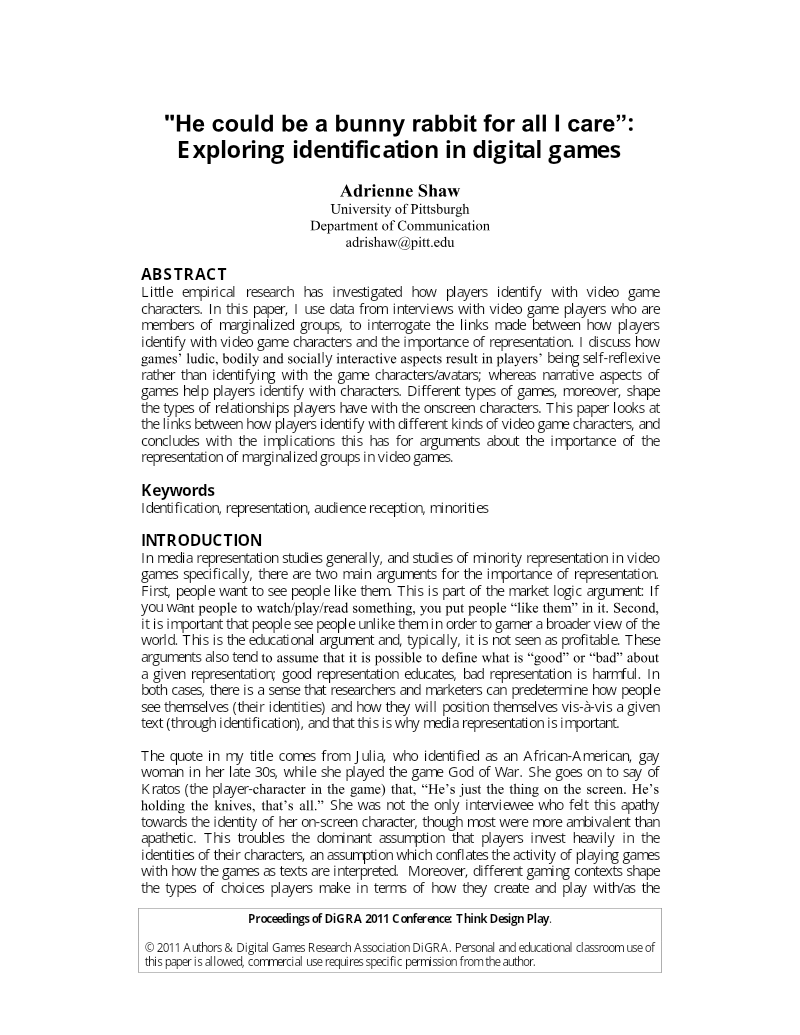
"He Could Be a Bunny Rabbit for All I Care": Exploring Identification in Digital Games
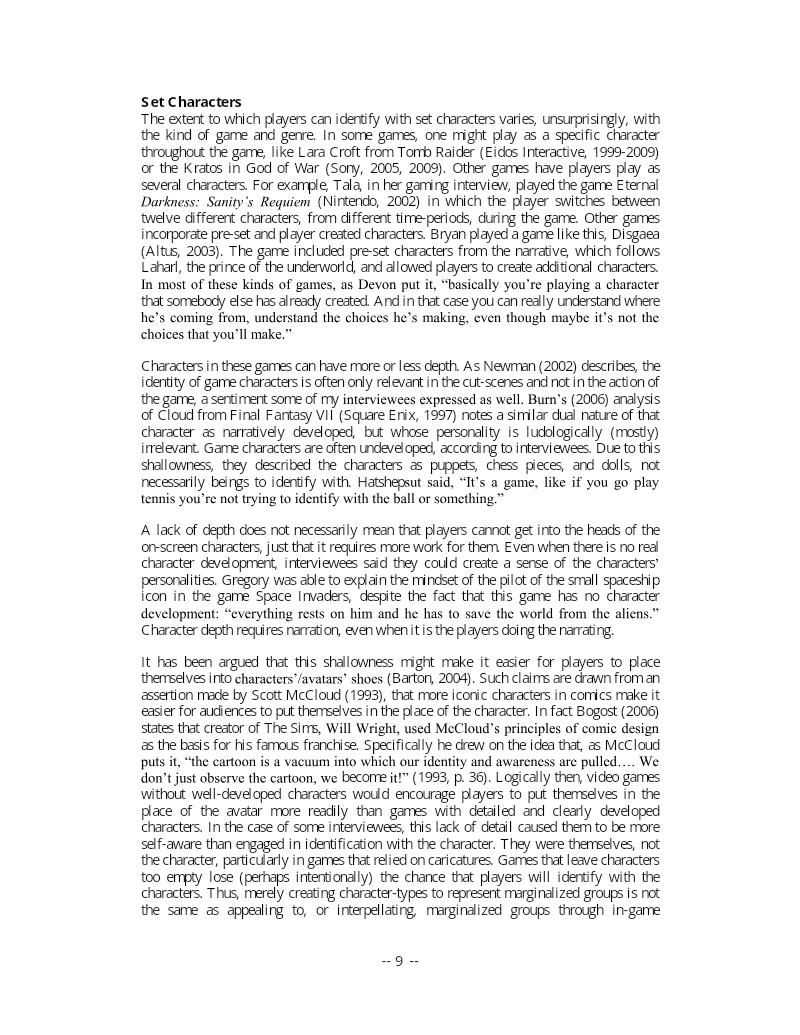
Adrienne Shaw of the University of Pittsburgh's Department of Communication presents an exploratory audience-reception study of how players identify with video game characters, published in the DiGRA 2011 proceedings.
- Interviewees' answers on whether they understood their character were evenly split between affirmative and negative, and varied with the kind of game being played.
- The author argues that the ludic, bodily and social aspects of games tend to make players self-referential rather than identifying with characters, while narrative aspects help players identify.
- Level of embodiment was not correlated with level of identification, according to interviewees.
How Are Digital Games Used in Schools?: Complete Results of the Study
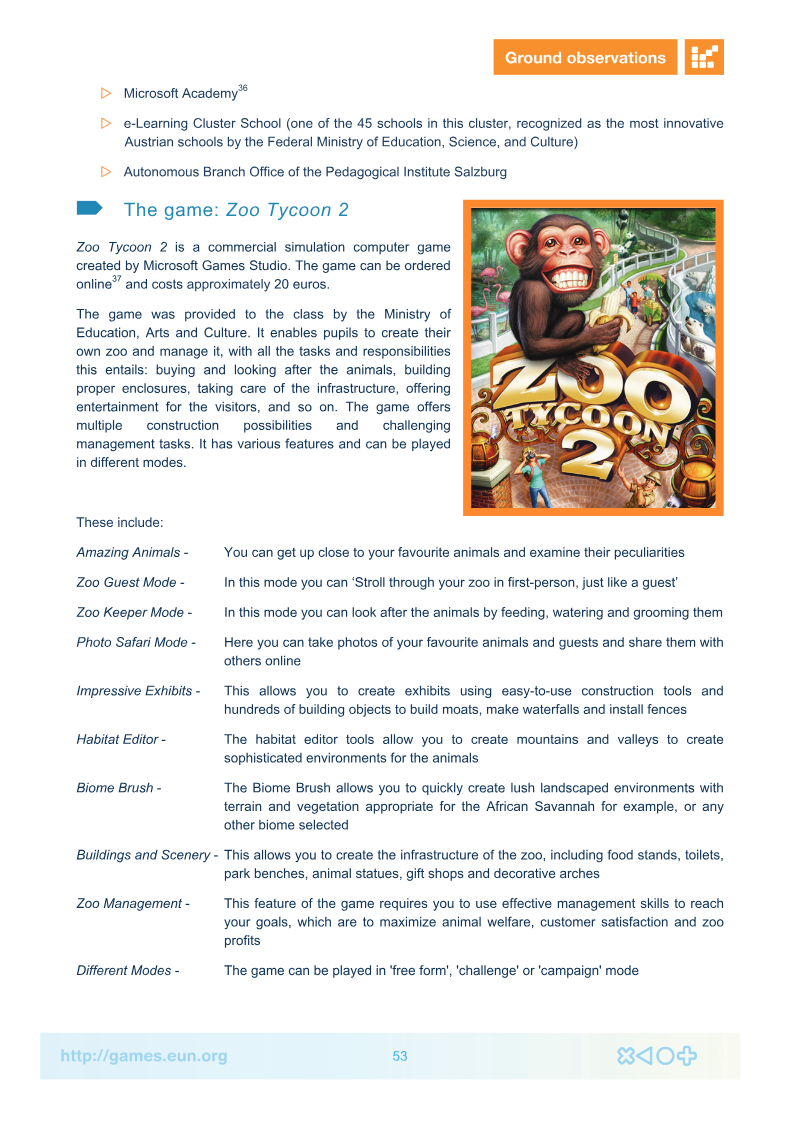
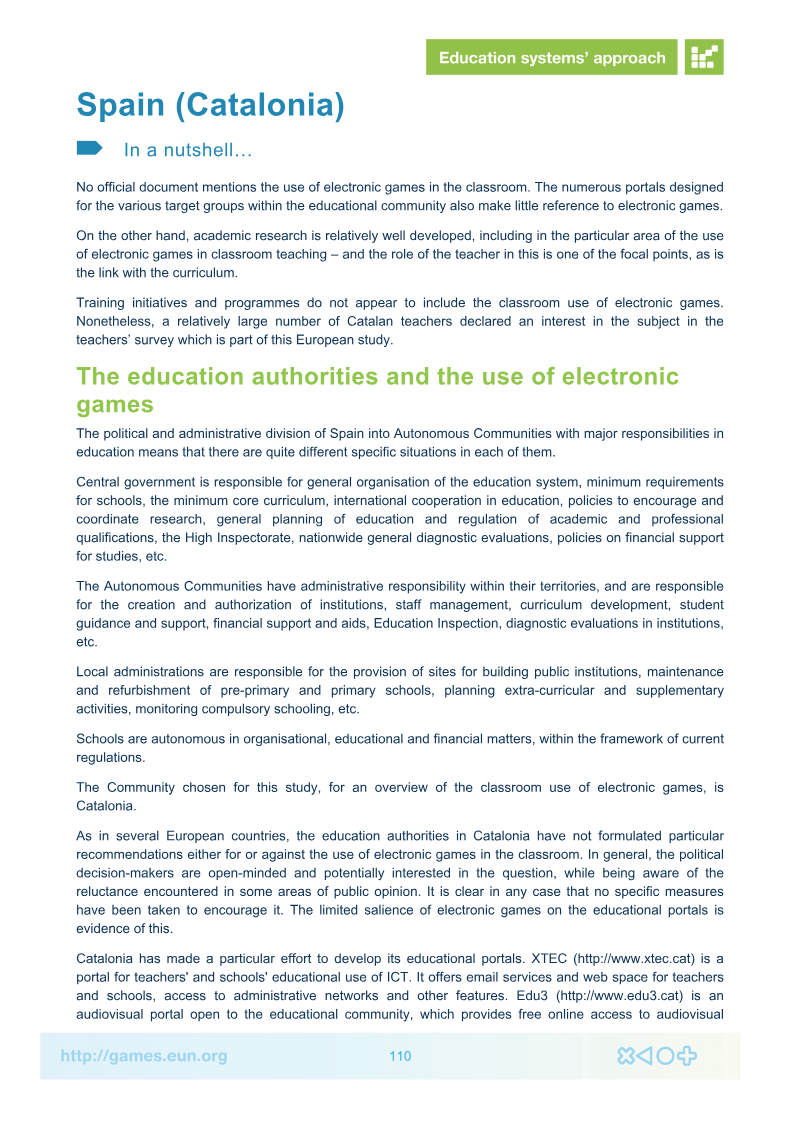
This study, published in May 2009, comprehensively investigates the use of digital games in schools across eight European countries, surveying over 500 teachers and interviewing more than 30 decision-makers and experts.
- Successful game-based learning depends on the pedagogical framework and teacher facilitation rather than the specific game title used.
- Digital games improve academic performance in core subjects like mathematics, language, and history when aligned with curriculum goals.
- Students show a preference for the high-quality design of commercial off-the-shelf games over purpose-built educational software, highlighting a need for better industry-education collaboration.
Textual Analysis, Digital Games, Zombies
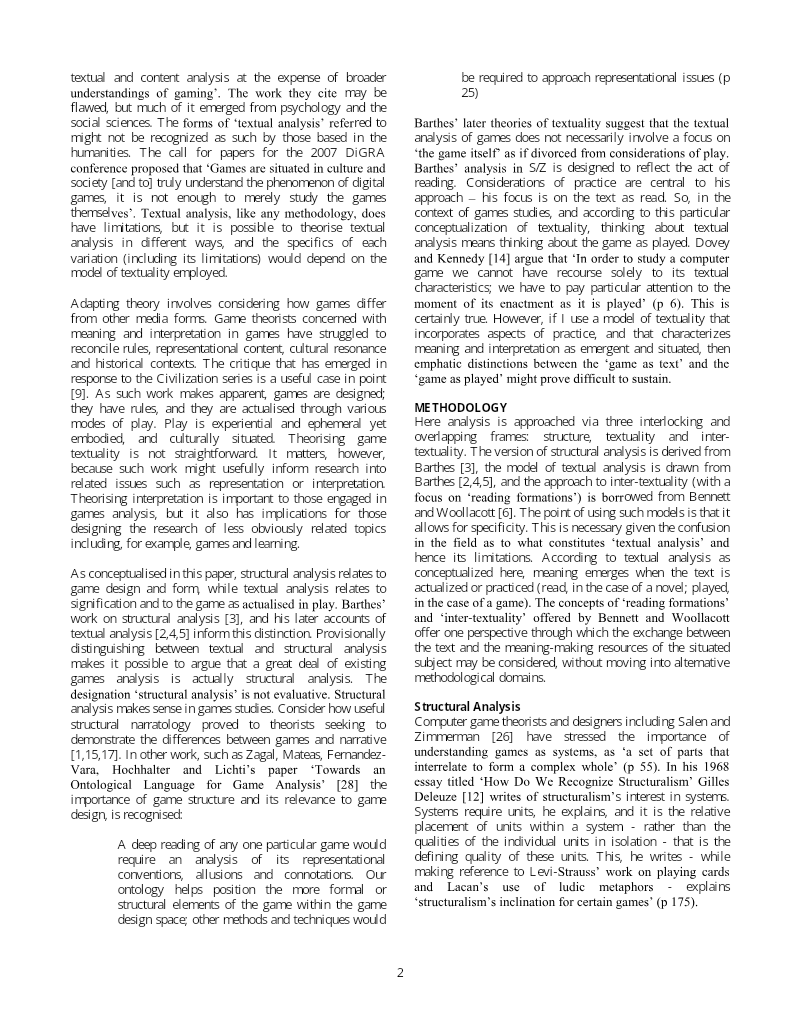
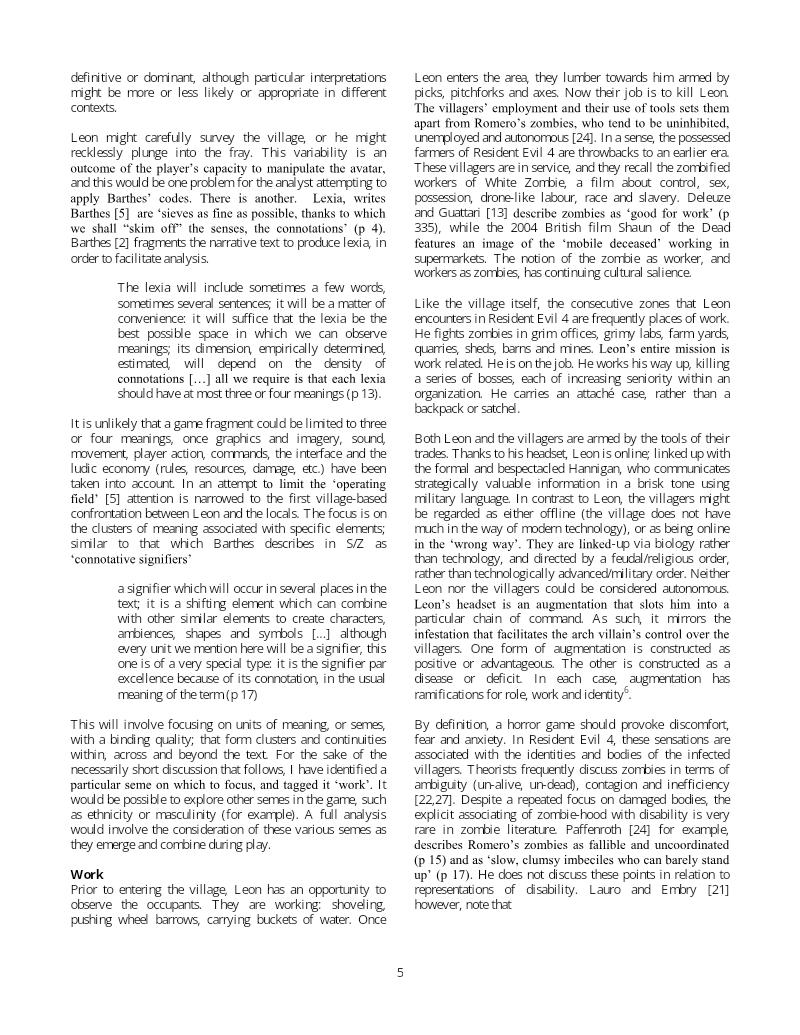
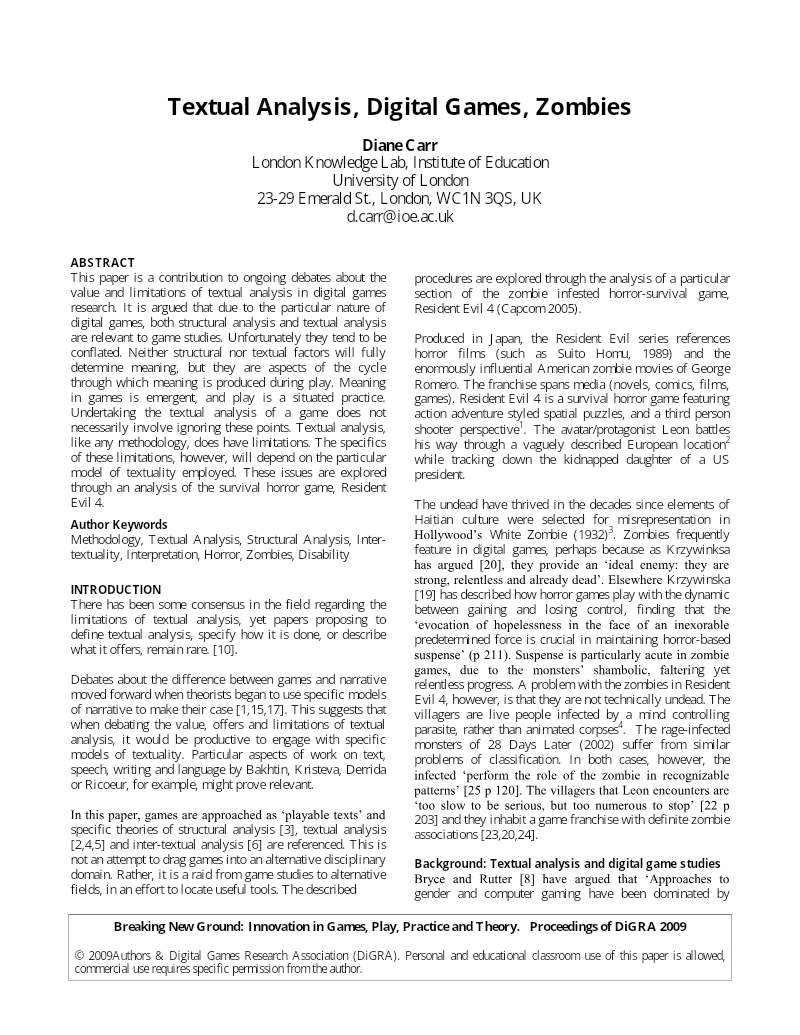
Diane Carr of the London Knowledge Lab, Institute of Education, University of London, presents a paper on textual analysis in digital game research, using the zombie-infested survival horror game Resident Evil 4 (Capcom 2005) as a case study.
- The author argues that structural and textual analysis are both relevant to game studies, and that neither structural nor textual factors will fully determine meaning on their own.
- The paper treats games as playable texts and frames meaning as emergent and situated in play, rather than fixed in the game alone.
- Structural analysis of a game, as the author conceptualises it, involves the units constituting the game-as-system and how they inter-relate in time and space, with those positions not necessarily constant or stable.
Where Have All the Games Gone? Explorations on the Cultural Significance of Digital Games and Preservation
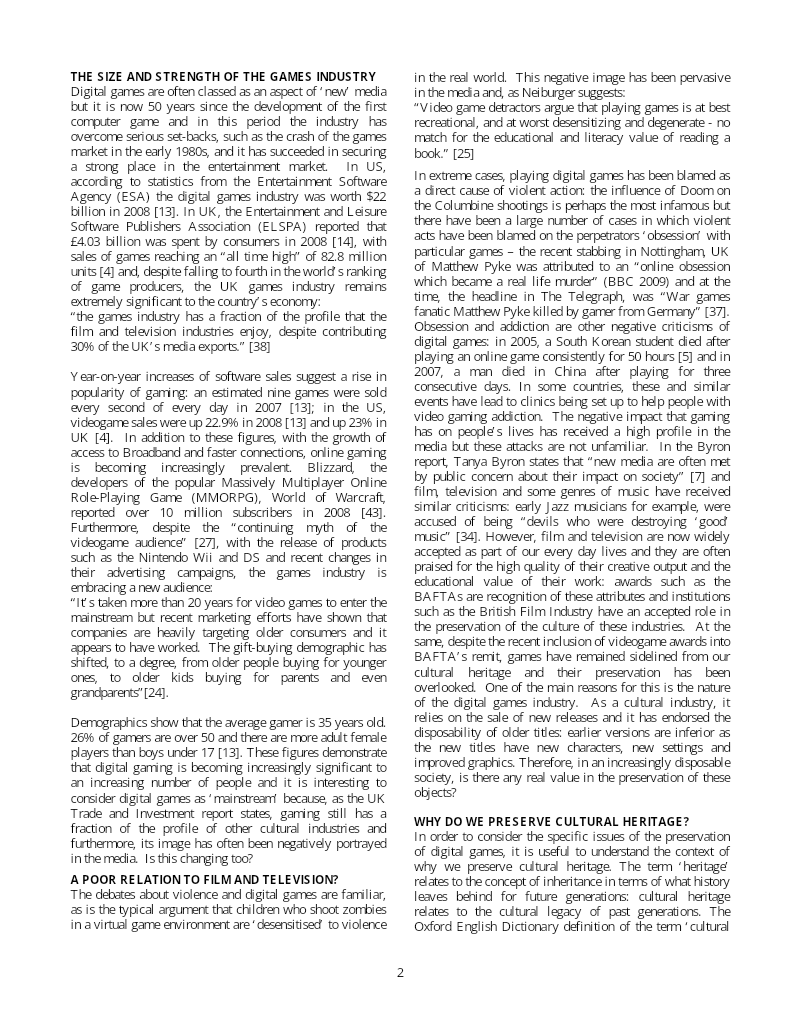
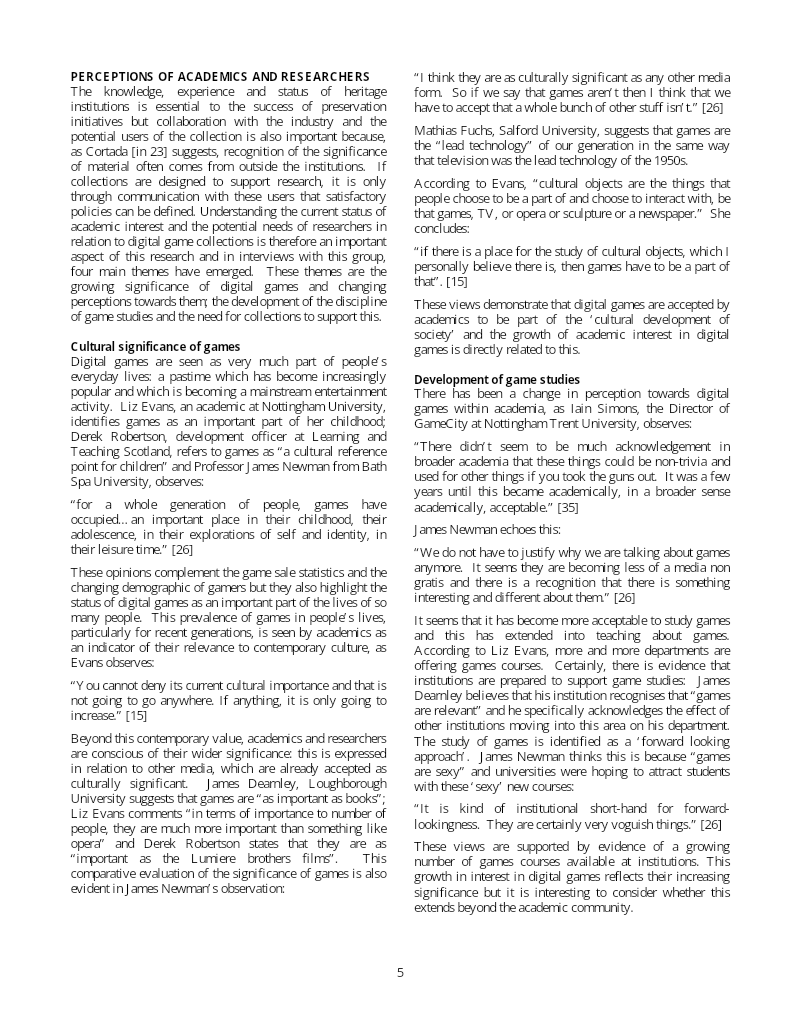
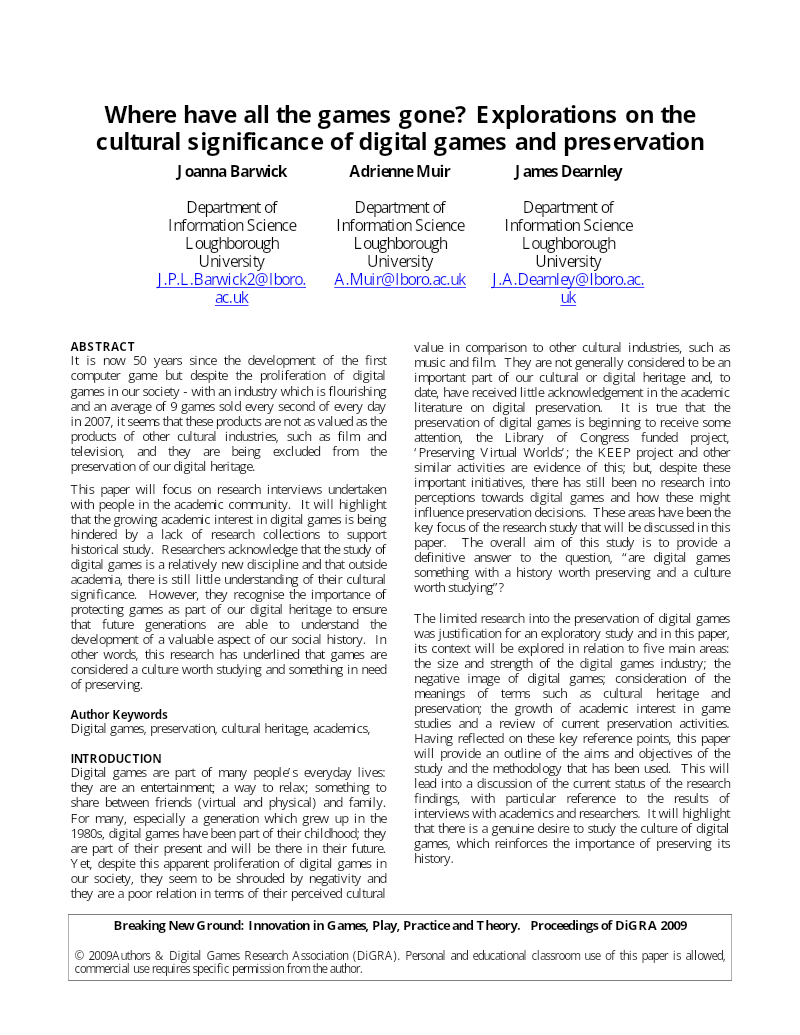
This exploratory study by Joanna Barwick, Adrienne Muir and James Dearnley of Loughborough University's Department of Information Science, presented at DiGRA 2009, examines the cultural significance of digital games and how perceptions of them might influence preservation decisions.
- The authors report that the digital games industry was worth $22 billion in the US in 2008, according to statistics from the ESA.
- The authors note that the number of games courses in the UK has grown, with 329 courses available in 2009 according to UCAS.
- The authors argue that the games industry's reliance on new releases has encouraged the disposability of older titles, which they link to the neglect of game preservation.
Collusion: Mapping the Interplay Between Paid and Unpaid Labourers in the Digital Games Industry
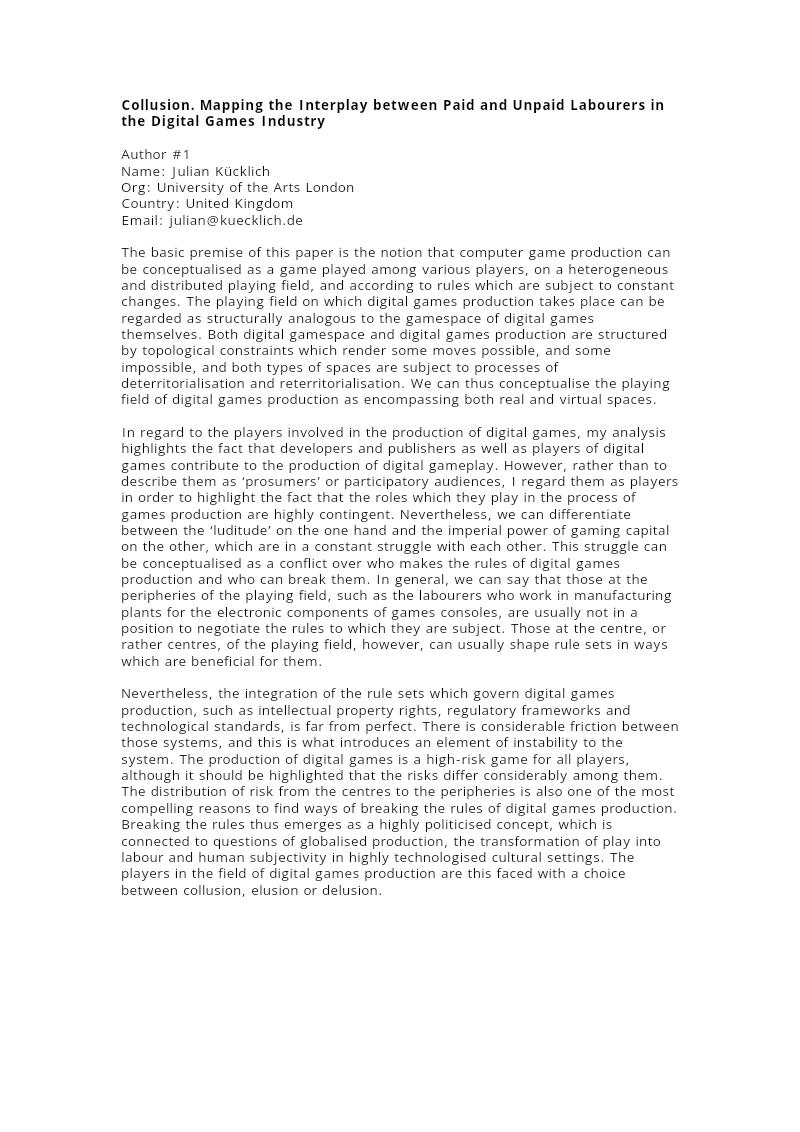
The document, "Collusion: Mapping the Interplay Between Paid and Unpaid Labourers in the Digital Games Industry," proposes a conceptual framework for understanding digital game production as a dynamic "game" played by various actors on a heterogeneous and distributed field.
- Digital game production is framed as a game in itself, played among heterogeneous actors across both real and virtual spaces, with developers, publishers, and players treated as contingent players rather than passive prosumers or audiences.
- The central conflict is a struggle between 'luditude' and the imperial power of gaming capital over who writes the rules of games production and who is able to break them.
- Power over rule-setting is unevenly distributed: peripheral actors, such as workers in manufacturing plants building games console components, have little capacity to negotiate the rules governing them, while central actors can shape rule sets to their advantage.
Levels of Complexity: Cultural Diversity, Politics and Digital Games
The paper examines the applicability of cultural diversity concepts, traditionally rooted in national media policy, to the digital games sector.
- The paper argues that cultural diversity, a concept rooted in traditional media and national cultural policy, must be rethought for digital games shaped by global production networks, transnational audiences, and user-generated content.
- European policymakers increasingly treat digital games as a cultural industry deserving public support, but the author contends that existing national policy frameworks are poorly matched to how games are produced and consumed.
- Support mechanisms cited include the French tax credit system and dedicated schemes in the United Kingdom, Germany, and Scandinavia, while Canada, South Korea, and China are noted as competitive pressures on European game industries.
Play with Me: Exploring the Autobiographical through Digital Games
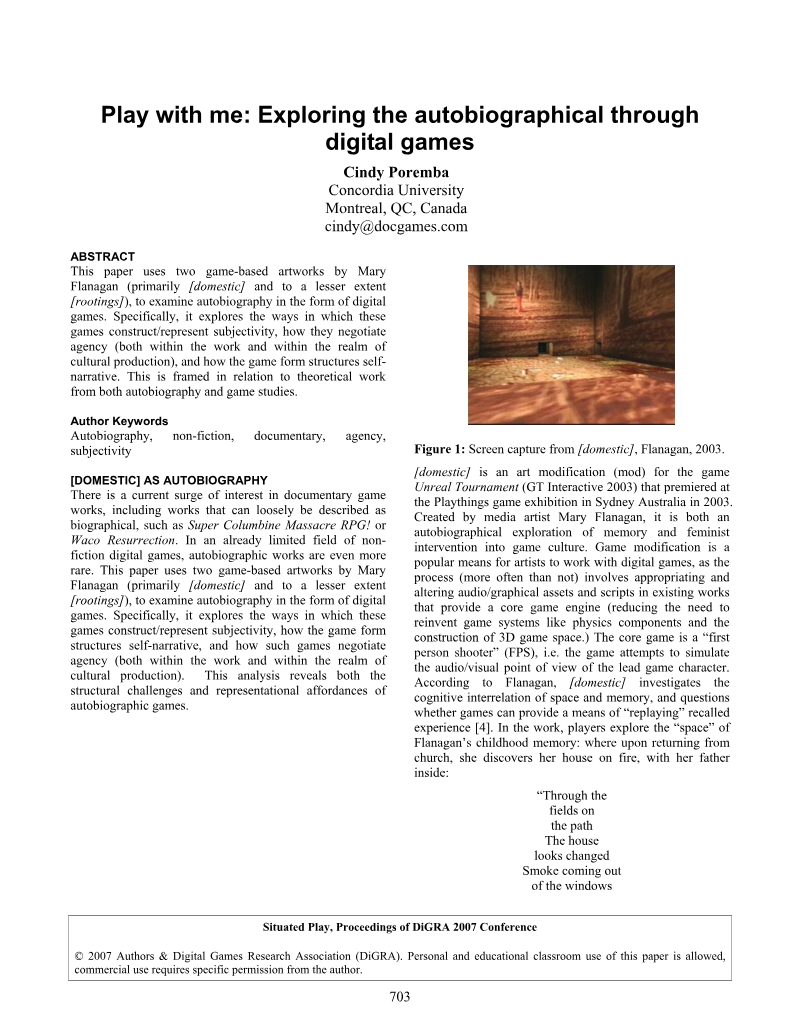
This paper investigates the potential of digital games as a medium for autobiographical expression, focusing on two game-based artworks by Mary Flanagan: "[domestic]" and, to a lesser extent, "[rootings]".
- The paper analyzes autobiography in digital games through two artworks by media artist Mary Flanagan, primarily the game modification [domestic] (2003), with a shorter look at [rootings].
- [domestic] removes a visible avatar and replaces combat imagery with personal photographs and poetic text about a childhood house fire, leaving the player's identity in contention and producing a shifting subjectivity.
- The paper argues that [domestic] reframes the first-person shooter's rules, which originally address a masculine subject of mastery, so that the player's shooting becomes defensive resistance against trauma and a reclaiming of agency within a feminist autobiographical project.
Profiling Academic Research on Digital Games Using Text Mining Tools
This paper by Johanna Bragge and Jan Storgårds, presented at DiGRA 2007, profiles academic research on digital games using text mining tools.
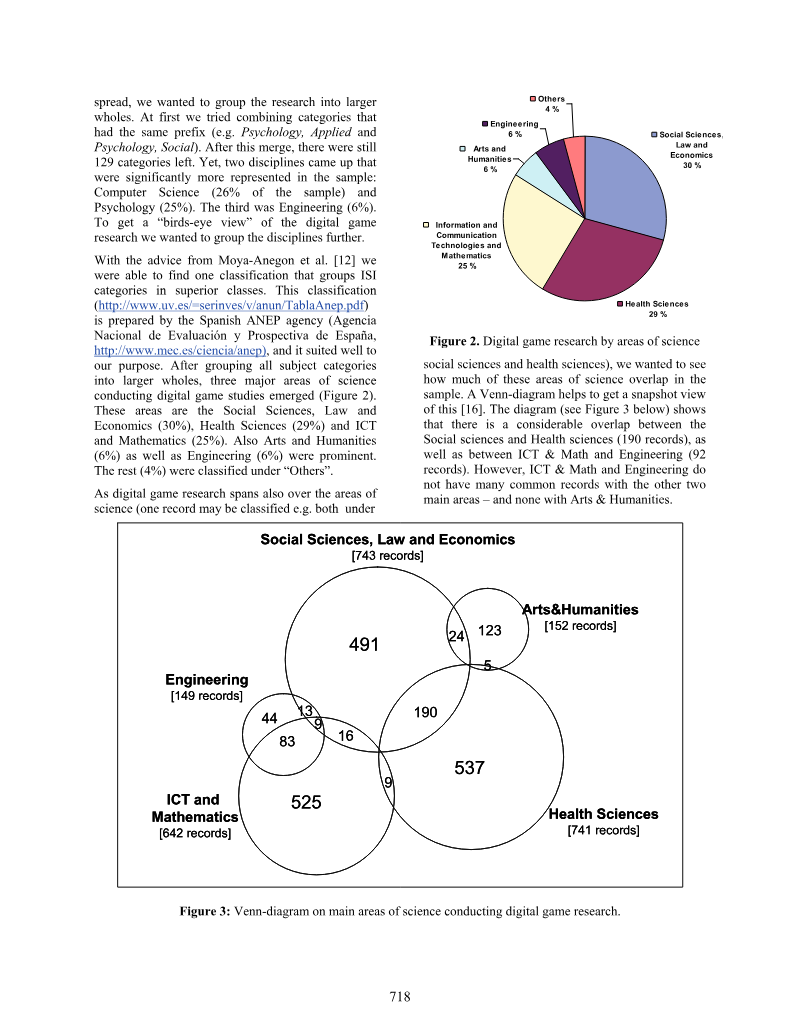
- The 2,136 ISI Web of Science records on digital games, dated 1986 to 2006, were spread across 182 subject categories, with the three largest grouped areas being Social Sciences, Law and Economics (30%), Health Sciences (29%), and ICT and Mathematics (25%).
- ICT and Mathematics showed the fastest growth between the last two five-year periods, at 160%, with Arts and Humanities second at 129%.
- The United States accounted for 48% of the top-ten countries selection by author country, followed by the United Kingdom at 15%.