Azure
Company
51 documents in the library are about Azure, from writers such as Microsoft, PocketGamer.biz and Game File. Each has a summary and key insights with the page they come from.
Connections
The documents about Azure on the inner ring, the other games and companies they name on the outer one. Select a cover to see it up close and open it in a new tab; drag to move, pinch or Ctrl + scroll to zoom.
Key figures from the reports
The Intelligent Cloud segment grew 30%, driven by a 40% increase in Azure and other cloud services revenue.
Microsoft, 2026 · Microsoft Third Quarter Fiscal Year 2026 Results, p. 10
The CMA identified that Microsoft already holds a dominant 60% to 70% share of the global cloud gaming market, supported by its Azure and Windows infrastructure.
Game World Observer, 2023 · UK Competition and Markets Authority Prevents Microsoft’s Proposed Purchase of Activision Blizzard
The Intelligent Cloud segment drove growth with a 31% surge in Azure and other cloud services revenue.
Microsoft, 2025 · Form 10-Q: Q2 FY2025
The Intelligent Cloud segment drove growth with a 17% revenue increase, bolstered by a 29% surge in Azure and other cloud services.
Microsoft, 2023 · Form 10-K: 2023
The Intelligent Cloud segment was the primary growth driver, generating $19.1 billion in revenue with a 26% year-over-year increase fueled by Azure.
Microsoft, 2022 · Microsoft Form 10-Q: Q3 FY2022
On Steam
Steam estimates as of 9 Oct 2026. Revenue is premium revenue on Steam only: game sales, without DLC.
- Revenue as publisher
- $2K
- 1 games
- Revenue as developer
- $2K
- 1 games
- Units sold
- 420
- as publisher or developer
Azure’s best-selling games on Steam
| Game | Released | Share of the best seller | Revenue | Units |
|---|---|---|---|---|
| AuguryDeveloper and Publisher | 2021 | $2K | 420 | |
| 救贖的奧米伽Developer and Publisher | — | — | — |
Documents about Azure

The End of Cheap Compute
The gaming industry is experiencing a fundamental shift in unit economics as the era of cheap, abundant cloud computing comes to an end.
- Xbox has introduced usage caps on cloud gaming, limiting Game Pass Ultimate subscribers to 15 hours per month, Premium to 10 hours, and Essential to 5 hours, to manage rising infrastructure costs.
- The cost of cloud gaming is being driven up by direct competition with AI workloads for data center resources, which has contributed to a 400% spike in the cost of basic memory components.
- Cloud gaming services are currently operating at a loss, with an estimated delivery cost of $0.45 per hour compared to an average revenue of only $0.22 per hour.

Xbox’s Billion-User Platform Mandate
Xbox’s newly appointed CEO, Asha Sharma, released a memo outlining a strategic reorganization aimed at transforming the company into a billion-user platform.
- Xbox's newly appointed CEO, Asha Sharma, announced a significant company reorganization on July 6, 2026, which will unfold over a year.
- The report, published on July 7, 2026, is titled "XBOX’s billion-user platform mandate."
- The full content of the report is accessible only to subscribers, with subscriptions starting at $8.99 per month.

How I Stopped Hating Commitment Dates: The Slow Walk from PERT to Flow Metrics
This analysis examines the limitations of traditional game production forecasting methods and advocates for a transition toward flow-based metrics.
- Traditional estimation methods like parametric, top-down, bottom-up, and three-point PERT are unreliable for game production due to inherent biases and the planning fallacy, often leading to inaccurate forecasts.
- Even probabilistic methods like classical PMBOK Monte Carlo simulations fail if their baseline inputs are biased estimates, essentially providing a probabilistic view of an already flawed prediction.
- Often, commitment dates are fixed by external factors (e.g., marketing windows, fiscal calendars) before estimation, turning the forecasting process into a reverse-engineering exercise to justify a pre-determined outcome.

Xbox Expands Leadership Team with Major Hires
Xbox has initiated a significant restructuring of its leadership team to accelerate product development and refine its business strategy.
- Xbox has appointed industry analyst Matthew Ball as Chief Strategy Officer to address significant pressures within its console business, particularly regarding rising memory and storage costs.
- Scott Van Vliet, formerly of Microsoft’s Azure OpenAI and AI Core infrastructure, has been hired as Chief Technology Officer to improve product development speed and execution.
- CEO Asha Sharma is leading a strategic restructuring aimed at increasing organizational agility and focus, part of a broader effort to reposition Xbox for future growth.
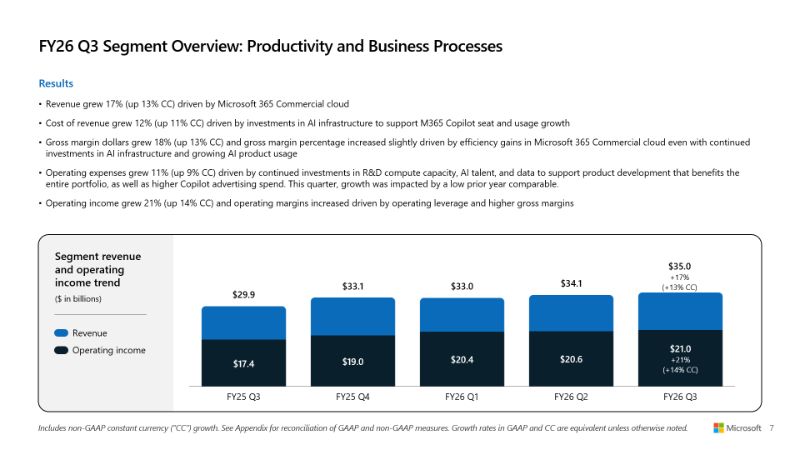
Microsoft Third Quarter Fiscal Year 2026 Results
Microsoft’s third-quarter fiscal year 2026 results demonstrate strong financial growth driven primarily by significant expansion in cloud services and artificial intelligence infrastructure.
- Microsoft reported total revenue of $82.9 billion for Q3 FY2026, an 18% year-over-year increase, with net income rising 23% to $31.8 billion.
- AI-related revenue reached an annual run rate exceeding $37 billion, marking a 123% year-over-year increase.
- Capital expenditures surged 49% to $31.9 billion, with approximately two-thirds of this investment allocated to GPU and CPU infrastructure to support AI and cloud demand.
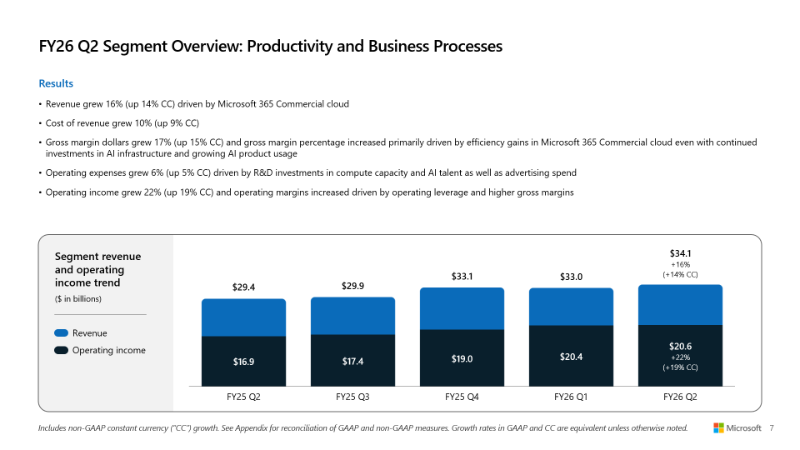
Microsoft Fiscal Year 2026 Second Quarter Results
The second quarter fiscal year 2026 results for Microsoft demonstrate strong overall financial growth, primarily fueled by significant expansion in cloud services and artificial intelligence infrastructure.
- Microsoft reported total revenue of $81.3 billion for Q2 FY2026, a 17% year-over-year increase, with net income rising 60% to $38.5 billion due to a $10 billion gain from the OpenAI recapitalization.
- Capital expenditures surged 66% to $37.5 billion, with approximately two-thirds of this investment directed toward short-lived assets like GPUs and CPUs to scale AI infrastructure.
- Commercial bookings grew 230% during the quarter, driven by major commitments from OpenAI and Anthropic, resulting in a commercial remaining performance obligation of $625 billion.
Microsoft Q1 2026 Earnings Results
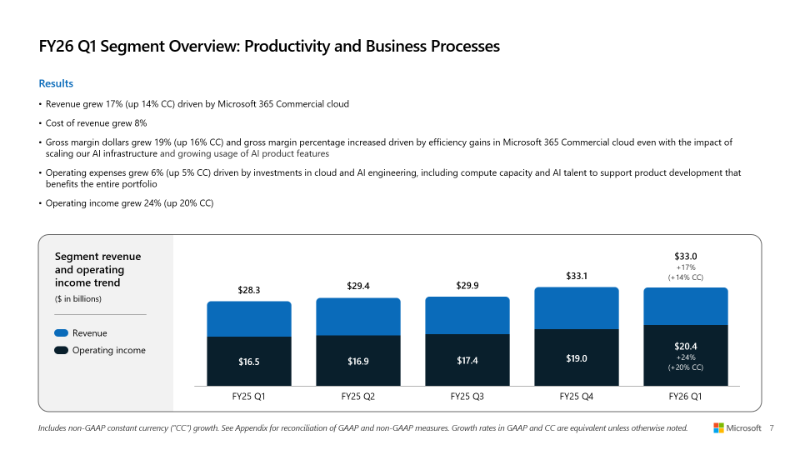
Microsoft’s fiscal year 2026 first-quarter results demonstrate robust financial growth, characterized by an 18% year-over-year revenue increase to $77.7 billion.
- Microsoft reported an 18% year-over-year revenue increase to $77.7 billion and a 24% rise in operating income to $38.0 billion for Q1 2026.
- Capital expenditures surged 74% to $34.9 billion, driven by aggressive investments in AI infrastructure, including large-scale GPU and CPU acquisitions.
- The Intelligent Cloud segment grew 28% to $30.9 billion, underpinned by a 40% increase in Azure and other cloud services revenue.

“To Do Nothing Is to Support Microsoft's Actions”
This analysis examines the internal tensions at Microsoft-owned Arkane Studios in France, where a group of employees associated with the French union Le Syndicat des Travailleureuses du Jeu Vidéo (STJV) issued an open letter criticizing the parent company’s alleged ties to the Israeli military.
- A group of employees at Microsoft-owned Arkane Lyon, represented by the STJV union, published an open letter protesting Microsoft’s reported provision of AI and Azure cloud technology to the Israeli military during the ongoing conflict in Gaza.
- The unionized workers argue that Microsoft’s gaming division, which includes Xbox, Activision, and Blizzard, is financially complicit in the company's broader corporate activities, rejecting the notion that their studio is siloed from these operations.
- Arkane leadership has remained neutral regarding the letter, advising staff to maintain peaceful exchanges, while the authors report receiving both internal support and anxiety from colleagues concerned about potential retaliation following recent Microsoft-wide layoffs.
Microsoft Game Workers Call Out Company Over Israeli Military Ties
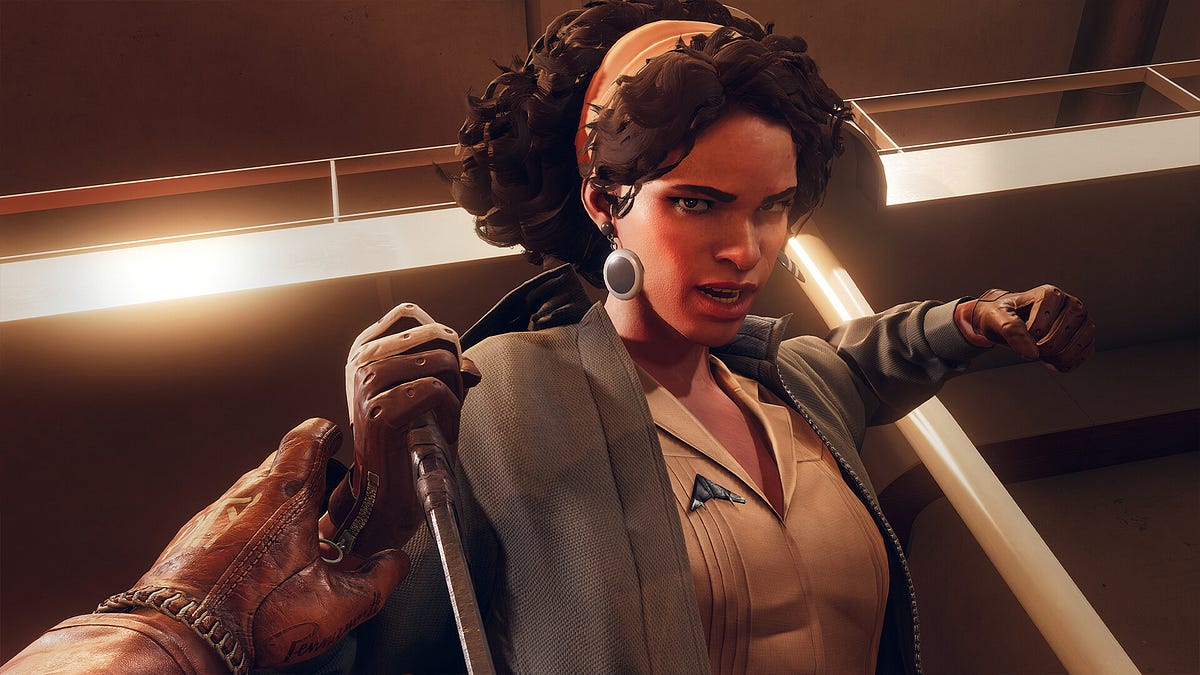
Employees at Arkane Lyon, a studio owned by Microsoft, have issued an open letter demanding that the corporation terminate all current and future contracts with the Israeli military.
- Workers at Microsoft-owned studio Arkane Lyon, represented by the French union STJV, have issued an open letter demanding the company terminate all contracts with the Israeli military.
- This marks the first instance of employees within Microsoft’s gaming division formally calling for action against the company over its alleged ties to the Israeli military.
- The workers cited concerns that the company's involvement could lead to a public boycott of Xbox products, potentially threatening the long-term viability of their jobs.

Form 10-Q: Q2 FY2025
Microsoft Corporation’s financial results for the second quarter of fiscal year 2025 demonstrate robust growth, with total revenue reaching $69.6 billion and net income rising to $24.1 billion.
- Microsoft reported Q2 FY2025 revenue of $69.6 billion and net income of $24.1 billion, marking a 12% year-over-year revenue increase.
- The Intelligent Cloud segment drove growth with a 31% surge in Azure and other cloud services revenue.
- Aggressive scaling of AI infrastructure has pressured margins, resulting in a decline of the Microsoft Cloud gross margin to 70%.
Perforce 2024 State of Game Technology Report
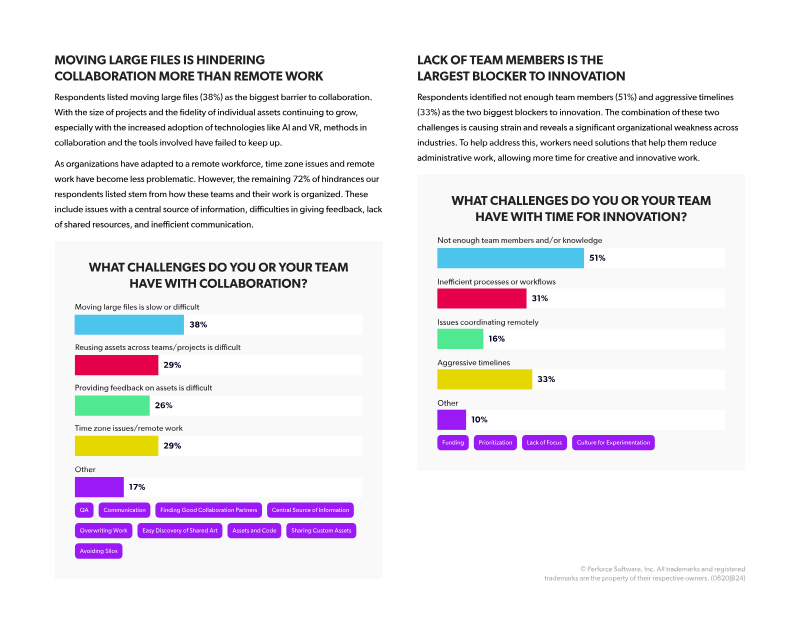
The report demonstrates that real-time 3D engines and advanced asset pipelines are now integral to more than half of organizations beyond traditional game development, spanning media, automotive, education and healthcare.
- Real-time 3D engines have expanded beyond gaming, with over 50% of organizations in media, automotive, education, and healthcare now integrating these technologies into their workflows.
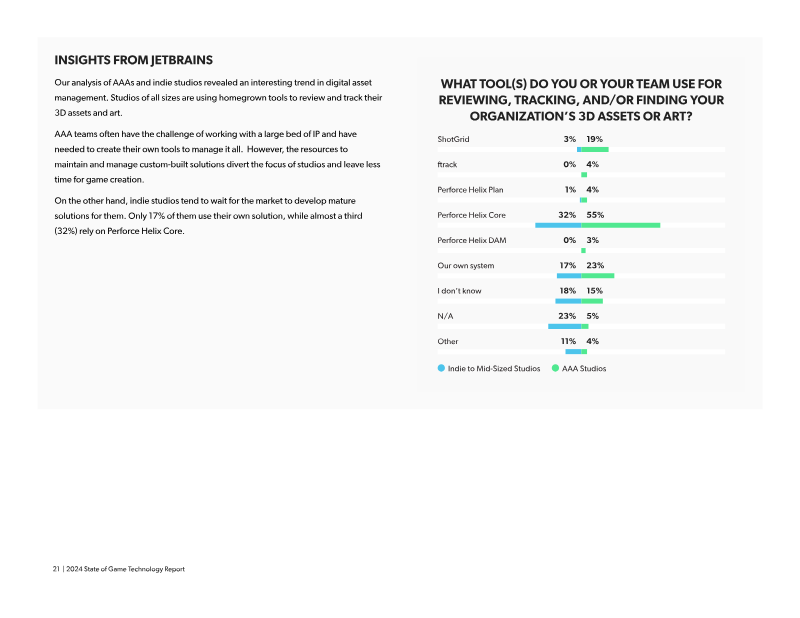
- Unreal Engine leads the market with 63% usage, followed by Unity at 47%, while Perforce Helix Core remains the primary version-control solution for 51% of firms.
- Generative AI adoption is widespread, with over 65% of respondents utilizing AI tools, led by ChatGPT at 47%, with indie studios showing higher adoption rates than AAA counterparts.

Unity Backpedals / Playtika Acquires / Next-Gen Console Leaks
Unity’s recent attempt to implement a controversial runtime fee policy has triggered a profound crisis of confidence within the game development community.
- Unity's attempt to impose retroactive runtime fees has damaged its reputation, prompting developers to explore alternatives like Godot to prioritize platform stability over Unity's mobile ecosystem.
- Unity has attempted to mitigate developer backlash by capping its new runtime fees at 4% of revenue and limiting the policy to high-earning developers.
- Microsoft is shifting its strategy toward a hybrid ecosystem that integrates local hardware with Azure cloud infrastructure to centralize user data and services via Game Pass.