Alliance
Company
Documents about Alliance
Raven QA are Unionizing | Games ReCAP
Quality assurance (QA) workers at Raven Software, a subsidiary of Activision Blizzard, have initiated a historic effort to form the first major North American video game industry union, known as the Game Workers Alliance.
- Raven Software QA workers have formed the Game Workers Alliance, marking the first major unionization effort in the North American video game industry.
- The organizing effort was triggered by a December 2021 strike following the non-renewal of contracts for several QA staff members.
- Activision Blizzard has countered unionization efforts by restructuring, including a 41% increase in minimum compensation for Raven QA staff and transitioning over 60% of temporary QA personnel to full-time roles.

Stillfront Interim Report: Third Quarter 2021
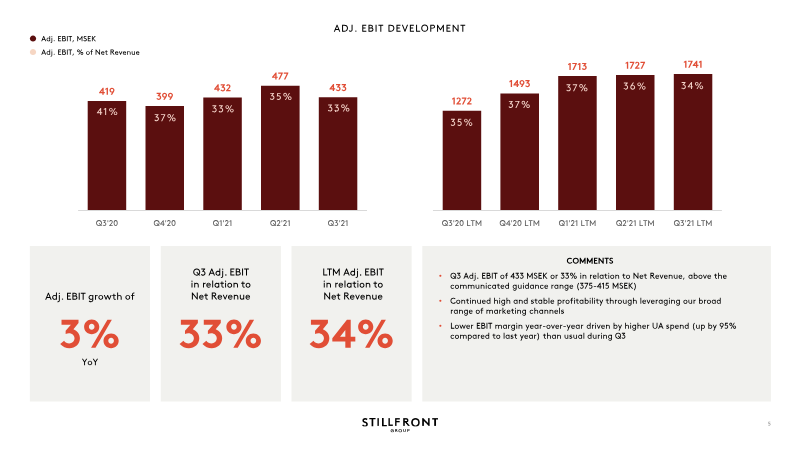
Stillfront’s third-quarter 2021 interim report highlights a period of robust financial expansion and operational scaling, characterized by a 28% year-over-year increase in net revenue to 1,311 MSEK.
- Stillfront reported a 28% year-over-year increase in net revenue to 1,311 MSEK for Q3 2021, supported by a strong adjusted EBIT of 433 MSEK and a 33% margin.
- User acquisition (UA) spending increased by 95% compared to the prior year as the company prepared for seasonally stronger quarters and stabilized mobile advertising markets.
- The company maintained a healthy balance sheet with a 1.2x leverage ratio, remaining below its 1.5x target following a directed share issuance and 486 MSEK in operational cash flow.
Duty Calls
In October 2021, Activision Blizzard CEO Bobby Kotick announced a series of corporate reforms aimed at addressing a major sexual harassment scandal and improving the company’s internal culture.
- Activision Blizzard CEO Bobby Kotick has pledged to waive his salary, bonuses, and equity awards until the company meets specific diversity targets, accepting only California's minimum wage of $62,500 in the interim.
- The company committed to increasing the percentage of women and non-binary employees by 50% and has pledged $250 million toward broader diversity initiatives.
- Activision Blizzard will end the practice of forced arbitration for employee grievances and implement a zero-tolerance policy for harassment, resulting in immediate termination for violations.
Plus: End of Quarter Hype, New Subscriber Features
GameDiscoverCo provides an update on platform analytics and subscriber resources, focusing primarily on the Steam ecosystem during the transition into the summer sales period.
- Steam Hype’s back-end has been overhauled with advanced filtering for Steam tags, controller support, and adult-content exclusion to help developers track genre-specific market trends.
- A new game discovery eBook provides proprietary data on Steam tag performance, pricing strategies, and the correlation between pre-launch followers and long-term revenue.
- Q2 release schedules are experiencing high volatility as developers delay launches to avoid competing with the Steam Summer Sale.
Plus: Who Is Steam's Long Tail Paying Off For?
This analysis examines the commercial performance and "long tail" sustainability of video games on Steam, focusing on how initial launch momentum translates into long-term sales.
- Steam review volume serves as a reliable proxy for sales, with a typical multiplier of 30 to 40 units sold per review.
- Top-tier long-tail performers like Guilty Gear Strive and Doki Doki Literature Club Plus! maintained approximately 500 reviews per week six months post-launch, equating to 15,000–20,000 weekly unit sales.
- Long-term commercial success is heavily dependent on genre-specific appeal, particularly in online co-op and tactical shooter categories, and the ability to convert initial launch hype into sustained community engagement.
Plus: Next Week's Hype Makes an Ascent to the Starbase
Analysis of Steam Hype data and platform sales charts for late July 2021 reveals a busy release window dominated by high-profile indie and mid-tier titles.
- The Nintendo Switch digital ecosystem is shifting toward free-to-play titles like Pokémon Unite and Sky: Children of the Light, which is negatively impacting the discoverability and sales performance of new premium indie games.
- Starbase and The Ascent are the primary drivers of Steam consumer interest for late July 2021, with Starbase entering Early Access backed by 40,000 followers.
- Death’s Door achieved breakout success with a 92% positive review rate, while Cris Tales underperformed commercially due to technical instability and a $40 price point.
Android Ad Spend Increases Up to 21% Two Weeks After iOS 14.5 and IDFA Changes
The mobile advertising landscape underwent significant shifts following the release of iOS 14.5 and the implementation of Apple’s App Tracking Transparency (ATT) framework.
- Following the release of iOS 14.5 and the implementation of IDFA changes, Android ad spend increased by 8.29% to 21% within two weeks.
- Initial adoption of iOS 14.5 was low, averaging 12.9% of users, with only 16.8% of users opting in to share their IDFA for app tracking.
- Ad spend on iOS saw mixed results immediately following the privacy changes, with some reports indicating a decrease of up to 3.59% and others showing a 3.32% increase.
Keynote: Turning Games Green: How the Industry is Signing up to Play for the Planet PGCD #2
The Playing for the Planet Alliance, a United Nations-led initiative, represents a critical shift in the gaming industry’s approach to environmental responsibility.
- The Playing for the Planet Alliance, a UN-led initiative, unites 24 major gaming companies reaching over one billion monthly active users to drive industry-wide decarbonization.
- Studios are required to move beyond passive awareness by measuring their total carbon footprint, which must include the energy consumption of player devices.
- Operational sustainability efforts focus on optimizing delivery methods, transitioning to carbon-neutral models, reducing corporate travel, and utilizing sustainable cloud partnerships.
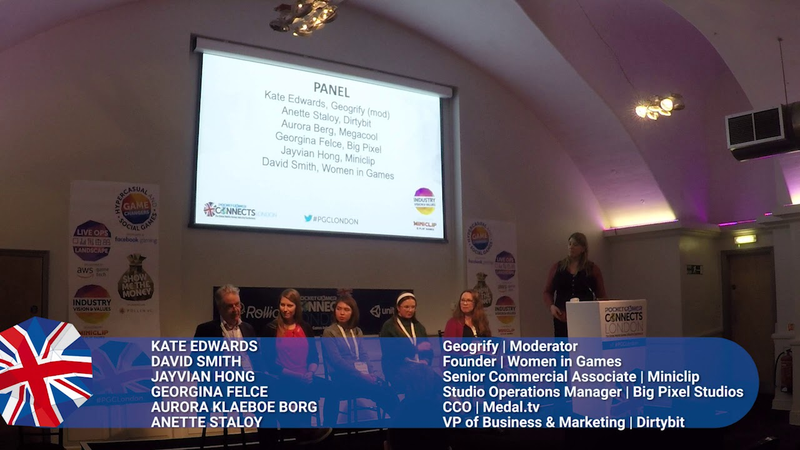
Panel: What Needs to be Done to Guarantee a Harrassment-free Company
This panel discussion, held at Pocket Gamer Connects London in January 2020, explores strategies for fostering harassment-free environments within the video game industry.
- Companies must move beyond passive policies toward active, transparent, and inclusive leadership to mitigate harassment risks and ensure accountability.
- Data indicates that 75% of disruptive online behavior is attributed to men, highlighting a specific demographic that requires targeted intervention strategies.
- Effective anti-harassment frameworks must be tailored to specific company cultures rather than relying on generic templates.

DOTA Underlords | Backseat Gamer Episode 001
Dota Underlords exemplifies the complexities of the auto-battler genre, where success hinges on strategic foresight rather than real-time mechanical execution.
- Success in Dota Underlords is driven by strategic foresight, unit placement, and team composition management rather than real-time mechanical skill.
- The core progression loop requires balancing the purchase of experience points to unlock higher-tier units with the acquisition of duplicate units to facilitate upgrades.
- Upgrading units to a two-star version—which requires combining three identical units—is a mandatory mechanic for scaling health and damage output.

Third-party publishing – Why and how
The mobile games industry has experienced significant growth, with 2018 revenues reaching $70 billion, surpassing the combined totals of PC and console gaming.
- Diversifying distribution beyond Google Play and the Apple App Store allows developers to improve revenue sharing, pricing control, and direct user engagement.
- Huawei is aggressively expanding its App Gallery ecosystem, leveraging its status as the world's second-largest smartphone manufacturer with over 200 million devices shipped in 2018.
- Huawei offers developers promotional support through splash screens, top banners, and out-of-the-box placement to drive user acquisition across its footprint in 170 countries.
Digital Turbine Quarterly Report: Q2 FY2018
Digital Turbine’s financial performance for the second quarter of fiscal year 2018 reflects a strategic transition toward higher-margin advertising services, characterized by revenue growth and narrowing losses.
- Digital Turbine reported a significant improvement in profitability for the three months ended September 30, 2017, with gross profit rising 133.5% to $7.36 million and operating loss narrowing by 80.2% to $1.25 million compared to the prior year.
- Net revenue for the quarter grew 22.2% year-over-year to $27.89 million, driven by the company's advertising and content distribution services.
- Revenue concentration remains high, with four major customers—Singapore Telecommunications (20.0%), AOL (14.2%), Telstra (12.5%), and Machine Zone (10.6%)—accounting for a combined 57.3% of net revenues during the quarter.