Alliance
Company
Documents about Alliance
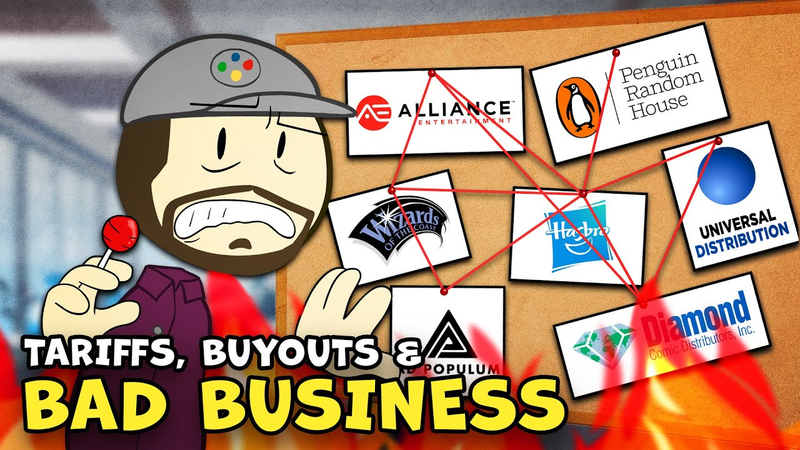
Board Games are in Trouble, and it's NOT Why You Think | Extra Credits
The board game and tabletop RPG industry is currently facing a systemic crisis driven by corporate consolidation, fragile global supply chains, and volatile trade policies.
- The board game industry is facing a systemic crisis driven by supply chain fragility, corporate consolidation, and volatile tariff policies that threaten the viability of publishers.
- The bankruptcy of Diamond Comic Distributors and the subsequent collapse of its subsidiary, Alliance Game Distributors, has created massive instability in the U.S. tabletop game distribution network.
- Modern board game production relies on 'just-in-time' supply chains that distribute manufacturing across multiple countries, making the process highly susceptible to border-crossing costs and tariff fluctuations.
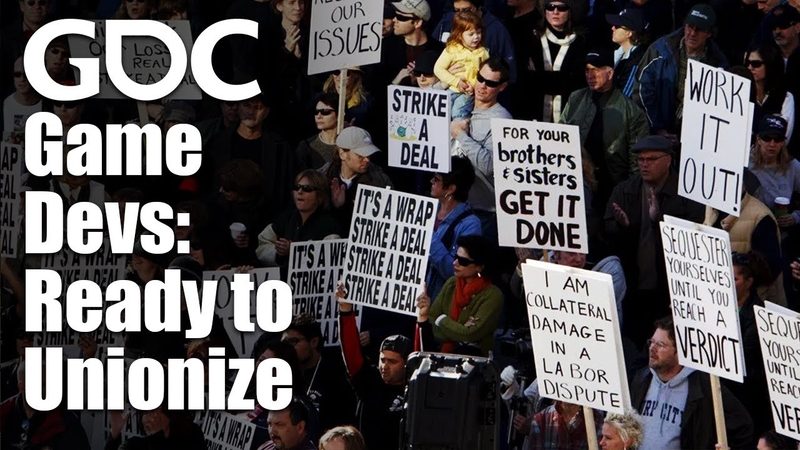
Now Is the Time! Workers in Games Are Ready to Form Unions
The game industry currently faces a critical juncture where widespread layoffs, precarious job security, and unilateral management decisions have necessitated a shift toward collective labor organization.
- Game industry workers are increasingly pursuing unionization to transition from individual advocacy to a structured, democratic system of negotiation that secures legally binding contracts.
- Collective bargaining is being utilized to address systemic issues such as widespread layoffs, job insecurity, and unilateral management decisions regarding remote work and unpaid testing.
- Strategic organizing efforts, supported by the International Alliance of Theatrical Stage Employees (IATSE), prioritize building studio-level supermajorities to establish industry-wide labor standards.
Raven QA are Unionizing | Games ReCAP
Quality assurance (QA) workers at Raven Software, a subsidiary of Activision Blizzard, have initiated a historic effort to form the first major North American video game industry union, known as the Game Workers Alliance.
- Raven Software QA workers have formed the Game Workers Alliance, marking the first major unionization effort in the North American video game industry.
- The organizing effort was triggered by a December 2021 strike following the non-renewal of contracts for several QA staff members.
- Activision Blizzard has countered unionization efforts by restructuring, including a 41% increase in minimum compensation for Raven QA staff and transitioning over 60% of temporary QA personnel to full-time roles.
Keynote: Turning Games Green: How the Industry is Signing up to Play for the Planet PGCD #2
The Playing for the Planet Alliance, a United Nations-led initiative, represents a critical shift in the gaming industry’s approach to environmental responsibility.
- The Playing for the Planet Alliance, a UN-led initiative, unites 24 major gaming companies reaching over one billion monthly active users to drive industry-wide decarbonization.
- Studios are required to move beyond passive awareness by measuring their total carbon footprint, which must include the energy consumption of player devices.
- Operational sustainability efforts focus on optimizing delivery methods, transitioning to carbon-neutral models, reducing corporate travel, and utilizing sustainable cloud partnerships.
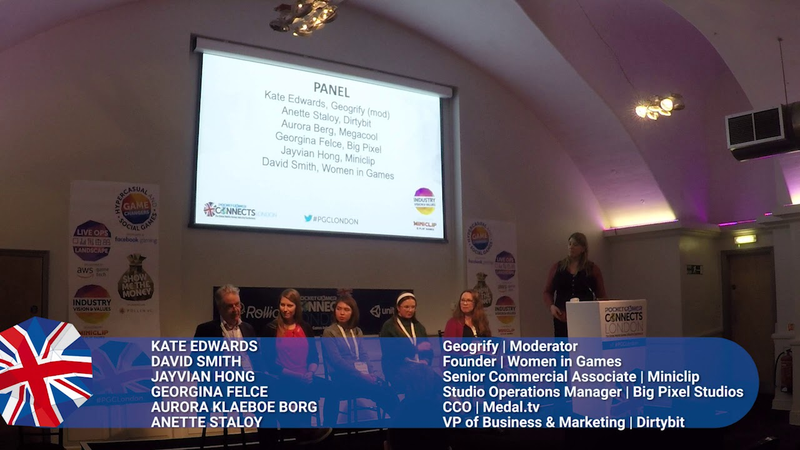
Panel: What Needs to be Done to Guarantee a Harrassment-free Company
This panel discussion, held at Pocket Gamer Connects London in January 2020, explores strategies for fostering harassment-free environments within the video game industry.
- Companies must move beyond passive policies toward active, transparent, and inclusive leadership to mitigate harassment risks and ensure accountability.
- Data indicates that 75% of disruptive online behavior is attributed to men, highlighting a specific demographic that requires targeted intervention strategies.
- Effective anti-harassment frameworks must be tailored to specific company cultures rather than relying on generic templates.
DOTA Underlords | Backseat Gamer Episode 001
Dota Underlords exemplifies the complexities of the auto-battler genre, where success hinges on strategic foresight rather than real-time mechanical execution.
- Success in Dota Underlords is driven by strategic foresight, unit placement, and team composition management rather than real-time mechanical skill.
- The core progression loop requires balancing the purchase of experience points to unlock higher-tier units with the acquisition of duplicate units to facilitate upgrades.
- Upgrading units to a two-star version—which requires combining three identical units—is a mandatory mechanic for scaling health and damage output.

Third-party publishing – Why and how
The mobile games industry has experienced significant growth, with 2018 revenues reaching $70 billion, surpassing the combined totals of PC and console gaming.
- Diversifying distribution beyond Google Play and the Apple App Store allows developers to improve revenue sharing, pricing control, and direct user engagement.
- Huawei is aggressively expanding its App Gallery ecosystem, leveraging its status as the world's second-largest smartphone manufacturer with over 200 million devices shipped in 2018.
- Huawei offers developers promotional support through splash screens, top banners, and out-of-the-box placement to drive user acquisition across its footprint in 170 countries.
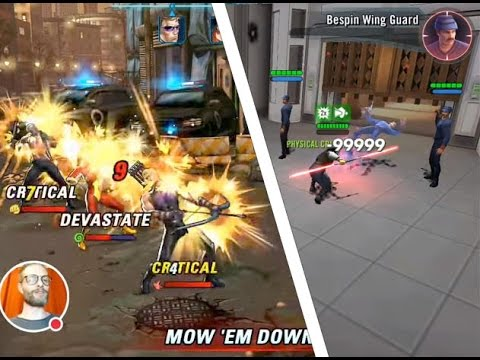
Marvel: Avengers Alliance 2 vs Star Wars: Galaxy of Heroes
Marvel: Avengers Alliance 2 and Star Wars: Galaxy of Heroes represent two distinct approaches to the mobile turn-based squad RPG genre, both leveraging major Disney-owned intellectual properties.
- Marvel: Avengers Alliance 2 and Star Wars: Galaxy of Heroes both utilize a three-wave combat structure and character-based progression, yet they target different segments of the mobile RPG market.
- Marvel: Avengers Alliance 2 focuses on tactical depth by requiring manual input for complex class-based mechanics, buffs, and debuffs without an automated combat option.
- Star Wars: Galaxy of Heroes prioritizes accessibility and time-efficiency through a streamlined combat system with fewer ability choices per character.
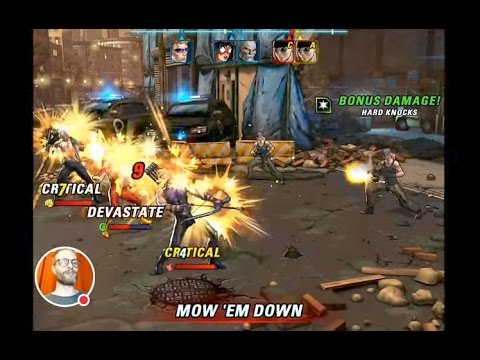
Marvel: Avenger Alliance 2's deep use of buffs/debuffs
Marvel Avengers Alliance 2, a mobile-first sequel to the original Facebook title, distinguishes itself within the squad-based card collection RPG genre through a heavy emphasis on tactical depth.
- Marvel Avengers Alliance 2 centers its combat loop on a complex buff/debuff system that rewards strategic move sequencing rather than basic attacks.
- Players can manipulate combat outcomes by applying status effects that reduce enemy defense by 20 percent or increase friendly damage output by 40 percent.
- The game utilizes a three-by-three combat structure, allowing players to manage a primary team of three heroes and a reserve pool of three additional characters for mid-mission swaps.
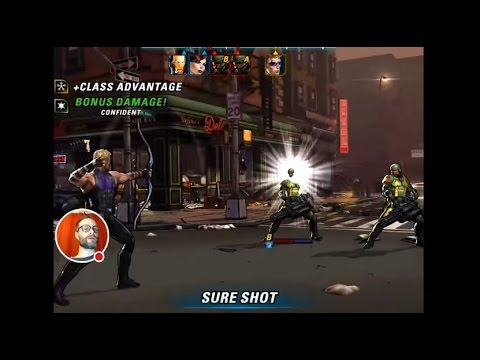
FTUE: Marvel Avengers Alliance 2
Marvel Avengers Alliance 2 represents Disney’s transition of its successful social media franchise into the mobile squad-based role-playing game market.
- Marvel Avengers Alliance 2 marks Disney's strategic pivot from social media to the mobile squad-based RPG market.
- The game utilizes a three-by-three grid combat system, mirroring the design architecture found in competitors like Star Wars: Galaxy of Heroes.
- The first-time user experience prioritizes narrative immersion and a hands-off tutorial structure that emphasizes early strategic decision-making and turn-order management.