Player Behavior reports and market data
Documents

概要: ゲーム障害に関する調査・研究
Four major Japanese gaming industry organizations, including CESA, JOGA, MCF, and JeSU, have initiated a comprehensive research project to address the classification of gaming disorder by the World Health Organization.
- Four major Japanese industry organizations (CESA, JOGA, MCF, and JeSU) have launched a formal research project to develop evidence-based countermeasures for gaming disorder following its classification by the WHO.
- The research is governed by an independent committee of external experts in psychology, medicine, and social research, chaired by Professor Akira Sakamoto of Ochanomizu University.
- The project is structured into two phases spanning 2019 and 2020, beginning with the development and validation of standardized measurement scales for both children and adults.

When the Fun Stops: The Science of Addiction
Public anxiety surrounding video game addiction frequently mirrors historical moral panics, often conflating high levels of player engagement with clinical behavioral pathology.
- The gaming industry lacks a universally accepted medical model for gaming disorder, making it difficult to distinguish between high-engagement play and clinical compulsion.
- Current public and regulatory discourse is largely driven by anecdotal evidence and low-quality research methodologies, such as convenience sampling and small-scale studies, rather than rigorous longitudinal data.
- Empirical data currently fails to establish a causal link between video game consumption and societal harms, such as youth aggression.
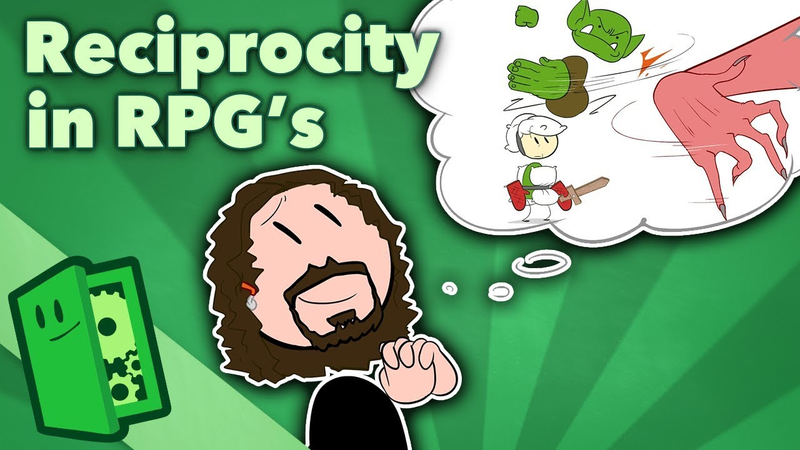
Reciprocity in RPGs - How to Share the Spotlight - Extra Credits
The core thesis of this analysis is that tabletop role-playing games (RPGs) are enhanced through the principle of positive reciprocity, where players intentionally embrace character failure to elevate the narrative and provide opportunities for others to shine.
- Tabletop RPGs are most effective when players prioritize collaborative storytelling over individual character optimization or winning.
- Positive reciprocity involves players intentionally embracing character failure to create narrative tension and provide opportunities for other players to succeed.
- The practice of 'selling'—borrowed from professional wrestling—is a core technique where players make others appear more skilled to enhance the group's dramatic narrative.
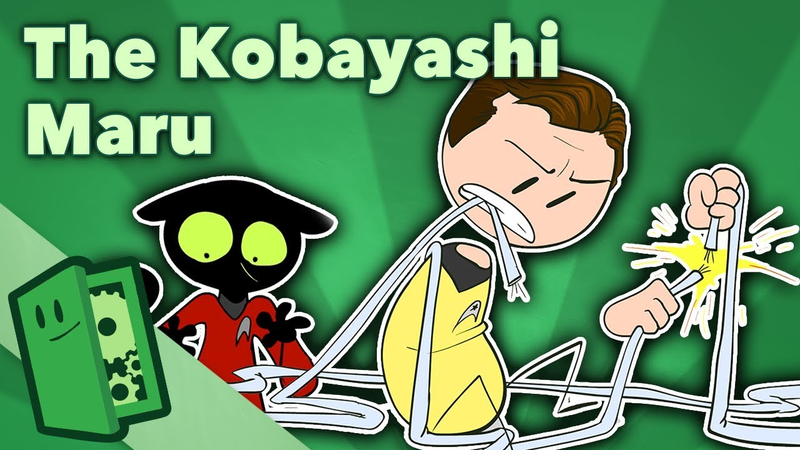
The Kobayashi Maru - No-Win Scenarios in Games - Extra Credits
The concept of the no-win scenario, famously exemplified by the Kobayashi Maru, is a prevalent yet often overlooked element in game design, particularly within titles that utilize procedural generation.
- Unwinnable game states are an inherent trade-off in procedurally generated titles, where randomness is prioritized to provide vast, scalable content without the need for manual oversight.
- In Klondike Solitaire, approximately 21 percent of all deals are mathematically impossible to complete, illustrating that unwinnable scenarios are a common feature in games relying on initial seeds.
- While unwinnable states are often categorized as design flaws, they can function as tools for psychological growth by forcing players to confront situations beyond their control.
Essential Video Game News: October 2019
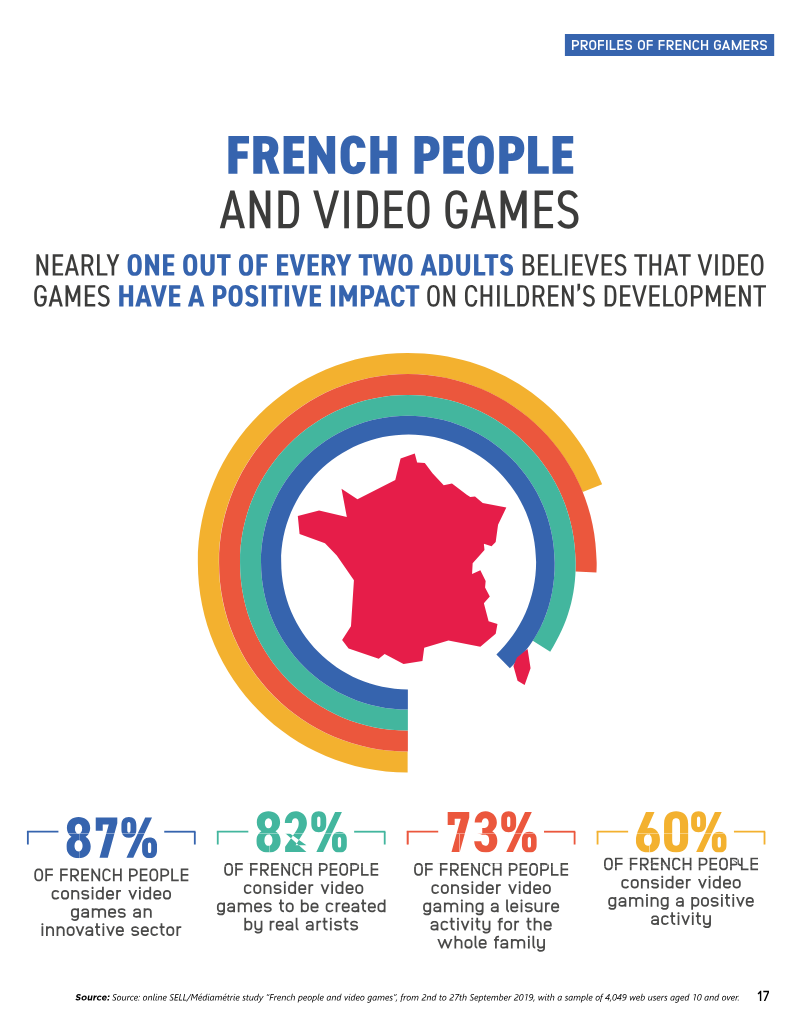
The French video game industry represents a robust and culturally integrated sector, with 71 percent of the population—totaling 37.15 million individuals—actively engaging with games as of 2019.
- The French video game industry generated 4.9 billion euros in turnover in 2018, with mobile gaming serving as a primary driver of this growth.
- Gaming is a mass-market activity in France, with 37.15 million people—71 percent of the population—actively playing games as of 2019.
- While smartphones are the primary platform for 53 percent of users, physical retail remains the dominant sales channel, accounting for 58 percent of consumer purchases.

A Deep Dive into the 12 Motivations: Findings from 400,000+ Gamers
The gaming industry frequently relies on a flawed binary model that mischaracterizes players with low motivation scores as casual or disengaged.
- Player motivations follow a normal distribution rather than a binary scale, meaning low-motivation scores indicate a preference for curated experiences rather than a lack of engagement.
- Data from over 400,000 gamers confirms that motivations are relative constructs shaped by population norms rather than fixed biological traits.
- Cross-cultural analysis shows that gaming motivations are heavily influenced by environmental and market-specific contexts, with competition and completion driving engagement differently across regions like the United States and China.
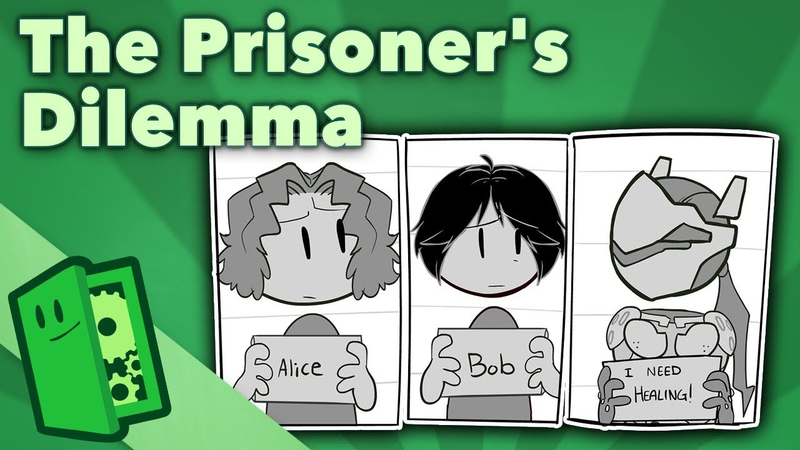
The Prisoner's Dilemma - The Game Theory of Decision-Making - Extra Credits
The Prisoner’s Dilemma serves as a foundational concept in game theory, illustrating why rational individuals often make decisions that result in suboptimal outcomes for the group and themselves.
- The Prisoner's Dilemma demonstrates that rational individuals often pursue self-interest at the expense of the group, leading to a Nash equilibrium where both parties achieve a suboptimal outcome.
- Mutual cooperation yields the best aggregate result for all participants, yet the individual incentive to defect—driven by a desire to avoid worst-case scenarios—frequently prevents this outcome.
- In multiplayer gaming, this framework explains why players prioritize individual performance metrics like kill counts over team-based objectives.

Learning to Play Magic - Part 5 - The Psychology of Magic: The Gathering - Extra Credits
Mastering Magic: The Gathering requires a shift in perspective from merely managing one’s own deck to actively engaging with the opponent’s decision-making process.
- High-level Magic: The Gathering play requires shifting focus from internal board management to actively manipulating the opponent’s decision-making process.
- Players can exploit hidden information by feigning threats, such as holding onto unnecessary land cards to simulate possession of counterspells or combat tricks.
- Strategic management of mana, specifically choosing which lands to tap when casting spells, can signal potential threats and force opponents into sub-optimal tactical choices.
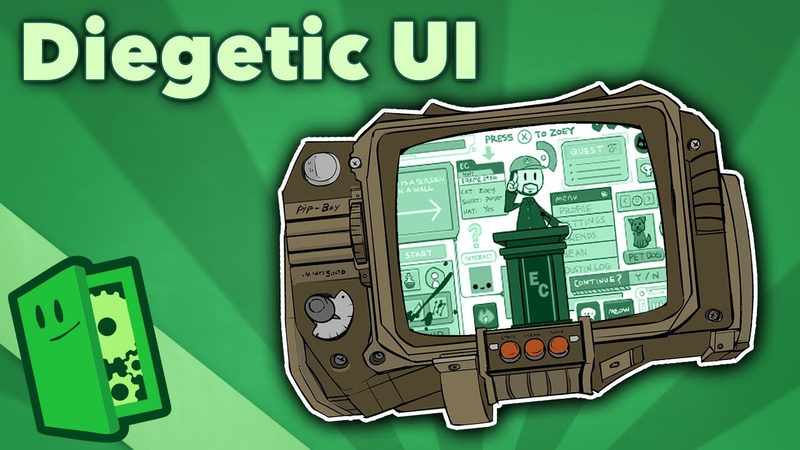
Diegetic UI - Realistic, or Distracting? - Extra Credits
The design of user interfaces (UI) and heads-up displays (HUD) in video games involves a constant tension between narrative immersion and functional clarity.
- Effective UI design must prioritize the principle of form following function, as overly complex diegetic systems can hinder gameplay and accessibility.
- The industry categorizes UI into four frameworks: diegetic (in-world), non-diegetic (screen-based), spatial (context-sensitive), and meta (visual effects).
- Diegetic UI, such as weapon-mounted ammo counters, exists within the game world for both the player and the character, whereas non-diegetic UI exists solely for the player.

Gun Control and Violence in Games | Games ReCAP Episode 033
The recurring cycle of mass shootings in the United States frequently triggers political rhetoric that attempts to deflect accountability by scapegoating the video game industry.
- Empirical evidence consistently fails to support a causal link between video game consumption and real-world gun violence.
- International data shows no correlation between high levels of gaming consumption and increased rates of violent crime.
- The video game industry already utilizes established, self-regulated rating systems to manage content accessibility and protect consumers.

Catfish Streamers | Games ReCAP Episode 031
The rapid advancement of real-time facial filtering and deepfake technology has fundamentally altered the landscape of digital content creation, enabling a phenomenon known as catfishing.
- Real-time facial filtering and deepfake technology enable 'catfishing' streamers to solicit over $100,000 in donations by misrepresenting their identities.
- The use of fabricated personas creates a fragile foundation for community building, as parasocial relationships are formed based on manipulated visual data rather than authentic interaction.
- Streamers often adopt deceptive digital tools to navigate hyper-sexualized industry cultures or meet unrealistic audience expectations, despite the significant risk of long-term professional fallout.
Mordhau White Washing | Games ReCAP Episode 015
The independent developer Triternion has faced intense scrutiny regarding its management of the medieval combat game Mordhau, specifically concerning the prevalence of racism and harassment within its player base.
- Developer Triternion faced criticism for implementing a feature in Mordhau that allows players to toggle off the visibility of female and minority character models.
- Critics characterize the toggle feature as institutionalized whitewashing that validates bigoted behavior rather than addressing the root causes of toxicity within the player base.
- Triternion’s passive moderation strategy is cited as an example of how developers use historical accuracy as a justification to exclude marginalized groups, which ultimately damages a game's long-term reputation.