1 free read left. Create a free account for unlimited reading + AI research.
Create free account
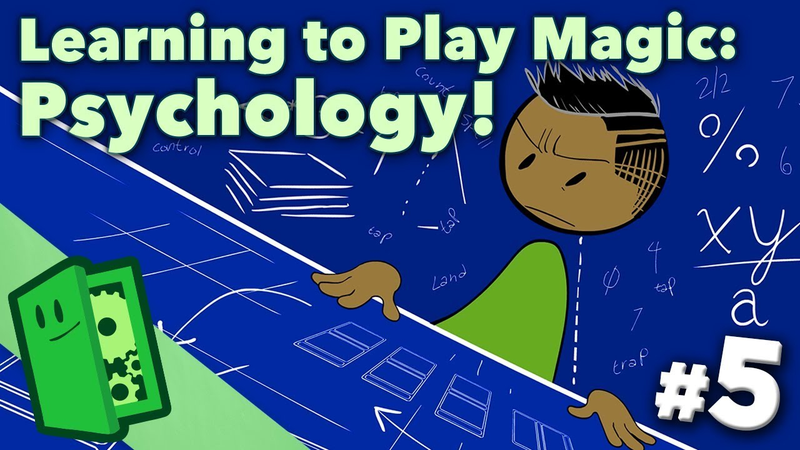
Learning to Play Magic - Part 5 - The Psychology of Magic: The Gathering - Extra Credits
Key insights
6 takeaways- 01Mastery involves rigorous data gathering, including tracking an opponent’s hand size, available mana, and behavioral tendencies to predict and bait future moves.
- 02Effective psychological play relies on forcing opponents to play around non-existent threats, thereby delaying their ability to execute optimal mechanical strategies.
- 03True competitive mastery is defined by using strategic card usage to create uncertainty rather than relying on external intimidation or posturing.
- 04Strategic management of mana, specifically choosing which lands to tap when casting spells, can signal potential threats and force opponents into sub-optimal tactical choices.
- 05High-level Magic: The Gathering play requires shifting focus from internal board management to actively manipulating the opponent’s decision-making process.
- 06Players can exploit hidden information by feigning threats, such as holding onto unnecessary land cards to simulate possession of counterspells or combat tricks.
Ask AI about this video
Transcript
Magic is a game of the mind as much as it is of the cards, and too many people just play the deck that's in front of them rather than playing the person they're up against. But, that's not going to be you. No way. Because today, Joey and I are going to teach you about the psychology of magic. That's the sound of minds blowing. Magic is a game about information. If you always had perfect information, you could always make the perfect move, and games would simply be determined by the shuffle of the deck. But, as we all know by now, they're not. Why? Because so much of the information in magic is hidden. So, as a player, this means you have two parallel goals. One, to make the best plays that you can, and two, to lure your opponent into making sub-optimal plays by making them think or be afraid that things might be worse for them than they are. So, how do we do
this? The making optimal plays yourself part requires gathering as much data from the state of the board as you can. And the getting your opponent to misplay part is about allowing them the opportunity to make assumptions that aren't true. But, these are really just mirrors of each other. So, we're going to take a look at the most common psychological tricks in magic. But, before we do that, there's one thing I have to say. I am a huge believer in sportsmanship, and a good player can play psychologically entirely through their cards. They don't need smack talk, posturing, or intimidation. Because even in the most competitive settings, the goal should not be to play to win, but instead to play the game at the highest level you possibly can. After all, winning is simply a metric that tells you how well you're playing. So, with that in mind, the most common psychological trap in magic is to let your opponent second-guess themselves. And to do this, all you have to do is provide them with the opportunity. Let's imagine a scenario. I have a 2-2 Goblin
Assailant, though who knows why I'm playing that, and my opponent has a 1-3 Erratic Visionary, and I have no cards in hand. My turn begins and I draw a mountain. Whomp whomp. My first main phase begins. And here's where I see a lot of people make a mistake. Usually, they just lay down that land. And I get it. It's sort of automatic. You've trained yourself to play a land a turn whenever you have one. But what happens if I play that land? Well, I don't really get any benefit from it because I have nothing else to play. And when I attack, my opponent is 100% going to block my 2-2 with their 1-3 because they know they have nothing to lose. But if I don't play that land, maybe my opponent thinks I have a combat trick and chooses not to block. Haha, got you, Zoe. Now I've just gotten in for two free damage because I gave my cat the opportunity to second-guess herself. Both James and I have won a lot of games, especially when drafting in Arena, because our opponents play their last card when it's a land that they
don't need, letting us know we're free to do whatever we please. And there's really no reason for that because let's think a turn ahead. What are the options for the next card you're going to draw? Well, it's either going to be a land or a spell. If it's a spell and I need one more to cast it, I can just lay my land down then. And if it's a land, well, I didn't really need the extra mana to cast anything anyway. So, playing my land on the previous turn wouldn't have benefited me. Whereas if I hold onto it, maybe my opponent thinks I have a counter spell and plays around that instead of just putting down their best cards. So, while playing or not playing your last land doesn't materially change anything, it affects the level of certainty with which your opponent can go into their next turn. And if you played that land, it means that you're only thinking about your deck, your moves, and not your opponent's, which is something you can't afford to do if you really want to play Magic. Also, once you start to know what cards are in the most recent sets, you can start to bluff by leaving the right amount of mana open to cast dangerous spells. For example,
if I have two blue and three red mana in play, and I want to cast my Goblin Assault. Why am I still playing this thing? If I haphazardly tap my lands and tap say one red and one blue to cast it, well then that gets me Goblin Assault, I guess. Hooray. But if I tap two red mana to cast it, leaving untapped two blue and one red mana, all of the sudden I give my opponent the opportunity to think I might be holding on to a thought collapse, which just so happens to cost the exact amount of mana I have left untapped. And they may choose not to play their best card because they're worried about me countering it, putting me in a little better position. Though not that much better because I'm still playing a Goblin Assault. Really, I got to dream bigger for these examples. On the flip side, being a good magic player means getting as much data from the state of the board as possible. Things like noticing when your opponent's hand is empty or when they're tapped out. Thinking through what cards they're likely to be playing based on what you've seen of their deck so far. And
hypothesizing where you can force them to block if they're at low health. You'll also need to be able to read your opponent a bit. Are they an aggressive player who always attacks as long as the board looks favorable for them? If so, you can lure them into traps by leaving what looks like a good opportunity for an attack wide open to them while holding combat tricks in hand that will turn the whole thing around. Or maybe they're a cautious player that doesn't really like taking any risks at all. And anytime it looks like you could possibly have a counter spell or a combat trick, they play around that. This makes it easy to get in some extra damage or keep them from making their best moves simply by thinking about what mana you're keeping open and how many cards you're keeping in your hand. This is really just the beginning though. Maybe someday we'll get to do an episode on the common logical fallacies that magic players fall into or how to be more aware of your own psychology so you can avoid falling into these traps yourself. But until then, thank you so much for watching this series. And if
you happen to be looking for a little more magic action in your media diet, we'd love it if you came and hung out with us while we play this game that's been such a big influence on our lives. So we're starting a new limited series over on our Twitch channel called Matt gets drafted. Every Thursday at 5:00 p.m. where James, who is already a mythic ranked draft player, tries to help Zoe and I get to mythic ourselves. Oh, a boy and his cat can dream. No, they don't have to bring snacks. We'll see you there. Hey Zoe. You got a lot of lands up there. Yep, that one. That one's a good But then you already used it. So If you get to she's cheating. Don't be a cheater.
Summary
Mastering Magic: The Gathering requires a shift in perspective from merely managing one’s own deck to actively engaging with the opponent’s decision-making process. The core thesis posits that because information in the game is inherently hidden, players must balance two parallel goals: executing optimal mechanical plays and manipulating the opponent into making sub-optimal choices by exploiting their uncertainty. This psychological layer of gameplay is presented as a fundamental skill that distinguishes high-level players from those who focus solely on their own board state.
The primary mechanism for this psychological strategy involves creating opportunities for the opponent to second-guess their actions. A key example is the management of land cards; by holding onto an unnecessary land rather than playing it automatically, a player can feign the possession of a combat trick or counterspell. This uncertainty forces the opponent to play more cautiously, potentially delaying their own optimal moves. Similarly, the deliberate selection of which lands to tap when casting a spell can signal the potential for a specific, threatening response, further influencing the opponent’s tactical choices.
Effective play also relies on rigorous data gathering from the board state. Players are encouraged to analyze their opponent’s tendencies—such as whether they favor aggressive or cautious playstyles—and to track available mana and hand size to predict probable threats. By observing these patterns, a player can bait an opponent into unfavorable attacks or force them to play around non-existent threats. Ultimately, the analysis emphasizes that true mastery is rooted in sportsmanship and the pursuit of high-level play, where psychological manipulation is achieved through strategic card usage rather than external intimidation or posturing.


















Comments