Player Behavior reports and market data
Documents

Ethics in the Game Industry
The game industry faces a critical juncture regarding the ethical implications of design choices that prioritize engagement and monetization over player well-being.
- Gaming disorder is a recognized concern affecting between 0.3% and 1% of the global population across major markets, including the U.S., U.K., Germany, and Canada.
- Developers are urged to abandon engagement-focused metrics in favor of ethical game architecture that avoids exploiting cognitive biases through variable ratio reinforcement schedules.
- Predatory monetization strategies, specifically loot boxes and frictionless payment systems, pose significant ethical risks, particularly when targeting minors who lack the cognitive maturity to resist impulsive behaviors.

Circle in the Dark: The Darkest Dungeon Community
The community management strategy for the single-player game Darkest Dungeon centers on a "camp counselor" philosophy, which rejects the traditional, hierarchical "manager" role in favor of a horizontal, collaborative dialogue between developers and players.
- Red Hook Studios employs a 'camp counselor' community management philosophy that prioritizes horizontal, collaborative dialogue over hierarchical developer-player relationships.
- To mitigate unproductive feedback, the studio uses a tier-based survey system that forces players to evaluate character utility holistically, creating a shared vernacular for more nuanced design discussions.
- The studio manages the 'endowment effect'—where players value a game based on its state at purchase—by utilizing a public beta system to separate iterative development for long-term fans from stable experiences for new players.

Bleed - Exploring Psychological Transference in Games - Extra Credits
The concept of psychological transference, or bleed, describes the phenomenon where the emotional boundaries between a player and their in-game avatar dissolve, causing the player to experience the character’s emotions as their own.
- Psychological 'bleed' is the bidirectional dissolution of emotional boundaries between a player and their avatar, where the player experiences the character's emotions and vice versa.
- Designers can foster bleed by reducing abstraction, as demonstrated in 'Papers, Please,' where performing mundane, high-stakes tasks forces the player to inhabit the character's specific pressures.
- Grounding narratives in universal human experiences like love, loss, or betrayal allows players to project their own histories onto the game, creating a shortcut to deep empathy.

AskGM #5: How to Make Mobile Apps Safe for Kids | With Super Awesome
The digital landscape for children is undergoing a significant transformation as developers shift from traditional, data-heavy monetization models toward privacy-first infrastructure.
- Developers are shifting from data-heavy monetization to privacy-first infrastructure to comply with global regulations like COPPA and GDPR.
- The industry is replacing unreliable age gates and behavioral tracking with zero-data tools and AI-driven identification to maintain compliance.
- Specialized B2B technology platforms are being used to abstract the technical and legal complexities of developing for child-directed audiences.

Why do they buy? Key player motivations for monetisation
The mobile gaming industry faces the persistent challenge of converting free-to-play users into paying customers.
- The CAPS framework—Cosmetics, Access, Power, and Status—provides a hierarchical strategy for aligning monetization mechanics with core player psychological motivations.
- Status is the highest tier of monetization, leveraging leaderboards and social rankings to incentivize spending through public recognition and community standing.
- Power-based monetization drives revenue by offering durable upgrades that provide competitive advantages in PvP or help players overcome difficult progression curves.
The golden cohort: How to create and engage your super user
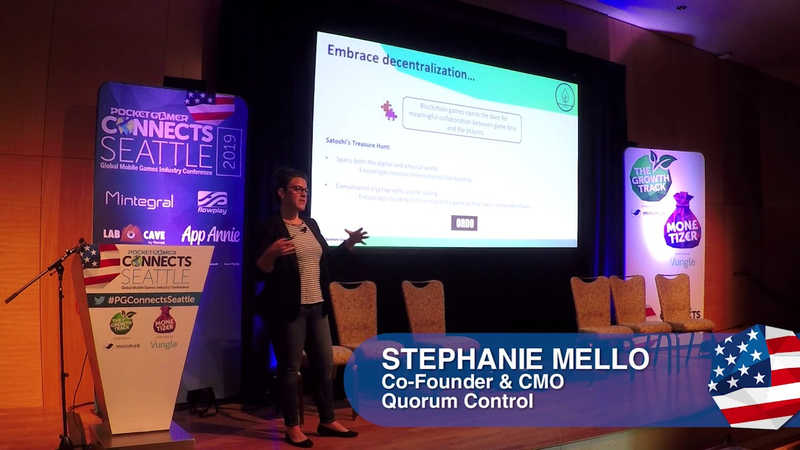
Blockchain technology serves as a foundational shift in game development, moving the industry away from centralized control toward decentralized, player-centric ecosystems.
- Blockchain technology shifts game development from centralized control to decentralized ecosystems, enabling true digital scarcity and verifiable asset ownership.
- Decentralization allows players to treat in-game assets as portable, long-term investments, which increases player commitment compared to traditional, restrictive models.
- Trustless infrastructure facilitates secondary markets and cross-game interoperability, providing developers with real-time, market-driven data on virtual item value.
Hyper-personalisation fueled by psychometrics: The ultimate power-up for retention and monetisation
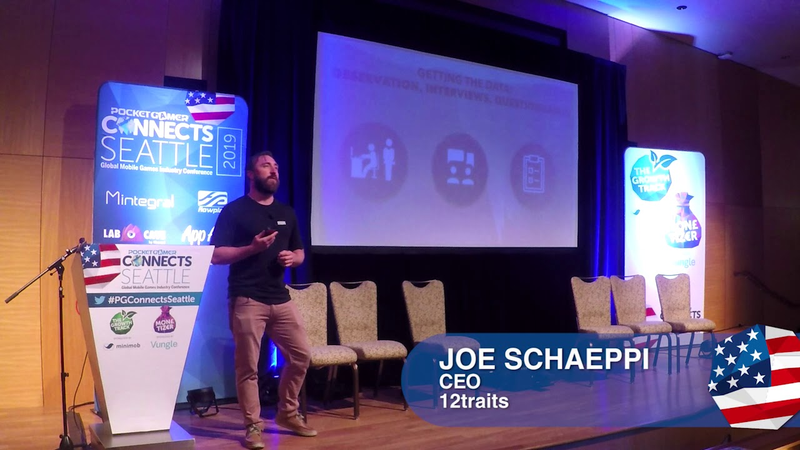
The mobile gaming industry faces significant challenges in maintaining player retention and monetization due to extreme market saturation, with over 800,000 games on the iOS store and 1,000 new titles released daily.
- Integrating psychometric data with behavioral analytics can drive a 400% increase in revenue and a 200% improvement in player retention.
- With 85% of mobile players churning within seven days and 1,000 new games released daily, developers must move beyond traditional behavioral metrics to combat market saturation.
- Psychographic data, such as personality traits and values, provides a more stable foundation for player modeling than behavioral data alone by explaining the 'why' behind player actions.

Custom-made games with machine learning and big data
The application of machine learning and big data in game development offers significant potential for optimizing player experiences, increasing monetization, and improving retention.
- Machine learning models can predict individual player behavior, including churn probability, expected lifetime value, and specific virtual item preferences, allowing for automated, personalized retention strategies.
- Data-driven interventions can significantly impact revenue: increasing VIP retention by 10% for one month can generate $1.3 million, while converting potential payers can add $4 million in monthly sales.
- Optimizing game levels identified as 'friction points' where players frequently quit can lead to an estimated $8 million annual increase in revenue.

How to win in eSports! | Evil Geniuses eSports Head Coach Aaron "Gotcha" Chung
Evil Geniuses, a premier professional esports organization founded in 1999, maintains a long-standing reputation for competitive excellence across titles such as Dota 2, Call of Duty, Rainbow Six Siege, and Rocket League.
- Evil Geniuses maintains competitive excellence through a rigorous regimen of 35 to 40 hours of weekly team practice, scrimmages, and systematic gameplay analysis.
- Professional esports success is increasingly tied to holistic player development, emphasizing rest, nutrition, and physical well-being to sustain cognitive performance.
- The esports industry is experiencing significant financial growth, with major tournament prize pools for titles like Dota 2 reaching as high as $20 million.
Dream Daddies and Fearful Fathers: How Indies Can Cope with Being Terminally Online
The modern independent game development landscape is increasingly defined by a toxic attention economy that prioritizes performative outrage over meaningful creative discourse.
- The current digital attention economy prioritizes performative outrage over creative discourse, leading to severe developer burnout, imposter syndrome, and physical exhaustion.
- Platform affordances cause 'context and temporal collapse,' which flattens complex human interactions into performative exchanges that reward cynicism and inflammatory behavior.
- The fear of dogpiling and harassment discourages developers from exploring nuanced or controversial themes, stifling creative expression in favor of social capital.

ゲーム障害に関する調査・研究の取り組みについて
The Japanese gaming industry, represented by the Computer Entertainment Supplier’s Association, the Japan Online Game Association, the Mobile Content Forum, and the Japan eSports Union, has initiated a formal research project to address the classification of gaming disorder by the World Health Organization.
- Four major Japanese gaming industry associations—CESA, JOGA, MCF, and JeSU—have launched a formal research project to address the WHO's classification of gaming disorder.
- The initiative is led by an independent research committee headed by Professor Akira Sakamoto to ensure academic rigor and impartiality in studying gaming behaviors.
- The project aims to replace speculation with scientific evidence to guide industry standards and public policy regarding excessive gaming.


2019 Essential Facts About the Computer and Video Game Industry
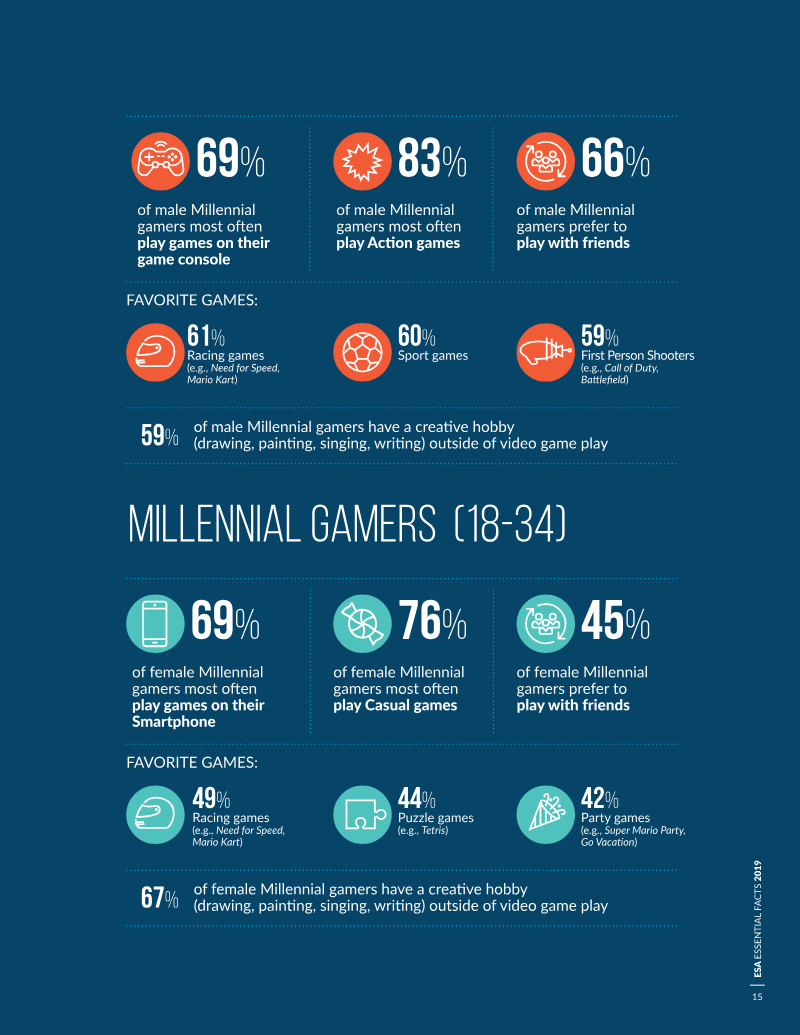
The 2019 Essential Facts About the Computer and Video Game Industry provides a comprehensive overview of the American gaming landscape, highlighting the industry's record-breaking performance and the diverse demographics of its player base.
- The U.S. video game industry generated $43.4 billion in total sales during 2018.
- Digital distribution dominated the market in 2018, accounting for 83% of all physical and digital format sales.
- Gaming is a pervasive household activity, with 75% of American households containing at least one gamer.