Player Behavior reports and market data
Documents
The Gamer's Brain, Part 3: The UX of Engagement and Immersion (or Retention)
Engageability serves as the foundational pillar for long-term player retention, requiring a multifaceted approach that integrates cognitive science with game design.
- Retention and engagement are driven by motivation, which relies on managing goals, fostering a sense of competence, and maintaining positive moment-to-moment emotions through game feel.
- Rewards should be designed as starting points for new goals rather than end points; they must be meaningful and provide feedback on competence to avoid decreasing intrinsic motivation.
- Effective onboarding is critical for long-term retention, as poor tutorials are frequently identified as the most impactful factors for player churn.

Should You Play the Classics? - Why Game History Matters - Extra Credits
The primary thesis of this analysis is that studying classic video games is an essential practice for anyone working in the game industry, particularly for designers.
- Studying foundational classic games is essential for designers to understand the core psychological and emotional drivers of player engagement rather than merely replicating surface-level features of modern hits.
- Modern game design often suffers from excessive complexity and bloated mechanics, whereas classic titles provide a streamlined look at the fundamental gameplay loops that define successful experiences.
- Tracing the lineage of game design to its primordial roots allows developers to identify untapped mechanical potential and move beyond the industry's cycle of derivative, iterative refinement.
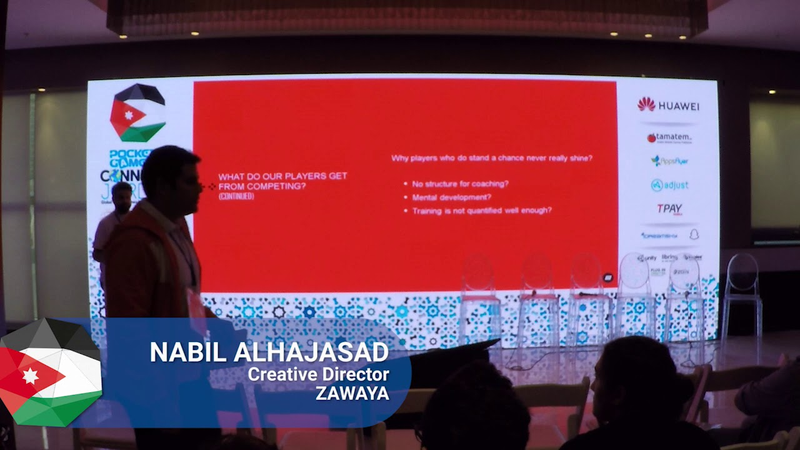
Esports and the Region's Players View on Competitive Play
The esports landscape in the Middle East and North Africa (MENA) region is currently characterized by a significant disconnect between high player interest and the lack of a professionalized ecosystem.
- The MENA esports sector faces a critical disconnect between high player registration numbers and a lack of sustainable infrastructure, resulting in fragmented, prize-pool-driven events rather than a professionalized ecosystem.
- Localization is a primary barrier to growth, as reliance on poorly translated English-based platforms hinders participation; simplifying and localizing registration processes has been proven to significantly increase player engagement.
- The core demographic of players aged 18 to 25 lacks the necessary business acumen to secure sponsorships and faces cultural skepticism regarding the legitimacy of esports as a viable career path.
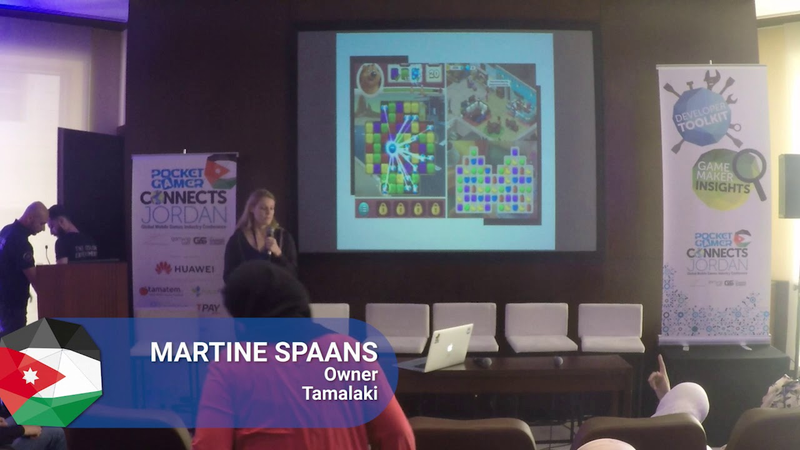
”Casually Hardcore” - How Hardcore and Casual are Outdated Terms
The industry-standard terms casual and hardcore are increasingly obsolete, as they fail to capture the nuance of modern player behavior and demographic diversity.
- The industry-standard labels of 'casual' and 'hardcore' are obsolete because they fail to reflect modern player demographics and the nuance of actual gaming behavior.
- Historical marketing shifts in the 1980s, following the video game market crash, intentionally targeted young men and created lasting, exclusionary gender stereotypes.
- A significant portion of the mobile gaming audience, particularly women, engages in substantial play time but rejects the 'gamer' identity, often viewing their hobby as a private or guilty pleasure.


The Past, Present and Future of Games
The analysis outlines the evolution of gaming from its early stages to contemporary and projected future states, emphasizing demographic shifts, monetization models, and technological convergence.
- The gaming industry is experiencing significant growth, evidenced by a 29% increase in PC game revenue and a 19.6% rise in mobile downloads in 2020, with total consumer spend projected to grow by 21% in 2023.
- Gaming is increasingly defined by social integration, with 45% of U.S. gamers aged 10–30 utilizing social features during gameplay.
- Streaming viewership has surged, as evidenced by a fivefold increase in hours watched on Twitch and YouTube between 2018 and 2019, led by dominant titles like Fortnite, League of Legends, and Genshin Impact.



2020 Global Games Market Report
The 2020 Global Games Market Report provides a comprehensive analysis of the video game industry during a landmark year defined by the COVID-19 pandemic and the transition to next-generation consoles.
- The global games market generated $159.3 billion in 2020, a 9.3% year-on-year increase, with projections to exceed $200 billion by 2023.
- Mobile gaming is the industry's dominant segment, accounting for $77.2 billion or 48% of total global revenue.
- The Asia-Pacific region is the primary market hub, generating $78.4 billion, while the Middle East and Africa represent the fastest-growing geographic regions.

Kids Explain Roblox Top Game Hits | 1 Billion+ Plays
Roblox has solidified its position as a dominant force in the digital entertainment landscape, with its top ten titles each surpassing one billion plays.
- Roblox's top ten titles, including MeepCity, Jailbreak, and Adopt Me!, have each surpassed one billion plays, establishing the platform as a dominant force in digital entertainment.
- The platform's most successful games prioritize social interaction, role-playing, and avatar customization over complex gameplay mechanics.
- Core engagement is driven by loop-based progression systems where players earn currency through mini-games to reinvest in virtual assets that enhance social status.
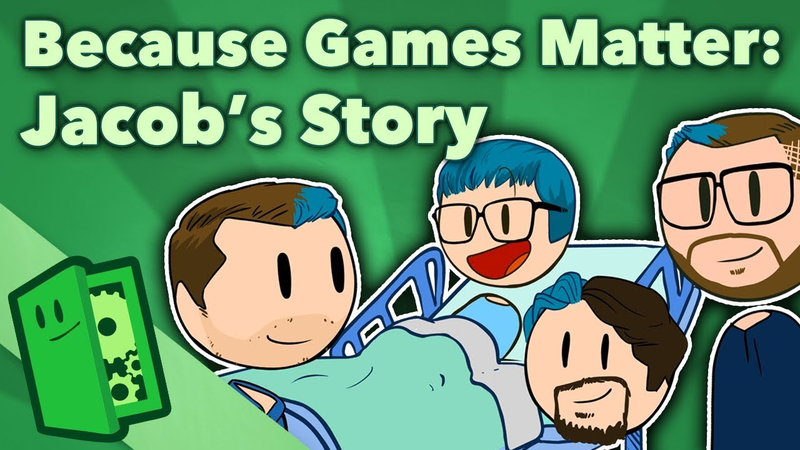
Because Games Matter - Jacob's Story - Extra Credits
The therapeutic role of video games in pediatric healthcare serves as the central focus of this narrative, which highlights how interactive play mitigates the psychological and physical burdens of chronic illness.
- Video games serve as a critical therapeutic tool for pediatric patients, providing essential emotional relief and social connection during prolonged hospitalizations and intensive treatments like chemotherapy.
- The charity Child’s Play facilitates the donation of games, toys, and technology to approximately 180 hospitals annually to improve the quality of life for pediatric patients.
- Gaming acts as a vital coping mechanism for children facing isolation and communication barriers, including deaf patients, by fostering a sense of normalcy and constructive distraction.

What Cats Can Teach You About Empathic Game Design
Empathic game design requires designers to move beyond superficial verbal feedback and prioritize deep, observational understanding of the end user.
- Empathic game design requires prioritizing observational research over verbal feedback, as users often struggle to articulate their actual needs or act in ways that contradict their stated preferences.
- Designers must utilize empathy mapping—tracking what users say, do, think, and feel—to uncover the underlying emotional and intellectual drivers that surface-level data often obscures.
- Product engagement increases significantly when features are aligned with core biological or psychological motivations, such as mimicking predatory instincts in animals or providing emotional reassurance to humans.
The Gamer's Brain, Part 2: UX of Onboarding and Player Engagement
Effective game design hinges on the application of cognitive science to manage the limited attentional and memory resources of the human brain.
- Free-to-play titles frequently lose 20 percent of their audience during the first hour of gameplay, making this window the most critical period for player retention.
- Human working memory is limited to processing approximately three items simultaneously, necessitating a design strategy that minimizes cognitive overload to prevent player churn.
- Onboarding should prioritize intuitive affordances and context-driven learning over dense, passive tutorials to allow players to master mechanics through practice rather than memorization.

Because Games Matter - J.J.'s Story - Extra Credits
The therapeutic application of video games in pediatric healthcare serves as a powerful tool for managing patient stress, pain, and emotional isolation.
- The C.S. Mott Therapeutic Gaming and Digital Technology Program, pioneered by child life specialist J.J. Bouchard, now serves over 3,000 pediatric patients annually.
- Therapeutic gaming in clinical settings acts as a critical tool for managing patient stress and pain while normalizing the hospital experience for children.
- Child’s Play Charity has expanded the reach of this practice by providing gaming equipment and funding specialized technology positions in approximately 180 hospitals globally.
Loading Screens - The Waiting Game - Extra Credits
Loading screens are an inevitable byproduct of modern game development, as the pursuit of higher graphical fidelity and larger game worlds continues to outpace hardware optimization.
- Loading screens should be treated as deliberate design opportunities to maintain immersion rather than viewed solely as unavoidable technical hurdles.
- Effective loading screens must include motion to provide essential feedback that the system is functioning and not frozen.
- Developers can increase player engagement by providing value through relevant content, such as the world-building item descriptions found in Dark Souls.