Mobile reports and market data
Documents

IP-Based Mobile Games: 2022
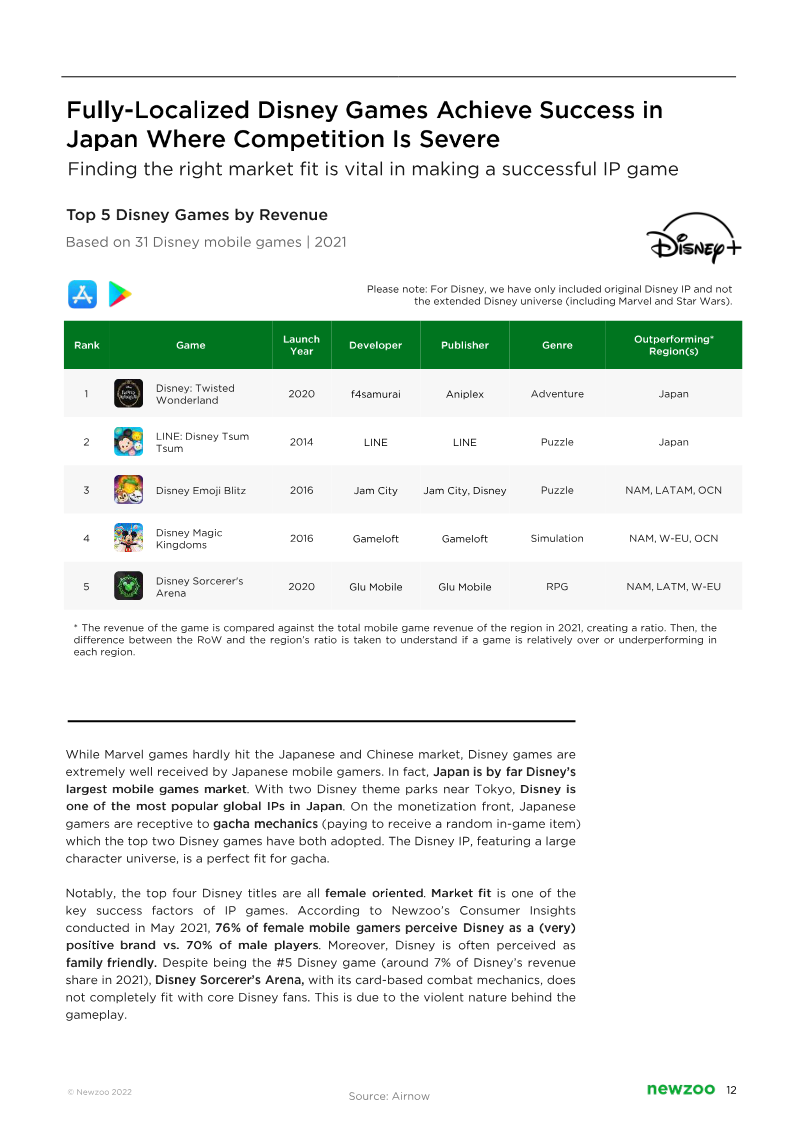
Newzoo's 2022 report examines IP-based mobile games, meaning games built on entertainment franchises from movies, TV, literature, manga, comics, and toys, while excluding franchises that originated as games such as Pokémon, Call of Duty, and League of Legends.
- Mobile was projected to generate 53% of global games market revenue by 2022, and the document describes it as the biggest and fastest-growing gaming segment.
- Among new iOS games released in 2021 that hit the top 100 download chart, excluding hypercasual games, only one was not IP-based, with Soccer Super Star being the exception identified in the analysis.
- TV-based IP was the most common source among IP-based mobile games released from 2016 to 2021, at 33%, followed by manga at 22% and literature at 19%.
State of Mobile: Germany 2022
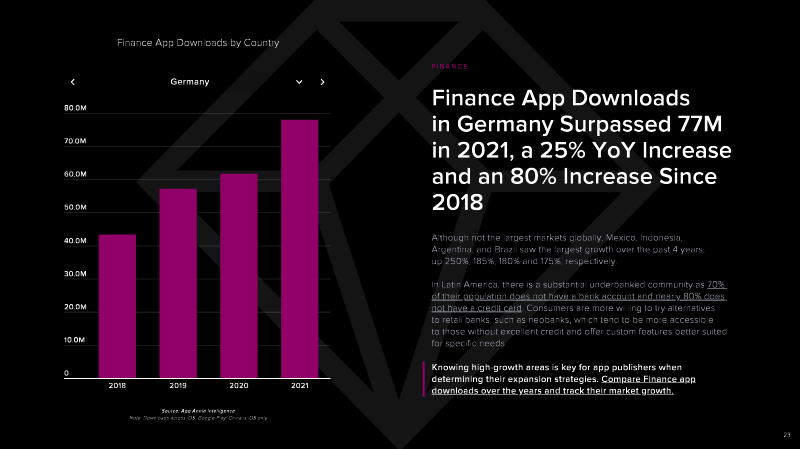
App Annie's "State of Mobile: Germany 2022" is a market report covering mobile app and game trends, drawing on App Annie Intelligence data.
- In Germany, consumer spend on mobile apps added $850 million more than 2020, equating to 30% growth year over year, with 2021 spend adding an additional $4.0 billion.
- German gaming consumer spend reached $2.81 billion in 2021.
- German users spent about one fifth of their waking hours on mobile in 2021, up 30% since 2019.
Ad Monetization Insights for Mobile Game Developers 2022
The available text from "Ad Monetization Insights for Mobile Game Developers 2022" is fragmentary and largely unreadable, so only limited conclusions can be drawn.
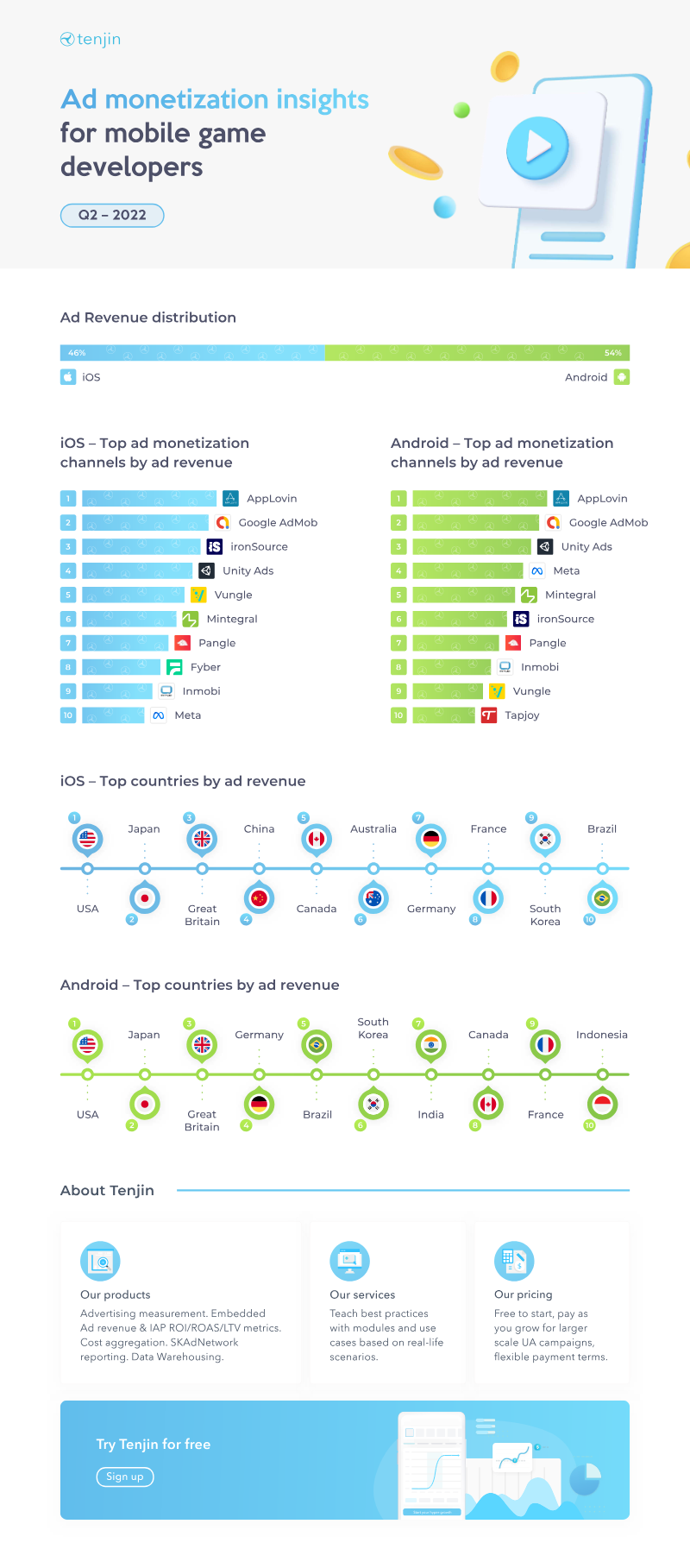
- Advertising accounts for 54% of total revenue across the mobile game markets surveyed in 2022.
- Effective monetization requires integrating ad revenue, in-app purchase data, and cost metrics to accurately calculate ROI, ROAS, and LTV.
- Key regional markets for mobile game monetization include Germany, Japan, South Korea, Canada, and Indonesia.

Games India Plays!: A Look into the Gaming Habits of Indian Mobile Gamers and How to Reach Them
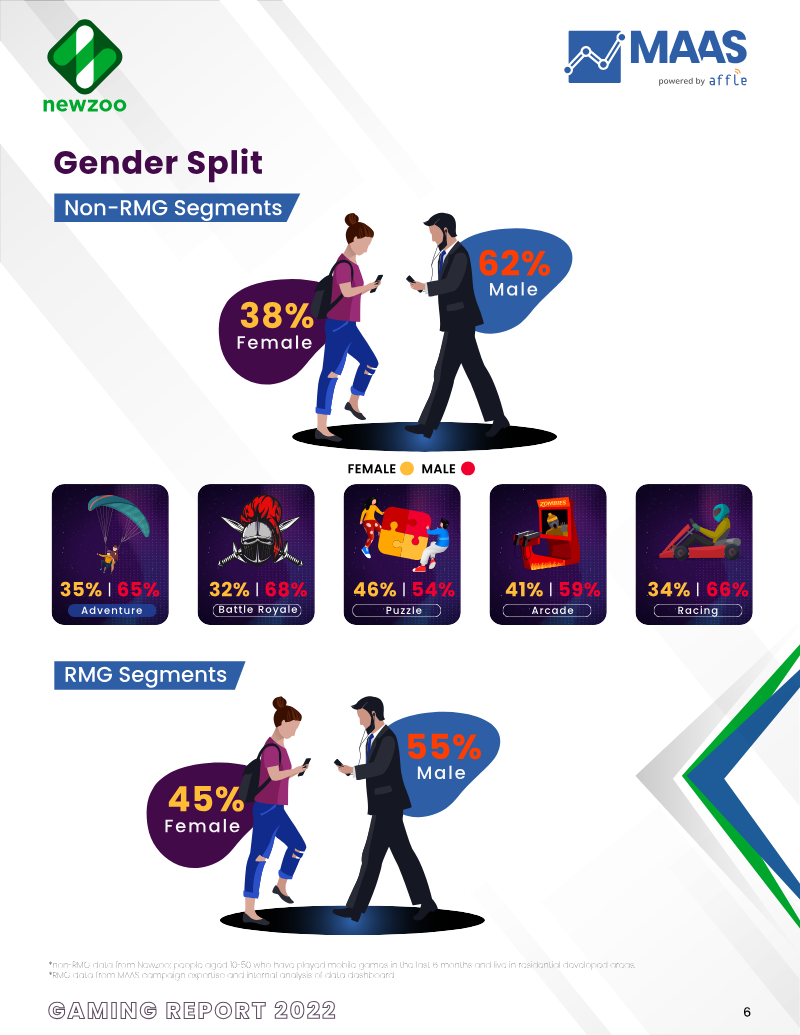
Indian mobile gamers are profiled across real money gaming (RMG) and non-RMG segments, with practical guidance for app marketers on acquiring them.
- The Indian mobile gaming market reached $2.2 billion in 2022, driven by a base of 373 million online gamers where 91% play exclusively on mobile devices.
- Real Money Gaming (RMG), including fantasy sports and card games, accounts for over 50% of total industry revenue.
- The core demographic for adventure and battle royale genres is young and male-skewing, with 55% of players falling within the 13-27 age bracket.
The New Destination to Reach Global Gamers: The 2021 Global Mobile Gamers Whitepaper
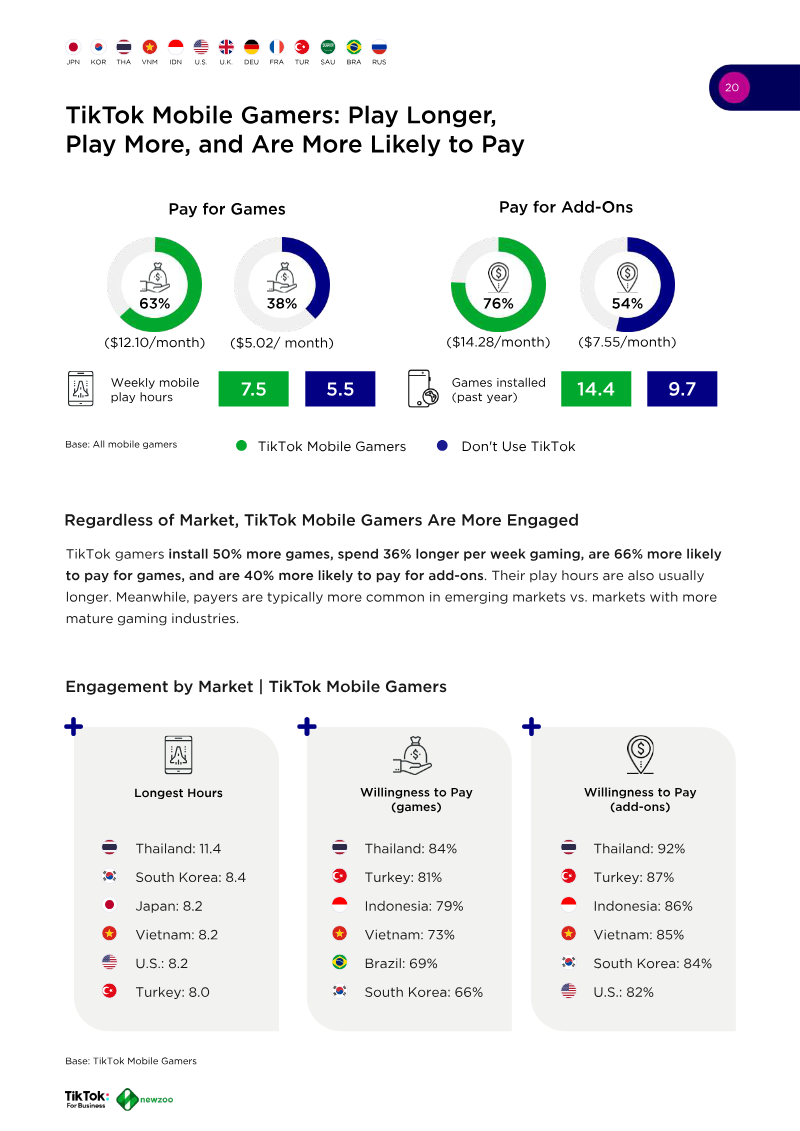
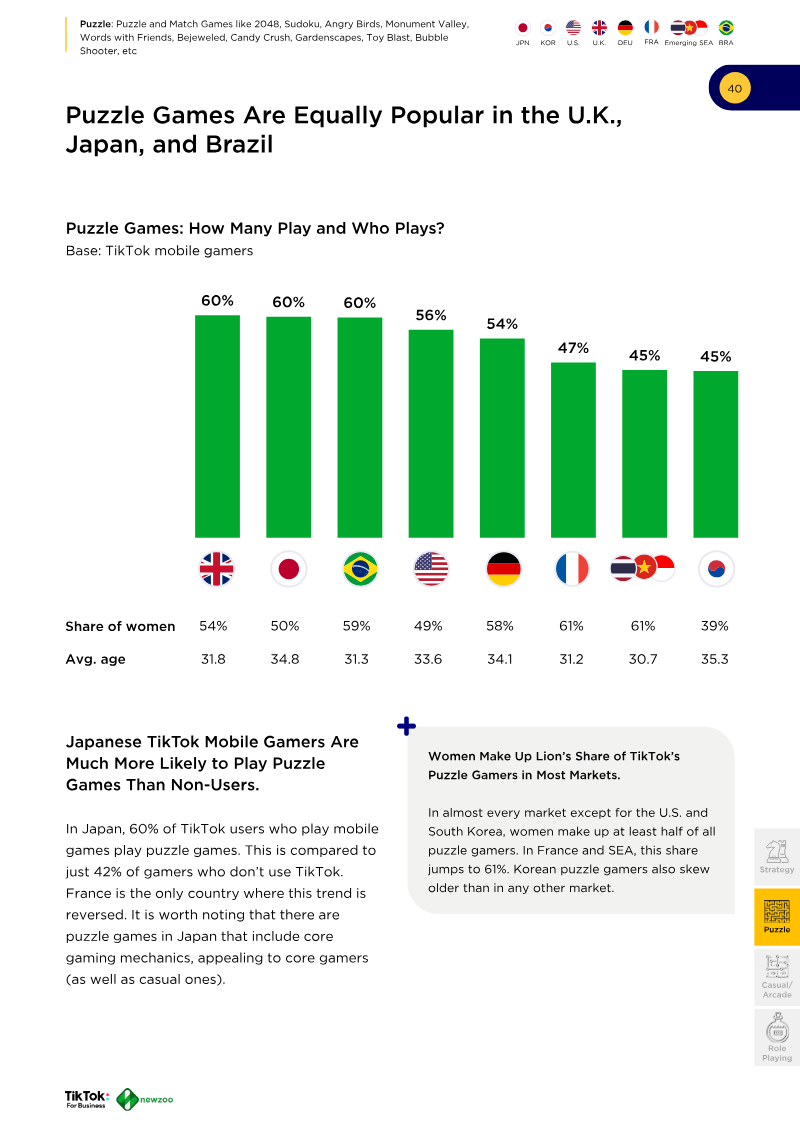
This whitepaper, titled "The New Destination to Reach Global Gamers: The 2021 Global Mobile Gamers Whitepaper," was produced by TikTok For Business with Newzoo to help mobile game advertisers understand how to build, grow, and monetize their games.
- Mobile accounted for 52% of 2021 global game revenues, and the document states that mobile game revenues exceed console and PC combined.
- TikTok mobile gamers install 50% more games and play 36% longer than gamers who are not on TikTok.
- APAC contributed 64% of 2021 mobile game revenues, and China, the U.S., and Japan were the three biggest mobile gaming markets.

Panel: What Techniques Can we Apply from Hypercasual Games & Bring into Living Games?
The gaming industry is currently witnessing a strategic convergence between hypercasual titles and live service models, driven by a mutual desire to optimize player retention and monetization.
- The mobile gaming industry is converging toward a hybrid model that merges the frictionless, low-barrier entry of hypercasual design with the long-term retention and monetization structures of live service ecosystems.
- Hypercasual developers are increasingly integrating live-ops and in-app purchase (IAP) frameworks to extend the traditionally short lifespans of their titles.
- Live service developers are adopting hypercasual design principles to simplify complex social and gameplay systems, making them more intuitive for broader mobile audiences.

Game On or Game Over: Level Up Your Gaming Strategy
The mobile gaming industry experienced sustained growth through the first three quarters of 2021, solidifying the gains observed during the pandemic as a new market baseline.
- Mobile gaming has established a new market baseline with 1 billion weekly downloads and 5 billion hours of gameplay, despite a slight decline in total time spent.
- Monetization efficiency has surged, evidenced by a 35 percent increase in weekly consumer spending compared to previous years, totaling 1.7 billion dollars.
- While hyper-casual titles lead in download volume, RPGs and strategy games remain the primary drivers of in-app revenue.
Panel: Indie to Empire: Growing Your Game Through New Monetisation Models
The modern mobile gaming landscape has transitioned from traditional premium pricing toward sophisticated hybrid monetization models.
- To achieve statistical significance in casual gaming monetization, developers should reach a minimum threshold of 5,000 daily active users and 10,000 ad requests.
- Modern mobile monetization relies on hybrid models that combine in-app purchases, subscriptions, and diverse ad formats to lower entry barriers while maximizing average revenue per user.
- Monetization must be integrated into core game design from the earliest stages of development rather than treated as an afterthought.

Fireside Chat: What the Mobile Space Looks Like as we Head into 2022
The mobile gaming industry is currently undergoing a period of rapid consolidation and structural evolution, driven by significant market growth, shifting privacy regulations, and advancements in adtech.
- The mobile gaming market is projected to reach $116 billion by 2024, fueled by an average daily consumption of 155 minutes per user.
- The industry is undergoing rapid consolidation and structural evolution as major players pursue mergers and acquisitions to scale operations and integrate monetization services.
- Monetization management has shifted from manual waterfall processes to automated, data-driven bidding, moving the focus of professionals toward product-level integration, A/B testing, and user segmentation.
Superstar Session: The Key Elements for a Meaningful Hypercasual Game Review
Hypercasual game development demands a disciplined, iterative approach centered on constant self-correction and data-driven decision-making.
- Success in hypercasual development requires a disciplined, iterative framework that prioritizes data-driven decision-making over linear development paths.
- Development resources should be focused on addressing critical funnel drop-offs rather than superficial aesthetic improvements to maximize efficiency.
- Teams should utilize visual-heavy communication and early testing of multiple variations to minimize development cycles and accelerate pivots.
Hypercasual Games & Real Multiplayer, a Marriage Come True!
Hypercasual gaming is undergoing a fundamental shift from simulated, bot-driven multiplayer experiences toward authentic, real-time competition.
- Hypercasual gaming is shifting from simulated bot-driven experiences to real-time multiplayer to address player disillusionment with fake engagement.
- Deterministic networking engines now enable physics-based, real-time multiplayer that remains performant on low-end hardware and unstable network connections.
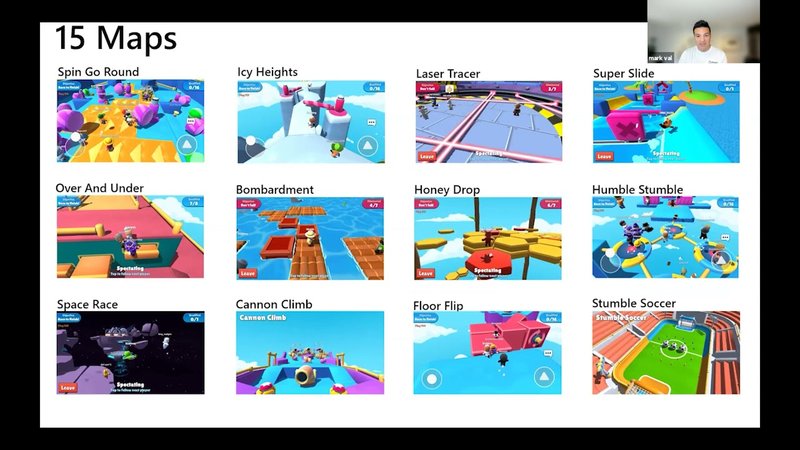
- Stumble Guys achieved over 15 million organic downloads by prioritizing real-time multiplayer and low-latency architecture from the earliest stages of development.
The Change in Mobile Landscape: What Does it Mean for You as a Developer?
The mobile gaming industry is currently undergoing a significant shift as traditional platform-controlled payment ecosystems, often referred to as walled gardens, face increasing pressure to open.
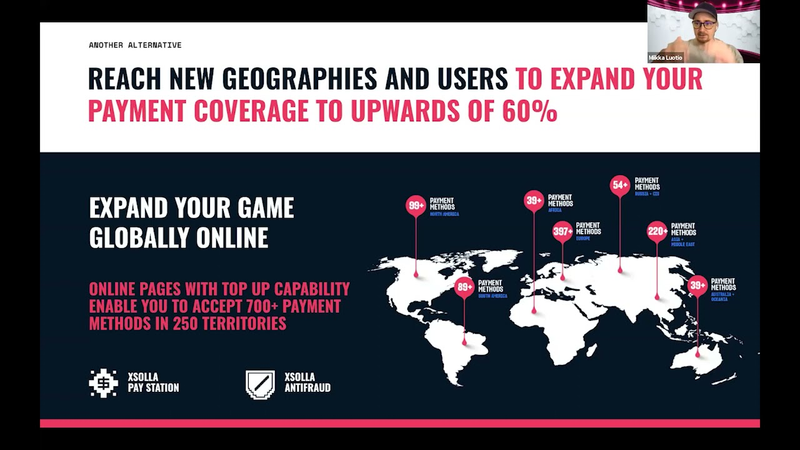
- Developers can increase revenue by over 40% by implementing web-based storefronts that bypass traditional platform fees and offer a broader range of payment options.
- Standard mobile platform payment ecosystems often fail to capture revenue in emerging markets like Latin America, India, Russia, and South Korea due to a lack of support for local payment methods and bank installments.
- Web-based storefronts allow developers to cultivate direct relationships with high-value players by offering exclusive bundles and promotions that are not available within the standard in-game store.
Writers
Games and companies
Games