1 free read left. Create a free account for unlimited reading + AI research.
Create free account
Superstar Session: The Key Elements for a Meaningful Hypercasual Game Review
Key insights
6 takeaways- 01Success in hypercasual development requires a disciplined, iterative framework that prioritizes data-driven decision-making over linear development paths.
- 02Studios should use structured evaluation frameworks that prioritize gameplay clarity, production value, and innovation to filter out non-viable concepts early.
- 03Development resources should be focused on addressing critical funnel drop-offs rather than superficial aesthetic improvements to maximize efficiency.
- 04Teams should utilize visual-heavy communication and early testing of multiple variations to minimize development cycles and accelerate pivots.
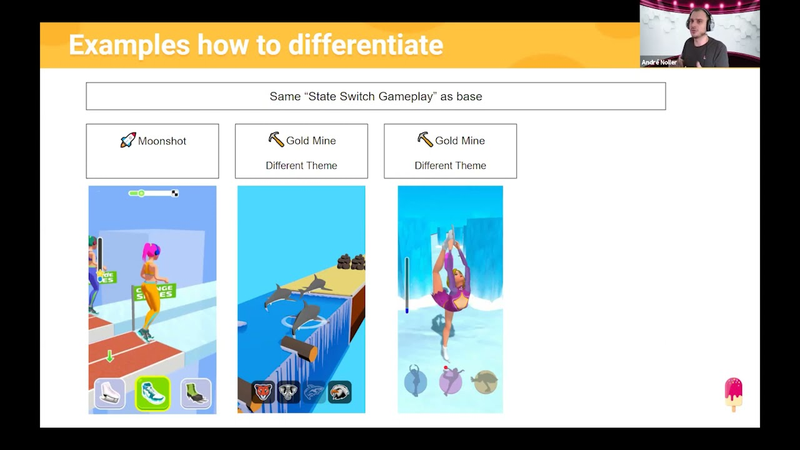
- 05Creative longevity is best achieved by applying different themes or visual skins to proven core mechanics rather than reinventing underlying technology.
- 06Ongoing live management and seasonal updates are essential for maintaining player retention and extending the commercial lifespan of short-lifecycle titles.
Ask AI about this video
Transcript
so we have a quick message from crazylab our track sponsors coming up now this is an idea an idea for a game but which game who knows it can be anything game ideas want to become something something famous that will make people laugh and shout things like yes i did it so do it become that special game already oh it's not that easy is it don't worry we can help you see we love game ideas and we know that behind every idea there is a proud developer parent can you believe it we're actually talking with the developer understanding caring giving support if needed and then
it happens amazing this is our job as publishers we are crazy labs there we go so talking of crazy lamps uh we uh we're gonna have them up first as our first speaker but uh before i do that i need to remind you of a couple of things in particular you may notice that we now have closed captions so you can see that option on the bottom right of your zoom window and you can toggle closed captions on and off you can also opt for live transcription which pulls up the script the side of your window as well which i find incredibly useful um we'll be tweeting all day and you can use pg connects to share your thoughts so the hash pg connects on your conference and obviously don't forget to drop any questions you've got into the q a q a section down below and so i think
hopefully we're all ready to get going and we can introduce our first speaker who is going to be um from crazylab so we have uh he says uh my my notes seem to have lost the name oh my goodness mario i knew it was you but for some reason my notes have lost your name on it so i'm having a fun start in the day all these technical glitches will be resolved more how you doing hopefully you um i can see you're there but i can't current ah there we are nice to see you again how are you oh you're on mute hello what's up oscar we're so happy to see that it's you but let me change my background for a sec i'm clearly not good at monday mornings because of all of my technology my mute's not working my my my screen's not working it kicked me off zoom before i get in so
oh and it's all my own fault because i was just pulling up your linkedin page and i think i must have cut it rather than so it's no one on the team so it's completely my incompetence this morning but anyway lovely to see you and you're going to talk to us about uh key elements from meaningful hyper casual game does that sound alright meaningful meaningful reviews yeah oh media reviews are minimal reviews even better so um i will hand over to you and come back with lots of questions i'm sure just a second please just a sec that's all good yeah i have so i one things i find really fascinating about um hyper casual myself is that i think i've learned loads of lessons about the function of uh publishing so as we've become publishers of living games you'd think that'll be the antithesis of hyper casual but actually a lot of the practical techniques that you guys are talking about and espousing we're trying to instill in people doing
longer-term retention-based content because it's so good at creating efficiency but anyway let's talk about hybrid game i'm i'm ready great stuff i will i will go hide myself a little bit later all right that's all looking good okay so you basically can see my screen and i will start not full screen sorry you're good now all right cool so who among you know what is the biggest difficulty of swimmers in open sea the most intuitive thing will be to think about the cold the waves or even getting out of bed in the morning but what swimmers in open water count as their biggest difficulty is actually the float mostly known as buoy and why is
that in a podcast that i heard a few weeks ago the professor talked about a lecture that steve jobs himself gave in front of executive and that this difficulty happens because in open water swimming you swim and swim invest an enormous effort but sometimes when you raise your head you realize the buoy is on the other side and you are not swimming in the right direction that's why professional swimmers every few moves raise their head and look at the buoy and why am i telling you all of that because the same goes for many cases in our life we work hard we invest an enormous effort but for a guest to read to raise our head look at the buoy and see if we're in the right direction i wanted to share this story with you because we can take it to the world of game development we can set up a studio hire people
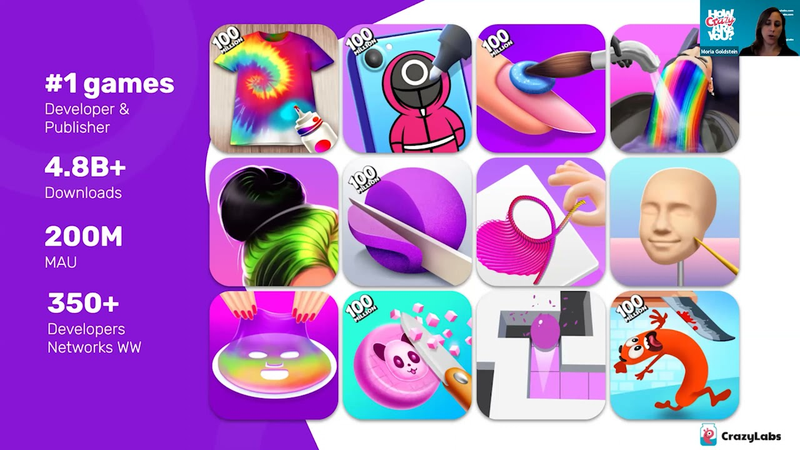
find the right publisher to work with but sometimes it still feel like we have lost our direction today i want to try to help you learn how to swim in the right direction look at your buoy and keep focus hi everyone it's great to be here again and my name is maria and i'm vp creative and product design at crazy labs my team and i are responsible for the creative leadership ideation professional guidance of all the teams of our hyper-casual lab from concept to liveops crazylabs is a mobile game developer and publisher with hyper-casual hits that have brought us over 4.8 billion downloads so far among our games you can find tie-dye phone case diy scope people zoom out 3d and more review is part of our life and criticism is something we receive on a daily basis
sometimes it suits well and sometimes it doesn't one thing for sure we can learn something from any feedback we receive as a game developer you get a lot of feedback you get a lot of no's sometimes yes and most of the time the feedback means that you just need to keep on working feedback can change everything for your game and that game can turn you into millionaires yes it can happen to any of you the most important thing we can do is to learn from our mistake and constantly become a better version of our product and ourself i want to share with you my ways to give and receive feedback well a significant part of what my team and i do is provide feedback to our developers from pitch through initial testing to final game versions why learn how to receive and give feedback because in hyper casual you
don't have room or time for mistake while you are working on your stunning game there is at least one game developer somewhere in the world working on the exact same game and you want your game to be out first in order to stay focused and give developer constructive feedback that can help them move full speed ahead we use specific methods when it comes to early stages it's part of the mentoring we provide to studios that work with us and can become part of your development culture we have defined four categories to evaluate the potential of the game and we give score from uh we use a scorecard and use a score from one to five just like the upstart rating when we give a low score we will always explain what wasn't good and advice or suggestion for improvement the first and perhaps the most important section in hyper casual is gameplay
clarity followed by production value innovation and engagement i will elaborate on each and we'll give you some examples when talking about gameplay quality we are basically going back again to the definition of hyper casual games and the three seconds rule a hyper casual game must be self-explanatory our players must understand how to play the game sometimes even before opening it the ad should clearly show us what the game is about your pitch should include one liner that explains your game one sentence that's it this is the core of hyper-casual games so here you can see a good example of how a game can be described in only one sentence versus the long and tedious one regarding production value here you have to adjust your pitches to the capabilities of your team if a studio is not strong in 3d
character animation for example and they submitted a pitch that is all about facial expression and character communication will recommend them not to go into this adventure another example is when sometimes a video you send just look like an early prototype so we will either decide that it's not worthwhile working on or explain what wasn't good you know like amateur ui or using non-hyper casual colors for example and we will see how it can be improved the quality of games in the market is always on the rise so we can't afford ourselves you know to put out tests that are not outstanding in terms of innovation one thing you need to know we don't allow clones of games and we don't recommend working on games or themes unless you are the early adopter of the trend long before it was chewed to death and i'm not saying that every game you submit must reveal a new mechanic to the
world we all know the market and we understand the evolution that the themes and mechanics go through but when a developer come with a familiar theme in their pitch like the squid game phrase you know and milk rate challenge we always want them to bring a twist to it when talking about engagement we want to see if our idea can really become a game sometimes when pitching an idea you realize that there's simply not a game there in addition we must understand what's the wow moment if it doesn't exist there may not be a reason to come back and play in that case we will recommend possible direction or send a developer back to do some rethinking a wow moment is so important to the player's sense of satisfaction progress and connection to the game it may be a short or quick moment but
it's extremely important you won't be able to test your game without it now let's move on and start working on your actual game which means you get to receive different angles of reviews and feedback how many times you were sure you were doing exactly what your publisher asked you to do and how many times do you finally sent on the version and got the same review again there are ways to avoid that and save time whether you're getting the review or receiving it the most important thing is actually the definition of the task which part i want to take on exactly is it the control is it the drop in the level funnel or maybe it's the usage now let's talk about the essence of the review and where to focus it's the business question priority the length of the review and communication
i want to dive into the first part that you know sometimes we get lost in the business question it's important because it can become your anchor and can help you find your buoy if you ever get lost again when we need to improve a specific api we must stay focused and try to solve the exact problem does this version that we are planning now really answer the business question will it really move the needle if a version has a drop between two levels that's the most important thing to tackle it doesn't matter if the catalog ui doesn't flash the way you wanted it to be because that won't fix the drop sure write it down add it to your backlog but don't forget to raise your head check where your buoy is and it's not the catalog ui at that point prioritizing tasks make it much easier to contain with inversions
but how much content can a version hold once once you know your business questions and they are translated into action items narrow it down to three things that need more work make sure that the next iteration deal with exactly those i think that part of the reason why hyper casual is so popular is this people stop reading when you're giving feedback keep it short even better stick to visuals if you have a reference that you want and say what you meant send it with a link or with a visual you have so many ways to do it without word record a video use arrows or screenshot make circles on the problematic area find similar games where your comments are applied well for example here you can see ui bottles that need further work and the reference
is the ui but of the bottles uh that dragged the way we did it in tie-dye so we sent a screenshot and recorded a short video that points the exact thing we wanted to describe communication when i give or receive feedback i try to use the effective communication model also known as the 738-55 communication model it means that the message is divided into three parts seven percent content fifty five percent visual and thirty thirty eight percent auditorial simply put it means that the content has very small part while the way the message is given presented and displayed has more significant effect now don't just hand out tasks as you are giving orders add your visual and reference and turn it into conversation see what the other side thinks and make sure they know exactly what you want and
what is expected from them mirroring is a wonderful technique for it you'd be surprised to learn how many times the other person misunderstood something that seems so clear to you by mirroring i mean actually to ask the other person to explain what he or she understood out of what i said let them say back what is the task that they are planning to do now miscommunication can happen since sometimes in our head everything works perfectly we are sure that the other understood what they what we wanted but in reality they just don't if you're also working with people from all over the world that means you sometimes face cultural differences language barriers or just simply a bad internet connection that one of the party had at one moment don't let it ruin things for you do whatever it takes to maintain excellent communication
i have another great example now in our game detective master um we gave this feedback make the character sexy now look at the outcome how can we measure it is it what we meant we clearly had something in mind so we sent the team a reference to make the character look like a blonde bond girl now that means that we didn't just gave the content but we also added the visual then we jumped on a call and to talk with the team about the reference that we gave and it made all the difference to ensure that we are 100 understood it can save you time energy and disappointment now see how beautiful our character turns out here's a bonus tip as basic as it sounds not everyone work with the same tools and systems when giving feedback always write the number of the version you reviewed and on which
date the developer can avoid fixing wrong versions and it can easily track if needed i really recommend also working on sure presentation as your feedback tool to review version you can respond add screenshot and a lot of people can work on it together at any given moment the place where our review process begins at the earliest is our gaming accelerator crazy house we have a hyper casual game development accelerator in india turkey serbia israel and south africa our hubs include four months trading program where we are teaching all the secrets of hyper casual game success from writing pitches looking at trends unity technique video editing and much more the review process start as soon as they submit their application it continues throughout the weekly show-and-tell meeting in which we review
the progress of the team from their first pitch and prototypes and on to later stages of game development our goal is to turn our hub members to first to self-sustained studios now speaking of hubs what do you see in the picture i see success story one of our latest hits released in october was zumo 3d and it was actually the result of the second round of our tel aviv hub in israel i'll share with you the story behind the game and together we will see how our review process fits into it when the studio bandit bears presented their first game idea they started with the image of the lamp and the reaction was were very amusing there were embarrassment curiosity and most importantly interest arose this is the first video they tested so let's briefly go over our scorecard
gameplay clarity the call to action and the hand greatly contributed to the clarity of the ad this type of game should put the player's curiosity at the center the production value wasn't polish enough the contrast were there but not enough as well as the animation and the ui i'm sorry um in terms of innovation here we felt there was something that we didn't see recently it felt like a combination between a brain game and a trivia with optical illusion and social trends we gave them very high score here in terms of engagement there was a clear wow moment the exposure of the first image so we knew that this type of game needs super cool content the first result were good but not amazing you can see that the first test
failed on facebook and that could have been the end of the story but since we are also running our test on tick tock and things look completely different over there the game show potential and they got green light to work on the day one version from a team that have never done hyper casual before they become a game development studio in one moment we asked them to add strong content to the game because in game like this you have to blow the player's mind in order to keep them playing at this point we had a dedicated product manager who worked with the team to content to make a new content the team continued to work together with our product team and progress one step at a time to increase usage and reach the stage of testing the business visibility of the game we added the monetization layer and took the roi test in this test we want to see if the average revenue per user is
higher than the amount of money we're spending on it i want to show you some of the feedback the developers received since we know it has greatly helped to improve the game one of the basic things uh to look at is your level funding and on boarding this is the face of the game this is the first impression our panel clearly showed that we are losing a lot of players already in the first level and in hyper is in hyper we don't want to make it too difficult for the players it's highly recommend to start with a no-fail condition and that's what we did we eliminated the possibility of failing at the first level and you can see the results in front of you another feedback was given it was about the ui the design looked a little bit amateur and a little bit outdated at the contrast the button size and we decided to put out the heavy guns and our ui expert
help the team to improve all of their screens and make it much more up to date as the game continue to progress and show feasibility to be launched we decided to speed out the work on the version of the game we gave the development team an office within our offices so we can give them a up close and personal guidance it was also way for us to make sure that they always see their own body our marketing team started producing dozens of creative to be ready to the moment of launch we started intensive eye contest we tested so many icons but we didn't stop until we reached the winning one in addition while squid game show was speaking we also introduced creative who spoke the relevant language at the moment like it pick in the story you can see the peak that this creative brought to our game it's very important knowing how to respond on time to trend and create
real-time marketing so in this talk i went over all the key elements that we at crazylab use in order to create meaningful review and give valuable feedback that can move the needle so when you're you and your team are in early stages of creating a pitch or a prototype you can use our skull count to evaluate your potential when moving forward and working on your actual game don't forget to raise your head and make sure you're still headed towards your buoy and you need to focus on the business question prioritize keep it short and visual and maintain open and collaborative communication with your team and your publisher i have no doubt that this will steer you in the right direction toward your next hit thank you very much for listening now i can hear your questions
oh that was great and i love the fact that you are so you guys are so committed to sort of bringing teams up to speed with you and kind of sharing that knowledge i think that's a super important thing it's kind of why we're going to keep doing things like this as well um so there i mean i was going to go into questions myself but i we have audience questions so i'm going to i'm going to actually be a good boy for once and actually ask the audience questions um have you had moments where you've had to start from scratch when designing the characters um and how do you resolve poor feedback efficiently can you repeat the question i didn't so the question was have you ever had moments where you've had to start from scratch when designing characters and how did you resolve the poor feedback effectively how to resolve the poor feedback i'm not sure i'm not sure what to do so the way the question has been worded may be a little bit common so as you're going through you're talking about the particular game uh examples
and the art styles weren't quite what you wanted and so have you ever had a point where you've had sort sources say no that's rubbish forget that start from the beginning i understand the que i hope that i understand the question correctly um i have to say that in hyper casual since we are really encouraging our developers to start with simple uh you know graphics and not to invest a lot of time and to even use you know the asset store for that and and you know to move speed ahead um i don't think that they really need to spend a lot of time and and while they can iterate and you know throw something if it wasn't good make something new it's not that much of you know of a disappointment for them because they really didn't invest a lot of effort creating it i do understand and it happened to me in
the past that you know we worked on art for games for a month and we had to throw it all away and begin from scratch it's it's it's hard but you know i always try to stick to the business questions like i said and if the data showed me that my uh you know my visual needs to be modified then i just need to listen to that and start all over you know so one of the techniques we use is that we try to for every game idea we try to have two mechanic variations and two art variations so basically that means eight variations of gameplay trailer that we pulled together at the beginning and the reason we do that is that we could run those those through and see exactly but that means that we try to make sure that those are variations are dramatically different so that we can kind of get a really good sense of what the game could be i think it's very smart and i try to do it with
especially in the internal production that we're doing for i really encourage to mix and match and to try two different stuff you know different direction i some sometimes i use you know i give the same idea to two teams with different briefs see you know which one turns out better because i think it's worth the investment of the time and the effort of the team to to you know to work on it in parallel and then to uh to check if they are which one was better no exactly and actually with one of these games we worked out that two variations were both equally good i have the same the same problem let's spell it well i've got the same game twice and it feels it feels like you know that i think that in hyper casual since you know it come and go so fast i would say work on the two of them together simultaneously definitely exactly and the nice thing about that was
back to your point earlier about communication and how proportion that is about visual the visual impact of that variation whilst it was the same core underlying mechanic was it felt completely different completely different exactly exactly and you know i had one that uses a drawing mechanic while the other one was swerving and it's the same theme but it's completely different game and hopefully both will release soon so i i think that it's great way to do that well exactly one last quickie because i've only got a minute left how important is engaging with pop culture for you is it essential to keep up with popular trends or are there issues if you do that i'm not sure that i'm following i'm trying to use the popular inspiration that i can get you know well the fact that you got the squid um
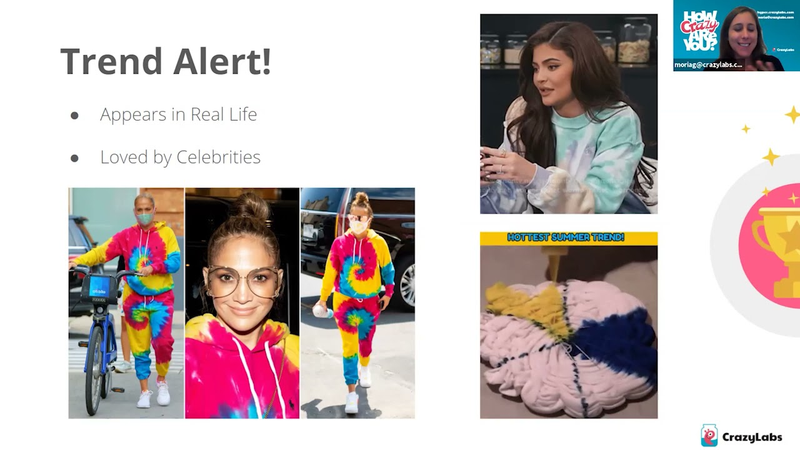
games into one of your games is that that use of popular culture so are there other media inside hyper casual games is that an important thing you know we're only you know we're trying to take only inspiration from these not to use you know the this specific uh you know things i think that everybody can turn you take you know inspiration from anything and can turn it sorry to anything that uh that you know that the audience wants to to play with exactly and i think this is one of the nice things about live management of games is that we can pay attention to things and we can add seasonality and even a hyper casual game yeah even a hybrid casual game needs some attention to its sustaining element even if it is only a short relatively short-lived experience from the player uh alright thank you so much for that that was fantastic i wish we had more time sadly i have to move on uh but the
good news thank is
Summary
Hypercasual game development demands a disciplined, iterative approach centered on constant self-correction and data-driven decision-making. Success in this fast-paced sector requires developers to maintain a clear strategic focus, treating the development process as a series of targeted adjustments rather than a linear path. By utilizing structured evaluation frameworks that prioritize gameplay clarity, production value, innovation, and engagement, studios can effectively filter out non-viable concepts and concentrate resources on mechanics that demonstrate genuine market potential.
Efficiency is achieved by aligning development tasks with specific business objectives, such as addressing critical funnel drops rather than focusing on superficial aesthetic improvements. This methodology relies on concise, visual-heavy communication and the early testing of multiple variations to minimize development cycles. By leveraging mirroring techniques and referencing successful industry benchmarks, teams can accelerate iteration and pivot rapidly based on performance data. This proactive stance ensures that development efforts remain tethered to market realities, preventing the common pitfall of over-investing in unproven ideas.
Creative longevity in the hypercasual space is often sustained through thematic flexibility and the strategic application of cultural trends. By applying different visual skins or thematic shifts to proven core mechanics, developers can refresh the user experience without reinventing the underlying technology. While pop culture serves as a valuable source of inspiration, it functions best as a creative foundation rather than a template for direct replication. Ultimately, even short-lifecycle titles benefit from ongoing live management and seasonal updates, which are essential for maintaining player retention and maximizing the commercial lifespan of a product in an increasingly competitive global market.