Mobile reports and market data
Documents
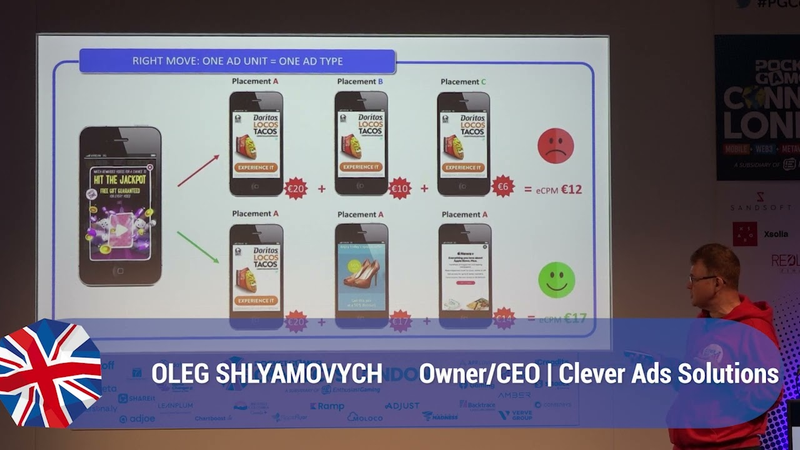
Mobile Ads Monetization: The Tips & Tricks That Make a Difference - Oleg Shlyamovych.
Mobile ad monetization serves as a critical revenue stream for mobile game developers, particularly given that approximately 97 percent of users do not make in-app purchases.
- Utilize professional mediation platforms to foster competition among ad networks, which can increase total ad revenue by up to three times.
- Implement App-ads.txt to ensure inventory transparency, a technical requirement that significantly boosts overall earnings.
- Maintain high user consent rates for personalized ads—reaching up to 92 percent—by carefully designing the opt-out process to be more complex.
Why Trust & Transparency are Crucial to Your Ad Monetisation Strategy - Maggie Mesa, Chartboost.
The current mobile advertising landscape is characterized by a lack of transparency within mediation platforms, which often function as opaque "black boxes."
- Developers must prioritize neutral mediation platforms that eliminate 'black box' auction mechanics to ensure fair competition among all demand sources.
- Adopting a unified auction model with in-app bidding and open real-time bidding (RTB) signals is essential for maximizing eCPM and ARPU.
- Transparency in the supply path is a critical performance driver, as evidenced by successful migrations of major titles like Empires and Puzzles and Words with Friends to neutral platforms.
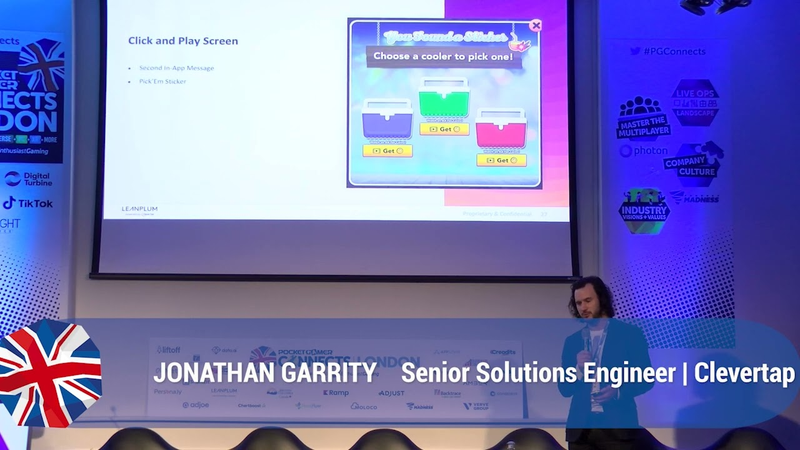
Re-Inventing LiveOps Strategy: Adapting to the new Norm - Yeshas Nakshathri & Jonathan Garrity.
The mobile gaming industry is currently navigating a significant shift in monetization strategy, driven by a decline in ad revenue of up to 30% following recent platform policy changes.
- Mobile game developers can mitigate the 30% impact of recent iOS and Android ad revenue changes by adopting a centralized LiveOps system that enables event management without constant engineering support.
- Mobilityware increased revenue and engagement by 5% in their initial campaign by using a modular, template-based dashboard to build and iterate on in-game events rather than relying on custom developer builds.
- Moving from basic demographic segmentation to behavioral-triggered in-app messaging can double the average revenue per user (ARPU) in mobile games.
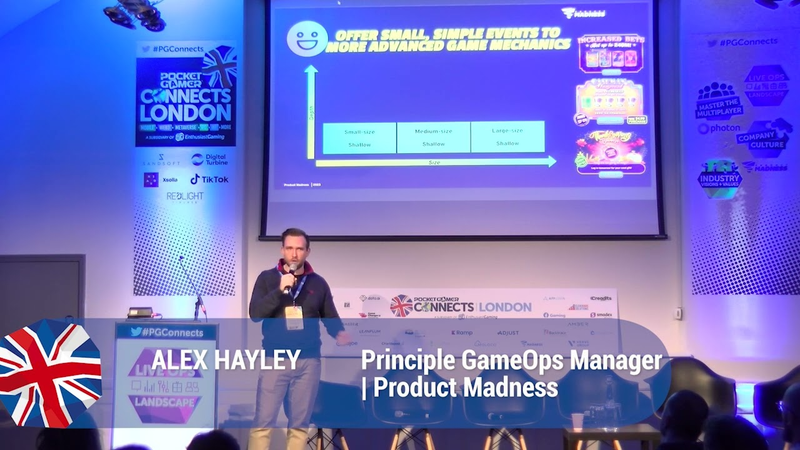
4 Fundamentals for Building a great Live Ops Department - Alex Hayley, Product Madness
Building a high-performing Live Ops department requires a strategic focus on simplicity, variety, documentation, and cross-functional collaboration.
- Operational efficiency is critical for scale, as demonstrated by Product Madness's Cashman Casino, which executes over 600 distinct live activities annually to support 430,000 daily active users.
- Live Ops success relies on simplicity through the use of repeatable, re-skinnable, and easily configurable events that maximize engagement while minimizing engineering overhead.
- Teams should build an 'arsenal' of simple events first, only introducing complexity by linking new content to the game’s core loop as the department matures.
Fireside Chat: Navigating the Evolving World of Influencer Marketing in Mobile Gaming.
Influencer marketing in the mobile gaming industry has evolved from a speculative endeavor into a data-driven strategy essential for community building and user acquisition.
- Prioritize audience alignment and genre-specific relevance over influencer follower counts to ensure higher engagement and conversion rates.
- Integrate creators early in the development lifecycle, such as during alpha or beta testing, to foster long-term brand advocacy and gain actionable community insights.
- Shift from speculative spending to a data-driven model by testing campaigns with micro-influencers and scaling based on verified metrics like chat activity and conversion rates.

Bringing Web3 Games to Mobile
Mobile gaming represents the primary frontier for the expansion of Web3, offering access to a global audience of three billion users.
- Mobile gaming is the primary growth frontier for Web3, targeting a global audience of three billion users.
- Developers must navigate restrictive Apple and Google policies that protect a 30% revenue share by adopting hybrid strategies that rebrand NFTs as digital collectibles.
- The industry is pivoting away from extractive GameFi models toward sustainable, gameplay-first experiences that prioritize high-quality mechanics over blockchain terminology.
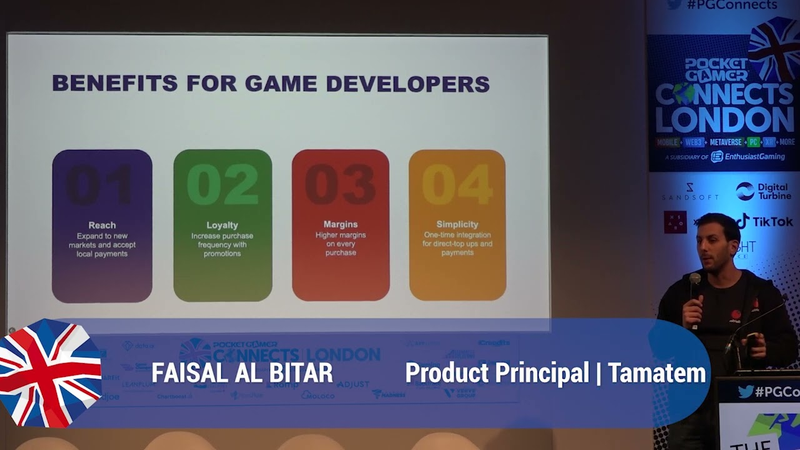
Future of Payments in Gaming - Faisal Al Bitar, Product Principal, Tamatem
The Middle East and North Africa (MENA) region represents a significant, high-growth opportunity for mobile gaming, currently valued at approximately $5 billion.
- The MENA mobile gaming market is valued at approximately $5 billion, yet traditional app store payment models fail to reach the region's population where over 70% remain unbanked or underbanked.
- Credit card penetration in some MENA nations is below 3%, creating a significant barrier for developers relying solely on standard Apple and Google payment infrastructure.
- Digital payment adoption in the region surged from 9% to 70% post-COVID, fueled by rapid fintech innovation and smartphone penetration that outpaces traditional bank account ownership.
Brands Are Now In-Play: Creating a new Revenue Stream in a Seamless Way by Chloe Cave from Adverty.
The integration of in-game advertising, specifically through non-intrusive "in-play" formats, represents a significant evolution in mobile game monetization.
- In-play advertising allows developers to monetize the entire duration of a gaming session without interrupting gameplay, unlike traditional rewarded videos or interstitials.
- Gaming has surpassed the combined reach of film, television, and music, with a global audience of 3.2 billion players.
- In-play advertising is projected to capture 10% of the total in-game advertising market share by the end of 2023.
Fireside Chat: The Great Expansion Mobile Gaming’s Multi-Platform Future.
The mobile gaming industry is currently navigating a significant pivot point, driven by the deprecation of identifier for advertisers (IDFA), the implementation of App Tracking Transparency (ATT), and rising user acquisition costs.
- The deprecation of IDFA and the implementation of App Tracking Transparency have rendered traditional mobile-exclusive performance marketing less effective, necessitating a shift toward multi-platform distribution.
- Expanding to desktop and web-based platforms allows developers to bypass standard mobile app store review processes, enabling significantly faster iteration and content testing cycles.
- Desktop users demonstrate higher engagement metrics compared to mobile, specifically showing stronger player retention and higher monthly in-app purchase volumes.
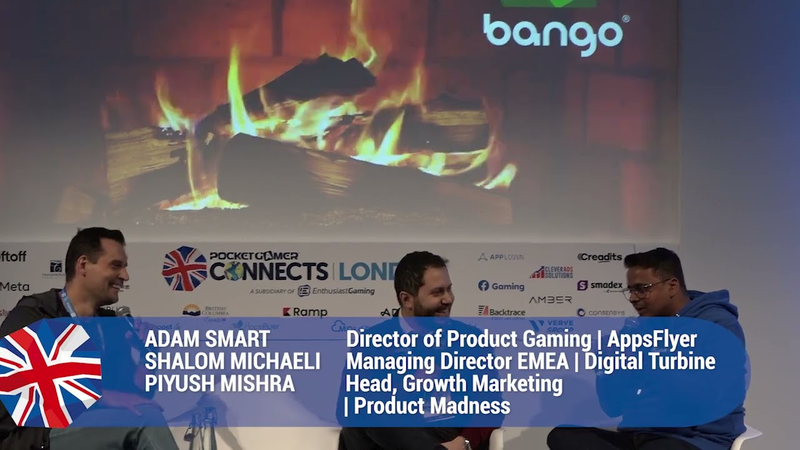
Fireside Chat: In the Sandbox With Adam & Piyush, the Live at PGC One
This discussion, held at Pocket Gamer Connects London 2023, explores the evolving landscape of mobile user acquisition (UA), supply-side mechanics, and the impact of privacy regulations on the gaming industry.
- The supply-side ecosystem—comprising SSPs, ad exchanges, and mediation platforms—functions as a multi-layered auction system where the primary goal is to maximize yield by rendering the highest-paying ad impression for the publisher.
- Publishers should determine their monetization model (IAA vs. IAP) based on game genre and the underlying economy of the title, rather than relying solely on Daily Active User (DAU) volume.
- Privacy-centric changes like iOS 14's ATT framework have forced the industry to shift toward contextual targeting and audience segmentation as alternatives to user-level data for media buying.

Ad monetisation gossip corner, Unity expensive bug, APS, Google 3 waterfall placements (#52)
The mobile advertising landscape is currently defined by a shift toward more granular control over mediation stacks and the mitigation of technical volatility.
- Google has removed the three-placement limit for third-party mediation, allowing publishers to expose more inventory to AdMob demand and potentially reducing the necessity of Google Ad Manager resellers.
- A March 13th bug in Unity’s reporting infrastructure inflated revenue data by over tenfold, forcing publishers to disable placements to prevent UA optimization errors and revenue leakage.
- Amazon Publisher Services (APS) is a high-potential demand source for titles with high-purchasing-power audiences, particularly when publishers secure direct Transparent Ad Marketplace (TAM) deals with partners like Xandr, InMobi, and PubMatic.

Is It The Right Time to Invent New Ways Of Playing & Developing New IPs?
The global gaming industry is currently navigating a period of financial contraction and strategic uncertainty, characterized by a shift away from high-risk innovation toward the preservation of established intellectual property.
- The gaming industry is currently prioritizing the optimization of established 'forever franchises' over radical innovation due to post-COVID market corrections and rising operational costs.
- Major firms like Supercell and Capcom are struggling to balance the preservation of legacy intellectual property with the necessity of developing new, genre-defining experiences.
- Companies are increasingly favoring the acquisition of proven intellectual property over the development of new studios to maximize profitability through standardized tools and infrastructure.
Writers
Games and companies
Games