1 free read left. Create a free account for unlimited reading + AI research.
Create free account
Fireside Chat: The Great Expansion Mobile Gaming’s Multi-Platform Future.
Key insights
6 takeaways- 01The deprecation of IDFA and the implementation of App Tracking Transparency have rendered traditional mobile-exclusive performance marketing less effective, necessitating a shift toward multi-platform distribution.
- 02Expanding to desktop and web-based platforms allows developers to bypass standard mobile app store review processes, enabling significantly faster iteration and content testing cycles.
- 03Desktop users demonstrate higher engagement metrics compared to mobile, specifically showing stronger player retention and higher monthly in-app purchase volumes.
- 04Modern web technologies and improved payment processing have effectively eliminated historical barriers to monetization, making the web a viable high-revenue channel for casual and mid-core titles.
- 05Long-term sustainability in the current gaming landscape requires a platform-agnostic design philosophy that prioritizes dynamic screen resizing and cross-platform compatibility from the start of development.
- 06Leading titles have successfully adopted this strategy, with some games now generating nearly 50% of their total revenue from web-based versions.
Ask AI about this video
Transcript
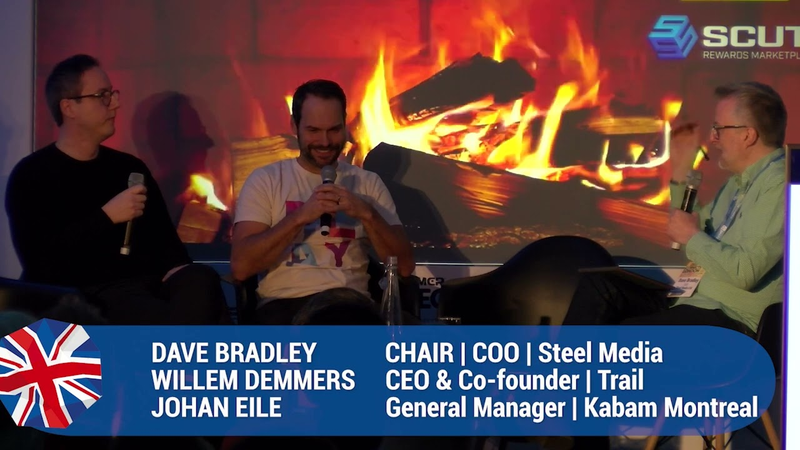
foreign [Music] [Applause] let's get started here let's get started I'd like to welcome to the stage for our panel um well fireside chat all about um the mobile Gaming's multi-platform future and I've got two expert speakers joining me on stage Willem Demers from Trail and Johan Ella from Kabam so guys you want to come to the stage let's welcome these guys foreign I'm gonna be your host for this panel
and get these guys talking um yeah it's complete with uh fire for our fireside chat so um I hope everyone's enjoying the uh uh the festive festive ambience uh your mic working there so uh nope oh hi guys can we fire up uh all three mics I think hear me okay brilliant um so let's get started the purpose of this fireside chat is to talk about um how the mobile gaming ecosystem has changed significantly significantly some of the uh the challenges that the the mobile gaming scene is facing at the moment and how taking a multi-platform approach to that can can solve some of those problems and we'll look at the opportunities there but before we get into some of the specific questions including the market overview and some of the advantages of
taking a kind of a broader platform approach um I'd like my expert speakers to introduce themselves so I'll tell you what um uh let's start let's start with uh uh Johan here and uh can you just give us a bit of intro to yourself in your background yes uh sure I'll keep it at a point making games for a long time and places that THQ original to continue Ubisoft and so on 2014 we started a new new company in Montreal and been publishing on I think 16 different platforms since the foundation of the company and and one of the first things we uh pushed was actually putting our mobile game on Facebook at the time so I'd say just just to sort of establish why we're sitting here and talking and we can kind of continued the cross-platform approach so today I'm I'll go back in 2019 we sold the company to Kebab today I'm the GM of Kebab Montreal and we continue to build build
games that's that's fantastic and you work with some really big IPS as well don't you the some of the games will definitely be games that people here have recognized the the franchises uh fantastic well do you want to give us some introduce to yora Sure too yeah so my name is William Demers and back in 2007 I was part of the team that built let's mix which was one of the very first music extremely Services which then became Beats Music which then became Apple music and for the past 10 years I've been wanting to make it equally simple to play video games and back in 2016 I founded my current company which is Trail with a purpose to make gaming easier than watching YouTube perfect perfect thank you and we're definitely going to come come back to that so in this chat we're going to talk about why thinking of a multi-platform approach is important and what's changed in the uh in in the mobile space and what what the publishing should be thinking about now but why do we need to do this so let's start Johan can you talk us a little bit
about the market overall why we're at this Pivot Point here I mean what challenges are developers and Publishers facing that has inspired this conversation uh yeah I think well obviously through during uh covid we kind of all got slammed with um the deprecation of idfa and right and ATT that's a it's been hashed on and so on um when that when that happened we obviously there's a bit of freak out um on the other hand we had as part of the development strategy been working on uh cross-platform games so it's just been part of like the native backbone of the uh of the thinking so when all those Trends are happening and like I I want to sort of beat a dead horse but it's extremely challenging to do the type of arbitration marketing that we used to do on mobile this is quite quite simple and that's forced us I think to be kind of go back to the origins where we you have to have a good game you have to market
the good game do like proper marketing like hard work like I know some of us used to go to you know all these conferences pitch pitch press pitch Publishers so we're back in that that kind of raw grind to a large degree and and and that's a I don't know if it's a cycle or if it was always like that but it's been become very very apparent that it you kind of have to do things almost like old school again uh and that's kind of forced us into thinking about uh you know kind of the same division as a you're making a game for the Xbox or or Ps it's like a hard wall between them it's not like like super compatible right so same same thing in in this case uh and and like looking at the trend right now it's forced us as game developers to just like fully open up and be like okay we can't just focus on IOS and Android uh or Apple and Google like it has to be like much broader yeah absolutely and we'll definitely come back to that I mean I get a sense that
there's a lot of things that have changed for Publishers the idfa is the big thing that mobile game developers it was all about Performance Marketing and the data and that's kind of gone away with the ATT but there were other things to code you know not just covered enforced changes in player Behavior but just the right Rising costs of UA all these kind of things that went along with it it was kind of time for the market to consider other things right yeah absolutely we were uh you have to be extremely good at making games obviously but you also have to be super sharp on like your paid user acquisition there's tons of opportunities to screw up and if you're like if you literally like like lose a step your competition is like running over like anything from marketing Tech and like uh Creative Marketing Tech and like stuff that we as developers and and Publishers maybe don't thought about the same way as we do today uh that just literally side swiped a huge part of the industry and we see some some of the games that are extremely successful and you're like like how like what is that they're doing
that like what are we missing right so uh I think that's that's the kind of stuff that we that we've seen yeah great I'm going to come to Willem next because I think what's this what this highlights is that there was a point where maybe a developer was making a game and it could be published it could just go onto the Apple App Store and that would be enough that would be how to build a business and that kind of isn't right now that isn't the right way to think now is it so do you want to like talk us a little bit more about the you know the advantages of multi-platform publishing where where do we go from here so I think one of the key issues with the App Store is uh it's discoverability right which is why you need to do the Performance Marketing in the first place because the app stores aren't really solving that for you anymore but it's just uh it's it's a I mean it's it's a large audience but you have a lot of competitors so it's become a red ocean for the past 10 years business has been very good but it's starting to become sort of full yeah but there are many opportunities outside of the app stores so you have you can do third-party app stores or you can look
at words desktop and web which is what we're looking at yeah and you still have like 2.2 billion people who are using the the desktop browser like daily essentially and they don't really play a lot of games there because there is no app store for desktop in the same way so there you don't really have the same competition and you can still do Performance Marketing with retargeting you don't have the same ATT issues there so it's about finding like new unexplored channels or channels that got that were sort of forgotten about yeah and finding new sort of blue ocean strategies so mobile was the blue ocean and that was a great strategy and I think I'm not trying to say that you shouldn't be doing mobile you obviously should but you should also be looking a bit expanding review outside of that I think if you want to be successful today tomorrow tomorrow and in the in the years to come yeah absolutely just thinking about where else to play it reminds me a little bit like we're saying of the of the previously some years ago publishing games on congregate
or Facebook uh gaming and as you say we sort of almost forgot about that somehow and that again actually there are other advantages too here um you know um Johan what's you know I think when we were speaking before here you mentioned that publishing to some to the web for instance allows you to iterate faster and test faster in a way that maybe mobile bills wasn't there are other advantages to developers that maybe we should be yeah I mean in many ways feels like we've skipped a generation of developers like when we you know making games on all different platforms for a long time and when we started uh making for mobile specific free to play we were testing the games on on Facebook and on canvas so like we launched and we didn't want to burn the game on on the App Store so we tested it on on Facebook at the time so we probably released the game six or seven months earlier on Facebook when we were very quickly several times a day able to do push updates and have users so that was it was just an incredible development tool like we never expected like a ton of revenue from it but it became like a
crucial part of the iteration in the development cycle and and that was kind of lost at a certain point we actually continued to publish on uh on canvas and continue to work with congregate and stuff like that because it was just part of the DNA of the company but I think that was sort of lost at some point here and that's one of the things that navel and I've been chatting about it's like there's a there's an opportunity to bring it back into a Dev environment and actually have it as a tool and once you're there and especially if you look at some of these hyper casual games like you could do this so much faster and get validation so much cheaper on on the web um and that was like one of the key components when we we sort of started looking at like what do we do or how do we react with uh with the sort of inability to be effective on on paid UA it's like why don't we start using all the tools that we had created to to push content on the web yeah absolutely and
in fact that's you know you mentioned some advantages there of publishing on the web um William with player's behavior is different on mobile and on console and on Steam and online do you see a a difference in engagement with publishing on the web is that another advantage that people should be aware of yeah so what we see with our customer games is that so we compare sometimes to Stats with like Play Store or such and what we've seen is that the engagement is much higher on web So speaking about web here is like on desktop we have theories about why this is but what we believe it is is because it's the largest green yeah and many of the games you know you try to do as much as possible with a small screen but when you have these players especially in like casual or mid core games you have you have a very small percent of players that make up most of the revenue and they play like five hours a day with their thumbs like they're not
necessarily just playing on the subway they're sitting at home at night or in the evening and they play with their friends and there we see that you know the the amount of purchases for example might be six times as many per month uh on on web wow so it seems like the engagement is brought up a lot yeah I mean it's it's super I mean Super clear like we we saw people playing con constantly they never disconnected so they'd have it running in the background right at work obviously and the so the numbers are through the roof like they're not even comparable in in terms of of that type of player behavior and we still see that today on on PC for example these are running like heavily in in the background I mean one of the reasons on this so I want to actually chat with Villa about uh one of the reasons why we went away from from website we started running into technical limitations so what kind of games we could push in sort of real time and and we're running out of uh you know
there used to be this kind of like runtime error in the in the Chrome browser it just drive me absolutely nuts uh any any thoughts about that and how uh how we're hopefully can go away from all that yes I think I think it's uh there's some history there so back in 2010 the web for playing sort of started dying a bit because Chrome was killing the Unity Web Player so you couldn't just build from Unity to web and apple is killing flash right and there was a big fight with Adobe at the time and eventually I think Apple actually acquired their CTO but that's been sort of like so the browser started cooperating better after that and they were building more and more tools that you can make use of a webgl being one of those and you know it's been slowly ramping up and it's not it's still very difficult to sort of Stitch it all together which is what we're trying to do at a trail but it's it's definitely possible to run the
games now in the browser performantly and you can even like with if you build a lot of Tools around it or if if you use Trail uh you you can actually have it in your pipeline the same way that you would have with like uh building for iOS or Android so it's it's more like another app store and it's performant and all of that but it is it is it is difficult if you do if you're going at it alone there is a lot of technical hurdles that you need to get over uh you need to know both like native programming you need to know web program you need to build sort of your own app store around it and handle purchases and all that and so that's the niche that we sort of found ourselves trying to actually let's talk about the purchases I mean that was one of the limitations at the time like this like 2014-ish when we're like having fun with this a lot um people were not super Keen to leave their credit cards on like a web store like I think that's changed like brilliantly now like we have no problem
anymore so that like payment barrier that we saw on on the web like we had to have high engagement and great stuff like but relatively low ltvs that's changed right because people are now like they have no issue leaving their card on on the platform uh and I so that's I think that's a game changer for for for web as well like just like the transaction of that like you there's multiple providers obviously but finding finding some like we're basically removed that barrier that was there for us to be like super successful on on these platforms that's interesting because you've tackled two challenges there if you like for Publishers developers in the room that kind of can you monetize can people pay and they seem willing to do that and then and then also uh the kind of development challenge like if you're an indie Studio had it and those seem to be so right now it basically is the conclusion of this chat if you like that there's no reason why a developer industry wouldn't publish to the web as well as Google or to the app store or is there anything else that we should be aware of are there any pitfalls that we haven't uh that people should be aware of
ah there's lots of pitfalls don't don't make don't make games no uh pitfalls um I mean I guess the way we talk about it and like the culture that we're building in in the studio is not cross-platform it's like platform agnostic so how we deal with with all these different issues can be there could be multiple solutions that we end up using and they're all fairly available and relatively easy to use and you know some of the discussions we had with Villas like it's actually like like built like a really incredible platform really easy to to work with that that becomes a game changer especially when we like are used to publishing native from from Unity uh so I think if there's anything it's more to actually think about it design for it um from from the start you might not need to do it or want to do it in the end but if you're mindful about it it becomes a very sort of pedestrian thing
after uh we're we're kind of sort of to the end to the end of time there I um uh I wanted just to see I've got a couple more questions but was there any questions for the audience uh for trail and come out yeah one right down here hey thanks for the great insights I was curious so you said I mean it's good to keep it in mind and design for it but do you have insights on what type of games make more sense to do this for not every team has the capacity to think about all this and it's really good to for example design certain games for mobile right for that experience but are there games or are there types of genre that you find especially good for this I I'm just right I mean we're we make core RPGs just by kind of Interest right so uh obviously we think they fit really well uh we design with landscape no horizontal like from the start like you can literally dynamically shift so we can resize it super easily depending on
what screen we go on that's just like the team is just it's ingrained in the backbone if you don't have those reflexes it's hard like that that I'll like omit and I just think it's something that you you either make part of your your your kind of framework or your development um uh yeah just how you how you see it and make it make sure that you keep that door open I the way we look is more and more but let's keep the door open it's not very expensive to keep it open and then we can actually see like do we need to go and close that door and like go after that market um I don't have like we were talking about this before like I personally think all games should be thinking about it uh and I don't see a specific genre but uh I don't know what you what you're thinking bill um I mean we've seen hyper casual work on web even after sort of Unity Web Player disappeared and Flash like they still exist right and that's the ad is monetized and that's always sort of worked on web when you can get to the numbers but what we see now uh at least on our platform is that even free to play like
casual in a purchase driven games are highly lucrative on web and they can function very well but it depends of course if you build the game to work exclusively around swiping and things like that it might not be a good fit for the peripherals on desktop but for most games what we've seen is that especially with our tools it can take a couple of weeks and you can sort of Port an existing game and you have success stories like Hero Wars which is a unity game for mobile and they they have it on web and they're doing something like 40 of their revenue like nearly 200 million a year from from web you know yeah so I think it's a lot of gains could work we we started seeing specifically the Casual to Mid core that's that that's also possible to bring there but hyper casual has been around the web forever thanks Steve thank you and what I suggest is if people have questions on on this topic and there's loads more we
could talk about to look up Johanna Willem on uh meet to match or find them around later there's lots we could dive into here and I've got a couple of questions as well so we'll follow up on pocketgamer.biz as well uh that's great to run I think and right now on trail.gg people can come there and play Pixel starships and and Airport City perfect so that's that's the way to go and see that in action so thank you very much guys thank you thank you thank you [Applause] [Music] thank you [Applause]
Summary
The mobile gaming industry is currently navigating a significant pivot point, driven by the deprecation of identifier for advertisers (IDFA), the implementation of App Tracking Transparency (ATT), and rising user acquisition costs. These challenges have rendered traditional performance marketing strategies less effective, forcing developers to move away from a mobile-exclusive mindset toward a broader, multi-platform approach. By adopting a platform-agnostic development philosophy, studios can mitigate risks associated with reliance on a single ecosystem and tap into previously overlooked channels, such as desktop browsers and third-party web platforms.
The transition to multi-platform publishing offers several strategic advantages, including improved discoverability and access to a massive, under-served desktop audience. Web-based distribution serves as a powerful tool for rapid iteration and testing, allowing developers to validate game mechanics and content updates far more quickly than the standard mobile app store review process permits. Furthermore, player engagement on desktop often exceeds mobile benchmarks, with data suggesting that users on larger screens exhibit higher retention and significantly higher monthly in-app purchase volumes.
Technological barriers that once hindered web-based gaming, such as browser performance issues and payment friction, have largely been resolved. Modern web technologies and improved payment processing have removed the historical obstacles to monetization, making the web a viable, high-revenue channel for casual and mid-core titles. While the transition requires a shift in design philosophy—such as building for dynamic screen resizing and cross-platform compatibility from the outset—the potential for success is substantial. Successful examples, such as titles generating nearly half of their total revenue from web-based versions, demonstrate that expanding beyond mobile is a critical strategy for long-term sustainability in the evolving gaming landscape.




















Comments